Is social media fuelling hatred and contempt in Britain?

jo cox mp

The late Jo Cox MP. Pic credit: BBC

CROSS POSTED ON BYLINE.COM


The killing of MP  Jo Cox has caused many people to pause and question whether political debate is becoming too callous and extreme because of the  way social media and Twitter in particular encourage polarised views.

Today’s Inforrm blog carries a very thoughtful article from Sharon Coen, a senior lecturer in media psychology at Salford University. Her article as you can see here is mainly framed about political debate.

However what she says says about politics can easily be extended to the way trolls treat women and survivors of child sex abuse.

As she says on politics: “The adversarial communication style we see in politics today is certainly counterproductive and polarises opinions. Disagreement is great and is at the heart of democracy. But, as political scientist Susan Bickford argues, it is only by really listening to other people’s positions, not just discarding them, that the democratic process can be successful. And – as in face to face interaction among politicians or televised debates – the internet has proved so bad at enabling people to listen to each other that there are now attempts to redesign the way we communicate online to make us better listeners.”

On social media she says:

“Social media …is a double-edged sword. On the positive side, it fosters political engagement both on and offline. For example, in a small (unpublished) study I conducted, I found that when people used the internet to debate and comment on news online, they were also more likely to be politically active in the real world. Again, this is in line with other research in the area.

“But (my emphasis in bold) social media also fosters polarisation. People tend to connect to like-minded people – and engage with content that reflects their pre-existing attitudes and beliefs. Social media focuses political debate even further around individuals who have active profiles on social media sites. It can effectively put a big neon target on them, attracting more personal abuse from those who disagree with them.”

She goes on:”The recent launch of the Reclaim the Internet campaign has highlighted the amount of abuse individuals (and women in particular) are subjected to online. The issues of cyberbullying and cybermisogyny are ones that deserve serious consideration for the negative impact they can have on the recipients of such abuse.”

In my view this aggressive stance by some people – often more aimed at women than men – is becoming particularly nasty with MPs like Jo Cox (before she was killed) and Jess Phillips, Mp for Birmingham, Yardley, being recent targets.

I am also thinking of child sex abuse survivors like Esther Baker – whose allegations are the current subject of a police investigation – who has suffered egregious abuse on line from people who claim not to beleive her.

It is time that these bullies and cowards put up and shut up. They should think before they tweet. Would they say  that to a person’s face in public? If not why say it on line behind some anonymous or not so anonymous twitter handle? Their actions also encourage  more hate and division but most of them are not man enough ( yes they are mostly men!) to stand up in public and say what they think.

The problem  is that this type of behaviour is beginning to have nasty consequences and turning this country into a nasty place to live.


Why all the UK should see this brilliant exhibition on the Calais Jungle

CROSS POSTED ON BYLINE.COM

Until June 22 there is an extraordinary exhibition of art, sculpture,photographs, documents, multi media  and sound on the Calais jungle migrant camp.. It is at the London Newcastle Arts Project Space in Shoreditch,London.

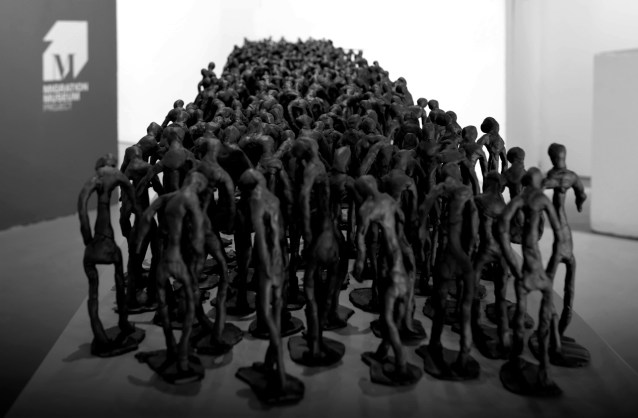
Wanderers 1

An amazing sculpture at the entrance to the exhibition. It looks like a mass of people but each of them is an individual. A fitting symbol for the exhibition.

© Nikolaj Bendix Skyum Larsen

The exhibition tells the story of the huge migration from the Middle East, Afghanistan, and North Africa to Calais and the people involved.It is probably the biggest issue in the whole of Europe today.

It is both a harrowing and uplifting showing the strength of the human spirit in the face of extreme adversity. There are evil people, neo Fascists,nasty people smugglers, and thugs who exploit and deride them  but there are also many ,many caring human beings who are prepared to help them on their way to a better, safer life.

What is extraordinary about this exhibition is that much of the art comes from the very people themselves as a way of expressing their own plight. And the squalid Jungle is  a place where people play music, dance, paint,cook,and create as well try to survive.

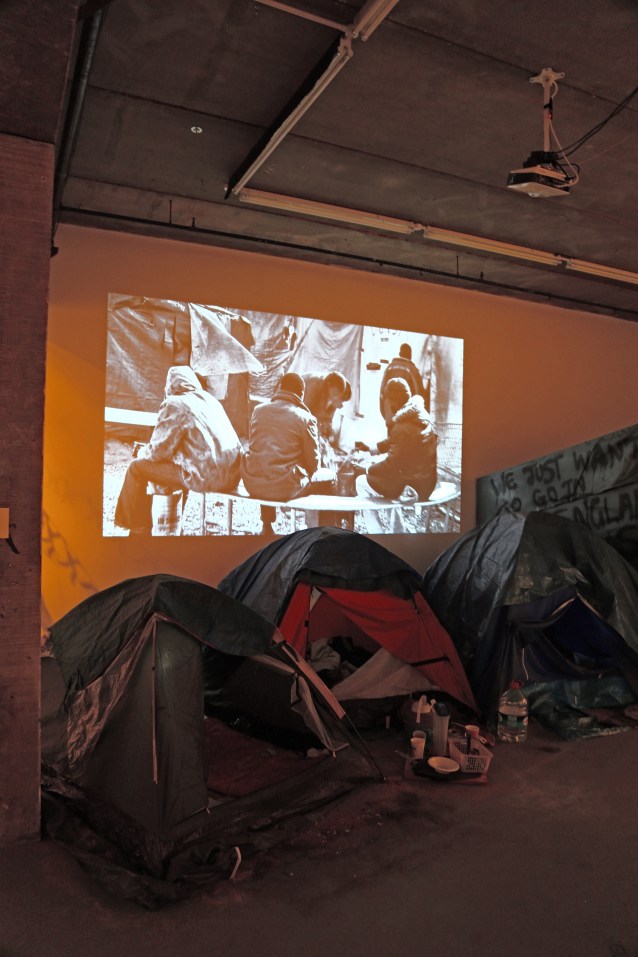
Call me by my name 9 hi res

These are the tents they livedin. Picture

© brandingbygarden.


Everyone who has any humanity should see this exhibition – especially the people who denigrate them as hordes or swarms of people. They are people like them. It is antidote to the crass debate on Brexit.

And denying them a safe haven is also denying our country the benefit of their enormous talents – many are highly educated and many have discovered new talents on the way. Worse the plight of unaccompanied children aged from 8 to 14 or 15 is something this country cannot ignore – and thanks to the efforts of Alf Dubs ( Lord Dubs) who pushed Theresa May, the home secretary, to allow them to come in – there is some hope  for a few now. But there needs to be more.

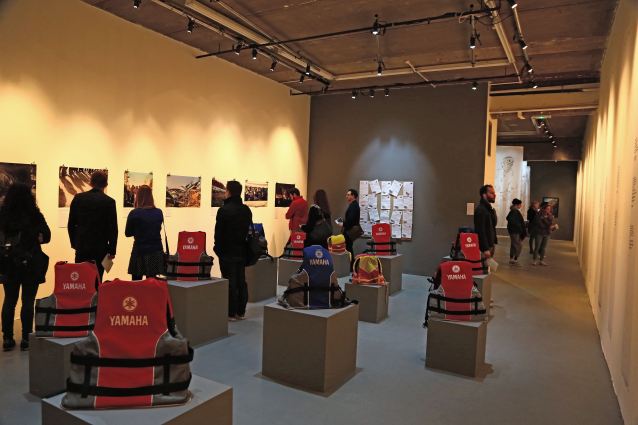
Call me by my name 11

These lifejackets were taken from the beach in Greece. Believe it or not the smugglers gave them fake lifejackets, they don’t float.

© brandingbygarden.


At a very moving reception where the organisers- through the Migration Museum Project – was attended by asylum seekers – and some who had managed to be smuggled into Britain. They mingled with students, artists and campaigners looking at the exhibits.

Museums and art centres in Britain you should thinking of staging this exhibition so the people  across the United Kingdom can see the whole story. How about some of you rising to the challenge.

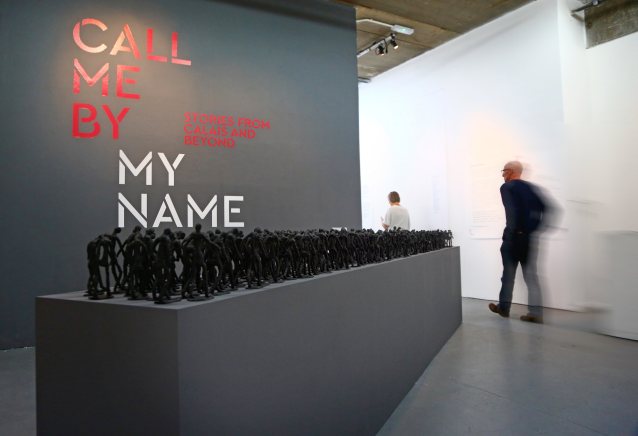
Call me by my name 3 med res (1)

The sculpture as you enter the exhibition. © brandingbygarden.

Why are we waiting for Lady Macur’s Review into child sex abuse in North Wales?

CROSS POSTED ON BYLINE.COM

Why does a judge having meticulously completed a major report on failings in investigating historic child sexual abuse in North Wales want to redact her own findings?

This is the bizarre  question facing  Lady  Justice Macur who on December 15 last year handed in her final independent report to the Welsh Office and the Ministry of Justice. Yet only weeks later Caroline Dinenage, the junior minister at Ministry of Justice, told Ann Clwyd, Labour MP for Cynon Valley, that the judge herself was recommending ” certain material  should be considered for redaction”.

She also disclosed that ” the report needs to be considered by law enforcement agencies and the government before it can be published. This includes considering whether redactions need to be  made”.

At the moment there is no date for publication – rather like the situation until last month surrounding  Dame Janet’s Smith’s report into Savile at the BBC which had been delayed for more than a year after being completed.

The report is particularly significant for survivors of child sexual and physical abuse in North Wales children’s homes. An inquiry  by Sir Ronald Waterhouse into the abuse of children in care in the former Gwynedd and Clwyd council areas of North Wales between 1974 and 1996 was supposed to get to the root of the problem and see perpetrators jailed.

But it is now obvious some 20 years later that it failed to do so as Operation Pallial under the National Crime Agency has brought many perpetrators to the courts where they have either been found guilty and imprisoned or not guilty and allowed to continue with their lives.

The review will examine some very important questions. Was the scope of the first review adequate or did the terms of reference allow people to escape justice? Did the North Wales police do an adequate job investigating these crimes? How did some people get away with abuse? What do the police, the authorities and the government need to do to prevent such a repetition?

Yet at least two Welsh MPs Ann Clwyd and Wrexham MP Ian Lucas are far from happy about the fresh delay – the inquiry was started four years ago.

Ann Clwyd is particularly sceptical as to why the government needs to scrutinise the report before it is published.

She points out in a letter to Caroline Dinenage that it is meant to be independent of government but now the government will decide when it will be published and what will be published.

She wants to know whether the government and law enforcement agencies have been set deadlines and who will take the decision to redact what material and why.

It may be with Operation Pallial still to bring some cases to court notably the trial of ex  North Wales police chief Gordon Angelsea whose case is not due to start until  September that some material may not be published to avoid prejudicing the trial.

However none of this has been made clear. The Wales Office and the Ministry of Justice need to get on with this – set a date for publication – or suspicions will grow that both departments have something to hide. They owe this to the survivors of these appalling cases in children’s homes in North Wales.


Leaked Savile Report: The BBC culture that failed to protect people from abuse

CROSS POSTED ON BYLINE.COM

Dame Janet’s highly critical report on the BBC’s handling of Jimmy Savile leaked to me  pinpoints  very serious issues at the Corporation which are still not resolved.

The official response from Tony Hall, the director general of the BBC, that this was a dark day for the BBC and it is all in the past does not wash.

Nor frankly does Dame Janet Smith’s plea to ignore this “early” draft. All the evidence  from people was taken before it was compiled and she has said she has not changed her conclusions. So will she rewrite it now?

Her draft report is not a whitewash. It is a closely argued analysis revealing a culture that allowed considerable sex abuse to flourish at ground floor level without a mechanism to report this to the top. This does not seem to have  changed and has conveniently let all the BBC’s top executives off the hook.

It reveals a  crass deferential attitude to celebrities – who could do anything they liked because they were ” untouchable” and people looked the other way. This is no different today – given the present cult of celebrity.

It also reveals an organisation that is more concerned with its public reputation that tackling the root of the problem- how to stamp out opportunities for sexual abuse.

Not only were under age  adolescents and children the victims of sexual abuse but so were  staff employed by the BBC – who did not complain because they wanted to keep their jobs.

And if anyone complained it seemed the BBC was woefully inadequate in investigating what happened – if it did indeed want to get to the real truth. That failure extended to its own investigations into the issue by its own investigative journalists who found their work dropped or sidelined.

When the BBC does publish the report it will have a lot of explaining to do. On the central issue of child sex abuse Dame Janet concludes that there could still be a paedophile lurking in the BBC and thinks the chance of this being exposed is now worse than then – because many people are on short term contracts and would worry if they could work again.

Her findings directly contradict a report commissioned by the BBC last year from the firm Good Corporation which praises the BBC’s policies in preventing a repeat of child sex abuse. Which is right?

Also it is still clear  the whistle blowing process at the BBC, is, at best, not properly promoted ( say the Good Corporation) or worse, virtually non existent  (  says Dame Janet’s review).

So I don’t think anyone should be fobbed off by complacent attitudes from the BBC and attempts to move the debate to the dim and distant past,. The BBC failed a group of survivors of sexual abuse by doing nothing then – and could be doing the same now.

Sneaky and Naive: The Department of Health’s plan to raise care home inspection fees

Care quality Commission

CROSS POSTED ON BYLINE.COM

While MPs were enjoying their Christmas break the Department of Health sneaked out a consultation paper planning a massive increase in compulsory inspection fees for care homes, privately provided ambulance services and hospitals.

As part of the spending settlement the ministry has decided to recoup the present £120m  a year subsidy given to cover compulsory inspections made by the Care Quality Commission. Altogether the ministry want to recoup some £780m over a ten year period. I have written about this in Tribune magazine

There is a subsidy is because the CQC has had to up its game and do more through inspections after the scandals exposed by  the Robert Francis report into Mid-Staffordshire NHS Foundation Trust and the Winterbourne View private home for people with learning difficulties exposed by BBC Panorama.

The Treasury wants to abolish this subsidy on the grounds that it must recover all the costs of inspections rather than part of them.. Superficially this sounds fine as NHS trusts will not to have to pay for the inspection of their own hospitals and ambulance services. Neither will 94 per cent of GP surgeries.

However increasing privatisation and outsourcing of services by local authorities and health trusts to private firms means that the bill for the inspections which already run into thousands of pounds could fall on councils and trusts who commission the services.

The paper reveals that 90 per cent of  care services are already privatised and privatisation is increasing in the NHS with private ambulance providers becoming the norm and mental health provision and other services being outsourced.

To try and justify this civil servants have tried to tell ministers that this could have nil effect on health provision.

This naive view is bolstered by the belief that care homes s will accept a cut in their profits to prevent an adverse health outcome caused by councils and health trusts having to cut the number of people sent there because of the increased cost of inspection fees.

This is contradicted by negotiations for the present year’s fee increases. The paper says:

“There is a risk that any increases in fees could have a destabilising effect on providers, as many providers are facing a tough financial climate, with increased running costs and reductions in income. During the CQC’s consultation into their fee levels for 15/16, 80% of providers opposed the proposed 9% fee increases for this reason. “

This is hardly surprising given that to run a care home on a profit, they already pay staff little more than the minimum wage and cash strapped councils are unlikely to pay them any more for residents. It puts into question whether running a care home  is a suitable business for the private sector. Soon they will soon have to pay the living wage. So would anyone believe they will absorb higher inspection fees into their profit margins.


The paper also discloses that the review will mean they will cut inspection fees for private dentists as they make a profit. It then naively assumes that the dentist will pass on the saving to patients. Does anyone believe that?

Whoever drew up these proposals cannot really live in the real world – no wonder ministers are told what they want to know rather than face reality themselves.


Child sex abuse survivors: a dangerous precedent to withdraw funding


_DSC9895

Graham Wilmer, head of the Lantern Project charity Picture reproduced courtesy Rory Wilmer Photography

CROSS POSTED ON BYLINE.COM

The recent media row over the alleged therapy techniques used by the abuse survivors charity, the Lantern Project, which led to the withdrawal of funding is a dangerous precedent.

The row pushed essentially by two newspapers by the Sunday Times and the Daily Mail ( see article here) could have much wider implications than just in the Wirral where the charity is based.

Essentially the allegations centred around two high profile survivors Esther Baker and one known as ” Darren” . Esther’s allegations are currently being examined by Staffordshire Police in a very detailed investigation which  has already led to one arrest and another person being interviewed under caution.

I am not going to comment further on the investigation particularly as the Solicitor General, Robert Buckland, has warned the media of ” the risk of publishing material that gives the impression of pre-judging the outcome of the investigation and any criminal proceedings that may follow, or which might prejudice any such proceedings.”

Indeed I am frankly surprised that both papers thought  they could comment on an active police investigation by casting doubt on the credibility of a survivor and perhaps there may be a case of drawing this to the attention of the Attorney General.

What more concerns me is the decision of the Wirral Clinical Commissioning Group to withdraw substantial funding for the charity in the wake of the Sunday Times allegations.

The reduction appears to be part of a £20m cut affecting other services but by withdrawing the £150,000 and stating firmly they disagree about the use of the therapy -Unstructured  Therapeutic Disclosure – which some people think can cause the medically  unrecognised false memory syndrome- is specifically aimed at cutting support to survivors. As it says “There is no recognition or recommendation of this approach by the National Institute for Health and Care Excellence (NICE).” And it questions whether the Lantern Project has the skilled staff to do this – even though the charity itself refers people back to the GPs in these cases.

However the effect of the withdrawal of the money  is not confined to just two high profile survivors – one of whom-Darren – doesn’t seem to have received the therapy anyway.

It turns out that the charity has been helping  at least 200 to 400 other families and provides or did provide a website forum for some 1000 survivors in the area. Wirral, faced with these other cuts, is not going to provide any money to other organisations – even if they could provide the services, which they can’t anyway.

Also its stance on staff could have implications for other groups that provide counselling to survivors.The Wirral decision on staffing required could provide an excellent excuse for a cash strapped NHS to withdraw support from other charities by saying they should employ psychotherapists as well as trained counsellors. And it is clear that the NHS is going to face a grim winter just providing  basic high profile services to the elderly and sick.

Those who have been concentrating on attacking the charity for supporting these two high profile cases seem to be totally unaware of the effect on other survivors who will now lose support.

They have not entirely been successful either. Norfolk Police Commissioner’s Office which is distributing the £7m to survivors organisations earmarked by the home secretary, Theresa May, is NOT withdrawing money from the Lantern Project, despite being briefed by Wirral CCG. And subject to a professional audit will continue to do so next year.

And the Daily Mail and Sunday Times coverage has had an unintended consequence- the Lantern Project has received £55,000 in two large donations from survivors or their families helped by the project. The money is part of  large compensation payments awarded by the courts on other cases taken up by the Lantern Project.

This means that the charity can continue to do some – but not all of its work. But the damage to services helping survivors has already been done.

UPDATE Dec 13: Since publication of this blog the Sunday Times (see below) has withdrawn its allegation that Esther Baker received the controversial Unstructured Therapeutic Disclosure at the time she made allegations of child sexual abuse. This does cast some doubt on  Wirral’s decision to withdraw the money.

sunday times correction


The “Jane” date rape case: A flawed report from MPs on the Home Affairs Committee

Keith Vaz MP, chair                  Leon Brittan

CROSS POSTED ON BYLINE.COM

The House of Commons home affairs select committee has produced a number of outstanding reports on the criminal justice system. But its latest report on the Met Police’s handling of an investigation in allegations that Leon Brittan was involved in an historic ” date rape” case is not one of them.

The MPs have admonished the Met Police, demanded that a prominent MP, Tom Watson apologise to Leon Brittan’s family for helping the woman who made the allegation; produced a biased conclusion of how the Met handled the case and given fresh impetus to the idea that celebrities should be given special treatment. The report can be read here. 

Since then my extremely assiduous colleague Mark Conrad has found new information from witnesses interviewed by the Met Police which  are  at odds with the account given by the  original investigating officer and what was broadcast on the BBC  Panorama investigation into child sex abuse. You can read his article on the Exaro website. Mark Watts, Exaro’s editor in chief, has also done an analysis of the police evidence to the committee here.

My main quarrel with the MPs is the conclusions of the report. Not only do they seem biased towards  the investigating officer Paul Settle whose work they describe as ” exemplary” but they appear to ignore compelling evidence given his superiors, notably Deputy Assistant Commissioner Steve Rodhouse.

As Rodhouse put it “I think this investigation was following the evidence where it could and conducting a thorough investigation of all the circumstances. That was not done within DCI Settle’s investigation. I understand his rationale but there were other inquiries that needed to be conducted before we could say we had done the job thoroughly.”

Or “. It is highly unusual to undertake an investigation of this nature without interviewing the person who is accused.”

Not only is this ignored in the conclusions but the report indemnifies Mr Settle before, as the report itself says, there has been a  thorough review by another police force to see if the Met Police got it right. One would have thought the MPs would await its findings rather than act like a kangaroo court in  this instance.

And what are MPs doling praising a senior police officer for NOT following standard procedure in  rape cases which is to interview the accused? Or do they think important people deserve special privileges?

They also attack Tom Watson for intervening in the case. As far as I can see the evidence shows that his points had already been acted on independently by senior Met Police officers, so, in effect, it had no influence. In fact the senior police officers agreed with him. His language about the Brittan at a very sensitive time might be another matter.

Finally the report makes a big point about the police not informing Leon Brittan’s family that the case was not proven. They emphasise that this was appalling because he was a high profile figure.

I understand the problem here is that the police aren’t required to inform any accused person that the case is dropped – whether it is Lord Brittan or Joe Bloggs. That is the point the MPs should take up – they are not elected just to represent celebrities but all the people. And they should  not want special treatment just because someone is famous.

All in all , this strikes me as a report rushed out to meet a media feeding frenzy rather than  considered findings of a group of MPs on how the police should handle a very difficult and complex issue.


Jimmy Savile: How the BBC have by passed Dame Janet Smith’s child sexual abuse review

Jimmy Savile BBC

Jimmy Savile: Credit: BBC clip

CROSS POSTED ON BYLINE.COM

The BBC is an extremely adept organisation in managing news – especially involving its own organisation. So faced with the huge Jimmy Savile scandal it launched a review into how the culture at the BBC allowed such a monster celebrity to get away with such vile and nasty crimes for so long.It also had a remit to decide what child protection and whistle blowing policies were needed to prevent it happening again.

The Corporation appointed a very well respected former judge, Dame Janet Smith, who investigated the appalling misdeeds of murderer Harold Shipman – a GP who killed his own patients.

Her report finished over a year ago  remains unpublished because of ongoing police investigations and no date has even been set when it will see the light of day.

But midway through her inquiry the BBC suddenly changed  the remit of the inquiry – separating the investigation into what  went wrong from the recommendations  of what is needed to put everything right in the BBC’s present day child protection and whistleblowing policies.

This change in  the terms of reference of an inquiry -midway through an investigation- looks pretty unusual to me. It hasn’t happened elsewhere to my knowledge. The reason given was the trial of BBC presenter Stuart Hall was delaying the report’s publication ( rather ironical given that it is still not published) and there was a need to get the BBC’s child protection and whistleblowing policies sorted out. In fact the trial was over within six weeks.

Nevertheless by then the BBC had appointed Good Corporation, a business ethics company, without tendering, to do the work  on changing present day policies for an unknown fee.

The full saga is reported by me and Tim Wood on the Exaro website today.

The findings of Good Corporation’s report were made public last July on the very day the BBC issued its annual report and accounts which dominated the media. You can read them on Exaro here. They are full of praise for the BBC’s current child protection policies and have little criticism of its whistleblowing policies.

Evidently the BBC is a wonderful place to work, women are rarely sexually harassed by men and  don’t  formally complain about this sort of thing anyway and with a few tweaks whistleblowing works perfectly.

What I find extraordinary is that  the BBC seem to have got away with putting the cart before the horse over Savile. We have no idea what Dame Janet Smith has found out about BBC culture, though there are rumours that the report could be damning

Yet  we have a business consultancy already acquitting the BBC of any problems over child protection and whistleblowing before we know. what the report says. How can the lessons be learned without first presenting the evidence.

Finally there is an extraordinary rub. All this information I have reported is in the public domain but has never been reported by the press which seemed to be asleep on the job. The change to the terms of reference and Good Corporation report findings were openly announced by the BBC. Yet no one was interested  even though Jimmy Savile is the most prominent paedophile ever to have lived in the UK. Amazing.


How Leon Brittan lost his job as home secretary – Charles Moore’s fascinating account 30 years on

Leon Brittan when he was EU commisisoner in late 1980s

Leon Brittan when he was EU commissioner in late 1980s

CROSS POSTED ON BYLINE.COM

While the  Met police continue to investigate  now into whether top figures were involved in a Westminster paedophile ring in the 1980s a fascinating account of the beginning of the fall of Leon Brittan in British politics has appeared in the second volume of Charles Moore’s authorised biography of Lady Thatcher. Amid all the rows over the miner’s strike, Westland and Europe, are three pages describing the events that led effectively to the demotion of Leon Brittan and how rumours of child sex abuse reached the ears of Lord Armstrong, the Cabinet Secretary, and Lady Thatcher herself.

They explain probably why even today there is controversy over Leon Brittan – such as the recent row over Tom Watson’s intervention over whether the Met Police should have quizzed him over an alleged rape. It also explains why they are still today disputes between those like David Aaronovitch and Dominic Lawson who say he has been unfairly maligned for years and those who are convinced that he was involved in hidden sexual activities.

Charles Moore- who is meticulous in researching every fact  from Thatcher’s private papers – reveals that Leon Brittan – was heading for the chop as home secretary  in the September 1985 reshuffle. He is described as ” the weakest link.”

His book – Everything She Wants – shows that without any rumours Brittan had no Parliamentary following,was seen as a bad TV performer, and even suffered from anti-Semitism from some Tory backbenchers.

He writes: ” He also suffered from rumours that, though married,he was homosexual and even that he had been a child abuser (too often in those days the two were conflated in the minds of man). No one produced actual evidence for either accusation.”

Opinion in the press and government was divided. Michael Jopling, a former chief whip,said: ” I never heard a whisper about Leon at the time”. Sir Bernard Ingham, her press secretary said: ” He always seemed as quaint as a coot to me”- but he had no evidence.

However The Mail on Sunday – contrary to  the view of the Mail today – took a different line and all this is reported to Thatcher by Lord Armstrong.

Jonathan Holborrow, an associate editor of the paper, had met Richard Ryder now Lord Ryder, then a junior figure in the Treasury and according to Ryder told him the paper was ” on a very good thing” about Leon Brittan’s private life.

According to Charles Moore though the memos did not spell it out ” they seem to have involved accusations of child sex abuse, including an alleged relationship with a boy in his early teens said to live in Brittan’s constituency”.

He goes on; ” Its sources was a reliable one, Holborrow said, but ” their investigations had run into the sand, and they really had no usable evidence.”

An attempt was made to say Michael Bettany, an MI5 officer caught trying to spy for the Russian in 1984, had got wind of this and had tried to use for blackmail. But this was knocked down by MI5 who said Bettaney had said no such thing.

The book  reveals that Thatcher did not believe the allegations but did believe that they were troublesome for a home secretary responsible for MI5.

But whatever the truth the knives were out for Brittan. John Wakeham, the chief whip, thought Brittan had been ” promoted a bit high and too quick” and ” wasn’t up to the job.”. And Brittan was moved to the Department of Trade and Industry – a post that he regarded as a demotion in the ” pecking order”. He was later to leave altogether to become a trade and industry commissioner at the European Commission.

All this is worth noting because of a sense of deja vu – even after his death. He again faces similar accusations – though this time it is part of a  full scale police investigation into other figures – and again there is a ”  reliable ” source -a survivor of abuse who came forward.

The outcome is still not known – but the divisions about whether Brittan was involved in such unsavoury activities is as strong as it was 30 years ago.

Why let your good smear campaign be spoiled with the facts, David Aaronovitch

David Aaronovitch: Abuse Conspiracies at Westminster? Image Credit: BBC

David Aaronovitch: Abuse Conspiracies at Westminster? Image Credit: BBC

CROSS POSTED ON BYLINE.COM

As the author of Voodoo Histories David Aaronovitch is an expert on modern conspiracy theories. So it is not perhaps surprising that he would treat a story about a  historic Westminster paedophile ring involving VIPs as the latest manifestation of mad conspiracy theorists fuelled by deluded people.

This month he published a detailed article in The Times (behind pay wall) saying the whole VIP paedophile ring scandal at Elm Guest House was in effect one of these fantasies. He said the story had been ” largely created and reiterated by a  former Labour councillor and convicted fraudster,Chris Fay”.

He accused me of spreading this  incredible story ” that I always wanted the public to know”. He concluded  by asking journalists like me ” Why am I doing this? And am I sure I’ve got this right.”

This is my answer to why David Aaronvitch has got this wrong. First it is not true that Chris Fay, who worked for an organisation helping children in care, is my sole source. He should know me better that that. I never rely on sole sources. Nor do I rely or refer to this list of VIPs – which appears to be notes from the  wife of the Elm Guest House’s long dead owner, Carol Kasir. I know it is not accurate. I have  seen part of the log of who stayed at this guest house which , of course, tells you nothing because people booked in under pseudonyms.

Second even Chris Fay does not claim the list is accurate.. Indeed in an article on The Needleblog he says almost the opposite saying he compiled a list of victims who claimed they had been abused at the Elm Guest House not abusers.He rightly casts doubt on that list – saying they may have been guests not abusers of children. Given that in 1982 it was not as acceptable as it is now for people to be gay, this is hardly surprising since people also used Elm Guest House as a rare haven for consenting adults to meet each other as well as paedophile activity.

So what is the evidence? There are two separate sources. First my original source – not Chris Fay – who a colleague met – was a former local government officer on Richmond Council. It was he who led me to investigate why Elm Guest House was raided in the first place in 1982.

It wasn’t complaints from survivors but the residents who lived on this smart Barnes street. They were fed up with people coming at all hours, seeing children going into the guest house, and having posh chauffeur driven cars drawing up there. Most ordinary people do not have large posh cars or chauffeurs at their beck and call. It was one of the then residents who identified Leon Brittan not a survivor. Separately in answer to a direct question from a Dispatches investigation, the police confirmed that Sir Cyril Smith visited Elm Guest House and contrary to reports,have not withdrawn it.

The second stream of sources came from either people who stayed at Grafton Close children’s home or were other former staff on Richmond Council who had responsibility for the home. Here the main allegation was that children were taken there and abused at Elm Guest House and elsewhere. Not everybody was, One was rescued  from that fate by a vigilant social worker.

It is a FACT that there was abuse at Elm Guest House. Why? Because one child was taken from Elm Guest House by Richmond Council  to Grafton Close was given a medical examination which revealed horrific abuse. This is confirmed by two former senior officials from the council and the Met Police may have the medical file. The person has long since left the country, has a new life abroad, and has decided in view of the furore over this, not to testify.

Also if John Stingemore, the former deputy manager of Grafton Close, had lived to face trial at Southwark Crown Court, he would have faced a conspiracy to commit buggery charge, which was linked to taking children to Elm Guest House. His friend, Father Tony McSweeney, was convicted  and sent to jail for three years. Evidence was given that showed children were taken by Stingemore and McSweeney from the home to Bexhill and abused,without their parents knowledge.

And Stingemore, it would have emerged, was a convicted paedophile , having sexually assaulted Peter Bornshin, another resident of Grafton Close  said to have been taken to Elm Guest House.  Richmond Council  paid him compensation. He later committed suicide.

Finally it will be a little premature to assume that the Elm Guest House investigation is over.It is not. There are links to the Operation Midland investigation and there are a number of unfinished leads. But that would be tantamount to speculating on a current police investigation.

Am I right to pursue this? Yes. I don’t have the certainty that commentators like David Aaronovitch to make a polemical point. But I am still certain enough that something went very wrong in the London borough of Richmond at that time and it could still be linked to other inquiries in Westminster.