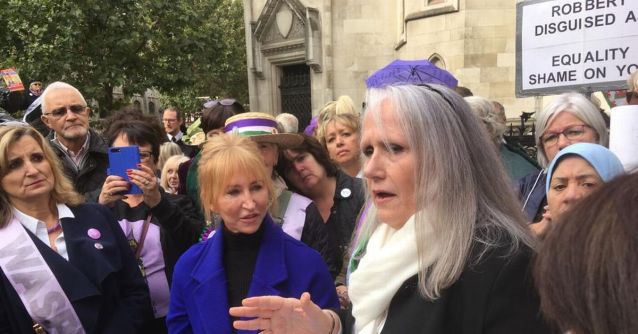
BackTo60 women outside the Royal Courts of Justice in 2019
It’s official. The Department for Work and Pensions has finally admitted after more than 25 years that they never thought of doing any impact studies on the effect of their decisions to raise the pension age from 60 to 66 for 3.8 million women.
A Freedom of Information request from a 1950s born woman seeking details of impact studies on the group of women most affected has forced the ministry to admit that there are none.
The letter says: “The Act does not oblige a public authority to create new information to answer questions; nor does it require a public authority to give advice, opinion or explanation, generate answers to questions, or create or obtain information it does not hold. “If you ask a question, rather than requesting recorded information, we will provide you with the recorded information that best answers the question. Once we have provided the recorded information, we have met our obligations under the Act; interpreting the information provided is up to you. “Your request makes statements and seeks to engage us in debate which you want us to respond to. This would need new information to be created.”
No information held
It goes on : “We do not hold any recorded information of an impact assessment of the effects on women of the State Pension Age that informed the rises of 1995. However, you may find the following explanation useful. We have provided this outside our obligations under the FOI Act”.
The Department has released the White Paper that preceded the 1995 Pension Act and the impact statement the coalition government produced before implementing the 2011 Act which speeded up the rise. And guess what the ministry are right there is nothing about the impact on women before the government legislated for the change.
There is one concession – the idea of extending the auto credit of national insurance contributions to women. Men over 60 had this concession since 1983. Women would have had it once they started to raise their pension age from 60 in 2010 but of course this was never implemented and men continued to have it until 2018 when the pension age was equalised. Instead there is much concern repeated in the 2011 impact study of the effects of the change on business and occupational pensions. The 2011 impact study is more comprehensive but also concentrates on the savings the government will make.
Sir James Eadie
So no wonder Sir James Eadie QC when acting for the DWP in last year’s Court of Appeal case brought by BackTo60 to seek restitution for the 3.8 million affected made it clear that pensions were not a social measure aimed to reduce poverty or inequality. The ministry never had the issue on their radar when they introduced the change in 1995. These women were not even thought important enough to require an study on how it would affect their lives.
Today is International Women’s Day and as my contribution I am focusing on Afghanistan as both the UK and the US cut their support to this country
I have recently come across a searing Congressional report from the United States Inspectorate on Afghanistan Reconstruction on the state of women’s and girl’s equality there.
Everybody knows the years of conflict which has cost British and American lives to rid the country of the Taliban regime and their horrendous treatment of women.
But this report shines a different light on the current plight of women just as the UK and the US are about to leave the country should a deal be possible between the war lords and the Taliban.
The United States has spent £564m in aid over nearly 20 years on women and girls
It reveals that during the never ending conflict from 2002 to 2020 the US has spent some £564.6 million on women and girls. On one level the achievement for women has been startling. From virtually no girls in schools under the Taliban there are now 3.5 million girls receiving an education. And a third of the country’s 210,000 teachers are now women but mainly in urban areas like Kabul.
There have been improvements in maternity care despite a horrendous death rate among pregnant women. Prenatal care coverage rose from 16 percent of pregnant women in 2002 to 61 percent in 2015. Postnatal care coverage increased from an average of 28 percent between 2005 and 2010 to 40 percent in 2015. And the number of trained midwives rose from a pathetic 467 in 2002 to roughly 4,000 in 2018.
There is, like many other areas, a huge disparity between urban and rural areas. Some 16 per cent of women died in childbirth in Kabul rising to an alarming 65 per cent in one rural province in 2002. This has improved with various estimates from the UK, Irish and World Health Organisation by between 19 per cent and 50 per cent, because reliable statistics are difficult to verify.
What has not improved particularly in rural areas is the attitude towards women. The US government also tried to encourage women to join the army and the police – this was the least effective of their programmes. “Targets have been highly unrealistic and unachievable. Although there has been a modest increase in the number of women police officers, women in all parts of the security forces face threats to their personal safety and pervasive harassment and discrimination,” says the report.
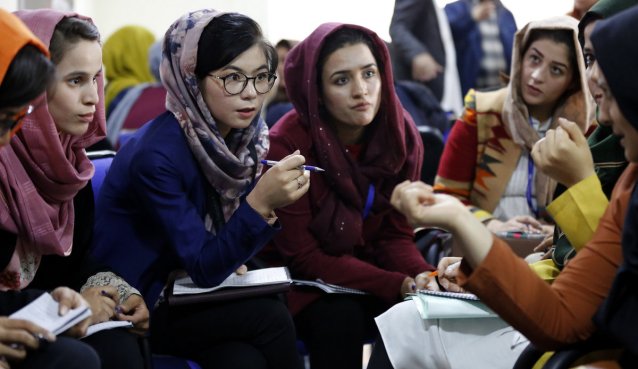
KABUL, 22 October 2019 – UNAMA Central Region Office in Kabul organized Global Open Day event, to facilitate discussion on women, peace, and security. The event was attended by 36 participants representatives from women rights activists, Government actors, schools’ teachers, local shuras, and university students. UNAMA CRO head of office In her opening remarks emphasized the importance of the Global Open Day as a forum to review the implementation of the UN Security Council Resolution 1325 on Women, Peace, and Security. UNAMA Photo / Fardin Waezi.
The US aid has had more effect in getting women involved in politics and the community. The report says: “Afghan women have assumed leadership roles at the national, provincial, district, and community levels. At the same time, they face threefold threats: continued or intensified violence, the risk of Afghan peace negotiations leading to erosions of women’s rights, and a dire economic and humanitarian situation exacerbated by the COVID-19 pandemic.”
Covid 19 has caused big problems in Afghanistan. The report says: “The lack of testing capability means that up to 90 percent of collected samples are untested, and therefore go unreported. Of the limited number of tests conducted, Afghanistan’s positivity rate—the percentage of tests that reveal COVID-19 infection—was nearly 43 percent as of July 2020, one of the highest in the world.”
The World Bank is alarmed that widespread poverty will become worse as the Afghan economy is hit by the pandemic cd see those living in poverty rise to 72 per cent of the population. Cultural problems make treatment for women worse. “Due to deeply entrenched sociocultural norms, many Afghans are reluctant to allow their mothers, wives, daughters, or sisters to visit a doctor directly, or at all, if that doctor is a male.”
The future is not rosy in other areas for women. The report found “Some of the gains made for girls in access to education may not be sustainable, since a large portion of the education sector in Afghanistan is dependent on international donor funding for maintaining and expanding those gains.”
No level playing field for men and women in meetings
And it is not a level playing field in political meetings. One woman told the report “When we have meetings and both men and women raise their hands and show their cards, the respect that is given to men is not given to women. The time which is given to men is not given to women. When a woman speaks, she is not allowed to speak more than three minutes, but a man is allowed to speak more than 15 minutes.”
Women are still scared in many parts of the country to go out alone as they can face harassment and violence from men. SIGAR interviewed 65 people from all Afghanistan’s 14 provinces and both men and women said it was society’s constraints that held women back.
The time which is given to men is not given to women. When a woman speaks, she is not allowed to speak more than three minutes, but a man is allowed to speak more than 15 minutes.”
Afghan woman
Many interviewees—male and female—said that social and cultural norms are one of the biggest barriers to Afghan women’s advancement, particularly in rural areas. “Men in our community think the role of women is to sit at home and cook. If their mothers tell them to behave well with their wives, so they do, and if their mothers order them to beat their wives and misbehave, so they also do,” said a woman from Nangarhar Province.
President Biden will decide soon whether to completely pull out of Afghanistan which was the policy of the Trump administration. The UK, according to a leaked report to Open Democracy will cut aid sharply to Afghanistan shortly. Once again it will be women who will lose out and many of their fragile gains could once again be lost. As the report said if the Taliban and other war lords regain full control “the effort to promote women’s rights may be hampered by a growing narrative in Afghanistan that the country can either have women’s rights at the cost of peace, or peace at the cost of women’s rights.”
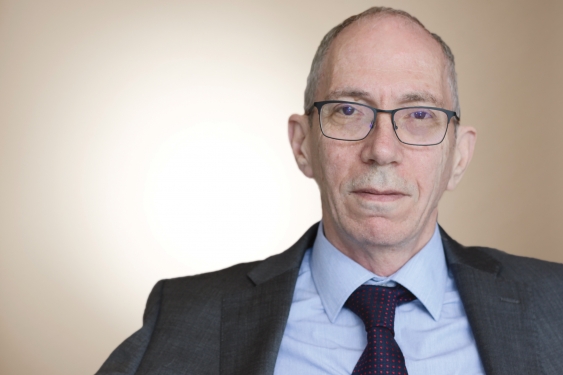
Rob Behrens: The Parliamentary and Health Service Ombudsman Pic Credit: Ombudsman’s Office
If you have a complaint about a government department or the National Health Service your last port of call is Rob Behrens, the Parliamentary and Health Service Ombudsman. He is the current post holder of an institution set up 54 years ago by the second reforming Labour government led by Harold Wilson.
A report by MPs today is both critical of the performance of the Ombudsman – particularly over transparency – and of the government for not even considering new legislation to give the Ombudsman fresh powers and bring its work into the 21st century.
The minister blocking any change is Michael Gove, the Cabinet Office minister. He has ruled out any new law that could streamline the operation by combining its work with the local government and social care ombudsmen; give it powers to initiate investigations and strengthen its work dealing with complaints.
Michael Gove: Blocker in chief in making sure the Ombudsman can’t do his job properly Pic credit: BBC
No doubt as one of the country’s leading power couples – Michael Gove and Sarah Vine – are able to use their influence through the current ” chumocracy” to deal with any complaints they might have without having to resort to anybody like the Parliamentary Ombudsman But for ordinary people it is quite different
As the Chair of the Public Administration, and Constitutional Affairs Committee, Tory MP William Wragg MP said:
“The Committee appreciates the pressing priorities facing the Government, including, of course, the current pandemic. But reform of the legislation governing the PHSO is worthy of parliamentary time. The PHSO represents the final stage in a complaints process that can be traumatic for complainants and may include serious matters such as the death of a loved one. It is essential that people have faith in a transparent, effective organisation. The current out-dated legislation undermines this crucial ambition”.
No action yet on long standing 50s women complaint
This leaves questions about how good Rob Behrens is in doing his job given the current restraints. He is currently looking at whether women born in the 1950s are entitled to any compensation for maladministration for failing to notify them of the raising of the pension age. And he is taking his time about it – despite MPs encouraging and recommending WASPI supporters to follow this route. Indeed the report includes a complaint from Frances Martin:
Her submission said:( I have left the capital letters) “There Is Still No Definitive Time Line For Finalisation, Nor, Importantly Has There Been Any Attempts To Provide An Impact Assessment, Notwithstanding, All Of The Above I Am Without Any State Aid Benefits Since Nov 2015, Am Redundant In A Jobs Blackspot And Have Been Excluded From Financial Assistance Through Rishi Sunak’s Furlough Scheme. As A Woman Of Over 60 Am At Greater Risk With Regard To The Covid Outbreak. None Of These Facts Seem To Have Been Considered By An Organisation Which Purports To Be Fair/Impartial Etc And Certainly Is Not Best Practice In Any Organisation That I Have Worked In Both In The Uk And Overseas.”
Both the MPs and the general public have raised a number of shortcomings. For a start he muddies the waters on the cases he takes up. The MPs report he conflates cases that “are not ready to be taken forward” and “should not be taken forward” so we don’t know what he is doing. He doesn’t report on the number of partial decisions.
He was accused of misleading Parliament by not proactively reporting that you can’t directly compare the figures for the number of cases referred to him over the last two years – because a new digital case system has made it impossible.
Since this blog was published there has been a sharp exchange of views between the Ombudsman and the chair of the committee over whether Rob Behrens misled Parliament by not proactively reporting the number of cases referred to him accurately. Mr Behrens accused the committee of being ” factually inaccurate” in suggesting this. William Wragg, the chairman, stood his ground and said MPs felt there were discrepancies in his evidence and it was important the Ombudsman updated information to MPs in a timely manner. He said that did not mean he was misleading Parliament.Letter exchanges arehereandhere.
He comes out well in treating people with dignity and respect and listening to their claims. But comes out badly for the time he takes to come to a decision and explaining it to the complainant.
More seriously he doesn’t seem to check back with the complainant that he has got all the information or give them a progress report.
” systemic disability discrimination in the Ombudsman’s office”
The report also contains some very critical comments from the public about the Ombudsman’s handling of some cases. MPs don’t investigate them but attach them to the report.
In one just known as A7 on the death of a disabled child in NHS care the person wrote: “In my and the experience of other parents of disabled children, rather than impartially investigating concerns concerning disabled children, with parity of esteem, investigations seem to be focused on justifying the actions of health professionals, however, unreasonable that behaviour is.”
The person added: “This seems to be a manifestation of the systemic disability discrimination found in poor parts of the NHS spreading to the PHSO office.”
Another from Dr Minh Alexander and Ms Clare Sardari on “a mishandled referral to the Care Quality Commission under Regulation 5 Fit and Proper Person, about an NHS trust director who had been found guilty of proven whistleblower reprisal and breach of the NHS managers code of conduct (an under-declared family interest), who was subsequently convicted of fraud and also criticised for her attempts to resist the proceeds of crime process.”
Ombudsman can’t “deliver accountability and good governance”
They conclude: “There was a lack of rigour by the PHSO in pursuing compliance with its recommendations for corrective action by the CQC, notwithstanding its lack of enforcement powers. It seemed to us that a procedural box had been ticked and thereafter, the PHSO was not interested in enough in ensuring that there was learning or genuine remedy of injustice.”
“We do not consider that the PHSO model is robust enough to deliver accountability and good governance in public life, because of insufficient powers and the lack of a duty on the PHSO to enforce improvements and corrections. It does not seem good value for money (budget 2019-20: £25.942 million) and we ask parliament to consider an alternative model of conflict resolution.”
I could go on with other examples. Suffice to say both Mr Michael Gove and Mr Rob Behrens seem to have a lot of explaining to do. Mr Gove for not bothering to do a thing about updating and strengthening the Ombudsman’s role and Mr Behrens for not being up front with complainants on how he is conducting his investigations.
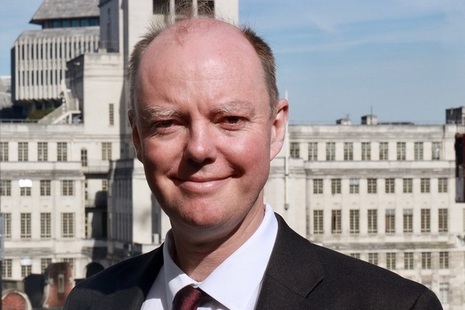
Professor Chris Whitty, chief medical officer, gave evidence on the damning statistics effecting the healthy living prospects for the elderly Pic credit: gov.uk
Today the House of Lords published an extremely worrying report into the prospect for millions of elderly people being able to enjoy a healthy old age.
I had not realised that Theresa May’s government had committed in 2017 to the Ageing Society Grand Challenge – a promise by 2035 that everybody in the country should be able to enjoy an extra five years good health in retirement. I have a feeling like the notice of the first raising of the pension age it has had little publicity.
Readers of my blog who have followed the BackTo60 campaign to get 3.8 million women born in the 1950s full restitution for their lost pensions will greet this aim with a hollow laugh – given there is growing anecdotal evidence that many women in their early 60s are already falling ill while working before they can even claim their pension. I wrote a blog about the figures in 2018 – see here.
But what this report confirms is not only that life expectancy has flatlined since 2011 but prospects for a healthy retirement has got worse particularly for the poor. The report reveals that the chances for a man to get an extra five years healthy retirement will take not 14 years as promised by the challenge but an incredible 75 years. They will be long dead by 2096.
For a woman it is actually worse – chances of having an extra five years healthy retirement is receding and getting worse by the day.
Figures in the report confirm what the Office for National Statistics has disclosed that Britain is slipping down the league table of advanced countries for those living longer – with men, who on average die earlier than women, have a higher increase in longevity than women. See my blog on this here.
Growing equality gap between rich and poor areas
But what is deeply disturbing is the huge gap between those in wealthy and deprived areas.
The report says: “In England in the period 2016–18, the difference in life expectancy between the most and least deprived areas was 9.5 years for males and 7.5 years for females. The differences in healthy life expectancy are 18.9 years for males and 19.4 years for females.”
The report notes: “the health situation is somewhat similar to other countries that have experienced political, social and economic disruption and widening social and economic inequalities.” The report also noted that “in some of the key social determinants, inequalities are widening in England”.
The largest killer of men is heart disease and for women it is Alzheimer’s Disease and dementia. Heart disease deaths are falling while dementia is on the rise which explains the changes in longevity.
In a 2016 analysis of 20 countries, females in the UK had the lowest rate of improvement in life expectancy, followed by those in the USA. For males, the UK had the second-lowest rate of improvement, after the USA.
The report concludes:” Inequalities in healthy life expectancy are stark, with people in the least deprived groups living more than 18 years longer in good health than those in the most deprived groups.”
This also hit ethnic minorities very badly as evidence given by Professor Chris Whitty , the chief medical officer to peers. He told them: “People from ethnic minorities are more likely to live in poverty in older age; 29% of Asian or Asian British people and 33% of Black or Black British people over the age of 65 live in poverty, compared with 14% of White people.”
Will it get better or worse?
So what is to be done and will it get worse ? For a start it will get worse because of Covid19 as the report was mainly written before the pandemic took hold and it is known that Covid killed disproportionately larger numbers of the elderly saving the DWP over £600m a year in pension payouts. In a postscript to the report the peers from science and technology committee say both short term and long term effects are an unknown.
On the positive side new technologies and robotics and new drug trials to treat diseases promise to make life better for the elderly provided they can access them.
Peers warn that unless growing inequality is tackled by the government – these benefits could widen the gap between rich and poor as wealthier pensioners would be able to benefit while the poor would be left behind.
The report also exposes the lack of a government strategy at the top to tackle this.
Peers say: “The Government is not on track to achieve the Ageing Society Grand Challenge mission to ensure five years of extra healthy life by 2035 while reducing inequalities, and does not appear to be monitoring progress towards the mission. It is hard to see how the target could be met without significant changes to the way it is managed.”
For those who criticise the House of Lords as an irrelevant institution – this report shows the House working at its best – it is a very thorough, well researched report – drawing attention to an overlooked issue and warning the government that it needs urgently to act to take this seriously. Whether it will, given the complacency of some ministers, is another matter.
Just before Christmas I carried a blog on a tribunal held in Croydon looking into allegations of sexism and racism brought by Usha Prasad, the sole woman cardiologist employed by the Epsom and St Helier University Health Trust. The case centred round an anonymous letter by a junior doctor who believed she put patient safety at risk and sent it to the chief executive, the Care Quality Commission, the General Medical Council; Jeremy Hunt, then secretary of state, and one of her patients.
She lost the case at a bizarre hearing presided over by employment judge Katherine Andrews which would only discuss whether the letter was racist or sexist.
But now two very eminent cardiologists Professor Jane Somerville and Dr David E Ward, have come forward to speak out in her defence – and raise much wider issues about how our National Health Service is being run and how trusts are using taxpayers’ money to pay large sums to lawyers to silence people who raise uncomfortable issues they would rather brush under the carpet.
Professor Jane Somerville, now 87, is one of the country’s leading cardiologists. She recently was awarded the World Heart Federation Award for Outstanding Contribution to Cardiovascular Health for defining the concept and subspecialty of grown-ups with congenital heart disease (GUCH) and being chosen as the physician involved with Britain’s first heart transplantation in 1968.
David E Ward has recently retired as a cardiologist at St George’s Hospital, in South London.
Jane Somerville: Pic Credit: World Heart Foundation
This is Jane Somerville’s detailed comment:
“There are many serious problems that are illustrated from this sad report of the ruining of a young doctor’s career as a cardiologist. She was an obvious target for bullying, harassment, and victimization by management at all levels. Why? Because she was Asian (foreign), small and female. This is such easy picking for those in charge to establish a continuous stream of it as indeed is shown over years.
“What is of more concern is the failure of the regulatory bodies and support services on which we have been brought up in medicine to believe they will be there for us to help give advice and support when in need. Just to name a few involved in this case: BMA, legal representation, GMC, MPA or MDU and indeed, the civil law itself. This is particularly important as the offending trust can afford on taxpayers money to engage the best advisors and the young doctor cannot afford to enlist such help.
questioning integrity and fairness of the judiciary
“Now from this case, one is forced to question the integrity and fairness of the actual judiciary. This is something one hopes in a civilised country one would never need to do. However in this case it is clear to assume that what has been reported is true, that the judge was biased against Dr Prasad with more than one example and did not allow relevant evidence (letters) to be shown.
“It is clear from the beginning of this case which started with simple complaints related to poor bureaucratic and system management which was influencing safety and comfort of patient management and continuing a few months later with acceptance from the trust with anonymous letters from her junior colleague and unacceptable behaviour in contacting one of her patients, that the trust was not interested in being even handed to her and worse, wanted to get rid of her.
bullying trusts
” In these current times of enormous difficulty and pressure in the NHS where it is clear that junior staff and nurses are needed and should be valued and cared for, that one must wonder why anyone would want to work in this trust or other trusts who have shown similar behaviour, victimising a young useful doctor. Despite what claimed, doctors who draw attention to something wrong for patients or staff safety (whistleblowing), have little or no protection in the bullying Trust.
The Department for Health with all its talk needs to address this matter urgently and stop just giving lip service to the excellent recommendations (Sir Robert Francis QC) that have been made to them. They must be made responsible for this bad behaviour by trust managers which alas is not unique to Dr Usha Prasad.
Dr David E Ward
Dr David E Ward commented earlier on my blog as aceofhearts44. He is now happy to repeat his view in his own name.
“I know Dr Prasad as friend and colleague. I and a senior eminent British cardiologist have been supporting her cause for sometime. It is astonishing that what was initially an anonymous complaint has led to a chain of events culminating in the dismissal of a small, female doctor of Asian descent. It smacks of bullying, victimisation and other behaviours doesn’t it? Something is seriously amiss in this story. It needs to be exposed. It’s heartening that a respectable journalist has taken an interest (we tried unsuccessfully to get others involved). Let’s hope justice is done. Sadly I’m not optimistic. We will continue to support Dr Prasad in any way possible.”
Something seriously wrong in the NHS
These are not the only people who are concerned. I have had a number of people contact me – some in confidence – who are raising similar behaviour elsewhere – and want me to look into other cases. Since this is not a mass circulation blog – with the exception of the campaign I have backed for justice for the 1950s born women who are having to wait another six years for their pensions – it suggests to me that there something seriously wrong in the NHS and needs a thorough investigation. Otherwise I would not have such a strong response.
MPs condemn multiple failures on planned broadband provision
John Howkins is well known in the creative industry as an innovator, author and an international speaker. His books – particularly relevant in the present pandemic – highlight a new way to look at work based at home. His latest book ” Invisible Work” concentrates on how people in work can adapt to the new age of artificial intelligence rather than be made redundant by it.
His world centres on publishing, TV, film, digital media and streaming – all the new technologies brought to us by the huge growth of the new digital age.
Supreme Irony
It is therefore a supreme irony that his opportunity to engage in this age of isolation has been wrecked by a Conservative government breaking its manifesto promise to bring broadband to everyone. The failed manifesto pledge – only a year after it was made – is highlighted today in a new report from the all party House of Commons Public Accounts Committee.
For Mr Howkins’ problem is that he lives in rural Norfolk near Attleborough in the Parliamentary constituency of Mid Norfolk represented by Tory MP George Freeman – a tech enthusiast who has written pamphlets on how technology can save the NHS. But as yet has done nothing to help his constituents get the broadband they need.
Mr Howkins like millions of others living rural Britain has no proper broadband that can download videos in seconds or easily stream Netflix or the BBC I Player. And today MPs on the Commons Public Accounts Committee tell you why.
On November 20 last year Rishi Sunak, the Chancellor, unceremoniously dumped the promise to all voters to get fast broadband by 2025 – and substituted a promise for 85 per cent coverage – dumping most rural parts of the UK ( and many Tory voters) in the process. Cynics might suggest the Tories only made this pledge because Jeremy Corbyn, for Labour, had promised a universal free broadband service – saying it should be a basic utility in the 21st century like water or electricity.
Ministry admits target unachievable
The MPs report concludes that not only in ministers’ words ““clear that Government’s 2019 election pledge to deliver nationwide gigabit broadband connectivity by 2025 was unachievable” but that even this lower target will be missed.
There is supposed to be £5 billion of our money put aside to bring this about but the report reveals that the Department for Culture ,Media and Sport, has yet to allocate 75 percent of this money one year into government for the contracts to do this.
It also warns : PAC is “increasingly concerned that those in rural areas may have to pay more, and may reach gigabit broadband speeds late” and is not convinced that “if and when rural users finally do get gigabit broadband, they will enjoy the same choice of service provider and the same protections as their urban counterparts”.
The scoreboard of failures by the ministry is appalling Mps found:
failure to make meaningful progress to tackle the barriers faced by operators in maximising gigabit connectivity by 2025,
failure to demonstrate it has learnt lessons from the superfast programme for the detailed design of the gigabit programme,
failure to demonstrate how its centralised procurement model will retain the people, skills and knowledge in local authorities that were critical to success in the superfast programme,
failure to give any reassurance that local authorities will get additional funding to retain their expert resources at a time when local government finances are under severe pressure from the pandemic,
failure to make any meaningful progress in delivering the policy and legislative changes deemed essential by industry to achieve rapid roll-out,
failure “yet again” to prioritise consumers in rural areas
Well done culture secretary Oliver Dowden ( NOT )!
Meg Hillier: chair of the Public Accounts Committee
Meg Hillier MP, Labour Chair of the Public Accounts Committee, said: “With the grim announcement that the country and economy will be locked down for months, the Government’s promises on digital connectivity are more important than ever. But due to a litany of planning and implementation failures at DCMS, those promises are slipping farther and farther out of reach – even worse news for the “rural excluded” who face years trying to recover with substandard internet connectivity.
“For the foreseeable future, ever more of our lives is moving online, whether we like it or not. Government cannot allow digital inequality to continue to compound and exacerbate the economic inequality that has been so harshly exposed in the Covid19 pandemic. It needs to be clear about timelines in each area so that businesses and individuals can plan for their digital future.”
As for Mr Howkins, his submission to MPs said: ” My current supplier is BT. I have an upload speed of a maximum of 0.3MB and a download speed of 3.0 MB. BT engineers have visited three times in the past few months and have been unable to improve on these speeds. Several neighbours are in the same position.
“It is therefore difficult to carry on business at present. Our ability to receive even a moderately sized data file is limited. It is impossible to upload a video file of any significant size. Interactive usage (banking) often fails. This week, I led presentations in China and Chile. My own internet link was worse than anyone else’s”
… “The suppliers celebrate their gigabit services but do nothing for those, like me, who would be delighted to have a much lower rate, say 10MB down and 2-3 up.
Regulatory failure
” It is a regulatory failure in the UK that broadband providers are evaluated according to national averages rather than the meeting of local need. So they benefit much more by providing 1GB to a one location, even if it is seldom used, than by providing an increase of 10MB to 10 locations. And providing 1GB to one location is treated as the equivalent to providing 10MB to 100 locations.”
” The pandemic has shown up the extent of the government’s failure. Although offices will re-open to some extent, the numbers working from home will increase.
I find it extraordinary in 2020 that the UK does not have universal service for broadband as it has for other utilities. Yes, broadband is a utility. “
He told me that he had been reduced to finding a friend who had better connections to do a lot of his work. His only alternative would be to use a local library which had restricted opening times.
He must be one among millions who have this problem and the UK is far behind other European countries.
” I’d be happy if we could reach the standards available in Romania”, he said.
Happy New Year. Since this blog was launched at the very end of 2009 it has had over 2.8 million hits and over 2 million visitors – a remarkable achievement – even if I say it myself – for a single handed effort.
The number of blogs on my site also topped over 1000 – 1072 – to be exact. Last year my blog got 511,721 hits – that is fewer than the 1,041,000 the previous year – but still the second highest figure since it started.
BackTo60 campaign
I am extremely grateful that so many people are interested enough to read my news and views on current issues and also to the women following the BackTo60 campaign who have had a dispiriting year after losing their Court of Appeal case for compensation for raising their state pension age from 60 to 66. They are also having to wait for a very long time to find out whether the Supreme Court will hear their cases – far too long in my opinion. If it goes to the Supreme Court I shall be reporting it.
Like last year the majority of most read stories were about that campaign. The most read story of all last year was the revelation – from a reader using a Freedom of Information request – that 4.6 million men over 60 had their national insurance contributions paid by the state if they did not register for the dole to keep the unemployment figures down. This had over 64,000 hits and when the Department for Work and Pensions revised this figure to a staggering 9.8 million that had another 34,600 hits – bringing interest in both stories to nearly 100,000.
Coverage of BackTo60’s Court of Appeal hearing was the second highest at 58,860 – which is a pretty high figure for a court case.
Also an old story on how the government has saved paying out £271 billion to the National Insurance Fund which could have paid for higher pensions and also stopped the need to raise the pension age for women had another 22,000 hits. Originally written in the summer of 2018 this enduring blog has now had 311,000 hits altogether.
Boris Johnson announcing the Brexit deal in Parliament. Pic credit: @UK Parliament_Jessica Taylor
Outside other highly read blogs on the pensions campaign the most read blog was one on how Boris Johnson and other Cabinet Ministers were moving towards an elective dictatorship by devolving power to themselves rather than Parliament under new Brexit laws. That had 35,554 hits.
Byline Times
This year there has been a subtle change in coverage on my blog of stories I write for Byline Times. Last year I tended to provide a short summary of the story on my blog. This year most of my Byline Times stories appear by themselves and are not automatically repeated on my blog. They get even wider coverage on Byline Times so those who want to see them and follow me on Twitter do get tweets telling them about the story. Or you could take out a subscription to Byline Times and get a monthly print newspaper.
Ending discrimination against women
There will be new developments next year. I will be blogging about the People’s Tribunal run by John Cooper, QC, the human rights lawyer, to end all forms of discrimination against women. This is a movement which wants to get the UK Parliament to put into domestic law the UN Convention on the Elimination of All forms of Discrimination Against Women. The UK ratified it under Margaret Thatcher but nothing has been done since.
It comes as Elizabeth Truss, the equalities minister, appears to want to reverse progress what she calls “identity politics” so I foresee fresh battles over this issue. And I am curious to see how the Equality and Human Rights Commission is going to handle this.
Dr Usha Prasad
I shall also be taking up some individual cases of injustice. The recent blog on the plight of Epsom and St Helier University Health Trust’s only woman cardiologist just one example – where a health trust is pursuing an individual and where they are whistleblowing issues.
I shall continue to keep an eye on political issues -particularly as incompetence, the chumocracy and corruption are on the rise in the UK and plan to write about it on Byline Times and this blog.
I have started again reporting on child sexual abuse again and plan more articles.
2021 promises to be a challenging year – the first post Brexit year- and I feel more than ready to meet it.
New Year fireworks in Dubai where my daughter and grandchildren are living. She is a science teacher there.
Last week by Zoom I attended a tribunal hearing – just one in a long running saga between the Epsom and St Helier University Trust and their former consultant, Dr Usha Prasad.
This dispute which is by no means over – she has already had one employment tribunal, one employment appeal tribunal, a reference back to the original employment tribunal – and has still to go to a General Medical Council hearing and an another tribunal over her unfair dismissal claim.
The hearing took I attended just one day but it felt to me that I had just stepped into an unreal world of interminable hospital politics. The issue goes back to 2012 and won’t be settled until 2022. And all this, by the way, is being funded by the taxpayer using NHS funds.
Dr Usha Prasad is a well qualified cardiologist who has been popular with patients but ran into difficulties with staff at the trust and complained she was subject to gender and racial discrimination, bullying and harassment. There are also whistleblower issues which are yet to come out at another hearing.
Three years ago she featured in the current trust’s chief executive’s report for receiving a Patient First Gold Badge award for giving ” a wonderful extra five years of life” to an 81 year old patient suffering heart disease. She is pictured here with chief executive Daniel Elkeles.
Dr Usha Prasad with the trust’s chief executive Daniel Elkeles at the award ceremony Pic credit: Epsom and St Helier University Trust
Behind these happy scenes however all was not well. Usha felt she was not being treated well by some of her fellow male colleagues and relations between her and her junior doctor Dr Aran Kumar Perikala were strained.
Anonymous letter sent to Jeremy Hunt
The centre of her complaint surrounded an anonymous letter which turned out to have been sent by him in 2015 to Daniel Elkeles, the chief executive, the Care Quality Commission, the General Medical Council, and to Jeremy Hunt, then health secretary and to one of her patients. It was signed as representing the entire cardiology team at St Helier Hospital and made very serious allegations that Dr Prasad was putting patient safely at risk.
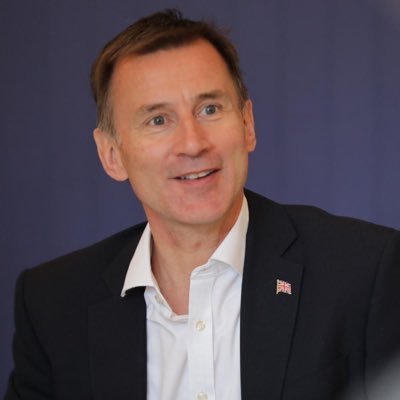
Jeremy Hunt.
She saw this attack by a fellow Indian doctor as sex discrimination and also as racist. It went to an employment tribunal headed by employment judge Katherine Andrews (more about her later) and her complaint was rejected. She appealed to an Employment Appeal Tribunal who upheld three of the letters but said that sending an anonymous letter to a patient and to Jeremy Hunt was going too far. The EAT ordered it to be referred back to the employment tribunal which held a hearing last week.
The hearing was unbalanced from the start. The trust was represented both by a barrister and a solicitor at enormous public expense. She appeared as a litigant in person ( funding herself) but was helped by Philip Howard ,a part time consultant at St Helier, who acted as Mackenzie friend, a pro bono role.
The part time judge, Katherine Andrews -a solicitor – was appointed as an employment judge by Chris Grayling when he was Lord Chancellor in 2013. Coincidently Grayling is also the Tory MP for Epsom and Ewell and is familiar with the workings of his local health trust.
Judge rules clinical judgement is irrelevant
From the start the judge brusquely limited the hearing to the contents of the letter and nothing else. Two other consultants at St Helier, Dr Sola Odemuyiwa, and Dr Ranjit Shail, a consultant physician, who wished to testify about Dr Prasad’s abilities were ruled as ” irrelevant” by the judge as they had no detailed knowledge of the letter. She ruled as ” irrelevant” any discussion about the clinical judgement of Dr Prasad. An issue that her brother in law, Dr Anand Kamath, working as a NHS dentist had committed suicide after being bullied by a primary healthcare trust over a complaint about his record keeping ,when this started, was also deemed to be ” irrelevant ” by the judge.
This left Philip Howard a very limited role to help defend her. His description of the circumstances of Dr Perikala writing the letter were illuminating. He told the hearing that he wrote the letter while all the other consultants were on holiday, did not consult them about it and paid a ” rare” home visit to one of her patients without her knowledge. He was only unmasked when the chief executive thought the entire cardiology department were of that view and other consultants objected. He told the tribunal that the patient had received excellent treatment and had no objections.
You would have thought that he would be the key witness that should be cross examined about why he acted alone and what his motive was. But the hospital trust’s lawyers did not call him and the judge ruled that as it was his belief it didn’t matter whether he was right or wrong. In other words the man can say anything he liked to a lot of important people and as long as he believed it, it didn’t matter a jot.
Not a level playing field
The trust has taken the matter to the General Medical Council where his behaviour could be questioned and certainly the issue of clinical judgement will not be brushed aside there.
The judge ruled against her but she has asked for the whole matter to reconsidered because she has received new information. Some of the time was spent arguing that she had missed legal deadlines to present new information. Given one side is using full time professional lawyers – and she is having to bring a case while still working elsewhere for Mid Yorks Health Trust – on loan from Epsom and St Helier University Trust. – it is hardly a level legal playing field.
Since the first tribunal hearing in 2017 she has effectively been suspended by the trust on full pay and faced losing her job. There are still two hearings to go.
One has to ask why the Epsom and St Helier University Health Trust is spending so much time and taxpayers money on this protracted dispute rather than using the cash to treat patients. When I earlier raised this with the trust they said they didn’t discuss issues about individuals working for them. They have also refused to give me details of how much taxpayer’s money they are spending on disputes.
This story is not over and I shall return to it when there are more developments.
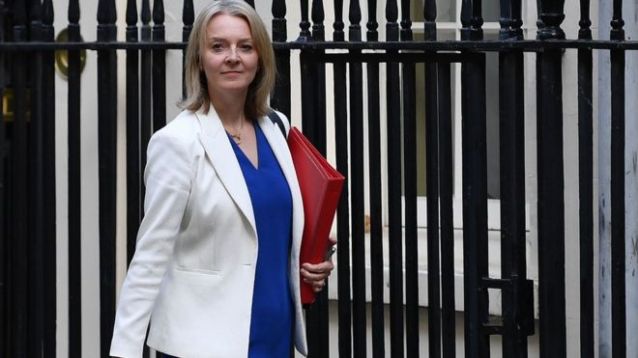
We are now getting used to Boris Johnson’s blustering empty slogans on current problems – whether it’s Covid 19 or Brexit. What I hadn’t realised until today it is obviously standard Cabinet speak for this government – as Liz Truss, the international trade secretary and women and equalities minister, has just done the same.
Her much trailed speech at the Centre for Policy Studies was full of crowd pleasing right wing jibes bashing the Left and talking of so called unrepresentative groups campaigning for black and ethnic minorities, gays and women but getting nowhere.
But when it came to what she wanted to offer it was pretty thin gruel. She is moving the Equalities Hub from London to the North and asking the Social Mobility Commission to research the geographical disparities across the country. Wow!
motherhood and apple pie
And some of the speech read – forgive me for being sexist – like ” motherhood and apple pie”.
“Now is the time to root the equality debate in the real concerns people face, delivering quality housing, cutting commute times, improving public transport, ending discrimination in our offices, factories and shop floors, and improving our schools so every child has the same chances in life,” she opined.
Politicians have been spouting these platitudes for decades. No one is going to stand on a platform of let’s build a new generation of slums, slash public transport and cut school budgets – even if the result of some policies -under Tory governments- has been to do this.
The truth is we already know what has happened to the North and the South West without any more research. I know having looked at life expectancy figures that people in posh Kensington live much longer than those in Blackpool. I have been to Sunderland and Skelmersdale and seen the narrow life chances of people who live there. And by the way if the Tories are so worried about the North- why did both places miss out on Robert Jenrick’s largesse in his town fund scheme- in favour of Cheadle and Southport ( both Tory marginal seats unlike the former two).
Rugged individualism
It is what she going to do about this that matters. Her solution seems to be that rugged individualism will solve the lot and miraculously lift the masses out of years of deprivation. Yet to have a big impact it has to be a big partnership involving local councils, communities and diverse interest groups. She seems to suggest that one compartmentalises equality -looking at social and economic class – and ignoring whether they are black, gay, women or white working class males. In a bizarre sort of way her analysis is almost Marxist – though she would be a million miles away from his solution.
She also doesn’t seem to know that she already possesses the power to do this under the Equality Act.
One reaction from Nell Andrew, GMB National Equality and Inclusion Officer ( no doubt one of those Lefties she doesn’t like) was:
“If Liz Truss is serious in her ‘new fight for fairness’, she could start by enacting Section 1 of the Equality Act that was passed in Parliament 10 years ago and which successive Tory administrations have refused to act on. This would force public institutions to adopt effective polices to reduce the inequalities that result from class or socio-economic barriers.
“A drastic move away from recognising peoples lived experience, ignoring qualitive evidence, is a dangerous use of smoke and mirrors to attack equality and human rights legislation.
“All major equality and employment laws came about because of workers and communities organising around issues like racism, sexism and homophobia; fighting for more equal rights for everyone. “
Dr Meghan Campbell from the Oxford Human Rights Hub
fracturing equality
Dr Meghan Campbell, Deputy-Director of the Oxford Human Rights Hub, and an expert on the UN Convention on the Elimination of All Forms of Discrimination Against Women,(CEDAW) put it this way:
“Today’s statement appears to fracture equality between identity characteristics (race, gender etc) and socio-economic equality. The water-tight division between different types of equality is both misleading and highly strained. There are complex interactions between race, gender, disability, migration status, geography, religion, sexual orientation, gender identity and poverty. Historically marginalised groups have higher rates of poverty and political and social exclusion. “
“While there are some encouraging aspects focusing in on geographic equality and poverty, but these should not be pitted against race or gender equality as equality is not a zero-sum game.
” Poverty cannot be fully addressed without transforming the institutions and norms that perpetuate poverty against women and people of colour. The statement seems to be moving back to a very individualised vision of equality that ignores how larger structures, norms and institutions can trap people into disadvantage. “
So I am not impressed. If I am very cynical just a week ago she as equalities minister got advance warning that the UN CEDAW committee in Geneva has decided to seek the UK’s response on discrimination in relation to women as the Supreme Court decides whether to hear the Back To 60 pension discrimination case. I wonder if this among other matters prompted her rushed public response.
Peers accepted last week a highly critical report from the House of Lords Conduct Committee, chaired by Lord Mance, a former Supreme Court judge, that the peer was guilty of ” bullying” and” harassment” of a security guard and of ” homophobic ” attacks on two gay MPs.
The peer believes he is the subject of persecution by Stonewall because he opposes same sex marriage and even accused Lucy Scott-Moncrieff, the Lords Commissioner for Standards, as biased against him because she supported Out4Marriage a charity that supports gay marriage. She has made it clear that this did not influence her judgement one jot.
Lord Maginnis of Drumglass , a former Ulster Unionist MP who sat as an Independent, had a row with a security guard, Christian Bombolo, when he forgot his security pass and demanded to be let into Parliament without one. The exchange became so toxic that an MP who witnessed the incident, Hannah Bardell, SNP MP for Livingston, intervened only to be attacked by the peer using homophobic language.
Like Pollard MP : Pic credit: Twitter
The second incident happened at a meeting of the Armed Forces All Party Parliamentary Group which was chaired by Luke Pollard, Labour MP for Plymouth, Sutton. The dinner meeting broke up before Lord Maginnis could ask his question and he blamed Luke Pollard for this.
The report says: “Later in the evening Lord Maginnis sent an email to James Gray MP (the Chair of the APPG), copied to a number of other parliamentarians and to my office, with the subject heading “Discrimination by Homos”.
“Mr Gray replied saying the Mr Gray replied describing Lord Maginnis’s conduct at the meeting and the content of his email as “completely and utterly unacceptable”.
He requested that Lord Maginnis withdraw his remarks and apologise, without which he would not be welcome at any future APPG events.
Lord Maginnis replied that Mr Pollard was “obviously part of the ongoing campaign against me because of MY views on the matter relating to the Cameron initiative [same-sex marriage]” and that he was “getting somewhat irked by being discriminated against so, as for any apology, forget it!”
But Lord Maginnis attended the next meeting which led to another complaint being lodged by Toby Perkins, Labour MP for Chesterfield, who was also a member of the group.
“Unapologetically homophobic and aggressive “
The report says: “Before the meeting began, he saw Lord Maginnis in conversation with James Gray MP. He later understood that Mr Gray had told Lord Maginnis he could not attend the event due to his previous conduct towards Luke Pollard. “According to Mr Perkins, Lord Maginnis “quickly responded aggressively refusing to leave and implying that the Chair would have to physically remove him”. He overheard Lord Maginnis saying “I am not going to be bullied by queers.” Mr Perkins said that Lord Maginnis’s “entire tone was unapologetically homophobic, aggressive and disrespectful”.
“It made me feel that it was not a safe environment for—I mean, particularly for people who were gay, but I think there is a sense to which we are all conditioned and harassed by the sense that we’re not all free to be at an event like that. So both the sort of the tone of the remarks and the content of them, I think, was upsetting.”
Maginnis refused to accept finding
Lord Maginnis refused to accept he had done anything wrong but said part of his behaviour was because he was a type 2 diabetic with arthritis and often in pain and had difficulty with his hearing.
This is yet another peer who seems to think that bullying and harassment and his case homophobic views are quite acceptable. While I am sure that most peers do know how to behave, it looks as though a small minority are still clinging on to outdated views and remarkably aggressive behaviour.
As Luke Pollard says in the report that he was “shocked and surprised that this type of behaviour would happen within Westminster”. “While he did not consider Lord Maginnis’s behaviour during the dinner to be acceptable, it was his remarks in the later email chain he had found most offensive. He said those emails made him feel like a “victim of abuse”.






 Westminster Confidential