The crisis at the heart of Britain’s Equality and Human Rights Commission

David Isaac Pinsent Masons

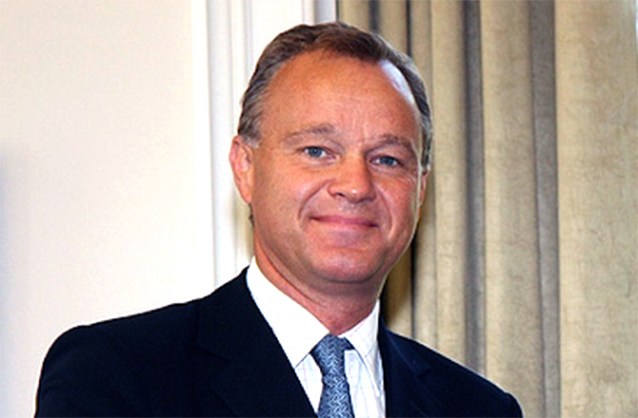
David Isaac: Chairing a fractured organisation with staff and management now at loggerheads.

rebeccahilsenrath

Rebeacca Hilsenrath: chief executive of the Equality and Human rights Commission Pic credit: Douglas-Scott co.uK

CROSS POSTED ON BYLINE.COM

Human rights – whether it is gay rights, racial discrimination, gender equality, equal pay or disability discrimination – is at the heart of many of the big issues facing modern Britain today.

It is therefore a tragedy that the organisation responsible for monitoring such issues is now a fractured body with management at loggerheads with staff and the main focus of a destructive policy of government cuts by people who appear to believe there is no such thing as society and these rights are not necessarily worth defending.

Today this body came within a hair’s breadth of facing strike action by a frustrated and alienated staff  and the action was only averted by talks at Acas. Contrary to the popular image civil servants do not take strike action lightly – it is only a measure of last resort. So when two unions, the Public and Commercial Services Union and Unite, decided to take such action, things have reached crisis point.

Its crisis is not surprising when a body like this has suffered cut after cut until it is a shadow of its former self and people – including the United Nations – are questioning whether it can have any meaningful role in defending people’s rights.

The  gaping divide can be seen between the  perceptions of management and staff over what is happening there at the moment – I did an article on the forthcoming strike for Tribune last Friday.(unfortunately not on line at the moment) and one on the great divide between management and worker’s salaries for Sunday Mirror earlier which is the subject of a dispute by the Commission ( also not on line at the moment).

The present cuts whereby nineteen of the first 26 posts due to be axed are held by staff in the three lowest paid grades, means the government body responsible for protecting vulnerable workers is itself disproportionately targeting older, ethnic minority and disabled staff. Another 50 are expected to follow.

The union and staff reaction to this is shown by a quote from Mark Serwotka, the genetal secretary of PCS, “The commission is spending hundreds of thousands of pounds on consultants while getting rid of low paid staff who provide daily support to victims of discrimination.

“It is sickening that as division and hate are being fostered in our communities in the wake of the Brexit vote, this Tory government is cutting the staff whose job it is to combat this.”

The management view is the opposite.

A Commission spokesperson said:“It is disappointing that the union have decided to take this action. We have made every effort to work constructively with them on our proposals as we implement our new way of working. We have listened to them throughout the process and acted on a number of their suggestions.

“Like every public sector organisation we have had cuts to our budget.  We need to make savings and we need to change how we work to deliver our strategic plan.  We are confident that any action will not affect the important work we do in protecting and improving people’s rights.”

“We have a very diverse workforce when compared to the wider public and private sectors.  The operating model was consulted on exhaustively with all staff, transparently and with a focus on the most effective structure for the Commission rather than the individuals in the posts affected. In addition to this, there will be a stronger focus on new training and mentoring schemes to support more minority ethnic and disabled staff into leadership positions.”

Given human rights is a central issue in Britain I have decided to forensically examine what is exactly going on at the EHRC. Can the top management justify its large salaries at the taxpayers’ expense? Is running the EHRC just a career option for an elite group of officials and a millionaire lawyer ?  What issues are the EHRC  really taking up and are they effective in doing so? Who are the people they want to sack from their organisation? Is the EHRC  really value for money?:Do they practice what they preach to private industry and the public services?

Fortunately  I have seen a large volume of material from a wide variety of sources – far too much to put in one blog or article – that  allows me to look at such issues. Over the next few weeks I intend to examine this and put it to the EHRC and other scrutiny bodies, like Parliament’s Women and Equalities Committee, which is preparing to examine whether the EHRC is doing a proper job.


Robert Halfon v Jeremy Corbyn: The battle for the working class vote

CROSS POSTED ON BYLINE.COM

Jeremy Corbyn’s success in attracting tens of thousands of new Labour supporters was given a rare  accolade this week at the Conservative Party Conference.

Robert Halfon, Tory MP for Harlow and the skills minister, told a Conservative  Party fringe meeting  organised by Respublica how the Labour leader had attracted these people because they saw him representing  their ” moral and ethical ” values and being fair minded rather than representing ” the privileged few”.

No doubt this would lead to a furious denial  from the Labour right wingers like Ben Bradshaw and Tristram Hunt – who see the whole exercise as a  1980s rerun of ” Reds under the Beds”  and  some predictable squealing from the Tory right who probably believe it should be a criminal offence to join a trade union.

But it was an intelligent assessment if you are a Tory at a time when capitalism is associated with unbelievable greed, inequality, globalisation and you are about to start an experiment  with Brexit that could lead to  uncertainty and an economic downturn.

For if there is another economic crisis the public- and particularly the young  -could easily turn against capitalism if it continues to crush and impoverish the working class at the expense of global multi billionaires. And Jeremy Corbyn will be ready and waiting.

Halfon’s pitch – which was reflected  in Theresa May’s speech – was basically to say unions were a good thing and should be given more power and influence in the board room. The arguments for collective bargaining  were made at this meeting – and the argument that where unions and management collaborated in other countries there was more prosperity and growth for more people.

Halfon is a member of the Prospect union and the union’s moderate general secretary Mike Clancy  was speaking at the same meeting and telling a few home truths to Tories.

Ha, ha , you might say from the party that has just passed the most vicious anti trade union laws in Western  Europe, penalised the poor and disabled ( Halfon is disabled too) and vilified people as scroungers. And it has also seen post Brexit a ferocious attack on immigration and immigrants that has led to the death of a Polish worker in Halfon’s constituency.

But what we are seeing under May and Halfon is a new battle of ideas to woo ordinary workers and families. The Tory Party is once again transforming itself – away from the uber Metro Notting Hill Set of Cameron, Gove and Osborne – to   Essex and Berkshire – combining an appeal to working class  Essex man and  middle class Berkshire woman. It always does this to maintain what it wants – to stay as the party of government.

But there is a very big elephant in the room called Brexit and in my view the conference was in total denial about it. We are going to curb immigration, tell the European Union what we want, build world wide markets for goods and services, and nobody will challenge us. Our newly trained doctors will be barred from emigrating until they have served time in the NHS, while foreign doctors will disappear from hospitals.. Our young people will spend their summers picking strawberries and hops in the UK rather than travelling  – like they used to a century ago – to bar EU workers from doing the same jobs.

And any opposition from people with different.viewpoints will be silenced. No doubt we will send a gunboat to any foreign power that dares challenge us like Palmerston in the nineteenth century.

Really? As the Daily Mail didn’t say this week, the Tories will be living in la la land if they believe this.


Austerity Britain: How Unison has helped create Durham’s new poor

durham-tas-with-john-mcd

Durham teacher assistants lobbying shadow chancellor John McDonnell at the Labour conference in Liverpool

CROSS POSTED ON BYLINE.COM

While the national  press depicted Labour’s policies as “la la land”  and Jeremy Corbyn as ” unelectable” down at the grass roots  a group of feisty women campaigners were lobbying union leaders and John McDonnell at the conference over the very issues that have led to the rise of Corbyn and the demise of the metropolitan elite.

The Durham teacher assistants or assistant teachers as they prefer to call themselves are just one group who have been hard done by austerity and public service cuts that followed the banking crisis and is still going on today.

Their case has been more eloquently outlined by my former colleague on the Guardian  Adita  Chakrabortty  in this long article where he describes them as the Lions of Durham. Basically they are among 2700 TA’s paid from just £14,000 to  £20,000 a year and now facing a pay cut of 23 per cent or the sack.This follows years of no or minimal pay rises that have already cut their standard of living. Even those who decide to work longer hours still face a 10 per cent cut.

The most they have been offered is some  “compensation” a deferment of the  wage cuts for two years but by the time Britain goes to the polls in 2020 they will all be far  worse off than now.

All this  is happening under a Labour controlled council and they are represented by a Labour affiliated union, Unison, which supported Corbyn for the leadership.

Durham county council – which to be fair has faced substantial cuts under the Tories – seem to have mishandled the whole affair by not implementing properly an agreement four years ago and were faced with legal advice saying they had to bring  the system into line with other authorities and impose cuts..

But probably the worst offender is Unison itself who, according to the campaigners, has done little to represent them by negotiating hard on their behalf like say the FBU does for its firefighters or the RMT for its guards.

Until the Labour conference Unison seem to expect the workers themselves to lobby local councillors and local Labour MPs to try and persuade them to change their mind. Not altogether surprisingly the councillors – faced with advice from officials that they would  be breaking the law to do so – have shied away.

And most of the MPs with one notable exception- Grahame Morris Mp for Easington  – have said they cannot negotiate themselves with Durham County Council on their behalf as it is up to their union.

This has left a load of activist voters very, very angry. It has been made worse by the patronising  and off hand treatment from some officials in Durham County Council’s human resources department who haven’t even bothered to spell out the lower rates of pay.

And while Dave Prentis, the union’s leader, makes great rousing speeches ( he did so at fringes in the conference) on the plight of the lower paid public sector workers, his officials lower down the chain have been distinctly unhelpful, patronising and some times downright rude to their own members. No wonder one of the teaching assistants described Dave Prentis as  “all mouth and no trousers”. But then he is not facing a 23 per cent pay cut from Unison.

All this is leading to damaging repercussions. Some of the assistants are planning to vote Liberal Democrat in May’s elections while supporting Corbyn at the next general election. They want revenge on the councillors and unfortunately if the Lib Dems ( who are having a local council resurgence)  win seats it will be seen as a verdict against Jeremy when it is against a local Labour council.

Following the conference the Unison TA’s have voted overwhelmingly for strike action and want union support – their GMB colleagues voted narrowly against.

It seems to me time Unison pulled its finger out and went into hard negotiations with the local council. The deal they are being offered is worse than people in many other authorities have got – where wages have been safeguarded through regrading – and it shouldn’t be beyond the wit of regional organisers like Clare Williams to organise such talks now there a vote for strike action.

My view on Unison is also shared by local Labour  MPs like Kevan Jones, who has taken stick from the teacher assistants for not intervening. As a former trade union negotiator himself, he is not impressed by Unison’s local tactics and their failure until now  to negotiate on their behalf.

If Unison do let these workers down they will not only betray their members but bear some responsibility for creating more unnecessary poverty for low paid workers and fuel resentment and anger that is already felt by people left out in the cold by the Tories.


An 11 plus failure speaks out:Theresa May wants conformity over opportunity

Theresa May

Theresa May, Prime Minister Pic Credit: conservatives.com

CROSS POSTED ON BYLINE.COM

Theresa May’s decision to turn the clock back five  decades by building a new generation of grammar schools makes me personally very angry. It is divisive, it will narrow opportunities for future generations and it will entrench the current Establishment by introducing a new ” gatekeeping ” role to ensure who succeeds and who fails.

Superficially it will allow a few hand picked intelligent  11 year olds from the poor to go to highly academic schools but the rest of the population can go hang.

I should know because I was one of those who would have been labelled a failure at 11. In 1958 I failed my 11 plus. Living in Streatham, South London and failing to get into Battersea Grammar meant I would be doomed to go to Dunraven Secondary Modern which then didn’t even teach enough O levels ( now GCSE’s) to get any professional job.
But I was lucky – educationalists in 1958 had this new fangled idea of  comprehensive education which was supported by Tories as well as Labour. A brand new school opened at the top of Brixton Hill called Tulse Hill – a   huge rough multi racial school that attracted idealist teachers across Britain.

Its first head came from Dulwich College, a prestigious public school (incidently where “anti establishment ” Nigel Farage later was a pupil) and teachers left cushy jobs at other elite schools to be part of the staff.

So instead of being consigned to the education scrapheap I was taught Latin by a teacher from Manchester Grammar, Spanish by a Republican fleeing Franco’s dictatorship, English by a guy who got plays on BBC radio and history by two brilliant teachers.

Even then though it took me to past 16 to really take off. As well failing my 11 plus I was a  “late developer”. I mucked  up some of my O levels but the flexibility at my school allowed me to retake some of them ( I was particularly bad at maths) while taking three A levels (one in 18 months). Even at 16 I was thought not to be university material but I was no longer thought to be a complete thickie.

I got much better A levels than people expected – though it did not surprise my history teachers- but had been rejected by every university. I used the ” clearing house” to re-apply to my first choice, Warwick University, backing it up by writing a letter.

In the meantime I was going to start my first job as a clerk with London Transport – but days before I suddenly got a place at Warwick on my chosen History and Politics course because someone dropped out. I gather the university chose me because they were heartened by my improvement at A level and thought I had more potential.

I have gone into such personal detail to illustrate why May is wrong – she may get some academically bright 11 year olds into grammars – but she will deprive thousands of other  ” late developers” like me who didn’t show their real potential until they were 16 of future opportunities available in a truly comprehensive system.

It is quite clear to me that without Tulse Hill and Warwick I would never have become a journalist. never have worked for The Times Higher Education Supplement and The Guardian. never been a lobby journalist and would not be sitting on a national independent  panel now. Neil Hamilton, Peter Mandelson. Tony Blair, Leon Brittan, Norman Fowler, Lord Ashcroft, Ed Lester and Brian Coleman to name a few, would never have been bothered by a pesky inquisitive journalist and could have slept more soundly.And talking of Tulse Hill, would Ken Livingstone, another pupil, ever had become mayor of London?

Since working at this level I have become aware of how much of a Club the Establishment is. It is dominated by public schools and old grammar school boys who share an ethos that is now miles apart from the working classes. By filtering people at 11 she will entrench this conformist view of society and help the Establishment- and that includes herself – to keep out oddballs like me – who can be a nuisance to so many people.

My view is that Theresa May’s real agenda is create a more conformist society and bolster the Establishment with a sprinkling of  academically clever working class boys and girls. Given her other main interest is pressing through a surveillance system that allows the state to keep records of every person’s digital footprint, the non conformists can easily be kept out of having a chance to shape society.


How government cuts led to blunders in complex criminal compensation awards

carole oatway chief executive of the Criminal Injuries Compensation Authority

Carole Oatway, chief executive of the Criminal Injuries Compensation Authority

CROSS POSTED ON BYLINE.COM

The government’s obsession with cutting Whitehall  staff is always portrayed by ministers as getting more ” value for money” and greater efficiency. No doubt it will be said again when the remorseless reduction continues over the next two years.

Yet this year’s  crop of annual reports has produced  a vignette from one Whitehall body that nobody knows much about which rather disproves this case.

The Criminal Injuries Compensation Authority is not well known but for those who suffer serious injury it is vital to ensure they receive some compensation for an injury that is no fault of their own. They include British victims of terrorist attacks including recently those injured in Paris and Tunisia and the families of those killed.

Most of its payouts are routine based on a tariff which was already reduced to save public money by Chris Grayling when he was justice secretary.

But for 10 per cent of claimants their cases are complex and they need a detailed assessment by Whitehall staff. It is these that have gone wrong.

As I wrote in Tribune this month the situation through staff cuts and people quitting the agency because of stress caused by their workload. The agency admits it itself.

It’s annual report for the last financial year says: “This issue … is the consequence of an exceptional level of staff turnover in 2015-16, that has resulted in a reduced level of resources  across increasing workloads. This situation is now being rectified with a major recruitment exercise underway.”
The errors were originally found when the National Audit Office, Parlia­ment’s financial watchdog, ran a spot check on payments made to victims in complex cases.
The worst case involved a significant overpayment of £69,023 on an award of £356,964 due to a maths mistake by a caseworker.
Another case revealed a potential underpayment of £15,118 on an award of £69,976 on a case involving two linked claims for dependency.
Other mistakes included under­pay­ments of £80 on a £395,727 award, £1,463 on a £113,071 award, and over­payment of £42 on a £445,355 award.
The NAO investigation triggered an internal inquiry by the agency which found even more errors. The CICA has now ordered a review into its practices.

The report says : “CICA tested a further 98 complex cases, based on a random sample selected by the NAO, and found 17 errors; 8 overpayments and 9 underpayments. These included three errors over £10,000 and four errors of under £80 on sample of cases with a combined value of over £5 million.”

The CICA took its time to reply to me and had to be pressed to admit that while it was refunding those who had been shortchanged it had no power to claim back money it had overpaid. Good news for those who got more cash but hardly an efficient way to run a service.It also stressed that it was only a relatively small number of people and not a huge part of its budget.

But this is not the point. For the individual suffering some damaging injury an underpayment of £15,000 is not a sum of money they won’t miss.

There is also a much wider point. Civil service cuts have also led to people being underpaid benefits, short changed on taxes and the bad handling of cases by public bodies. Cuts being imposed next include the Equality and Human Rights Commission losing lower paid case workers – meaning it will either cut the number of cases it handles or open the risk of stressed staff making mistakes. None of this seems to affect the higher paid.

The government should realise that it can’t magic savings in public services without any consequences for the general public. Something I suspect they won’t want to know as it damages their belief  that austerity doesn’t matter.


Exaro: What next?

exaro

CROSS POSTED ON BYLINE.COM

Most people have been shocked at the sudden closure of the Exaro website. Excepting trolls and troll websites that is.It means the  end of an outlet for a cutting edge form of investigative journalism. It certainly made waves  – whether on controversial allegations of child sex abuse and paedophile rings, the Dame Janet Smith findings, tax avoidance, and  media stories like the ” Rupert Murdoch ” tapes.

And it is worth saying  that the owner Jerome Booth, generously funded the site for five years without ever interfering in the editorial content.

Every effort will be made by Mark Conrad and me to see that  these investigations and more will continue and we are having conversations with a number of people on what we do next – whether using the Exaro site or with other media organisations.

But I thought a couple of points should be made to ensure people don’t get the wrong idea.

First, conspiracy theorists please note, the site has not been closed down because of its coverage of the child sex abuse allegations and by hints from dark forces. It is purely the result of a wider financial decision

Second, the site was not scheduled for closure when its former editor in chief, Mark Watts, was first made redundant and then dismissed. Nor at that time were other people expected to lose their jobs. Logically you would not appoint new people to run a  site if you wanted to close it.

Indeed we both had plans for developing new challenging stories  which first appeared in the last few weeks and there were more in the pipeline. We were also looking at new commercial ideas and partners to fund the site.

This has paradoxically put us in a good position to examine alternatives for the future. We are also  looking out for opportunities for Exaro staff who were there at the time of the closure so this excellent team can continue their investigations.

All I can say is watch this space. I am not commenting further  on the  sad and traumatic events of this week. There is the chance of a new era ahead.


Racist and Cruel: The nasty world of the Equality and Human Rights Commission

CROSS POSTED ON BYLINE.COM

The body that is supposed to protect the rights of  ethic minorities, the disabled and women from discrimination and unequal pay is about to behave like some of the worst employers it likes to attack.

Faced with an edict for cuts from wealthy Cabinet minister Nicky Morgan (  a former corporate lawyer with  City  firm  Travers Smith whose partners earn £935,000 a year) millionaire chairman David Isaac  ( a partner in law firm Pinsent Masons) is about to sack some 30 of the lowest paid workers at the Equality and Human Rights Commission.

The decision borders in my view on being  racist and cruel since the very victims will, according to the unions who have access to the redundancy list, be black and/or disabled and have difficulty getting jobs elsewhere. I have written about it this week in Tribune magazine here.

The people administrating the cuts are all wealthy people – either on ” off pay roll ” contracts worth up to £900 a day so they can minimise the tax they pay to the government or highly paid executives like Rebecca Hilsenrath ( £105,000 a year as chief executive – a pay rise of £10,000 in the last year but £30,000 a year less than her male predecessor) after she moved from being chief legal officer for the EHRC. She lives I notice in an expensive part of Hertfordshire like me. She seems to have moved a long way from her commitments given in this interview with a recruitment magazine three years ago.

They will, of course, be totally unaffected by any cuts and will continue to live a very comfortable life. This will be a world away from the people they want to sack who  are already suffering from the cruel policies of this government.Employers will not want the bother of giving disabled people  a job if they can get a fit person to do it.

The policy also has a much wider effect since these people are the very  workers who take up nitty gritty case work that can bring justice for ordinary people who face discrimination on racial grounds,unequal pay,  sacked for being pregnant, or for being gay. In other words it is bad news for ordinary people trying to get justice ( the wealthy friends of the lawyer chairman  and chief executive can afford to employ a lawyer).

Two unions at the EHRC – Unite and the Public and Commercial Services union – are furious about the redundancies which are part of an overall cut of 20 per cent (may be 30 per cent)  being imposed by Nicky ­Morgan, Education Secretary and Minister for Women and Equalities.

In a letter to Maria Miller, chair of the Women’s and Equalities Select Committee, Unite national officer Siobhan Endean said the cuts would turn the EHRC into a “remote, inaccessible think tank.”

She added:  “It is difficult for us to see how the commission can implement a new operating model and fulfil its functions effectively on £16.8 million a year when the Government concluded in 2012 that it needed £30 million a year.”

Of course the Commission disagree . A spokesman said:

“While we do not comment on the detail of leaks, our business plan sets out our intention to develop and implement a new operating model this year which will ensure we have the right structure, people and processes in place to deliver our ambitious plans to tackle discrimination and promote equality of opportunity and human rights.

“We know already that we will need to make significant savings. It is important we involve staff as early as possible. Responsible leadership is about facing up to future challenges not ducking them. Our operating model can help us deliver more impact as well as help us manage difficult change.”

Nice sounding words but I don’t believe them. I think the EHRC is becoming part of the new nasty Britain. It will issue fine words but do nothing practical about the plight of people  because it won’t have the staff to do it. It is all part of turning the country into a place where the wealthy feel comfortable and the  rest have to scavenge to survive. The only added twist is that the well paid people at the top of this pyramid at the ECHR are being paid out of ordinary people’s taxes.


A tainted and improper appointment by Nicky Morgan

CROSS POSTED ON BYLINE.COM

On the day  of the Hillsborough  disaster verdict Nicky Morgan,  education secretary  with a sideshow job as women and equalities minister, slipped out that she had appointed a new chair of the Equality and Human Rights Commission.

On the scale of wrong decision making this probably trumps her plan to force all schools to become academies,describe budget cuts as a consultation exercise and avoiding live TV coverage of her remarks on child sex abuse  at a conference in her Loughborough constituency last year. I will explain why.

The appointment of David Isaac, a millionaire lawyer and equity partner at the global law firm, Pinsent Masons, has been highly controversial.

The two chairs of the Joint Committee of Human Rights and the Women and Equalities Committee –  Labour’s Harriet Harman and the Conservative’s Maria Miller – were unable to confirm the appointment because of perceived conflict of interest. Both are highly experienced ex  ministers and both took top legal advice before they objected.

The most damning evidence  against this appointment comes from another highly distinguished lawyer, Michael Carpenter, the Speakers Counsel. He was asked by both chairs as to whether the appointment met the strict criteria of what are known as the Nolan  Principles ( named after Lord Nolan, the first chair of the Committee on Standards in Public Life). These lay down strict guidelines of selflessness,integrity, objectivity,accountability,openness, honesty and leadership. They were brought in after the aftermath of the corrupt ” cash for questions ” scandal and apply to every public appointment.

Mr Isaac’s appointment fails to meet two of these standards – selflessness and integrity.

As Mr Carpenter highlights Mr Isaac  failed to meet the selflessness standard – because holders of public office should act solely in terms of the public interest. (His emphasis added) . He failed to meet the  integrity standard  because holders of public office must declare and resolve any interests and relationships. (His emphasis added).

Mr Carpenter concluded that because Mr Isaac both remained as an equity partner with responsibility for the development of the law firm which had many government contracts and because he was also a practising lawyer with a duty of confidentiality to his clients – some of which could be investigated by the Commission- that he would not fulfil the Nolan principles. Mr Isaac will be earning ten times his salary as an equity partner with Pinsent Masons  than his salary as commission chair.

He also concluded that a promise of keeping Chinese walls in his legal work by Mr Isaac would not work in this case.

He concluded: “It is difficult to predict where the overlap between these two bodies may result in an actual, potential or perceived conflict of interest. With the best will in the world, Mr Isaac may well not be aware of a problem until it is published elsewhere – at that point, a “Chinese Wall” will be ineffective and too late.”

Now in her rush to  appoint Isaac  Nicky Morgan  decided to ignore this advice. Her reasoning is perverse. She actually argues in a letter that having a conflict of interest in public life is a good thing.

She wrote: “What is important is that there is transparency around these interests and that appropriate action is taken to deal with any potential conflicts. Mr Isaac’s CV refers clearly to these interests and, given his openness and assurances to deal with any actual or perceived conflicts of interest, I feel that is to be welcomed rather than a cause for concern. “

How wrong can you get.. You can’t trade off one Nolan Principle against another. It’s illogical and plainly improper.

Frankly her decision could well be the start of slippery slope where people ( not Mr Isaac in this case) with dodgy private connections get access to public jobs.

Mr Isaac has delayed accepting the job until he has further talks with Commission. Very wise.

If  he accepts both he and the Commission will be tainted. And among his  legal peers he will be regarded as the first public appointment that compromised the Nolan Principles.

And if there is ever any breach of any equality or gender law in Pinsent Masons he will find himself at the centre of  a  storm.

Nicky Morgan has been extremely stupid . I hope it comes back to haunt her political career for the rest of her life.

I have also written about this in Tribune magazine.


A family that plays together stays together: a happy holiday season for the UK’s political-media elite – Des Freedman

A very good read from Des Freedman.Obviously a very happy Christmas for the Murdoch dynasty, their friends and the Prime Minister. What could possibly go wrong now -only immortality eludes them. Very much a tale of power corrupts. Now they have absolute power they must think nothing is beyond their grasp.

INFORRM's avatarInforrm's Blog

rupert-murdochFamilies should be together at Christmas. That’s the simple message we should take from the merry noises emanating from Rupert Murdoch’s London apartment where, on Monday night, David Cameron, George Osborne, Rebekah Brooks and a slew of top News Corp personnel joined the mogul in capping off what has been a pretty decent year for him.

View original post 1,119 more words

Revealed:The ten job Tory who couldn’t live on £110,000 a year

Mark Simmonds

Mark Simmonds; Ex Africa Minister with ten jobs. Pic Credit: venturesafrica.com

CROSS POSTED ON BYLINE.COM

Some 16 months ago Mark Simmonds, then MP for Boston and Skegness, resigned as Foreign Office minister for Africa and caused a huge stir in the media.

As reported here his reason for going  and standing down as an MP last May was because he found the new restrictions on Parliamentary expenses ” intolerable” and his £110,000 a year income -including employing his wife as secretary- and he couldn’t afford a second home in Central London.

“The allowances that enable members of parliament to stay in London while they are away from their families – my family lives in Lincolnshire in my constituency – does not allow me to rent a flat that could accommodate my family. So I very rarely see my family and I have to put family life first and every single parent listening to this will hopefully understand,” he told the BBC.

As this article shows he had done well out of the previous expenses system selling his Putney home in south London for £1.2m ( which taxpayers covered his mortgage interest payments)in 2010 to buy a 7 bedroom listed abbey in Lincolnshire with a swimming pool and 15 acres of parkland. His Lincolnshire home appears to have been put on the market now for £1.2m but recently withdrawn.

Now in the rush of documents released in the  last days of Parliament the Advisory Committee on Business Appointments – which vets ministers and senior civil servants appointments for possible conflict of interest -has disclosed that since he left the ministry he has had permission to take no fewer than ten jobs.

I have an article in Tribune this week on this.

The ten jobs are Adviser to Bechtel, an international civil engineering company; honorary vice president of Fauna and Flora International; non executive director, African Potash; senior strategic adviser to the private health company, International Hospitals Group; managing director, Kroll, a risk strategy company; chief operating for Counter Extremism project; chairman of the advisory board for Invest Africa; strategic adviser to First, an international organization; non executive deputy chairman of the Commonwealth Enterprise and Investment Council and chief executive officer of his own company, Mortlock Simmonds Ltd, a commercial property firm based in Mayfair, London. All but one are paid.

Three of the firms, Bechtel, Invest Africa and the International Hospital Group, he met while he was a minister.

According to ACOBA all the meetings were so the minister could understand their work.

ACOBA say of Bechtel: “ Mr Simmonds did meet Bechtel, as the company wanted to explain what its activities were around the world and to see how best it could use its UK-based expertise in developing markets. However, they also noted that Mr Simmonds was not involved in any departmental policy, the award of grants or regulatory work affecting Bechtel, and that the FCO had no concerns with this appointment.”

However the companies do find his job as a former Africa minister very helpful. As Kroll’s chief executive officer, Emanuele Conti, put it: ” His unique blend of experience gained in business and politics over many years will further strengthen our capabilities in Africa.”

Similarly  African Potash Executive Chairman Chris Cleverly said, “His significant political experience, particularly within Africa, will be invaluable as we continue to roll-out our integrated fertiliser operations, finalising the current agreements we have in place and negotiating future contracts.”

(Incidently another non executive director is former Labour Cabinet minister, Lord Peter Hain)

Invest Africa, as its limited access  website shows  it is a global private members  club for institutions, private equity and wealthy family clients, who want to invest in Africa. Speakers at private events include Cherie Blair, Bob Diamond, former Ceo of Barclays and the King of Ashanti, a wealthy Ghanaian investor. It also organises private business visits to Africa with the help of the Foreign Office.

Simmonds also has previous connections with the private health industry. Before he became a minister he was an adviser to Circle Health, a private  health company. He also took up to £50,000 a year from his own company.Circle Health walked away from running Hinchingbrooke Hospital in Huntingdon.

The former minister is prevented from lobbying any government ministers or departments until August next year. After that he is free to lobby as many of his former ministerial colleagues as he likes.

What does this say about British politics. Nothing he has done is illegal and he has obviously been scrupulous in telling ACOBA about all his job offers or they could not be easily traced.

However to my mind this seems to be symptomatic of the state of British politics at the moment where for some MPs it is just another business career . A different way to make a lot of money and garner valuable contacts and connections. And probably becoming so common place at the top that some people won’t even see it worth reporting.