Featuring latest developments in the long running battle to put right the injustice to 3.5m 50sborn women who faced delayed pensions
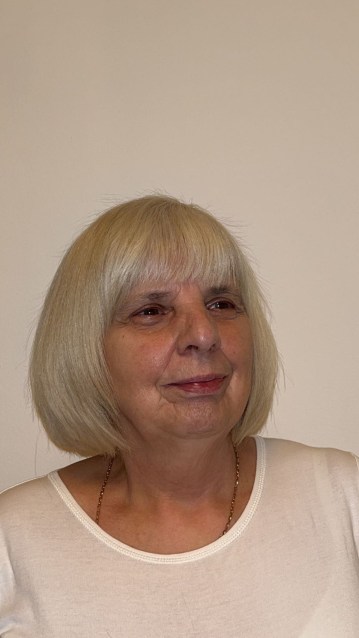
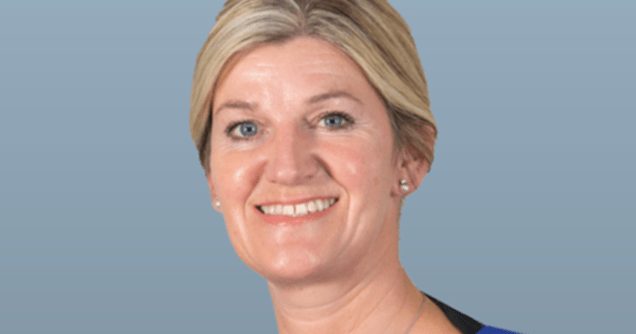
Australian former anti discrimination commissioner and judge Dr Jocelynne Scutt
The CEDAWinLaw organisation, which backs full implementation of the UN Convention for ending all discrimination against women and girls, has put up links to the interviews this week on Salford City Radio’s Ian Rothwell show. These reveal the latest move towards getting mediation for the 50s women who faced a six year extra wait to get their pensions.
Mel Stride, the work and pensions secretary has refused any mediation so tougher action is being considered and legal advice has been sought. The link to the website is here.
Worth watching developments over the next coming weeks. Doesn’t look like anyone is going away. Meanwhile the number of 50swomen who have died without getting any compensation has reached over 300,000.
Please donate to Westminster Confidential to allow me to continue my detailed investigations.
This week I paid a lightening visit to the Labour Party Conference in Liverpool and found a remarkably changed and brutally focused party.
Out had gone any commitment to state ownership, hugely expensive pledges to spend, spend, spend and in had come a sharp focus on bread and butter issues like cutting hospital waiting lists and building lots of homes for generation homeless..
There was also a brutal message from Sir Keir Starmer that the party would be raising very little on new taxes- beyond taxing non doms and VAT on private school fees. Everything was going to depend on growing the economy from its present feeble state to pay for new public spending. If that fails the whole Labour project will collapse once they are in government – a big hostage to fortune.
What was also noticeable was the huge presence of corporate firms and large charities and ngos – never have I seen such numbers in the exhibition hall and its overflow corridor.
The main reason why Labour is being cautious is the state of the British economy post Brexit. Although Brexit was never mentioned by the Labour leadership, the chaos and incompetence of the present Tory government ( now also emerging in the Covid inquiry) has virtually torched the British economy, now bedevilled with a cost of living crisis and high inflation. And they can’t blame the EU. But it is worse than that – the chopping and changing in government policy -illustrated by scrapping HS2 at Manchester during their conference last week and delays in the net zero programme – has even bewildered their business allies who don’t know where they are and how they should plan.
That is why they see a Labour government as a better bet than the Tories. It is ironic that after all the attacks on Jeremy Corbyn turning Labour into a cult – it is now the Tories that are turning into one – with their obsession with opposing trans rights, boat people, cancel culture and recreating the UK in the image of the 1950s. No wonder much of business ran off to Liverpool.
David Blunkett; Official House of Lords portrait
I did attend two very interesting fringe meetings during my short stay. Both illustrated the new order at Labour. One organised by the TUC was on the subject of tackling Britain’s skill shortages among the workforce. It was addressed by Steve Rotherham, the Labour Metro Mayor of Liverpool; Bridget Phillipson, Labour’s shadow education secretary; Labour peer David Blunkett; and chaired by Kevin Rowan from the TUC. What was impressive was that the TUC and David Blunkett had drawn up a very detailed plan to tackle the crippling skills shortage – often overlooked by politicians – and Bridget Phillipson, was keen to implement it. It included scrapping the very low wage of £5.28 a n hour for apprentices and replacing it with the minimum wage and radically changing the funding programme to tackle skills shortages and prevent employers exploiting it for cheap labour. If Labour are serious in doing this, it will be fundamental to economic recovery.
An even bigger eyeopener was a fringe meeting organised by Labour’s environment campaign, Chaired by a Westminster Labour councillor , the campaign had both the head of forests, from Global Witness and a Aviva, the private insurance company on the panel. It turned out that both Global Witness and Aviva had been working together to ensure UK legislation that would stop British firms contributing to global deforestation by de investing in companies that did this. Even this it appeared had been opposed by the Tories.
One extraordinary meeting I did not get into was on the controversial future of rail to be addressed by Labour’s shadow transport secretary, Louise Haigh. Organised by Lodestone Communications, whose clients include US whiskies, the Countess of Chester Hospital ( not best to advertise this at the moment) and IT firms, it was private but important enough for the general secretaries of ASLEF and the RMT to attend. I was told it shouldn’t have been advertised in Labour’s conference programme and been placed there by mistake. Very intriguing.
Women born in the 1950s who have faced a six year delay in their pension would have been pleased by a motion which was passed by Labour’s women’s conference. It commits the next Labour government to fully implement in law the UN Convention on the Elimination of All Discrimination Against Women (CEDAW) and ensure equal pay for women is fully implemented. We shall see if Sir Keir Starmer makes this a manifesto commitment.
Lloyd Russell – Moyle MP : Pic Credit: Labour South East
A Labour MP is challenging Mel Stride, the Work and Pensions Secretary, to ” correct the imbalance ” that allowed up to 9.8 million men to claim free national insurance contributions from the state while 50s born women were stopped from claiming anything.
He is the first MP to raise this issue, disclosed on this blog three years ago, directly with the Secretary of State. See here.
This huge subsidy only came to light when one of my readers ,Myfanwy Opeldus, one of 3.8 million women facing a six year delay to get her pension, got the admission from the ministry through a Freedom of Information request. three years ago.
Originally introduced in the 1980s by Margaret Thatcher and Sir Geoffrey Howe, the former Tory chancellor, to cut down the employment figures. men aged 60 got ” auto credits” – free national insurance payments- towards their state pension if they did not claim unemployment benefit.
Meant to be a temporary measure men could still claim this right up to 2018. Women born in the 1950s were promised to be able to claim this once the coalition government started raising the pension age from 60 to 66 but it was never implemented.
Mel Stride Works ands Pensions Secretary
The MP writes : “Recent revisions by the Department for Work and Pensions reveal that 9.8 million men received “auto credits” for pension eligibility—more than double the previously disclosed 4.65 million. This is particularly unsettling in comparison to the six-year pension delay faced by 1950s born women. The lack of transparency surrounding these payments for nearly four decades deepens these concerns. The timing of this disclosure, following a Court of Appeal hearing, underscores the need for prompt action. The substantial “auto credits” provided to men since 1983 to encourage male employment reveal an imbalance requiring correction.”
Mr Russell-Moyle is one of the MPs backing a bid to settle the long running disputed over compensation for the now 3.5 million women ( 300,000 have since died) by holding an alternative dispute resolution, hearing with the government. which is championed by Sir George Howarth, the Labour MP for Knowsley. This solution is being promoted by the CEDAWinLaw People’s Tribunal following a report by the former Australian anti discrimination commissioner, Dr Jocelynne Scutt, which says the UK broke international law by not compensating the women.
It is also a speedy way to resolve the problem compared to WASPI’s solution to get the Parliamentary Ombudsman, Rob Behrens, to recommend compensation which has been mired in delays and disputes for years.
This is the full test of his letter:
Please donate to Westminster Confidential to allow me to continue my in depth reporting.
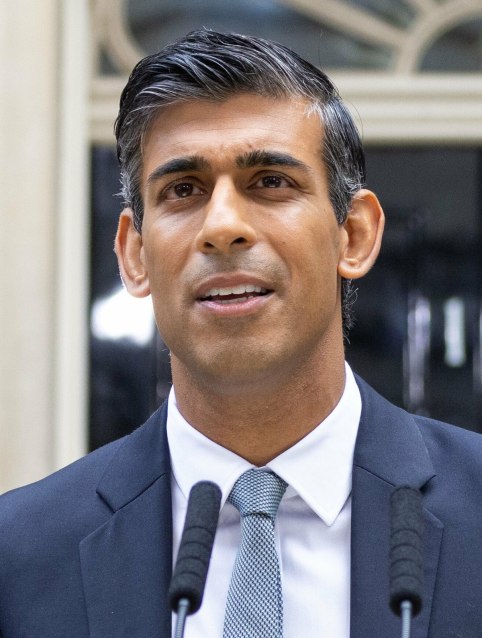
” Dishy Rishi” or our new Maharajah Pic Credit : Lauren Hurley / No 10 Downing Street
Increasingly desperate about his poll ratings the Prime Minister has turned to dumping green policies as Europe burns. The Tories managed by just under 500 votes to hold Boris Johnson’s old seat of Uxbridge and South Ruislip and claimed that stirring up the introduction of new charges for the ULEZ ( Ultra Low Emissions Zone) being extended to all vehicles entering Greater London helped them hold it. Keir Starmer, the Labour leader, bought the argument.
For the record two other reasons also contributed to counter that view. Despite ULEZ the Green Party polled 893 votes taking more than enough votes from Labour to deny them the seat. And the seat has a substantial Indian minority – who are thrilled to have an Indian PM – with many mothers dubbing him “Dishy Rishi” as they see him as a trailblazer for the future community.
But Sunak’s short term populist stance on these issues aimed at the “boy racer” motorist vote is going to have a devastating effect on the health and lives of ordinary people. In the space of a week the PM has signalled he is against ULEZ, against 20mph speed limits, against restrictions on cars in residential neighbourhoods and in favour of a massive expansion of oil and gas in the North Sea. If he gets more desperate I can see him dropping the ban of new diesel and petrol cars and promising the combustion engine will live forever in the UK.
Bill Esterson Labour’s business and industry spokesman Pic credit: Industry Forum
And none of this is good for long term planning for business to transition to net zero as Labour’s shadow business and industry spokesman, Bill Esterson points out. It could even damage our own car industry as every country we export is switching to electric cars.
As he says: “Over 70% of our car exports go to markets that have already set a phase-out date of fossil vehicles.
Other countries are committed to the transition away from fossil fuels. And they are keeping their commitments.”
All these measures will damage the health of people and cost lives. That is why I think he deserves the title of the Road Kill PM – the roads of the UK will not only be littered with dead wildlife but dead and injured children and pedestrians.
Take the ULEZ zone itself. This is as much a public health issue as an environmental one. Children have died in London because of it so Sadiq Khan is right to introduce it. And the Tories are hypocritical about the zone – it was demanded by Grant Shapps, as transport secretary as part of a cash settlement to bail out Transport for London during the Covid crisis. So it could be called the “Grant Shapps” ULEZ zone as much as Khan’s.
In France ineligible cars are BANNED not charged in Ulez zones
Also drivers chaffing at paying the charge should know that this initiative is not confined to the UK. If they drive to France on holiday they will find they are not charged but banned from driving in a growing number of big city centres and could be fined. And all eligible cars and motorbikes have to carry a clean air sticker or you cannot drive in France.
No wonder doctors have written Sunak and Khan to say.
“Air pollution affects every one of us from before we are born into old age. It not only causes respiratory conditions such as asthma, but also heart attacks, heart arrhythmias, strokes, child developmental disorders, lung cancer and dementia.
“Ulez works. It has already saved lives and prevented many illnesses and hospital admissions.”
As for reviewing 20 mph limits in cities including London. There is no question that will result in more deaths and injuries.
Road crash Pic credit: Brake, road safety charity
Brake, the road safety charity, says:
“A vehicle travelling at 20mph would stop in time to avoid a child running out three car-lengths in front. The same vehicle travelling at 25mph would not be able to stop in time, and would hit the child at 18mph. This is roughly the same impact as a child falling from an upstairs window.
The greater the impact speed, the greater the chance of death. A pedestrian hit at 30mph has a very significant (one in five) chance of being killed. “
Latest statistics for London show the number of collisions has reduced by 25% (from 406 to 304), and collisions resulting in death or serious injury have also reduced by 25% (from 94 to 71), demonstrating the huge impact of lowering speeds to 20mph on many roads.
But for Rishi Sunak to get his votes back and stay in power obviously a few more children or pedestrians killed or maimed every year are a price worth paying. Anyway he seems to go most places by helicopter.
Then there is the big boost to finding North Sea oil with 100 new licences to be issued by the government. Again this is going down the wrong track. The North Sea is not the only place being explored when I was in Namibia a big exploration was under way near Walvis Bay which could yield an enormous new field. At some point the big increase in electric vehicles is going to meet the burgeoning supply of oil and as demand for oil falls so will the price until it becomes uneconomic.
The security claim is rubbish too – since it will be traded on the open market. What is true is that Rishi Sunak’s family firm Infosys will personally benefit every time BP gets a licence as they signed a deal with the oil giant just before the exploration licences were announced. His wealthy family will see the petrodollars rolling in, the more BP win concessions. No doubt the cash will be hidden in some offshore tax account so we won’t know about it.
Next month Rishi Sunak will be in Delhi for the G20 summit and the press there is already very excited about him coming there. Politico Europe is already suggesting he will be mobbed by ecstatic Hindus. And the Times of India has heralded his arrival in Downing Street as a move from ” Empire to the Rishi Raj”. Others see this as revenge for Britain’s Imperial past ruling India. Now Rishi rules over the British people instead.
The choice of helicopters for Rishi Sunak from Maharaja Aviation
Given his penchant for exorbitant expensive helicopter rides over mundane journeys by rail or road I have found the perfect charter company for his travel. It is called Maharaja Aviation and runs a fleet of helicopters. He can fly like a modern fabulous wealthy maharaja across India dispensing baubles to the masses. And in the meantime he can forget the country he rules with its sky high mortgages and rents, sewage in the seas and rivers, food inflation and its demonising of other foreigners who try to seek sanctuary on its shores.
Please donate to Westminster Confidential so I can continue to report independently on issues of the day.
Rob Behrens, Parliamentary Commissioner to stand down in March.
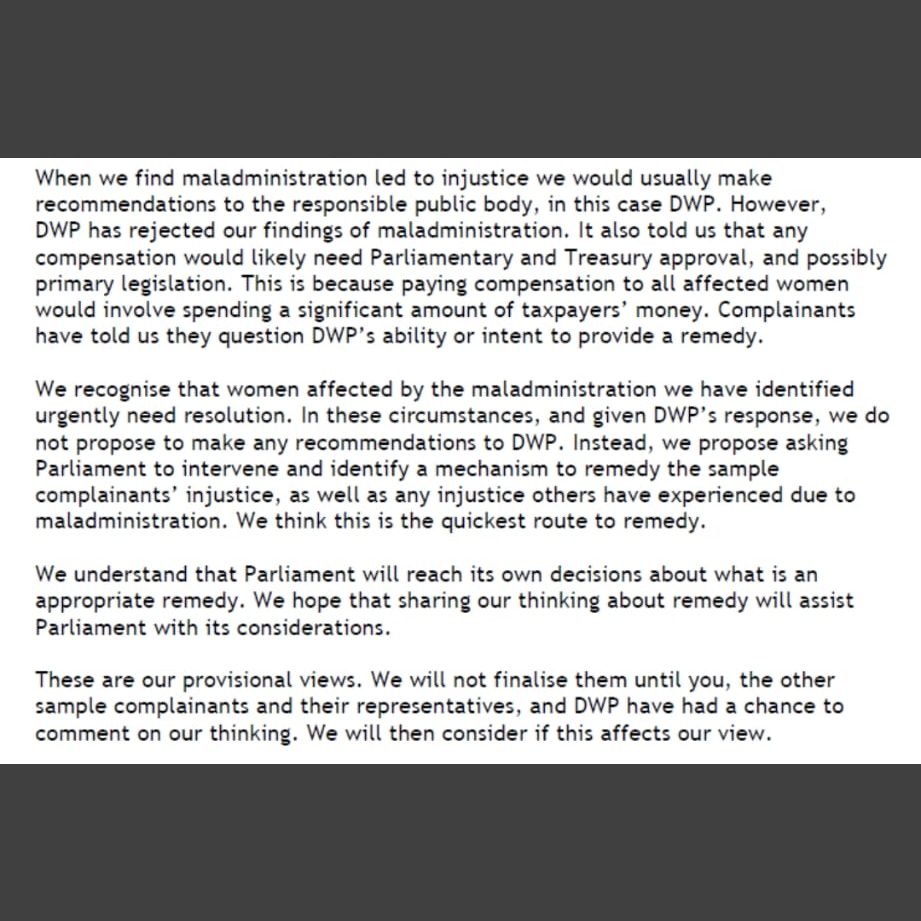
Promise of an early resolution for the £3.6 million 50s born women to get compensation for their delayed pensions appear to have been dashed with no movement from the Parliamentary Ombudsman to solve the problem.
Despite a court agreement in May to revise the final report on compensation for the women to correct what Waspi calls the Ombudsman’s “legally flawed” decision to award minimum compensation for the women who have lost up to £50,000 by the six year delay they faced when the pension age was raised from 60 to 66, nothing has happened. Waspi has raised £147,500 from the public for a judicial review of the decision which never happened.
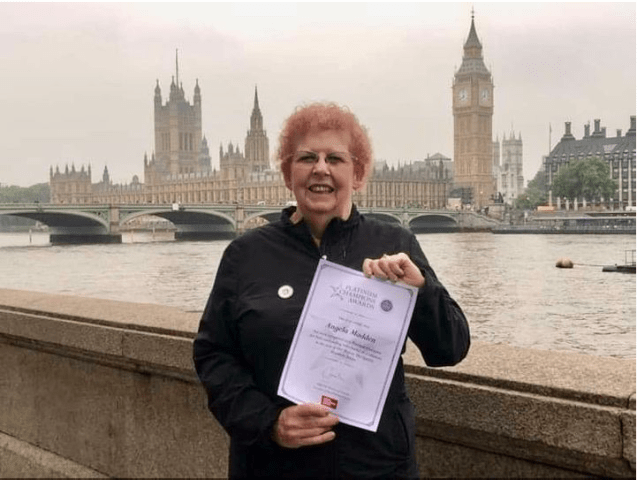
Angela Madden, chair of Waspi
The Waspi statement in May was very confident the organisation could hold Robert Behrens, the Parliamentary Ombudsman’s feet to the fire and get great concessions for the women. At a Labour Party Conference meeting last year, Angela Madden, chair of Waspi, said she would expect women to get £10,000 a year compensation. See my bloghere.
What a contrast with the downbeat statement a few days ago.
“”WASPI are disappointed and frustrated by the length of time that the Ombudsman is taking to rewrite his Second Report on the injustices cause by DWP maladministration. The Court Order requiring that reconsideration was sealed on 12 May 2023. It is unclear precisely what has been done since then.
” We can confirm that neither we nor, as far as we are aware, any of the sample complainants have been contacted to comment on a draft, or on anything new that the Ombudsman has gathered from the DWP. That opportunity to comment is guaranteed by the Court Order, which suggests that finalisation of the report is still some way off.”
In desperation Waspi have got their lawyers, Bindman’s, to write to the Ombudsman. But as their statement says:
“We have not had the courtesy of a reply. We also have asked for a meeting with William Wragg MP, the Chair of the Public Administration and Constitutional Affairs Committee (PACAC), to whom the Ombudsman reports. That meeting has yet to take place.”
Failure to reply is quite common from the Ombudsman’s Office. BackTo60, who have repeatedly told the Ombudsman that he should have to consider whether the failure to compensate the women is in breach of international agreements signed by the UK government which ratified the UN Convention on the Elimination of All Forms of Discrimination against Women (CEDAW),.
Dr Jocelynne Scutt
This argument is particular powerful following the report by Dr Jocelynne Scutt, the former Australian anti discrimination commissioner and judge, which found it was in breach of CEDAW and was clearly discriminatory against the 50swomen.
Now while it might be convenient for the government and the Ombudsman to pretend this report doesn’t exist, the findings are being taken seriously by the committee implementing the convention in Geneva who have to do a report to the UN on Britain’s compliance with it. Given the Ombudsman’s public pride of his role on the international scene with other Ombudsmen his reputation could easily be sullied if he is found to have ignored an international convention.
But perhaps he doesn’t care. The other major development while Waspi was awaiting his report is that he is to step down from the job next March. He announced this in his annual report published on July 20 which he said was his valedictory report.
This means when Parliament comes back in September the emphasis will switch to finding a successor, drawing up a short list and having the new Ombudsman’s appointment scrutinised and approved by Parliament via the Public Administration and Constitutional Affairs Committee.
What should worry Waspi, which chose to go down this route, is there must be a temptation to delay his findings so his successor has to sort it out. Also even if he does come out with his findings before he leaves, it will be up to his successor to persuade the government to implement them. Given by then Parliament will be engulfed with preparations to fight the next general election, the government might be tempted to push it into the long grass or make vague promises in the hope of garnering votes.
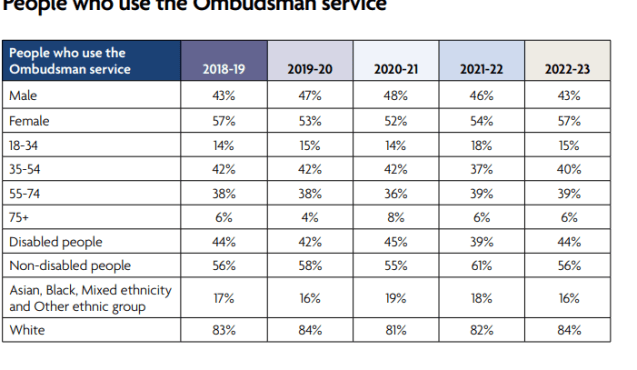
The annual report provides some interesting facts and figures on the operation of the Ombudsman’s Office. A table reveals who uses it showing more women than men complain to the Ombudsman and the main age groups are between 35 and 74 and 84 per cent are white.
The report also reveals disabled people are heavily reliant on it. When one looks at the breakdown of the board however, there is not a single person with experience of a disability on it, which means the disabled have no voice at the top of the organisation. The board has one gay member and three people from ethnic minorities.
The organisation fares well in the employment of women both among its staff and the board as 59 per cent of staff and 58 per cent of the board are women. Disabled people form 13 per cent of the staff just above gay people and just below people from ethnic minorities.
The report also shows that some £588,000 of taxpayers money was spent on management consultancy last year compared with just £22,000 the previous year. This does seem an extraordinary amount of money from a budget which the government has limited.
Please donate to Westminster Confidential to allow me to continue my forensic reporting.
Rishi Sunak gets a report on why women are still hugely disadvantaged in decision making across the world
Video from Downing Street where Jocelynne Scutt hands in the report on Women, Power and Decision Making to Number Ten
Here is a video taken yesterday when Jocelynne Scutt, a former Australian judge and anti discrimination commissioner and now an academic in the UK, handed in a report to the Prime minister detailing how women are still at a huge disadvantage to men in taking key political decisions in the UK and the rest of the world. She says the position of women is ” lamentable” in the UK
The report by the UK based Cedaw in Law, the organisation which is working with the Geneva based UN Convention on the Elimination of All Forms of Discrimination against Women and Girls (CEDAW). to put pressure on the government to implement in full the convention ratified by Margaret Thatcher in 1986.
The campaign covers everything from the 1950s born women battle for full restitution of their delayed pensions when the age went up form 60 to 66 to the dearth of women MPs and peers in Parliament.
At the moment we seem to be going backwards with Labour having an all white male prospective Parliamentary candidate list for five pending by-elections and former premiers Boris Johnson and Liz Truss putting forward an overwhelming number of men to be new peers in their resignation honours lists Even the Supreme Court which took on a big role under its former woman president, Brenda Hale now has 11 male judges and just a token woman judge.
As the report says : “…overlooking women’s right to equal participation in decision-making leads to an ignoring of, and ignorance about, women’s economic rights, health and wellbeing. Worse, it shows how the failure to ensure women’s participation in decision-making can lead to a wilful failure of government to consider the impact of policy decisions and law-making on women and women’s rights generally.“
We also discovered that the rules governing the delivery of petitions and reports to Downing Street had changed. Previously when Backto60 and trade unionists had delivered petitions to Downing Street it was allowed for people to make a short speech. Now under Rishi Sunak speeches that criticise the PM cannot be made from the steps of Downing Street. We did not discover this until both me and Jocelynne Scutt had made them.
Please donate to Westminster Confidential to allow me to continue my reporting on issues often ignored by mass media.
The Office for National Statistics – the independent official body which produces official figures for work and inflation in the UK – has come up with some alarming predictions for women born in the 1950s 1960s and 1970s.
They show that post the Covid pandemic there has been a big drop among women expecting to have enough money to retire and enjoy a life of leisure on their pensions. As a result a significant proportion of women now aged 50 to 65 are planning to stay in work – either with reduced hours or full time when they reach the retirement age of 66.
An organisation called Rest Less, which acts a community and an advocate for the over 50s, has analysed these figures and estimates that nearly one in two women pensioners now expect to have to continue working after retirement age. Either they will work their existing hours (13%) or work with reduced hours (31%).
Huge inequalities between men and women’s pensions
The main reasons for this is pensioner poverty among women and huge inequalities between men and women when it comes to their pension pots. Not only are women less likely to get full state pensions – often they have missed years – than men but there is a big discrepancy in private pensions. The ONS figures show while 78 per cent of men will fund their retirement with a private pension, only 68 per cent of women have one. And the inequality goes on and on. Some 47 per cent of men will fund their retirement through savings, compared to 40 per cent of women. And only seven per cent of men will rely on funds from their partner, while 18 per cent of women will rely on their partner to help fund their retirement.
These figures were compiled 10 months ago in September last year. I hear that the ONS does not plan to update them since the survey was a ” one off” following Covid. Curiously a lot of publicity was given to people dropping out of the workforce when they got to 50 – I can only think that the majority must have been men or women married to men with a very good private pension.
Stuart Lewis, Chief Executive of Rest Less, commented: “Years of gender based earnings disparity has resulted in a large pension savings gap between men and women, leaving many women in their 50s and 60s in real financial precarity. Nearly half of women aged 50-65 said they plan to continue working in some capacity after reaching state pension age – a number that is likely to have risen even further given the subsequent cost of living crisis.
…..“‘In the last recession of 2009, women could retire at 60 and receive the state pension; today it is 66. Many women aged 50-65 are stuck between a rock and a hard place – they struggle to find work due to age discrimination or a lack of flexible work opportunities but they are too young to claim their state pension putting them in a vulnerable financial position as they approach retirement. Whilst the state pension age for men and women may now be equal, this data shows that the retirement fortunes of men and women remain anything but equal.”
One person who is caught in this trap is Back to 60 campaigner Michaela Hawkins known as Mac to her friends
Michaela Hawkins
“.I was forced to stay in work longer than I wanted to or hoped for. “My husband is 10yrs older than myself so was relying on retiring at 60 so we could enjoy some quality time together. When SPA was raised this devastated our plans. It would have meant if I retired before receiving my SP we would have had to survive below the breadline. “Austerity along with the pandemic put untold pressure on both myself and husband. I was transferred to work in care home from Day services during Covid. As my husband was in high vulnerable category during this time you can imagine the stress this put on both ourselves. “Another reason why I felt stressed also is because as a woman gets older her body is not the same. The physical aspects of working in care sector takes its toll. When you come home from work you feel exhausted. But if you’re caring for loved one or helping out your children with childcare which I done both you have got no time for any sort of quality life.”
now tax allowance frozen
“Now the Tax allowance that’s been frozen. Now I’m retired I’ve been hit with a tax bill for over £1300 on top of cost of living crisis this is going to push many 50s women over the top. “
UPDATE : Since then there has been another demand for £1300.
Mac writes:
“I then received a letter saying I owe them a further £1,300. If this wasn’t payed then they would get in touch with debt collectors.
It took me 2 1/2 hrs to get through to tax office to query this. It couldn’t be done online. Although I disputed the amount I owe they were insistent that I did owe that amount. I was then put through to debt management. Who I got to say was accommodating. But the problem is when older people receive letter from HMRC saying they will bring in debt collectors or as people our age call them bailiffs they become confused and frightened. Then to be put on hold for that length of time is again frustrating to say the least. When you think how HMRC is quick to chase up pensioners who in good faith think they payed their fair taxes and are chased up and then you got those who knows how to play the system get away with it. It makes me so angry.”
Certainly Backto60, which campaigns for full restitution for all the 1950s women who lost up to six years of their pension, is inundated with stories of women living on the poverty line, unable to heat their homes properly or use their ovens to cook because they can’t afford the fuel bills.
Instead the government concentrates on getting everybody back to work rather than seeking to compensate people who have already worked for decades and now should be able to put their feet up if that’s what they want to do without fear of paying the bills.
Please donate to Westminster Confidential to allow me to continue my reporting.
Last year I reported that the national audit office had qualified the Department for Work and Pensions accounts for the 34th year running because they were inaccurate and it couldn’t balance the books.
Auditor General threatens to refuse to pass pension accounts next year if DWP carries on like this
But this year the DWP has surpassed itself – it is now the 35th year that the DWP has had its accounts qualified.
Benefits overpaid officially fell a little from the pandemic year – £8.2 billion instead of £8.6 billion- but when you strip out the extra cost of living payments – they are much higher than the pre pandemic year of 2019 -£7.8 billion compared to £4.4 billion – a massive increase.
Most of the fall in the amount DWP overpaid benefits related to fraud in Universal Credit. The amount of Universal Credit that DWP overpaid fell from 14.7% (£5.9 billion) of expenditure in 2021-22 to 12.8% (£5.5 billion) in 2022-23. But again compared to the pre pandemic year of 2019 this was a rise.
DWP estimates that Universal Credit claims started after the COVID-19 peak (March to June 2020) were overpaid by 13.1% in 2022.This remains significantly higher than the 9.4% that it overpaid all Universal Credit claims in 2019-20.
The reduction is mainly due to a fall in the level of self employment claimants and the reintroduction of rules designed to prevent self employed claimants understating their income.
On average 33% of Universal Credit claims were incorrect in 2022-23,equivalent to 1.6 million claims. Most of these claims (24% of all Universal Credit claims) were overpaid.
The report says: “Around 40% of overpaid claims were to people with no entitlement to any payment at all, which is equivalent to 10% of all Universal Credit claims. Some of these were marginal cases where small amounts of undeclared income or claimant circumstances (such as attending hospital) made the whole claim invalid. However, some other claims were overpaid as much as £1,800 per month; some were completely fictional; and some related to serious and organised crime.”
Pensioners lost hundreds of millions of pounds in underpayments
The record underpayments of pensions and benefits topped £3.3 billion. A large number were caused by people claiming Personal Independence Payments who had not updated the DWP about their increased medical needs.
But it was pensioners who were cheated by the DWP into not receiving their full pension entitlements that is worrying the National Audit Office.
The report says: “The level of State Pension underpaid by DWP has been trending upward for six years to 0.6% (£670 million) in 2022-23. Most of these underpayments (£580 million) were a result of official error. DWP believes that part of the increase is due to changes in how it measures State Pension error and that its previous estimates may have been understated. This brings the total fraud and error rate for State Pension, including overpayments, to 0.7%.
“I will keep the gross level of incorrect payments in State Pension under review and may have to include State Pension in my regularity qualification in future years if the estimated rate continues to rise.”
There is £1.2 billion owed to 165,000 married pensioners, widows and those over 80- all caused by official errors in the past. It will take until the end of 2024 before everyone is paid.
And now the DWP has discovered another 210,000 pensioners owed up to £1.5 billion because officials did not record their right to paid national insurance contributions while looking after children
The report says; “These issues affect people (mostly women)who received Child Benefit before 2000 and whose National Insurance record was not updated to reflect periods of HRP (Home Responsibilities Protection) they were entitled to. DWP cannot begin to correct cases until HM Revenue & Customs (HMRC), which administers both National Insurance and Child Benefit records, corrects the National Insurance records and notifies DWP. “HMRC intends to begin work to identify people who may have missing HRP in autumn 2023 and will write to them to invite them to apply for missing periods of HRP to be added to their National Insurance record.”
However it turns out that HMRC have destroyed many of the people’s records.to meet Data Protection laws so it may not be able to find them.
Then there are 10 million people claiming Universal Credit have not been updated properly – a small proportion of these may have also been underpaid their State Pension. HMRC began correcting records in February 2023 and expects this work to be completed by the end of March 2024.
The report adds; “DWP has still to determine how many people have been underpaid and by how much they were underpaid. Of those missing the Universal Credit National Insurance credits, 137,000 have already reached State Pension age.“
jonathan Millspeter schofieldneil coulingnick Joiceykatie faringdonsimon McKinnonamanda reynolds- director service excellenceDebbie Alder
Roll call of this year’s DWP top officials and their bonuses and pensions
Meanwhile the DWP continues to pay out bonuses to senior staff. Peter Schofield, the permanent secretary, did not take a bonus this year and his pension payments were half last year’s at £16,000. His full package is £210,000 a year compared with £240,000 the previous year.
Neil Couling, the change director who is responsible for universal credit, got a £5000 bonus and had a £52,000 deduction in his pension pot, in a year when he presided over record fraud over universal credit.
Debbie Alder, director of people, got a £15,000 bonus, and put £59,000 into her pension pot, giving her a package worth £200,000 this year.
Jonathan Mills, responsible fo the Labour policy at the DWP, left in June with a £5000 bonus. He is now director of energy markets and supply at the Department for Energy Security.
Nick Joicey, director general of finance who earned £80,000 for five months is now chief operating officer and second permanent secretary of Defra. He is also the husband of Rachel Reeves, the shadow chancellor.
Simon McKinnon, director general and chief digital officer, who left in April 2023, Got a final year bonus of £15,000 and £62,000 in his pension pot, taking his final package to £240,000. He was responsible for reorganising the DWP’s system to bring it back in house.
Amanda Reynolds, director of service excellence, also got a £15,000 bonus and £61,000 into her pension pot, taking her package to £240,000 for providing what some claimants and pensioners would claim was hardly a first class service.
Katie Faringdon, director general for disability, health and pensions, got no bonus but had a £175,000 package including £44,000 into her pension. Over the last two years she has put pension benefits worth £131,000 into her personal pension fund. I am sure the millions of pensioners facing delayed pensions and still waiting to be reimbursed for mistakes by officials into their pensions will be pleased for her!
Please donate to Westminster Confidential to allow me to continue my forensic reporting.
It is portrayed by HM Courts and Tribunals Service as “our vision for reform to make the justice system more straightforward, accessible and efficient.”
But this £1.3 billion digital court reform programme has been exposed by the National Audit Office and last week by the House of Commons Public Accounts Committee for having failed to meet its objectives. This ambitious programme started in 2016 has been much delayed and only half completed. As MPs commented last week it has ” burned through” over £1 billion of public money and is the on the verge of running out of cash before half the benefits can be realised.
No one would argue that the courts and tribunal system is antiquated and needs reform. One only has to watch judges in the employment tribunal system writing down what claimants and respondents are saying by hand in courts that don’t keep proper records of hearings to realise how antiquated it is.
But once again it looks like that Whitehall has fallen for an expensive simplistic digital solution for a service which is incredibly wide ranging and complex. The aim was to create a common computer platform to serve 44 different aspects of justice from the criminal courts to magistrates courts and from the family and divorce courts to the probate service and the tribunal service.
Timetable five years behind schedule
It also had a timetable to be completed by 2020. Now we will be lucky whether the truncated programme will be up and running by 2025. Also £1.3 billion won’t be enough – there is only £120 million left to spend and that is nowhere enough to meet what is needed. And £22 million was wasted trying to integrate the Crown Prosecution Service into the system which didn’t work.
Also there are promises of big savings by going digital. This is always promised and we will see whether that really happens.
Also plans to have fully digital probate and divorce services had not fully worked. The MPs said:
“HMCTS found that significant proportions of its online divorce and probate cases required manual interventions from staff and in March 2022 HMCTS identified that 55% of divorce cases could not be completed online.”
In addition it appeared that both services discriminated against ethnic minorities.
Both the Bar Council and the Law Society were not impressed. The report says:
The Law Society “explained that there were functionality issues with online portals for family services, such as family public law. These issues led to problems, including instances of solicitors not getting necessary notifications which made the system difficult to use and, in some cases, significantly delayed cases. It told us that it had frequently expressed concerns to HMCTS about the functionality and design of some reformed services.”
System developed in a vacuum – Bar Council
The Bar Council told MPs:” the designers and producers of the common platform appeared to have a limited understanding of working needs and practices, and “displayed a marked reluctance for the system to be designed in conjunction with, and for the benefit of, professional court users”.
It said it looked like the system had been designed in a vacuum.
As for the general public, it looked like that it was going to be a problem at magistrates courts ,purely because most of the defendants didn’t have any legal representation and therefore might not have proper access to the system to defend themselves.
Meanwhile the project continues so far with the pausing of integrating possession orders, special tribunals except for the Criminal Injuries Compensation Tribunal.
Dame Meg Hillier MP
Dame Meg Hillier MP, Chair of the Committee, said:
“Our courts were already stretched thin before the pandemic, and the backlogs now faced pose a real threat to timely access to justice. These are services crying out for critical reform, but frustratingly HM Courts & Tribunal’s attempts appear in some cases to be actively hindering its own staff’s ability to carry out their jobs. In particular, the roll-out of the Common Platform digital system was a blow upon a bruise for pressured court users.”
Given there are already many issues whether the courts do deliver justice, this rather botched computer programme does not give you much faith in the system.
Please donate to Westminster Confidential to allow me to continue my forensic reporting.
The National Audit Office last week gave its verdict on plans by the Department for Work and Pensions to digitalise and transform all the health assessments of disabled people claiming benefit and Personal Independence Payments (PIP) by 2029 and raised serious concerns whether it would work..
This is not a minor matter for the disabled. Some 3.9 million working age people claim these benefits and those claiming both PIP and the Employment and Support Allowance have to pass two health assessments. By 2025-6 the number of claimants is estimated to rise to 5.8 million. Every year private contractors assess nearly two million people. There also has been a rise in people claiming ESA as a result of the pension age for women going up from 60 to 66 and for men from 65 to 66.
As usual this report appears to have had little coverage in the national media -despite the millions of people that will be affected.
High risk of delay, cost overruns without achieving benefits
Gareth Davies, the head of the NAO, said:
“While the Programme is ambitious and has the potential to make savings and improve the experience of those being assessed, the scale and complexity of the transformation leaves it at high risk of delay, cost overruns, and of not achieving the intended benefits.”
He called for the department to revise its business plan for the £1 billion scheme and for more transparency so that perhaps even MPs can understand its implications.
At present disabled people have to provide multiple documents and fill in long forms to claim and the system is unpopular. The new system will digitalise the process, cut out duplication but will still depend on private contractors assessing whether people are unfit enough to claim.
Therese Coffey, former DWP secretary of State
Appeals over claiming PIP are unnecessarily high with decisions by the private firms being overturned and there have been cases where people turned down for disabled benefits have died and the DWP under Therese Coffey covered up reports about this. See thisreportin the Disability News Service.
The transformation is going to take place alongside new five year contracts for three private companies, Capita. US company Maximus, and Australian firm Ingeus worth over £1.6 billion with an IT contract to Atos to provide the computer back up. Nearly all the companies (except Ingeus) have been linked to claimants deaths as an article in Disability News Service reveals.
Limited testing of system using state appointed medical advisers
At the same time there is going to be a limited state provided service in London and Birmingham where the DWP will employ medical assessors directly. The aim according to the NAO report is to ” test and learn ” the new system and pass on the information to the contractors.
The NAO is sceptical whether this twin approach will work in time for the national 2029 launch as the contracts awarded to these firms will not be flexible enough to make changes without no doubt further expensive negotiations.
One of the main aims of the scheme is to save public money through digitalisation and the DWP estimates a £2.6 billion saving up to 2035. One wonders though whether all the disabled people will be able to use computers to apply on line ( all PIP applications will be on line) eventually. Can they download apps etc and do they all possess smart phones?
Once again I am going to be sceptical about this – particularly after the NAO’s report on Making Tax Digital which it revealed has been subject to long delays and huge increases in costs. Given other areas I have covered in the DWP I have little confidence they can get things right.
Please donate to Westminster Confidential to allow me to continue my forensic reporting