The Pensions Regulator: The most unwanted job in the government

Hidden husband and wife conflict of interest revealed for winning candidate

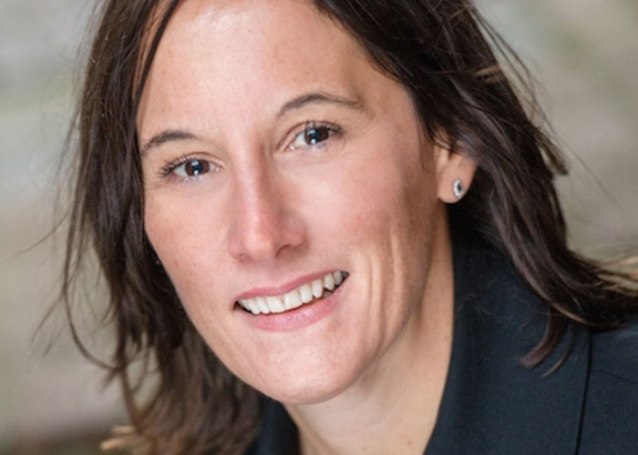
Last week almost unreported MPs on the Commons Work and Pensions Committee approved the appointment of a new chair of the Pensions Regulator. It went to Sarah Smart -already the interim chair.

Nothing particularly newsworthy in that. But the report from MPs went on to disclose the dearth of interest in this important job and expose until now a hitherto hidden serious conflict of interest that affects the entire board of the Pensions Regulator.

The regulation of private pensions in the private sector affects tens of millions of people. As the report says:

Its main responsibilities include:
a) Ensuring that employers put their staff into a pension scheme (known as
automatic enrolment) and pay money into the scheme;
b) Protecting people’s savings in workplace pension schemes;
c) Improving the way that workplace pension schemes are run;
d) Ensuring that employers balance the needs of their pension scheme with growing
their business;
e) Reducing the risk of pension schemes ending up in the Pension Protection Fund,
a statutory fund which protects members of defined benefit pension schemes if
their scheme becomes insolvent.

Pension scams

It also pays a role in keeping an eye on pension scams and firms going bust leaving people without proper pensions. The MPs say they have previously been concerned about its role in some high profile cases involving defined benefit schemes whose sponsoring employer had become insolvent. ” We ourselves have expressed concern this year about
TPR’s capacity—working alongside other regulators—to tackle pension scams effectively.” These cases include tax exile Sir Philip Green’s treatment of the British Home Stores Pension Fund and the British Steel pension fund.

Therefore it is rather shocking to discover that this £75,000 a year part time job for the public face of the Pensions Regulator attracted just eight applicants – and that was after extending the application period. Three were not worth interviewing. Of the remaining five who were interviewed – three were thought to be inappropriate for the job. This left the choice of just two people – Sarah Smart and another.

Indeed so low were the number of applications that the Department for Work and Pensions can’t provide a breakdown of the gender, disability and ethnicity of the applicants – for fear that it will end up disclosing who applied.

Fraser Smart -chief executive of BA Pensions – conflict of interest with his wife’s new appointment Pic credit: Twitter

But worse was to follow. Sarah Smart’s application for the job disclosed that her husband Fraser Smart was chief executive of British Airways Pensions and chair of British Airways Pension Investment Management Ltd – the body responsible for investing the money of thousands of employees of the airline. The BA Pension scheme is one of the bodies Sarah Smart is supposed to supervise- an obvious conflict of interest with her husband as chief executive of a blue chip company pension scheme.

She has promised that her husband will resign his job before September and not take any other job involving managing a pension scheme.

It was then discovered that NONE of the members of the board of The Pensions Regulator have to declare whether their partners or close relatives run company pension schemes – which has forced a review of the code of conduct of the regulator.

Guy Opperman, pensions minister couldn’t even be bothered to meet Sarah Smart before he recommended her for the job Pic credit: Twitter

Ministerial interest in the running of the Pension Regulator is virtually non existent. Guy Opperman, the pensions minister, couldn’t be bothered even to meet the new chair before he appointed her. As the MPs say in their report:

“We were surprised to hear that Mrs Smart had not met the Pensions Minister before being chosen for this role. We urge them to arrange a meeting at the earliest possible opportunity.”

The MPs also fired a warning shot about the conflict of interest: “We are conscious, however, that—given wider economic uncertainty—her spouse’s situation may change. In that event, we would urge TPR, the Pensions Minister and Mrs Smart herself to consider whether she can remain in her role.”

Hidden justice in the NHS: Profile of Claire McLaughlan – a doctors’ career terminator and rehabilitator

Claire McLaughlan. Pic credit: Linked In

The National Health Service has a largely hidden system of justice when a health trust is involved in a dispute with a doctor. It holds internal inquiries and appeals in private to decide whether a doctor should be dismissed.

The people who chair and sit on the inquiry are drawn from a list that a health trust can choose. The same people are also chosen and paid by trusts to build up a case against a doctor. The people who get onto the list normally have had a career in the NHS but are now running their private businesses in Claire McLaughlan’s case offering rehabilitation to doctors who have fallen foul of their own health trust.

I have chosen Claire McLaughlan as an example because she has been and is involved in three high profile cases where doctors have challenged decisions by health trusts to dismiss them. They are Dr Raj Mattu, who won a spectacular £1.2 million settlement after being unfairly dismissed for warning about patient safety in a cardiology department; Dr Chris Day, who is still fighting his dismissal for warning about patient safety at an intensive care unit at Woolwich Hospital, and as readers of this blog will be familiar, Dr Usha Prasad, a consultant cardiologist at the Epsom and St Helier University Health Trust, who is currently awaiting an internal inquiry appeal over her dismissal from the trust.

I did offer Claire McLaughlan an opportunity to comment but have received no reply to my request.

From Royal Navy nurse to clinical assessment services

Claire McLaughan’s nursing career started in the Royal Navy before she became Head of Fitness to Practise at the Nursing and Midwifery Council and then moved to the now renamed National Clinical Assessment Service (NCAS) becoming, an Associate Director. There she developed the NCAS Back on Track Services for doctors, dentists and pharmacists between 2008 and 2014. 

She also did obtain a law degree and was called to the Bar but as far as I could ascertain never practised as a barrister despite calling herself a non practising barrister. Certainly the Law Society do not appear to have any records of her working for chambers.

She left NCAS and set up her own business which offers a huge list of services which are listed on her Linked In page. It begins “Claire provides bespoke, holistic services and access to resources relating to performance management, revalidation, remediation, reskilling and rehabilitation for health professionals and the organisations they work in.”

Her company CC McLaughlin Services ( website here) which appears to be run according to the website from their home in Stockbridge, Hampshire, ( though it has a registered office in Winchester), which they purchased according to the land registry for £600,000 in 2010.

The latest Companies House accounts for the firm show that she and her husband, fellow director, Charlie ,have a thriving business. Latest company returns show it made a profit of £137,000. Both directors pay themselves in dividends rather than salaries which is more tax efficient.

While working in the private sector she holds a number of NHS posts including Chair for NHS England’s Performers List Decision making panels( they decide the internal inquiries) She is also an Invited Review panellist for the Royal College of Paediatrics and Child Health and an appointed lay member of the Royal College of Veterinary Surgeons.

Given this stellar series of appointments it is rather surprising that in two cases she has been subject to criticism- and in one case had to apologise.

The first case involved Raj Mattu, a cardiologist with the University Hospitals Coventry and Warwickshire NHS Trust. He was dismissed after he warned of serious patient safety problems at Walsgrave Hospital. He lost his court battle but won an employment tribunal and was awarded over £1m damages in 2016.( see here).

Claire McLaughlan, who appeared for the trust, was criticised by employment judge Pauline Hughes for an important omission in her evidence. The extract in her judgement says:

Her second case was highlighted by Chris Day. She was paid by Greenwich and Lewisham NHS Trust to investigate his claims of patient safety concerns at and was working with M J Rhoddis Associates. They were paid over £40,000 for the work.

Dr Chris Day; Pic credit: Twitter

In a recent letter to the Care Quality Commission Dr Day said that he came to a meeting with them to explain the circumstances of his concerns – only to find afterwards that the record of what happened had been completely altered, important points were left out, his views were distorted and comments attributed to him which he never said.

He got an apology from Mrs Mclaughlan and the record was altered.

Now at the moment Mrs McLaughlan is about to issue her verdict as chair of an internal inquiry on the fate of Dr Usha Prasad, who has already been exonerated by the GMC, so there can no question of patient safety being at risk. There is the question why this appeal is being heard while we still have a pandemic and St Helier hospital has been hit badly by it. It goes against NHS guidance to have it now and Mrs Mclaughlan as chair of the NHS England Performers List should know. Obviously she has not followed NHS guidance in this instance.

Is it a chumocracy?

These internal NHS hearing are areas where journalists rarely investigate but to my mind raise a lot of questions which need answering. Is this rather closed system open to chumocracy? How curious that people can glide between the public and private sector running a successful business on the proceeds? How independent are these people if they are paid by the trust which obviously in all three cases wants to get rid of the doctor concerned?

And most importantly whatever findings come out – they can ruin the professional careers of doctors – and should that be left to a secretive system to decide their fate? And why is all this taxpayers’ money going on these long and drawn out proceedings which are money making troughs for all the lawyers concerned?

Seeking new trustees: The Migration Museum plans to broaden its appeal

Museum Museum Poster

The Migration Museum – an innovative project to create the first permanent home for a museum in the United Kingdom devoted to a story that probably affects every person in the country – is looking for new trustees.

They will come at a time when the museum – at present in a temporary home in a shopping centre in Lewisham, south London is planning to boost its profile and move centre stage to highlight the issue and all its extraordinary facets.

As the prospectus for new trustees says

” Never before has there been stronger justification for there to be a welcoming and stimulating cultural institution – away from the polarising noise of politics and the media – to explore some of the most pressing issues of the day – migration, race, Brexit and our colonial past among them – in a richly aesthetic atmosphere of calm reflection.”

Aim, Vision and Values

The projects aim, vision and values are summed up in three paragraphs:

“Our Mission is to deliver a popular, high-profile and accessible cultural institution, to which every person in the country can feel a sense of belonging and that puts Britain’s migration story at centre stage.

“Our Vision is of a society in which we all (for we all have migration stories in our family past, if we dig a little) feel connected and represented in an essentially British shared migration story.

” Our Values are to promote tolerance, understanding, respect and participation, and to engender a real sense of representation, both beyond our organisation and within it. This means that we are strongly committed to promoting diversity and representation within our Board, not only to reflect the lived experience of our
audiences, but also to deliver role models for those who join, or aspire to join us, as trustees, employees, volunteers or collaborators. “

exciting events

For the last few years the museum has already put on a number of exciting events – from recreating the Jungle camp ( and all the art) made by migrants in Calais to putting on a concert by Aeham Ahmad, the incredibly brave and talented pianist who played his piano on the streets of bombed out Yarmouk in Damascus until he was forced to flee by the Syrian dictator Assad to Germany.

More recently during the pandemic there has been a digital exhibition of migrants contribution to the NHS and a series of digital exhibitions telling the story of emigration from the UK and those who were left behind.

For those who might be interested the deadline for applications is May 3 and the prospectus and all the details are here.

I am one of 120 Distinguished Friends of the Migration Museum and am a strong supporter of the project. I have also written a number of stories on this blog on some of their past exhibitions. Here are a few of them.

Migration Museum You Tube Video on the NHS

https://davidhencke.com/2020/10/07/amazing-new-digital-exhibition-celebrating-how-migrants-around-the-world-came-to-the-aid-of-the-nhs/

https://davidhencke.com/2016/06/10/why-all-the-uk-should-see-this-brilliant-exhibition-on-the-calais-jungle/

https://davidhencke.com/2014/10/12/what-have-the-germans-ever-given-us/

Revealed: The chequered past of the Highgate Care Home consultant assisting with evicting centenarians

Isla Meek : pic credit; Linked In

The controversy over the sale of the Mary Feilding Guild care home in north London to social care entrepreneur and property developer Mitesh Dhanak, continues unabated as he begins to arrange for the residents to leave.

Since his take over the now renamed Highgate Care Home he has brought in two consultants to help him move the residents out, two of them centenarians, so he can demolish the home and apply for planning permission to build a new one.

One of the consultants is Isla Joanne Meek. Her Linked In entry says she is managing director of Isla Meek Consulting, a small business based in Radstock, a town in Somerset. She has a long list of services she provides and she has both a management and nursing qualification. These include helping the management of new homes, safeguarding people, helping homes maximise their occupancy and charge higher fees for services and the occasional work advising homes how to handle Care Quality Commission inspections.

What she doesn’t disclose is that she was once consultant to a failing care care home in Westbury-On-Trym and for a period was struck off the Nursing and Midwifery Council register.

The care home in question ,Holmwood House nursing home, was subjection of a BBC TV investigation in 2014 and stories in a local community paper The Bristolian. The links to the tales are here and here.

Holmwood House; Pic credit:BBC

Holmwood House had eight substantiated allegations of abuse or neglect of residents there between 2012 and 2014,

Admissions had been temporarily suspended twice since June 2012 and, under a voluntary arrangement, no-one with nursing needs was admitted during that time.

The home’s owner Ghassan Al-Jibouri said he had “nothing to hide” and his first concern was the health and welfare of residents.

Isla Meek, then struck off by the NMC, was working there as a consultant and audited controlled drug records for manager Simone Smith which turned out to have had numerous forged signatures.

Since then Isla Meek has been reinstated on the NMC register – the NMC told me people could reapply for reinstatement five years after they had been struck off.

Wentworth Court: Pic credit; Care Choices

The Highgate Home is not the only work she has done for Mr Dhanak. She also acted as a consultant for Wentworth Court in Cheltenham, a home for people with serious dementia. The home has a good rating but its financing is similar to all Mr Dhanak’s other companies. It is run by First Cheltenham Care Ltd, a £100 company with him a sole director. The financing of the home comes loans and mortgages from Barclays Bank and the property is revalued most recently at £6.3 million.

Isla Meek Consulting is more modest. It has two directors, herself and Tim Meek and is based in a property solely owned by Tim Meek which he paid £170,000 five years ago. The latest accounts up to May 2020 show the business has assets of around £17,000 and capital and reserves of £7300.

I did ask Ms Meek for a comment via Highgate Care Home but none has been received at the moment.

The previous story is here: https://davidhencke.com/2021/03/15/how-the-genteel-retiree-world-of-centenarians-was-shattered-by-the-ruthless-modern-model-of-social-care-capitalism/

There is also an interesting article in the Ham and High: https://www.hamhigh.co.uk/news/care-experts-fire-mary-feilding-guild-warning-7896998 This warns about the dangers of severe health impacts on elderly people who are suddenly moved.

Mitesh Dhanak. Pic credit: Precious Homes

Updated: 2663 reasons why the Parliamentary Ombudsman is not working

Sir Robert Behrens

Earlier this year I reported on a letter sent by Sir Robert Behrens, the Parliamentary Ombudsman, to MPs on the Commons Public Administration and Constitutional Affairs Committee on why he could not implement a three year programme to improve the service for another year.

The letter revealed that Michael Gove, the Cabinet Office minister, had decided not to go ahead with a three year funding plan to make it happen until 2022. As a result the Ombudsman would be expected to concentrate on complaints about Covid19 and would not have the budget to do much about improving the service beyond laying the bare bones of the idea.

I suspected that the service might be overwhelmed and asked for the figures on the number of people on the ” waiting list” to get their complaint heard and the number of cases where people were awaiting a decision. The media office declined to give me the information immediately and converted my press inquiry into a Freedom of Information request to delay it for 20 working days.

Physical queue could stretch from Millbank Tower to Westminster Bridge

We now know why. Figures released under that FOI request reveal that the Ombudsman show that a staggering 2663 people are in a virtual queue to await to be assigned to a caseworker. If everybody physically turned up ( not allowed at the moment due to the pandemic) it would stretch from the Ombudsman’s office at Millbank Tower right along the Embankment to the Houses of Parliament and possibly across Westminster Bridge.

They also released the figures awaiting a result from their complaint. That is 2699. So almost as many people are waiting to get to get a case worker to look into their complaint as the number of people waiting for a result.. That might explain the latest figures from the Ombudsman Office’s own performance standards review which shows that only 51 per cent gave a positive reply to the point “We will give you a final decision on your complaint as soon as we can”. It means 49 per cent weren’t impressed with that claim.

The Ombudsman’s Office have also told me that nowhere in their building is there ” any recorded information confirming that “the public will get worse service this year”. This seems to me more of an act of self denial than a possible statement of fact.

The Ombudsman seem to be relying on two mitigating developments to help them overcome this frankly appalling scenario.

Planned new NHS Complaints Handling Service

They are plans for a new model NHS Complaints Handling Service that will aim to take the pressure off the Ombudsman’s Office by trying to sort out patients’ complaints before they have to go to him. But as the section on this new procedure on the Ombudsman’s website discloses that these are only draft guidance. Participation by health bodies is voluntary and as yet plans for pilot projects have not been finalised. My guess is that probably the best health trusts will pilot it, the worst won’t want to know.

The Parliamentary Ombudsman’s latest controversial senior appointment: Rebecca Hilsenrath

The second move is the appointment of a £80,000 Director of External Affairs, Strategy and Communications to drive through the new strategy and report to Gill Fitzpatrick, chief operating officer. There is a full description on the headhunters website, Hays, of the job. Today ( April 12) the Ombudsman confirmed that the post had been filled by Rebecca Hilsenrath, the former chief executive of the Equality and Human Rights Commission, who officially resigned last week. Three months ago Ms Hilsenrath was in the centre of a row that she had twice breached lockdown rules by going with her family to her Welsh country cottage. You can read about the allegations and her resignation in two articles I wrote for Byline Times articles here and here. By all accounts this is a very curious and controversial appointment.

Altogether the situation at the Ombudsman’s Office does not present a pretty picture. A cynic might say it is not a priority to put money into watchdog bodies because all it does is highlight problems when things go wrong. And a government that would love to stay in power forever wants to present the idea that the UK has world beating public services and hide anything that might detract from that propaganda.

The Parliamentary Ombudsman File

Here are previous stories on this blog on the issue

https://davidhencke.com/2021/03/20/revealed-the-ombudsmans-much-delayed-justice-train-for-50swomen-lost-pensions/

https://davidhencke.com/2021/02/21/parliamentary-ombudsman-dont-contact-us-well-contact-you/

https://davidhencke.com/2021/02/10/will-your-complaint-get-heard-as-the-government-forces-the-parliamentary-ombudsman-to-curb-its-service/

https://davidhencke.com/2021/01/25/why-the-archaic-parliamentary-and-health-ombudsman-needs-a-modern-make-over/

Women’s Discrimination: What is CEDAW

The CEDAW logo

Since CEDAW will become a major issue in the forthcoming People’s Tribunal to be held later this year. I thought it might be worth publishing what exactly the Convention says . A number of people have asked what exactly it means for them. Some wonder whether it can help the 3.8 million people who lost their case in the courts and were refused permission to appeal to the Supreme Court.

If you read this it sounds idealistic rather like some of the great statements of the past whether it was the founding fathers of the American Constitution or the founding charter of the United Nations. The reason why it is important is once this statement is written into law it follows that the law of the country has to change and people can cite the new law to end discrimination and protect their rights. This is statement is followed by an action plan on how the government of the day has to implement it. No wonder it has not yet been incorporated into English law.

Many many issues of discrimination against women will be affected

The answer is that all women would be affected by the change. CEDAW was cited by BackTo60’s lawyers in their case – but because even though the convention, ratified by Margaret Thatcher, is applicable in the courts and in Parliament because it had not been put into domestic law the judiciary they appear not to understand its implications.. If it was not only the 50swomen case but many, many other issues of discrimination against women will be on much stronger grounds.

Should as current opinion polls show the Scottish National Party win next month’s Parliamentary elections one of the first moves will include legislating to incorporate CEDAW into Scottish law. This will provide an early example of how effective the change will be for women and girls.

CONVENTION ON THE ELIMINATION OF ALL FORMS OF DISCRIMINATION AGAINST WOMEN

The States Parties to the present Convention,

Noting that the Charter of the United Nations reaffirms faith in fundamental human rights, in the dignity and worth of the human person and in the equal rights of men and women,

Noting that the Universal Declaration of Human Rights affirms the principle of the inadmissibility of discrimination and proclaims that all human beings are born free and equal in dignity and rights and that everyone is entitled to all the rights and freedoms set forth therein, without distinction of any kind, including distinction based on sex,

Noting that the States Parties to the International Covenants on Human Rights have the obligation to ensure the equal rights of men and women to enjoy all economic, social, cultural, civil and political rights,

Considering the international conventions concluded under the auspices of the United Nations and the specialized agencies promoting equality of rights of men and women,

Noting also the resolutions, declarations and recommendations adopted by the United Nations and the specialized agencies promoting equality of rights of men and women,

Concerned, however, that despite these various instruments extensive discrimination against women continues to exist,

Recalling that discrimination against women violates the principles of equality of rights and respect for human dignity, is an obstacle to the participation of women, on equal terms with men, in the political, social, economic and cultural life of their countries, hampers the growth of the prosperity of society and the family and makes more difficult the full development of the potentialities of women in the service of their countries and of humanity,

Concerned that in situations of poverty women have the least access to food, health, education, training and opportunities for employment and other needs,

Convinced that the establishment of the new international economic order based on equity and justice will contribute significantly towards the promotion of equality between men and women,

Emphasizing that the eradication of apartheid, all forms of racism, racial discrimination, colonialism, neo-colonialism, aggression, foreign occupation and domination and interference in the internal affairs of States is essential to the full enjoyment of the rights of men and women,

Affirming that the strengthening of international peace and security, the relaxation of international tension, mutual co-operation among all States irrespective of their social and economic systems, general and complete disarmament, in particular nuclear disarmament under strict and effective international control, the affirmation of the principles of justice, equality and mutual benefit in relations among countries and the realization of the right of peoples under alien and colonial domination and foreign occupation to self-determination and independence, as well as respect for national sovereignty and territorial integrity, will promote social progress and development and as a consequence will contribute to the attainment of full equality between men and women,

Convinced that the full and complete development of a country, the welfare of the world and the cause of peace require the maximum participation of women on equal terms with men in all fields,

Bearing in mind the great contribution of women to the welfare of the family and to the development of society, so far not fully recognized, the social significance of maternity and the role of both parents in the family and in the upbringing of children, and aware that the role of women in procreation should not be a basis for discrimination but that the upbringing of children requires a sharing of responsibility between men and women and society as a whole,

Aware that a change in the traditional role of men as well as the role of women in society and in the family is needed to achieve full equality between men and women,

Determined to implement the principles set forth in the Declaration on the Elimination of Discrimination against Women and, for that purpose, to adopt the measures required for the elimination of such discrimination in all its forms and manifestations,

Pension mis-selling: Lorry driver’s victory against private pension firm in landmark court decision

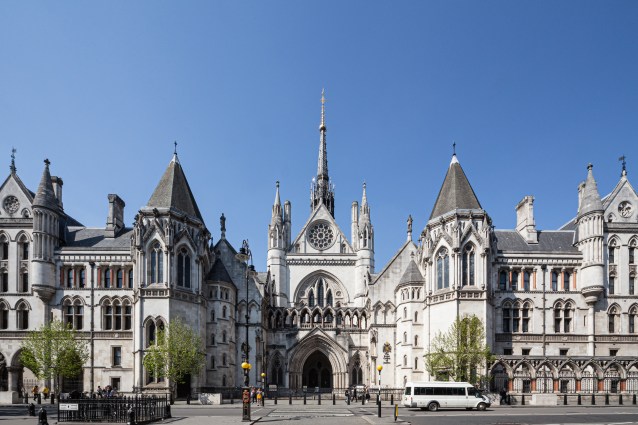
Royal Courts of Justice Pic Credit; Wikipedia

In 2012 Lorry Driver Russell Adams was down on his luck. His bank, the HSBC, had decided to call in his £170,000 mortgage on his £380,000 home. Desperate to raise money he thought of cashing in his frozen £52,000 private pension from Friends Life. He spotted an ad “‘release some cash from your pension” and was directed to CLP Brokers.

A friendly man called Ben Shepherd, told him “I could transfer it into a pension that would perform better and allow me to invest in better investments. I did not know much, if anything, about pension investment at the time and trusted what CLP told me.”

Since the transaction was going to be handled by a reputable private pension management provider then called Carey Pensions UK ( now Options UK Personal Pensions) he was reassured.

He was directed to invest in Store First, a Blackburn based storage facility, that made its money letting out what are known as store pods to people.

Mr Adams told the court that Ben was very keen on this because it was property and he made it sound safe and good for me. He then took out an execution only SIPP with Carey to include his investment. Ben was on commission for putting business that way.

What he didn’t know that CLP, based in Spain, was not authorised by UK law to give any financial advice. It was run by Terence Wright and Lesley Wright. Although Carey was unaware of this until May 2012, the Financial Conduct Authority had posted a warning notice in respect of Mr Wright in 2010. The notice warned that Mr Wright was not authorised under Financial Services and Markets Act to carry on a regulated activity in the United Kingdom, explaining that it believed that he “may be targeting UK customers via the firm Cash In Your Pension”.

Worse was to come. Store First was a dud – it hardly made a penny and Mr Adam’s investment was worthless.

So Mr Adams went to court. At the first hearing the judge found for the private pensions industry and exonerated Carey Pensions for any liability of managing an investment run by a guy barred from trading in the UK.

But last Thursday the Court of Appeal overturned much of the ruling saying Mr Adams was entitled to his money back plus compensation and furthermore Carey Pensions now Options UK Personal Pensions – could not escape liability by trying to blame Mr Adams for his own misfortune. The pension firm tried to appeal to the Supreme Court but were blocked by the judges.

Lady Justice Andrews: Pic credit: judiciary.com

The judgement has widespread implications. For a start some 580 other people had been advised to invest in the firm Store First and could claim their money back. The ruling also has wider implications in that your friendly private pension provider may well have to stop recommending you high risk investments by unregulated – or to be more frank- dodgy providers or risk the fate of Carey Pensions.

The judges in my view took the right decision. They said anymore with only £50,000 to invest is not a sophisticated investor and should be better protected than someone with a £1m to invest.

” Fresh opportunities for unscrupulous entities to target the gullible” -judge

Perhaps the comment from Lady Justice Andrews sums this up the best:

“As the unhappy history of the transfers of small personal pensions into SIPPs holding high risk investments related in that judgment illustrates, the liberalisation of the pension regime in 2006 brought with it fresh opportunities for unscrupulous entities to target the gullible, the greedy or the desperate.

“There is nothing to prevent a regulated SIPP provider such as Carey from accepting instructions from clients recommended to it by an unregulated person, and from doing so on an “execution only” basis. But the basis on which they contract with their clients will only go so far to protect them from liability. If they accept business from the likes of CLP, they run the risk of being exposed to liability under s.27 of the FSMA.”

The full case is here. There is also a report in the Financial Times here.

Independent panel of judges announced to head tribunal examining discrimination against women

Dr Jocelynne Scutt. Pic credit: Cambridge Labour Party

The campaign to introduce a comprehensive bill of rights for women by implementing in full the UN Convention for the Elimination of all Discrimination Against Women (CEDAW) takes a major step forward this weekend.

Five high profile women -one a former judge – have agreed to serve on the panel which will sift evidence to be presented at the CEDAW People’s Tribunal later this year presided over by John Cooper, QC, a human rights lawyer,.

CEDAW is “like motherhood and apple pie” – John Cooper QC

John Cooper said the issue should not be controversial – ” it is like motherhood and apple pie”.

He said the tribunal should have three main goals – independence, transparency and authenticity.

” There are three main areas to investigate: Why CEDAW has never put into UK law; whether there was any good reason for not doing so, and most importantly, to make recommendations on what should happen next.”

The movement to implement comprehensive changes in the law for all women and girls has come from the historic unequal treatment of women and the exposure of poverty and hardship by women born in the 1950s who had to wait an extra six years for their pension. Campaigners pointed out that Margaret Thatcher had signed up to the convention as long ago as 1986 but it had never been properly implemented into UK law -despite Gordon Brown’s government passing the Equality Act in 2010.

Worse the position of the 50s women was just the tip of the iceberg of unequal treatment which covers everything from unequal pay to discrimination in the workplace and women being subject to harassment and sexual abuse and even given poor treatment in jails.

The tribunal will take place as the devolved governments in Scotland and Wales are considering implementing laws to apply the convention – leading to an extraordinary situation where women will have more rights and redress against discrimination and inequality in Scotland and Wales than in England. All this will bring home the issue to the present Tory government whether it wants to do anything about it or not.

The president of the new panel is the Hon. Jocelynne Annette Scutt, an Australian feminist and human rights lawyer and senior law fellow at the University of Buckingham. She has written about money, marriage and property rights and more recently about plastic surgery, women’s bodies and the law. She was Tasmania’s first anti discrimination commissioner and is a member of the Labour Party and the Australian Labor Party. She is a former judge in Fiji.

The other panel members are:

Christine Chinkin

Christine Chinkin, FBA is Emerita Professor of International Law, Professorial Research Fellow and Founding Director of the Centre of Women Peace & Security at LSE. 

She is a barrister, a member of Matrix Chambers. Together with H. Charlesworth, she won the American Society of International Law, 2005 Goler T. Butcher Medal ‘for outstanding contributions to the development or effective realization of international human rights law’. She is a William C Cook Global Law Professor at the University of Michigan Law School.

She has held visiting appointments in Australia, the United States, Singapore and the People’s Republic of China. She is currently a member of the Kosovo Human Rights Advisory Panel and was Scientific Advisor to the Council of Europe’s Committee for the drafting of the Convention on Preventing and Combatting Violence against Women and Domestic Violence.

Jane Gordon

Jane Gordon MA (Oxon) LLM (Distinction) is a human rights lawyer with over 20 years’ experience working in human rights legal practice and policy at domestic, regional and international levels. Jane co-founded Sisters For Change with her sister, SFC Executive Director, in 2014. Jane was Human Rights Advisor to the Northern Ireland Policing Board (2003-2008) where she co-devised the first ever framework for monitoring the human rights compliance of the police.

In 2009-2010, she was appointed Human Rights Advisor to Her Majesty’s Inspectorate of Constabulary’s national policing protest review. Jane has litigated cases of serious human rights violations against Russia, Turkey, Georgia, Armenia and Ukraine before the European Court of Human Rights, and advised national human rights institutions, public authorities and oversight mechanisms in Jamaica, India, Malawi, Iraq, Ireland and across the UK. Between 2008-2017,

Jane was a Senior Fellow at LSE’s Centre for the Study of Human Rights and LSE’s Centre for Women, Peace and Security where she delivered LSE’s practitioner short course on Women’s Human Rights. In 2013-2014, Jane served as gender advisor/SGBV investigator with the UN Commission of Inquiry on Syria. Jane is additionally a member of the Foreign Secretary’s Human Rights Advisory Group.

Aisha Gill : Pic Credit: Putney local website

Professor Aisha K. Gill, Ph.D. (University of Essex) CBE is Professor of Criminology at University of Roehampton. Her main areas of interest focus on health and criminal justice responses to violence against Black, minority ethnic and refugee (BMER) women in the UK, Georgia, Iraqi Kurdistan, Libya, India, Pakistan and Yemen. Professor Gill is often in the news as a commentator on early/child/forced marriage, violence predicated on ‘honour’, and sexual violence in South Asian communities.

Professor Gill has been involved in addressing the problem of violence against women and girls (VAWG) at the grassroots level for the past 21 years. She is invited adviser to the Independent Police Complaints Commission (IPCC) strategic support group on investigations and complaints involving gendered forms of violence against women in the UK (including domestic violence); member of Liberty’s Project Advisory Group; member of Kurdish Women’s Rights Watch; Imkaan and Chair of Newham Asian Women’s Project (2004-2009). In October 2019, she was invited to join the Victims’ Commissioner’s Advisory Panel, chaired by Dame Vera Baird, QC.

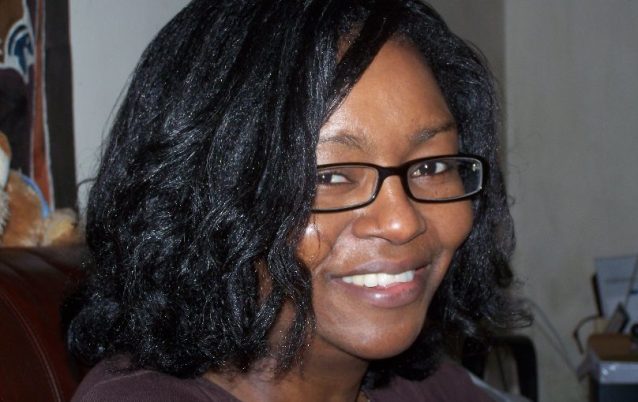
Professor Fareda Banda Pic Credit:Black Female professors Forum.

Professor Fareda Banda, at the School of Oriental and African Studies, London University.

She joined SOAS in 1996. She has convened and taught English Family law, Human rights of women and Law and Society since then. She has also contributed to various courses including Alternative Dispute Resolution, Law and Development, Law and Development in Africa and Legal Systems of Asia and Africa.  She has supervised PhD theses on topics including children’s rights, sexual violence against women, post-conflict reconstruction and gender. She writes on women’s rights, family law, and, more recently, religion. Fareda has been an active member of the School’s Equality Committee, first in her capacity as the union equality officer and more recently as the representative of the Faculty of Law and Social Sciences.

The new panel members are delighted and honoured to be appointed. Dr Davina Lloyd, Chair of the CPT Steering Committee, said:” The well being of future generations is in excellent hands”.

Expect more of this on my blog as the campaign gains momentum throughout the rest of this year.

A toxic indictment of the bungled nuclear decommissioning mess that cost taxpayers millions

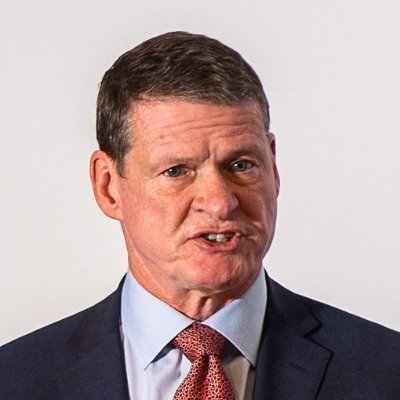
Steve Holliday: A damning report Pic Credit: Twitter

Report recommends a root and branch review of the National Decommissioning Authority

You have a right as a citizen to be kept safe from any dangerous pollution from the ageing 12 closed Magnox nuclear reactors and research stations in the UK. You would expect the organisation protecting us to hand out properly thought out contracts to do the job. The failure by the Nuclear Decommissioning Authority to organise a £6.6 billion contract to clean up properly cost taxpayers £97.5 million when rival companies who lost out successfully sued the agency forcing them to settle with them.

This month completely unnoticed by the national press Steve Holliday, the former chief executive of the National Grid, published a damning report on how the agency failed to do its job and the failure of its supervising body, the UKGI, to supervise it and the Department for Business, Energy and Industrial Strategy, to keep tabs on what was going on.

So frightened were former senior executives of the Nuclear Decommissioning Authority(NDA) of his inquiry report that they rushed to the High Court to try and get a judicial review to stop him ruining their reputations. They failed but delayed the report.

For the record they were John Clarke. the former NDA chief executive; Stephen Henwood, the former chairman; Robert Higgins, the former head of legal services; Mr Graeme Rankin, former head of competition and Mr Sean Balmer, former commercial director, He has spared their blushes by not naming them personally in his report.

Steve Holliday had in his remit the power to recommend disciplinary action against them for their failings. But he chose not to do so instead blaming the culture of isolation in the nuclear industry in general and the running of the Nuclear Decommissioning Authority in particular.

NDA failed to keep a grip

In broad terms the NDA failed to keep a grip on what has happening after they awarded the contract to the Texas company Cavendish Fluor Partnerships before it ended up in the courts where it was successfully challenged by rivals Energy Solutions and Bechtel. The original contract was changed so much and cost so much more – latest estimate is up to £8.9 billion that the companies who lost out were able to sue.

So imbued were the senior staff at the NDA with how clever they were in organising procurement contracts that they missed warning signs and worse didn’t inform the NDA board what was really going on until it was too late. The UKGI is revealed to have a conflicting role – both supervising it and sympathetically helping it sort out problems. He rightly suggests that it should be stripped of its day to day supervision.

The report says : “There appears to have been a culture that sought to self-justify, and which was inward looking. In particular: the NDA had a belief in its own skills and intellectual ability, and did not recognise or seriously contemplate that it may have any weaknesses, when contracting and managing external advisers, it had a propensity to limit their role, and did not appear to welcome strong challenge; and it failed to take sufficient steps to bring in people from other industries with different skills and experience, and to learn lessons from them.”

Damning conclusions picked up by a whistleblower

His criticism of the culture of the NDA has been picked up by Alison McDermott, a whistleblower taking the NDA and Sellafield to an employment tribunal, and may be quoted in her case expected later this year. The BBC recently did an exposure on bullying and harassment at Sellafield. The link to the story is here.

He recommends a root and branch review of the NDA by the business ministry- which has now handed the contract back in house – changing its structure and bringing in people from outside the nuclear industry and putting a top flight lawyer on the board.

I am worried that since there was so little publicity about this report whether the ministry will have the incentive to do anything about it. If it doesn’t we could see more waste of taxpayers’ money and we need changes for our safety in cleaning up some of the most toxic sites in the country.

Four years ago Sir Amyas Morse, then comptroller and auditor general , said “The NDA’s fundamental failures in the Magnox contract procurement raise serious questions about its understanding of procurement regulations; its ability to manage large, complex procurements; and why the errors detected by the High Court judgement were not identified earlier.”

We now need the National Audit Office and MPs on the House of Commons Public Accounts Committee to keep an eye on this. He also has wider recommendations for the rest of Whitehall when it hands out big contracts.

Bradwell Nuclear Power Station; Being decommissioned under this contract

Previous Stories https://davidhencke.com/2017/10/26/nuclear-decommissioning-how-whitehall-turned-toxic-waste-into-a-dirty-mess/

https://davidhencke.com/2020/12/11/the-latest-toxic-progress-on-the-great-nuclear-decommissioning-mess/

Updated: The Ombudsman’s much delayed justice train for 50swomen lost pensions

Sir Robert Behrens:Parliamentary Ombudsman

Parliamentary Ombudsman slips out progress report on 50s and 60s born women pensions complaint

It is commonly known in Whitehall that if want to bury bad news, choose an obscure part of your website, make a big announcement and don’t put out a press release .Yesterday I found out Sir Robert Behrens, the Parliamentary Ombudsman, has done just that.

His announcement on the progress of his four year long investigation on maladministration by the Department for Work and Pensions over notifying the women amounts to pretty much a non announcement. Partly this is because he is restricted by an Ombudsman law which urgently needs updating, Partly it is his own fault that he has made so little progress.

I suspect that he may have thought it was a good idea to make this announcement because it was clear from the recent report on the Ombudsman by the House of Commons Public Administration and Constitutional Affairs Select Committee that people are dissatisfied with his progress. There are conflicting reports that another announcement may be imminent to follow this up.

WASPI Cheltenham statement yesterday

Cheltenham WASPI 19th March

We understand that the Parliamentary & Health Service Ombudsman may make an announcement “imminently”.We expect that this will be the official result of the first stage of their investigation. This will decide whether there was maladministration when we were given inadequate notice of the changes to our State Pension Age.

There are three stages that must be completed before decisions about any compensation can be made:Stage 1: Was there maladministration?Stage 2: If so, did the maladministration lead to injustice?Stage 3: If so, what recommendations should be made to put things right? This could include compensation.It is important to remember that a positive decision on maladministration does not automatically mean that we will get compensation. It is only the first step in the process. Please note that any decision made by the Ombudsman will apply to ALL 1950s women affected by a delay to their State Pension, not just those who have made an official complaint.You can read full details of this process, and how compensation is calculated, here https://www.ombudsman.org.uk/complaints-womens-state…We will let you know as soon as we hear anything further. In the meantime please share this information with anyone you know who’s affected.”

ReplyForward

It will have to be good if it is meant to mollify people he hasn’t done a good job. The announcement is good in explaining to people how an Ombudsman handles an inquiry and why people need to be patient but bad in hiding his own mistakes which have contributed to this delay.

The worst example of this was his decision to pause the investigation in 2017 the moment it became clear that the BackTo60 group, campaigning for the women, were going to the courts for a judicial review on behalf of the 3.8 million women who thought they had been cheated by the decision.

Belatedly yesterday he has now admitted this was false.

“We have reviewed the Court of Appeal’s judgment and it does not affect our investigation. Our investigation is looking at the issues from a different perspective to the courts,” says the announcement.

DWP lawyers argued in court that the ministry had no obligation to tell the women

The announcement suggests that – despite the DWP’s lawyers arguing in the courts that under the 1995 Act the DWP had no obligation in law to tell anyone about the change – that the failure to inform everyone affected properly could have been maladministration. The announcement admits that the first stage of the investigation on this matter is complete and they have a preliminary finding but are not allowed by law – under the 1967 Ombudsman Act – to tell any member of the public about it.

The second clue is that he talks about the second stage – which is discussing any financial remedy for maladministration. This can only happen if the first stage is proved. The advice says there were “complaints that women were given inaccurate information about the number of years of National Insurance contributions they needed to receive a full State Pension. We will be looking at this issue as part of stage two of our investigation. “

  “Our investigation is looking at the issues from a different perspective to the courts,” Parliamentary Ombudsman

What is depressing for the women is what the Ombudsman has ruled out . He won’t investigate full restitution or the payments of ” auto credits” – up to five years of insurance contributions only for men over the age of 60. The auto credits are controversial because originally the government intended to give them to women between 2010 and 2018 when they raised the pension age.

Low compensation

The level of compensation is also likely to be low – the one example he gives is a figure of between £500 and £950. In fact the Ombudsman can order anything from an apology and no compensation to over £10,000 in the most extreme cases.

This will be a drop in the ocean for those who have lost £40,000 or more from this decision.

It looks like any compensation will be for all including women born in the 1960s as well as the 1950s.

The real scandal is how long this will take. Covid 19 has already killed a substantial number of women in this group and bad health, stress and poverty is putting many others at risk. You only have to read the comments from people on my blog to see this.

No idea when he will report

He can’t even give a ball park date when he will report. The more he delays the fewer people will get any compensation because they will be dead. Unlike other inquiries the grim reaper will keep reducing the size of the overall compensation package.

While Covid 19 has left the government with huge bills, the effect of the pandemic since it is more severe on the elderly is reducing the Treasury’s pension bill and killing off those who would have got a pension later.

I wouldn’t suggest that ministers would be so callous to welcome the huge number of deaths among the elderly, but it is certainly saving them a lot of money on pension costs.