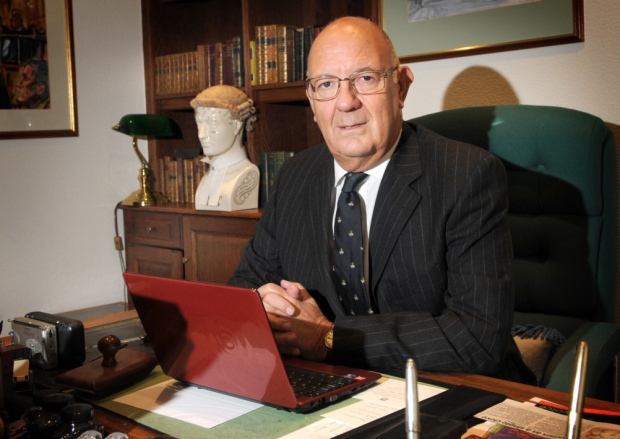
Goddard Inquiry: A very judicial view of child sex abuse

CROSS POSTED ON BYLINE.COM

It was always clear that when the independent panel into child sex abuse morphed into a full blown judicial inquiry under Lady Justice Goddard that the emphasis and atmosphere of the hearings  would change.

Now it has started with preliminary hearings into  Greville Janner, the Anglican Church, Rochdale and Sir Cyril Smith and the forthcoming one on Lambeth it could couldn’t be clearer.

The tone was set by Ben Emmerson, counsel to the inquiry, when he outlined the role of the inquiry. Meeting in Court no 73  at the imposing Royal Courts of Justice in London it will have the atmosphere of a trial, the trappings of a trial, and a huge surfeit of lawyers representing every conceivable interest you see at any trial.

Each separate inquiry over the next five years will amount to a  judicial hearing into the case and there will be a lot of them.The focus will be  into looking into  events surrounding each case  based on strict legal criteria.

This is very different to the workings of an independent panel inquiry. I am a member of one at the moment so cannot comment on its work. But there is a quite a different emphasis in approach between an inquiry which focuses on putting together facts and  whose prime responsibility is to the people who have made the complaints and an  adversarial  inquiry that will be dominated by legal arguments and disputes.

Ben Emmerson, in my view, gave the game away, in his opening address.

He said this on one key point and I  report this in full :

“As will be obvious, Madam, the Westminster  investigations take place in a highly charged media environment. Allegations of the involvement of  politicians in child sexual abuse are reported, on the  one hand, as evidence of a paedophile conspiracy at the heart of Westminster and, on the other hand, as evidence  of a modern-day witch-hunt. It is the role of this  Inquiry to move from the realms of rumour and speculation, allegation and counter-allegation, to the  assessment of objective facts.

The Inquiry must consider all relevant documents, take evidence from witnesses and publish a report which sets out in clear terms what the evidence shows. In doing so, the Inquiry will need to remain sensitive to the particular needs of vulnerable complainants without unduly privileging their testimony. The Inquiry will also need to recognise the damage that can be caused by false accusations of sexual abuse, without hesitating to make findings against individuals and institutions if justified by the evidence. “

What concerned me – and I sought guidance from the inquiry on this – is whether survivors who give evidence will find themselves ” on trial ” during this inquiry and subject to rigorous cross examination about what they claimed happened to them.

The inquiry has clarified that it plans no hearings just to cover cases of false allegations which may disappoint the very vocal minority on the internet who claim that the level of child sex abuse is exaggerated and the motives of survivors are to get easy money by lying about what happened to them.

But this threat  which  I have outlined in bold must be very real for survivors who may want to give evidence in highly contentious cases. If  it does – sometime down the route – look at the Westminster paedophile ring – will ” Nick ” be expected to testify and face questions from lawyers for Harvey Proctor  who is alleged to be his abuser ( and vociferously denies it)- at the risk that a ” court” will decide he could be publicly condemned for going to the police in the first place.

Judgements are also being made on who should be a ” core participant ” – ie a person who can question  all witnesses -and this has already happened at the first preliminary hearing on Greville Janner

Here  Nigel O’Mara, a survivor and campaigner applicant for core participant status,is involved in a legal dispute over whether he should be allowed to become one. In an independent panel this would not arise as all victims are treated equally and there are no public hearings. Justice Goddard has had to reserve judgement on this, but it will not be the last.

I raise these issues not because I  want the inquiry to fail by highlighting problems for survivors in giving evidence – but to warn of potential pitfalls. If I was a survivor I would weigh up these issues very carefully before giving evidence.

 

Google bows to EU law and removes right to search for delisted posts

erase past

Right to be Forgotten? Pic Credit: Index on Censorship.

CROSS POSTED ON BYLINE.COM

From Monday people in the UK and the rest of the European Union will no longer be able to bypass a ban on searching for information which an individual has asked to be removed from the net by Google.

Until now the removal of information by hundreds of thousands of people can easily be circumvented by searching on Google.com, the US version of the search engine.

However as the Inforrm blog reveals Google will block anyone with an IP address in Europe from seeing delisted posts. The full statement from Google is here. It will also be retrospective.

The decision is a victory for privacy campaigners though Inforrm thinks it may not go far enough for some.

Nearly 50,000 people  in the UK  are among the 400,000 who have requested for information to be removed. As Inforrm reports:

” Large numbers of delisting requests are now being made under the Google Spain ruling. Google’s most recent transparency report indicates that it has received 400,564 removal requests and has removed 42.6% of URLs covered by them.  Google has received 48,979 requests from the United Kingdom and has removed 184,115 URLs (38.6% of those requested).”.

While one can understand that people should have the right to remove false information from search engines what concerns me is  there is little transparency. One does not know who has requested the removal of the information and what information has been removed. Google just issues a statement to say that some posts are no longer available. Of course the post remains but people will have difficulty in finding it unless they subscribe to a particular blog.

Google has attempted with a FAQ to explain the main points behind the decision to delist – and there appears to be a view that there where there it is obviously not in the public interest or the person is a political  or public figure the request will be denied.

Google’s ban will not be foolproof – networks like Tor which is also used by the dark web – could mask the IP address of a person searching for the information. I suspect that investigative journalists will use this more as a new way of bypassing this ban if they want to do thorough searches.


A worrying indictment of how child sex abuse cases are handled today

CROSS POSTED ON BYLINE.COM

This week the inquiry into historic child sexual abuse under New Zealand judge Lady Justice Goddard will start preliminary hearings which could last years. On Wednesday it starts with a hearing into allegations against the late Lord Janner. The following Wednesday there are two short sessions looking into abuse inside the Anglican Church and at Knowl View and other venues in Rochdale and on Thursday March 24  into child sexual abuse of people in the care of Lambeth Council. The details are here.

Last week a report came out from the United Kingdom  Child Sex Abuse People’s Tribunal- a very small scale investigation that took evidence from 24 people covering different types of sexual abuse with families, institutions and paedophile rings. What comes out – apart from horrific stories from the testimony of individuals – is a system not capable of sensitively handling the issue. As it says in this paragraph:

people's tribunal two

That to my mind  is as important as the recommendations reported on Mail On line by  the Press Association here . These include a permanent commission,provision of advocates to survivors  proper links between mental health and  police investigating abuse  and a safe channel for victims yo give evidence anonymously.plus better training for police, the judiciary and the health service to handle cases.

This report deserves to be taken seriously as its steering committee was composed ,mainly of survivors themselves  aided by professional advisers and two experts, Regina Paulose, an American lawyer and former prosecutor and Alan Collins, a British solicitor with enormous experience in handling child abuse cases from Jersey’s Haut de la Garenne inquiry  to Australia and Kenya.

If the Goddard Inquiry really wants to tackle the issue they could  not do much better than take  this on board  when they start their hearings.

The full report can be found here.


How EU law hobbled Parliament investigating worst mis-selling scandal in history

CROSS POSTED ON BYLINE.COM

The scandal of the mis-selling of Personal Protection Insurance is well known as one of the worst financial scandals in history.

Some 12 million people have received £22.5 billion in compensation from  unnecessary Payment Protection Insurance (PPI) schemes sold to gullible people.

And to compound it a National Audit Office report  (NAO) last week highlighted how cold calling claims management companies had ripped off £3.8 billion and £5 billion of the compensation paid for work which could be done by claimants for free.

What might also shock people – particularly in the current debate over whether we should quit the European Union – is the revelation by the NAO  that it could not complete the investigation  to its satisfaction because a European Union directive banned Parliament from getting confidential information. I have written about this in this week’s Tribune magazine.

The situation is this. As well as finding out the scale of the problem the NAO wanted to know -on behalf of you the taxpayer – whether the public watchdog the Financial Conduct Authority had done its job its ensuring the many banks and financial organisation had smartened up their acts to prevent a repetition.. Particularly as they are fears that there could be a new scandal involving the mis-selling of annuities and pension schemes.

The FCA had collected this information but refused to hand it over to Parliament’s watchdog.. The reason it turned out is that the Financial Services and Markets Act 2000 combined with EU law restrictions prevents them obtaining the information from the FCA.

As the NAO said: “ This limits our ability to reach a judgement on the FCA’s value for money, as we could not carry out a full assessment of the effectiveness of the FCA’s actions…. we have only limited evidence on how the FCA’s actions have changed firm behaviour, and how effective its redress schemes have been in providing compensation to consumers.”

The NAO tried to get around this by contacting some 20 banks and financial companies and asking them to volunteer to disclose the information. Fifteen did reply but five including two of the companies with the largest number of complaints, Barclays and British Gas Services, declined to provide any information.

The 15 who did reply included HSBC Bank plc; Lloyds Banking Group; MBNA Limited; Nationwide Building Society; NFU Mutual Insurance Society and Santander UK plc.

But a NAO spokesman said: “The information we got from the others while helpful, didn’t enable us to carry out a full assessment of the effectiveness of the FCA’s actions.”

What  is the EU doing putting  the interests of banks above people and Parliament. The NAO is now asking the Treasury to pass a law allowing it some access to this information but it will have to bow to EU law on how much can be revealed.

I am not a supporter of Brexit but it seems to me there is something very wrong here that needs changing. I am surprised that the vociferous campaigners for a No vote have not latched on to this – even if it is in the small print of the report. The NAO is obviously an independent source with no axe to grind over Europe. But it has provided campaigners who say we are not in control of our country with a very potent example on a very serious issue.


Holding Tony Hall, BBC director general to account over Savile

BBC director general Tony Hall

BBC Director General Tony hall. Pic Credit:BBC

CROSS POSTED ON BYLINE.COM

The press launch of Dame Janet Smith’s forensic review into Savile’s  predatory activities at the BBC was an impressive affair.

Survivors are naturally disappointed that she failed to land a terminal blow on senior management at the BBC. They did not have the satisfaction of seeing heads roll for Savile getting away with sexually or indecently assaulting 72 people at different BBC venues or in private flats after attending BBC events. But it was not a whitewash.

It was impressive for two reasons. Dame Janet is a formidable performer ( as I found out when I tried to sneak  two questions past her) and had a  real grasp of the issues of why Savile had been able to get away with his monstrous behaviour for decades.

Tony Hall – who looked visibly moved after reading her horrific findings – did not take the easy way out. He did not as I feared say this was a dark period for the BBC but now everything was OK  after new measures had been taken to protect children and encourage whistleblowers. He took it on the chin the modified conclusion of Dame Janet that there could be another manipulative, charming, clever paedophile still working at the BBC or any other major organisation. He also pledged to do something about it.

Dame  Janet who in my view gratuitously threw away half her terms of reference dealing with recommendations for new child protection guidelines has laid down a pretty tough schedule to make sure something is really done at the BBC.

As she says  “My recommendation is that within, say six months of this report, the BBC should set out its official response to all the reports and should explain what its current rules, policies and procedures are in respect of each of the areas which have been open to criticism and demonstrate that these apply current best practice.”

“…the BBC should.. commission an independent audit of the operation of those rules, policies and procedures. It should set out the timeframe in which each of these areas will be subject to audit, how the audit will be undertaken and should confirm that the results of each audit will be made public. Further, it should undertake now to make any changes to procedures recommended by those audits to ensure that it maintains best practice in these extremely important areas.  ”

She also called for greater commitment to whistleblowers  at the BBC and for the BBC to change its hierarchy and stop its worship of “Talent” who  like Savile seemed to be able to get away with anything as a BBC VIP.

Tony Hall has to be held accountable to do all of this. His contrition should not been seen as a one day wonder. He owes it to brave journalists like Meirion Jones and Liz MacKean,  who were determined to expose Savile but were thwarted by the BBC establishment. He owes it, above all to all the survivors, and any future victim of sexual abuse on BBC premises.

All this will come when the BBC is under enormous pressure to cut costs savagely  under Charter Renewal and with Rupert Murdoch seeking to destroy the BBC as a  formidable media player. But the promises he made to survivors must be carried out.

He also ought to commit the BBC to playing a much bigger role in investigative journalism and use its resources to bear down remorselessly on issues like child sex abuse and corruption that need exposing. The pressure for  that won’t come  from Dame Janet.

I got the impression yesterday that investigative journalists were not Dame Janet’s favourite people. She thought that an accurate and comprehensive leak of her report  on a  issue of  major importance in a publicly funded institution was not in the public interest. Really?

How the Legal Ombudsman’s Office ripped off the taxpayer with a £1m irregular incentive scheme

CROSS POSTED ON BYLINE.COM

What  would you think if the organisation that handles your complaint against a poorly performing solicitor or barrister was itself ripping you off as a taxpayer?

That  is the extraordinary situation in the Office of Legal Complaints or Legal Ombudsman for the last six years where well over £1m extra cash has been paid to its staff  without approval from anyone just to keep them from taking jobs in the private sector.

This was exposed last month in a  virtually unreported disclosure from the National Audit Office. I have written it up for Tribune magazine this month.

The office handles tens of thousands of complaints every year from the general public about poor service from legal professionals – whether it is over conveyancing,personal injuries, wills or family disputes. What emerged about what was going in this office of over 200 people has led to resignation or dismissal  ( whether you take his version or the Ministry of Justice’s ) of its £167,000 a year head, Adam Sampson  who has been described by his permanent secretary as “ not a fit and proper person” to continue  as an accounting officer to Parliament.

He presided over what the NAO called a ” novel and contentious” irregular payment scheme which saw its top officers and the rest of his staff benefit from pay enhancements well beyond anything else available in Whitehall currently suffering pay freezes and one per cent pay rises.

The two unauthorised pay schemes were aimed to retain legal staff who might be tempted to leave and join the private sector. One for senior executives was according to the annual accounts “a benefit in addition to salary and was ­believed by the OLC at the time to be necessary to attract and retain the best candidates nationally to senior posts within the organisation”. Some £33,000 was paid out the last financial year – ­altogether some £348,000 has been paid over six years.

The second scheme for general staff allowed up to an extra 3 per cent to be paid on top of their salaries to encourage them not to leave to join the private sector. This cost nearly £900,000.

Neither scheme was authorised by the Ministry of Justice and neither was spotted for four years either. Successive Lord Chancellors -Kenneth Clarke and Chris Grayling didn’t notice.

On top of this there is suggestion of  alleged expenses fiddling by the chief executive.

The report said an arrangement from 2009 assumed “Mr Sampson to be living in Birmingham [where the OLC offices were based from January 2010] despite his only spending up to two nights a week in Birmingham away from his London home.”

The claims involved train fares which could not be solely justified for business use between London and Birmingham.

The Ministry has reported him to the tax authorities for not declaring them as a benefit in kind. Altogether he had received over £27,000 in benefits in kind over the last two years in office.

What is extraordinary is that the two schemes are still in existence today and the Treasury is still trying to end them this year. The reason is that the contracts drawn up by lawyers are so watertight that the Treasury is having difficulty unravelling them.

One can only say that if the lawyers at the Office of Legal Complaints spent as much time providing a good service to the  public as they did in drawing up lucrative contracts for themselves Whitehall would be a much better place.

Did Boris steal Ken’s best ideas for London?

The site Londonlovesbusiness is rather an extraordinary place to find an interview with Ken Livingstone which is actually sympathetic to the former Labour mayor and critical of Boris Johnson.

But two articles  by Robyn Vinter in the past week give Red Ken a lot more credit than Blue Boris. You can find them here  and here . The second include a statement from Boris’s spokesman  listing all the things Boris says he has done for the capital.

Basically the articles say it was Red Ken who originally put forward the idea for Crossrail, London Overground. the Olympic Games and  what became to be known as Boris Bikes.

And there is also an extraordinary claim by Ken that you won’t find much evidence in City Hall archives that he was responsible for any of them.

The reason is he says is: “One of the things Boris’s team did once they won in 2008 was go through all the dates and records and websites at City Hall and remove my name from all of them and it took some time doing that.”

We have all heard that history is always written by the victors but to  change the actual archives used for people to research history is a step too far.

Given we have a key election for Mayor this year I put up links to these articles so people can judge for themselves before casting their vote.


Westminster Paedophile Inquiry Row: A shrewd move by Scotland Yard

Sir Richard Henriques.

Sir Richard Henriques. Pic Credit: Blackpool Gazette

The decision by Sir Bernard Hogan Howe, the Met Police Commissioner, to ask Sir Richard Henriques, a distinguished  retired judge, to review police procedures covering Operation Midland is very shrewd.

At a stroke it will knock down the hysterical coverage in some newspapers of the investigation which has involved prominent VIPs being interviewed by the Met following allegations of sexual abuse and murder from a survivor known as Nick.

The papers- some of whom seem to act as judge and jury  before the investigation has been completed – in wanting to clear prominent people and cast doubt on the veracity of the victim in alleging such crimes. They have  also complained about the Met Police spending time and money looking at historic child sex abuse cases.

It will also prevent Keith Vaz, the  Labour chair of the Commons Home Affairs Committee, grandstanding when  Sir Bernard comes before him at the end of this month.

He will know as a lawyer that he can hardly grill Sir Bernard about the procedures of the investigation while there is an inquiry by a retired judge looking into the same issues. Nor can he second guess Sir Richard’s findings.

Indeed instead he may have to explain why his committee was so quick to condemn the Met for its handling of  its investigation into the historic alleged rape  against the late Leon Brittan  brought by  ” Jane” now an independent review by Dorset Police has largely cleared the Met of any errors.

It should also provide a valuable breathing case for the Met to take a balanced decision on whether it can proceed further with Operation Midland rather than all this orchestrated hue and cry that it must be stopped now.

Obviously it has been painful for Leon Brittan’s family and the 92 year old war hero  Lord Bramall to be at the centre of such allegations but that doesn’t mean that the police should not investigate them.

Also it is not only cases brought by Nick that will come under scrutiny but also Darren where the Met Police appear to have taken the opposite decision and decided that Darren’s claims were not worth pursuing.

One of the most interesting findings by the judge will be how he sees the police handled two entirely different victims and  their allegations and what standards were applied.

In a statement announcing the review on Wednesday, Hogan-Howe said the aim was “whether we can provide a better balance between our duty to investigate and the interests of suspects, complainants and victims.”

The Met commissioner added: “We are not afraid to learn how we can do these things better, and that’s why I’ve announced today’s review in to how we have conducted investigations in to non-recent sexual allegations involving public figures.”

Henriques is a former high court judge who conducted an inquiry into how Lord Janner escaped justice over abuse claims.

He is  also the prosecutor who  brought the killers of James Bulger to justice and nailed Harold Shipman,the GP who murdered his patients..

Before retiring he was a judge presiding over  terrorist trials including the trial of eight terrorists who would have slaughtered almost 3,000 people had their plan to bring down transatlantic airliners been successful.

So he seems a good choice to cut through all the hyperbole surrounding the VIP paedophile ring  allegations and make sound recommendations on how the Met should handle such allegations in the future. My main reservation is how much of the report will be made public. Transparency is very important in this case.


A bloody nose for Keith Vaz: Met Police cleared in “Jane” rape case

CROSS POSTED ON BYLINE.COM

What I suspected was a flawed finding by the Commons Home Affairs Select Committee into the Met Police’s investigation of the allegations by ” Jane” that she had been raped as a teenager by Leon Brittan has now been proved correct.

An independent review by Dorset Police of Met Police’s investigation into the case – slipped out in an appendix to a report from the committee – has upheld that the investigation was “necessary, proportionate and fully justified despite the significant passage of time.”
This contradicts the critical findings of MPs who preferred to rely on the evidence given by  Det Chief Inspector Paul Settle  rather than senior Met officers. Their description of Paul Settle’s conduct as ” exemplary ” now looks a trifle hollow.

His decision not to interview the late Lord Brittan despite this being standard procedure in the case of rape allegations is unsurprisingly not described as ” exemplary conduct” by Dorset Police.

Instead They say: “The initial SIO was, by his own admission, inexperienced in rape investigation and whilst he appropriately sought specialist assistance and referred the case for Early Investigative Advice, he drew an early erroneous conclusion that the offence of rape was not made out, due to his perceived issues with consent.

” The reviewer concludes that there were ample reasonable grounds to conduct an investigative interview of LB and that the enquiry could not be properly progressed without doing so. Such action was necessary, proportionate and justified and far from unlawful  (their emphasis) as was contended by the SIO when he subsequently gave evidence before the Home Affairs Select Committee.”

“The Early Investigative Advice file lacked essential detail and was incomplete. It is surprising that a relatively junior member of staff made the decision to close this case without auditable reference to senior command.”

Their views  about ” Jane” are also significant.

They say:”The complainant provides a fairly compelling account of events. She is a competent witness,who displays no malice in her motivation.

Her accounts of her situation in 1967 are corroborated and it is plausible that she was moving in similar social circles to LB. The early disclosures in later years provide some consistency in her account and she appears to have little to gain from making a false allegation.There is some ambiguity surrounding the issue of consent, which would prove difficult before a properly directed jury.”

Her case  was superbly reported by Mark Conrad for Exaro. I met her and her husband and would agree with Dorset police’s assessment.

There were mistakes notably taking a broken tape recorder to interview Leon Brittan when it was eventually done – but it does not deserve the highly biased report in the Mail on Sunday on the findings.

Keith Vaz has opportunity to make amends. Perhaps he could either apologise or clarify his position on this investigation when the Met Police Commissioner Sir Bernard  Hogan Howe appears before him on February 23.


Why are we waiting for Lady Macur’s Review into child sex abuse in North Wales?

CROSS POSTED ON BYLINE.COM

Why does a judge having meticulously completed a major report on failings in investigating historic child sexual abuse in North Wales want to redact her own findings?

This is the bizarre  question facing  Lady  Justice Macur who on December 15 last year handed in her final independent report to the Welsh Office and the Ministry of Justice. Yet only weeks later Caroline Dinenage, the junior minister at Ministry of Justice, told Ann Clwyd, Labour MP for Cynon Valley, that the judge herself was recommending ” certain material  should be considered for redaction”.

She also disclosed that ” the report needs to be considered by law enforcement agencies and the government before it can be published. This includes considering whether redactions need to be  made”.

At the moment there is no date for publication – rather like the situation until last month surrounding  Dame Janet’s Smith’s report into Savile at the BBC which had been delayed for more than a year after being completed.

The report is particularly significant for survivors of child sexual and physical abuse in North Wales children’s homes. An inquiry  by Sir Ronald Waterhouse into the abuse of children in care in the former Gwynedd and Clwyd council areas of North Wales between 1974 and 1996 was supposed to get to the root of the problem and see perpetrators jailed.

But it is now obvious some 20 years later that it failed to do so as Operation Pallial under the National Crime Agency has brought many perpetrators to the courts where they have either been found guilty and imprisoned or not guilty and allowed to continue with their lives.

The review will examine some very important questions. Was the scope of the first review adequate or did the terms of reference allow people to escape justice? Did the North Wales police do an adequate job investigating these crimes? How did some people get away with abuse? What do the police, the authorities and the government need to do to prevent such a repetition?

Yet at least two Welsh MPs Ann Clwyd and Wrexham MP Ian Lucas are far from happy about the fresh delay – the inquiry was started four years ago.

Ann Clwyd is particularly sceptical as to why the government needs to scrutinise the report before it is published.

She points out in a letter to Caroline Dinenage that it is meant to be independent of government but now the government will decide when it will be published and what will be published.

She wants to know whether the government and law enforcement agencies have been set deadlines and who will take the decision to redact what material and why.

It may be with Operation Pallial still to bring some cases to court notably the trial of ex  North Wales police chief Gordon Angelsea whose case is not due to start until  September that some material may not be published to avoid prejudicing the trial.

However none of this has been made clear. The Wales Office and the Ministry of Justice need to get on with this – set a date for publication – or suspicions will grow that both departments have something to hide. They owe this to the survivors of these appalling cases in children’s homes in North Wales.