Peers fight into the night for 12 million pensioners to get the full “triple lock” rise of over £14 a week

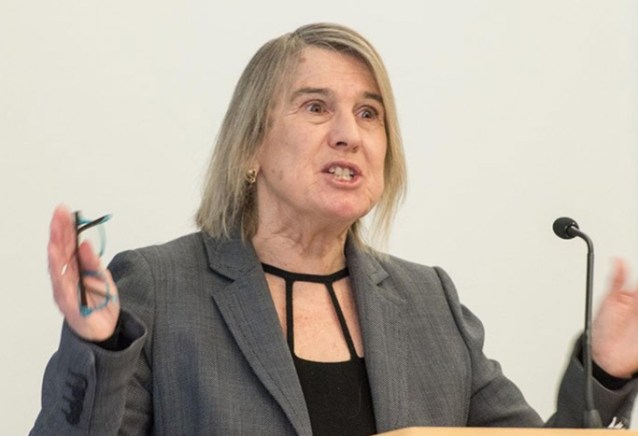
Baroness Stedman-Scott, DWP minister in the Lords who said bill would collapse if peers voted for the amendments

The government came under fire from all parties last night in a late sitting in the House of Lords for deciding to scrap the “triple lock” for pensioners- reducing next April’s rise from over £14 to £5.55 a week.

There also was a constitutional row when the Conservative Leader of the House of Lords, Baroness Evans, on advice from the clerks, wanted to rule out of order an amendment from Tory peer Baroness Stroud, on the £20 a week cut in Universal Credit. It was quite clear from her proposal – she worked with Iain Duncan Smith at the Centre for Social Justice – that she wanted MPs to to have a vote on the cut and was not happy with the policy.

The debate which ran on until midnight united rebellious Tories, Labour, Liberal Democrats, Greens and crossbenchers in opposition to the plans to break the earnings link.

Baroness Altmann, a former Conservative pensions minister, proposed three amendments – all aimed at restoring in some way an earnings link – though offering the government a compromise by either linking to a lower earnings level or giving the highest rise to those pension credit – who are the poorest pensioners.

Lord Sikka – picture credit Twitter

By far the strongest criticism of the move came from the Labour peer, Prem Sikka, who wanted to scrap the clause altogether. He was backed by Baroness Bennett, the former Green Party leader and Lord Davies of Brixton, a former trade unionist and leader of the Inner London education authority.

He called for the full 8.3 per cent up rating to be paid:” In the 1980s, the Thatcher Administration broke the link between earnings and the state pension, and we never recovered from it. This is another example of where, once that link is broken, we will never really recover from it; the Minister so far has not said that in future the backlog will somehow be made up. Nothing has been said about that.”

“The current full state pension at the moment is £9,350 a year, and only four out of 10 retirees receive it. The average state pension is about £8,000 a year and, as has already been pointed out, is around 24% or 25% of the earnings. It is the lowest among industrialised nations, and by not increasing the state pension in line with average earnings we are going to condemn it to remain low.”

He said that state pensions were lowest in Europe – just 4.6 per cent od gross national product – compared to 10 per cent in Germany.

1.25 million women pensioners living in poverty

He asked: “Why is it that the Government are content for such low allocation to the state pension? What happened to the billions that the Government took from 3.8 million women by raising their state pension age from 60 to 66? What happened to the billions that the Government said would be saved by coming out of the European Union? Why have those resources not been used to lift our senior citizens out of poverty?”

He added: “Despite the triple lock, 2.1 million pensioners live in poverty, 1.25 million of whom are women. The poverty rate is higher now that it was in 2012-13. Many simply struggle to survive. Those retirees who try to top up their meagre state pension with part-time work will soon be hit by the Johnson tax: a 1.25% hike in national insurance. At the same time, what do we actually observe? For those rich people who make vast fortunes from capital gains and dividends, or speculation on second homes, commodities markets and securities markets, no national insurance contributions are payable on unearned income. That money could definitely be used to alleviate poverty, but the Government have not indicated any inclination to do that.”

“£8.50 a week is probably less than what many ministers pay for a glass of wine”

He said it would cost £4.7 billion to do so and could easily be raised by raising the national insurance levy on unearned income, such as shares or capital gains, which are exempt from the new levy.

“A triple lock based upon the existing formula could have given an increase of around 8% to 8.3%, adding up to about £14 a week in the full new state pension, instead of £5.55 a week. That is a difference of about £8.50 a week. Is that really a king’s ransom? It is probably less than what many Ministers pay for a glass of wine with their lunch.”

Baroness Bennett said she wanted a even more radical overhaul of the pensions system – saying no pensioner should live in povery and the con tributory system which is unfair to women should be abolished.

Baroness Stedman-Scott, junior minister at the Department for Work and Pensions, said if Lord Sikka’s proposal was passed the bill would collapse as it has only two clauses and asked for him to withdraw it. He did but promised to come back next Wednesday when the bill is debated again when he plans to raise the issue of the National Insurance Fund whose latest accounts show it has a £37 billion surplus. Curiously I learnt that Sir Keir Starmer, the Labour leader, did not want Labour peers highlighting the issue of the pensions ” triple lock” implying Labour was prepared to go along with the Tories over this issue but it seems pretty clear from the debate that this was ignored. Rather extraordinary that Labour don’t want to highlight the issue.

For those who want to see the debate go to https://parliamentlive.tv/Event/Index/3af431d5-923d-46d3-a9ec-3bf5a3ad7d2f and scroll down to 20:12:26 Legislation: Social Security (Uprating of Benefits) Bill – committee stage .It is a long debate lasting nearly four hours.

Please donate to my blog to continue through coverage and through forensic investigations

One-Time
Monthly
Yearly

Make a one-time donation

Make a monthly donation

Make a yearly donation

Choose an amount

£3.00
£5.00
£10.00
£3.00
£9.00
£60.00
£3.00
£9.00
£60.00

Or enter a custom amount

£

Your contribution is appreciated.

Your contribution is appreciated.

Your contribution is appreciated.

DonateDonate monthlyDonate yearly

Donate to Westminster ConfidentiaL

£10.00

DWP dumps on benefit watchdog and ignores plea for more help for victims of domestic violence

The Department of Work and Pensions has rejected any changes to its new minimalist regulations to exempt victims of domestic violence -mainly women – from paying the ” bedroom tax ” and helping them to find out how they could qualify to keep more of their benefits.

Ministry turns down plea from social security watchdog

As I reported ten days ago the release of minutes from the little known Social Security Advisory Committee revealed in July the body chaired by Stephen Brien who worked for Ian Duncan Smith’s think tank had written to the ministry criticising the proposed regulations for being too narrow and the ministry for not running a prominent campaign to let victims know they will now be exempt.

The exemption applies to anybody who wants to stay in their own home and has thrown out an abusive partner and enrols in a sanctuary scheme – which provides extra locks, a fireproof letterbox and in extreme cases a reinforced door to a ” panic room” should the abusive partner return and break into the house.

The problem is that not all women know about this and the exemption only applies to council homes and flats. Also abuse from stalkers or strangers is not covered by the new regulations.

Mr Brien wrote: “Given the vulnerable situations of those affected, there is a compelling case for the Department to examine what options exist in terms of proactively identifying those potentially affected. This should be supplemented by a strong communications strategy that sets out clearly the criteria for this exemption, along with guidance on how to access it.”
“There is a risk that a number of claimants entitled to take advantage of this scheme, particularly those who have already benefitted from a sanctuary scheme security adaptation prior to these regulations coming into force, will be unaware of this change.”

Ministry rejects plea to change the regulation

But the DWP has told me not only will there be no changes but they had already implemented the regulations which came into force on October 1.

A DWP spokesperson said:

“The Department offers support to victims of domestic abuse, whether in the private rented sector or not. The benefit system acts as a safety net for people who find themselves in need of financial support with living and housing costs for a variety of reasons. A range of Universal Credit measures are designed to support victims of domestic abuse, including special provisions for temporary accommodation, same day advances, easements from work-related requirements and signposting to expert third-party services.”

Now for these regulations to become law they have to be scrutinised by Parliament. So I looked up what had happened.

It turns out the ministry laid the regulations before the House of Commons and the House of Lords on September 9 – a Thursday evening just before MPs and peers went off for the weekend. They were laid under what is known as a negative statutory instrument – which means that unless a peer or a MP objects they automatically can become law three weeks later.

Not one MP or peer spoke up about this

The regulations were laid alongside numerous other regulations including changes to Covid 19 pandemic regulations. Not one MP or peer objected or even spoke about it.

They would not have known about the criticism from the watchdog body because its minutes had not been published then. Nevertheless this shows up the ineffectiveness of MPs and peers – who have more time – in scrutinising what the executive is doing.

Given the high profile issue of violence against women after the kidnap and murder of Sarah Everard by a serving Met Police officer it is pretty deplorable that a ministry can get away with this.

Benefits watchdog keeps mum

I sent the ministry’s response to the watchdog body – which regards scrutinising regulations as its main priority – and it decided not to comment, preferring to keep silent about its advice being ignored .I haven’t had a reply from the House of Lords on why the new regulations were missed.

However I have discovered the ministry has issued new advice six days ago to its housing benefit officers. It is here and victims of domestic abuse should challenge officials about getting an exemption.

For those in England I would suggest contacting Shelter. The charity has a comprehensive guide for victims of domestic abuse here. It includes a list of other charities who can help.

So if the ministry, the social security watchdog and Parliament are so ineffectual, at least this blog can highlight some information so more people know about it.

Previous Blog

https://davidhencke.com/2021/10/03/exclusive-half-baked-and-half-hearted-dwps-help-for-women-facing-domestic-abuse-and-violence/

Please consider a donation to allow me to expand and develop this blog to hold more people and government to account

One-Time
Monthly
Yearly

Make a one-time donation

Make a monthly donation

Make a yearly donation

Choose an amount

£3.00
£5.00
£10.00
£3.00
£9.00
£60.00
£3.00
£9.00
£60.00

Or enter a custom amount

£

Your contribution is appreciated.

Your contribution is appreciated.

Your contribution is appreciated.

DonateDonate monthlyDonate yearly

Donate to Westminster Confidential

£10.00

EXCLUSIVE: Half baked and half hearted: DWP’s help for women facing domestic abuse and violence

With the horrendous murder of Sarah Everard by a serving Met police officer dominating the headlines by coincidence the government’s benefit watchdog this weekend released minutes of a meeting with officials from the Department for Work and Pensions on tackling domestic abuse.

Domestic abuse Pic credit: HelpGuide.org

The little known Social Security Advisory Committee was examining new regulations from the ministry due to come into law on payments and help for victims (usually women) of domestic abuse.

You might not think the DWP would have any role in domestic violence but actually it can help by removing benefit penalties and also open the door to money to improve security measures in a victim’s home.

The ministry must have been pretty tardy in doing anything about this as the reason for the new regulations stemmed from a government defeat at the European Court of Human Rights.

At the centre of this case was the much loathed ” bedroom tax ” where 14 per cent of your housing benefit payment can be clawed back if you have more bedrooms than you need.

Women who throw out an abusive partner or grown up member of the family could find themselves liable for this ” tax” if they want to stay in the family home. This regulation exempts them.

No relief from benefit penalties if you are pursued by a stalker

But as the committee found it is a pretty narrow concession. If you are being abused by a stranger or a stalker you can’t escape the penalty. The ministry has decided they are not ” family” even if they are being as violent or frightening as any member of the family.

And it only applies if you live a council house or flat – is you live in private rented accommodation you have to apply for a discretionary housing payment – and given it is discretionary you may not get it. And that applies whether it is family or a stalker.

That’s why I think the change is half hearted and half baked -designed to help a minimum number of people.

But the meeting also disclosed much more. To qualify for these payments and removal of penalties you have to enrol in a sanctuary scheme. This is service which can protect you in your home -by installing extra locks, fireproof letterboxes and in some cases a ” panic room” with a reinforced door where you can flee from attack from an abusive partner or intruder and call the police.

But guess what? The onus is on the claimant to find out about the sanctuary scheme – not on the Department to tell them about it. Just like the millions of 50swomen over their pensions and the millions of people opted out of SERPS who have lost out on a guaranteed minimum pension, the ministry is not bothered to ensure they know. Both of these issues led to rulings of ” maladministration” against the ministry by the Parliamentary Ombudsman.

Department for Work and Pensions hasn’t a clue

But it is even worse than that. The ministry hasn’t a clue how many people are in sanctuary schemes because there is no central record.

Only next year will local authorities have a duty to collect this information but otherwise it is being left to charities, the police and other bodies to tell claimants. The minutes say: “A number of ways to identify claimants in scope of the measure were attempted – requests were made to local authorities, the Ministry of Housing, Communities and Local Government and the Home Office – but the information is not available”

Details of the sanctuary scheme are here – it is aimed at charities.

Stephen Brien;:Chair of the Social Security Advisory Committee

Such a situation has led the chair of the committee, Stephen Brien, to write to the DWP:

“Given the vulnerable situations of those affected, there is a compelling case for the Department to examine what options exist in terms of proactively identifying those potentially affected. This should be supplemented by a strong communications strategy that sets out clearly the criteria for this exemption, along with guidance on how to access it.”
“There is a risk that a number of claimants entitled to take advantage of this scheme, particularly those who have already benefitted from a sanctuary scheme security adaptation prior to these regulations coming into force, will be unaware of this change.

” A number of claimants will be unaware “-Stephen Brien

“Given the vulnerable situations within which this group finds itself, there is potential risk of harm should these claimants remain unaware of the support available to them resulting in their leaving a home where additional security has been installed.”

He also said the definition of who could escape the penalty was too narrow and should be extended to stalkers and that there was not enough being done to support people in private rented accommodation.

“The narrow focus adopted by the Department could lead to inconsistent treatment of people at risk of violence because their circumstances fall outside of those defined by the regulations.”

The SSAC has not formally objected to the new regulation but is seeking some improvements.

This seems to be yet another example of the ministry not informing people of their rights and in this case in an area where public concern has been heightened by the issue of male violence makes it doubly important that something is done. Will the DWP do it though?

please donate to help me investigate more stories

One-Time
Monthly
Yearly

Make a one-time donation

Make a monthly donation

Make a yearly donation

Choose an amount

£3.00
£5.00
£10.00
£3.00
£9.00
£60.00
£3.00
£9.00
£60.00

Or enter a custom amount

£

Your contribution is appreciated.

Your contribution is appreciated.

Your contribution is appreciated.

DonateDonate monthlyDonate yearly

westminster confidential

£10.00

Time for a new UN convention on the rights of older people

Today is the United Nations International Day of Older Persons. As the number of older people grows in developed countries they are becoming a much bigger force.

Yet as we see in the UK the government pays mere lip service to them – trying to present the general public with the idea that they are all well off and preferring to focus on the young.

Indeed the present Tory government thinks it can get away with targeting them – along with the poor- for the mainstay of their new post pandemic austerity polices.

In the last few years they have taken away free TV licences for the over 75s, abolished the ” triple lock ” for pension rises for one of the lowest state pensions in developed countries, continually raise the pension age and targeted women born in the 1950s and 1960s -taking away around £50,000 in pension payments by raising their pension age.

Many people aged 60 cannot now get free bus passes until they are 66 and ministers now have their plans to make them pay full prescription charges from the ages of 60 to 66 – knowing that far more of them are unhealthy and suffer chronic ailments than younger people. And they are going to reintroduce national insurance contributions for those over 66 who supplement their pension by working.

Older people facing redundancy

There are also problems for older people being targeted for redundancies -indeed the organisation Rest Less, (website here) which monitors job prospects for the over 50s, suggests that there were half a million people over the age of 50 on furlough according to the latest figures. They are reporting growing numbers of economically inactive people in their 50s and 60s. How are they going to get a full pension?

So it is rather good news that JustFair – a campaigning organisation – is calling for a new international convention on the rights of older people. You can read about them and their proposal here. Sufficient to say it highlights a lot of issues affecting older women – and it has the backing of CEDAWinLaw which held a tribunal examining women’s rights and the case for putting that UN convention on eliminating all forms of discrimination against women into UK law.

As it says: “Gender inequality in older age is the result of disadvantages accumulated over the life course and further exacerbated by ageism and age discrimination. As a result, many older women are denied their rights, a situation further aggravated by the COVID-19 pandemic with its disproportionate effect on both older persons and women. It is estimated that the impact of the pandemic increased the gender gap by a generation.  This means that women will continue to reach older age in a disadvantaged position unless structural changes are made“.

Internationally the UN is highlighting a huge digital divide between developed nations and developing countries over the internet with older people the worst affected.

Yet, one-half of the global population is off-line, with the starkest contrast between the most developed countries (87%) and the least developed countries (19%) (ITU Facts and Figures 2020).

Age UK Dacorum’s campaign to highlight the UN day

There are also lots of local events today highlighting the day. In my area in Hertfordshire Dacorum Age UK have a fund raising campaign called ” Slip into Slippers” celebrating the dignity of old age and the fact that many older people play a big role in the community.

Charlie Hussey, development officer for Age UK Dacorum said: “We are asking individuals businesses schools and clubs to get involved by Slipping into Slippers for some of the day, and encourage people to have some fun, make a small voluntary donation and take some photos / videos. All to raise funds and awareness of Age UK Dacorum and highlight the needs of older people and equally importantly the contributions they can still make to our community. “

I am also raising funds for my own website to develop my work holding the government and the powerful to account. Please donate if you can

One-Time
Monthly
Yearly

Make a one-time donation

Make a monthly donation

Make a yearly donation

Choose an amount

£3.00
£5.00
£10.00
£3.00
£9.00
£60.00
£3.00
£9.00
£60.00

Or enter a custom amount

£

Your contribution is appreciated.

Your contribution is appreciated.

Your contribution is appreciated.

DonateDonate monthlyDonate yearly

westminster confidential

£10.00

The “systemic maladministration ” facing the disabled applying for Personal Independence Payments -official findings

Margaret Kelly Northern Ireland Ombudsman

Northern Ireland ministry and Capita under fire

An absolutely damning report has been issued by Margaret Kelly, the Northern Ireland Ombudsman on the way hundreds of thousands of disabled people between the ages of 16 and 64 are assessed to see if they qualify for personal independence payments.

This two year investigation into the benefit is the first made by the Ombudsman using new powers under Northern Ireland legislation giving their Ombudsman the power to initiate inquiries if the Ombudsman thinks something is going wrong. This type of inquiry would be illegal in England, Scotland and Wales because Ombudsman do not have the same powers.

In Westminster Michael Gove, the Cabinet Office minister, is currently refusing to even introduce draft legislation to give Rob Behrens, the Parliamentary and Health Service Ombudsman. similar powers to start his own inquiries.

The findings apply to the 250,580 people who applied for the benefit in Northern Ireland but as the NI Ombudsman’s Office says ” there are many similarities to PIP across other parts of the UK.”

The report – which examined 100 cases in minute detail, made extensive inquiries of the ministry and Capita, and looked at statistics governing appeals concludes there has been ” systematic maladministration” by the Northern Ireland Department for Communities and Capita, who were administering the assessments.

Not “one off mistakes”

The report says these were not one off mistakes. Instead she” identified repeated failures which are likely to reoccur if left unremedied. It is therefore my view that there is more work to be done to improve the experience and outcomes for claimants, the robustness of decision making and public confidence in the system.”

She has made some 33 recommendations and has given the ministry and Capita six months to rectify them. She can’t compel the ministry to implement them but has said she will do a follow up report to see what they have done. The report also went to members of the Northern Ireland Assembly.

Ms Kelly said:
“Too many people have had their claims for PIP unfairly rejected, and then found themselves having to challenge that decision, often ‘in the dark’, and on multiple occasions, while not knowing what evidence has been requested and relied upon to assess their entitlement.

” Both Capita and the Department need to shift their focus to ensure that they get more of the PIP benefit decisions right the first time, so that the most vulnerable people in our society get access to the support that they need, when they need it. Furthermore, it will safeguard public resources by reducing both the time and costs associated with examining the same claim on multiple occasions.”

The report reveals a serious lack of leadership and guidance from the ministry, poor communication with claimants and a failure to get key additional medical information which would have helped them get the benefit. As a result many of them had their applications turned down only to appeal and get the benefit – at a cost of some £14m to the taxpayer. If the ministry and Capita had got the information in the first place there would have not have been the need for an appeal.

Capita had an incentive NOT to get further medical information to help claimants

She also discovered that disability assessors working for Capita had a perverse incentive NOT to get additional information to help the claimant because they would get a bonus if they completed the application quicker and getting extra information slowed down the process.

Capita were also criticised for poor communications with health professionals as well as claimants. When evidence was requested from Health Professionals named by the claimant, the request letters sent by Capita were often poorly completed and did not specify what information was sought.

In face to face assessments, the evidence from the consultations was often the primary and in some cases the only source of evidence relied upon by the Disability Assessors when providing their advice to the Department.

I came across this report because of a link to my blog from UKAJI, the United Kingdom Administrative Justice Unit, who have reviewed the long report. Their article is here.

I concur with their review which was impressed with the high standard of the research and the bar it set for future Ombudsman investigations.

To my mind this again shows the current weakness of the Parliamentary Ombudsman in Westminster. The present Ombudsman can only investigate complaints and therefore is left with a much narrower remit. By having powers to do a broad ranging investigation, much more detail can be investigated and issues that governments don’t want to address can be highlighted. Hence the conclusion in this report that the disabled have been subject not just to maladministration but ” systemic maladministration”. I bet disabled claimants are similarly treated in the rest of the UK but nobody has the resources to properly investigate their poor treatment. Let’s see what happens in Northern Ireland following this devastating report.

Worst audit report for the Department for Work and Pensions in 33 years

A damning loss of control of Universal Credit payments has meant that the Department for Work and Pensions has received a drubbing from the ministry’s auditors, the National Audit Office, and led to its accounts being qualified for 33rd year in succession.

While the ministry has been praised for its swift response to the pandemic by uplifting Universal Credit by £20 a week and coping with a doubling of people on the benefit, the grim costs to the ministry’s finances are revealed in its annual report.

Overpayments on Universal Credit have skyrocketed, criminal gangs have targeted business payments and the ministry has had to set aside £1 billion to pay 132,000 pensioners who have been underpaid their pensions for up to 30 years.

A new problem of identity theft of some 5000 claimants has also hit Universal Credit leaving some claimants losing benefit for weeks.

Overpayments hit record £8.3 billion

DWP estimates it overpaid £8.3 billion of the £111.4 billion that it spent on benefits in 2020-21, an increase of £3.8 billion on the previous year. The rate of overpayments increased from 4.4% in 2019-20 to 7.5% in 2020-21. Nearly all of the increase in fraud and error was on Universal Credit. DWP estimates it overpaid £5.5 billion of Universal Credit (14.5%) and underpaid £540 million (1.4%).

The NAO reports: “DWP has identified four key fraud and error risks within Universal Credit that it needs to tackle, as they are the largest causes of fraud and error. It is looking to improve controls over incorrectly reported self-employment earnings, savings, living arrangements and housing costs. It has also identified several organised criminal attacks during the pandemic, with fraudsters targeting Universal Credit in particular and making claims in other people’s names.

The Department is owed £5 billion of overpayments, placing additional strain on its resources and potentially causing uncertainty and hardship to claimants. It is not sure how much of its estimated loss of £8.4 billion in 2020-21 it will recover, as it has attempted to recover only 10% of the estimated loss in the last 5 years.”

The ministry is now having to bring in more staff to sort out the fraudulent claims and a criminal investigation has been launched.

On the underpayment of pensions the ministry has promised to pay the people by the end of next year.

Gareth Davies, NAO head ” fraud and error at record levels”

The NAO report says: “The Department commissioned a root cause analysis to understand the cause of these underpayments. This analysis identified a range of process and control issues including poor staff training, instructions and quality review that led to the underpayments. These issues have also affected the Department’s initial work to quantify and rectify errors. The Department has asked the Government Internal Audit Agency to review State Pension legislation to ensure there are no further entitlements that may be underpaid.”

“The impact of this underpayment on the individual pensioners is significant, and it is vital the Department learns lessons to avoid systemic underpayments in the future and correct past underpayments.”

Gareth Davies, the head of the NAO, said:

“I am concerned that the level of fraud and error in the benefits system continues to increase year on year, now reaching its highest level since records began. This has a real impact on public funds and on those who face deductions to their income due to overpayments.

“I recognise that the pandemic and the resulting surge in the number of claimants has increased DWP’s exposure to fraud and error. It must now review all cases that could have been subject to fraud during this time, whilst continuing to progress our past recommendations on how to reduce fraud and error.”

Revealed: The chequered past of the Highgate Care Home consultant assisting with evicting centenarians

Isla Meek : pic credit; Linked In

The controversy over the sale of the Mary Feilding Guild care home in north London to social care entrepreneur and property developer Mitesh Dhanak, continues unabated as he begins to arrange for the residents to leave.

Since his take over the now renamed Highgate Care Home he has brought in two consultants to help him move the residents out, two of them centenarians, so he can demolish the home and apply for planning permission to build a new one.

One of the consultants is Isla Joanne Meek. Her Linked In entry says she is managing director of Isla Meek Consulting, a small business based in Radstock, a town in Somerset. She has a long list of services she provides and she has both a management and nursing qualification. These include helping the management of new homes, safeguarding people, helping homes maximise their occupancy and charge higher fees for services and the occasional work advising homes how to handle Care Quality Commission inspections.

What she doesn’t disclose is that she was once consultant to a failing care care home in Westbury-On-Trym and for a period was struck off the Nursing and Midwifery Council register.

The care home in question ,Holmwood House nursing home, was subjection of a BBC TV investigation in 2014 and stories in a local community paper The Bristolian. The links to the tales are here and here.

Holmwood House; Pic credit:BBC

Holmwood House had eight substantiated allegations of abuse or neglect of residents there between 2012 and 2014,

Admissions had been temporarily suspended twice since June 2012 and, under a voluntary arrangement, no-one with nursing needs was admitted during that time.

The home’s owner Ghassan Al-Jibouri said he had “nothing to hide” and his first concern was the health and welfare of residents.

Isla Meek, then struck off by the NMC, was working there as a consultant and audited controlled drug records for manager Simone Smith which turned out to have had numerous forged signatures.

Since then Isla Meek has been reinstated on the NMC register – the NMC told me people could reapply for reinstatement five years after they had been struck off.

Wentworth Court: Pic credit; Care Choices

The Highgate Home is not the only work she has done for Mr Dhanak. She also acted as a consultant for Wentworth Court in Cheltenham, a home for people with serious dementia. The home has a good rating but its financing is similar to all Mr Dhanak’s other companies. It is run by First Cheltenham Care Ltd, a £100 company with him a sole director. The financing of the home comes loans and mortgages from Barclays Bank and the property is revalued most recently at £6.3 million.

Isla Meek Consulting is more modest. It has two directors, herself and Tim Meek and is based in a property solely owned by Tim Meek which he paid £170,000 five years ago. The latest accounts up to May 2020 show the business has assets of around £17,000 and capital and reserves of £7300.

I did ask Ms Meek for a comment via Highgate Care Home but none has been received at the moment.

The previous story is here: https://davidhencke.com/2021/03/15/how-the-genteel-retiree-world-of-centenarians-was-shattered-by-the-ruthless-modern-model-of-social-care-capitalism/

There is also an interesting article in the Ham and High: https://www.hamhigh.co.uk/news/care-experts-fire-mary-feilding-guild-warning-7896998 This warns about the dangers of severe health impacts on elderly people who are suddenly moved.

Mitesh Dhanak. Pic credit: Precious Homes

Independent panel of judges announced to head tribunal examining discrimination against women

Dr Jocelynne Scutt. Pic credit: Cambridge Labour Party

The campaign to introduce a comprehensive bill of rights for women by implementing in full the UN Convention for the Elimination of all Discrimination Against Women (CEDAW) takes a major step forward this weekend.

Five high profile women -one a former judge – have agreed to serve on the panel which will sift evidence to be presented at the CEDAW People’s Tribunal later this year presided over by John Cooper, QC, a human rights lawyer,.

CEDAW is “like motherhood and apple pie” – John Cooper QC

John Cooper said the issue should not be controversial – ” it is like motherhood and apple pie”.

He said the tribunal should have three main goals – independence, transparency and authenticity.

” There are three main areas to investigate: Why CEDAW has never put into UK law; whether there was any good reason for not doing so, and most importantly, to make recommendations on what should happen next.”

The movement to implement comprehensive changes in the law for all women and girls has come from the historic unequal treatment of women and the exposure of poverty and hardship by women born in the 1950s who had to wait an extra six years for their pension. Campaigners pointed out that Margaret Thatcher had signed up to the convention as long ago as 1986 but it had never been properly implemented into UK law -despite Gordon Brown’s government passing the Equality Act in 2010.

Worse the position of the 50s women was just the tip of the iceberg of unequal treatment which covers everything from unequal pay to discrimination in the workplace and women being subject to harassment and sexual abuse and even given poor treatment in jails.

The tribunal will take place as the devolved governments in Scotland and Wales are considering implementing laws to apply the convention – leading to an extraordinary situation where women will have more rights and redress against discrimination and inequality in Scotland and Wales than in England. All this will bring home the issue to the present Tory government whether it wants to do anything about it or not.

The president of the new panel is the Hon. Jocelynne Annette Scutt, an Australian feminist and human rights lawyer and senior law fellow at the University of Buckingham. She has written about money, marriage and property rights and more recently about plastic surgery, women’s bodies and the law. She was Tasmania’s first anti discrimination commissioner and is a member of the Labour Party and the Australian Labor Party. She is a former judge in Fiji.

The other panel members are:

Christine Chinkin

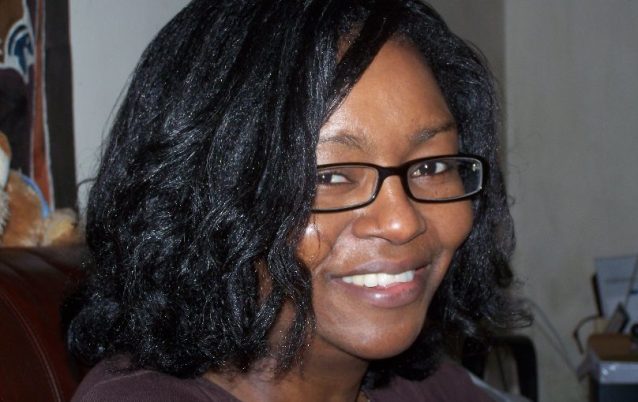
Christine Chinkin, FBA is Emerita Professor of International Law, Professorial Research Fellow and Founding Director of the Centre of Women Peace & Security at LSE. 

She is a barrister, a member of Matrix Chambers. Together with H. Charlesworth, she won the American Society of International Law, 2005 Goler T. Butcher Medal ‘for outstanding contributions to the development or effective realization of international human rights law’. She is a William C Cook Global Law Professor at the University of Michigan Law School.

She has held visiting appointments in Australia, the United States, Singapore and the People’s Republic of China. She is currently a member of the Kosovo Human Rights Advisory Panel and was Scientific Advisor to the Council of Europe’s Committee for the drafting of the Convention on Preventing and Combatting Violence against Women and Domestic Violence.

Jane Gordon

Jane Gordon MA (Oxon) LLM (Distinction) is a human rights lawyer with over 20 years’ experience working in human rights legal practice and policy at domestic, regional and international levels. Jane co-founded Sisters For Change with her sister, SFC Executive Director, in 2014. Jane was Human Rights Advisor to the Northern Ireland Policing Board (2003-2008) where she co-devised the first ever framework for monitoring the human rights compliance of the police.

In 2009-2010, she was appointed Human Rights Advisor to Her Majesty’s Inspectorate of Constabulary’s national policing protest review. Jane has litigated cases of serious human rights violations against Russia, Turkey, Georgia, Armenia and Ukraine before the European Court of Human Rights, and advised national human rights institutions, public authorities and oversight mechanisms in Jamaica, India, Malawi, Iraq, Ireland and across the UK. Between 2008-2017,

Jane was a Senior Fellow at LSE’s Centre for the Study of Human Rights and LSE’s Centre for Women, Peace and Security where she delivered LSE’s practitioner short course on Women’s Human Rights. In 2013-2014, Jane served as gender advisor/SGBV investigator with the UN Commission of Inquiry on Syria. Jane is additionally a member of the Foreign Secretary’s Human Rights Advisory Group.

Aisha Gill : Pic Credit: Putney local website

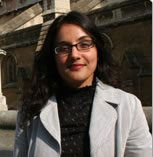
Professor Aisha K. Gill, Ph.D. (University of Essex) CBE is Professor of Criminology at University of Roehampton. Her main areas of interest focus on health and criminal justice responses to violence against Black, minority ethnic and refugee (BMER) women in the UK, Georgia, Iraqi Kurdistan, Libya, India, Pakistan and Yemen. Professor Gill is often in the news as a commentator on early/child/forced marriage, violence predicated on ‘honour’, and sexual violence in South Asian communities.

Professor Gill has been involved in addressing the problem of violence against women and girls (VAWG) at the grassroots level for the past 21 years. She is invited adviser to the Independent Police Complaints Commission (IPCC) strategic support group on investigations and complaints involving gendered forms of violence against women in the UK (including domestic violence); member of Liberty’s Project Advisory Group; member of Kurdish Women’s Rights Watch; Imkaan and Chair of Newham Asian Women’s Project (2004-2009). In October 2019, she was invited to join the Victims’ Commissioner’s Advisory Panel, chaired by Dame Vera Baird, QC.

Professor Fareda Banda Pic Credit:Black Female professors Forum.

Professor Fareda Banda, at the School of Oriental and African Studies, London University.

She joined SOAS in 1996. She has convened and taught English Family law, Human rights of women and Law and Society since then. She has also contributed to various courses including Alternative Dispute Resolution, Law and Development, Law and Development in Africa and Legal Systems of Asia and Africa.  She has supervised PhD theses on topics including children’s rights, sexual violence against women, post-conflict reconstruction and gender. She writes on women’s rights, family law, and, more recently, religion. Fareda has been an active member of the School’s Equality Committee, first in her capacity as the union equality officer and more recently as the representative of the Faculty of Law and Social Sciences.

The new panel members are delighted and honoured to be appointed. Dr Davina Lloyd, Chair of the CPT Steering Committee, said:” The well being of future generations is in excellent hands”.

Expect more of this on my blog as the campaign gains momentum throughout the rest of this year.

Official: The Department of Work and Pensions has never bothered to assess the impact of raising the pension age on the 3.8 million women themselves

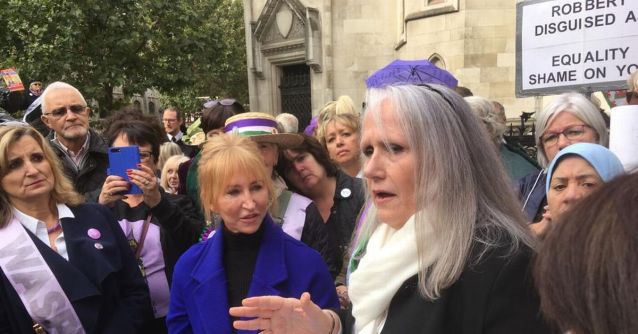
BackTo60 women outside the Royal Courts of Justice in 2019

It’s official. The Department for Work and Pensions has finally admitted after more than 25 years that they never thought of doing any impact studies on the effect of their decisions to raise the pension age from 60 to 66 for 3.8 million women.

A Freedom of Information request from a 1950s born woman seeking details of impact studies on the group of women most affected has forced the ministry to admit that there are none.

The letter says: “The Act does not oblige a public authority to create new information to answer questions; nor does it require a public authority to give advice, opinion or explanation, generate answers to questions, or create or obtain information it does not hold.
“If you ask a question, rather than requesting recorded information, we will provide you with the recorded information that best answers the question. Once we have provided the recorded information, we have met our obligations under the Act; interpreting the information provided is up to you.
“Your request makes statements and seeks to engage us in debate which you want us to
respond to. This would need new information to be created.”

No information held

It goes on : “We do not hold any recorded information of an impact assessment of the effects on women of the State Pension Age that informed the rises of 1995. However, you may find the following explanation useful. We have provided this outside our obligations under the FOI Act”.

The Department has released the White Paper that preceded the 1995 Pension Act and the impact statement the coalition government produced before implementing the 2011 Act which speeded up the rise. And guess what the ministry are right there is nothing about the impact on women before the government legislated for the change.

There is one concession – the idea of extending the auto credit of national insurance contributions to women. Men over 60 had this concession since 1983. Women would have had it once they started to raise their pension age from 60 in 2010 but of course this was never implemented and men continued to have it until 2018 when the pension age was equalised. Instead there is much concern repeated in the 2011 impact study of the effects of the change on business and occupational pensions. The 2011 impact study is more comprehensive but also concentrates on the savings the government will make.

Sir James Eadie

So no wonder Sir James Eadie QC when acting for the DWP in last year’s Court of Appeal case brought by BackTo60 to seek restitution for the 3.8 million affected made it clear that pensions were not a social measure aimed to reduce poverty or inequality. The ministry never had the issue on their radar when they introduced the change in 1995. These women were not even thought important enough to require an study on how it would affect their lives.

How the genteel retiree world of centenarians was shattered by the ruthless modern model of social care capitalism

Mary Fielding Home, Highgate Pic credit: Mary Feilding Guild

This spring a group of very elderly, sharp minded and bright people will be evicted from a care home where they hoped they would end their lives by a ruthless capitalist who epitomises the new privatised world of social care providers.

The home is unusual in many respects. It caters for bright academics and authors and is a living community of a university of the third age – the oldest is 104 and still going strong. It also occupies a site on the borders of Highgate and Hampstead in London with a book value of £3.8m -a tempting find for any developer.

The group have been placed in this position by the failure of the unique trust, the Mary Feilding Guild, a charity set up in 1962 but dating back to 1882, to make ends meet. The combination of Covid 19, the closure of one of its properties on the site, not being in a position to take new residents, and the need for major modernisation all contributed. The value of the charity’s investments fell from £1.8m to £824,142 in one year.

So the trustees decided to sell it as a ” going concern ” with the aim of finding someone who would keep the residents there and have the funds to improve and modernise the home. Enter Mr Mitesh Kumar Dhanak or Mr Mitesh Girharlal Dhanak as he now prefers to be called. He offered to buy it as a going concern.

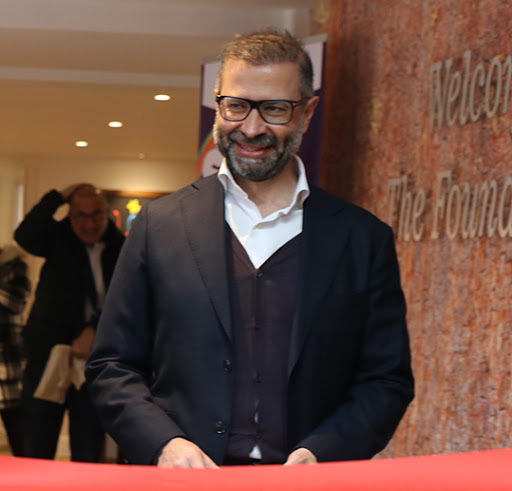
Mitesh Dhanak Pic credit: Precious Homes

Within five days of owning it for as yet undisclosed sum he decided to evict everyone by the end of May, declare the staff redundant, demolish the entire home and put a planning application for a new home to Haringey Council.

Mr Dhanak, 63 next month, is not a trained social care or health specialist. He is an accountant with a degree from Sheffield University. He set up his first business Precious Homes in 1994.

His views on the sector were outlined at a Care Conversation webinar on 14 October last year: ” “In terms of the KPIs ( Key Performance Indicators )that funds would look at, it’s property backed, it’s resilient cashflow, it’s government backed – it ticks all the right boxes.” He added later: “Unfortunately, the British press loves the horror stories. It’s about lobbying the government and making sure that our voice is heard and our contribution is recognised. It’s incumbent on all of us to try to do that.”

Now Mr Dhanak has created a complex group of interlocking companies – holding according to Companies House – 27 appointments. All of them are virtually one man bands – himself and a secretary and nobody else – making it difficult to follow his story.

They embrace a small number of care homes for adult care plus the elderly with Alzheimer’s Disease and a property company with investments from Neasden in North London to Barnsley and St Albans. He also got into an enormous tussle with Revenue and Customs when he moved some homes tax free into his pension based in Guernsey- but after a bitter battle he proved the tax people had made an error in law and he won.

The services he provides are rated Good by the Care Quality Commission and he has ploughed money from bank loans into providing a good standard. He also is a trustee of the Cheltenham Playhouse.

The centre of his operations are Precious Homes at Magic House close to Palmers Green. Each each company follows a similar pattern. They are £100 off the shelf companies and within days of him either setting them up or taking over from another operator their assets are mortgaged to the banks – his favourite ones being Coutts and Clydesdale Bank.

His latest £100 company which took over the Mary Feilding Guild home ,Highgate Care is a good example. He has already mortgaged the site to one of his own companies Precious Homes. But this time he has decided to go to a tax haven to get a second mortgage from the Waymade Capital, a Jersey based company run by brothers Vijay and Bhikhu Patel.

The company also has interests in health care, pharmaceuticals, and property and the brothers, both Kenya Asians, originally made their money by setting up a chain of pharmacies which they sold on to Boots. Vijay was awarded an OBE in 2019 under very controversial circumstances. An investigation by the Times revealed he had rebranded generic drugs and overcharged the NHS. This was not picked up by the committee awarding him the honour.

It wrote “Atnahs, a company he co-founded, acquired the rights to old medicines and increased prices by up to 2,500 per cent, costing the NHS at least £80 million. A packet of antidepressants rose from £5.71 to £154 and an insomnia drug soared from £12.10 to £138.” The company now has a financial interest in the Highgate home.

No answers to questions on finance or the price he paid

Mr Dhanak declined to answer through his communications agency any questions about the financing of his ventures or the price he paid for the property.

He did provide an explanation for his change of mind. “The team held meetings within days of completion as there was no desire to mislead residents or staff once a decision was made. Within five days, nearly 40% of the residents have already found potential new homes and we are confident that this trend will continue with the support of the Highgate House team.”

“Since the sale was agreed, the new owner in consultation with professional advisors reviewed the existing model and considered a number of options, including operating the home in its current format and concluded that regrettably it would not be possible to continue to provide care in the same way.  The home has been financially unsustainable for a significant period of time and the Mary Feilding Guild trustees would be aware that a new owner would have to make significant changes.”

owner intends to demolish property, says trust

The trust have also issued a statement: “We now understand that the new owner intends to demolish the existing property and build a completely new home on the site. Four days after completing the sale the purchaser announced a three-month notice period to the staff and residents after which the home will remain empty.

“However, it will take at least seven months to produce a detailed design, obtain planning permission, and commence construction. During this time the home could have been kept open for existing residents, and staff, rather than force them to move, and making staff redundant. The elderly residents will now be forced to seek alternative accommodation during the COVID restrictions, therefore severely limiting their choice.

Please don’t evict them by the end of May

” We are appealing to the new owner to reconsider this wholly unnecessary decision to shut the home immediately. We believe that it is not unreasonable to delay the closure procedure, to one month, before a start on site is possible. This would allow residents and staff reasonable time to consider their options, and by this time the pandemic should have eased.”

The lessons from this saga are two fold. The trust’s lawyers appears to me to have been very naive in not demanding guarantees for their residents in writing. And Mr Dhanak’s business strategy depends of an ever rising property market and ever bigger sums of money being available to local authorities for social care. If there is a major hiccup in either or both of these – the banks are going to demand their money back pretty sharpish and lot of vulnerable people are going to be evicted.

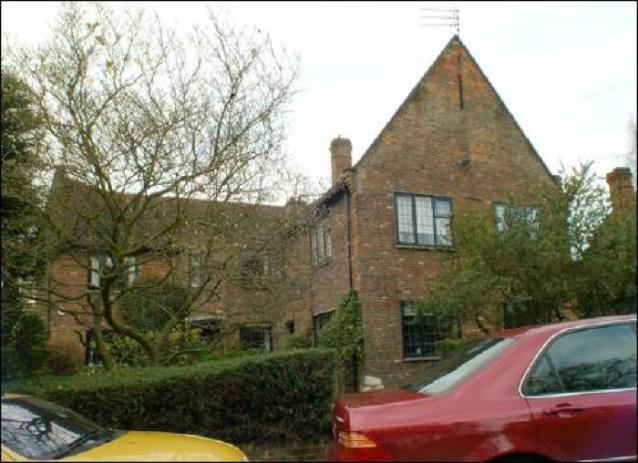
In the meantime Mr Dhanak can retire to his beautiful home in Hampstead Garden Suburb purchased for £2.5 million with a Clydesdale Bank mortgage, according to the land registry,. Here’s a nice picture of it.