Oldham West: How Labour is defeating the UKIP challenge

CROSS POSTED ON BYLINE.COM

Anybody who has followed UKIP’s recent performances in council by elections would not have been surprised at the resounding victory by Labour over UKIP at Oldham West, the seat held by the late Michael Meacher MP.

Once again the Westminster Parliament appeared out of touch with local reality when it assumed that Jeremy Corbyn’s leadership would mean the end of Labour as a serious fighting force and a close run result at Oldham, heralding a revival for UKIP.

The combination of a popular young local candidate in Jim McMahon, the leader of Oldham Council, and the fact that the Labour Party  has had a surge in membership meant that the party was well  placed to win.

The serious loser is Nigel Farage who ran a vicious anti Corbyn campaign using the worst of the deluge of bad press coverage, expecting a big boost from white working class voters in Oldham. But it didn’t happen – hence his outrageous attack today on Asian voters for keeping Labour in poll position.

This is a real problem for Farage because his entire strategy is to get the votes of mainly white working class voters in the North so he can replace  Labour as the official opposition by winning swathes of Northern seats.

This is clearly not happening in Oldham. Despite I suspect some switching  from the Tories to UKIP – resulting in the Tories very bad performance where their share of the vote dropped to under 10 per cent.

If you analyse the UKIP bad run of  council by-election results – it shows they are falling back  everywhere except in their traditional heartlands in the Fens, Kent and Essex. They are making no headway in London

The Oldham West result was preceded by a similar UKIP slump in a council by election in Chorley in Lancashire. In Chorley Labour recorded a 12.7 per cent swing –taking the seat with 57.3 per cent share of the vote and winning with 697 votes. The big loser was UKIP whose share of the vote dropped by 12.4 per cent – getting just 76 votes.

And there have been similar bad performances – including two last night -one in the London borough of Newham where there was an 9 per cent swing to Labour and UKIP got only 3.9 per cent of the vote.Labour got 1440 votes, UKIP, 78.

The other was in the Malvern Hills – a Tory heartland – where UKIP was pushed into third place, halving their share of the vote, to 13.3 per cent from 27.7 per cent. They got 56 votes. Labour, standing for the first time in the ward, got nearly 23 per cent of the vote, 96 votes with the Tory winning with 268 votes.

Where UKIP do have presence – their effect has been to hit the main parties without winning outright. In Ashford, Tories took a seat from Labour by two votes and in Rochford, Essex, Labour took a Tory seat by four votes.

However pundits or commentators want to play it.- this was a good result for Labour, a bad result for UKIP, and an appalling result for the Westminster Establishment who had written the Labour Party into the history books.


The full result
Jim McMahon (Labour) – 17,209 (62.11%)
John Bickley (UKIP) – 6,487 (23.41%)
James Daly (Conservative) – 2,596 (9.37%)
Jane Brophy (Liberal Democrat) – 1,024 (3.70%)
Simeon Hart (Green Party) – 249 (0.90%)
Sir Oink A-Lot (Monster Raving Loony) – 141 (0.51%)


The “Jane” date rape case: A flawed report from MPs on the Home Affairs Committee

Keith Vaz MP, chair                  Leon Brittan

CROSS POSTED ON BYLINE.COM

The House of Commons home affairs select committee has produced a number of outstanding reports on the criminal justice system. But its latest report on the Met Police’s handling of an investigation in allegations that Leon Brittan was involved in an historic ” date rape” case is not one of them.

The MPs have admonished the Met Police, demanded that a prominent MP, Tom Watson apologise to Leon Brittan’s family for helping the woman who made the allegation; produced a biased conclusion of how the Met handled the case and given fresh impetus to the idea that celebrities should be given special treatment. The report can be read here. 

Since then my extremely assiduous colleague Mark Conrad has found new information from witnesses interviewed by the Met Police which  are  at odds with the account given by the  original investigating officer and what was broadcast on the BBC  Panorama investigation into child sex abuse. You can read his article on the Exaro website. Mark Watts, Exaro’s editor in chief, has also done an analysis of the police evidence to the committee here.

My main quarrel with the MPs is the conclusions of the report. Not only do they seem biased towards  the investigating officer Paul Settle whose work they describe as ” exemplary” but they appear to ignore compelling evidence given his superiors, notably Deputy Assistant Commissioner Steve Rodhouse.

As Rodhouse put it “I think this investigation was following the evidence where it could and conducting a thorough investigation of all the circumstances. That was not done within DCI Settle’s investigation. I understand his rationale but there were other inquiries that needed to be conducted before we could say we had done the job thoroughly.”

Or “. It is highly unusual to undertake an investigation of this nature without interviewing the person who is accused.”

Not only is this ignored in the conclusions but the report indemnifies Mr Settle before, as the report itself says, there has been a  thorough review by another police force to see if the Met Police got it right. One would have thought the MPs would await its findings rather than act like a kangaroo court in  this instance.

And what are MPs doling praising a senior police officer for NOT following standard procedure in  rape cases which is to interview the accused? Or do they think important people deserve special privileges?

They also attack Tom Watson for intervening in the case. As far as I can see the evidence shows that his points had already been acted on independently by senior Met Police officers, so, in effect, it had no influence. In fact the senior police officers agreed with him. His language about the Brittan at a very sensitive time might be another matter.

Finally the report makes a big point about the police not informing Leon Brittan’s family that the case was not proven. They emphasise that this was appalling because he was a high profile figure.

I understand the problem here is that the police aren’t required to inform any accused person that the case is dropped – whether it is Lord Brittan or Joe Bloggs. That is the point the MPs should take up – they are not elected just to represent celebrities but all the people. And they should  not want special treatment just because someone is famous.

All in all , this strikes me as a report rushed out to meet a media feeding frenzy rather than  considered findings of a group of MPs on how the police should handle a very difficult and complex issue.


The Media’s Attack on Corbyn: Research Shows Barrage of Negative Coverage – Media Reform Coalition

This factual analysis shows what everybody suspected – there has been an unrelenting media attack on Jeremy Corbyn in the media since he was elected.It is by a press dominated by unelected multi millionaire owners. This is chilling for democratic debate. The scale of the bias is staggering, particularly in the news coverage.

INFORRM's avatarInforrm's Blog

corbyn_coverage-360x222New research by the Media Reform Coalition shows how large sections of the press appeared to set out systematically to undermine Jeremy Corbyn in his first week as Labour Leader with a barrage of overwhelmingly negative coverage.

View original post 568 more words

Spending Review: Caveat Emptor- Buyer Beware

George-Osborne1

CROSS POSTED ON BYLINE.COM 

Today the Chancellor, George Osborne, launched the autumn spending review.

From the statement you might guess that he has climbed down over welfare spending cuts by abolishing his plan to cut tax credits, climbed down over big cuts to police budgets and acted to save the mental health budget and save the NHS from further cuts. All terribly good news along with more money for defence equipment, the security services, already announced.

But if you look at the figures he still planning  the same  huge level of cuts  but apparently with no pain.

For a start we are going to have no changes to the tax credits – yet there is going to be a change to the new universal credit which will replace a whole series of benefits. So the government will still be cutting the welfare bill by £12 billion. No details yet but it will be sneaked through when the figures are announced much later, hitting another group. And he is proposing to sell 20 per cent of the Department of work and Pensions estate- selling off  Jobcentres and benefit offices.

The NHS is getting more money but will have to make £22 billion of efficiency savings and provide a 7 day a week service. How? No details.

The police may not get their budget cut but the budget is not protected against inflation which is expected to start rising – so there is a hidden cuts inside this announcement.

And  the government claimed it had protected the science budget – but within hours engineers were announcing that a major demonstration project into carbon capture – which could save some coal fired power stations from closure – had been cancelled.

And both the extra money for defence and spending by HM Revenue and Customs – on equipment and tackling tax evasion- is going to be financed by axing thousands of civilian jobs in defence and closing down almost all local tax offices.

And while there is a £600m fund for mental health inside the NHS many voluntary organisations looking after the mentally ill and handicapped will be hit by the huge cut in local government funding.

There is more privatisation on the way – the rest of air traffic control, ordnance Survey and the Land Registry.

So what looks like a series of good announcements are often little more than smoke and mirrors. And in this budget it will depend more than most on the small print hidden in government announcements. Journalists are often fooled into first believing the initial message only to find it starts to unravel over the next few weeks when the policy bites. This is a Caveat Emptor Spending Review- buyer beware.


Jimmy Savile: How the BBC have by passed Dame Janet Smith’s child sexual abuse review

Jimmy Savile BBC

Jimmy Savile: Credit: BBC clip

CROSS POSTED ON BYLINE.COM

The BBC is an extremely adept organisation in managing news – especially involving its own organisation. So faced with the huge Jimmy Savile scandal it launched a review into how the culture at the BBC allowed such a monster celebrity to get away with such vile and nasty crimes for so long.It also had a remit to decide what child protection and whistle blowing policies were needed to prevent it happening again.

The Corporation appointed a very well respected former judge, Dame Janet Smith, who investigated the appalling misdeeds of murderer Harold Shipman – a GP who killed his own patients.

Her report finished over a year ago  remains unpublished because of ongoing police investigations and no date has even been set when it will see the light of day.

But midway through her inquiry the BBC suddenly changed  the remit of the inquiry – separating the investigation into what  went wrong from the recommendations  of what is needed to put everything right in the BBC’s present day child protection and whistleblowing policies.

This change in  the terms of reference of an inquiry -midway through an investigation- looks pretty unusual to me. It hasn’t happened elsewhere to my knowledge. The reason given was the trial of BBC presenter Stuart Hall was delaying the report’s publication ( rather ironical given that it is still not published) and there was a need to get the BBC’s child protection and whistleblowing policies sorted out. In fact the trial was over within six weeks.

Nevertheless by then the BBC had appointed Good Corporation, a business ethics company, without tendering, to do the work  on changing present day policies for an unknown fee.

The full saga is reported by me and Tim Wood on the Exaro website today.

The findings of Good Corporation’s report were made public last July on the very day the BBC issued its annual report and accounts which dominated the media. You can read them on Exaro here. They are full of praise for the BBC’s current child protection policies and have little criticism of its whistleblowing policies.

Evidently the BBC is a wonderful place to work, women are rarely sexually harassed by men and  don’t  formally complain about this sort of thing anyway and with a few tweaks whistleblowing works perfectly.

What I find extraordinary is that  the BBC seem to have got away with putting the cart before the horse over Savile. We have no idea what Dame Janet Smith has found out about BBC culture, though there are rumours that the report could be damning

Yet  we have a business consultancy already acquitting the BBC of any problems over child protection and whistleblowing before we know. what the report says. How can the lessons be learned without first presenting the evidence.

Finally there is an extraordinary rub. All this information I have reported is in the public domain but has never been reported by the press which seemed to be asleep on the job. The change to the terms of reference and Good Corporation report findings were openly announced by the BBC. Yet no one was interested  even though Jimmy Savile is the most prominent paedophile ever to have lived in the UK. Amazing.


How Leon Brittan lost his job as home secretary – Charles Moore’s fascinating account 30 years on

Leon Brittan when he was EU commisisoner in late 1980s

Leon Brittan when he was EU commissioner in late 1980s

CROSS POSTED ON BYLINE.COM

While the  Met police continue to investigate  now into whether top figures were involved in a Westminster paedophile ring in the 1980s a fascinating account of the beginning of the fall of Leon Brittan in British politics has appeared in the second volume of Charles Moore’s authorised biography of Lady Thatcher. Amid all the rows over the miner’s strike, Westland and Europe, are three pages describing the events that led effectively to the demotion of Leon Brittan and how rumours of child sex abuse reached the ears of Lord Armstrong, the Cabinet Secretary, and Lady Thatcher herself.

They explain probably why even today there is controversy over Leon Brittan – such as the recent row over Tom Watson’s intervention over whether the Met Police should have quizzed him over an alleged rape. It also explains why they are still today disputes between those like David Aaronovitch and Dominic Lawson who say he has been unfairly maligned for years and those who are convinced that he was involved in hidden sexual activities.

Charles Moore- who is meticulous in researching every fact  from Thatcher’s private papers – reveals that Leon Brittan – was heading for the chop as home secretary  in the September 1985 reshuffle. He is described as ” the weakest link.”

His book – Everything She Wants – shows that without any rumours Brittan had no Parliamentary following,was seen as a bad TV performer, and even suffered from anti-Semitism from some Tory backbenchers.

He writes: ” He also suffered from rumours that, though married,he was homosexual and even that he had been a child abuser (too often in those days the two were conflated in the minds of man). No one produced actual evidence for either accusation.”

Opinion in the press and government was divided. Michael Jopling, a former chief whip,said: ” I never heard a whisper about Leon at the time”. Sir Bernard Ingham, her press secretary said: ” He always seemed as quaint as a coot to me”- but he had no evidence.

However The Mail on Sunday – contrary to  the view of the Mail today – took a different line and all this is reported to Thatcher by Lord Armstrong.

Jonathan Holborrow, an associate editor of the paper, had met Richard Ryder now Lord Ryder, then a junior figure in the Treasury and according to Ryder told him the paper was ” on a very good thing” about Leon Brittan’s private life.

According to Charles Moore though the memos did not spell it out ” they seem to have involved accusations of child sex abuse, including an alleged relationship with a boy in his early teens said to live in Brittan’s constituency”.

He goes on; ” Its sources was a reliable one, Holborrow said, but ” their investigations had run into the sand, and they really had no usable evidence.”

An attempt was made to say Michael Bettany, an MI5 officer caught trying to spy for the Russian in 1984, had got wind of this and had tried to use for blackmail. But this was knocked down by MI5 who said Bettaney had said no such thing.

The book  reveals that Thatcher did not believe the allegations but did believe that they were troublesome for a home secretary responsible for MI5.

But whatever the truth the knives were out for Brittan. John Wakeham, the chief whip, thought Brittan had been ” promoted a bit high and too quick” and ” wasn’t up to the job.”. And Brittan was moved to the Department of Trade and Industry – a post that he regarded as a demotion in the ” pecking order”. He was later to leave altogether to become a trade and industry commissioner at the European Commission.

All this is worth noting because of a sense of deja vu – even after his death. He again faces similar accusations – though this time it is part of a  full scale police investigation into other figures – and again there is a ”  reliable ” source -a survivor of abuse who came forward.

The outcome is still not known – but the divisions about whether Brittan was involved in such unsavoury activities is as strong as it was 30 years ago.

How a Whitehall mandarin wanted to add insult to injury for redundant steel apprentices

Martin Donnelly, permanent secretary at Department of Business, Innovation and Skills, wanted to stop paying apprentices when they were sacked

Martin Donnelly, permanent secretary at Department of Business, Innovation and Skills, wanted to stop paying apprentices when they were sacked

CROSS POSTED ON BYLINE.COM

The appalling destruction of Britain’s steel industry with the loss of  4000 jobs  -a fifth of the workforce in just one month- has been bad enough.

Ministers have accepted that there appears to be little they can do against the Chinese dumping of steel – and that the steel industry will have to slim down to meet the drop in world wide demand. The trouble is that this decision will mean that it will be Britain that will be getting rid of its industry while governments in the rest of the world decided to keep their steelworks.

But if that was not appalling enough what has happened to a new generation of apprentice steel workers – hoping for a new career in manufacturing. They have been thrown on the scrapheap with other workers -just like the mineworkers.

So it is extraordinary as I reported in Tribune last week that Martin Donnelly, the permanent secretary at the department for business,innovation and skills, proposed that apprentices  should sacked on the spot and unlike other workers receive no more pay or even redundancy.

In a letter to his political boss, Sajid Javid,the business secretary, Mr Donnelly said the cost – some £1.7m of taxpayer’s money – was not justified in Redcar where the steel works closed.

Quoting Treasury rules he wrote: “The required appraisal process concludes that this would not offer value for money even after taking into account the very real economic challenges facing apprentices in the Tees Valley at this time.

“It is the case that apprenticeship training offers a value for money investment… I am also concerned that spending at this level would be repercussive, and might create an unhelpful precedent.”

In this case Sajid overruled him saying “I have to weigh that assessment against the broader objectives of government; including our commitments to localism, and our aim to build confidence in apprenticeships.

“Furthermore, the apprentices of Teesside face a very extreme situation and one which, in my judgement, requires an exceptional and urgent public sector response that is equivalent to the scale of the challenge.”

This struck me as a very mean view for a mandarin to take  – and obviously he was worried it would create similar requests in Scunthorpe, the Midlands and Scotland where other jobs have now been lost.

But it is certainly harsh just to cut off money to apprentices – and the minister was right to overrule him.

Is Corbyn’s Labour already cutting the mustard with local voters?

Tommy Gray- Labour's biggest by-election winner in Chorley with a 12.7 per cent wing

Tommy Gray- Labour’s biggest by-election winner in Chorley with a 12.7 per cent wing

CROSS POSTED ON BYLINE.COM

One interest I found I share with Ukip’s leader Nigel Farage is that both us every week check the Twitterfeed of @britainelects – which provides details of every local council by-election in Britain.

Our exchange at the book launch of Lord Ashcroft’s Call Me Dave unauthorised biography revealed that both of us have a healthy scepticism of opinion polls but a mutual interest in seeing how real voters are turning out to vote in by elections across the country.

Corbyn’s mauling in the mainstream media coupled with distrust among the Parliamentary party one might expect no one in their right mind to vote Labour and for evidence in advance of the Oldham Parliamentary by-election that he is already in trouble.

In fact the reverse is true which might explain why the same mainstream media has been rather quiet about it. Three by-elections in totally different seats have seen huge swings to Labour. I write about this in Tribune magazine this week.

They are Euxton North ward in Chorley, Lancashire; South Camberwell in London  and Banbury in Oxfordshire..

In Chorley the party recorded a 12.7 per cent swing –taking the seat with 57.3 per cent share of the vote and winning with 697 votes. The big loser was UKIP whose share of the vote dropped by 12.4 per cent – getting just 76 votes. The Tories were second and saw their vote drop by 0.3 per cent with 443 votes.

In South Camberwell, in the London Borough of Southwark, Labour recorded a 9 per cent swing – winning with 1,244 votes – and taking a 57.9 per cent share of the vote. The party’s nearest rival, the Greens, saw a 1.3 per cent drop and the Tories were down 1.4 per cent. Only the Lib Dems, who were third, recorded a small increase of 2.3 per cent but polled just 200 votes.

In Banbury, Oxfordshire, saw Labour take a seat from the Conservatives on a 5.9 per cent swing –taking 45 per cent of the vote in the Grimsby and Castle ward in the town. The Tory vote fell by 7 per cent and the Lib Dem vote fell by 1.5 per cent. UKIP’s share of the vote did rise 5.6 per cent – but the party only got 150 votes. Labour polled 781.

The results are not mainly good  for UKIP whose plan to oust Labour as the party of the Opposition in the North is plainly not working as their council candidates are taking a mauling in some seats and making no progress in others.The Tories are very resilient. their vote is going up from a low base in Scotland and they have made four gains  this autumn – three from the Liberal Democrats and one from Labour. They also put in a credible performance in Barrow where they gained 23 per cent in a traditional Labour seat  almost ousting the UKIP opposition candidate. And Labour are still falling back in Scotland.

The one bad result for Labour in England has been Bury where the Tories took a seat from then with a swing approaching 14 per cent – but other parties also lost votes.

The Lib Dems seem to be reviving in rural areas – running the Tories close in one seat and taking a Sussex seat – but they are still declining in urban areas. They can boast one landslide result in Torbay when their former MP Adrian Sanders held a seat on a 39 per cent swing. But the same night they lost their third seat to the Tories in Aberdeen.

All this suggests that there is still a lot to play for – but Labour which had a huge rise in membership following Corbyn’s victory is more than holding its own and getting some spectacular swings.

The Tory narrative put forward by Cameron and Osborne is also still hitting a nerve – otherwise they would not be gaining seats. All this makes  the December 3 by-election in Oldham the more interesting.

Stormin’ Corbyn a hit in Korea (No Mail-on-Line not North Korea but the capitalist South)

Jeremy Corbyn - a hit in Korea

Jeremy Corbyn – a hit in Korea

CROSS POSTED ON BYLINE.COM

While the British media has been uniformly hostile to Jeremy Corbyn – his victory has led to some completely different  coverage abroad.

One TV station “News Tapa”   – a nonprofit online investigative reporting organisation  in South Korea – decided to devote  a half hour programme to what they called the Corbyn Syndrome- for viewers in their country.

The  TV station –  unusual because it is crowd funded by over 35,000 people using a principle also used for byline.com for individuals decided that Corbyn was an interesting phenomenon precisely because he was an example of  a popular rebellion in a mainstream party challenging conventional politics.

According to the broadcasters it hit a nerve in South Korea because politics is seen as remote, dominated by big business and career politicians and not exactly squeaky keen. Sounds familiar? They were also fascinated how a backbencher representing a working class constituency could suddenly capture the minds of so many people and propel themselves to the leadership of a major party.

As Seon-Ju Choi, the London co-ordinator for the programme’s production said :”In S. Korea, the conservative party has been in power for many years now since our president Noh who committed suicide.  In a way, it has been very depressing all the public funds have been radically cut, and many people are struggling due to lack of public service and many of privatisation, etc.  We would love to feature the amazing and exciting story about Jeremy Corbyn’s story, how the left-wing politician has received overwhelming support from the public, and became a leader of Labour Party.”

It The film is in Korean but there are enough British people interviewed – including me- for people to follow most of it.

For those interested the link is here http://newstapa.org/29509 .

It makes interesting viewing.

Closed today: The rehab hospital that should be at the cutting edge of NHS care

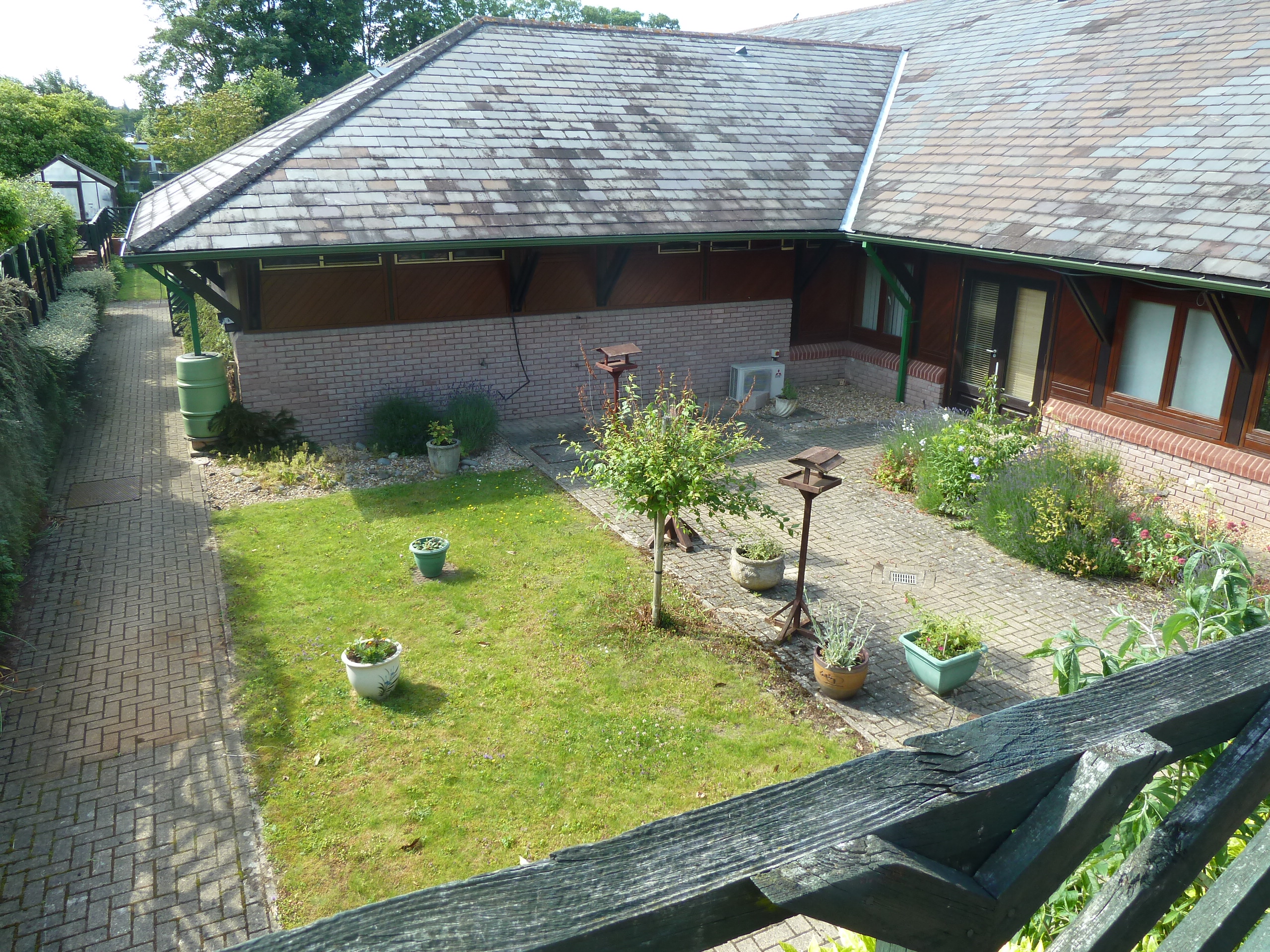
Gossoms End Community hospital, Berkhamsted : Closed today

Gossoms End Community hospital, Berkhamsted : Closed today

CROSS POSTED on BYLINE.COM

When my wife Margaret was struck down by a stroke on holiday and  lost her mobility one of the  redeeming features was that after her initial care in Truro she was transferred at our GP’s insistence to Gossoms End Community Hospital in our home town, Berkhamsted.

As a result of her stay there and later at the now closed  Holywell rehab unit at St Albans Hospital she has progressed in two years from help to get out of bed and living in a wheelchair through to the first stage of slow independent walking without any aids.

That is in no small part to the loving care at Gossoms End which led me to write a blog two years ago praising the work there.

At the time I said :

“What is particularly good is that some one has properly planned this facility so that stroke victims and people recovering from serious injuries can get proper physiotherapy and nursing care in a decent environment. The hospital unlike Watford, the main accident and emergency hospital for West Herts, is under no pressure to throw people out at the earliest opportunity. The cost of running it is much less than using a ward in acute hospital.

But the real key is that this is a nurse and physiotherapy led unit – with a weekly visit from a consultant and a doctor on call. The result is that the driving force  behind the care is to find the most suitable  rehab treatment for the individual patient.”

Alas that is no more. The unit closed  today because the Herts Community Health Trust  which runs it has overspent on agency staff because they can’t get full-time staff. It has faced criticism over staffing levels at other hospitals. Staff have been transferred elsewhere.

If you read the latest board minutes you see a trust that is struggling to provide services across Hertfordshire It is short of staff in key areas, facing an emergency financial crisis and failing in its ambition to become an independent foundation trust. Indeed it can only achieve the latter as far as I can see by slashing services so it can become profitable. Most of the key issues at the board meeting have a red or amber tag – meaning they are facing a disaster unless they slash costs in four weeks by closing down every possible service.

This local example to my mind illustrates the lie by our national politicians particularly by Jeremy Hunt, the health  secretary – about the state of the NHS. They trip out figures boasting about how much extra money there is. They haven’t a clue about integrated planning. They don’t know  and  don’t care how one policy – high house prices in Hertfordshire probably contributes to difficulties in recruiting staff -impacts on another. They are incapable of joining anything up – silo politicians.

In the meantime they talk about  so-called government policy ” care in the community” or ” no care in the community” as I prefer to call it. This is just an excuse to close down facilities and dump the sick ,ill, disabled and the insane on their families knowing that taxpayers don’t have to pay out. And if they haven’t any family, well, they will probably fall over and die and that will be a saving on the pensions bill.

To my mind closure of such facilities is short sighted. It means they only half rehabilitate people, failing to draw out their full potential and not wishing to acknowledge that new medical research shows that stroke victims  continue to improve for a much longer period than people thought. We are lucky that we can still afford to pay for Margaret to have private physiotherapy. I notice the lack in improvements among those who can’t.

I realise we have been lucky but I fear for anybody who has the misfortune to have a stroke in Hertfordshire today. Don’t expect the board members of Hertfordshire Community Health trust to do much about it.