Labour’s best council by election result night since the General Election

ctbyzkywyaqceoo

Victorious Scottish Labour candidate Alex McVey with friends at Coatbridge this morning

CROSS POSTED ON BYLINE.COM

On the eve of the Labour Party conference there is a rare fillip for the divided party .Voters turned out in sufficient numbers to elect councillors in the Midlands, North West and Scotland for the party to gain seats.

The night was not promising for Labour -particularly after spectacular defeats in council by-elections in Sheffield and  Cardiff.

Nine seats were up for grabs – 7 in England and one each in Scotland and Wales and Labour only held one in their heartland in  Gateshead. The Tories held six with the SNP and an independent holding the other seats.

By the end of the night the Tories had lost four of its seats – two to Labour and two to the Liberal Democrats. The SNP lost their seat to Labour and Plaid Cymru took  a seat from Independents.

The result in Scotland was particularly interesting as this is Labour’s second gain from the SNP in a month. The North Lanarkshire council gain at Coatbridge was hailed as “a surprise win” by the Daily Record.  It followed a Labour gain last month in North Ayrshire where Labour beat Nicola Sturgeon’s dad, Robin, to come from behind to win. In both cases it has to be said that the Labour vote fell and the SNP vote went up compared to results in 2012.

In North Lanarkshire  Labour were ahead in first preference votes. In North Ayrshire they were behind the SNP. But in both cases the STV system helped Labour gain the seats. What appears to be happening is that more people voting for opponents of SNP end up switching eventually to Labour ( even Tories in these cases) rather than helping the SNP hold the seat.

In England Labour secured two spectacular gains. In the Lake District they won a seat in Cockermouth with a 5 per cent increase in a solid Tory ward in the town. They were helped by the collapse of the Tory vote and a big 20 per cent rise in support for the Liberal Democrats which pushed the Tories into third place.

In North Warwickshire – a marginal Parliamentary seat which the Tories did particularly well in the General Election – Labour stormed to victory in a straight fight with the Tories.

They won despite a Tory campaign lambasting Labour over local issues. The Tory Party told the electorate.”There will be a clear choice at this by-election; a responsible Conservative councillor who will ensure that the residents of Arley & Whitacre ward get the best deal possible and that their voice is heard, or a Labour councillor who will fail to stand up for local people”

Interestingly UKIP which had done well in this area couldn’t field a candidate and neither did the Liberal Democrats or Greens. Result was a staggering 33.7 per cent increase in Labour share . As @britainelects tweeted:Arley & Whitacre (North Warwickshire) result: LAB: 59.7% (+33.7) CON: 40.3% (+1.7) Greens and UKIP didn’t stand this time round.

This was in area where 60 per cent of the people voted for Brexit.

The Liberal Democrats did well in Devon with a 28 per cent rise in the share of the vote to take Teignmouth from the Tories. They also won a seat from the Tories  in Suffolk  with a 12 per cent share of the vote. The Labour share of the vote in this Tory seat also went up by 5.8 per cent. The Lib Dem performance  is part of a pattern in many Tory and now some Labour seats which has meant the party has made 17 council seat gains since the General Election.

The Tories held two of their safe seats  with an 8.5 per cent vote share  increase in Adderbury near Banbury and they easily saw off a UKIP challenge in Stony Stratford, South Northants – taking over 77 per cent of the vote.

Whatever is said nationally UKIP continue to do badly. In the Labour heartland of  Gateshead where they were a distant challenger they got a mere 1.3 pc more of the vote while Labour declined by 3.7 per cent. Here again the Lib Dems did better. In other places UKIP got a derisory share of the vote – for example coming bottom in Coatbridge with just 63 votes compared to over 1350 for the winner.

My prediction is that on present performance  in council areas it is the Liberal Democrats rather than UKIP that are re-emerging as the challenger to the Tories in the rural shires and Labour in the cities. And all is not lost for Labour on this performance  provided they unite.


An 11 plus failure speaks out:Theresa May wants conformity over opportunity

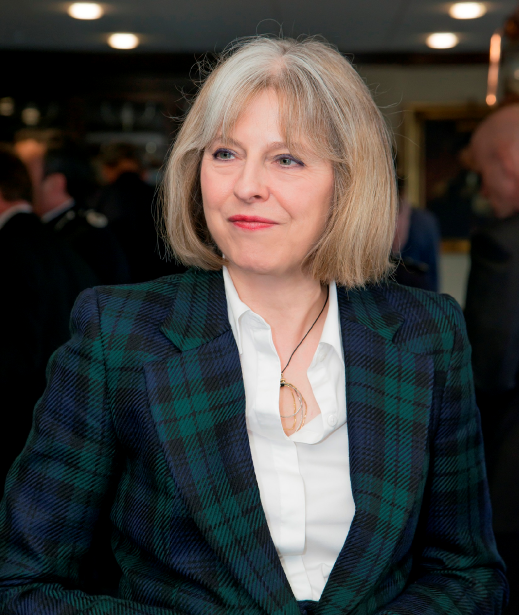
Theresa May

Theresa May, Prime Minister Pic Credit: conservatives.com

CROSS POSTED ON BYLINE.COM

Theresa May’s decision to turn the clock back five  decades by building a new generation of grammar schools makes me personally very angry. It is divisive, it will narrow opportunities for future generations and it will entrench the current Establishment by introducing a new ” gatekeeping ” role to ensure who succeeds and who fails.

Superficially it will allow a few hand picked intelligent  11 year olds from the poor to go to highly academic schools but the rest of the population can go hang.

I should know because I was one of those who would have been labelled a failure at 11. In 1958 I failed my 11 plus. Living in Streatham, South London and failing to get into Battersea Grammar meant I would be doomed to go to Dunraven Secondary Modern which then didn’t even teach enough O levels ( now GCSE’s) to get any professional job.
But I was lucky – educationalists in 1958 had this new fangled idea of  comprehensive education which was supported by Tories as well as Labour. A brand new school opened at the top of Brixton Hill called Tulse Hill – a   huge rough multi racial school that attracted idealist teachers across Britain.

Its first head came from Dulwich College, a prestigious public school (incidently where “anti establishment ” Nigel Farage later was a pupil) and teachers left cushy jobs at other elite schools to be part of the staff.

So instead of being consigned to the education scrapheap I was taught Latin by a teacher from Manchester Grammar, Spanish by a Republican fleeing Franco’s dictatorship, English by a guy who got plays on BBC radio and history by two brilliant teachers.

Even then though it took me to past 16 to really take off. As well failing my 11 plus I was a  “late developer”. I mucked  up some of my O levels but the flexibility at my school allowed me to retake some of them ( I was particularly bad at maths) while taking three A levels (one in 18 months). Even at 16 I was thought not to be university material but I was no longer thought to be a complete thickie.

I got much better A levels than people expected – though it did not surprise my history teachers- but had been rejected by every university. I used the ” clearing house” to re-apply to my first choice, Warwick University, backing it up by writing a letter.

In the meantime I was going to start my first job as a clerk with London Transport – but days before I suddenly got a place at Warwick on my chosen History and Politics course because someone dropped out. I gather the university chose me because they were heartened by my improvement at A level and thought I had more potential.

I have gone into such personal detail to illustrate why May is wrong – she may get some academically bright 11 year olds into grammars – but she will deprive thousands of other  ” late developers” like me who didn’t show their real potential until they were 16 of future opportunities available in a truly comprehensive system.

It is quite clear to me that without Tulse Hill and Warwick I would never have become a journalist. never have worked for The Times Higher Education Supplement and The Guardian. never been a lobby journalist and would not be sitting on a national independent  panel now. Neil Hamilton, Peter Mandelson. Tony Blair, Leon Brittan, Norman Fowler, Lord Ashcroft, Ed Lester and Brian Coleman to name a few, would never have been bothered by a pesky inquisitive journalist and could have slept more soundly.And talking of Tulse Hill, would Ken Livingstone, another pupil, ever had become mayor of London?

Since working at this level I have become aware of how much of a Club the Establishment is. It is dominated by public schools and old grammar school boys who share an ethos that is now miles apart from the working classes. By filtering people at 11 she will entrench this conformist view of society and help the Establishment- and that includes herself – to keep out oddballs like me – who can be a nuisance to so many people.

My view is that Theresa May’s real agenda is create a more conformist society and bolster the Establishment with a sprinkling of  academically clever working class boys and girls. Given her other main interest is pressing through a surveillance system that allows the state to keep records of every person’s digital footprint, the non conformists can easily be kept out of having a chance to shape society.


Is Corbyn’s Labour already cutting the mustard with local voters?

Tommy Gray- Labour's biggest by-election winner in Chorley with a 12.7 per cent wing

Tommy Gray- Labour’s biggest by-election winner in Chorley with a 12.7 per cent wing

CROSS POSTED ON BYLINE.COM

One interest I found I share with Ukip’s leader Nigel Farage is that both us every week check the Twitterfeed of @britainelects – which provides details of every local council by-election in Britain.

Our exchange at the book launch of Lord Ashcroft’s Call Me Dave unauthorised biography revealed that both of us have a healthy scepticism of opinion polls but a mutual interest in seeing how real voters are turning out to vote in by elections across the country.

Corbyn’s mauling in the mainstream media coupled with distrust among the Parliamentary party one might expect no one in their right mind to vote Labour and for evidence in advance of the Oldham Parliamentary by-election that he is already in trouble.

In fact the reverse is true which might explain why the same mainstream media has been rather quiet about it. Three by-elections in totally different seats have seen huge swings to Labour. I write about this in Tribune magazine this week.

They are Euxton North ward in Chorley, Lancashire; South Camberwell in London  and Banbury in Oxfordshire..

In Chorley the party recorded a 12.7 per cent swing –taking the seat with 57.3 per cent share of the vote and winning with 697 votes. The big loser was UKIP whose share of the vote dropped by 12.4 per cent – getting just 76 votes. The Tories were second and saw their vote drop by 0.3 per cent with 443 votes.

In South Camberwell, in the London Borough of Southwark, Labour recorded a 9 per cent swing – winning with 1,244 votes – and taking a 57.9 per cent share of the vote. The party’s nearest rival, the Greens, saw a 1.3 per cent drop and the Tories were down 1.4 per cent. Only the Lib Dems, who were third, recorded a small increase of 2.3 per cent but polled just 200 votes.

In Banbury, Oxfordshire, saw Labour take a seat from the Conservatives on a 5.9 per cent swing –taking 45 per cent of the vote in the Grimsby and Castle ward in the town. The Tory vote fell by 7 per cent and the Lib Dem vote fell by 1.5 per cent. UKIP’s share of the vote did rise 5.6 per cent – but the party only got 150 votes. Labour polled 781.

The results are not mainly good  for UKIP whose plan to oust Labour as the party of the Opposition in the North is plainly not working as their council candidates are taking a mauling in some seats and making no progress in others.The Tories are very resilient. their vote is going up from a low base in Scotland and they have made four gains  this autumn – three from the Liberal Democrats and one from Labour. They also put in a credible performance in Barrow where they gained 23 per cent in a traditional Labour seat  almost ousting the UKIP opposition candidate. And Labour are still falling back in Scotland.

The one bad result for Labour in England has been Bury where the Tories took a seat from then with a swing approaching 14 per cent – but other parties also lost votes.

The Lib Dems seem to be reviving in rural areas – running the Tories close in one seat and taking a Sussex seat – but they are still declining in urban areas. They can boast one landslide result in Torbay when their former MP Adrian Sanders held a seat on a 39 per cent swing. But the same night they lost their third seat to the Tories in Aberdeen.

All this suggests that there is still a lot to play for – but Labour which had a huge rise in membership following Corbyn’s victory is more than holding its own and getting some spectacular swings.

The Tory narrative put forward by Cameron and Osborne is also still hitting a nerve – otherwise they would not be gaining seats. All this makes  the December 3 by-election in Oldham the more interesting.

Will a Tory town hall victory in May lead to bitter defeat in July?

St Albans Civic Centre: One of the new Tory controlled councils. Pic Credit: St Albans gov.uk

St Albans Civic Centre: One of the new Tory controlled councils. Pic Credit: St Albans gov.uk

This weekend’s Observer contained a very interesting article from Toby Helm revealing that local councils are planning to lobby the government like mad to stop yet another huge wave of cuts.

What was interesting is that it was coming from the victorious Tory leaders in May’s local elections who are now fearful of having to implement heavy unpopular cuts to local services.

It has gone virtually unreported the scale of the local government gains by the Conservatives who gained of 32 councils and 541 more councillors on the back of getting a majority in Parliament. the full results are on the BBC website here.

The gains – many from  no over all control include Amber Valley (from Labour),Basingstoke, Bath,Brentwood, Broxtowe,East Staffs,Gloucester, Gravesham,Hinckley (from Lib Dems),Herefordshire,Lewes, Newark,North Warwickshire,Scarborough,St Albans,Taunton, Warwick, West Devon,Winchester,Worcester and Wyre Forest.

Labour had just three gains, Chester, Stockton-on-tees and West Lancashire but overall lost control of  three councils and lost over 200 councillors.  But this masks the scale of Labour defeat in places locally like Dacorum in Hemel Hempstead where Labour is down to two seats and the Liberal Democrats down to three, with 46 councillors from the Conservatives.The Liberal Democrats lost another 411 councillors and control of four councils, holding on to South Lakeland, Eastleigh and Eastbourne..

UKIP gained their first council in Thanet  where Nigel Farage was defeated and put on another 176 councillors.This council will become a yardstick on how UKIP run local services.

The Conservative victors have every reason to be apprehensive. Local government has borne a disproportionate share of the cuts under the now departed Eric Pickles and George Osborne is introducing an emergency budget in July. The Treasury often prefer to land local government which supplies personal services with big cuts to spare some of the lobbying from anxious Whitehall departments.

I predict that we are going to see some very radical changes to services. Private companies like Capita must be rubbing their hands with glee and many councils may have to follow the London borough of Barnet and outsource the entire council to private companies. People will soon find out that the only way to contact their council will be by a call centre – if they are lucky in England – but if unlucky in Bangalore or Chennai. The Tory victors could end up being defeated by their own austerity policies.

Election 2015: Fear triumphs over hope

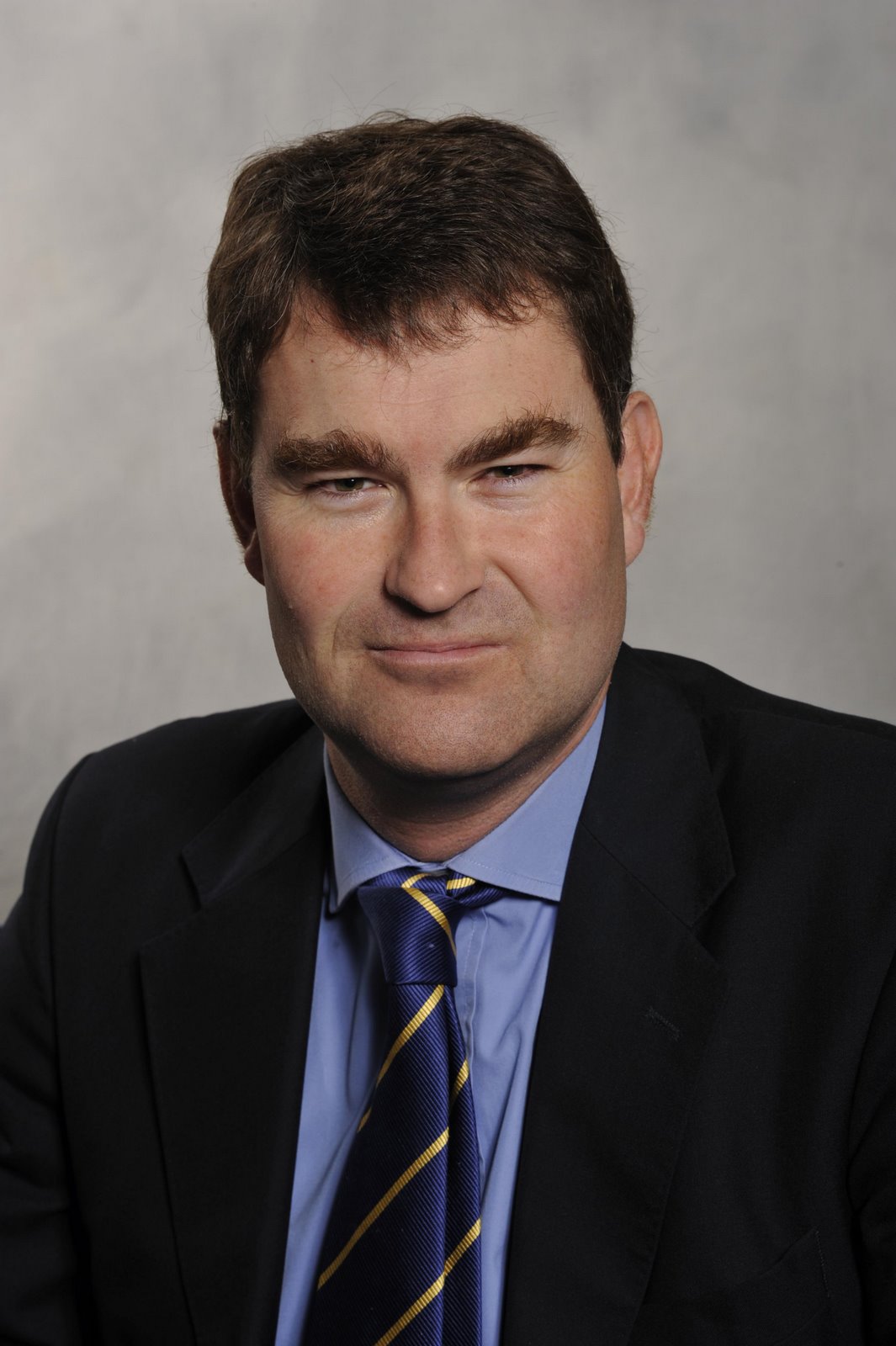
David Gauke, prediicted the Tories would have a small working majority last Saturday

David Gauke, prediicted the Tories would have a small working majority last Saturday

Last Saturday in Berkhamsted market  treasury minister David Gauke, my local Tory MP now safely re-elected, told me five days before polling day, that the Conservatives would be returned with a small working majority.

At that time people said to me” he would say that, wouldn’t he? ” but Gauke had picked up, presumably from constituency returns, that the Liberal Democrats were doing badly. As the main challengers to the Tories in Herts South West he might take an interest even though his seat is one of the safest in the country. And he would know that many Liberal Democrat seats were vulnerable to the Tories and that Labour had more or less had it in Scotland.

As it turns out whether he had a crystal ball or not he was right – even though the opinion polls said the result was too close to call. Yet they all showed that a lot of people were still undecided.

What appears to have happened is that  enough undecided people on the way to the polling station appear to have bought the idea that they had to keep the government in power  to ensure that the “recovery ” continued and probably thought  ” I am just about OK” not to risk a change. A substantial minority – the UKIP vote – were so disillusioned about Westminster politics – that they were happy to vote for them  and damn the consequences. And it seems quite a number were ex Labour rather than Tory voters. and certainly that applied in Scotland where Labour seemed to have lost the plot.

Labour had offered the hope of a fairer society, more support for the NHS, and some controls on vested interests like private landlords and energy companies. Both Labour and the Tories  said there would be more unspecified cuts while the Tories promised to legislate to stop tax rises. But I suspect that people did not want to risk it because of these uncertain times.

I suspect many people think these “cuts”won’t affect them – only welfare scroungers and immigrants. I  think they will be in for a very big shock because there is no way the books can be balanced without much wider reductions if not removal of services. Local government, social care, benefits for disabled people, all are likely to be hit and there is no need now for a government in power for the next five years to bother with higher pay rises for public sector workers. There will also be a bonanza for private  firms to take over the rest of the work of the state and fraught referendum on Europe and a resentful relationship between England and Scotland.

Labour will have to do some new thinking on how it is going to offer a vision to attract people to vote for them – or be squeezed between UKIP and the Greens. Otherwise the prospects for 2020 will be even worse than now after the new  more equal constituency boundaries come into play and reduce their Parliamentary representation even further.

There is a very bumpy road ahead for this government with a small majority and a controversial manifesto to implement  but an equally bumpy road for all opposition parties as a result of today’s shock result.

Election 2015: Are We Bovvered?

Driving around England just days before this week’s poll what has struck me forcibly is the absence of party political posters in ordinary people’s homes. Years ago when it was a simple two horse race with a rogue mare in a few Liberal strongholds the country would be a sea of red and blue with a spattering of orange.

Twice I have driven between Hertfordshire and Nottinghamshire ( half of it not on the M1  but sticking a lot to the A5 and cutting across towns and villages Like Leighton Buzzard and Towcester) and I could count the number of party political posters on two hands. Now it may be that the old party poster is out of fashion or political support is now emblazoned on Twitter rather than the front window, but I suspect it may reflect a deeper malaise reflected in the polls.

Given that we have had a ferocious election campaign the extraordinary fact – barring a last minute switch in the next 48 hours -is that the English polls have remained roughly the same ( given a point or two ) throughout the campaign.The earth has not moved.

The exception is Scotland where the SNP looks heading for a landslide on the back of the referendum campaign – and has if anything strengthened its lead if the polls are to be believed. It could achieve a virtual wipe out of the opposition. Gordon Brown , Alastair Darling and Sir Menzies Campbell must be very relieved they stood down this election rather than face defeat at the hands of the voter.

What I suspect – beyond the hard core of supporters – is a general disillusionment with politicians, a lack of trust, and a sad view that politics can’t change things. This was shown by one Tory supporter who told me she had decided to support the party ” because things were just about all right”. This is hardly a ringing endorsement for a party which claims to have saved the country from Labour fiscal disaster, created full employment in the South and destroyed inflation. I know the Tory top guard -minimum income £67,000 a year – just can’t understand why voters aren’t flocking to them in droves to give them like the SNP either a  Thatcherite landslide or a decent working majority.They must be desperate now.

Labour seems also to have failed yet to achieve a convincing swing – though Miliband who is being portrayed as a weird wonk by the right-wing media- has actually increased his poor ratings once people saw him perform on TV. How Murdoch must regret he hasn’t got Fox News over here where he could run stories which  Sun Nation and Zelo Street highlighted – like Miliband’s plans to evict the Downing Street cat – to garner landslide Tory support from the Cats Protection League and RSPCA.

And Nick Clegg has the student tuition fees lying promise like an albatross around his party’s neck – people do not trust what he says. Individual Liberal Democrats may do better in individual seats than national polls suggest – and they could even have a freak win in Watford  over the Tories where the  Liberal Democrat mayor is fighting a ferocious campaign against strong  opposition from Labour and Tory.

As for UKIP – their highlighting of immigration and quitting the European Union – has meant they have not faded away – and still attract a significant minority of disillusioned voters but their poster count is not high either.In my view they have a nostalgic and nasty view of the modern world that won’t work in the 21st century.

And the Greens have made some inroads though not enough to gain seats – though they have a fighting chance in Bristol and Norwich.

But the general impression is a public still interested in political issues but disillusioned with politicians. The expenses scandal, and broken promises still resonate. The lack of trust can be shown by Cameron’s desperation in promising to frame in law his uncosted plans to promise no tax rises and Miliband’s promise to erect a stone monument in the Downing Street’s garden  featuring his election pledges.

My serious worry about this election is what happens next if politicians and political parties can’t garner the trust of the people.Siren voices are already suggesting getting rid of them and leaving the country-like much of society -to be run by business. The latest is Ministry of Sound man James Palumbo. His article in the Evening Standard is dangerous stuff. It suggests  simplistic solutions that would deny a proper debate about the issues. And there are real issues – but politicians have to level with the British people to regain their respect.

Lies, Damned Lies and Tory Jobless Statistics

Misleading statistics for the dole queue.

Misleading statistics for the dole queue.

I see from the excellent Vox Political blog that a row has broken out over claims  by Conservative Central Office of big reductions in the number of jobless claiming benefit under the last coalition government.

The BBC reports a row over the way Essex Tory MPs are presenting falls in unemployment figures. The row concentrates on them using the claimant count. ( Jobseekers Allowance only) rather than the number of people seeking work who are not on benefit. This makes a huge difference to the numbers unemployed in constituencies.

Central Office defended their stance by saying : “This  (questions surrounding the use of JSA figures) is nonsense. This unemployment measure is provided by the independent House of Commons Library – and for constituencies they are the most up to date and most reliable numbers to use.They are used by MPs and candidates across the country, regardless of political party.”

However as readers of this blog will know this is not the true and accurate picture because since Iain Duncan Smith, the work and pensions secretary, introduced universal credit – those transferred from JSA and still on the dole  were no longer counted in the JSA figures. So where there are jobcentres already implementing universal credit in constituencies these figures were  much less.

So it is rather outrageous for Tory Central Office to quote the very House of Commons reports that reveal this as the correct interpretation of the claimant count particularly if they only use JSA..

The very latest statistics available have for the first time started showing both but the situation is a mess as this report  from the Commons library covering unemployment in February 2015 shows. For the first time it does try to show those on Universal Credit and those on JSA who are the dole – adding about 27,900 to the JSA total.

As  the report says : “From April 2013, some unemployed people attending certain jobcentres are claiming Universal Credit rather than JSA. Consequently, simply looking at the number of JSA claimants in the areas affected may not give an accurate reflection of the number of people looking for work. At the national level, the effect of Universal Credit on the total claimant count remains minor.”

But given the distortion between those on the dole in the prosperous South and less prosperous North these figures are still significant. In the North West of England it accounts for another 25,000 on the dole. In London it is just 400.

To make matters worse trying to breakdown accurate figures for the long-term employed and by age group is impossible at the moment. The figures are just not available.

As the report says: “Data on the number of Universal Credit claimants who are out-of-work by age are currently not published at the constituency level. However, data are available on JSA claimants by age.
In constituencies where Universal Credit has been introduced, the number of JSA claimants may not reflect the actual number of unemployed claimants in a particular age group.”

It adds: “Similarly, data on the number of Universal Credit claimants who are out-of-work by duration of claim are currently not published at the constituency level.”

So beware of false claims and people quoting official House of Commons documents to back them up. They are not necessarily giving the full picture.

Revealed: Cameron’s nudge,nudge survey to woo marginal voters

David Cameron outside Downing Street. Picture courtesy: Guardian

David Cameron outside Downing Street. Picture courtesy: Guardian

David Cameron has started his re-election campaign by sending out a private questionnaire and personal letter to targeted voters in marginal seats with leading questions on cutting benefits,encouraging immigration and freezing petrol. My story is in this week’s Tribune magazine.

The survey bears all the “dog whistle”  hallmarks of libel trigger happy Lynton Crosby and the execution of Giles Kenningham, now at Conservative Central Office.

The survey also wants to get hold of e-mail addresses of all the participants for future use by Conservative Central Office. It purports to be a simple request to evaluate how the government is doing to help families and asking for advice on how to continue existing policies. The tenor of Cameron’s letter is couched in party political terms.

He says: “Even with the enormous deficit we inherited from the last government forcing us to make tough decisions in every area, I am committed to doing everything possible to help families with the cost of living in these tough times. So I’d like to know what you think about some of the steps we’ve taken so far – and I’d like to know your ideas about what more the Government can do to help families like yours.”

cameron's survey letter to marginal voters

cameron’s survey letter to marginal voters: click on it to read better

There follows a detailed questionnaire on the economy, welfare benefits. And direct questions on attitudes to life  and to political leadership – such as whether or not you believe in rugged individualism without the support of state and that people can get on regardless of  background or not.

The choice is between “How well I do in life is first and foremost down to me. OR How well I do in life is primarily decided by forces outside of my control.”

The main economic question is slanted against Labour saying : “Even before the banking crisis hit in 2008, the UK was borrowing too much money to pay for public services and public sector jobs that, in the long-term, we couldn’t afford.” Some of the choices are extraordinary – such as a question asking whether a two tier benefit system should be introduced – and existing benefits cut by more than half for those who have only just started paying tax and national insurance.

Voters are invited to put in figures for benefit levels, new caps for the “bedroom tax”,and to comment on evicting council tenants who earn too much money.

David Cameron’s and Ed Miliband’s leadership the questionnaire proposes a dramatic choice. People are asked to choose between “We need leaders who are prepared to listen and to do what people really want” or “We need leaders who will stick to what they believe is right, even if it is unpopular.”

Three rather different questions are asked on immigration, same sex marriage and education  – one definitely pre UKIP surge. The immigration question is ” On balance immigration has been a good thing for this country”. The other on education looks like it had been inserted by Michael Gove: ” Educational standards have been steadily improving in recent years”.

Altogether a very interesting disclosure from a Labour marginal seat in the Midlands. One wonders what that Lynton Crosby  fan (NOT) @LordAshcroft would make of it for fairness and as a tactic. It does suggest Labour need to wake up and small the coffee on campaigning double-quick and start working hard in these marginal seats.

welfare questions - click on it to read it better

welfare questions – click on it to read it better

Coleman charges: How Eric Pickles has failed councils and the Tory Party

Brian Coleman: An embarassment created by Eric Pickles. Pic courtesy: New Camden Journal

Update: Since this blog appeared Grant Shapps, chairman of the Conservative Party  has  finally suspended Coleman from national party membership though he still says he is a local Tory councillor. He appeared before Uxbridge magistrates on November 5 and pleaded not guilty to  an offence of assaulting by beating a local cafe owner, Helen Michael.  He has been bailed to appear before magistrates on February 6 when the case will be heard.

Full reports on this are on the @BarnetBugle and @ BrokenBarnet websites.

The news that  London’s former fire chair and Barnet councillor, Brian Coleman, has now been charged with assaulting local cafe owner Helen Michael and driving without proper caution is perhaps not surprising. Obviously as he will be appearing at Hendon magistrates on November 5 there can be no comment on the case.

But there is plenty of comment that can be made about Richard Cornelius, the leader of the Tory Party in Barnet and now self-serving arbiter of council standards in the borough. He has decided that despite Mr Coleman  being charged that there is no need to suspend him from the Tory Party pending the court’s decision.

As Mrs Angry says in her excellent blog today ” this is preposterous” ( http://wwwbrokenbarnet.blogspot.co.uk/). He uses the lame excuse that somehow to suspend Mr Coleman would interfere with the judicial process. Like hell it would!

But there is a wider issue here. Mr Cornelius can only do this thanks to the decision of Eric Pickles, the communities secretary, to abolish in the name of  localism, the Local Government Standards board last January. By no means perfect, this board did set standards for England and councils would have to be very wary about ignoring its decisions. Indeed councillors had no choice but to stand down.

My old colleague and hero, Peter Preston, former editor of the Guardian. warned of this in a prescient article before Mr Pickles acted. You can read it here ( http://bit.ly/XOyTWv) and everything he says applies to what is happening in Barnet now.

I hear rumours that Barnet Tories have checked the present law and even if Mr Coleman is convicted he could stay in office –  provided he doesn’t spend three months or more in prison.

Frankly this is both damaging to the standards required in local government and to the Conservative Party in particular. It gives the impression that there is one law for Tories, and another for the rest of the public. It chimes well with the recent behaviour of Andrew Mitchell, the former chief whip, who swore at the police, and sits very badly with David Cameron’s initiative on Monday for tough intelligent justice.

It is time someone quoted Henry II and said ” Who will rid me of this turbulent priest?” and put Coleman out of the picture (not of course as brutally as the four knights) before he does even more  damage to politics.

Finally  as @BrokenBarnet reports the local Tory leader acted and started procedures to suspend Brian Coleman though he is still a member of  the Conservative group at the moment.

Richard Cornelius, the Tory leader said:”I am initiating the process of suspending Councillor Coleman from the Conservative Group. There are group rules that need to be followed and I must abide by these rules.
“Due process must be followed and I will update as and when I can.”

Sex and Violence: The different treatment of Tory councillors Holmes and Coleman

Arrested and bailed; Brian Coleman

Last night Brian Coleman, the infamous former chair of the London fire authority and advocate of  mass privatisation, was arrested by police on suspicion of common assault after an incident outside a parade of shops in North Finchley.

He has been given police bail pending further inquiries into the alleged assault on  Buzz  cafe owner, Helen Michael, who fought a strong campaign against his privatised parking scheme during Coleman’s failed attempt to be re-elected as London Assembly member for Barnet and Camden. (See http://snipelondon.com/scoop/brian-coleman-arrested-on-suspicion-of-assault )

By sheer coincidence not many miles away  at St Albans magistrates court comments have been raised following another leading Tory pleading guilty to 23 charges of  creating and viewing child pornography, including  two extreme images. ( seehttp://bit.ly/Qr2osV) He will be sentenced on October 15.

Stephen Holmes, former Mayor of Dacorum and deputy chairman of Hertfordshire  children’s services, was also a leading advocate of Tory privatisation.

Let’s make it clear I am NOT linking the two men – I don’t know even if they know each other – nor suggesting that all privatisers are violent or paedophiles.

The link is to compare what the Conservatives have done about it. Dacorum Tories in Hemel Hempstead  immediately suspended Holmes following his arrest and he stood down as a borough and county councillor BEFORE even going to trial.

Stephen Holmes; Tories acted fast when police arrested him for keeping child pornography

Dacorum Tories are also looking  to appoint an independent ombudsman to look into complaints against councillors – particularly as people are asking what checks the party does when it selects candidates who are supposed to be trustworthy individuals.

Barnet Conservatives seem to indulge Coleman no matter what he says, what he does and who he insults. Given what happened last night it seems to me the Conservatives owe it to the electorate to suspend him from any remaining posts in Barnet and if found guilty they should demand his resignation.

If not Grant Shapps, the new chairman of the Tory Party  who knows all about Coleman, should insist the party takes action.