Liberal Democrats: On the rise again in the shires?

Liberal-democrats-poster-016

Lib Dem poster Pic credit: http://www.geraldvernonjackson.org.uk/

CROSS POSTED ON BYLINE.COM

Almost without any comment  there appears to  be quite a  Liberal Democrat transformation in voting patterns outside the big cities in the latest rounds of council by-elections

The meltdown in the 2015 general election  left the Liberal Democrats with just eight seats in Parliament.The party seemed incapable of recovering from the damage it suffered from the electorate by going into a coalition with the Tories.

Indeed last year’s council by-elections saw the Lib Dems losing more ground to the Tories in places like Woking and Brentwood. The party made a little progress in the May local elections gaining 45 seats and control of one council, Watford.

Yet since the Brexit vote the Liberal Democrats – unscathed by any party infighting – have made  no fewer than six gains – two in Cornwall and one each in Wiltshire, Surrey, Norfolk and Northampton. I have written about this in Tribune  this week.

The interesting thing is not just the gains but the huge leap in vote share by the Liberal Democrats.

The latest result in Northampton – which came in after Tribune went to press- saw in Westone the Lib Dem share up 36.4 per cent and the Tory share down 28.8 per cent. A very useful website Vote UK Forum  records that in this ward the Lib Dems – despite a low poll – garnered 268 more votes  than in the general election.

The only other factor appears to be that the Liberal Democrat had stood for a nearby area some time ago and there was some resentment that the Tory lived in a village and not in the town.

The party – like Labour – is being helped by the decline in support for the now leaderless UKIP since the referendum. UKIP appears to be both declining and having difficulty in putting up council candidates.
The Lib Dem gain from UKIP in Cornwall was caused by UKIP not putting up a candidate in a seat they already held. As a result the Lib Dem candidate won the Newquay seat with a 57 per cent share of the vote. Conservative and Labour shares were down.
Lib Dems did well defeating another independent in Cornwall and one in Trowbridge, Wiltshire where the party got 45 per cent share of the vote. In North Norfolk they roundly defeated the Tory candidate in a seat which the Lib Dems had not contested at the last council election.

The interesting point is this is not being repeated where the Liberal Democrats are fighting Labour in metropolitan areas.Apart from a modest rise in one Islington seat won convincingly by Labour and a near miss in Southwark the party is performing dismally.

Indeed the challenge to Labour -if any- has come from the Greens who nearly won a seat in the London borough of Lambeth and ate into the Labour vote in both Luton and the London borough of Newham.

This would suggest that the “Corbyn” factor has not damaged Labour in its strongholds – indeed often the opposite with the Labour share increasing. And the Voter UK website also points that the revitalised local Labour Party are by far the best in getting their local vote out – up 10 per cent on average this year. But the Tories are holding off challenges from Labour in Tory marginals.

 

Labour’s UKIP fear factor: A ballot box illusion

Jeremy-Corbyn1-440x248

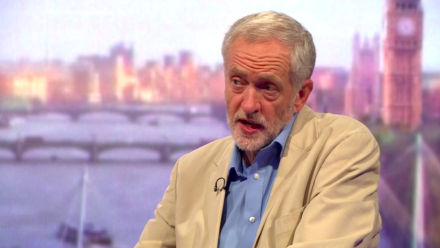
Jeremy Corbyn ; Labour doing well in council elections as UKIP declines

CROSS POSTED ON BYLINE.COM

One of the reasons Labour MPs  are deciding to try and ditch Jeremy Corbyn is the fear that following the referendum result UKIP would become the official opposition by seizing swathes of Labour seats in the North and Midlands at the next general election.

Their ( at present) ex leader Nigel Farage boasted to journalists at a reception earlier this year that UKIP would win hundreds of seats from Labour in a Scotland style  melt down as the working class deserted Corbyn over immigration and leadership issues.

Since UKIP achieved its ambition for Brexit this month  one would expect them to be riding high every time voters went to the polls.

But the handful of council by-elections since Brexit are telling a totally different story with Labour actually increasing its share of the vote in some seats – and when under fire mainly losing votes to the Liberal Democrats and the Greens.

Although these results are at present straws in the wind they seem to suggest that public is separating its vote to remain or leave the EU from its support for parties on domestic and local issues. I have written about this in Tribune magazine.

By coincidence two of the first council by-elections  were in heartland UKIP areas in Kent and showed an increase in the Labour vote and a decline in support for UKIP.

In every other seat UKIP contested they lost their previous share of the vote and when they challenged Labour in a Luton ward for the first time came bottom of the poll with a derisory 69 votes.

The by- election in Welling in the London borough of Bexley was in a borough that voted to leave and in an unpromising ward  for Labour that included had one UKIP and two Tory councillors.

Yet the result last Thursday in St Michael’s ward saw the Labour share of the vote increase by 11.5 per cent to come a close second to defeating the Tory who recorded a 2.7 per cent increase in his share. UKIP’s share of the vote declined by 14.7 per cent.  Over 30 per cent of the electorate voted – one week after Bexley recorded a decisive vote to leave.

The second by-election in Newington in Thanet – a UKIP stronghold – saw UKIP just retain the seat by 14 votes. But the UKIP share was down four per cent and the Labour share was up 1.9 per cent. The Tory share was down 2.5 per cent.

Two other results in High Town, Luton and Leatherhead North in Surrey saw Labour lose a share of the vote but not at the expense of a declining UKIP. Leatherhead was a straight battle between the Tories and the Liberal Democrats who gained the seat with a 27 per cent  increase in the share of the vote.

In High Town the main challengers were the Green Party who clipped Labour’s majority and the Liberal Democrats who stood for the first time gaining 14.2 per cent. UKIP got 5.4 per cent of the vote. Labour’s share of the vote was down 13.4 per cent.

Conway in North Wales might be a example that detractors could quote. The Labour share of the vote in last Thursday’s by election in Mostyn fell 6.1 per cent. Local circumstances – the previous Labour councillor, a ship’s captain who hardly attended council meetings – may have been a factor.

The Tory share went up by 4.7 per cent and the Lib Dems by 4.9 per cent. But significantly the UKIP candidate – known in the area as he had stood as an independent – could only muster 75 votes -under 10 per cent of the poll. A full analysis can be seen on  this site.

Given the state of the Labour Party at the moment their performance in local councils is extremely robust. It still has to be tested in a by-election in the North and Midlands. But on the evidence so far the UKIP threat is a myth when it comes to the ballot box.

The woes of the first 48 hours of Brexit

Palace_of_Westminster_at_sunset

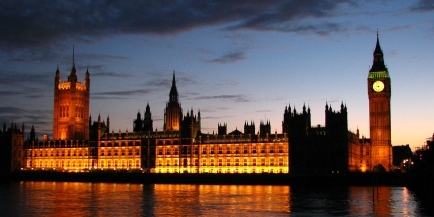
Parliament at sunset. Pic credit: LSE blog

CROSSPOSTED ON BYLINE.COM

So Britain has had its ” independence  day ” as Boris Johnson and Nigel Farage would have it. And what have been the repercussions.

In 48 hours the pound has dropped to its lowest level since 1985.

Stock markets across the world from London to Wall Street have all fallen.

The Prime Minister has announced his intention to resign before the party conference triggering a Brexit leadership contest.

Jeremy Corbyn is facing a leadership  challenge from his own MPs reinforcing the split between the Parliamentary Party from huge swathes of the membership. The shadow cabinet is now splitting as well with eleven resignations so far tonight.

Nicola Sturgeon, the Scottish first minister, has said that it is ” highly likely” there will be a fresh referendum on independence from England after Scots voted in every constituency to stay.

Sinn Fein has called for a border poll as a move to a united  Ireland. Meanwhile it is pointed out that all Northern Ireland’s citizens are entitled to a Republic of Ireland passport which guarantees them free movement and jobs in Europe.

Spain has made it clear that all citizens of Gibraltar – who voted heavily to remain – could have Spanish EU passports  if they took over joint sovereignty of the Rock. This means it could trigger a fresh crisis.

The promise of £350m a month for the NHS if the leave campaign one  has mysteriously disappeared.

Britain’s taxpayers have begun a new bail out for the banks with £250 billion of our money earmarked to defend the pound.

The result has been however been welcomed as an ” historic opportunity” in Iran. See this report in a  US pro  Jewish and Israeli website here. The Islamic state also thinks it is a good idea as they see great opportunities for dividing Europe.

In the last 24 hours the situation has worsened.

In Berlin the six founding fathers of the EU  met and decided they would not wait for a leisurely departure from Britain but ask the country to prepare to go this week.

Jonathan Hill ( Lord Hill) the British commissioner responsible for capital  and financial markets announced his resignation from July 15. He was the lynch pin for the EU’s relationships with the City of London. See a report here. he is being replaced by a Latvian with strong support for the Euro.

A major rating agency Moody’s has changed Britain’s credit rating to negative while also ruling that the Euro’s credit rating is positive – widening the gap between the two currencies.

Some British people living in Brussels ” in the know”  started applying for Belgian EU passports to ensure they had freedom of movement to apply for jobs in Europe. I wonder why?

What seems certain is that in short term prices are likely to go up but that is no problem for those Brexit supporters. some of them were celebrating their new freedom to buy bendy cucumbers without interference from Brussels.

I wonder how they will feel when Independence Day comes around next year.


Fact and Fiction over Jeremy Corbyn’s first by election defeat of the year

Jack Paton

Jack Paton: :Local hero Pic Credit: Cumberland News

CROSS POSTED ON BYLINE.COM

Guido Fawkes and the Daily Express couldn’t wait to jump on the fact that the Labour Party lost  the first council by election of the year last Thursday.

After all this was in a Labour ward in flood sodden Carlisle where Jeremy Corbyn turned up to help and talk to flood victims and they firmly  rejected Labour in favour of an Independent. Paul Staines was ecstatic predicting a deluge of losses for Labour next May as the party totally disintegrated under Jeremy Corbyn to be consigned to the dustbin of history.

But both Guido  and the Daily Express are guilty of sloppy journalism because if they had looked  or wanted to look more carefully things were not as they seemed.

Myth No 1 was that  the Labour vote collapsed as Carlisle voters following the reshuffle chaos decided Labour was finished. I bet they had more things to worry about clearing up their flooded homes than following what was going on in the Westminster bubble.

In fact the Labour share of the vote – in a low turnout of 18 per cent- marginally INCREASED – from 33.1 to 33.5 per cent.

The party that lost out more was the third placed Conservative candidate whose share of the vote DECLINED by 5.4 per cent. Funny that was not reported.

Myth No 2 was that the Independent got there by taking votes only from Labour. In fact as the excellent Britain Elects Twitter file pointed out last time it was a four cornered fight with UKIP and the Greens standing. UKIP got 14 per cent of the vote but after their disastrous performances in many council by-elections and  the Oldham West Parliamentary by-election, couldn’t even find someone to stand. So it looks as though this vote switched to the Independent.

The third point ignored by the press- and this is where sloppy journalism really takes the biscuit – is that the winning candidate is a local hero.

He is Jack Paton, a former veteran, and a long time campaigner of the old style ” pavement politics ” type which was pioneered in the past by the Liberal democrats.

As the local paper , the News and Star, reported :

“Mr Paton, who has also worked with cadets in Botcherby and is a well-known figure in the area, becomes the second sitting independent city councillor for the estate, with Robert Betton already representing this neighbourhood.

” Mr Paton recently led the transformation of a dilapidated building into a new base for Army cadets, with the conversion of a former hairdressers on Victoria Road and land behind it.

He has also previously campaigned on issues including buses in the area and on kerbs and pavements that he perceived as dangerous for wheelchair users.”

He has his own Facebook page and tweets as @sixtysjack. His Facebook page is full of congratulations from local residents and his family.

Where Jeremy Corbyn might want to take note is that he is an army veteran and a traditional working class supporter who backs our troops. He is the sort of person who would  have warmed to Kevan Jones, the junior shadow defence minister , who quit this week, and was grossly misrepresented by John McDonnell as a right winger.

In that sense the vote is a warning to Corbyn that Labour is a broad church and needs to decide how it is going to keep on side this type of voter. After all the next PM is 2020 will definitely not be an Independent.


Oldham West: How Labour is defeating the UKIP challenge

CROSS POSTED ON BYLINE.COM

Anybody who has followed UKIP’s recent performances in council by elections would not have been surprised at the resounding victory by Labour over UKIP at Oldham West, the seat held by the late Michael Meacher MP.

Once again the Westminster Parliament appeared out of touch with local reality when it assumed that Jeremy Corbyn’s leadership would mean the end of Labour as a serious fighting force and a close run result at Oldham, heralding a revival for UKIP.

The combination of a popular young local candidate in Jim McMahon, the leader of Oldham Council, and the fact that the Labour Party  has had a surge in membership meant that the party was well  placed to win.

The serious loser is Nigel Farage who ran a vicious anti Corbyn campaign using the worst of the deluge of bad press coverage, expecting a big boost from white working class voters in Oldham. But it didn’t happen – hence his outrageous attack today on Asian voters for keeping Labour in poll position.

This is a real problem for Farage because his entire strategy is to get the votes of mainly white working class voters in the North so he can replace  Labour as the official opposition by winning swathes of Northern seats.

This is clearly not happening in Oldham. Despite I suspect some switching  from the Tories to UKIP – resulting in the Tories very bad performance where their share of the vote dropped to under 10 per cent.

If you analyse the UKIP bad run of  council by-election results – it shows they are falling back  everywhere except in their traditional heartlands in the Fens, Kent and Essex. They are making no headway in London

The Oldham West result was preceded by a similar UKIP slump in a council by election in Chorley in Lancashire. In Chorley Labour recorded a 12.7 per cent swing –taking the seat with 57.3 per cent share of the vote and winning with 697 votes. The big loser was UKIP whose share of the vote dropped by 12.4 per cent – getting just 76 votes.

And there have been similar bad performances – including two last night -one in the London borough of Newham where there was an 9 per cent swing to Labour and UKIP got only 3.9 per cent of the vote.Labour got 1440 votes, UKIP, 78.

The other was in the Malvern Hills – a Tory heartland – where UKIP was pushed into third place, halving their share of the vote, to 13.3 per cent from 27.7 per cent. They got 56 votes. Labour, standing for the first time in the ward, got nearly 23 per cent of the vote, 96 votes with the Tory winning with 268 votes.

Where UKIP do have presence – their effect has been to hit the main parties without winning outright. In Ashford, Tories took a seat from Labour by two votes and in Rochford, Essex, Labour took a Tory seat by four votes.

However pundits or commentators want to play it.- this was a good result for Labour, a bad result for UKIP, and an appalling result for the Westminster Establishment who had written the Labour Party into the history books.


The full result
Jim McMahon (Labour) – 17,209 (62.11%)
John Bickley (UKIP) – 6,487 (23.41%)
James Daly (Conservative) – 2,596 (9.37%)
Jane Brophy (Liberal Democrat) – 1,024 (3.70%)
Simeon Hart (Green Party) – 249 (0.90%)
Sir Oink A-Lot (Monster Raving Loony) – 141 (0.51%)


The Media’s Attack on Corbyn: Research Shows Barrage of Negative Coverage – Media Reform Coalition

This factual analysis shows what everybody suspected – there has been an unrelenting media attack on Jeremy Corbyn in the media since he was elected.It is by a press dominated by unelected multi millionaire owners. This is chilling for democratic debate. The scale of the bias is staggering, particularly in the news coverage.

INFORRM's avatarInforrm's Blog

corbyn_coverage-360x222New research by the Media Reform Coalition shows how large sections of the press appeared to set out systematically to undermine Jeremy Corbyn in his first week as Labour Leader with a barrage of overwhelmingly negative coverage.

View original post 568 more words

Is Corbyn’s Labour already cutting the mustard with local voters?

Tommy Gray- Labour's biggest by-election winner in Chorley with a 12.7 per cent wing

Tommy Gray- Labour’s biggest by-election winner in Chorley with a 12.7 per cent wing

CROSS POSTED ON BYLINE.COM

One interest I found I share with Ukip’s leader Nigel Farage is that both us every week check the Twitterfeed of @britainelects – which provides details of every local council by-election in Britain.

Our exchange at the book launch of Lord Ashcroft’s Call Me Dave unauthorised biography revealed that both of us have a healthy scepticism of opinion polls but a mutual interest in seeing how real voters are turning out to vote in by elections across the country.

Corbyn’s mauling in the mainstream media coupled with distrust among the Parliamentary party one might expect no one in their right mind to vote Labour and for evidence in advance of the Oldham Parliamentary by-election that he is already in trouble.

In fact the reverse is true which might explain why the same mainstream media has been rather quiet about it. Three by-elections in totally different seats have seen huge swings to Labour. I write about this in Tribune magazine this week.

They are Euxton North ward in Chorley, Lancashire; South Camberwell in London  and Banbury in Oxfordshire..

In Chorley the party recorded a 12.7 per cent swing –taking the seat with 57.3 per cent share of the vote and winning with 697 votes. The big loser was UKIP whose share of the vote dropped by 12.4 per cent – getting just 76 votes. The Tories were second and saw their vote drop by 0.3 per cent with 443 votes.

In South Camberwell, in the London Borough of Southwark, Labour recorded a 9 per cent swing – winning with 1,244 votes – and taking a 57.9 per cent share of the vote. The party’s nearest rival, the Greens, saw a 1.3 per cent drop and the Tories were down 1.4 per cent. Only the Lib Dems, who were third, recorded a small increase of 2.3 per cent but polled just 200 votes.

In Banbury, Oxfordshire, saw Labour take a seat from the Conservatives on a 5.9 per cent swing –taking 45 per cent of the vote in the Grimsby and Castle ward in the town. The Tory vote fell by 7 per cent and the Lib Dem vote fell by 1.5 per cent. UKIP’s share of the vote did rise 5.6 per cent – but the party only got 150 votes. Labour polled 781.

The results are not mainly good  for UKIP whose plan to oust Labour as the party of the Opposition in the North is plainly not working as their council candidates are taking a mauling in some seats and making no progress in others.The Tories are very resilient. their vote is going up from a low base in Scotland and they have made four gains  this autumn – three from the Liberal Democrats and one from Labour. They also put in a credible performance in Barrow where they gained 23 per cent in a traditional Labour seat  almost ousting the UKIP opposition candidate. And Labour are still falling back in Scotland.

The one bad result for Labour in England has been Bury where the Tories took a seat from then with a swing approaching 14 per cent – but other parties also lost votes.

The Lib Dems seem to be reviving in rural areas – running the Tories close in one seat and taking a Sussex seat – but they are still declining in urban areas. They can boast one landslide result in Torbay when their former MP Adrian Sanders held a seat on a 39 per cent swing. But the same night they lost their third seat to the Tories in Aberdeen.

All this suggests that there is still a lot to play for – but Labour which had a huge rise in membership following Corbyn’s victory is more than holding its own and getting some spectacular swings.

The Tory narrative put forward by Cameron and Osborne is also still hitting a nerve – otherwise they would not be gaining seats. All this makes  the December 3 by-election in Oldham the more interesting.

Stormin’ Corbyn a hit in Korea (No Mail-on-Line not North Korea but the capitalist South)

Jeremy Corbyn - a hit in Korea

Jeremy Corbyn – a hit in Korea

CROSS POSTED ON BYLINE.COM

While the British media has been uniformly hostile to Jeremy Corbyn – his victory has led to some completely different  coverage abroad.

One TV station “News Tapa”   – a nonprofit online investigative reporting organisation  in South Korea – decided to devote  a half hour programme to what they called the Corbyn Syndrome- for viewers in their country.

The  TV station –  unusual because it is crowd funded by over 35,000 people using a principle also used for byline.com for individuals decided that Corbyn was an interesting phenomenon precisely because he was an example of  a popular rebellion in a mainstream party challenging conventional politics.

According to the broadcasters it hit a nerve in South Korea because politics is seen as remote, dominated by big business and career politicians and not exactly squeaky keen. Sounds familiar? They were also fascinated how a backbencher representing a working class constituency could suddenly capture the minds of so many people and propel themselves to the leadership of a major party.

As Seon-Ju Choi, the London co-ordinator for the programme’s production said :”In S. Korea, the conservative party has been in power for many years now since our president Noh who committed suicide.  In a way, it has been very depressing all the public funds have been radically cut, and many people are struggling due to lack of public service and many of privatisation, etc.  We would love to feature the amazing and exciting story about Jeremy Corbyn’s story, how the left-wing politician has received overwhelming support from the public, and became a leader of Labour Party.”

It The film is in Korean but there are enough British people interviewed – including me- for people to follow most of it.

For those interested the link is here http://newstapa.org/29509 .

It makes interesting viewing.

Dropped: The vile Saudi Arabian contract that helped prop up a barbaric justice system

JusticiaCROSS POSTED ON BYLINE.COM

The Cabinet revolt that ended the £5.9m contract bid by the now doomed Just Solutions International – the commercial arm of the Ministry of Justice – is to be welcomed.

Justice Secretary  Michael Gove’s decision to press home ending this deal over the head of Philip Hammond, the foreign secretary, and initially, David Cameron, is the only morally acceptable case. Britain could not be seen helping a country that uses public beheadings, floggings and crucifixion as a routine part of its justice system.

When I first saw the disclosure of the deal in a routine half yearly report of the Ministry of Justice laid before Parliament I had no idea we had a commercial arm of the ministry, let alone that we had already done deals with Oman and Macedonia and were bidding for a Saudi contract.

Thanks to the work of. lawyer David Allen Green – known as Jack O’Kent on Twitter- who has assiduously followed this issue since -Downing Street has become embarrassed – and finally thrown in the towel. You can follow him on the JackofKentblog

I am also delighted that Lord Falconer, the shadow Lord Chancellor has reported this to the National Audit Office – because Just Solutions International set up by Gove’s predecessor, Chris Grayling, deserves a thorough financial examination.

I am also pleased that Jeremy Corbyn, the Labour leader used his conference speech to demand David Cameron dropped the deal. I realise that he reads Tribune where I also featured developments there.

So for once justice has been done and seen to be done in the full glare of the media – rather than injustice being sneaked out in obscure Parliamentary reports.

So afraid of the Saudis: How the Brits daren’t cancel a contract to bolster barbaric justice

CROSS POSTED  ON BYLINE COM

Jeremy Corbyn has challenged David Cameron to explain why the British government can’t cancel a contract with the Saudis to provide training for their prison system just as it is about to execute a teenage dissident and crucify his body.

The Prime Minister who rightly does not spare a word in condemning Islamic State for its barbarism from throwing gay people off high buildings, and the public beheading of dissidents and hostages, is coy about financing the Saudis to behead its own dissidents or lash its social media bloggers like Raif Badawi.

Michael Gove, the new justice secretary, last week announced he was closing down Just Solutions International, the commercial wing of the Ministry of Justice that was flogging expertise to unsavoury regimes including Oman and the Saudis.

Except  that in its afterlife it will continue with a contract to Saudi Arabia,His decision reverses the policy of his predecessor, Chris Grayling, who was planning to expand its business as a way of raising revenue for the ministry without being particular about which regime’s justice system they were supporting.

The existence of Just Solutions International was revealed earlier on my own blog. So it i is good news that Michael Gove, the new justice secretary,is closing it.

This is a secretive organisation that the ministry refused to reveal any details about – despite admitting there are 2000 emails about its operations. A splendid thorough investigation of the background of the company’s bid for Saudi Arabia has been written up by David Allen Green on his Jack of Kent blog.

I have also written a story for Tribune highlighting how ministers are admitting that the real reason they have not cancelled it is because in Andrew Selous’s words -( he is the junior minister at the Ministry of Justice) – “The critical factor was the strong view from across Government that withdrawing at such an advance stage would harm HMG’s broader engagement with Saudi Arabia.”

This replaced the phoney reason originally given to Parliament which ministers had to withdraw that it couldn’t be cancelled because the government faced penalty clauses. Despite that it is still reported in some media that this is the reason.

This is an appalling situation and the fact that Jeremy Corbyn linked this to the case of teenager Ali Mohammed Baqir al-Nimr who will be beheaded for a ” crime ” he committed when he was 14  deserves highlighting.

He wrote: “Will you step in to terminate the Ministry of Justice’s bid to provide services to the Saudi prisons system – the very body, I should stress, which will be responsible for carrying out Ali’s execution?”

The Labour leader concluded: “Ali’s case is especially urgent – the secrecy of the Saudi system means that he could face execution at any time, and even his family may only find out after the event. There is therefore no time to spare in taking this up with the Saudi authorities, if we are to prevent a grave injustice.”

Not only should he take this up  and the Foreign Office has said it will – but this contract should not go ahead. Britain should not dirty its hands with aiding a regime that imposes such cruel punishments anymore than it should support the Islamic State.

In Britain the National Audit Office ought to look at the setting up of Just Solutions International and decide whether this experiment in commercialising a department was ” value for money”..This should then be taken up by the Commons public accounts committee.

The secrecy around this is totally unjustified and it appears only Parliament can properly investigate it.