Charity Commission reported to Privileges Committee by MPs after it tries to stop a critical report by Parliamentary Ombudsman

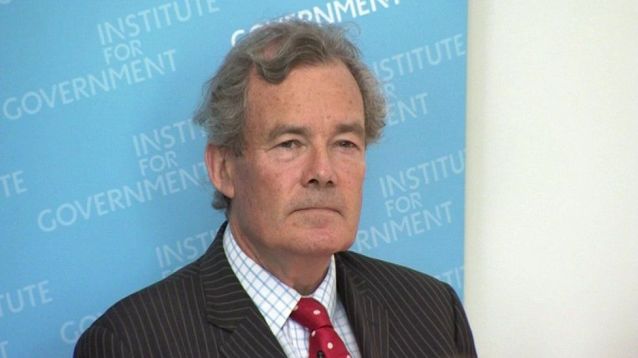
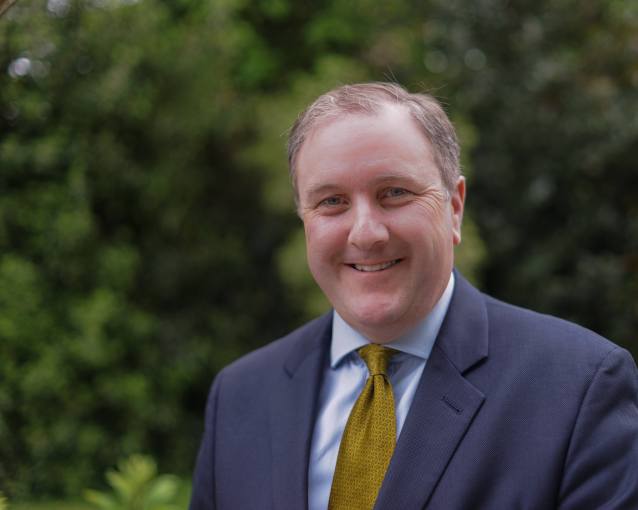
Simon Hoare MP, Tory chair of the Public Administration and Constitutional Affairs Committee

Exclusive: Report will reveal huge dispute over two reports into complaints of sexual abuse by charities supervised by the Commission

An extraordinary stand off between Parliament and the Charity Commission was revealed yesterday after Simon Hoare, Tory chair of the Commons Public Administration and Constitutional Affairs Committee, made a rare use of privilege to compel the Parliamentary Ombudsman, Paula Sussex, to publish a critical report into the Charity Commission next week after MPs were told the Commission was blocking its publication.

Lyndsay Hoyle, the Speaker, granted the request. It was the second one he has granted in four years – the last being from Angela Rayner, when she was in opposition in 2021 ordering the release of Government minutes of meetings between former Tory MP Owen Paterson, health minister, Lord Bethell and special advisers over the award of up to £777 million Covid testing contracts to Randox Laboratories, without competition who employed the MP as a consultant for £8333 a month.

MPs were told by Mr Hoare that the Charity Commission was blocking publication by going to judges and he wanted it reported to the Privileges Committee.

He said “The Charity Commission is bringing legal proceedings deliberately to prevent the laying of two reports before this House. That completely undermines the linkage between the ombudsman and this place, and …undermines our opportunity and decisions to look at any information that we deem to be of importance, or that matters to us, in order to allow us to advance policy.”

He claimed:  “Members from across the House have privately raised with me concerns about decisions that the commission is taking. It is appearing to do so in a slightly abstract or perverse way, without any degree of accountability. That matter is separate from this motion, but it is important for all our arm’s length bodies, and particularly the Charity Commission, to understand that this House will not be bullied by arm’s length bodies seeking recourse to the courts to stop us doing our job properly, efficiently and professionally on behalf of all our constituents.”

He was backed by Tory frontbench spokesman Alex Burghart and junior Cabinet Office minister Georgia Gould.

The Charity Commission has put a different interpretation of events in a statement issued yesterday which is at the end of this blog. Basically it is saying it was not aiming to block publication.

Bizarrely Mr Hoare said he had no knowledge of the complaints by a Miss A and Mr U in the two reports and had not seen him.

But both are already in the public domain on the Parliamentary Ombudsman’s website. Both contain criticism of safeguarding over sexual misconduct. Miss A has publicly named herself as Lara Hall, aged 35, and is a survivor of sexual abuse and a whistleblower.

She says in the news report issued by the Ombudsman: ” “I feel institutionally betrayed by the Commission. It made repeated commitments to me to deregister the charity and said it would do all it could to disable the trustee from acting in the name of charity in future, but the Commission dramatically changed regulatory course. This left me feeling incredibly vulnerable and confused.

“I feel so thankful and humbled to the PHSO for its diligent and thorough investigation into my complaint. I’m disappointed at the lack of contrition from the Commission.”

Acting Parliamentary Ombudsman Rebecca Hilsenrath said “Our investigation uncovered a number of failings around the Charity Commission’s handling of serious safeguarding concerns. It is important that the Commission apologises for its mistakes and reassures Lara that it will put things right.”

The full news report is here.

The second report involving Mr U involves historic child sexual abuse by a charity and in a sixth form college run by a religious charity. The abuse was hidden by the charity and it involved priests including one perpetrator who has a building named after him and was given a celebratory mass when he died.

The report said:” Mr U had long suspected he had also been a victim of grooming by the perpetrator. He told us it was only the book written by the victim in 2017 that allowed him to confirm the abuse as such. He told us the apparent absence of other victims was part of the reason he gave the perpetrator the benefit of the doubt for many years. ” When he raised issues he was treated as a vexatious complainant. The full report is here.

The Charity Commission says:“The Commission is challenging a PHSO decision that we have failed to implement some of its recommendations in two specific cases. We are concerned that PHSO’s approach expects us to act beyond our legal remit, at odds with Parliament’s intentions, and undermines our ability to regulate independently and effectively.

“We sought to resolve these matters without the need for legal proceedings but have been forced to put these matters beyond doubt, for the benefit of both organisations in fulfilling our respective public duties. We are therefore seeking the guidance of the High Court via a public law challenge.

“We welcome proper Parliamentary scrutiny of our role and have not asked the courts to prevent PHSO from laying any report before it. We had previously invited PACAC to delay its consideration of any report from PHSO related to this case, pending the outcome of these legal proceedings.”

 We are mindful this matter has arisen from complaints of difficult personal experiences related to charities. We accepted there are some genuine lessons for the Commission to learn from these two sensitive cases, and we have made improvements to the way we communicate with complainants.”

A charity should be a safe and trusted environment. As regulator, we are clear that keeping people safe should be a priority for all charities.”

One-Time
Monthly
Yearly

Make a one-time donation

Make a monthly donation

Make a yearly donation

Choose an amount

£5.00
£10.00
£20.00
£5.00
£15.00
£100.00
£5.00
£15.00
£100.00

Or enter a custom amount

£

Your contribution is appreciated.

Your contribution is appreciated.

Your contribution is appreciated.

DonateDonate monthlyDonate yearly

You can donate via Paypal via the link below:
https://www.paypal.com/ncp/payment/865JAS3QJ3CGQ

William Wragg acts as Parliamentary Ombudsman Office faces life without a boss

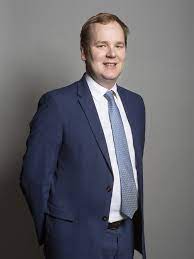
William Wragg

William Wragg, the Tory chair of the Public Administration and Constitutional Affairs Committee, has belatedly intervened in the growing crisis over the failure of the Prime Minister to appoint a new Parliamentary Ombudsman to replace Rob Behrens who quits on March 31.

In a letter published on the committee’s website Mr Wragg asks Sir Alex Allan, the senior non executive director on the Parliamentary and Heath Services Ombudsman board, what measures will be taken to keep the office going and what is going to happen to people who, via their MP, want to lodge a complaint to the Ombudsman. He also raises whether reports can be published and complaints investigated. Particularly at risk is the long awaited report on the partial maladministration for 50swomen who faced a six year delay getting their pension.

The letter discloses that recruitment for a new Ombudsman began last October and a panel chose the winning candidate at the beginning of January. Since then the Cabinet Office and Rishi Sunak, who has to approve the appointment, have not responded. The silence from Whitehall and Downing Street means no motion can be put to Parliament appointing a new Ombudsman, who then appears before the PACAC for a pre appointment hearing. PACAC has only a couple of weeks to set up the hearing.

Sir Alex Allan

The publication of the letter by the committee is in fact a response to a letter written to Mr Wragg from Sir Alex warning of dire consequences for the corporate body if no one was appointed and suggesting that Rebecca Hilsenrath, the current chief executive is appointed as an Interim Ombudsman. The letter was briefly on the committee’s website but withdrawn the moment I published a blog about it.

Part of it read:


I am aware that, due to the preferred candidate’s notice period, there will be a need to appoint an
interim Ombudsman and that the view remains that this should be Rebecca Hilsenrath, Chief
Executive Officer at PHSO. We have yet to receive confirmation of this, despite the urgency, which
is making it difficult for the organisation to properly plan for leadership change.
As a corporation sole, the organisation cannot operate without an Ombudsman in post. Any delay to
the appointment puts the organisation at considerable risk. In particular because key casework
decisions could not be taken it puts at risk all of the work to reduce the queue and improve service
to complainants. Clarity of the timeline for both the permanent and interim Ombudsman appointments is
therefore pressing,

However the antiquated legislation suggests that the PHSO board cannot appoint its own acting ombudsman. It has to be appointed from outside the board.

The legislation specifically refers to an “Acting Ombudsman” and, as such, cannot be appointed by the PHSO Board of Directors.

Section 3A of the 1967 Act deals with the appointment of an Acting Commissioner who serves at the pleasure of His Majesty.

The Acting Commissioner can only serve for a maximum of 12 months or until a new Commissioner is appointed (whichever is sooner).

The full text of William Wragg’s letter is here.

One-Time
Monthly
Yearly

Make a one-time donation

Make a monthly donation

Make a yearly donation

Choose an amount

£5.00
£10.00
£20.00
£5.00
£15.00
£100.00
£5.00
£15.00
£100.00

Or enter a custom amount

£

Your contribution is appreciated.

Your contribution is appreciated.

Your contribution is appreciated.

DonateDonate monthlyDonate yearly

Please donate to West minster Confidential

£10.00

DWP dumps on benefit watchdog and ignores plea for more help for victims of domestic violence

The Department of Work and Pensions has rejected any changes to its new minimalist regulations to exempt victims of domestic violence -mainly women – from paying the ” bedroom tax ” and helping them to find out how they could qualify to keep more of their benefits.

Ministry turns down plea from social security watchdog

As I reported ten days ago the release of minutes from the little known Social Security Advisory Committee revealed in July the body chaired by Stephen Brien who worked for Ian Duncan Smith’s think tank had written to the ministry criticising the proposed regulations for being too narrow and the ministry for not running a prominent campaign to let victims know they will now be exempt.

The exemption applies to anybody who wants to stay in their own home and has thrown out an abusive partner and enrols in a sanctuary scheme – which provides extra locks, a fireproof letterbox and in extreme cases a reinforced door to a ” panic room” should the abusive partner return and break into the house.

The problem is that not all women know about this and the exemption only applies to council homes and flats. Also abuse from stalkers or strangers is not covered by the new regulations.

Mr Brien wrote: “Given the vulnerable situations of those affected, there is a compelling case for the Department to examine what options exist in terms of proactively identifying those potentially affected. This should be supplemented by a strong communications strategy that sets out clearly the criteria for this exemption, along with guidance on how to access it.”
“There is a risk that a number of claimants entitled to take advantage of this scheme, particularly those who have already benefitted from a sanctuary scheme security adaptation prior to these regulations coming into force, will be unaware of this change.”

Ministry rejects plea to change the regulation

But the DWP has told me not only will there be no changes but they had already implemented the regulations which came into force on October 1.

A DWP spokesperson said:

“The Department offers support to victims of domestic abuse, whether in the private rented sector or not. The benefit system acts as a safety net for people who find themselves in need of financial support with living and housing costs for a variety of reasons. A range of Universal Credit measures are designed to support victims of domestic abuse, including special provisions for temporary accommodation, same day advances, easements from work-related requirements and signposting to expert third-party services.”

Now for these regulations to become law they have to be scrutinised by Parliament. So I looked up what had happened.

It turns out the ministry laid the regulations before the House of Commons and the House of Lords on September 9 – a Thursday evening just before MPs and peers went off for the weekend. They were laid under what is known as a negative statutory instrument – which means that unless a peer or a MP objects they automatically can become law three weeks later.

Not one MP or peer spoke up about this

The regulations were laid alongside numerous other regulations including changes to Covid 19 pandemic regulations. Not one MP or peer objected or even spoke about it.

They would not have known about the criticism from the watchdog body because its minutes had not been published then. Nevertheless this shows up the ineffectiveness of MPs and peers – who have more time – in scrutinising what the executive is doing.

Given the high profile issue of violence against women after the kidnap and murder of Sarah Everard by a serving Met Police officer it is pretty deplorable that a ministry can get away with this.

Benefits watchdog keeps mum

I sent the ministry’s response to the watchdog body – which regards scrutinising regulations as its main priority – and it decided not to comment, preferring to keep silent about its advice being ignored .I haven’t had a reply from the House of Lords on why the new regulations were missed.

However I have discovered the ministry has issued new advice six days ago to its housing benefit officers. It is here and victims of domestic abuse should challenge officials about getting an exemption.

For those in England I would suggest contacting Shelter. The charity has a comprehensive guide for victims of domestic abuse here. It includes a list of other charities who can help.

So if the ministry, the social security watchdog and Parliament are so ineffectual, at least this blog can highlight some information so more people know about it.

Previous Blog

https://davidhencke.com/2021/10/03/exclusive-half-baked-and-half-hearted-dwps-help-for-women-facing-domestic-abuse-and-violence/

Please consider a donation to allow me to expand and develop this blog to hold more people and government to account

One-Time
Monthly
Yearly

Make a one-time donation

Make a monthly donation

Make a yearly donation

Choose an amount

£3.00
£5.00
£10.00
£3.00
£9.00
£60.00
£3.00
£9.00
£60.00

Or enter a custom amount

£

Your contribution is appreciated.

Your contribution is appreciated.

Your contribution is appreciated.

DonateDonate monthlyDonate yearly

Donate to Westminster Confidential

£10.00

Brexit: How Parliament abdicated its role to scrutinise the biggest change in UK life for 50 years

Parliament: Abdicating scrutiny

The most potent slogan of the Vote Leave campaign was the promise that Brexit meant that the country could ” take back control” and Parliament would be sovereign and we will be governed by our own laws.

Today Parliament abdicated its role to take back control of scrutinising the Brexit deal by kowtowing to a manipulative government which left little time to examine the Treaty before it had to come into effect.

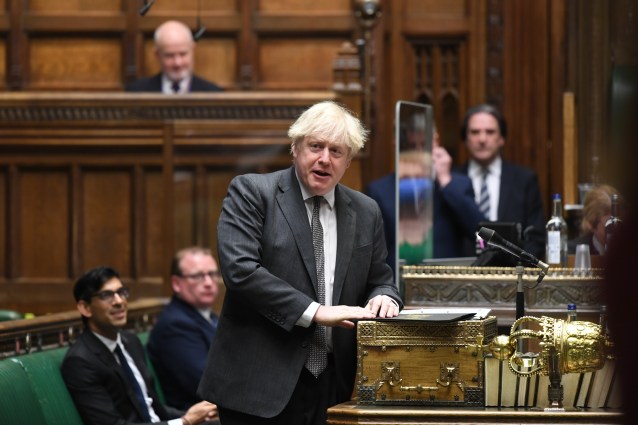
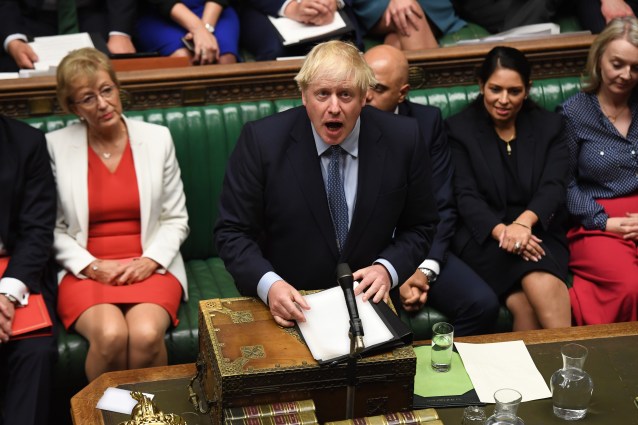
Boris Johnson opening the debate with Rishi Sunak looking on Pic Credit: @UK Parliament _jessica Taylor

A huge bill which will change Britain’s relationship with our nearest neighbours, end the freedom of British people to work and study in Europe, and introduce a raft of bureaucratic red tape to do business with Europe while avoiding tariffs and quotas, will be debated in just half a day. The bill will have no clause by clause examination because there will be no time in the Commons to do this. It will be just rubber stamped. And MPs will have just four minutes – later reduced to three – each to comment.

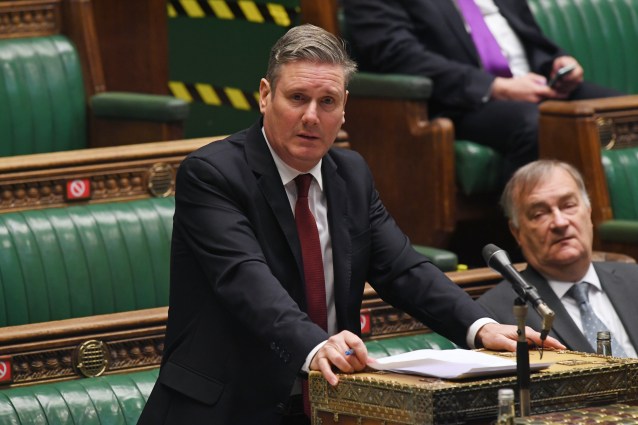
Keir Starmer backing the “thin deal rather than no deal” with Opposition chief whip Nick Brown

Similarly the House of Lords will not have time to scrutinise the bill either and though 145 peers have said they want to comment the new bill – they have precisely three minutes each to do so. The House of Lords Constitution Committee will scrutinise the detail of the bill after it has become law – even though the government does not want this to happen. The government in its explanatory memorandum says the bill is not suitable for pre legislation scrutiny. But Baroness Taylor, who chairs the Lords Constitution Committee, points out that the means the government uses to implement the treaty are subject to scrutiny – and she indicated that many of the Commission powers had been transferred to ministers not Parliament.

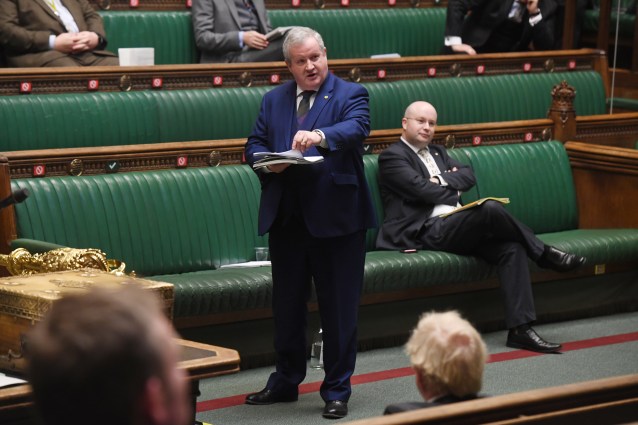
Ian Blackford, Scottish National Party leader, who opposed the deal and whose party voted against of it.

By midnight tonight the Royal Assent will be given. As the Hansard Society says: “Parliament’s role around the end of the Brexit transition and conclusion of the EU future relationship treaty is a constitutional failure to properly scrutinise the executive and the law.”

It rightly says the proceedings amount to a farce. Compare it with the European Parliament – which Brexiteers say amount to bureaucratic dictators. They declined to rush through a debate approving the deal until they could properly consider it. Instead they rely on a temporary agreement to allow trade to continue and will set aside much more time to debate it than the UK Parliament. They have two months to do this.

The reason why this is important is if there are defects in the legislation that will show up later and end up discrediting the issue even for Brexiteers. Much better to get the legislation right – and Parliamentary scrutiny is the best way to do this. Particularly as the deal runs to 1200 pages and you have to check the bill with the Treaty and refer to other legislation. We have now thrown away that chance.

In a way this is a microcosm of the way Boris Johnson and his Cabinet colleagues want to govern this country. They do not want scrutiny and want “to take back control” for themselves and not for Parliament or the people. They want to use Parliament and the people for their own agenda. Today was a bad day for Parliament and democracy.

On Byline Times: Refurbishment of the iconic Elizabeth Tower and Big Ben mismanaged by Parliament at huge cost to taxpayers

Image by Free-Photos from Pixabay

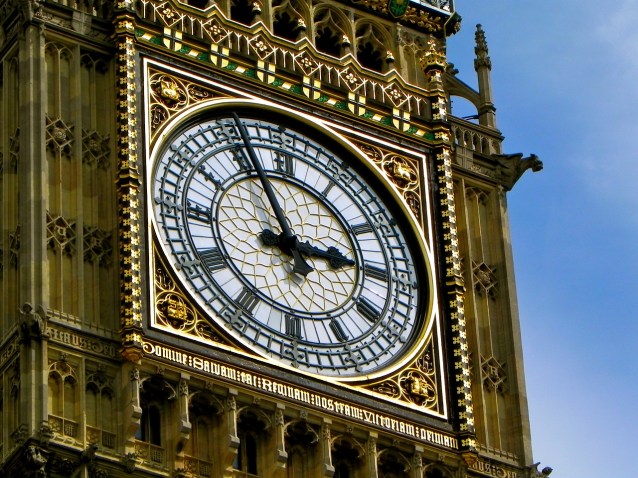
I have today put out a story on Byline Times some damning findings by the National Audit Office on the refurbishment of the Elizabeth Tower and the Big Ben bell and clock face. You can read it in full here.

The report is important because the government is committed to spending billions of pounds – a £4 billion estimate will go nowhere near the real cost – -refurbishing the Palace of Westminster over a decade.

This project was a tiddler compared to that – originally thought to cost £29 million -now 80 million. And if Parliament’s managers can’t properly manage that – what great mess awaits us over the next decade.

The report also reveals one extraordinary fact which shows that the Victorians were as bad at controlling taxpayer’s money and managing big projects as we are today.

The present building built after fire destroyed most of the old Parliament in 1834 was completed 18 years behind schedule and at three times the original cost.

Effectively the governments of Robert Peel and Lord Palmerson were no better at controlling budgets than those of David Cameron and Boris Johnson today. Plus ca change etc.

Exclusive on Byline Times: MPs £8.4m second jobs and how Boris Johnson made a £1m in the last Parliament

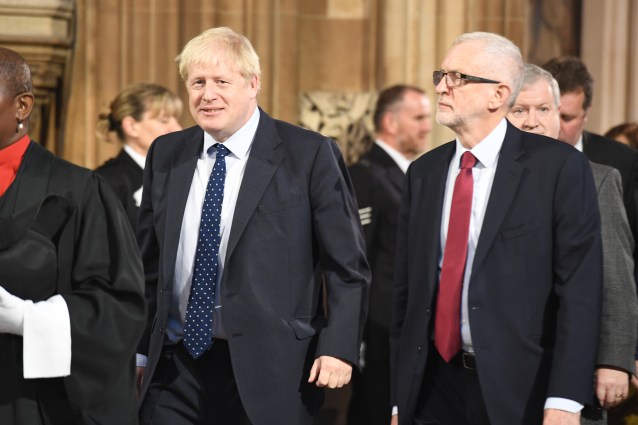
Boris Johnson and Jeremy Corbyn at the state opening of Parliament. Boris Johnson made £1m including £800,000 from second jobs and speeches, Jeremy Corbyn nothing from a second income. Pic Credit: parliament.uk Jessica Taylor

Today I have published from a new database how much money MPs made from second jobs in the last Parliament with Boris Johnson top of the premier league of high earners. Read the full story in Byline Times here and see for yourself from a link to the database here. You can check your own MP.

On Byline Times: Forensic examination by Lords reveals flaws in Liz Truss’s ” gold standard ” trade deal with Korea

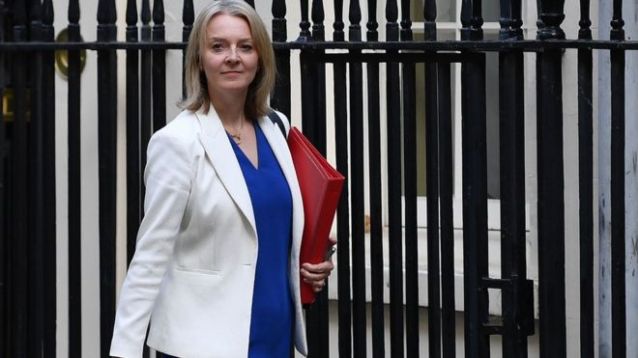
Liz Truss, international trade secretary. Pic credit:BBC

Claims by Liz Truss, the international trade secretary, that the UK’s biggest independent trade deal with Korea hit the ” gold standard” are ruthlessly exposed by a House of Lords committee. The full story on Byline Times here reveals that government’s claims we would be better outside the EU for trade are suspect – and ministers don’t want them properly scrutinised by Parliament.

On Byline Times: Cabinet Office propriety probe into Boris Johnson’s Hedge Fund backers

Boris Johnson in full flood on his Parliamentary statement on the Supreme Court. Pic Credit: UK Parliament/ Jessica Taylor

Given the enormous interest into Johnson’s determination to leave the EU on October 31, there are questions about the huge hedge fund and City trader financial backing for his leadership campaign this deal when they stand to make billions of pounds on shares and the potential collapse of the pound. Read my story on Byline Times here.

BackTo60 take to the London streets to project their case to get their pension money back

While MPs were enjoying drinks and snacks in parties and receptions across London last week – I admit I was at one in the gardens of Westminster Abbey – a team of intrepid campaigners from BackTo60 took to the streets with the support Media Gang Guerrilla Marketing.

They stopped outside the Bank of England, The Law Courts in the Strand and opposite the House of Parliament to project images backing the 50s bornwomen campaign. One of my blogs was projected on the Bank of England and the Backto60 logo appeared on the side of Parliament overlooking the Thames.

Certainly if nothing else this campaign is creative – equal to some of the stunts of the younger generation. They should be proud that people never give up campaigning.

Revealed: The next bill for the over 40s: Your social care tax


ImageVaultHandler.aspx

pic credit: parliament.uk

CROSS POSTED ON BYLINE.COM 

Without huge coverage MPs from two influential Parliamentary committees yesterday proposed a new tax system to pay for the burgeoning cost of social care.

The proposal could mean a new hike in national insurance contributions, some redistribution of money going to fund your local council, higher council, inheritance and income tax  and/or abolishing some of the existing universal pension benefits, like the heating allowance or cutting future state pension rises.

Significantly it includes making existing pensioners pay more tax particularly if they are still supplementing their pension by working.

This makes this the first serious policy proposal to deliberately tax people differently depending on their age – and exempting the millennials  at the expense of the elderly. In that it feeds into the current  and my view misconceived debate that millennials are being robbed by wealthy pensioners and the system must be changed to tax pensioners more.

The proposals may well prove to be attractive to the present government which has been trying to create an inter generational wedge between the young and old people – as a sop to the younger generation who have been burdened with huge student loan debts by government policy and can’t afford to buy a home.

No one can deny that the present system for social care is in a mess and is underfunded and it is estimated by the report  using  data from the Institute of Fiscal Studies that spending on  care needs to rise by 3.9 per cent a year just to keep the current severely means tested system which means many cannot get help. It will cost billions more if personal care like the NHS became free at the point of use.

At the moment many people are already paying for care through  local council tax. When people ask where is all the council tax  money  is going – anything from 25 pc to 57pc  is going on social care for the young and old. The average of 37.8 pc according to the report.

The government is also transferring a big tranche of business tax revenue from Whitehall  to the councils and at the same time abolishing grants – but not according to the MPs  earmarking any of this money for social care.

The MPs have done a lot of groundwork – suggesting an independent body should supervise the new earmarked tax-  and have used a citizens assembly to advise them of how they could do it-. The report can be read in full here.

MPs need to tread very carefully over their funding proposals because there is no doubt it could make matters worse for a lot of people.

For a start – and it is picked up by people they consulted – 40 year olds will probably have the expense of  large mortgages, or higher rents, the cost of bringing up children and  may find, if they have had successful careers that they are  paid enough to have to pay back student loans. So they may be even more squeezed.

They have completely ignored the plight of  3.9 million 50s women. – many being forced to work for up to six years – and would now have to pay extra insurance or tax just at the point when they find it difficult to get a highly paid job.

Also by extending national insurance contributions at a higher rate for those who still have a job after turning 65 could well hit people who have taken part time low paid jobs to make ends meet. The MPs also suggest the premium should apply to unearned income and investments held by pensioners – which amounts to a tax on pensioners savings.

The committee talks of  setting an income threshold to make sure some pensioners are exempt – but does not state what this threshold should be.

To my mind there are too many questions  that have not been answered or evaluated for the government to go ahead with this. People should remember that everybody who drew up this report was on an MPs salary of  £77,000 a year, way above many people’s incomes.

Yes we need a debate on how to fund social care – but it shouldn’t be used as part of way to drive a wedge between generations- and we shouldn’t rush into  yet another use for the National Insurance Fund when  they are so many women who have been robbed of a decent pension by the existing system.