Uncork the Gauke: Could the Tories go for another grey man to lead the party – like John Major

david gauke gov uk

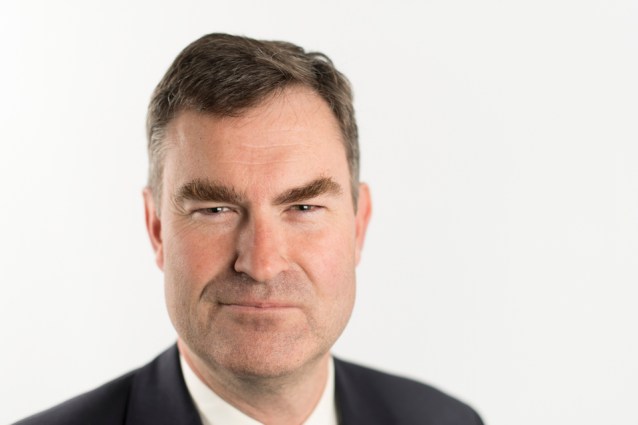
David Gauke: potential leader? pic credit; Gov uk

CROSS POSTED ON BYLINE.COM

August is the time of the year when lobby journalists love to speculate on leadership plots. If Jeremy Corbyn had done really badly in the June general election – it would be all about who is going to succeed him. But as it is Theresa May who lost her majority and authority – the speculation is all about who will replace her – even though she is at the moment determined there will be no vacancy. So I thought I would add my pennyworth.

The last Tory PM to be deposed in office was Margaret Thatcher in 1990 and she was at that point even more unpopular than Theresa is now. Her disaster was the poll tax – which was quickly replaced by the present council tax – after she stood down.

People forget that at the time John Major was the least known of the candidates who stood to be leader and PM.

Just as now the leadership favourites were big beasts –  the two top runners were Michael Heseltine – who had resigned over a row over the  fixing of an order for a new generation of helicopters in what became the Westland affair – and Douglas Hurd, a well known big Tory beast and foreign secretary. Both are now peers.

Heseltine was at the time a bit of blonde bombshell – unpredictable and strident. Nicknamed ” Tarzan ” because- though he denies it – he was accused of swinging the Parliamentary mace in protest against Labour. Definitely regarded as leadership material – he had shades of Boris Johnson in his leadership claims for today.

While Hurd was seen as more thoughtful – just like Michael Gove who prides himself as a radical thinker – sees himself today.

But both these big beasts were trounced by the ” grey man ” – the relatively unknown John Major.

Today there is another relatively unknown man – a John Major for the 21st century. He is David Gauke. In the Westminster bubble he is known by the phrase ” Uncork the Gauke ” for  his ability to smoothe over gaffes made by his then boss George Osborne in successive budgets. He is a safe pair of hands to send to Westminster and handle Opposition anger over ministerial mistakes.

He was first out of the traps to address the Westminster  press gallery lunches this month – and came to put himself over as an agreeable lunch companion with a store of self deprecating jokes. He is also benefiting from Theresa May’s decision to promote him to Secretary of State for Work and Pensions, presumably thinking like Thatcher about Major that he is no leadership challenger.

But don’t be fooled by his manner. At the heart of the man is a determination to continue the Conservative austerity programme. He was careful only to park plans to end the ” triple lock” on pensions and a new charging system for social care. He has since taken the decision to raise much earlier the pension age to 68 – something that was not in the Tory manifesto.

He also showed little real concern that benefit claimants had committed suicide as a result of  tough decisions. He came out in favour of means testing and to a question from me that his ministry was turning into the Department of Corporate Manslaughter – ignored the point – saying  lamely that there might be mistakes by staff.  There is a lot of difference between a  mistake and a suicide.

A lot is at  stake at the next general election – and Jeremy Corbyn has no longer that element of surprise that he is supposed to be a ” no hoper”  to become PM. So expect the unexpected from the Tories – they will devise new ways to stay in power and an unexpected figure emerging as their leader could be one of them.



Exclusive: How the Boundary Commission could smash the Tory DUP love in

_95666321_jeffreydonaldson

Sir Jeffrey Donaldson ” These proposals are not welcome” Pic credit: BBC

CROSS POSTED ON BYLINE.COM

While everyone has been concentrating on  the wrangling between  Cabinet ministers over Brexit another crisis is looming for Theresa May which could cause enormous bad blood between the Tories and its newly found friends, the Democratic Unionist Party.

Theresa May has inherited  from David Cameron a  controversial revamp of all Parliamentary boundaries with the aim of slashing the number of MPs from 650 to 600.

The review is being undertaken by the Boundary Commission- independent of government – but set to strict guidelines on the size of each constituency. A move to reform Parliamentary boundaries collapsed during the coalition government when the Lib Dems voted it down and Cameron and Theresa May backed its revival when the Tories won a majority. The change is expected to benefit the Tories at the expense of Labour because many of the smaller constituencies are inner city seats.

In Northern Ireland the Boundary Commission has made its recommendations are they are extremely bad news for the DUP. The number of seats in Northern Ireland are cut from 18 to 17 – with the loss of one Belfast constituency – but the real controversy is the complete redrawing of all the other seats to meet the new standard size constituency.

As I have written in Tribune  this radical revamp means the  DUP are set to lose three of its ten seats and Sinn Fein is expected to gain two – making it the largest party from Northern Ireland. The DUP have reacted with fury and complained to the Commission asking them to change the proposals.

Sir Jeffrey Donaldson, MP for Lagan Valley, which will disappear to become part of a new constituency under the changes, said: “The proposals are not welcome. We have made representations to the Boundary Commission to get them changed and expect them to publish their final proposals in September”.

More seriously for the government, the proposals are not part of the deal agreed with the DUP on “confidence and supply”. This was confirmed by Sir Jeffery, meaning that the government could face a defeat in the Commons next year if the DUP decide to vote them down – denting the government’s position still further and possibly triggering a general election before Brexit negotiations are completed.

Such a defeat would cause enormous damage for ministers because it would mean that the next full term general election, originally scheduled for 2020 and but now 2022, will have to be fought on the present boundaries. These are now years out of date.

And the embarrassment will not be confined to N Ireland.There is no provision under the Act which set up the boundary review to allow any special concessions to N Ireland. So not a single Parliamentary boundary will change if it is voted down in the Commons.

The damage by this debacle will only add to the frailty and weakness of this government – if it can survive as long as next year.


Will May’s terrorism clampdown restrict freedom of speech?

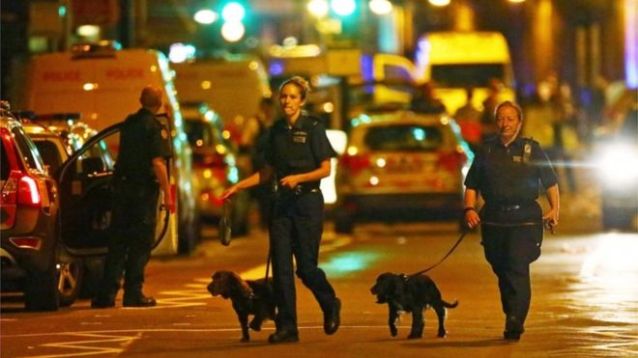
Police at Finsbury Park after latest terrorist attack

Police at Finsbury Park, north London after the latest terrorist attack this week Pic credit: BBC

CROSS POSTED ON BYLINE.COM

Theresa May promised ” Enough is Enough”  after the two vicious terrorist attacks in Manchester and London Bridge during the election campaign. Since then we have a third attack in Finsbury Park, north London targeting Muslims.

Today a much slimmed down Queen’s Speech promises new laws on security and possibly a U-turn on police cuts. But we need to be vigilant on what measures are taken and ensure that in a rush to clamp down on extremist perversions of the Muslim faith that the law is not used against other people to restrict freedom of speech and robust debate.

This threat was highlighted by none other than researchers at the House of Commons library who produced a timely review of terrorist legislation and also pointed out the pitfalls of badly drafted legislation and loose definitions of extremism.

As I wrote in Tribune last week:

In the Tory manifesto Theresa May had committed herself to creating Commission for Countering Extremism. The Commons library paper says the last Tory government has already got a Counter-Extremism and Safeguarding Bill in the pipeline – which was never introduced because of the snap election.

This included powers to regulate all official out-of-school activities to prevent extremists from using them and banning people with extreme views from teaching in schools by extending the scope of the debarring system, at present used to prevent criminals and sex abusers from getting jobs.

It also included new powers to block people streaming extremist videos from outside the EU and new action to be taken against local councils that did not act to stop extremism in schools.
What is not clear is whether the new legislation would also include measures to disrupt extremist activity, including outlawing some organisations and some individuals, barring them using premises and trying to criminalise people who say they do not believe in democracy and advocate violence even if they have no intention of committing offences themselves. Some of this would involve issuing civil orders against individuals.

The  Commons report  raises a lot of questions:
• Can extremism be defined in a way that offers legal certainty?
• Is it necessary to resort to new civil orders instead of existing criminal offences?
• How will proposals avoid unjustified interference with freedom of religion and expression?
• Is it justified to limit speech which is not in itself illegal?
• How can online extremism be dealt with both by government and social media companies?

It warns: “Unless a consensus can be reached as to what constitutes extremism in the first place, the development of effective measures will continue to prove problematic.”

And the government can hardly introduce a law that singles out Muslims.

These are wise words because the direction of travel is to try to prosecute people for what they say not for what they do – and somehow try and control what is on the internet.

It is a law of unintended consequences as the Commons paper reveals. For while naturally Liberty objected it also led when the idea was debated in 2015 to objections from Christians.

They were protesting that people advocating gay marriage should be banned could face prosecution or denial of access to buildings because they would be described as extremists.

It is delicious irony that tough talk to clamp down on radical extremism could end up alienating  the Tory’s preferred government partner, the Democratic Unionist Party , who oppose gay marriage, unless of course there will be a special exemption for Northern Ireland.  Even Dominic Raab, Conservative MP for Esher, now a government minister at the Ministry of Justice, objected to curbs on free speech, warning it could be used to prosecute other groups – including Christians opposing gay marriage,

People should scrutinise the proposed terrorism bill very carefully when it is published today. The Commons research paper is here.

Jeremy Corbyn’s biggest victory: Revitalising democracy

Jeremy corbyn rally

Jeremy Corbyn rally – as big as a Gladstone or Disraeli rally. Pic Credit; Twitter

CROSS POSTED ON BYLINE.COM

Jeremy Corbyn’s good performance  in the polls last night was not just brilliant for Labour. It was also not just because he produced a left of centre detailed manifesto. It was not even because he avoided ” yah boo sucks”  attacks on the Tories or Liberal Democrats.

His biggest victory last night was because he galvanised democracy and got a new generation of young people to take an interest in politics and bother to register to vote. He did this in the extraordinary space of two months.

On  March 24 Tribune published an editorial highly critical of Labour’s performance in general and Jeremy Corbyn in particular. It said simply Labour isn’t working and this was from a left of centre magazine not the Daily Mail.

Lest it be forgotten then the Tories had a 19 per cent lead over Labour and crucially had a 41  to 29 per cent lead among the  18-24 year old group.  Thus at that time Theresa May even had a lead among students and young workers.

Now in the remarkable space of  just 10 weeks Jeremy Corbyn and his election campaigning team has totally transformed the picture of politics for youth.  Not since the barnstorming performances of Gladstone and Disraeli in the nineteenth century and Churchill in the early twentieth century have such huge crowds turned up at rallies to hear a party  leader speak.

And remember these huge meetings predate the invention of radio and TV let alone the internet and the smartphone.

To get youth as enthusiastic to think they can change events in an age of so many other distractions is a mega achievement which leaders of every other political party should be profoundly grateful to Jeremy. For if the idea of change through the ballot box is not passed from one generation to another democracy dies and dictatorship looms. And given it was against a background of two random terrorist attacks aimed at the young is even more remarkable.

Sadly I must say his dream of encouraging young people to participate in democracy did not seem to be shared by the Conservatives. They did not appear to be encouraging the young to  register to vote – presumably because Lynton Crosby thought it would not get many new votes for the Tories.

And worse on polling day some people – including one person with a blue rosette in Enfield and a UKIP and Tory run council in Plymouth – lied to young first time voters that they needed an ID card to vote at polling stations- presumably in a desperate move to keep  Labour from winning marginal seats. Theresa May does want to introduce ID cards for voting – but I am afraid it is not the law at the moment so it is illegal to mislead voters.

The contrast between Labour and the Tories over democratic rights is still continuing after the election. Theresa May is behaving like a headmistress of a rather badly run prep school  – by pretending that she is still running a successful operation when people are stopping paying the fees. She has lost authority and seems to be developing a  “bunker type”  mentality ignoring the reality that the game is already half up.

There appear so far to be no concessions to the democratic process from the Tories – and the main aim seems to be to ally May with the Democratic Unionist Party in Northern Ireland – probably adding to division there between them and Sinn Fein. Would she ban abortion in the rest of UK if the DUP demanded it? Would she concede to some of their antiquated views about gays? How will this play out over the present crisis in Stormont?

But I profoundly believe that what Jeremy has started cannot be stopped. There may have to be yet another general election after a few months to complete the transformation – though this will be highly risky in the middle of Brexit negotiations. Theresa May called the election believing her own propaganda that Jeremy was a no hoper. Now she has found out the hard way  that he isn’t and no matter how many pages of propaganda Paul Dacre and Rupert Murdoch use to smear him it no longer works.


Pollsters to lose tomorrow’s General Election

Jeremy Corbyn Pic Credit BBC

Jeremy Corbyn Pic credit:BBC

Theresa May

Theresa May Pic credit:BBC

CROSS POSTED ON BYLINE.COM

Today’s last minute polls show the volatility of the electorate and why it is has been such a difficult election to call. It started as a guaranteed ” slam dunk ” win for Theresa May with a  lead over Labour of 24 points. Then the prediction was that with an unpopular Labour leader who was not supported by many of his MPs would help Theresa May increase her lead as Opposition parties tend to lose their momentum during a general election and see their  position decline. Hence the initial predictions that Labour already 101 seats behind the Tories could lose another 70 seats or even more giving her a majority of 150 to 200. Instead every poll has pointed to a narrowing of the lead, Jeremy Corbyn, has surprised everyone by leading a very energetic campaign on a left wing manifesto and even passionate Tory supporters admit their own campaign has been a mess. Theresa May has not appeared as the self confident stable leader  unafraid of debate. She has positively avoided it.

Then there is an expected swing to the centre  which should accompany Labour moving Left..  Based on this  Tim Farron  hinted at first that he could replace Labour as  leader of the official Opposition on the back of the 48 per cent Remain vote. Instead – and all the polls  are agreed – the Lib Dems look like making little progress and could be pushed back. The electorate has become  totally polarised – just like during the referendum.

And as for UKIP who once boasted that they would replace Labour in the North as the main opposition to the Tories – their collapse has been phenomenal – they are unlikely to have any representation in Parliament and  have lost seats hand over fist in the local elections.

But can we trust the pollsters today? Just as in 2015 when the majority got a hung Parliament wrong – and the one poll that predicted a Tory victory over egged the size of it.

Unlike last time there is no consensus – with each poll coming to wildly different conclusions.

They range from a Tory majority of 124 and 100 – with the Lib Dems also losing every seat in England including their leader Tim Farron and former leader Nick Clegg ( to Labour) to Labour gaining seats and the Tories short of majority in Parliament. In the middle are Lord Ashcroft -Tory  majority of 64 – and Nowcast with Labour losing 13 seats and the Tories gaining 23.  The latter last two give Theresa May full command of the House of Commons.

Much will depend on who will vote. The young are pro Corbyn so if they turn out in substantial numbers – the result will be good for Labour. But pollsters don’t expect them to vote – and the elderly – despite the row over paying for social care  to rush or even limp to the polls to ensure a big Tory victory.

Mind you if people keep telling the young they won’t vote – they may well be bloody minded enough to turn out to defy expectations.

Whatever happens it will be bad news for pollsters. Because someone is going to get the result awfully wrong – they can’t all be right.


My billet-doux from Theresa: Push Brexit from the comfort of your own home and register your vote plan at Tory Central Office

Theresa May

May’s billet doux campaign to her supporters Pic credit:BBC

CROSS POSTED ON BYLINE>COM

One of the more amusing things about this election is that Conservative Central Office appear to have registered me as a Tory supporter, How this has happened I do not know but as a result nearly every day I receive a Dear David  billet-doux from Theresa May, Boris Johnson, Amber Rudd and Patrick McLoughlin telling me what line to take against Jeremy Corbyn.

They were especially active when Theresa May  and Jeremy  Corbyn were facing separate Paxman interviews – with five lines to take – emphasising Corbyn’s support for the IRA .

But in the last week it is clear that the Tories have gone back to basics and  even after the Manchester terrorist attack – are now trying to get a big majority on Theresa May’s stance over Brexit.

As this letter shows:

Dear David,

I’m excited about the future.

If we make a success of Brexit, there are great opportunities ahead.

My plan for Brexit will return control to Britain – and help us shape a brighter, fairer future for our country.

But David, I need every Conservative supporter to get behind my plan to make Brexit work.

So please join our team speaking to voters around the country by signing up to make calls today.

As we approach the final week of this campaign, it’s crucial that everybody remembers this fact: Britain is about to enter into the most important negotiations of my lifetime.

Brexit negotiations are set to begin just eleven days after polling day. And the European Union is already adopting an aggressive negotiating position.

That’s why Britain needs a strong government and a strong Prime Minister capable of standing up to Brussels.

Your support is more important now than ever. Because every vote for me in this election will strengthen my hand in the negotiations that are about to start.

So, David, help me make my case to the country – and help me make a success of Brexit – by signing up to make calls today.


Thank you for your support

Theresa May
Prime Minister and Leader of the Conservative Party

If you click on the link you will find three choices – join a phone bank, go to Conservative Central Office ( you get a special rousing address from Boris if you do) or make the calls under Tory guidance from your own home. Fascinating to know how many people have received calls in the last few days – and whether this appeal has been launched because the Tories have not had enough support from members to do the work despite overflowing with cash donations.

On polling day Theresa has asked me to have a plan on how I am going to vote – suggesting I might go with the family, friends and neighbours to stop Jeremy Corbyn Diane Abbott and  John McDonnell going into government.

As she says here:

Dear David,

Today I’m asking you to do one crucial thing: make a plan to vote.

If the Conservatives lose just 6 seats next Thursday, we will lose our majority: and Jeremy Corbyn will be in charge of Brexit, Diane Abbott our national security and John McDonnell our economy.

There is so much at stake David – and I need your support.

Please make a plan to vote on our website today, so you know what time you’ll be voting next Thursday, and who you’ll be going to the polling station with.

And then forward this email on to every Conservative supporter you know, so they can make a plan to vote too.

Thank you for your support,

Rt Hon. Theresa May MP

Theresa May
Prime Minister and Leader of the Conservative Party


What this does show is that even on polling day – who goes out to vote will be absolutely crucial to the result – and the Tories are planning to monitor their supporters to make sure they have voted. Interesting times.

Election 2017: Prim Headmistress v Cool Grandad

CROSS POSTED ON BYLINE.COM

General elections should be all about policy rather than personalities. But what about the non political vibes that may decide how you cast your vote? And why is Jeremy Corbyn rather than Theresa May such an unlikely icon for younger voters?

Theresa May

Prim Headmistress Pic credit:BBC

The impression I get of Theresa May is that she is a retro figure who would love to turn Britain back when she was born in the 1950s – the days when the Ford Popular was the car for the aspiring masses and yes, we had lots and lots of grammar schools.

Her demeanour is everything like the prim and prissy heads of old single sex grammar schools who ruled the roost, took no prisoners, and bullied the staff as well as the pupils.

They had a very narrow vision of Britain based on God, Queen and Country and thought girls should be well mannered ( no swearing), academically bright  and get a professional job.

It is no wonder then that she has made grammar schools the centrepiece of her 21st century education policy – they reflect her own image and values. They also co-opted a very small section of  academically bright working class fellows – just to make sure the great unwashed lost any aspiring leader who  would foment dissent and acquired the right middle class values.

As a head of  a girls grammar school she would have eschewed violence- caning was for men – but anybody who was naughty would be put  in detention  and made to write lines.

I imagine as PM she would love to punish the millions of Remainers in Britain by making them stay in their homes for an hour and write ” I love Brexit” 100 times until they were forced to agree.

Her views on immigration are also very 1950s. She is not racist but she is obviously missing the almost exclusively white grammar school classroom – with just the odd aspiring West Indian and Asian to add a bit of flavour and hopefully  imbibe middle class values. Which is why we get the tens of thousands mantra rather than free movement.

I wonder what she really thinks of the internet – which allows free rein to any expression – given she wants to control  what is said – something that even China finds difficult. It reminds me of what one angry director said about me criticising his product – you ‘re quite at liberty to moan about it in the pub but you shouldn’t put your views online for everyone to see because it damages my company.

None of the above is likely to appeal to the  majority of the young who like Britain being a tolerant, open, multicultural and diverse place and don’t want to be bossed about.

Jeremy Corbyn Pic Credit BBC

Cool Grandad Pic credit:BBC

Which then brings me to Grandad Jeremy. By rights he shouldn’t be an obvious icon. Every idea and political stance he had is supposed to be old hat – like renationalisation of the railways and saying trade unions are a good thing. The youth have been told for years by the Sun and the Mail  he is an extremist and  supports dangerous terrorists and has radical policies that will destroy Britain.

But I suspect they have been surprised by what they have seen. It does not marry with what they have been told. To them he must look more like a thoughtful grandad who has retained his youthful idealism. They may not agree with everything he says but they respect him for sticking to what he believes and not being phased by strong criticism or bossy interviewers.

Also young people – being young – are normally full of idealism themselves – they are not naturally bitter and twisted and don’t hate the present Britain they live in. They might like the fact that as a politician he doesn’t do personal abuse. And they might agree that indiscriminate bombing of civilians is not the way to ensure lasting peace.

The Establishment may laugh at him having an allotment or wearing home knitted jumpers but I suspect that cuts no ice with the young – whose grandads may also have allotments and have granmas who can knit.

It is this underlying contrast that I suspect has caused a bit of a sea change in the expected outcome of the election – which on day 1 looked a slam dunk for the Tories with a majority of 150 to 200. It may still not change the ultimate result but it is no longer clear cut and there are 11 days to run.


Why Theresa May must ensure transparency between top politicians and big business during Brexit negotiations

Theresa and Philip May

Theresa and Philip May: Pic Credit: ITV

CROSS POSTED ON BYLINE.COM

Tonight Theresa May and her husband Philip May appeared on the BBC One Show together – providing a major personal boost for the PM during the General Election campaign.

Last month Byline carried a story about the Cabinet Office being asked to investigate an issue that is very close to home to both of them – whether there could be any conflict of interest between her role as Prime Minister and his role as a senior investment manager of the Capital Group, which moves billions of pounds every day in the money markets.

The question is important – not because there is any evidence that either Theresa or Philip May  have abused that relationship to make money – but because the Whitehall rules are still pretty lax in ensuring that there is full transparency despite fine words in the Ministerial Code of Conduct.

As it says :“Ministers must ensure that no conflict arise, or appears to arise, between their public duties and their private interests.”

I raise this because last month the Cabinet Office insisted that there was no investigation into this and that  “The Prime Minister has declared in full her interests and the interests of her husband.”

That reply covers a multitude of sins because the same code allows nothing to be declared by Theresa May if she puts her investments in a ” blind trust” and leaves it to the trustees to invest. Similarly her husband Philip need only declare very basic information because  such details “would involve unjustifiable intrusion into the private affairs not only of Ministers, but of their close family.”

I also raise it because the Cabinet Office seemed unduly sensitive about this inquiry. I am told by another media source that it privately briefed that not only was there no investigation but there was no email correspondence about such a complaint or response from the Cabinet Office about it.

I have double checked my sources and indeed discovered a civil servant from the Cabinet Office did acknowledge the complaint and promised to examine the issue  after it was pointed out that billions if not hundreds of millions of pounds are involved in currency movements depending on speculation on Brexit.  I won’t embarrass the civil servant by naming the person on this site as I know the source won’t want to be identified.

This leads me to one conclusion. If the Conservatives do win the election, for the next two years the money markets will be desperate to know the state of Brexit negotiations – as there are hundreds of millions if not billions of pounds to be made by having an ” inside track “.

Therefore I think declarations by ministers and their close relatives – given the close connections between the City and prominent Tories – should be made much more transparent. This is one for Lord Bew and the Committee on Standards in Public Life but it needs to be sorted quickly.


Must a stellar Tory performance lead to Labour oblivion?

Theresa May

Theresa May:Leader of the Tory party. Pic credit:BBC

CROSS POSTED ON BYLINE.COM

If I was a Conservative strategist I would be very pleased with myself. The local election results could not have gone better to plan. In one fell swoop the 650 plus Tory gains have put Labour on the defensive and even threatened their heartlands, halted the Liberal Democrat revival in the West Country, pushed back  the SNP advance in Scotland and destroyed UKIP.  One symbolic Tory gain was winning a seat in Sedgefield, Tony Blair’s old Durham constituency.  The only small flies in the ointment is that the Tory advance was contained in the big South Wales cities and they failed to make any impact in Manchester and Liverpool.  We have no indicator of how London will vote.

On the face of it Theresa May is heading for a coronation in  the June general election with a majority of anything from 140 to 220 with  most of the four million UKIP voters in the bag to add to her diehard Tory supporters. Grim reading indeed particularly if the convention is  that previous local election results underestimate swings to the government party in a general election.

But note that the Conservatives are not crowing too much about this result. The result in one sense ( with 11 council gains) has been too successful and they have to big up ” Corbyn ” or they will have no bogeyman to frighten their more affluent voters to come out and vote for May. Because if they think it is in the bag they may not bother.

They also have an interesting campaigning challenge – do they limit campaigning in Tory seats on the grounds that they are impregnable now – and go and campaign in seats where Labour has a 10,000 majority on the grounds that May is so popular that they can take these. Or do they take a more cautious approach and fight hard in their marginals.

Whatever the situation  the Labour top team have got to up their game and try and convince both working class and middle class voters that are tempted by May and her robust nationalist challenge over Brexit to switch.

Labour should have the high ground on the rest of the agenda, the NHS, police and crime, education, transport, the environment and welfare. In all these areas the government is making a mess of it – and with five years of more austerity and rising prices the message ought to get through that we need a change in direction.

But it will still to be dominated by Brexit and how Britain is going to lead the negotiations – and Labour has failed to counter this.

There may be a way to deal with this. As May is not going to reveal her negotiating stand perhaps Labour who have a talented Brexit secretary in Keir Starmer should do so. What would happen if Labour took the risky chance of holding a press conference to announce their negotiating stance and their team that would go to Brussels. And what if that was combined with the post Brexit future a Labour government would provide for Britain. It would look like a government in waiting.

It would be controversial as the media would concentrate on Labour’s plan but it would put May on the defensive to explain her vision – something she is reluctant to do so given she is after a blank cheque wrapped up in the Union Jack.

And it would widen the gap between Labour and the Liberal Democrats who are seen as the remain party – but they have the problem that their increasing vote share has been eclipsed by UKIP supporters swamping them by voting for May in the West Country and elsewhere. While the Lib Dems will probably gain some seats in Remain constituencies  ( St Albans,Twickenham and Bermondsey) they have no chance of becoming the official Opposition even if Labour do badly.

To my mind for Labour to try and combine their vision for Britain with their vision for Brexit could cause some of the people who have quit Labour for May to think again. It could also avert some of the most dangerous aspects of a complete breakdown with Europe.


Has Theresa May got it wrong over the Brexit negotiation plan?

View at Medium.com

Theresa May

Theresa May, Prime Minister Pic Credit: conservatives.com

CROSS POSTED ON BYLINE.COM

Theresa May is about to trigger Article 50 and go into negotiations with the other 27 European Union countries to sort out arrangements covering British trade with this huge market. It is a complete mystery how Britain is going to play its cards and Theresa May doesn’t want to give anything away.

However  a fascinating  post  from Stewart Wood, a former adviser to  Labour PM, Gordon Brown and  later to  Ed Miliband, suggests that she does have a strategy but it may be the wrong one.

Drawing from his experience in Whitehall  he suggests that Theresa May plans to draw from her experience as home secretary where she successfully negotiated an opt out on police and criminal justice matters – choosing to opt back in to measures she accepted.

She plans to use this to apply to the whole British negotiation.

He writes : “Her plan is for the UK to leave the single market en bloc, but renegotiate continued access to it on preferential terms for some key UK industrial sectors as part of a wider free trade agreement. According to this vision, these lucky sectors would continue to enjoy de facto membership of the single market, but without the requirement to be bound by decisions of the European Court of Justice. Problem solved, our Prime Minister thinks.”

So will this work? Not according to Stewart Wood because  the mechanism she is using does not apply here.

” So it can work again, right? Wrong. The strategy of “exit then cherry-picking” worked with the JHA decision in 2014 for a simple reason: it was set up as an “exit plus cherry-picking” deal in the Lisbon Treaty itself. It is a colossal error to think that the same approach can work in the case of Brexit – a negotiation of phenomenally greater complexity, played on multiple chessboards simultaneously, where interests between the EU and the UK are nowhere near as simply aligned, and where opt-outs have not been negotiated by existing treaty provisions.”

I gather Stewart Wood’s views are reflected in Whitehall thinking. But whether Theresa May is taking any notice is another matter.

What it does mean is that if he is right  the Labour Party, Liberal Democrats and the Scots Nats are going to have a field day if they decide to hold the government to account. Also all the sectors – from the car industry, the financial sector and technology to name but a few – might vote with their feet to maintain unrestricted access to the EU. Interesting times.

View at Medium.com