A Supreme Court verdict on Scottish human rights that could backfire on Dominic Raab and Boris Johnson

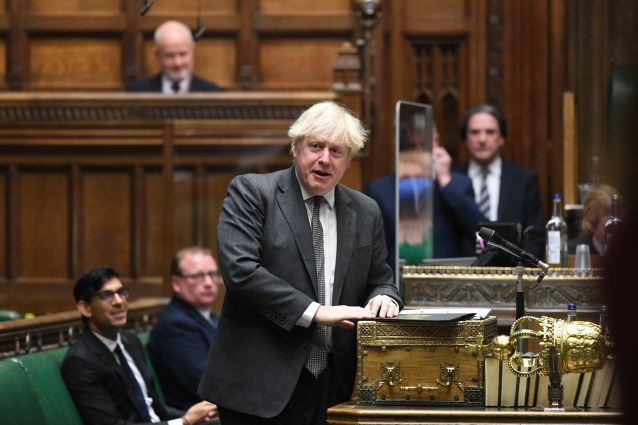
Last week the Supreme Court delivered a verdict against Scotland’s government that gave Boris Johnson a victory to stop both Scotland and Wales giving new rights to children, women, disabled people and protecting ethnic minorities from discrimination.
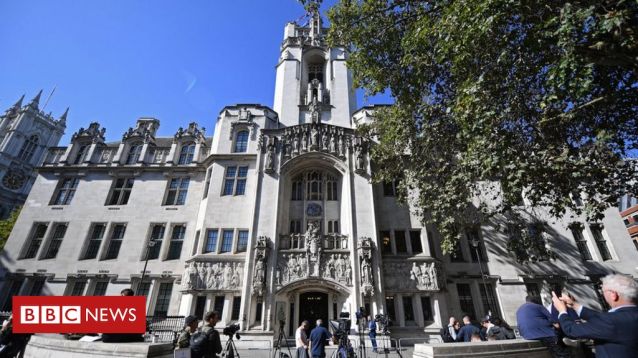
Supreme Court. Pic credit BBC News

The Tories were triumphant that Suella Braverman, QC, the Attorney General, employing the Treasury Devil. Sir James Eadie, to argue successfully that neither Scotland nor Wales could bring forward legislation to implement in full the UN convention on the Rights of the Child nor a European Charter on local self government. The Daily Mail said that it was ” a humiliation” for Nicola Sturgeon and could be used to stop any Scottish referendum. Tories in Scotland accused her of manufacturing a row with the UK by proposing to implement the charter in full.

The decision has implications for three other UN conventions – the Convention on Eliminating All forms of Discrimination against Women (Cedaw); a UN Convention outlawing racial discrimination and one giving full rights to disabled people effectively saying that even in areas of law already devolved to Scotland and Wales neither Parliament can legislate to implement these rights. The Scottish government was planning to introduce legislation to do this.

The immediate effect will be that Holyrood will have to remove clauses in two bills unanimously passed by the Scottish Parliament to take out measures that give extra rights to children or the Queen will refuse Royal Assent to the measures.

Westminster overrides Scotland

The decision basically gives untrammelled rights to the Westminster Parliament to override the Scottish Parliament if it is thought its new law conflicts with lesser rights for children in England.

The issue was argued on constitutional grounds – not on any issues of the rights of any of these groups- who will now be denied these rights purely by the Westminster government saying it is outside the competence of Scotland to legislate in this way.

The judgement was made by five elderly and middle aged male judges and argued equally by a middle aged QC – he is 59 -the same QC who successfully argued before the Court of Appeal that the Department of Work and Pensions had no obligation to bother to tell women born in the 1950s and 1960s that they weren’t going to get their pensions until the age of 66 instead of 60. One is tempted to say ” male, pale and stale” government rules supreme in Westminster- though I may be guilty of ageism.

All male judicial decision

The five judges who unanimously took the decision are

Lord Reed, President, aged 65, a Scottish judge, Baron Reed of Allermuir
Lord Hodge, Deputy President, aged 68, Patrick Stewart Hodge
Lord Lloyd-Jones, aged 69, David Lloyd Jones, President of the Welsh Law Council
Lord Sales, aged 59, Philip James Sales
Lord Stephens, aged 66, Lord Stephens of Creevyloughgare, a Northern Ireland judge.

The full judgement is here. The key phrase is that the changes are outside the competence of the Scottish Parliament under the 1997, Scotland Act which limited the powers of the Scottish Parliament to legislate for certain matters. The judges were careful to say that this was not about the rights of children under the UN Convention only the manner the legislation . This might provide a loophole for the Scottish government.
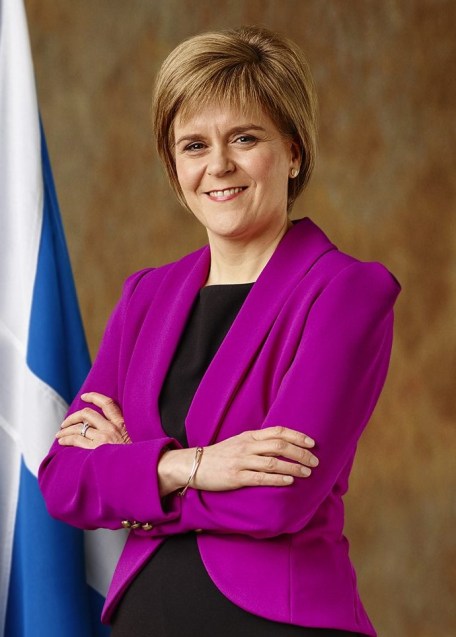
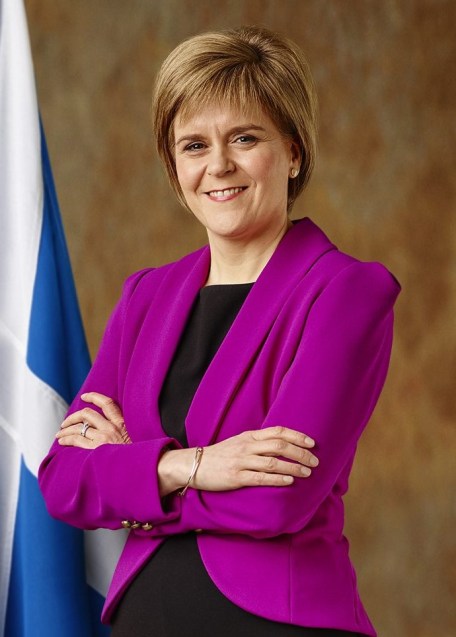
Nicola Sturgeon – official portrait

Nicola Sturgeon the SNP leader and first minister, said in a tweet: ” The current powers of the @ScotParl leaves us unable to full protect children’s rights, even in devolved areas. If our Parliament was independent, no such restriction would apply.

” Anyone thinking this is an abstract argument should reflect that also today, the UK government is taking £20pw from the pockets of the poorest families- making it harder for many parents to provide essential for their children”.

John Swinney, deputy first minister, said: “While we fully respect the court’s judgment and will abide by the ruling, we cannot help but be bitterly disappointed. It makes plain that we are constitutionally prohibited from enacting legislation that the Scottish Parliament unanimously decided was necessary to enshrine and fully protect the rights of our children.

“The judgment exposes the devolution settlement as even more limited than we all – indeed the Scottish Parliament itself -­ had understood.  It sets out new constraints on the ability of our elected Scottish Parliament to legislate to protect children’s rights in the way it determines.

“There is no doubt that the implications of this judgment are significant from a children’s rights perspective. This Bill will not now become law in the form which our Parliament agreed, but we remain committed to the incorporation of the UNCRC to the maximum extent possible as soon as practicable.  Whilst the judgment means that the Bill cannot receive Royal Assent in its current form, the majority of work in relation to implementation of the UNCRC can and is continuing.”

What we have here is a warning shot of a huge row which could also become a centrepiece in the debate over the Scottish independence referendum.

Official portrait of Dominic Raab, Lord High Chancellor

For at the same time Dominic Raab, the new justice secretary, wants to scrap the present UK human rights legislation which still allows appeals to the European Court of Human Rights.

It looks like – whatever the spin – is that he wants to take away human rights from women, the disabled, children and those facing racial discrimination- just at the point when Scotland and Wales want to extend them. We therefore have a perfect storm which could end with the break-up of the UK which is why I say this victory by Boris Johnson could backfire. It could end up being a Pyrrhic victory.

I am trying to extend the work of this website. Please donate if you can to continue my forensic investigations.

One-Time
Monthly
Yearly

Make a one-time donation

Make a monthly donation

Make a yearly donation

Choose an amount

£3.00
£5.00
£10.00
£3.00
£9.00
£60.00
£3.00
£9.00
£60.00

Or enter a custom amount

£

Your contribution is appreciated.

Your contribution is appreciated.

Your contribution is appreciated.

DonateDonate monthlyDonate yearly

donate to westminster confidential

£10.00

Time for a new UN convention on the rights of older people

Today is the United Nations International Day of Older Persons. As the number of older people grows in developed countries they are becoming a much bigger force.

Yet as we see in the UK the government pays mere lip service to them – trying to present the general public with the idea that they are all well off and preferring to focus on the young.

Indeed the present Tory government thinks it can get away with targeting them – along with the poor- for the mainstay of their new post pandemic austerity polices.

In the last few years they have taken away free TV licences for the over 75s, abolished the ” triple lock ” for pension rises for one of the lowest state pensions in developed countries, continually raise the pension age and targeted women born in the 1950s and 1960s -taking away around £50,000 in pension payments by raising their pension age.

Many people aged 60 cannot now get free bus passes until they are 66 and ministers now have their plans to make them pay full prescription charges from the ages of 60 to 66 – knowing that far more of them are unhealthy and suffer chronic ailments than younger people. And they are going to reintroduce national insurance contributions for those over 66 who supplement their pension by working.

Older people facing redundancy

There are also problems for older people being targeted for redundancies -indeed the organisation Rest Less, (website here) which monitors job prospects for the over 50s, suggests that there were half a million people over the age of 50 on furlough according to the latest figures. They are reporting growing numbers of economically inactive people in their 50s and 60s. How are they going to get a full pension?

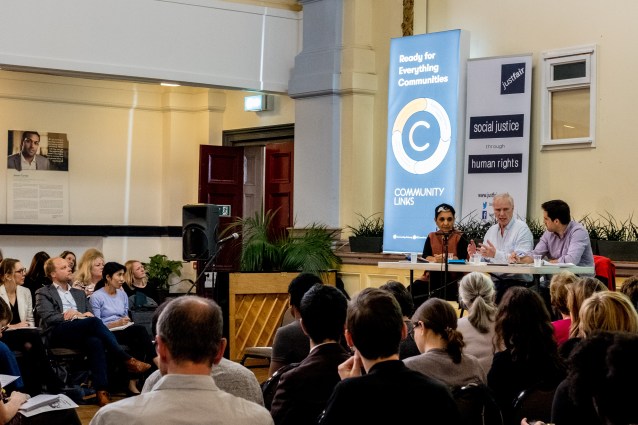
So it is rather good news that JustFair – a campaigning organisation – is calling for a new international convention on the rights of older people. You can read about them and their proposal here. Sufficient to say it highlights a lot of issues affecting older women – and it has the backing of CEDAWinLaw which held a tribunal examining women’s rights and the case for putting that UN convention on eliminating all forms of discrimination against women into UK law.

As it says: “Gender inequality in older age is the result of disadvantages accumulated over the life course and further exacerbated by ageism and age discrimination. As a result, many older women are denied their rights, a situation further aggravated by the COVID-19 pandemic with its disproportionate effect on both older persons and women. It is estimated that the impact of the pandemic increased the gender gap by a generation.  This means that women will continue to reach older age in a disadvantaged position unless structural changes are made“.

Internationally the UN is highlighting a huge digital divide between developed nations and developing countries over the internet with older people the worst affected.

Yet, one-half of the global population is off-line, with the starkest contrast between the most developed countries (87%) and the least developed countries (19%) (ITU Facts and Figures 2020).

Age UK Dacorum’s campaign to highlight the UN day

There are also lots of local events today highlighting the day. In my area in Hertfordshire Dacorum Age UK have a fund raising campaign called ” Slip into Slippers” celebrating the dignity of old age and the fact that many older people play a big role in the community.

Charlie Hussey, development officer for Age UK Dacorum said: “We are asking individuals businesses schools and clubs to get involved by Slipping into Slippers for some of the day, and encourage people to have some fun, make a small voluntary donation and take some photos / videos. All to raise funds and awareness of Age UK Dacorum and highlight the needs of older people and equally importantly the contributions they can still make to our community. “

I am also raising funds for my own website to develop my work holding the government and the powerful to account. Please donate if you can

One-Time
Monthly
Yearly

Make a one-time donation

Make a monthly donation

Make a yearly donation

Choose an amount

£3.00
£5.00
£10.00
£3.00
£9.00
£60.00
£3.00
£9.00
£60.00

Or enter a custom amount

£

Your contribution is appreciated.

Your contribution is appreciated.

Your contribution is appreciated.

DonateDonate monthlyDonate yearly

westminster confidential

£10.00

National Audit Office reveals DWP’s “almost inevitable” errors in calculating your pension as £1 billion is owed to 134,000 pensioners

Woman pensioner. pic credit: Which?

A highly critical National Audit Office report today exposes major shortcomings in the running of the country’s state pension system.

With some 12 million people relying on the Department for Work and Pensions to calculate their pension accurately the auditors reveal a sorry picture of outdated IT systems, civil servants reduced to making manual calculations and mistakes galore with no proper system to identify the errors in the first place.

The NAO investigation was triggered when former pensions minister Liberal Democrat Sir Steve Webb and Tanya Jefferies of ThisIsMoney.co.uk, last year started to refer a number of cases to the Department of women who had been underpaid. On 26 May 2020 Sir Steve published an estimate of the level of underpayments using the
information obtained from the Department combined with public information from the Family Resource Survey that at least 220,000 women had been underpaid including 131,000 married women, 56,000 widows and 35,000 divorcees.

90 per cent of the losers are women

Now the department has admitted that 134,000 people have indeed been given underpaid pensions and it will cost £1.053 billion to compensate them. This figures excludes those who have already died because the department wipes them from its records after four years

Once again 90 per cent of them are women, and only 10 per cent men.

What is particularly alarming is the summary in the report about the whole pensions system.

It says: ” The errors occurred because State Pension rules are complex, IT systems are outdated and unautomated, and the administration of claims requires a high degree of manual review and understanding by case workers. This makes some level of error in the processing of State Pension claims almost inevitable.

The Department’s caseworkers often failed to set (and later action) manual IT system prompts on pensioners’ files to review the payments at a later date, such as their spouse reaching State Pension Age or their 80th birthday. Caseworkers also often made errors when they did process prompts because frontline staff found instructions difficult to use and lacked training on complex cases.

Worse the department seem to have a top down approach to find out about errors – rather than a bottom up from the pensioners themselves who might challenge their pension awards. Therefore it never picks up a large volume of similar complaints.

Wrong assumption that there are no errors

As a result there always been the assumption – and it was taken until now by the National Audit Office- that there was virtually no fraud or error in the payment of the £100 billion plus to pensioners every year. This has now been proved wrong.

The ministry is recruiting 544 people – at a cost of £24.3 million – to chase up and pay out the money to people who have lost out. But it is going to take some two years to do this with priority being given to the over 80s and widows. It has no plan on how to compensate relatives of dead pensioners owed money- and the NAO think it should create one.

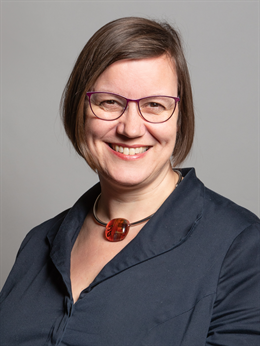
Meg Hillier MP

Meg Hillier MP, Chair of the Committee of Public Accounts, said

“Many pensioners – most of whom are likely to be women – have been short-changed by thousands of pounds which they are still yet to receive many years later.

DWP must provide urgent redress to those affected and take real action to prevent similar errors in future.”

A DWP spokesperson said:

“We are fully committed to ensuring the historical errors that have been made by successive Governments are corrected, and as this report acknowledges, we’re dedicating significant resource to doing so. Anyone impacted will be contacted by us to ensure they receive all that they are owed.

“Since we became aware of this issue, we have introduced new quality control processes and improved training to help ensure this does not happen again.”

Fourth pensions scandal to hit DWP

However one must comment that this is the fourth scandal to hit the DWP over the payment of pensions and women are by far the worst treated. First we had the 3.8 million 50swomen not being properly informed about the raising the pension age which the Ombudsman has found there was maladministration. Then we had the complicated story of people losing their guaranteed minimum pension uprating which could affect 11 million people, mainly women. Again the Ombudsman found maladministration but only two people have been compensated. And now we are also having delays for people claiming their pension for the first time in getting paid.

Cynics might conclude the ministry is almost misogynist in its approach – and also all these delays is ensuring more people -particularly in the age of Covid- will be dead before they get the money that is owed to them.

You can now donate to my blog to support my work. Details below:

One-Time
Monthly
Yearly

Make a one-time donation

Make a monthly donation

Make a yearly donation

Choose an amount

£3.00
£5.00
£20.00
£3.00
£9.00
£60.00
£3.00
£9.00
£60.00

Or enter a custom amount

£

Your contribution is appreciated.

Your contribution is appreciated.

Your contribution is appreciated.

DonateDonate monthlyDonate yearly

donate to westminster confidential

£10.00

Suspected race hate vandals smash up black artist’s exhibition and tribute to the Windrush generation

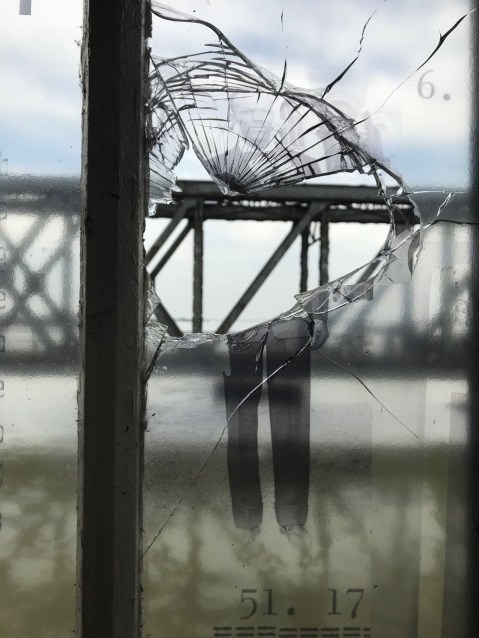
Damaged walkway at the Windrush exhibition where vandals smashed the glass pic credit: Evewright

The Afro Caribbean people who came to the UK in the 1940s to the 1970s-known as the Windrush generation after the first ship MV Empire Windrush that brought them from Jamaica, Trinidad and other West Indies islands- have suffered a lot in the last few years at the hands of successive Tory governments.

They were victims of the ” hostile environment” policy to immigrants set up by home secretary Theresa May in 2012 and continued to this day by Priti Patel ( herself from a family of Ugandan Asian refugees) they wrongly faced deportation, loss of jobs and homes after living in this country for more than 50 years because they were never issued with documents. Many were wrongly deported.

So it was rather good that an inventive Afro-Caribbean artist Everton Wright (Evewright) decided to launch an amazing art and sound installation as a tribute to that generation. He also based the exhibition at the port of Tilbury in Essex – the very place where MV Empire Windrush docked in 1948 and used the original walkway – still there – where what are known as the elders of Windrush made landfall in the United Kingdom.

 It is an immersive visual art experience, installed on 432 panes of glass collaged with photographs, documents, original boat passenger tickets and memorabilia. The artwork is installed in an original passenger walkway 55 metres long. As you walk through, you can listen to audio stories about the lives of some of the elders whose images are featured in the installation.  See http://www.evewrightarts.org

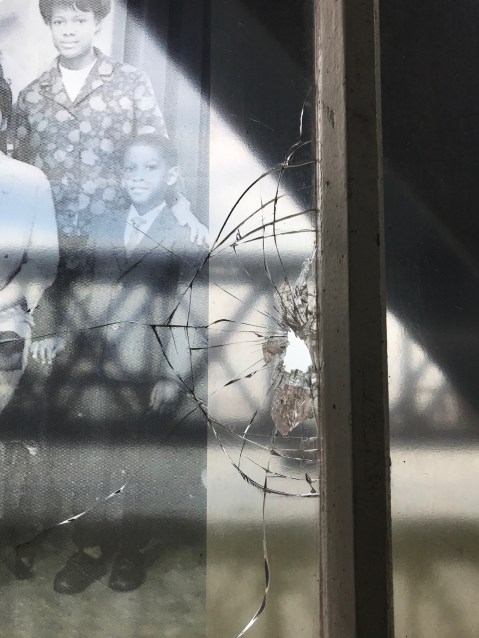
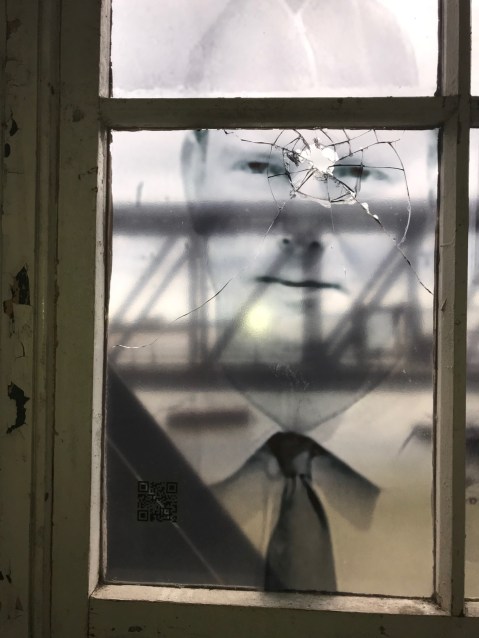
Sadly vandals this month broke into the exhibition and smashed many of the exhibits and damaged the walkway where it has held. This is some of the damage:

A damaged exhibit Pic credit: Evewright
Windrush exhibition: Another Exhibit smashed. pic credit; Evewright

The artist himself is keeping the exhibition open leaving the damage for all those to see.

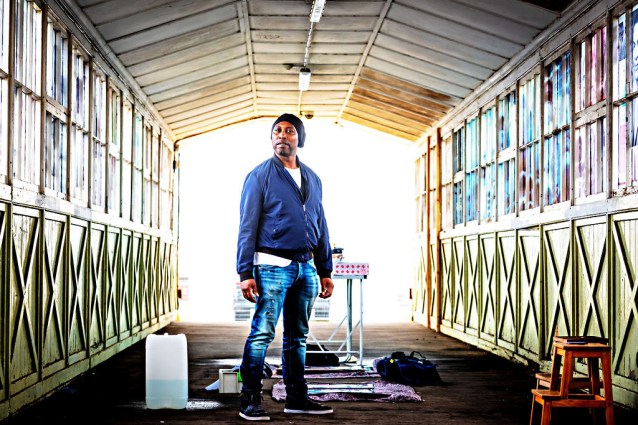
Artist Evewright at the exhibition. Pic credit: John Ferguson Photography

Everton Wright said: “This artwork is made as a celebration of the lives and endeavours of Caribbean elders, from the Windrush Generation. It has been created through the need to preserve their stories and first-hand accounts so future generations can understand the importance of the contributions they made to Britain. This work has received an overwhelming positive response from the public and those who contributed their stories and images. The feedback from the public is heartfelt knowing these stories where being told. Yet there are a few who choose to damage this beautiful work. 
” This is a targeted hate crime targeted towards the Windrush Generation. Who themselves had to show resilience in the face of the racism and barriers many of them experienced. I intend to keep the damage windows in place on the installation as a visible reminder of the hate and bigotry towards those that are seen as “other and foreigner” that still unfortunately still exists in our society today.

Essex Police have launched a criminal investigation: “

Another example of the damage. Pic Credit: Evewright

Essex Police has urged anyone with information to contact them and said it would “not stand by while people commit crimes in our communities”.

Supt Naomi Edwards, of the force, said: “Myself and colleagues at Essex Police were extremely saddened to hear that such a culturally and historically significant art exhibition has been subject to damage – this is unacceptable on every level.”These offences had not been reported to Essex Police, rather they had been reported to our colleagues at the Port of London Authority Police.

 “However, such is our concern at these incidents, that we are working alongside our policing colleagues to support their investigation and are undertaking enquiries to establish who may be responsible in order that we can arrest them and bring them to justice.”

So far nobody has been arrested but the organisation say the police are treating it as a hate crime.

Contrast this coverage with the toppling of the Edward Colston statute

I cannot but contrast the coverage of this event in the media with the national coverage given to the toppling of the statute of Edward Colston, the Bristol slave trader, in a Black Lives Matter demonstration. This was given saturation coverage in the nationals and on TV and was linked to the debate on ” woke” and ” culture wars”.

This incident was only covered on local BBC TV, The Voice and as far as I can see, the Independent. I don’t need to make any further comment.

Time for a Women’s Rights Law and real radical change – CEDAW President’s report

Jocelynne Scutt, President of the CEDAW People’s Tribunal

A major blueprint for how the United Kingdom can transform its laws to end all forms of discrimination against women and properly implement the UN convention ratified by Margaret Thatcher in 1986 has been published by the CEDAW People’s Tribunal.

The 252 page report written by Jocelynne Scutt, with the backing of a researcher team,, proposes to end the piecemeal implementation of parts of the UN Convention Eliminating All Forms of Discrimination, both in national law and in different parts of the UK.

Its conclusion said: “The proposal now made by the CEDAW People’s Tribunal that the United Kingdom seize the opportunity now presented to it and introduce a Women’s Bill of Rights into the United Kingdom Parliament provides
a real opportunity to do this – create a climate where women’s rights are truly recognised as human rights, and human rights as women’s rights – with the United Kingdom taking the lead.”

it says it is time to replace fine words by politicians on women’s rights with deeds and includes comprehensive proposals backed up by research for almost every conceivable area of British life to improve the rights of women. Indeed in the space of one article it is impossible to encompass every area of this report – you will have to read and study it for yourself.

The shortcomings of the Equality Act

Some of the more dramatic findings reveal shortcomings in the 2010 Equality Act – which is probably the UK’s major contribution to women’s rights – both in sections that have never been implemented and the fact that its provisions don’t apply to Northern Ireland – which the present government insists should remain an integral part of the UK.

To back up that last point the report said:
” No devolved authority to have the power to undercut or reduce the provisions, extent or scope of the Women’s Bill of Rights and to address any potential conflict or proposal by any devolved authority to do so, the UK Act to include a provision prohibiting its terms from being excised from operation in the devolved jurisdictions. This provision to be based in the principle herein stated, namely that all women of the United Kingdom, wherever residing, are entitled to equal rights without being deprived of them by reason of residency in any devolved jurisdiction.”

But it does not rule out as Scotland and Wales introducing their own legislation both to improve any UK Act or if the government doesn’t introduce any legislation for Scotland and Wales to go ahead with their own law as they are proposing to do now.

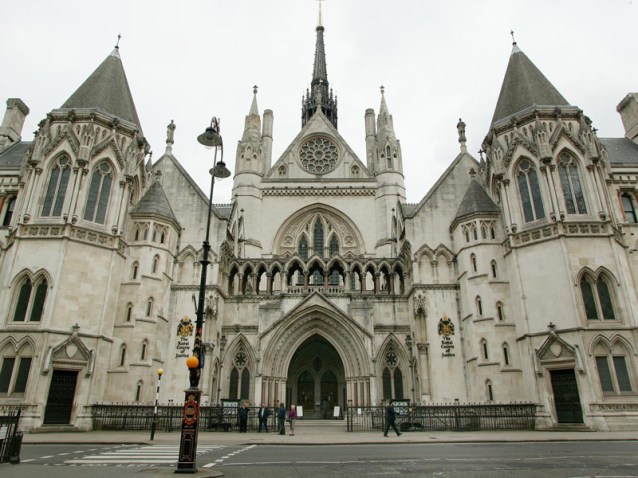
Royal Courts of Justice – time judges learnt about CEDAW

The report also insisted on widespread training for lawyers and public officials on what CEDAW means.

“That the Women’s Bill of Rights include a provision making it mandatory for members of the judiciary and magistracy at all levels to receive education and training on an initial and regular basis, including remaining up to date with CEDAW jurisprudence, and that this provision extend to all holders of public office, whether by appointment or election, in international, national and local bodies and authorities.”

This is a point I felt during the Court of Appeal hearing on the judicial review of women’s pensions that the judges did not seem to have a clue about CEDAW – and in my view this contributed to their decision to throw out the case.

It also makes it mandatory for every piece of legislation to have a gender impact assessment and for all government departments to have a gender impact assessment for every new policy they introduce. Since women are the majority in this country I would have thought that to be essential.

The report picked up that many women do not understand their rights because it is not presented in simple and clear language and the information is not available ( take the 50swomen case in informing women about the rise in the pension age for example).

The ” whole person ” approach to women’s rights and discrimination

There is also a failure to connect discrimination against women to other serious forms of discrimination. As the report said:

“The discrimination of women based on sex and gender is inextricably linked with other factors that affect women, such as race, ethnicity, religion or belief, health, status, age, class, caste and sexual orientation and gender identity. Discrimination on the basis of sex or gender may affect women belonging to such groups to a different degree or in different ways to men. States parties must legally recognize such intersecting forms of discrimination and their compounded negative impact on the women concerned and prohibit them.”

Where is particularly bad the report said the government should use “special measures” – specific legislation to address the problem – to end this inequality.

The report looked at major policy issues such as Brexit, climate change, the Covid 19 pandemic and the Windrush scandal and how they affected women.

It quoted evidence on how these separate issues impacted on each other. One passage read:

“The evidence further provided a snapshot view of the rise in hostility in the lead-up to, the confirmation of, and the continuing aftermath of Brexit. The Covid pandemic has exacerbated this, in that because Black and minoritised women (along with their male counterparts) have been in the forefront – both as doctors, nurses, healthcare workers and cleaning staff in hospitals, and suffering from being more susceptible to the virus – this has militated against their interests in the community, too – drawing racist attacks as if they are to blame because of that greater susceptibility”.

It tackled controversial issues such as migration, asylum seekers, women being detained in prison and made strong recommendations on how to deal with these issues. And it dealt with the lack of equal pay for women, and being forced by the partners into credit debts -coining the phrase ” sexually transmitted debt.”

” Sexually transmitted debt”

“This term, coined by lawyer Jenny Lawton and barrister Emma Swart recognises the position of women who, believing
their signature does not ‘count’ and under pressure that is difficult or impossible to counter, sign contracts – including mortgages and guarantees – at the behest of husband or partner, plunging them into debts they did not envisage, from which they do not profit, and which they did not wish to accumulate. Not infrequently, this occurs with the complicity, to a greater or lesser degree and even amounting to collusion, with banks or other financial providers.”

It also looked at faith marriages among the South Asian community which are not recognised by civil law and how they can lead to polygamous marriages, trafficking and women left with nothing in a divorce settlement.

This gives you an idea both of the breadth of issues covered by the tribunal and the need for widespread reform in many areas to give women full rights. And I haven’t touched on violence against women and domestic abuse.

This is truly a major document and a basis for major campaign to change the entire approach to women’s rights. Read it, digest it, and go forward and campaign for change.

UPDATED: CEDAW IN LAW goes to Downing Street to petition Boris Johnson to introduce a REAL Women’s Rights Bill

UPDATED: WITH FULL ROTHERS RADIO PROGRAMME ON CEDAW

Today a group of women from the CEDAW People’s Tribunal led by its president, former judge Dr Jocelynne Scutt went to Downing Street to petition the Prime Minister, Boris Johnson to introduce a comprehensive women’s rights bill.

This is the latest move in a campaign to persuade the government to implement the UN Convention to End All forms of Discrimination Against Women ratified by Margaret Thatcher as long ago as 1986.

It would pave the way for proper gender sensitive legislation and transform the rights of women still fighting for equal pay, equal treatment and better protection from, domestic violence, rape and abuse.

Above is a video now on You Tube of the event. I came along to report it for this blog

Dr Scutt was accompanied by four of the many legal assistants who helped the campaign. They are Katie Capstick, Pietra Asprou, Clara Guitau and Sara Vincezotti.

The event was organised by the steering committee involving Ann Fenner, Kris Gibson, Michaela Hawkins, Louise Matthews, Davina Lloyd and Joanne Welch.

One intriguing insight. The handing over of the petition was delayed a little as Boris Johnson, who was in residence, had to dash outside from No 10 to No 9 Downing Street. He was in the middle of the virtual G7 summit at the time with Afghanistan on his mind. No doubt once he got to see the petition it would remind him that there were also issues like women’s rights in the UK which are not going to go away either.

The next step shortly will be the publication of the report from the People’s Tribunal. There is also a radio interview with me, Joanna Welch and Davina Lloyd tonight who both organised the tribunal with the amazing help of human rights lawyers from Garden Court Chambers.

Ian Rothwell special programme on Salford City Radio

Special programme on BackTo60 and CEDAW; Interviews with Dr Davina Lloyd, chair of the CEDAW Tribunal Steering Committee; Joanne Welsh and myself talking about how the moves in Scotland and Wales are complementing the work of CEDAW. Press on the button below to hear the entire programme ( one hour)

Enjoy the programme and thanks to Ian Rothwell and Salford City Radio for allowing me to put it on my blog.

Parliamentary Ombudsman officially says maladministration over 50s women pensions – but it will still be a long wait for justice

Amanda Amroliwala, Deputy Ombudsman Pic Credit: Parliamentary Ombudsman

Rob Behrens, the Parliamentary Ombudsman, today published his report finding there was maladministration by the Department for Work and Pensions in issuing advance warnings over the rise in the pension age for women born in the 1950s and 1960s.

The report – as previously revealed on this website – is little changed from its draft version – and still insists that up to 2005 there was no maladministration over telling the women that their pension age would rise. After that the report says there were delays.

Amanda Amroliwala, Parliamentary and Health Service Ombudsman CEO, said: “After a detailed investigation, we have found that DWP failed to act quickly enough once it knew a significant proportion of women were not aware of changes to their State Pension age. It should have written to the women affected at least 28 months earlier than it did.

‘We will now consider the impact of these failings, and what action should be taken to address them”

The decision to publish the first part of the investigating before announcing whether the women will be compensated is unprecedented. But according to the press office ” this is because it is the most important investigation we have done” and ” there is a lot of public interest”.

The report is now laid before Parliament and MPs will be able to press the government about its findings.

Andrew Gwynne MP

Andrew Gwynne, joint chair of the All Party Group on the State Pension Inequality for Women, said:

This report is a landmark moment in the ongoing fight for 1950s women to receive justice, and a vindication of what campaigners have been saying for years. The PHSO has conducted a thorough investigation of a number of complaints and found that there were failings in the actions of the DWP in communicating changes to State Pension.

The DWP must urgently address these findings and advise 1950s women what actions they will take to right the wrongs committed by successive Governments. For too long 1950s women have been ignored, and this must change.”

The question is now what will happen next. The report is the first part of a three stage process.

What happens next?

The next stage will be to examine how badly the women were affected by this process. According to the press office this may not be just examining how the six complainants were affected but will look wider. It is not clear at this stage how this will be done and how long it will take.

Then there is a third process -deciding how much compensation the women will get. It will be nothing like the sums of money women lost – often adding up to as much as £50,000 – but is more likely to be hundreds or low thousands.

Again it is not clear whether the Ombudsman will publish these two processes separately or just issue a final report.

My guess – and it is only a guess- is that this may take a year.

Even when it is published the Department for Work and Pensions will need time to respond and a lot will depend on the timetable the Ombudsman gives them to respond and compensate people.

If I take previous cases involving the DWP- the six will get their compensation within a month- while the remaining millions will have to wait. Also the Ombudsman cannot compel the DWP to compensate them – but pressure from MPs should ensure that people will eventually get the money.

The 3.8 million women and those born in the 1960s are still a long way from justice despite this ruling today.

Previous stories on my blog on this issue are:

https://davidhencke.com/2021/06/07/exclusive-parliamentary-ombudsman-proposes-to-say-maladministration-by-dwp-over-the-rise-in-the-womens-pension-age/

https://davidhencke.com/2021/06/12/50s-women-pensions-flaws-in-the-parliamentary-ombudsmans-preliminary-maladministration-report/

I haven’t gone into much detail on the report as you would have read it when I published the draft on June 7.

Those who want to see the report It is here.

England’s buses “expensive, unreliable and dysfunctional” – damning findings of a former UN human rights expert

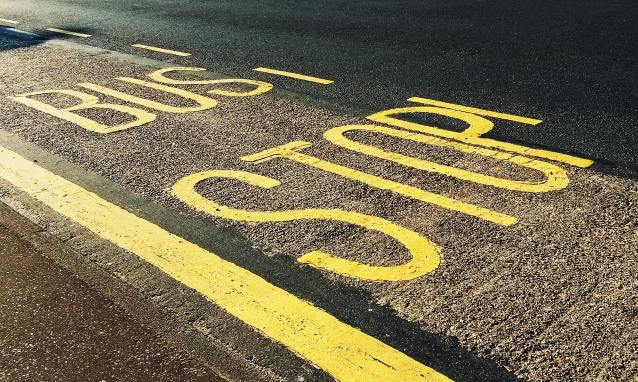
Bus stop image; Pic credit: Pexels Suzy Hazelwood

A report out today by Philip Alston, the former United Nations rapporteur on human rights, condemns the outcome of Margaret Thatcher’s privatisation of the country’s bus services for denying rights to the people of the UK. He came to the UK to interview people about bus services and contacted some of the bus companies.

In a stinging review he finds that many people have lost jobs and benefits, faced barriers to healthcare, been forced to give up on education, sacrificed food and utilities, and been cut off from friends and family because of a costly, fragmented, and inadequate privatized bus service that has failed them.
“Over the past 35 years, deregulation has provided a master class in how not to run an essential public service, leaving residents at the mercy of private actors who have total discretion over how to run a bus route, or whether to run one at all,” said Philip Alston, who authored the report with Bassam Khawaja and Rebecca Riddell, Co-directors of the Human Rights and Privatization Project at New York University’s Center for Human Rights and Global Justice. “In case after case, service that was once dependable, convenient, and widely-used has been scaled back dramatically or made unaffordable.”

He describes the form of privatisation as the most extreme possible – with the exception of London where Transport for London has overall control of how private operators run services.

He is also critical of the government’s new bus strategy started by Grant Shapps, the transport secretary, saying merely tinkers with the existing system, offering ineffective half measures that fail to address the structural cause of the
country’s bus crisis.

Philip Alston getting people’s views at a public meeting in Newham, East London. Pic credit: Bassam Khawaja

Some of the points in the report.

“People living in London, Scotland, Wales, and Northern Ireland can get a concessionary pass to travel for free on buses at the age of 60, an important measure that guarantees older people access to transport. But in England outside London, the government has tied the bus pass to the female state pension age—which was changed from 60 to 66, severely penalizing those on the cusp of retirement who had every expectation that they could rely on a pension and a free bus pass in the next phase of their lives. The UK government should rectify this injustice

“The abysmal state of the bus system in many rural areas is perhaps the strongest argument against a deregulated, for-profit approach to public transportation.

” There is no reason why rural parts of the United Kingdom cannot have a functioning bus service. The Zurich region of Switzerland guarantees villages of 300 people or more at least an hourly service seven days a week. In North Hesse, Germany, bus routes reach all communities with more than 200-250 residents on at least an hourly basis, with ambitions to double public transport use by 2030. Notably, none of these systems rely on an unregulated market to provide this essential service.”

He makes a strong case for bus services to be returned to public ownership and for Parliament to lay down minimum standards for the provision of bus services.

This really is a damning indictment of the state of bus services in England and it has human rights implications because women, people with disabilities, the poor and those living in rural areas cannot access services or get jobs because of poor transport. As usual ministers are pretending they provide good services while other similarly rich countries -like Switzerland and Germany -provide services that English people can only dream about. In the meantime the bus operators make good profits by not providing the services they need.

Philip Alston hears from people affected in Newcastle-upon-Tyne. Pic credit: Bassam Khawaja

A scandalous cover up: The DWP and Ombudsman let down millions of people promised an indexed Guaranteed Minimum Pension for life

Steve Webb, former Liberal Democrat minister, who piloted the change in pension law in 2014

Only two people given a total of £1250 compensation out of millions who lost out

This is a complicated story but bear with me. Under the old pension arrangements (abolished in 2016) employers who decided to contract out of the old SERPS scheme would save on their national insurance contributions (NICs) but promised whatever happened they would still maintain a Guaranteed Minimum Pension for their workers.

But they would not pay for the indexation of the pension once people retired. That money would be paid by the state. and still is for those who have the old state pension.

But from 2016 with the introduction of the new pension that would cease with the exception of people who received an occupational second pension in the public sector – and that includes ministers, MPs, civil servants as well as other public sector workers. This exception even covers any public sector worker who moved abroad to places like Canada and Australia where their basic state pension is frozen.

This change which could lead to people losing thousands of pounds over their retirement – was spotted independently by two knowledgeable people who having got nowhere with the Department for Work and Pensions complained to the Ombudsman. 11.5 million people affected had opted out of the scheme between 1978 and 1997.

Some 21 months ago the Ombudsman reported that they had been right to spot this. The report noted:

“The National Audit Office (NAO) and the Work and Pensions Select Committee considered that the DWP had provided insufficient and limited information to individuals about the potential negative impacts the new State Pension could have, particularly in relation to indexation on the GMP. The NAO said that some people were likely to lose out and could not find the information they needed.

DWP information was misleading

It concluded:

“The DWP communicated the impact of the 2014 Pensions Act legislative change to the public. ln communicating this change, the DWP said that individuals could increase their starting amount of new State Pension. However, people who were to reach SPA shortly after April 2016 were in fact unable to make significant additional NlCs to do this. The DWP’s information was thus misleading.”

Indeed the DWP gave the impression that the change would make a mere 36p a week difference when in fact people, especially women, would lose over their course of their retirement, thousands of pounds. It is very difficult to estimate how much, but a Treasury estimate on how much money those in the public sector will GAIN by keeping this right – suggests, if inflation stays at 2 per cent, it is £13,000 for every man and £18000 for every woman over their average life span. If it is 3 per cent, it is £19,000 for a man and £27,000 for a woman. Not 36p!

Once they had retired they could do nothing about it. The Ombudsman’s report says that between 2016 and today two million people have already been affected. The bulk of the people have still to claim their pension.

The ministry to confuse matters said that the new triple lock provisions for the basic state pension meant that on average people affected would only be between £2 a week worse off and £4 a week better off. But in fact that has nothing to do with the indexation of GMP, it was part of package of measures for the new pension.

Rob Behrens, Parliamentary Ombudsman

If that change wasn’t bad enough the last 21 months nothing has happened. The Ombudsman made straightforward recommendations and wanted the ministry to report back in three months. He was ignored.

“The DWP should ensure that their literature clearly and appropriately references that some individuals, who have large GMPs and reach State Pension Age in the early years of the new State Pension, may be negatively affected by the changes.
“The DWP should direct individuals to check their circumstances. Further, the DWP should provide details to the public about how they can check their circumstances.. We have recommended that the DWP should ensure that anyone with a complaint of injustice arising from the same maladministration can have their concerns fully considered.”

Ombudsman has no power to compel the DWP to redress the injustice

Well so far the DWP has only offered to produce a fact sheet and not made any attempt to contact a single person who was misled . And the Ombudsman – who has no power to compel people to follow his recommendations – looks like letting them get away with it by agreeing to the offer. So only two people – the complainants Mr Smart and Stephen Kenny – have been compensated -offered £500 and £750 each respectively.

Despite some heroic efforts by Stephen Timms, the chair of the Commons Work and Pensions Committee and some questions from me the ministry has stonewalled in providing detailed information. Both the Ombudsman and the DWP are also silent on how the law was changed in 2014 -since the money was paid out before under the old system and those in public sector rather than the private sector now get it through their occupational pension.

Some readers might find this story eerily familiar. If you are a 1950s or 1960s woman it sounds like a rerun of the denial of pensions to millions of women between 60 and 66. Misleading information, nobody being told, and then no redress.

But there is also something alarming in this tale for the WASPI women who have placed their faith in the Ombudsman to save them. First compensation for the potential loss of tens of thousands of pounds is just £500 and £750. Secondly it could suggest if maladministration is proven that the DWP will just compensate the six women involved in the complaint and ignore the rest of the 3.8 million. Thirdly it looks like the DWP may ignore the Ombudsman’s recommendations -knowing he can’t compel them to do anything – or make it so difficult and obtuse for the women to claim that they will get nothing. After all you can’t prove you never had a letter!

A thank you to one of my readers Christopher Thompson who contacted me about this and helped with unearthing some of the key facts in this story.

The new human rights battle: Scotland v Westminster goes to the Supreme Court

Nicola Surgeon: Official Portrait. Scotland’s Minister Nicola Sturgeon said the move was “politically catastrophic and morally repugnant “.

This week the Supreme Court held a ground breaking hearing that could have huge implications for human rights legislation in this country.

The UK government under Boris Johnson took the Scottish government to the Supreme Court to stop them incorporating into Scottish law a United Nations Convention which the UK ratified in 1990 under Mrs Thatcher.

The United Nations The United Nations Convention on the Rights of the Child (UNCRC) is an international human rights treaty that grants all children and young people (aged 17 and under) a comprehensive set of rights. 

It is one of four UN Conventions – the others cover race equality, the disabled – and of course CEDAW- which covers all forms of discrimination against women.


Boris Johnson: pic credit: UK Parliament Jessica Taylor

Just like CEDAW the UNCRC has not been properly implemented. It covers everything from the age of criminality of children ,detention of children, rights for asylum seekers children, and the ill treatment of children including issues like using solitary confinement.

A scathing report from Parliament’s Joint Committee on Human Rights in 2009 expressed severe disappointment on how little the government had done and how fine words used by ministers were not put into practice. Since then there has been a big drop in the number of children being arrested and detained but a lot of other issues, including raising the age of criminal responsibility have not been implemented. The report can be read here.

Now Scotland’s decision to implement it – passed unanimously by the Holyrood Parliament – with every party backing it, has infuriated Boris Johnson who ordered his aides to block it.

This is what happened this week – and the Scots were joined by the Welsh – in fighting the government.

Scotland’s Minister Nicola Sturgeon said the move was “politically catastrophic and morally repugnant “.

Her deputy, John Swinney told MSPs during the final debate on the UN convention bill that the UK government’s request that it be amended amounted to a “orchestrated and sustained assault” on Holyrood’s powers.

Sir James Eadie: now wanting to stop Scotland forcing UK ministers to improve children’s rights

Step forward Sir James Eadie ,the Treasury Devil, who also blocked 50swomen getting any restitution for lost pensions and told the courts that the government was not obliged to tell anybody the value of the state pension.

He has been engaged by Johnson to fight it and it soon emerged why.

He told the court the case concerned “whether the Scottish Parliament has the legislative competence to subject acts of the UK Parliament with the need to comply with the UNCRC and to assign or delegate to the Scottish courts powers to strike down, rewrite or declare incompatible provisions of the acts of the sovereign UK Parliament”.

The UK Government has said their concerns “are not about the substance of the legislation” but whether the Scottish Parliament has the legal ability to pass the bills. In written arguments, Eadie said: “Both bills, [ there was a local government bill as well] in slightly different ways, purport to bestow upon the Scottish courts extensive and, in part, unparalleled powers to interpret and to scrutinise the legality of primary legislation passed by the sovereign UK Parliament at Westminster.”

Don’t give a damn about implementing human rights

It means in slightly less legal language that putting these powerful UN conventions into Scottish law could lead to the Scottish courts striking down unfair and discriminatory laws passed by Westminster – in this case involving the treatment of children. This is precisely why the government fear CEDAW.

So the game is finally up – and it explains why this government is so tardy in putting these conventions into law. They want to bathe in the fine words of these conventions – but really they don’t give a damn for extending human rights to anyone – whether it is a 10 year old child, a 1950s born woman, an asylum seeker, a disabled person or someone who isn’t the same skin colour as the majority of the population.

As MSP Neil Gray warned: “Not only are they threatening the powers of Holyrood but also the rights of Scotland’s children. Scotland’s Parliament has been under sustained attack from the Tories who have been using Brexit, which people in Scotland overwhelmingly rejected, to tighten Westminster control.

“Now they are threatening to strike down legislation that was passed unanimously at Holyrood.”

The all male judges in the Supreme Court who heard the case are reserving judgement.