How a leading expert on home working is stymied by the government’s “litany” of failures to deliver broadband

John Howkins. You can find him at johnhowkins.com

MPs condemn multiple failures on planned broadband provision

John Howkins is well known in the creative industry as an innovator, author and an international speaker. His books – particularly relevant in the present pandemic – highlight a new way to look at work based at home. His latest book ” Invisible Work” concentrates on how people in work can adapt to the new age of artificial intelligence rather than be made redundant by it.

His world centres on publishing, TV, film, digital media and streaming – all the new technologies brought to us by the huge growth of the new digital age.

Supreme Irony

It is therefore a supreme irony that his opportunity to engage in this age of isolation has been wrecked by a Conservative government breaking its manifesto promise to bring broadband to everyone. The failed manifesto pledge – only a year after it was made – is highlighted today in a new report from the all party House of Commons Public Accounts Committee.

For Mr Howkins’ problem is that he lives in rural Norfolk near Attleborough in the Parliamentary constituency of Mid Norfolk represented by Tory MP George Freeman – a tech enthusiast who has written pamphlets on how technology can save the NHS. But as yet has done nothing to help his constituents get the broadband they need.

Mr Howkins like millions of others living rural Britain has no proper broadband that can download videos in seconds or easily stream Netflix or the BBC I Player. And today MPs on the Commons Public Accounts Committee tell you why.

On November 20 last year Rishi Sunak, the Chancellor, unceremoniously dumped the promise to all voters to get fast broadband by 2025 – and substituted a promise for 85 per cent coverage – dumping most rural parts of the UK ( and many Tory voters) in the process. Cynics might suggest the Tories only made this pledge because Jeremy Corbyn, for Labour, had promised a universal free broadband service – saying it should be a basic utility in the 21st century like water or electricity.

Ministry admits target unachievable

The MPs report concludes that not only in ministers’ words ““clear that Government’s 2019 election pledge to deliver nationwide gigabit broadband connectivity by 2025 was unachievable”  but that even this lower target will be missed.

There is supposed to be £5 billion of our money put aside to bring this about but the report reveals that the Department for Culture ,Media and Sport, has yet to allocate 75 percent of this money one year into government for the contracts to do this.

It also warns : PAC is “increasingly concerned that those in rural areas may have to pay more, and may reach gigabit broadband speeds late” and is not convinced that “if and when rural users finally do get gigabit broadband, they will enjoy the same choice of service provider and the same protections as their urban counterparts”.

The scoreboard of failures by the ministry is appalling Mps found:

  • failure to make meaningful progress to tackle the barriers faced by operators in maximising gigabit connectivity by 2025,
  • failure to demonstrate it has learnt lessons from the superfast programme for the detailed design of the gigabit programme,
  • failure to demonstrate how its centralised procurement model will retain the people, skills and knowledge in local authorities that were critical to success in the superfast programme,
  • failure to give any reassurance that local authorities will get additional funding to retain their expert resources at a time when local government finances are under severe pressure from the pandemic,
  • failure to make any meaningful progress in delivering the policy and legislative changes deemed essential by industry to achieve rapid roll-out,
  • failure “yet again” to prioritise consumers in rural areas

Well done culture secretary Oliver Dowden ( NOT )!

Meg Hillier: chair of the Public Accounts Committee

Meg Hillier MP, Labour Chair of the Public Accounts Committee, said: “With the grim announcement that the country and economy will be locked down for months, the Government’s promises on digital connectivity are more important than ever. But due to a litany of planning and implementation failures at DCMS, those promises are slipping farther and farther out of reach – even worse news for the “rural excluded” who face years trying to recover with substandard internet connectivity.  

“For the foreseeable future, ever more of our lives is moving online, whether we like it or not. Government cannot allow digital inequality to continue to compound and exacerbate the economic inequality that has been so harshly exposed in the Covid19 pandemic. It needs to be clear about timelines in each area so that businesses and individuals can plan for their digital future.”

As for Mr Howkins, his submission to MPs said: ” My current supplier is BT. I have an upload speed of a maximum of 0.3MB and a download speed of 3.0 MB.  BT engineers have visited three times in the past few months and have been unable to improve on these speeds. Several neighbours are in the same position.

“It is therefore difficult to carry on business at present. Our ability to receive even a moderately sized data file is limited. It is impossible to upload a video file of any significant size. Interactive usage (banking) often fails. This week, I led presentations in China and Chile. My own internet link was worse than anyone else’s”

… “The suppliers celebrate their gigabit services but do nothing for those, like me, who would be delighted to have a much lower rate, say 10MB down and 2-3 up.

Regulatory failure

” It is a regulatory failure in the UK that broadband providers are evaluated according to national averages rather than the meeting of local need. So they benefit much more by providing 1GB to a one location, even if it is seldom used, than by providing an increase of 10MB to 10 locations. And providing 1GB to one location is treated as the equivalent to providing 10MB to 100 locations.”

” The pandemic has shown up the extent of the government’s failure.  Although offices will re-open to some extent, the numbers working from home will increase.

I find it extraordinary in 2020 that the UK does not have universal service for broadband as it has for other utilities. Yes, broadband is a utility. “

He told me that he had been reduced to finding a friend who had better connections to do a lot of his work. His only alternative would be to use a local library which had restricted opening times.

He must be one among millions who have this problem and the UK is far behind other European countries.

” I’d be happy if we could reach the standards available in Romania”, he said.

My blog in 2020: The year total visitors passed over 2 million

Welcoming the New Year in London

Happy New Year. Since this blog was launched at the very end of 2009 it has had over 2.8 million hits and over 2 million visitors – a remarkable achievement – even if I say it myself – for a single handed effort.

The number of blogs on my site also topped over 1000 – 1072 – to be exact. Last year my blog got 511,721 hits – that is fewer than the 1,041,000 the previous year – but still the second highest figure since it started.

BackTo60 campaign

I am extremely grateful that so many people are interested enough to read my news and views on current issues and also to the women following the BackTo60 campaign who have had a dispiriting year after losing their Court of Appeal case for compensation for raising their state pension age from 60 to 66. They are also having to wait for a very long time to find out whether the Supreme Court will hear their cases – far too long in my opinion. If it goes to the Supreme Court I shall be reporting it.

Like last year the majority of most read stories were about that campaign. The most read story of all last year was the revelation – from a reader using a Freedom of Information request – that 4.6 million men over 60 had their national insurance contributions paid by the state if they did not register for the dole to keep the unemployment figures down. This had over 64,000 hits and when the Department for Work and Pensions revised this figure to a staggering 9.8 million that had another 34,600 hits – bringing interest in both stories to nearly 100,000.

Coverage of BackTo60’s Court of Appeal hearing was the second highest at 58,860 – which is a pretty high figure for a court case.

Also an old story on how the government has saved paying out £271 billion to the National Insurance Fund which could have paid for higher pensions and also stopped the need to raise the pension age for women had another 22,000 hits. Originally written in the summer of 2018 this enduring blog has now had 311,000 hits altogether.

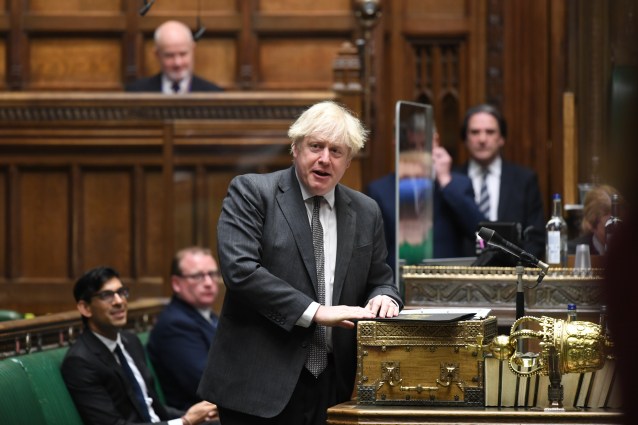
Boris Johnson announcing the Brexit deal in Parliament. Pic credit: @UK Parliament_Jessica Taylor

Outside other highly read blogs on the pensions campaign the most read blog was one on how Boris Johnson and other Cabinet Ministers were moving towards an elective dictatorship by devolving power to themselves rather than Parliament under new Brexit laws. That had 35,554 hits.

Byline Times

This year there has been a subtle change in coverage on my blog of stories I write for Byline Times. Last year I tended to provide a short summary of the story on my blog. This year most of my Byline Times stories appear by themselves and are not automatically repeated on my blog. They get even wider coverage on Byline Times so those who want to see them and follow me on Twitter do get tweets telling them about the story. Or you could take out a subscription to Byline Times and get a monthly print newspaper.

Ending discrimination against women

There will be new developments next year. I will be blogging about the People’s Tribunal run by John Cooper, QC, the human rights lawyer, to end all forms of discrimination against women. This is a movement which wants to get the UK Parliament to put into domestic law the UN Convention on the Elimination of All forms of Discrimination Against Women. The UK ratified it under Margaret Thatcher but nothing has been done since.

It comes as Elizabeth Truss, the equalities minister, appears to want to reverse progress what she calls “identity politics” so I foresee fresh battles over this issue. And I am curious to see how the Equality and Human Rights Commission is going to handle this.

Dr Usha Prasad

I shall also be taking up some individual cases of injustice. The recent blog on the plight of Epsom and St Helier University Health Trust’s only woman cardiologist just one example – where a health trust is pursuing an individual and where they are whistleblowing issues.

I shall continue to keep an eye on political issues -particularly as incompetence, the chumocracy and corruption are on the rise in the UK and plan to write about it on Byline Times and this blog.

I have started again reporting on child sexual abuse again and plan more articles.

2021 promises to be a challenging year – the first post Brexit year- and I feel more than ready to meet it.

New Year fireworks in Dubai where my daughter and grandchildren are living. She is a science teacher there.

My views on the US election on The Greatest Music of All Time podcast

This is a podcast I was invited to do today for Tom Cridland on the Greatest Music of All Time podcast site. I am expecting Joe Biden to win despite Trump’s flaying all over the place. I also talked to one of the Democrat insiders about the present impasse and situation.

A Joe Biden win is likely to be bad for both Boris Johnson and Dominic Cummings as they are seen by the Democrats to be too aligned to Donald Trump and his advisers. I was told Biden’s advisers are still not very happy about Johnson’s description of Barack Obama being a Kenyan at the time Obama’s birthright was being falsely questioned by the American far right.

I am told that Biden is likely to want to be closer to France and Germany than the UK – as Britain is no longer a member of the EU and therefore is not the gateway for US influence in Europe. He is not keen on rushing through a UK/US trade deal either.

So there will be consequences for the UK and we could end up being more isolated rather than a world leader. Interesting times ahead.

House of Lords approve new compulsory training on behaviour for all peers

Former judge Lord Mance, chair of the Lords Conduct Committee, which proposed the changes Pic credit; June Buck

The House of Lords approved without a vote new rules which will mean that all 798 peers will have to attend behaviour training course or face being reported to the Lords Commissioner for Standards for breaching their code of conduct.

two public dissenters

The scheme had only two public dissenters – both Conservative peers – who claimed it was unnecessary. The move followed a couple of cases in the last year where two former Labour peers were found to have bullied and harassed Parliamentary staff. See my last blog here.

Lord Cormack, a former Tory MP who had a junior job in the Thatcher government said; “Speaking as one who has served in Parliament for over 50 years now, it is a very ​sad day when I am told that I have to be trained on how to behave. That is extremely unfortunate, and I believe that it is unnecessary. “

 … “I regret and deplore it. After all, it is right that people accused of any offence should be appropriately dealt with, but I do not suppose that it would be thought appropriate for your Lordships to be given a course in how not to burgle.”

Lord Balfe, who as Richard Balfe was a former London Labour councillor and a Labour MEP until he switched to the Tories in 2002, called for the House of Lords Conduct committee to reconsider the move.

“I regret the compulsion attached to this training. I have done the training. It was largely irrelevant; most of it was about the House of Commons, or appeared to be.”

Lord Mance, a former judge and deputy president of the Supreme Court, chairs the Lords conduct committee which proposed the compulsory training, received support from a number of other peers who welcomed the move.

He said: “There is, unfortunately, a clear problem, even in this House. People sometimes behave in ways that one may not conceive of oneself, but that are recorded in great detail in the press and in the reports issued by the commissioner. Unconscious attitudes, and lack of consciousness of a problem, are real issues that the Valuing Everyone training is designed to address.”

All peers will have to either have attended or booked a training course by next April. Half of them have already attended one.

Updated: Judgement on Smith v Baker: A long running dispute still unresolved

Royal Courts of Justice

Judge warns she will block senders who flooded her office with 50 emails before hearing

Some readers of this blog will know that until two years ago I did report in a number of blogs the allegations of Esther Baker against former Liberal Democrat MP, John Hemming. Since then a judge has ruled against Esther Baker’s allegations and banned her from making them again and I have had an agreed settlement with Mr Hemming not to mention them.

There has been a sequel to this story culminating in Mr Hemming’s friend, Sam Collingwood Smith and Esther Baker being involved in a protracted dispute in the courts over tweets and forums on the Internet. The case culminated ( so far) in two judgements on the Queen’s Bench Division list at the Royal Court of Justice.

Today a woman judge used her discretion to refuse Mr Smith’s application to strike out her response and told Esther Baker to re-present her claim to the court within a proper legal framework.

Neither litigant is represented by lawyers. The pleadings and annexes according to the judge ran to 293 pages which shows how comments on Twitter and blogs can escalate into an extraordinary expensive dispute if they ever get into the courts.

The judge also issued an unusual statement at the end of her judgement warning she would block the email accounts of senders if they continued to flood her office over the dispute.

She said : “In the 10 days leading up to the hearing, I received well over 50 emails on this matter, not all from the parties. Some were properly alerting me to documents or issues I needed to decide or consider. Many
were not. The majority of those were copied to my listing clerk had to consider them to see if there was anything she was required to do. I received a further 15 emails after the hearing and before handing down this judgment, again some of which were properly sent; others were not.”

She concluded: “If I continue to receive unnecessary emails I will block the sender and all correspondence will have to be done through the post, the court’s generic email or CE file.”

The full judgement is here-

It is a long read. I will not comment but leave you to make up your mind. The ruling has absolute privilege.

Update

After further hearings in November and February Master Sullivan, the judge has issued a second judgement in this long saga. She had asked Esther Baker to resubmit her arguments against Mr Smith’s claim.

This time she rejected a substantial section of her arguments of harrassment and truth in her amended defence and counterclaim but also rejected Mr Smith’s attempt to have her case completely struck out.

The judgement is here. Make up your mind if you want to read it.

https://www.bailii.org/ew/cases/EWHC/QB/2021/348.html

At the end of the judgement she says:
“Although longwinded and at times difficult to follow, there is an understandable claim. [By Esther Baker] That remains once the matters set out above have been struck out in my judgment.  I am also asked to strike the defamation claim out on the basis that the defendant’s reputation is so damaged already by the judgments against her (in the Lavery and Hemming cases) that there can be no serious harm. 

“That judgment would require an investigation into the facts it would be inappropriate for me to do.  I am also of the view that is it realistically arguable that there is a difference between the matters alleged against her which would arguably cause serious harm even against the backdrop of those judgments.

” The claimant also submits that given the way the defendant has conducted the litigation and the limited nature of any possible remedy, it is not proportionate to allow the counterclaim to continue.  Whilst there may be triable issues on some issues such as the difference between stalking and harassment, is it not proportionate in the circumstances of an impecunious defendant with adverse findings against her and who has already caused the cost and time a number of procedural hearings, to allow the claim to continue.  I do not accept that submission. 

“There are triable issues and the litigation so far has not been conducted in such a way as to make it appropriate to strike out the claim.  The remedies sought, if granted, would include injunctive relief and that is a matter of value as well as any damages that might be awarded.  “

A further hearing is expected later.

Search for Justice: New Podcast on the 50s women struggle for their delayed pensions

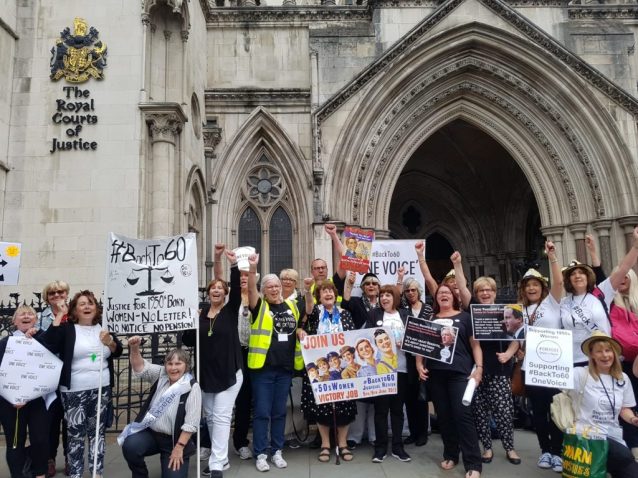
BackTo60 at the Royal Courts of Justice before the pandemic set in. They are now applying to appeal to the Supreme Court after losing their judicial review

I have given a long interview to Dave Niven, one of the country’s leading figures on the safeguarding of children, for socialworldpodcast on the issue of justice for the 50swomen. This podcast is aimed at the social work and caring professions and is watched by 2000 people in the field.

Dave contacted me after a gap of over 20 years because he had seen my writing on the plight of the 50s born women and wanted me to do an interview for his podcast. We last collaborated on a story in the 1990s when I was on The Guardian though both of us can’t remember what the story was exactly about.

He now runs his own consultancy, David Niven Associates (info@dnivenassociates.co.uk) which provides media training, and consultancy on child protection and safeguarding.

The podcast can be listened to here. That is the link to his site where you will also find other podcasts.

regular series of podcasts

It is part of a regular series of weekly podcasts on Thoughts on the Social World. Previous people who have been interviewed include Jim Gamble, a former national policing lead for child protection and the architect and CEO of the UK Child Exploitation and Online Protection (CEOP) Centre. He is now  CEO of the INEQE Safeguarding Group. http://www.ineqe.com

He also recently interviewed Christopher Lamb, a former Australian ambassador and chief diplomat with the International Federation of Red Cross and Red Crescent Societies (IFRC) in Geneva. He is now an adviser.to IFRC and the Australian Red Cross.

My own interview covers the case I have made on my blog for justice and proper equality for the 50swomen. I also talk about the exposures I did on The Guardian which led to the resignation of Tory ministers Neil Hamilton and Tim Smith over the “cash for questions” scandal in the 1990s and the first resignation of Peter Mandelson from the Labour government over his hidden ” home loan” to buy a posh pad in Notting Hill. And also my award winning story on how the former head of the Student Loans Company devised a scheme for legitimate tax avoidance which led to the government discovering that they had 2500 civil servants doing the same thing.

Former Minister X v. Ryan Giggs and Sir Philip Green : Parliamentary hypocrisy or protecting a complainant?

Parliamentary Privilege: All right for some

Today I am reproducing a blog by Alistair Parker, a solicitor, with the firm, Brett Wilson LLP, a specialist media and professional litigation solicitors, on the issue surrounding the former Tory minister under police investigation for the alleged rape and sexual assault of one of his female staff.

My position has been that he should not be named – solely to protect the claimant who requested anonymity not to spare him embarrassment. But what this article highlights is the hypocrisy over the use of Parliamentary privilege by MPs – they use Parliamentary Privilege to name other prominent people, whether it is a famous footballer or a well known businessman, knowing they cannot be sued. But when it is one of their own the shutters come down and Parliament protects them as they are supposed to be honourable members.

The irony is that probably every MP and every lobby journalist knows his name but keeps quiet – perhaps only telling curious close friends. Thanks to Brett Wilson LLP for giving me permission to reproduce the blog. The link to their media blog is here.

Suspect anonymity: The hypocrisy of parliamentary privilege – Alistair Parker

1 August 2020 marked the parliamentary revelation that a sitting MP had been arrested by police on suspicion of rape, sexual assault and controlling and coercive behaviour. All offences were alleged to have taken between July 2019 and January 2020 against the MP’s former staffer. Police confirmed the suspect was a male Tory in his 50s, and a former minister. Subject to police guidance, the name of the man was not revealed. This is because he has not been charged and is still under investigation, with a police bail date now extended until early November 2020. 

A man suspected of a serious sexual offence therefore remains a serving MP. He has not had the Tory whip removed or been sanctioned at all, (apparently) for fear that this would identify him. Indeed, his anonymity has been carefully guarded by all sides of the House. Is this a proper observance of the right to pre-charge anonymity, or can we detect a whiff of hypocrisy?

Parliamentary privilege, which by Article 9 of the Bill of Rights 1689 guarantees that “the freedom of speech and debates of proceedings in parliament ought not to be impeached or questioned in any court or place out of parliament”, has long allowed members of Parliament, be they in the Commons or the Lords, to name criminal suspects in these situations.

Both peer and MPs have on occasion exploited this privilege, even identifying individuals who were protected by court injunctions:-

In 2011, then Liberal Democrat MP John Hemming named Ryan Giggs as the footballer who secured an anonymised injunction to prevent publication of allegations he had an affair with a former reality TV star.

Also in 2011, Mr Hemming revealed that the banker Sir (as he then was) Fred Goodwin had obtained a super-injunction protecting his identity in relation to an alleged extra-marital affair. The Liberal Democrat peer Lord Stoneham poured oil on the fire adding “How can it be right for a super-injunction to hide the alleged relationship between Sir Fred Goodwin and a senior colleague?” he asked. “If true it would be a serious breach of corporate governance and not even the Financial Services Authority would know about it.”

In October 2014, Labour MP Jimmy Hood used parliamentary privilege to make serious accusations against Sir Leon Brittan (both have since passed away). Mr Hood said “By the way, the current expose of Sir Leon Brittan, the then home secretary, with accusations of improper conduct with children will not come as a surprise to striking minors of 1984”. Sir Leon was posthumously cleared of any wrongdoing once it was finally established these allegations were among the prolific lies of Carl Beech. 

In November 2018, Labour peer Lord Hain used Parliamentary privilege to name Sir Philip Green as the ‘anonymous businessman’ who had used Non-Disclosure Agreements in settling numerous claims of bullying and sexual harassment with five complainants. This was despite the fact the High Court had maintained the injunction preventing publication of Sir Philip’s name and also that two of the five complainants supported this. We wrote about this matter at the time

The past decade therefore shows that UK politicians, in both houses, have been prepared to use Parliamentary privilege even when it:-

– Breaches civil court orders with impunity,
– Reveals personal details such as extra-marital affairs of high profile individuals, and
– Names a suspect in a serious criminal investigation, where the allegation turned out to be provably false.

Fast forward to the present day: The complainant of ‘Former Minister X’ has apparently been lobbying for his identification by urging MPs and peers to use parliamentary privilege to put his name into the public domain. If this is true, she is doing so despite the strong chance it will result in her own identification.

However, this led to an unprecedented response last week, when the Speaker of the House stepped in to urge MPs not to do so. Sir Lindsay Hoyle warned MPs that “while the investigation is ongoing, I believe that it would be wholly inappropriate for any further reference to be made to this matter in the House, including an attempt to name the member concerned.”

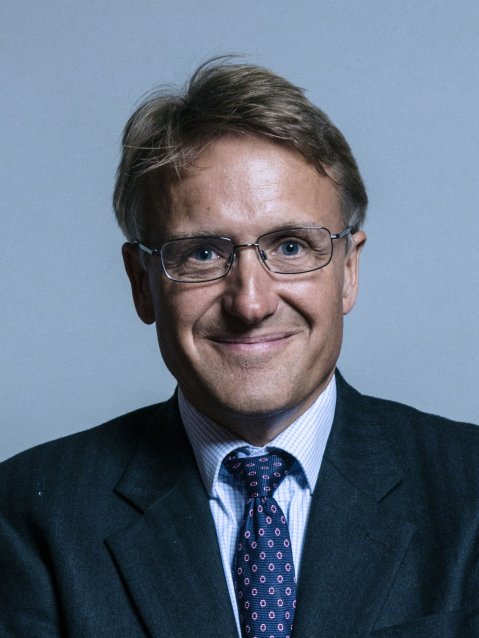
Sir Charles Walker MP: Former chair of the procedure committee which ruled MPs who are arrested should not be named Pic credit: Twitter

Indeed, back in February 2016, the cross-party Procedure Committee voted to end the tradition of the automatic naming of any MP who had been arrested. Its Chairman at the time, Tory MP Charles Walker said that MPs “should have the same rights to privacy as any other citizen, and in future their names should not be put in the public domain if they were arrested, unless this was directly connected to their role as an MP”. It seems Mr Walker had not considered the irony that the right to privacy of “any other citizen” can be trampled on via the use of parliamentary privilege. 

The conclusions we can draw are that, in the last decade, various parliamentarians have been happy to use parliamentary privilege to name and shame those being investigated for crimes and those embroiled in personal civil proceedings – even where they have court orders protecting their anonymity. However, when the ‘shoe is on the other foot’ and the accused party is himself a parliamentarian, it seems the House of Commons is a zealous believer in the right of pre-charge anonymity.

In simple terms, if you are being investigated of a crime, then any parliamentarian can publicly name you without any consequence to themselves. But if you name a parliamentarian who is in a similar predicament, get ready for formal legal consequences.

Although the identity of “Former Minister X” remains a mystery, surely the pattern of politicians protecting themselves could not be any clearer.

Book Review: The Mountbattens: Their Lives and Loves

Lord Mountbatten in naval uniform. Pic Credit: Allan Warren and Wikipedia

This is an extraordinary biography. It is a story of one of the leading figures in Royal circles, friend of Edward VIII and mentor to Prince Charles, whose life was cut short when he and some of his closest relatives were murdered by the IRA in 1979.

But it is no eulogy for a Royal figure whose Christian name lives on in the names of two of the Duke of Cambridge’s children. As Mountbatten himself once said ” No biography has any value unless it is written with warts and all.”

This biography written by historian Andrew Lownie is full of warts as well as some startling disclosures. It draws on previously unknown information – despite many previous biographies – and still does not present a complete picture because of decisions by the British government, the United States government and his own estate at Broadlands not to release all the documents relevant to his life.

What emerges is a complicated man who is full of hubris, self importance, a natural risk taker whose life was privileged, setting himself,apart from the rest of society with his retinue of household staff. He was also extraordinarily methodical.

It goes into detail of the love life of his wife, Edwina, a wealthy socialite, whose adventurous affairs took in Hollywood film stars and India’s first leader, Nehru when Lord Mountbatten was the last governor general of India. Until World War II she lived the life of a bored heiress making exotic trips to remote places before finding an amazing drive to help with the war effort organising and looking after the interests of the troops injured in action.

The book describes his loves which in their ” open marriage” and reveals that he was also bisexual after tracing one of his gay lovers. It also contains an extraordinary chapter entitled ” Rumours” which goes on to suggest that he may also have been a paedophile, It describes claims by a former boy , Richard Kerr who was in the notorious Kincora children’s home in Belfast , where it is proven that boys were subject to child sexual abuse, that MountBatten abused him.

Interestingly the Northern Ireland Office still hasn’t released all the documents about this home even though the events took place over 50 years ago.

The book is fascinating in its description of their wealthy life style – which might sound dated – but in fact due to the growing inequality in the UK could well be replicated today by some of the uber wealthy from Russian oligarchs, Hong Kong billionaires, tech billionaires rather than Royalty.

There are some extraordinary revelations particularly during his career in the Royal Navy. His hubris and risk taking, and a habit of not necessarily following orders, was responsible for a disaster early in World War II When he ignored orders to pick up 600 captured seamen and chase a German battleship with the result the seamen spent the war in internment camps.

The book to an extent exonerates him from the failed raid on Dieppe during the war but it shows that because of his connections to King George V and Churchill he would never be taken to task for his failures.

This hubris actually led to his assassination in 1979 when he ignored repeated advice from the security services and the Irish embassy not to go his country home in the Republic during August. They knew he was an IRA target.

The book contains a remarkable disclosure of how one young corporal, Graham Yuill, responsible for the Mountabatten’s security, spotted a car near his yacht Shadow 5 which was identified as a vehicle used by the IRA for gun running and carrying bombs. His report was ignored and not taken into account when the Garda took over security. The yacht was then blown up killing Mountbatten, his 83 year old mother, his daughter,Patricia and husband John; two 14 year old twins and a 15 year old friend.

The report has been subject to a 40 year old gagging order which was only lifted two years ago. This is just one remarkable disclosure in this fascinating book. Well worth a read.

The Mountbattens: Their Lives and Loves by Andrew Lownie. Bonnier Books. £20

How internet innovation could sound the death knell for trolls and pedlars of fake news

I am reprinting this article by an Irish academic because it not only finds a way of dealing with major providers like Facebook and Google harvesting personal data for financial gain but could help stop anonymous attacks on people and organisations by spreading hate and fake news.

It has struck me for some time that some of the most vile attacks on people – whether on anti semitism,or directed at survivors of child sexual abuse, on Brexit or the 50s born women courageously fighting for a pension come from anonymous accounts which can’t be easily verified.

This proposes a new way of identifying people before they can get on the internet without the whole system being controlled by the state.

It would stop attempts by people – particularly by those who support paedophiles and regularly abuse child sex survivors on line – being able to hide behind anonymous Twitter handles or claim websites they run are not their responsibility.

And it would make it much easier for the police and other regulatory authorities to identify people behind these attacks and prosecute if necessary. It is an interesting read.

Four ways blockchain could make the internet safer, fairer and more creative

Yurchanka Siarhei/Shutterstock

Hitesh Tewari, Trinity College Dublin

The internet is unique in that it has no central control, administration or authority. It has given everyone with access to it a platform to express their views and exchange ideas with others instantaneously. But in recent years, internet services such as search engines and social media platforms have increasingly been provided by a small number of very large tech firms.

On the face of it, companies such as Google and Facebook claim to provide a free service to all their users. But in practice, they harvest huge amounts of personal data and sell it on to others for profit. They’re able to do this every time you log into social media, ask a question on a search engine or store files on a cloud service. The internet is slowly turning into something like the current financial system, which centrally monitors all transactions and uses that data to predict what people will buy in future.

This type of monitoring has huge implications for the privacy of ordinary people around the world. The digital currency Bitcoin, which surfaced on the internet in 2008, sought to break the influence that large, private bodies have over what we do online. The researchers had finally solved one of the biggest concerns with digital currencies – that they need central control by the companies that operate them, in the same way traditional currencies are controlled by a bank.

Bitcoin was the first application of a blockchain, but the technology shouldn’t stop there. AnnaGarmatiy/Shutterstock

The core idea behind the Bitcoin system is to make all the participants in the system, collectively, the bank. To do this, blockchains are used. Blockchains are distributed, tamper-proof ledgers, which can record every transaction made within a network. The ledger is distributed in the sense that a synchronised copy of the blockchain is maintained by each of the participants in the network, and tamper-proof in the sense that each of the transactions in the ledger is locked into place using a strong encrypting technique called hashing.

More than a decade since this technology emerged, we’re still only beginning to scratch the surface of its potential. People researching it may have overlooked one of its most useful applications – making the internet better for everyone who uses it.

Help stamp out hate

In order to use services on the internet such as social media, email and cloud data storage, people need to authenticate themselves to the service provider. The way to do this at the moment is to come up with a username and password and register an account with the provider. But at the moment, there’s no way to verify the user’s identity. Anyone can create an account on platforms like Facebook and use it to spread fake news and hatred, without fear of ever being identified and caught.


Read more: Now there’s a game you can play to ‘vaccinate’ yourself against fake news


Our idea is to issue each citizen with a digital certificate by first verifying their identity. An organisation like your workplace, university or school knows your identity and is in a position to issue you with a certificate. If other organisations do the same for their members, we could put these certificates on a publicly accessible blockchain and create a global protected record of every internet user’s identity.

Since there’d be a means for identifying users with their digital certificate, social media accounts could be linked to real people. A school could create social media groups which could only be accessed if a student had a certificate issued to them by the school, preventing the group being infiltrated by outsiders.

Never forget a password again

A user could ask for a one-time password (OTP) for Facebook by clicking an icon on their mobile phone. Facebook would then look up the user’s digital certificate on the blockchain and return an OPT to their phone. The OTP will be encrypted so that it cannot be seen by anyone else apart from the intended recipient. The user would then login to the service using their username and the OTP, thereby eliminating the need to remember passwords. The OTP changes with each login and is delivered encrypted to your phone, so it’s much more difficult to guess or steal a password.

Vote with your phone

People are often too busy or reluctant to go to a polling station on voting days. An internet voting system could change that. Digital currencies like Zerocash are fully anonymous and can be traced on the blockchain, giving it the basic ingredients for a voting system. Anyone can examine the blockchain and confirm that a particular token has been transferred between two parties without revealing their identities.

Blockchain could ensure more people are able to vote. TarikVision/Shutterstock

Each candidate could be given a digital wallet and each eligible voter given a token. Voters cast their token into the wallet of their preferred candidate using their mobile phone. If the total number of tokens in the wallets is less than or equal to the number issued, then you have a valid poll and the candidate with the most tokens is declared the winner.

No more tech companies selling your data

People use search engines everyday, but this allows companies like Google to gather trends, create profiles and sell this valuable information to marketing companies. If internet users were to use a digital currency to make a micropayment – perhaps one-hundredth of a cent – for each search query that they perform, there would be less incentive for a search company to sell their personal data. Even if someone performed a hundred search queries per day they would end up paying only one cent – a small price to pay for one’s privacy.

Blockchain technology started as a means for making online transactions anonymous, but it would be shame for it to stop there. The more researchers like me think about its potential, the more exciting possibilities emerge.

Hitesh Tewari, Assistant Professor in the School of Computer Science and Statistics, Trinity College Dublin

This article is republished from The Conversation under a Creative Commons license. Read the original article.