How internet innovation could sound the death knell for trolls and pedlars of fake news

I am reprinting this article by an Irish academic because it not only finds a way of dealing with major providers like Facebook and Google harvesting personal data for financial gain but could help stop anonymous attacks on people and organisations by spreading hate and fake news.

It has struck me for some time that some of the most vile attacks on people – whether on anti semitism,or directed at survivors of child sexual abuse, on Brexit or the 50s born women courageously fighting for a pension come from anonymous accounts which can’t be easily verified.

This proposes a new way of identifying people before they can get on the internet without the whole system being controlled by the state.

It would stop attempts by people – particularly by those who support paedophiles and regularly abuse child sex survivors on line – being able to hide behind anonymous Twitter handles or claim websites they run are not their responsibility.

And it would make it much easier for the police and other regulatory authorities to identify people behind these attacks and prosecute if necessary. It is an interesting read.

Four ways blockchain could make the internet safer, fairer and more creative

Yurchanka Siarhei/Shutterstock

Hitesh Tewari, Trinity College Dublin

The internet is unique in that it has no central control, administration or authority. It has given everyone with access to it a platform to express their views and exchange ideas with others instantaneously. But in recent years, internet services such as search engines and social media platforms have increasingly been provided by a small number of very large tech firms.

On the face of it, companies such as Google and Facebook claim to provide a free service to all their users. But in practice, they harvest huge amounts of personal data and sell it on to others for profit. They’re able to do this every time you log into social media, ask a question on a search engine or store files on a cloud service. The internet is slowly turning into something like the current financial system, which centrally monitors all transactions and uses that data to predict what people will buy in future.

This type of monitoring has huge implications for the privacy of ordinary people around the world. The digital currency Bitcoin, which surfaced on the internet in 2008, sought to break the influence that large, private bodies have over what we do online. The researchers had finally solved one of the biggest concerns with digital currencies – that they need central control by the companies that operate them, in the same way traditional currencies are controlled by a bank.

Bitcoin was the first application of a blockchain, but the technology shouldn’t stop there. AnnaGarmatiy/Shutterstock

The core idea behind the Bitcoin system is to make all the participants in the system, collectively, the bank. To do this, blockchains are used. Blockchains are distributed, tamper-proof ledgers, which can record every transaction made within a network. The ledger is distributed in the sense that a synchronised copy of the blockchain is maintained by each of the participants in the network, and tamper-proof in the sense that each of the transactions in the ledger is locked into place using a strong encrypting technique called hashing.

More than a decade since this technology emerged, we’re still only beginning to scratch the surface of its potential. People researching it may have overlooked one of its most useful applications – making the internet better for everyone who uses it.

Help stamp out hate

In order to use services on the internet such as social media, email and cloud data storage, people need to authenticate themselves to the service provider. The way to do this at the moment is to come up with a username and password and register an account with the provider. But at the moment, there’s no way to verify the user’s identity. Anyone can create an account on platforms like Facebook and use it to spread fake news and hatred, without fear of ever being identified and caught.


Read more: Now there’s a game you can play to ‘vaccinate’ yourself against fake news


Our idea is to issue each citizen with a digital certificate by first verifying their identity. An organisation like your workplace, university or school knows your identity and is in a position to issue you with a certificate. If other organisations do the same for their members, we could put these certificates on a publicly accessible blockchain and create a global protected record of every internet user’s identity.

Since there’d be a means for identifying users with their digital certificate, social media accounts could be linked to real people. A school could create social media groups which could only be accessed if a student had a certificate issued to them by the school, preventing the group being infiltrated by outsiders.

Never forget a password again

A user could ask for a one-time password (OTP) for Facebook by clicking an icon on their mobile phone. Facebook would then look up the user’s digital certificate on the blockchain and return an OPT to their phone. The OTP will be encrypted so that it cannot be seen by anyone else apart from the intended recipient. The user would then login to the service using their username and the OTP, thereby eliminating the need to remember passwords. The OTP changes with each login and is delivered encrypted to your phone, so it’s much more difficult to guess or steal a password.

Vote with your phone

People are often too busy or reluctant to go to a polling station on voting days. An internet voting system could change that. Digital currencies like Zerocash are fully anonymous and can be traced on the blockchain, giving it the basic ingredients for a voting system. Anyone can examine the blockchain and confirm that a particular token has been transferred between two parties without revealing their identities.

Blockchain could ensure more people are able to vote. TarikVision/Shutterstock

Each candidate could be given a digital wallet and each eligible voter given a token. Voters cast their token into the wallet of their preferred candidate using their mobile phone. If the total number of tokens in the wallets is less than or equal to the number issued, then you have a valid poll and the candidate with the most tokens is declared the winner.

No more tech companies selling your data

People use search engines everyday, but this allows companies like Google to gather trends, create profiles and sell this valuable information to marketing companies. If internet users were to use a digital currency to make a micropayment – perhaps one-hundredth of a cent – for each search query that they perform, there would be less incentive for a search company to sell their personal data. Even if someone performed a hundred search queries per day they would end up paying only one cent – a small price to pay for one’s privacy.

Blockchain technology started as a means for making online transactions anonymous, but it would be shame for it to stop there. The more researchers like me think about its potential, the more exciting possibilities emerge.

Hitesh Tewari, Assistant Professor in the School of Computer Science and Statistics, Trinity College Dublin

This article is republished from The Conversation under a Creative Commons license. Read the original article.

Parliament’s top official Black Rod displeased by Back To 60’s Flash dance on College Green

The BackTo60 Flash Dancers from @pandorasboxperformers.com pose in front of Henry Moore’s sculpture, Knife Edge.

BackTo60s new guerrilla campaign to highlight the plight of the 50s born women who are waiting up to six years to get their pension took on a new dimension yesterday – and brought the displeasure of Parliament’s top official, Black Rod.

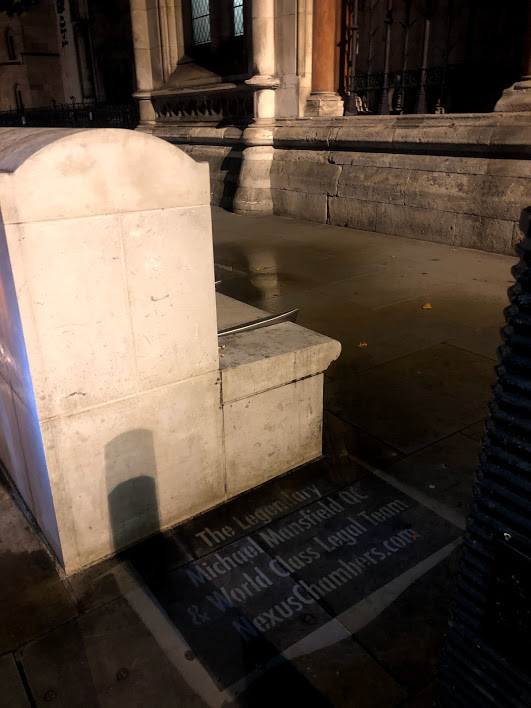
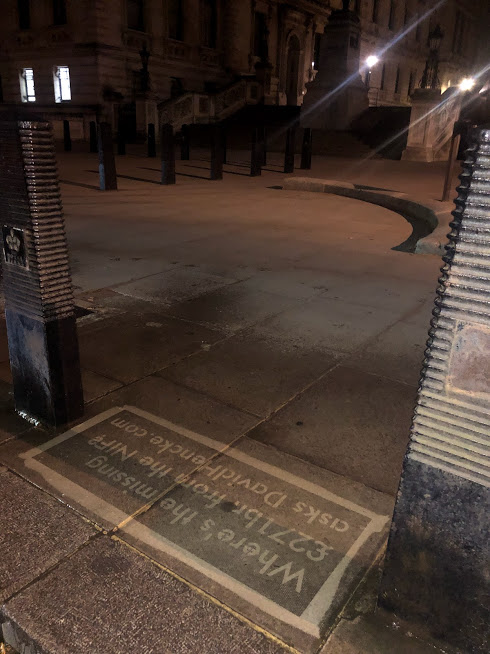
Campaigners engaged Pandora’s Box performers to do a flash mob dance performance on College Green opposite the House of Lords. This is part of a guerrilla marketing campaign that has so far seen images backing the campaign projected onto Parliament and the Bank of England at night and the appearance of campaigning graffiti washed into the pavement outside Portcullis House, the Treasury and the Supreme Court.

Soundtrack: Dave Gammie https://www.davidgammie.com/ Film: Manou Bendon Medigang https://www.mediagang.co.uk/ Dancers: Pandora’s Box http://www.pandorasboxperformers.com/

Pandora’s Box Flashmob dance on College Green


But little were they to know that College Green – which might seem to me or you a public green place – is in fact part of the private Parliamentary estate.

So no sooner had the music started and the dancing began, Black Rod, who is The Queen’s representative in the House of Lords instructed one of her 30 staff to come down to remonstrate with BackTo60 organiser, Joanne Welch.

A lively discussion followed only mellowed when the member of staff, Fiona Shannon, who had been instructed to ask the dancers to go, realised she was one of the women born in the 1950s who would benefit from a victory by the campaign.

She then went off however to get reinforcements – allowing the dancers to do a quick encore – before the dancers decided to disappear down a Westminster sidestreet.

Joanne Welch said: ” I genuinely thought this was a public place and didn’t think we needed permission to stage the event. It is used regularly by broadcasters and also has been used by Remainers and Brexiteers to stage noisy demonstrations. I apologise if we needed permission.We will know next time.”

A House of Lords spokesperson said that College Green is part of the parliamentary estate. Any requests for filming or other activity are dealt with by Black Rod’s office on behalf of the House of Commons.

The spokesperson added :”Protests and operating amplified noise equipment are not permitted on College Green. The participants were made aware of this and left voluntarily.”

But not without accompanying their mission.

Not amused: Sarah Clarke,The Lady Usher of Black Rod Pic credit: Parliament.uk

For those curious about Black Rod,the current holder of the office is Sarah Clarke, the first woman appointed to the £93,000 a year post in 650 years.

She organises the State Opening of Parliament and the highest profile part of her role is summoning the House of Commons to hear the Queen’s Speech. She is also responsible for business resilience and planning for the House of Lords, and leads a department that includes the Yeoman Usher and the House of Lords Doorkeepers.

She was appointed last year having previously organised the Wimbledon tennis championships for a number of years.

As the Queen’s representative she now knows that her 1950s British subjects are pretty angry about the loss of their pensions.. Perhaps Her Majesty should be sent a video of Pandora’s Box great performance compliments of BackTo60,

BackTo60 Graffiti on the pavement outside Portcullis House
The guerrilla imaging campaign included a projection of one of my blogs on the wall of the Bank of England

Campaigning Graffiti: How an older generation of pension protesters are using the tactics of young activists

My image and blog on the side of the Bank of England

Disruptive protests are seen mainly but not exclusively as the preserve of the young. Whether it is blocking roads like Extinction Rebellion or organising street protests they are not the natural first choice of people old enough to be grandparents..

Yet the government’s refusal to even discuss any compensation with 3.8 million women born in the 1950s who are now waiting up to six years longer to get a pension has seen the first disruptive action organised by ” oldies” in the capital.

First there was a rally in Hyde Park and march which ended in Parliament Square where spontaneously some of the protestors blocked the road forcing the police to divert traffic for nearly two hours.

Then there has been an extraordinary partnership with young people in a guerrilla marketing organisation to project on to prominent buildings like the House of Commons, the Bank of England and the law courts – slogans demanding action to redress the problem. I am told there are no laws to stop anyone projecting slogans on any building. It also included one of my blogs revealing the Thatcher government’s decision to all but end the Treasury contribution to the National Insurance Fund.

Then in the dead of night graffiti started to appear on the pavements outside prominent London landmarks with slogans as part of the BackTo60 campaign to compensate the women.

Here are some of the pictures:

BackTo60 logo sprayed into the Westminster pavement
Graffiti praising the lawyer Michael Mansfield who represented the 50s born women in the judicial review demanding compensation.
Logo outside the entrance to Portcullis House, Westminster
Graffiti outside the Treasury.

None of this has been reported in mainstream media. And the public who see the graffiti may be puzzled about what it is all about.

But there is a deeper issue. This particular group of women are a large bedrock of the older generation. They have been until now mainly apolitical, bringing up their families, going to work and living normal lives.

But the total refusal of the government to even discuss the issue has transformed this. Shocked by this attitude they are becoming radicalised and for the government this is very bad news. They did form a large part of the group who traditionally voted Conservative. Very few will vote Conservative at the next general election. Some will vote Labour, some Liberal Democrat, Plaid Cymru or Scottish Nationalist, some the Brexit Party and some not at all.

This means given the antipathy to the Tories among the young that many Tory MPs who think they have secure majority may find themselves out of a job at the next general election. And the government will only have itself to blame for not listening to them.

BackTo60 take to the London streets to project their case to get their pension money back

While MPs were enjoying drinks and snacks in parties and receptions across London last week – I admit I was at one in the gardens of Westminster Abbey – a team of intrepid campaigners from BackTo60 took to the streets with the support Media Gang Guerrilla Marketing.

They stopped outside the Bank of England, The Law Courts in the Strand and opposite the House of Parliament to project images backing the 50s bornwomen campaign. One of my blogs was projected on the Bank of England and the Backto60 logo appeared on the side of Parliament overlooking the Thames.

Certainly if nothing else this campaign is creative – equal to some of the stunts of the younger generation. They should be proud that people never give up campaigning.

Novichoc: From Russia with Love

A rather sick  Christmas joke Pic credit: TVRAIN Russian TV

CROSS POSTED ON BYLINE.COM

I don’t readily comment on actions by other media but the decision by the Russian state broadcaster Russia Today to send out to other Russian state broadcasters chocolate models of Salisbury cathedral as a Christmas gift is one of the sickest messages I have seen at a time of festive cheer.

As a report in the Independent shows it has rightly raised hackles in Salisbury a city disrupted by the botched assassination attempt of a former Soviet spy Sergei Skripal and his daughter using the lethal poison Novichok. This later tragically led to the manslaughter of Dawn Sturgess, another Salisbury resident. Her partner Charlie Rowley is still ill.

The idea that there is anything remotely funny about sending gifts of a chocolate Salisbury cathedral as a Christmas present from Russia to well wishers and supporters suggests those involved have a really disturbed mindset.

Everybody knows that the cover story of the two agents posing as tourists about visiting Salisbury Cathedral broadcast on Russia Today was an absurd explanation.

The only sad thing is that it is also a reminder every time Theresa May talks about leaving the EU to ” take back control of our borders” also looks pretty sick. This is particularly so when a couple from a non EU country can get into the UK intending to commit murder with impunity under the noses of our own security forces.

So I hope anyone who received such a gift from the Russians in the UK put it in the bin where it belongs.

+

Boycott this mean Treasury National Savings ISA account that is slashing interest rates for pensioners and the poor

treasury

HM Treasury: Slashing your savings in National Savings

CROSS POSTED ON BYLINE.COM

Over a month ago bank rate rose for only the second time in a decade – promising a bit more money for people who have savings and are seeing their money eroded by inflation.

They would probably hope to get an extra paltry 0.25 per cent interest on their already diminishing  savings – lucky to get just over one per cent on an instant access cash ISA when inflation is running at 2.7 per cent.

However the well paid top mandarins and ministers at the Treasury and National Savings ( their chief exec, ex Barclays banker Ian Ackerley is on a pittance of £185,000 a year plus an annual £69,000 payment into his pension) had other ideas. Why not use the cover of the bank rate rise to slash the interest we already pay out to people who use National Savings as a safe haven but need to access money to meet unexpected bills for a broken boiler or fridge. Everybody will think interest rates will go up, they wouldn’t think anyone would slash them now

So in July when both the Treasury and National Savings knew a bank rate rise was imminent they agreed not to put up the rate of their cash isa but CUT it by 0.25 per cent to just 0.75 per cent. It was though Mark Carney, the governor of the Bank of England was about to announce a bank rate cut not a bank rate rise.

Today the new cut came into effect – just at the point when other banks and building societies are putting their rates on equivalent cash isas UP.

You would think from the blurb on their website that National Savings would do the opposite. Their comment on interest rate changes reads:

 “Can NS&I change the interest rate?

Yes – the rate is variable so we can change it up or down from time to time, for example when the Bank of England base rate changes or when rates in the general savings market change. See the customer agreement (terms and conditions) for more details.”

So we know now  in this case when the bank interest rate goes UP,  the National Savings rate will go DOWN.

And as for other providers- Metro Bank for example, has an equivalent instant access cash isa which was paying less than National Savings at 0.75 per cent. But since the bank rate rise it is now paying more. Its new rate is 0.90 per cent -UP 0.15 per cent while National Savings are DOWN 0.25 per cent to 0.75 per cent. Which Money? has other recommended providers paying more.

So what’s their explanation?

A spokesperson said today :”The decision to reduce the interest rate on Direct ISA was taken in order to deliver positive value for taxpayers. NS&I sets its interest rates to balance the interests of its savers, taxpayers and the stability of the broader financial services sector.

“In order to take this decision, we made a proposal to HM Treasury which was approved. We review the rates on all of our products regularly and recommend changes to HM Treasury when we believe they are appropriate, to ensure that we continue to balance the interests of our savers, taxpayers and the stability of the broader financial services sector.

“We announced the change on 16 July 2018. It is NS&I policy to give customers at least two months’ notice of any detrimental variable rate change on our variable rate accounts, so the rate change will be effective from today, 24 September 2018.”

So basically National Savings are paying lower rates to small savers ( the maximum you can put in the isa is £20,000, the minimum £1) to make sure high rate taxpayers are not having to bear such a burden to fund other public services. No doubt it is linked to the Treasury regretting it has to pay people’s pensions anyway.

 My view is the National Savings Direct ISA should be boycotted because the people who run it appear to  have the Treasury’s interests than yours at heart. The decision also helps other big banks not to increase rates if the state rival is cutting rates – and will boost profits for the major banks.

I took all my money out of this particular National Savings account today. I would not blame other people doing the same – now you can get higher isa rates elsewhere. Your only restriction is that if took out an isa this financial year ( from April) you can’t take out another tax free cash account. But if you did it last year you can and should – rather than leave the Treasury to profit from you.


IMPRESS dismisses complaint of intimidation, malice and invasion of privacy from child sex abuse survivor named in blog on Esther Baker

justice

In my view Justice done over Impress complaint

CROSS POSTED ON BYLINE.COM

IMPRESS, the independent press regulator,  has rejected a complaint from a child abuse survivor, who was named in a story on the Byline  site and  on my personal blog.

The ruling sets a precedent  for the regulator.  It ruled that survivors who rightly normally get anonymity,  but then decide to go public in the mass media cannot subsequently decide to ban other individual journalists from referring to them if no new information is published.

The dispute arose after a blog published by me on Byline and here which was critical of the treatment of Esther Baker in a  direction made by Alexis Jay, the chair of the Independent Inquiry into Child Sexual Abuse.

As a side issue the blog pointed out that survivors who go public are rare and cited in passing another child sex survivor who “bravely” went public in the Scottish Sun about his experiences after an 82 year old paedophile priest was jailed.

The survivor subsequently complained to Impress. The grounds of his complaint were :

“The publisher failed to preserve the Complainant’s anonymity as a vulnerable
witness;
“Publishing of the Complainant’s name was an act of malice and intimidation
and unacceptable conduct by a journalist; and
“Publishing of intimidatory reference to the Complainant was done in an
invasive manner.”

The publication, the complainant said had caused him  significant distress.

Byline and myself vigorously contested this.

The report says: “The publisher believes that victims of sexual offences and their
privacy should be protected, but, does not believe that this means that such victims
can selectively waive their rights of anonymity with respect to specific
journalists or publishers.
“The Author argued that the Complainant had made public, multiple times,
that they are a survivor of sexual abuse. The Complainant had been named
in the UK national press, the Washington Post, TV, YouTube, social media
and on numerous national websites.
” The publisher argues that, in these circumstances, a requirement to request
specific permission from the Claimant to publish material in the public domain
would amount to a form of targeted prior restraint and censorship, in breach
of its Article 10 rights.

“The Author refuted that the naming of the Complainant was in any way
malicious or any part of a campaign of intimidation made against the
Complainant.
“The Author believes that ‘it would be egregious if it is held that no one could
link to the article [already in the public domain] and discuss it without their
permission’. Therefore, the Author disagrees with the Complainant’s point
that publication had caused enormous distress.”

Impress called in lawyers to advise them on the naming and dismissed all the complaints made by the child sex abuse survivor.

“The Committee considered that merely referring to the Complainant in this
article did not constitute an act of intimidation in the course of journalistic
activities, particularly so in light of the fact the Complainant had identified
themselves to the media as a victim of sex offending.”

It went on :”The fact the Author had been copied into various emails from a third party to the Complainant,was not in and of itself evidence of intimidation in the course of journalistic activities.”

“The Committee noted that the article only cited information that had been
reported in other publications. Therefore, there could be no reasonable
expectation of privacy on the part of the Complainant in the published
information. The Committee considered that it had been reasonable for the
publisher to believe that the citation of this information (given its recent
widespread dissemination at the date of publication) would not significantly
exacerbate the Complainant’s grief or distress. Furthermore, the Committee
considered that in this case there had not been ‘intrusive newsgathering or
reporting’.”

Impress say no further action is necessary so the blog stays on both Byline and my own blog in its entirety. The full report is here.


Why there should be no Cliff’s Law following the chilling judgement by Mr Justice Mann

royal-courts-justice-passes-misuse-602677

High Court decision on Sir Cliff Richard should not mean a new law

CROSS POSTED ON BYLINE.COM

The scathing judgement by Mr Justice Mann condemning the BBC for the invasion of  Sir Cliff Richard’s privacy has profound implications for crime reporting.

The BBC is condemned  for reporting the raid on his home following allegations of child sexual abuse which did not stand up- not just for the sensational way they did it – but for reporting it at all.

This is a double edged judgement. True the freedom of the press to do this has led to innocent people like  DJ Paul Gambaccini and Sir Cliff suffering enormous traumatic stress and having their reputations trashed over unproven child sex abuse allegations.

But in other cases noticeably broadcaster Stuart Hall, the entertainer Rolf Harris ( both child sexual abuse allegations) and for that matter ( on perverting the course of justice)  ex Liberal  Democrat  Cabinet minister and former colleague on the Guardian, Chris Huhne, press publicity helped the police to pursue the cases to a successful conclusion. The publicity before anybody was charged led to more people coming forward or to new evidence being discovered.

That is why I would like to see the decision challenged  because of its profound implications for reporting and would certainly not want a new law giving anonymity to suspects in criminal cases.

Thankfully Theresa May seems to have ruled out the latter and so have ministers and  some MPs.

  On BBC Radio 5 Live last week  Treasury minister Robert  Jenrick said that he didn’t believe that the law should be changed to give anonymity to people accused of certain offences.

He said:“There’s been a long debate, as you know, about whether that should be the case for particular types of crime – crimes which have such a serious effect on individuals’ personal reputations, like sexual offences for example.  And at the moment we’ve chosen not to proceed on that basis.  We don’t think we should discriminate between different offences.  And I think that that’s probably the right approach.  But I do feel that both the police and the media need to proceed with great caution when they’re reporting.”

His point is where you draw the line. A limited law saying only those accused of child sex abuse should be protected could be seen  by victims and survivors as ” a protect paedos” law. And if there is discrimination between offences it won’t be long before some famous personality brings a case – saying their reputation was damaged by a police raid on their home in say, a fraud case.

Also do you protect alleged murderers or low life drug dealers from the press reporting raids on their homes until they are charged. After all until a drug dealer is charged  reporting a police raid on his or her home is breaching their privacy. It could also have implications for some of the popular reality  TV crime programmes.

Why I also don’t want the law to change is that it is a matter of judgement for the police and the press to come to a conclusion. The police need to be able to judge whether publicity is necessary – even Mr Justice Mann admits in his judgement that if people’s lives are at risk there is a case for naming a suspect.

The media also need to show some judgement on how they report the issue as well – and sometimes investigations can be published without naming the suspect  or giving too much of  the suspect’s identity away. In other cases the suspect’s name is part of the story.

Finally I see that the  BBC reporter Dan Johnson  who broke the story gets some criticism from the judge. He is described as honest and over enthusiastic. The judge says:

“I do not believe that he is a fundamentally dishonest man, but he was capable of letting his enthusiasm get the better of him in pursuit of what he thought was a good story so that he could twist matters in a way that could be described as dishonest in order to pursue his story.”

Some ten years ago Dan Johnson was our principal researcher for a book I wrote jointly with author and journalist Francis Beckett, on the miner’s strike of 1984. Called Marching to the Fault Line.

This is what we said about Dan in the book:

” A talented young journalist, Dan Johnson, was our principal researcher, conducting some of our most important interviews. Because of his deep knowledge of mining communities, and because he was brought up in Arthur Scargill’s village of Worsbrough, he turned into a great deal more than our researcher: he was also also a thoughtful and knowledgeable guide to what it all meant.”

In my view enthusiasm is vital if you are to be a good journalist. Journalists who are not enthusiastic about their job aren’t real journalists.


Exaro News back from the dead

exaro

The old Exaro News is dead but not buried

4f102817f3cd081105c6facbb4f1b405_360_360

The new Exaro logo

EXARO NEWS

The British companies, Exaronews Ltd and Exaro Holdings Ltd were both dissolved by June 21 this year ending the existence of Exaro News as an entity in the UK.

However the website was put up for auction and is now owned by a Brit living in North America.

As a result the news site has been relaunched under new management outside UK jurisdiction. The current site is running with a standard newsfeed.

The good news for readers of this blog is that almost the entire archive of Exaro from 2011 to 2016 has been put back on the internet by the new owner. If you want to find any of the articles written by me go to https://www.exaronews.com/  and look under UK News. Scroll down to  news archive, click on it and then click on my name to retrieve any story  I have written in the past five years.

This is the only place you can find the archive of Exaro News as the site has been excluded from the Wayback Machine and is no longer available.

At the same time my blogs which are normally cross posted on https://www.byline.com/  are now  -using new machine technology –  automatically appearing on the exaronews site. Those wanting to read the full blog rather than excepts  from exaro are redirected back to byline.com  or to my site.

The first blog covered by this  ( and put up yesterday) is the Crown Prosecution Service  statement which says without comment that ” Nick” is now facing  multiple charges of perverting the course of justice for all the allegations he made against prominent politicians and senior military officers in an alleged Westminster paedophile ring. So until the trial is over the old  archived stories should be treated with caution.

The new arrangement  should enhance the capacity of this blog to reach many more readers particularly in North America . Since some of the issues raised – such as the raising of the pension age particularly for women , child sexual abuse, politics,  Whitehall waste and various health and social security scandals- are international.

In the case of the 50s women  who have to wait up to six years for a pension this is  an issue across Europe and is also to be raised at the United Nations.