London fireworks ushering in the New Year. Pic credit: BBC
Happy New Year to all my readers and followers.
This year my blog hit another milestone since it was launched in 2009 after I left the Guardian . The number of hits on the site topped three million – 3,113, 413 to be exact.
Last year this blog received 286,840 hits and over 203,000 visitors. This is smaller than the previous year but still a substantial number for a single handed blog. It is also the year when I started to solicit donations for my investigative work and I have now received close to £2000 in four months.
Part of the reason for the drop is that Back to 60 campaign which I still support has now morphed into a broader campaign – CEDAWinLAW- which people have needed time to get their heads round. Back to 60 was a simple single issue campaign concentrating on getting full restitution for 3.8 million 50s born women who have had to wait up to six years for their pension. Now it has changed into a much bigger campaign covering ALL discrimination against women based on a UN convention which we ratified in 1986 but have never fully implemented- the UN Convention on Eliminating All forms of Discrimination Against Women.
CEDAW tribunal last year attracted a lot of interest
This is now making its mark – two of my highest blogs hits last year- relate to the new CEDAW campaign getting 6500 and over 8,800 each.
The top blog came from a tip off from a reader, Rosie Brocklehurst, who received a threatening letter from the Department for Work and Pensions as part of an anti-fraud exercise to gather information from pensioners. The top line was : ““If you fail to be available for this review and do not contact me, your entitlement to State Pension may be in doubt and your payments may be stopped. ( Bold type my emphasis). This had 25,652 hits.
The second highest at 20,643 came from a 50s woman whose Freedom of Information request revealed the Department for Work and Pensions had never conducted an impact assessment on the effects of raising the pension age for women from 60 to 66.
One older blog which exposed the huge £271 billion savings made by successive governments putting money into the national insurance fund made the top ten blogs – adding another 9828 hits – taking it to an astonishing 331,000 hits since it was published.
Rob Behrens – Parliamentary Ombudsman. His report findings leaked.
One controversial blog leaking the maladministration findings of the Parliamentary Ombudsman’s draft report on 50s women over the raising of the pension age had 9,688 hits. Senior members of the WASPI campaign who knew this wanted me to take it down for fear the Ombudsman would change his mind. This turned out to be groundless and a lot of people were given advance warning.
More next year on Whistleblowers
Next year as well as following through CEDAW, keeping an eye on pension developments, I will also be taking up more and more whistleblower cases -involving doctors in the NHS, Sellafield and other areas. One case I took up last year was the plight of Dr Usha Prasad, a cardiologist who has been dismissed by Epsom and St Helier University Health Trust after exposing an avoidable death there. The combined blogs in her case have topped over 8000 hits. Expect more of this.
Global reach of the blog
An analysis by WordPress shows that my blog has a very big UK audience – over 264,000 hits out of the 286,840 last year – with the remaining 22.700 coming from overseas. Biggest overseas hits were from the United States ( 6821), Spain (3071) and the Republic of Ireland ( 2143). But on a much smaller scale it also has a global reach covering almost every country in the world, including hits from the Marshall Islands, Greenland, Russia, China, India, Mauritius and nearly every country in South America, Asia and Africa plus Canada, Australia and New Zealand and the whole of Europe.
Next year will be challenging – I already have enough new stories to investigate -plus a some long term investigations which take a while to come to fruition. Please continue to donate to my blog to keep my investigations going.
Cardiologist Dr Richard Bogle admits trust should have told the coroner and the Care Quality Commission about the death at the time
Former consultant also says old X ray machines at Epsom Hospital put staff and patients at risk from radiation when they are fitted with pacemakers
Dr Richard Bogle, the former head of the cardiology department at the Epsom and St Helier University health trust, admitted to an employment tribunal that the trust should have reported the death of a 76 year old heart patient to the Coroner and the Care Quality Commission three years ago.
The doctor under cross examination from barrister Matt Jackson described the death as “tragic ” and admitted the trust should have informed both the coroner and the CQC. He said that although he was on ward duty he did not know anything about the patient and ” couldn’t have been expected to know about all the patients at St Helier hospital.”
The details came out at a recent tribunal hearing under Judge Anthony Hyams-Parish, brought by Dr Usha Prasad, a cardiologist who has been dismissed by the trust even though the General Medical Council has exonerated and re-validated her as “fit to practice” medicine. She decided to make two protected disclosures under the Whistleblowers Act after the trust covered up her findings on the death. You can read a series of previous articles on this blog about the battle Dr Prasad has had with senior staff at the trust.
The disturbing case of patient Mr P
The patient known as Mr P was admitted in August 2018.Dr Prasad’s witness statement said :”He died of heart failure on 5 September 2018 having been previously admitted from 5 to 15 of August to Ward 6 which is a ward run by cardiology and respiratory medicine at St Helier hospital. Mr P had been admitted with breathlessness and diagnosed with pneumonia. However, an echocardiogram had been ordered by Dr Foran (Cardiologist) which showed evidence of “severely impaired left ventricular systolic function…. [with a] drop in left ventricular function since last scan, previously mildly impaired.” The echocardiogram was performed when Dr Richard Bogle was assigned to the ward and the results could not have been known by Dr Foran. The pneumonia was successfully treated by the respiratory physicians and Mr P was discharged after about 10 days. The echocardiogram had shown signs of severe left ventricular failure but the results were not recognised by the chest physicians or cardiologists on the ward. The patient was discharged after having largely recovered from the pneumonia during his first admission and then was readmitted on 4 September with severe left ventricular failure from which he died shortly afterwards on 5 September 2018. The certified cause of death was heart failure.”
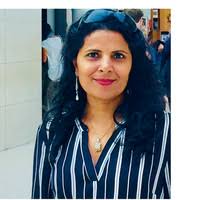
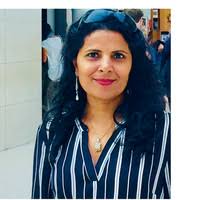
Dr Usha Prasad
Dr Prasad was assigned by Dr James Marsh, the medical director to write up a report on the patient’s death. Her conclusion was that it was a Serious Untoward Incident Level 5 – that is the hospital caused severe harm to the patient leading to his death. This would lead to a report to the coroner and the CQC. The coroner could look at how the patient died and the issues surrounding it to help prevent other deaths.
What followed were attempts by other senior consultants to water down the report and delay its completion which Dr Prasad refused to do. Those involved in this exercise included Mr Karim Bunting, the quality manager at the trust and Dr Simon Winn, Clinical Director for Acute and General Medicine, She was asked to make the report in her words “inaccurate” and Dr Winn drafted an alternative version. He accepted that a serious mistake had been made by not recognising the result of the echocardiogram but put the emphasis on the lack of communication between the respiratory physicians and the cardiologists. He did not accept it as an avoidable death.
It is not known whether thepatient’s relatives were properly informed about the circumstances of the death or which version of the report they have been shownif any.There is a duty of candour if someone has died.
Epsom hospital Pic credit: Epsom and St Helier University NHS Trust
The second disclosure of failings at the hospital that came out at the tribunal concerns serious radiation risks from old X Ray machines at Epsom Hospital – which are used when pacemakers are inserted into patients. This puts staff and patients at risk.
Dr Sola Odemuyiwa, consultant cardiologist at Epsom Hospital from 1994 until 2016, He disclosed how an audit by Dr Abhay Bajpai, – specialist in pacemaker devices and electrical rhythms, appointed to take over pacing at Epsom in addition to his other duties – revealed stark contrasts in radiation levels between Epsom and St George’s hospitals. Using a dosimeter, he compared radiation insertion of a similar number of devices at St George’s. With similar average screening times, the total radiation received was substantially higher (up to a hundred times greater) at Epsom than at St George’s.
He says in his witness statement: “When I saw the histograms – the Micrograys of radiation from Epsom a skyscraper beside which the values from St George’s, looked slipper thin, (I attach the relevant data) my heart drummed against my ribs out of apprehension and angry self-reproach as I recalled with dismay how for twenty years I may have been gorging my organs on X-rays. My anxieties ballooned when I learned that Abhay’s readings came from Libra, the more modern of the two machines and that I was often given the older Endura machine, which emitted even higher levels of radiation.”
“Drs Yousef Daryani and Abhay Bajpai, my colleagues on the Epsom site continued to press the Trust over the safety of the X-ray machines. In February 2016, Abhay presented his audit data again at a meeting between Cardiology and Radiology departments. He thought the machines should be replaced. The senior radiographer said she could not change the past but that the machines were working properly.”
He then sought figures for radiation doses he had received during his career at Epsom Hospital.. “The Radiation Protection department at George’s were most helpful and sent me dose records from 2005 to 2008. Where are the data from 1995 I asked. They said they could not retrieve the data from the archive of the Mirion Technologies Dosimetry Services Division.”
The trust itself is adamant that there is nothing wrong with the machines. A long e-mail trail between the consultant and trust officials ended with the Trust insisting that the machines are safe and regularly checked.
Sally Lewis ” our image intensifiers are old and due for replacement “
Sally Lewis, a radiologist and medical examiner at the trust, wrote to Daniel Elkeles, then chief executive of the trust, saying there had been confusion about the reporting of the differing level of doses at Epsom and St George’s using different methods. She said if they had exceeded safety levels it would have triggered an alert.
She admitted; ” We are well aware that our image intensifiers are old and due for replacement … newer machines will with new technology produce lower dose readings which is something we always strive for.”
Dr Odemuyiwa disputes her findings. He said: “The manager misunderstood the report from the Radiation Protection Service. The absorbed dose of radiation, the amount of energy deposit in a small volume of tissue, and the equivalent dose, the impact that dose has on that tissue are numerically the same. The former is measured in mGy and the latter in mSv or milliSievert. Colon and prostate are more sensitive than the head for example.”
A year after leaving the trust he was diagnosed with prostrate and bowel cancer.
He explained to me in an interview: ” When you are fitting a pacemaker you are lying over the patient and are very close to the imaging equipment. If you are going to receive too much radiation the most sensitive organs to cancer are the prostrate and the bowel.”
Dr Odemuyiwa: ” When you are fitting a pacemaker you… are very close to the imaging equipment”
Since he announced his support for his colleague, Dr Prasad, Epsom and St Helier University Trust have declined to revalidate him so he cannot practice medicine.
The trust were contacted about what they intend to do after these revelations but have not responded.
Epsom and St Helier University Trust say on their pinned tweet on Twitter: “We put the patient first by giving outstanding care to every patient, every day.” Draw your own conclusion.
A second blog will look at what the hearing revealed about the issues surrounding the treatment of Dr Usha Prasad. The tribunal is expected to issue its findings in the New Year.
Please donate to my blog Westminster Confidentialto help me continue my forensic work.
They can’t or won’t explain internal NHS procedures used to dismiss the perfectly competent cardiologist Dr Usha Prasad
Professor Stephen Powis. Pic credit: NHS England Zoe Penn: Pic credit: Twitter
The long drawn out saga over the dismissal of cardiologist Dr Usha Prasad by Epsom and St Helier University Hospital Trust reported earlier on this blog continues. I will be reporting soon on a lengthy Employment Tribunal recently finished where Dr Prasad made serious protected disclosures about patient and staff safety at the trust and senior consultants were cross questioned about the way they treated Dr Prasad.
In the meantime two retired cardiology consultants Professor Jane Somerville and Dr David Ward, who are championing Dr Prasad’s cause, have tried to get explanations from two of the most senior people in NHS England, Professor Stephen Powis, national medical director and Zoe Penn, Medical Director for the NHS London region and lead official for professional standards. Dr Zoe Penn took time out during the pandemic to sit on the internal Maintaining Higher Professional Standards panel which decided Dr Prasad’s future.
Claire McLaughlan , chair of the MHPS inquiry which found ” unfit for purpose”
At the heart of the matter is a ruling by the internal tribunal that Dr Prasad is ” not fit for purpose” to do her job. This was made by Claire McLaughlan, the never practised barrister who chaired the inquiry. with Zoe Penn. She has refused to explain what that term means which led to the two retired consultants going to the senior NHS officials for an answer.
What the panel could not rule was that Dr Prasad was ” not fit to practice” medicine even though the trust tried its best to be able to do so by sending 43 cases to the General Medical Council to show her failings.
The GMC not only threw out the Trust’s cases but decided to revalidate her to keep on working – taking away the power the trust had to stop her medical career.
Professor Powis’s response to this is: “Fitness for purpose is a phrase used to refer to behaviours which are not in keeping with the doctor’s ability to practise in a particular professional role but do not breach the threshold for GMC action, to be distinguished from those which are not in keeping with GMC requirements on good medical practice and therefore may have an impact on a doctor’s licence or registration (“fitness to practice”).”
This is a cut and paste job from Claire Mclaughlan’s findings and takes us no further. It almost suggests the panel was upset that the GMC had ruled she was competent and made up something else to get rid of her.
Nobody can point to where in employment law this phrase comes from – let alone any case law of anybody being dismissed for being ” unfit for purpose”. Any employment lawyer who reads this blog is welcome to come forward to explain with some case law.
Disturbing Disclosures
The other disturbing disclosure from Professor Powis is the way he dealt with requests from the two consultants for an inquiry into the whole saga.
As they say : “How is it possible for Trusts to use cost threats, expensive lawyers and dubious (and unregulated) “independent management consultants” (aka hired guns) of the type used in this case, to push whistleblower claimants into submission and thereby achieve the “desired” outcome, i.e. their dismissal? It seems to us that this case is a particularly bad example.“
They also say: “NHS Improvement has a duty to oversee behaviour of NHS Trusts. Will it continue to overlook the gravity of this and similar injustices? It is time for a review and improvement of NHS disciplinary and dismissal processes which should include senior NHS managers as well as medical personnel. “ Professor Powis’s response was to refer the case to the regional medical director for London, Dr Vin Diwakar, a close colleague of medical director, Zoe Penn. He is a distinguished clinician and a former medical director of Great Ormond Street Hospital in London.
But was he the right person to do this review? He sits on the committee in charge of the re-appraisal and relicensing of medical directors in London with Zoe Penn. Given she was also on the same panel that found Dr Prasad was” unfit for purpose”, it is not surprising that Professor Powis in his own words was ” assured that a fair and independent process has been carried out.”
A really independent review would have called someone outside the London region to do this just as the General Medical Council did when a cardiologist from the North East reviewed her case. His solution would be like Epsom and St Hellier University Trust appointing a friendly cardiologist who would find in their favour at the GMC.
Professor Powis said: “It is not the responsibility of NHS England and NHS Improvement nor that of the National Medical Director, or NHS England and NHS Improvement more generally, to intervene to resolve in individual employment matters,… although we will consider whether employment matters could indicate wider problems with how a trust is being run.”
Daniel Elkeles Pic credit: London ambulance NHS Trust
However perhaps the most damning issue he is silent about is the disclosure in Dr Ward and Professor Somerville’s letter about the behaviour of the former chief executive of the trust, Daniel Elkeles ( now at the London Ambulance Service) during this period.
I quote:”. It would appear that the CEO acted outside his powers by offering to bribe Dr Prasad to “drop all the actions you are taking against ESTH” and leave the Trust in exchange for which ESTH will “agree to cease the MHPS process”…..By offering these terms he was, in effect, cancelling the investigation. We think this is highly irregular. Do you agree? “
What this shows is that Professor Powis is prepared to ignore unethical behaviour in one of London’s health trusts. Either this internal official process was necessary or it shouldn’t have been brought. It is not a bargaining chip to negotiate with a competent consultant. Frankly I think it is akin to blackmail – drop your complaints against the trust or we will make sure you will regret it.
What this nasty little saga shows is that unaccountable officials at the top of the NHS are either too frightened of health trusts or happy to go along with unethical behaviour in the NHS. It is also reveals that this complicated MHPS system is in need of a radical overhaul. It is like those at the top “unfit for purpose”.
Please donate to my blog so I can continue my forensic investigations
Issue much more widespread than the public realise
The recent Dispatches programme and article in the Times by journalist Matthew Syed highlighted the plight of whistleblowers in the NHS citing the case of Peter Duffy, a consultant surgeon, working for the Morecambe Bay Foundation Trust. Faced with failures at the trust in the emergencies department he expressed concern for two patients who subsequently died from kidney sepsis.
One would have expected the Trust to have remedied the situation. Instead they turned on him rather than admit any failings. As he told Matthew Syed: ” I was on the receiving end of allegations of bullying, abuse and racism. And so what I hoped would be an attempt to raise standards became an investigation of myself”.
It took five years of toxic attacks and tribunal hearings before he won his case for constructive dismissal. The sad thing is that this is not some isolated instance but appears to be growing in an NHS that is more concerned with its reputation than the safety of patients in its care and is preparing to spend millions of taxpayers money on lawyers fees to undermine any cases brought by whistleblowers. Furthermore it is prepared to spend literally years to wear down anybody who puts their face above the parapet.
Dr Usha Prasad
Readers of this blog will be aware of the case of Usha Prasad, a popular and competent cardiologist ( the General Medical Council has recently revalidated her) who has been driven out of the Epsom and St Helier University Health Trust ( now merged with St George’s Health Trust),
Today she starts a 16 day employment tribunal hearing as a whistleblower. She is backed by Dr Sola Odimuyiwa, from the hospital trust and two retired eminent cardiologists, Professor Jane Somerville and Dr David Ward, who believe her case is just one example of a malign system designed to cover up failures in the NHS. This week the latter two sent a letter to the Sunday Times which was edited down for publication. This is the full text:
“We thank Matthew Syed (Comment Oct 24) for his frank exposure of some of the “mistakes and weaknesses” of the NHS of which the persecution of medical whistle-blowers, as shown by the heinous story of the consultant surgeon, Mr Peter Duffy. He is one example of many.
It is a doctor’s duty of candour to draw attention to matters which are not safe for patients. This action, in good faith, prevents accidents thereby protecting patients. Hospital Trusts may not respond favourably to such complaints and may use their unbridled powers to instigate prolonged, expensive and vengeful disciplinary processes.
Medicine has learnt some of the lessons from aviation safety but the fair and open treatment of whistle-blowers is not one of them. Hospital Trusts are able to fund these processes because they can access public funds not available to the whistle-blower which is a gross imbalance of power. Shady external “management consultants”, who operate by their own rules, and expensive legal firms are hired by Trusts at great expense with the sole aim of ensuring the dismissal of the troublesome whistle-blower. This certainly affects the recruitment and retention of doctors the NHS so badly needs.
A serious consequence of this nefarious process has been the emergence of a cover-up culture in which the initial deficiencies or ‘protected disclosures’ are inadequately investigated. There is no oversight or regulation of the way Trusts investigate whistleblowers. What informal processes there are may have been designed deliberately to avoid or deflect scrutiny. We have been unable to find a body or organisation to whom to report a Trust’s bad treatment of a whistle-blower. Attempts by supporters of whistle-blowers to engage higher regulatory bodies such as NHS England are usually met with indifference.
For the victimised, whistle-blowing doctor the outcome can be devastating. Their careers are stolen from them. The reputational damage prevents them from securing another job. Serious physical and mental health problems are not uncommon and family lives are destroyed.
We think the investigation of NHS whistle-blowers, of which there have been many notable cases over the past decade, should open and accountable. It is a scandal unknown by the wider public and in need of an independent inquiry.”
A national problem
You can see they believe this is a national problem not an isolated case. It can be backed up by a roll call of cases ( some of which are not yet finished). You can click on the stories reported in various newspapers to get an idea of the scale of toxicity on this issue.
But this is not the end of it by many means. Since I took up Dr Prasad’s case I have become aware through a new group. Doctors for Justice, that there are as many as 35, yes 35, other cases. Nearly all the doctors at the moment are requesting confidentiality until their case becomes public at an employment tribunal hearing. There are many, many other doctors who have quietly quit trusts to find work elsewhere because they don’t want to have to fight their employers for years on end.
Under this system it is the patient that pays the price – and in a number of cases the ultimate price – death. That is why this blog is going to keep an eye on what is going on the NHS until someone has the guts to reform the system and take on a bureaucracy that seems more interested in preserving its reputation than improving patient safety.
Please donate to this blog to allow me to continue my forensic reporting of public issues.
Earlier this month the appeal panel set up by the Epsom and St Helier University NHS Trust under Mrs Claire McLaughlan rejected the appeal by Dr Usha Prasad, the cardiologist, against her sacking. She is said to be ” unfit for purpose”. For many the verdict was thought to be inevitable given the enormous lengths the trust had gone to dismiss her, but the findings are worth highlighting because it is a perfect example of why this internal system is in disrepute and needs to be scrapped.
The unwieldly nature of the Maintaining High Professional Standards Appeal system set up in 2003 by the NHS is itself “unfit for purpose” as illustrated by an enlightening article in the Health Services Journal by Alastair Currie, a partner with the law firm Bevan Brittan.
“No sane NHS manager would use MHPS”
He wrote: “MHPS is a calamitous mess of a document,” and goes on to say:
“MHPS, at 59 pages, is a bloated mixture of inconsistent policy verbiage and labyrinthine procedure. It seems designed to promote High Court debate … and so it often does. There is a devastating trail of case-law left by MHPS, each case involving a doctor or dentist and their employer becoming miserably entrenched in MHPS for years before landing in the courts.”
“No sane manager wants to touch MHPS, let alone use it frequently or to intervene early in borderline bad practice. It is well known that any attempt to use MHPS risks years of disputes and litigation.”
Bevan Brittan lawyers Alastair Currie and Tim Gooder Pic credits; Bevan Brittan
So it is a supreme irony that the law firm Bevan Brittan is the very company that facilitated the MHPS hearing on the Usha Prasad case. While Alastair Currie denounced the system in the most colourful language, his colleague Tim Gooder, was fixing up the arrangements for the hearing. Still never get between a law firm and their business to make money. I wonder which ” insane” manager from the trust engaged them.
Now to the hearing itself. The report begins with a desperate defence that the three main members of the panel are independent. Claire McLaughlan emphasises that she is a non practising barrister. What she should have said, I am told, is that she is an unregistered barrister because she has never worked for a law firm and never completed any pupillage. The analogy which she should know is that a qualified doctor is not properly qualified until he or she has worked in a hospital.
Dr Zoe Penn has a high flying job as a medical director and lead for professional standards at NHS England and Improvement (London region). She, I understand, has refused to communicate any explanation of the decision hiding behind the “labyrinthine procedure” of MPHS.
And Ms Aruna Mehta, a former banker and non executive director of the trust, I gather was appointed to the trust without any competition for the post.
The panel could not find that Dr Prasad was ” not fit to practice” because she has been both exonerated and revalidated by the General Medical Council. They didn’t even bother to read all the detailed expert findings in the GMC report. So citing the bad relations in the hospital trust between medical colleagues they decided that Dr Prasad was not fit for purpose.
Back of an envelope decision
The relevant paragraph said: “The GMC were concerned with Dr Prasad’s fitness to practise whereas the MHPS panel were concerned about Dr Prasad’s fitness for purpose. The Panel are fully cognisant that these are two different considerations, with different tests, thresholds, processes and outcomes. Fitness to practise distinguishes behaviours which are not in keeping with GMC requirements on good medical practice and therefore may have an impact on a doctor’s licence or registration from behaviours which are not in keeping with a doctor’s ability to carry out a particular professional role. Although the latter do not breach the threshold for GMC action it does mean that a doctor is not fit for purpose.”
Yet nowhere are these different tests and thresholds explained nor how a human being rather than a system or faulty goods can be classified as unfit for purpose. It is as almost Mrs McLaughlan made the concept up on the back of the envelope just to find anything to attack her. And also safe in the knowledge that the MHPS protects her from explaining herself.
Certainly there are purple passages slamming Usha Prasad’s perceived failings: “Dr Prasad made mediation unviable, refused to participate in a behavioural assessment, made a placement impossible, refused a sabbatical, did not engage with the Trust’s MHPS investigation, responded antagonistically throughout and submitted multiple grievances as a result of any challenge. She appears unable to accept help from her peers but sees everything through the prism of victimhood.”
Yet this is at total odds with reports from Pinderfields Hospital near Wakefield where has received glowing tributes for being able to work there with colleagues while on a placement from St Helier – the report seems to suggest that she is a Jekyll and Hyde figure.
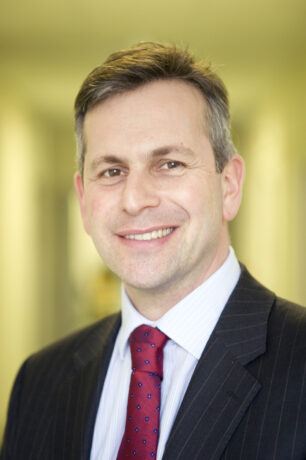
Dr Richard Bogle, then lead cardiologist and Dr James March, the trust’s medical director
The report does not exonerate other senior figures in the cardiology department. Dr Richard Bogle, who was head of the cardiology department, is criticised: “The Panel were concerned about some of Dr Bogle’s actions and non-actions while clinical leader and how little leadership he demonstrated. He displayed little empathy in relation to the anonymous letters. As the departmental leader he could have undertaken an investigation himself into the relationships within the department.”
Also the inquiry has to admit that the way the trust collected evidence against her to send to the GMC was dubious. “The 43 cases do appear to have been gathered in a haphazard, rather than properly random, fashion. This could be construed as a hunt for evidence rather than a proper audit of clinical care against known gold standard best practise which is properly comparative with others i.e. benchmarking.”
This sorry saga has ended with a popular and competent cardiologist dismissed from the trust and declared to be ” unfit for purpose” as a human being. The truth, as I see it, is that it is the system that judged her that is ” unfit for purpose” not Dr Prasad.
Professor Jane Somerville; Pic credit: World Heart Foundation
Professor Jane Somerville, a distinguished cardiologist , who took part in the first heart transplant in the UK, has put up this comment on the situation:
This story highlights a serious problem within the National Health Service which needs urgently to be addressed by the Department of Health. The number of new whistleblowing scandals is steadily increasing. It is concerning when dismissal of a senior doctor following a “whistleblowing” event (as in this case) occurs at a time when insecure young doctors and new consultants are worrying about what sort of National Health Service has employed them – and in the middle of the worst pandemic for 100 years! In David Hencke’s excellent factual reports, a BAME consultant, easily bullied by the Trust despite being found by our regulatory body (the GMC) to be ” fit to practice” has lost her livelihood on grounds of not being “fit for purpose”. This interesting phrase does not appear in English Employment Law, and when used applies to services or goods. Perhaps the Trust wishes to show she is as useless as a cardboard box!
Why does the Department of Health or NHS England allow hospital Trusts to do this, to fight whistleblowing staff but fail to address their original concerns or even pay any lip service to them, using vast sums of taxpayers money (>£700k going on £1m in the case of Dr Chris Day, see @drcmday on Twitter) which the “little person”, the doctor under fire, cannot hope to match? In an exercise of gross imbalance of power and taxpayers’ money Trusts respond to whistleblowers by using panels of seemingly prejudiced and dubious panellists and often expensive lawyers.
These bullying Trusts have too much power and no one seems to be able or willing to control their excesses. This is not a unique case. There have been several very prominent examples in the national press over the past 2 decades. The Department of Health should be concerned about the oppression of their vital professionals, unequipped to fight back and often not helped by representative bodies (such as the BMA), or seniors who may themselves be too frightened of a Trust’s retribution. This cannot be a fair outcome for whistleblowers whose primary motives are to preserve and maintain patient safety, often requesting simple as well as fundamental changes and fair but thorough investigation of underlying problems. A Trusts’ response to whistleblowing often seems corrupted by internal bias. The Department of Health turns a blind eye or does not care. Sir Robert Francis QC was asked to report (2010 and 2013) on failings of Mid Staffs management and avoidable loss of lives. He made many (290) recommendations and introduced the Freedom To Speak Up Guardian. Only a few of 290 recommendations were adopted and FTSU process is not functioning as intended. The Dept of Health should be ashamed of ignoring its responsibilities to the NHS, its doctors (and nurses) and the British electorate. Not to mention the huge sums of taxpayers money expended to save face and cover up the initial problems as well as the labyrinthine process itself.
The National Health Service has a largely hidden system of justice when a health trust is involved in a dispute with a doctor. It holds internal inquiries and appeals in private to decide whether a doctor should be dismissed.
The people who chair and sit on the inquiry are drawn from a list that a health trust can choose. The same people are also chosen and paid by trusts to build up a case against a doctor. The people who get onto the list normally have had a career in the NHS but are now running their private businesses in Claire McLaughlan’s case offering rehabilitation to doctors who have fallen foul of their own health trust.
I have chosen Claire McLaughlan as an example because she has been and is involved in three high profile cases where doctors have challenged decisions by health trusts to dismiss them. They are Dr Raj Mattu, who won a spectacular £1.2 million settlement after being unfairly dismissed for warning about patient safety in a cardiology department; Dr Chris Day, who is still fighting his dismissal for warning about patient safety at an intensive care unit at Woolwich Hospital, and as readers of this blog will be familiar, Dr Usha Prasad, a consultant cardiologist at the Epsom and St Helier University Health Trust, who is currently awaiting an internal inquiry appeal over her dismissal from the trust.
I did offer Claire McLaughlan an opportunity to comment but have received no reply to my request.
From Royal Navy nurse to clinical assessment services
Claire McLaughan’s nursing career started in the Royal Navy before she became Head of Fitness to Practise at the Nursing and Midwifery Council and then moved to the now renamed National Clinical Assessment Service (NCAS) becoming, an Associate Director. There she developed the NCAS Back on Track Services for doctors, dentists and pharmacists between 2008 and 2014.
She also did obtain a law degree and was called to the Bar but as far as I could ascertain never practised as a barrister despite calling herself a non practising barrister. Certainly the Law Society do not appear to have any records of her working for chambers.
She left NCAS and set up her own business which offers a huge list of services which are listed on her Linked In page. It begins “Claire provides bespoke, holistic services and access to resources relating to performance management, revalidation, remediation, reskilling and rehabilitation for health professionals and the organisations they work in.”
Her company CC McLaughlin Services ( website here) which appears to be run according to the website from their home in Stockbridge, Hampshire, ( though it has a registered office in Winchester), which they purchased according to the land registry for £600,000 in 2010.
The latest Companies House accounts for the firm show that she and her husband, fellow director, Charlie ,have a thriving business. Latest company returns show it made a profit of £137,000. Both directors pay themselves in dividends rather than salaries which is more tax efficient.
While working in the private sector she holds a number of NHS posts including Chair for NHS England’s Performers List Decision making panels( they decide the internal inquiries) She is also an Invited Review panellist for the Royal College of Paediatrics and Child Health and an appointed lay member of the Royal College of Veterinary Surgeons.
Given this stellar series of appointments it is rather surprising that in two cases she has been subject to criticism- and in one case had to apologise.
The first case involved Raj Mattu, a cardiologist with the University Hospitals Coventry and Warwickshire NHS Trust. He was dismissed after he warned of serious patient safety problems at Walsgrave Hospital. He lost his court battle but won an employment tribunal and was awarded over £1m damages in 2016.( see here).
Claire McLaughlan, who appeared for the trust, was criticised by employment judge Pauline Hughes for an important omission in her evidence. The extract in her judgement says:
Her second case was highlighted by Chris Day. She was paid by Greenwich and Lewisham NHS Trust to investigate his claims of patient safety concerns at and was working with M J Rhoddis Associates. They were paid over £40,000 for the work.
Dr Chris Day; Pic credit: Twitter
In a recent letter to the Care Quality Commission Dr Day said that he came to a meeting with them to explain the circumstances of his concerns – only to find afterwards that the record of what happened had been completely altered, important points were left out, his views were distorted and comments attributed to him which he never said.
He got an apology from Mrs Mclaughlan and the record was altered.
Now at the moment Mrs McLaughlan is about to issue her verdict as chair of an internal inquiry on the fate of Dr Usha Prasad, who has already been exonerated by the GMC, so there can no question of patient safety being at risk. There is the question why this appeal is being heard while we still have a pandemic and St Helier hospital has been hit badly by it. It goes against NHS guidance to have it now and Mrs Mclaughlan as chair of the NHS England Performers List should know. Obviously she has not followed NHS guidance in this instance.
Is it a chumocracy?
These internal NHS hearing are areas where journalists rarely investigate but to my mind raise a lot of questions which need answering. Is this rather closed system open to chumocracy? How curious that people can glide between the public and private sector running a successful business on the proceeds? How independent are these people if they are paid by the trust which obviously in all three cases wants to get rid of the doctor concerned?
And most importantly whatever findings come out – they can ruin the professional careers of doctors – and should that be left to a secretive system to decide their fate? And why is all this taxpayers’ money going on these long and drawn out proceedings which are money making troughs for all the lawyers concerned?
The Migration Museum – an innovative project to create the first permanent home for a museum in the United Kingdom devoted to a story that probably affects every person in the country – is looking for new trustees.
They will come at a time when the museum – at present in a temporary home in a shopping centre in Lewisham, south London is planning to boost its profile and move centre stage to highlight the issue and all its extraordinary facets.
As the prospectus for new trustees says
” Never before has there been stronger justification for there to be a welcoming and stimulating cultural institution – away from the polarising noise of politics and the media – to explore some of the most pressing issues of the day – migration, race, Brexit and our colonial past among them – in a richly aesthetic atmosphere of calm reflection.”
Aim, Vision and Values
The projects aim, vision and values are summed up in three paragraphs:
“Our Mission is to deliver a popular, high-profile and accessible cultural institution, to which every person in the country can feel a sense of belonging and that puts Britain’s migration story at centre stage.
“Our Vision is of a society in which we all (for we all have migration stories in our family past, if we dig a little) feel connected and represented in an essentially British shared migration story.
” Our Values are to promote tolerance, understanding, respect and participation, and to engender a real sense of representation, both beyond our organisation and within it. This means that we are strongly committed to promoting diversity and representation within our Board, not only to reflect the lived experience of our audiences, but also to deliver role models for those who join, or aspire to join us, as trustees, employees, volunteers or collaborators. “
exciting events
For the last few years the museum has already put on a number of exciting events – from recreating the Jungle camp ( and all the art) made by migrants in Calais to putting on a concert by Aeham Ahmad, the incredibly brave and talented pianist who played his piano on the streets of bombed out Yarmouk in Damascus until he was forced to flee by the Syrian dictator Assad to Germany.
More recently during the pandemic there has been a digital exhibition of migrants contribution to the NHS and a series of digital exhibitions telling the story of emigration from the UK and those who were left behind.
For those who might be interested the deadline for applications is May 3 and the prospectus and all the details are here.
I am one of 120 Distinguished Friends of the Migration Museum and am a strong supporter of the project. I have also written a number of stories on this blog on some of their past exhibitions. Here are a few of them.
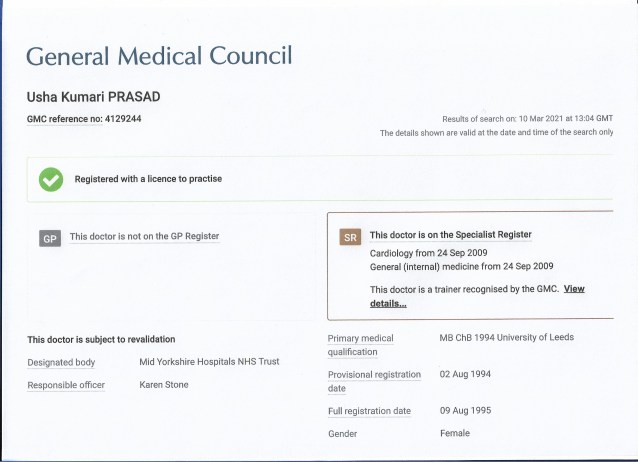
Dr Usha Prasad, the cardiologist currently appealing against her dismissal from the Epsom and St Helier University Trust, has been exonerated by General Medical Council of any medical failings or putting patient safety at risk.
The decision by the GMC not only rejected a dossier of complaints from the trust but decided that the issue was closed and will not be re-opened again by the GMC.
The decision is part of a long running saga that has been going on for nine years and heightened by an anonymous letter sent by Dr Perikala, a staff doctor, who made the patient safety allegations in an anonymous letter to the General Medical Council, Care Quality Commission, Daniel Elkeles, the chief executive of the trust and Jeremy Hunt, then the health secretary in 2015.
The GMC initially declined to investigate Dr Perikala’s anonymous complaint but the trust has persisted in pursuing her at the GMC.
dr james marsh pic credit: Epsom and St Helier University Health Trust
I understand Dr James Marsh, the trust’s medical director, and Dr Richard Bogle, the lead cardiologist at the trust, compiled a dossier of no fewer than 43 cases which they claimed should be investigated. The GMC narrowed it down to seven cases and sent them for review to a very distinguished consultant at the James Cook Hospital in Middlesbrough whose career has spanned work at Papworth Hospital and Addenbrooke’s Hospital in Cambridge. The very detailed report came back completely exonerating her of any failings. She has also received glowing references from Pinderfields Hospital where she is currently working as a cardiologist after the Epsom trust dismissed her.
Dr Richard Bogle pic credit:www.richardbogle.com
The GMC’s decision comes just as an internal inquiry into her appeal is under way. This is being heard by Claire McLaughlan an independent consultant, and Associate Director of the National Clinical Assessment Service with an interest in the remediation, reskilling and rehabilitation of healthcare professionals. The case was also being followed by Dr Zoe Penn, Medical Director NHS England ,London Region and Lead for Professional Standards. She is sitting on the panel with Claire McLaughlan. Ms Mclaughlan runs a private business with her husband in Hampshire.
The fact that the hearing is taking place now is questionable since Professor Stephen Powis, national medical director of NHS England, told health trusts NOT to hold such hearings when the NHS is under pressure from the pandemic. I checked with the press office of NHS Resolutions and they have supplied me with the guidance for such hearings. They really should only be held if there is an absolute necessity and immediate risk to patient safety. Now with the GMC deciding there is no current and immediate risk to patient safety in Dr Prasad’s case – this makes the hearing even more questionable.
Officially the GMC will not comment on personal cases but they did confirm her clean bill of health entry on their public register which is reproduced below. All entries on this register have to be kept up to date on a daily basis. The saga continues but the case being made by the trust looks pretty weak after this decision by the GMC.
Since this blog was published I have had this strong message of support from Justice for Doctors. Here it is:
Dear Mr. Hencke, you are doing an excellent job by highlighting the problems with our NHS and how splendid doctors like Usha Prasad had been treated. It was very courageous of Usha to challenge the wrongdoings and the harsh decisions by our health institutions at a time when the GMC are calling retired doctors to rescue the overstretched NHS.
Without dedicated and committed doctors like Usha Prasad, our NHS will crumble and collapse. The misleaders and bullies will remain to demolish what goodness is left in our NHS. Unfortunately, most doctors retire or change location whenever they were unfairly challenged. Moving away will not solve the problem but encourage bullies and harassers to thrive and do more damage.
In our view, Dr. Prasad has won the moment she decided to stand firm and challenge the discrimination, the harsh and unfair decisions. We congratulate both of you for raising awareness about what goes on in our hospitals and congratulate Usha for her courage and conviction. Thank you On behalf of Justice for Doctors
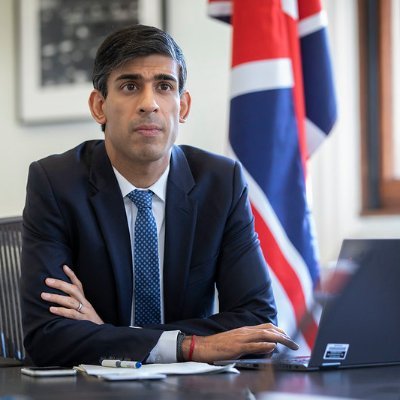
Rishi Sunak: Postponing the cash to improve the Ombudsman service
The Parliamentary Ombudsman has already – as I wrote in an earlier blog – faced a critical report from MPs on the way it handles some of its work.
And Michael Gove, the Cabinet Office minister, has also turned down any prospect of new legislation to modernise the service by combining its work with the local government and social care ombudsman.
Not content with that, Rishi Sunak, the Chancellor, has now postponed a three year funding programme which would have allowed it to introduce changes to improve matters.
Instead The Treasury has decided to give it just one year’s worth of funding and instructed it to concentrate on handling complaints arising out of Covid 19 pushing aside other grievances..
Details of this latest bad news has not been put out in any press release by the Ombudsman but has been hidden away in the correspondence section of the House of Commons Public Administration and Constitutional Affairs Committtee.
A letter from Rob Behrens, the Parliamentary and Health Service Ombudsman, to William Wragg, the Tory chair of the committee, reveals the not very bright future for people wanting to take the NHS to the Ombudsman or for the 1950s born women hoping for compensation for maladministration over the six year rise in the date they could claim their pension.
In the letter Mr Behrens says “We will postpone the launch of PHSO’s new three-year strategy until we can secure the three-year funding settlement necessary to deliver it. Instead, we will use 2021-22 as a bridging year to lay the foundations for the new strategy and focus on addressing the significant operational challenges facing PHSO’s service.”
Severely affected by Covid – 19
He goes on to describe what next financial year will be like:
“PHSO’s service has been severely affected by the ongoing COVID-19 situation in a number of ways, from the impact of school closures on the availability of staff, to pressures on the NHS that mean services are taking longer to respond to PHSO’s requests for information. “As a result, PHSO is closing substantially fewer cases than usual and, in turn, this means a growing number of complainants are waiting for their case to be allocated to a caseworker. “Although we have started to recruit some more caseworkers, it takes a minimum of six months to train new staff and even with additional caseworkers, it is clear that complainants will face increasingly long wait times unless we take further action.”
Delaying revealing the size of the complaints waiting list
I asked the Ombudsman to give me details of how many cases they were and how long they were taking. I also asked about the size of the waiting list. Simple questions enough if they are on top of the job. Instead they have decided to turn it into a Freedom of Information request which will give them a month or two to reply. I will report back when I have the figures.
In the meantime the letter says: “This means we will prioritise the quality and productivity of PHSO’s core complaints-handling service. We will also use 2021-22 to carry out preliminary work to support the new three-year strategy, such as improvements to some of PHSO’s core systems and processes, and highlighting opportunities for Parliament to make essential improvements to PHSO’s legal framework, such as removing the MP filter.” The latter point is that all complaints have to go through MPs at the moment.
The whole situation is not good at all. But I am not surprised that the government is not keen on funding or modernising the service. A more efficient service will bring to light injustices – which means a bad press for government services – and ministers don’t like bad publicity. Far better to deprive the Ombudsman of cash and keep the announcement hidden in the correspondence column of a committee.
Rob Behrens: The Parliamentary and Health Service Ombudsman Pic Credit: Ombudsman’s Office
If you have a complaint about a government department or the National Health Service your last port of call is Rob Behrens, the Parliamentary and Health Service Ombudsman. He is the current post holder of an institution set up 54 years ago by the second reforming Labour government led by Harold Wilson.
A report by MPs today is both critical of the performance of the Ombudsman – particularly over transparency – and of the government for not even considering new legislation to give the Ombudsman fresh powers and bring its work into the 21st century.
The minister blocking any change is Michael Gove, the Cabinet Office minister. He has ruled out any new law that could streamline the operation by combining its work with the local government and social care ombudsmen; give it powers to initiate investigations and strengthen its work dealing with complaints.
Michael Gove: Blocker in chief in making sure the Ombudsman can’t do his job properly Pic credit: BBC
No doubt as one of the country’s leading power couples – Michael Gove and Sarah Vine – are able to use their influence through the current ” chumocracy” to deal with any complaints they might have without having to resort to anybody like the Parliamentary Ombudsman But for ordinary people it is quite different
As the Chair of the Public Administration, and Constitutional Affairs Committee, Tory MP William Wragg MP said:
“The Committee appreciates the pressing priorities facing the Government, including, of course, the current pandemic. But reform of the legislation governing the PHSO is worthy of parliamentary time. The PHSO represents the final stage in a complaints process that can be traumatic for complainants and may include serious matters such as the death of a loved one. It is essential that people have faith in a transparent, effective organisation. The current out-dated legislation undermines this crucial ambition”.
No action yet on long standing 50s women complaint
This leaves questions about how good Rob Behrens is in doing his job given the current restraints. He is currently looking at whether women born in the 1950s are entitled to any compensation for maladministration for failing to notify them of the raising of the pension age. And he is taking his time about it – despite MPs encouraging and recommending WASPI supporters to follow this route. Indeed the report includes a complaint from Frances Martin:
Her submission said:( I have left the capital letters) “There Is Still No Definitive Time Line For Finalisation, Nor, Importantly Has There Been Any Attempts To Provide An Impact Assessment, Notwithstanding, All Of The Above I Am Without Any State Aid Benefits Since Nov 2015, Am Redundant In A Jobs Blackspot And Have Been Excluded From Financial Assistance Through Rishi Sunak’s Furlough Scheme. As A Woman Of Over 60 Am At Greater Risk With Regard To The Covid Outbreak. None Of These Facts Seem To Have Been Considered By An Organisation Which Purports To Be Fair/Impartial Etc And Certainly Is Not Best Practice In Any Organisation That I Have Worked In Both In The Uk And Overseas.”
Both the MPs and the general public have raised a number of shortcomings. For a start he muddies the waters on the cases he takes up. The MPs report he conflates cases that “are not ready to be taken forward” and “should not be taken forward” so we don’t know what he is doing. He doesn’t report on the number of partial decisions.
He was accused of misleading Parliament by not proactively reporting that you can’t directly compare the figures for the number of cases referred to him over the last two years – because a new digital case system has made it impossible.
Since this blog was published there has been a sharp exchange of views between the Ombudsman and the chair of the committee over whether Rob Behrens misled Parliament by not proactively reporting the number of cases referred to him accurately. Mr Behrens accused the committee of being ” factually inaccurate” in suggesting this. William Wragg, the chairman, stood his ground and said MPs felt there were discrepancies in his evidence and it was important the Ombudsman updated information to MPs in a timely manner. He said that did not mean he was misleading Parliament.Letter exchanges arehereandhere.
He comes out well in treating people with dignity and respect and listening to their claims. But comes out badly for the time he takes to come to a decision and explaining it to the complainant.
More seriously he doesn’t seem to check back with the complainant that he has got all the information or give them a progress report.
” systemic disability discrimination in the Ombudsman’s office”
The report also contains some very critical comments from the public about the Ombudsman’s handling of some cases. MPs don’t investigate them but attach them to the report.
In one just known as A7 on the death of a disabled child in NHS care the person wrote: “In my and the experience of other parents of disabled children, rather than impartially investigating concerns concerning disabled children, with parity of esteem, investigations seem to be focused on justifying the actions of health professionals, however, unreasonable that behaviour is.”
The person added: “This seems to be a manifestation of the systemic disability discrimination found in poor parts of the NHS spreading to the PHSO office.”
Another from Dr Minh Alexander and Ms Clare Sardari on “a mishandled referral to the Care Quality Commission under Regulation 5 Fit and Proper Person, about an NHS trust director who had been found guilty of proven whistleblower reprisal and breach of the NHS managers code of conduct (an under-declared family interest), who was subsequently convicted of fraud and also criticised for her attempts to resist the proceeds of crime process.”
Ombudsman can’t “deliver accountability and good governance”
They conclude: “There was a lack of rigour by the PHSO in pursuing compliance with its recommendations for corrective action by the CQC, notwithstanding its lack of enforcement powers. It seemed to us that a procedural box had been ticked and thereafter, the PHSO was not interested in enough in ensuring that there was learning or genuine remedy of injustice.”
“We do not consider that the PHSO model is robust enough to deliver accountability and good governance in public life, because of insufficient powers and the lack of a duty on the PHSO to enforce improvements and corrections. It does not seem good value for money (budget 2019-20: £25.942 million) and we ask parliament to consider an alternative model of conflict resolution.”
I could go on with other examples. Suffice to say both Mr Michael Gove and Mr Rob Behrens seem to have a lot of explaining to do. Mr Gove for not bothering to do a thing about updating and strengthening the Ombudsman’s role and Mr Behrens for not being up front with complainants on how he is conducting his investigations.
















 Westminster Confidential