Will your complaint get heard as the Government forces the Parliamentary Ombudsman to curb its service?

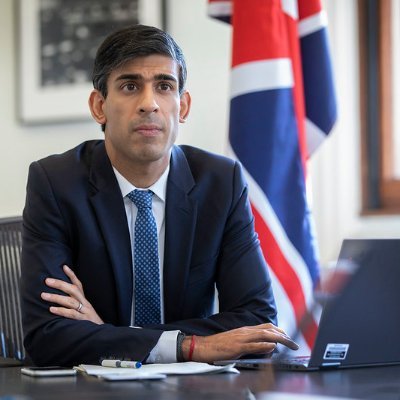
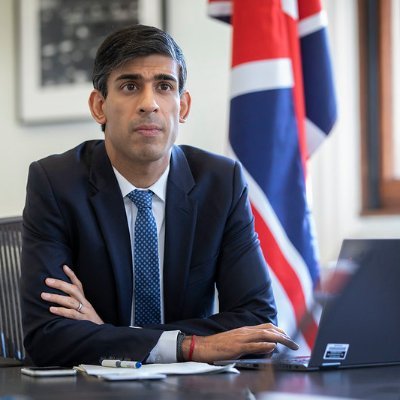
Rishi Sunak: Postponing the cash to improve the Ombudsman service

The Parliamentary Ombudsman has already – as I wrote in an earlier blog – faced a critical report from MPs on the way it handles some of its work.

And Michael Gove, the Cabinet Office minister, has also turned down any prospect of new legislation to modernise the service by combining its work with the local government and social care ombudsman.

Not content with that, Rishi Sunak, the Chancellor, has now postponed a three year funding programme which would have allowed it to introduce changes to improve matters.

Instead The Treasury has decided to give it just one year’s worth of funding and instructed it to concentrate on handling complaints arising out of Covid 19 pushing aside other grievances..

Details of this latest bad news has not been put out in any press release by the Ombudsman but has been hidden away in the correspondence section of the House of Commons Public Administration and Constitutional Affairs Committtee.

A letter from Rob Behrens, the Parliamentary and Health Service Ombudsman, to William Wragg, the Tory chair of the committee, reveals the not very bright future for people wanting to take the NHS to the Ombudsman or for the 1950s born women hoping for compensation for maladministration over the six year rise in the date they could claim their pension.

In the letter Mr Behrens says “We will postpone the launch of PHSO’s new three-year strategy until we can secure the three-year funding settlement necessary to deliver it. Instead, we will use 2021-22 as a bridging year to lay the foundations for the new strategy and focus on addressing the significant operational challenges facing PHSO’s service.”

Severely affected by Covid – 19

He goes on to describe what next financial year will be like:

“PHSO’s service has been severely affected by the ongoing COVID-19 situation in a number of ways, from the impact of school closures on the availability of staff, to pressures on the NHS that mean services are taking longer to respond to PHSO’s requests for information.
“As a result, PHSO is closing substantially fewer cases than usual and, in turn, this means a growing number of complainants are waiting for their case to be allocated to a caseworker.
“Although we have started to recruit some more caseworkers, it takes a minimum of six months to train new staff and even with additional caseworkers, it is clear that complainants will face increasingly long wait times unless we take further action.”

Delaying revealing the size of the complaints waiting list

I asked the Ombudsman to give me details of how many cases they were and how long they were taking. I also asked about the size of the waiting list. Simple questions enough if they are on top of the job. Instead they have decided to turn it into a Freedom of Information request which will give them a month or two to reply. I will report back when I have the figures.

In the meantime the letter says: “This means we will prioritise the quality and productivity of PHSO’s core complaints-handling service. We will also use 2021-22 to carry out preliminary work to support the new three-year strategy, such as improvements to some of PHSO’s core systems and processes, and highlighting
opportunities for Parliament to make essential improvements to PHSO’s legal framework, such as removing the MP filter.” The latter point is that all complaints have to go through MPs at the moment.

The whole situation is not good at all. But I am not surprised that the government is not keen on funding or modernising the service. A more efficient service will bring to light injustices – which means a bad press for government services – and ministers don’t like bad publicity. Far better to deprive the Ombudsman of cash and keep the announcement hidden in the correspondence column of a committee.


Another fine mess: MPs slam £425m school food voucher scheme as firm walks off with the profits

The Department for Education promoting the Edenred scheme

Company predicted “successful business performance” on the back of feeding poverty stricken children

The spectre of poor children going hungry during the Covid 19 crisis is something the government have had to be put under pressure to remedy – notably by Marcus Rashford, the Manchester United footballer.

But now it has emerged that even when the government finally did the right thing – they managed to make a mess of it. The initial scheme was poorly implemented and the supervision by the Department for Education (DfE) of the private company, Edenred UK Ltd, was lamentable.

Naive civil servants thought they were getting a bargain when the company told them that they get the supermarket vouchers for them at their face value without it costing them a penny more. What they hadn’t realised was that the company could get a huge discount from supermarkets by bulk buying and pocket the difference themselves. And on an initial contract worth £77m later increased five fold to £425m that’s a lot of cash.

Whitehall ” surprisingly unconcerned” about Edenred making big profits out of taxpayers’ money

The report by the Commons Public Accounts Committee expresses dismay that the ministry even now seemed ” surprisingly unconcerned” about the profits made out of our money and has hit back at the MPs for suggesting it – backing the company which is also trying to deny it. A wonderful example of how the Johnson government is prepared to be shamed faced about making money out of Covid 19 and the plight of poor children.

There were serious problems in the early weeks of the scheme” and “unacceptable delays in Edenred processing orders from schools and getting vouchers to families,” the report reveals..

Those words cover up the distressing evidence given by individual schools to MPs.

School staff had to work in the middle of the night to get Edenred’s vouchers

Ms Andrea Howard ,School Business Manager at Truro & Penwith Academy Trust at the time of using Edenred, wrote to Mps, saying she was ” subjected to extreme levels of stress.”

“From the onset, the portal was not fit for purpose, initially it continually crashed and when the portal was first upgraded, there was a very long wait to access the site, this wait was sometimes more than two hours.  “For several nights in a row, I and many other school business manager colleagues took to waking up in the middle of the night to attempt to upload our spreadsheets, and site traffic was better in the early hours of the morning.  However, the fact that there was still traffic at these times is evidence of the desperation of school staff to be able to provide their families with vouchers.”

“Once parents received their vouchers, we had reports from the majority that they were not able to access the platform to redeem them.  It must be recognised that many of these families have limited access to the internet and tried to redeem the vouchers through their phones using their limited mobile data. 

 ” Additionally, we are located in a rural part of Cornwall with no nearby supermarkets, many of our families do not have access to their own transport and there is a very limited bus service, however the vouchers were only able to be used in large supermarket chains and not local shops such as co-op (initially) and Spar. “

Gavin Williamson, education secretary

Gavin Williamson made ” untrue statements”- headteacher

Raphael Moss, Headteacher, Elsley Primary School, Wembley, told MPs:” Due to the untrue statements made by the Secretary of State [Gavin Williamson] and DfE, their lack of acceptance of many of the issues, or the downplaying of the impact, I feel compelled to submit evidence for what amounts to gross negligence. As a result of the delays to providing vouchers, our own school set up a food bank, relying on donations from staff and the public, to ensure that children did not go hungry. “

“A major flaw in the scheme was that there was a huge incentive for schools to use the Edenred scheme rather than use a local alternative. A school’s own scheme would require laying out the cost of it it ourselves, with DfE guidance placing several limitations on which schools could claim and maximum amounts that could be claimed.

“The Edenred voucher amount of £15 was also in excess of the usual funding of £11.50 which also acted as an incentive to use the Edenred scheme. The public messages implied that schools had a choice to use their own scheme but without mentioning the limitations on schools reclaiming costs.”

Profits of £10.7 million

Taking this evidence it is quite clear that the scheme was aimed ( with Whitehall connivance) as much as benefitting Edenred as the poor hungry children. No wonder after a National Audit Office investigation and a critical report by MPs they have decided to return one per cent of the cost of the contract.

Their latest accounts – they are a subsidiary of a French firm – show they made profits of over £10.7 million.

Their annual report says they were ” honoured ” to get the food voucher contract which” will enable a successful business performance in 2020.”

You bet it did. The pay rise for their highest paid director last year was £136,000 – it went up from £235,000 to £371,000. That pays for a lot of food vouchers – more likely in caviar and French champagne than baked beans and spaghetti.

After sending up Boris Johnson, Joe Politics turns on Keir Starmer

The honeymoon must truly be over for Keir Starmer as Labour leader. Out today is a biting satirical video from Joe Politics on Keir Starmer and his move to shift Labour to the small c conservative right to attract back those “Red Wall ” voters. Corbynistas must be enjoying this one. Indeed Tommy Corbyn has already tweeted lol.

Updated:Why the archaic Parliamentary and Health Ombudsman needs a modern make over

Rob Behrens: The Parliamentary and Health Service Ombudsman Pic Credit: Ombudsman’s Office

If you have a complaint about a government department or the National Health Service your last port of call is Rob Behrens, the Parliamentary and Health Service Ombudsman. He is the current post holder of an institution set up 54 years ago by the second reforming Labour government led by Harold Wilson.

A report by MPs today is both critical of the performance of the Ombudsman – particularly over transparency – and of the government for not even considering new legislation to give the Ombudsman fresh powers and bring its work into the 21st century.

The minister blocking any change is Michael Gove, the Cabinet Office minister. He has ruled out any new law that could streamline the operation by combining its work with the local government and social care ombudsmen; give it powers to initiate investigations and strengthen its work dealing with complaints.

Michael Gove: Blocker in chief in making sure the Ombudsman can’t do his job properly Pic credit: BBC

No doubt as one of the country’s leading power couples – Michael Gove and Sarah Vine – are able to use their influence through the current ” chumocracy” to deal with any complaints they might have without having to resort to anybody like the Parliamentary Ombudsman But for ordinary people it is quite different

As the Chair of the Public Administration, and Constitutional Affairs Committee, Tory MP William Wragg MP said:

“The Committee appreciates the pressing priorities facing the Government, including, of course, the current pandemic. But reform of the legislation governing the PHSO is worthy of parliamentary time. The PHSO represents the final stage in a complaints process that can be traumatic for complainants and may include serious matters such as the death of a loved one. It is essential that people have faith in a transparent, effective organisation. The current out-dated legislation undermines this crucial ambition”. 

No action yet on long standing 50s women complaint

This leaves questions about how good Rob Behrens is in doing his job given the current restraints. He is currently looking at whether women born in the 1950s are entitled to any compensation for maladministration for failing to notify them of the raising of the pension age. And he is taking his time about it – despite MPs encouraging and recommending WASPI supporters to follow this route. Indeed the report includes a complaint from Frances Martin:

Her submission said:( I have left the capital letters) “There Is Still No Definitive Time Line For Finalisation, Nor, Importantly Has There Been Any Attempts To Provide An Impact Assessment, Notwithstanding, All Of The Above I Am Without Any State Aid Benefits Since Nov 2015, Am Redundant In A Jobs Blackspot And Have Been Excluded From Financial Assistance Through Rishi Sunak’s Furlough Scheme. As A Woman Of Over 60 Am At Greater Risk With Regard To The Covid Outbreak. None Of These Facts Seem To Have Been Considered By An Organisation Which Purports To Be Fair/Impartial Etc And Certainly Is Not Best Practice In Any Organisation That I Have Worked In Both In The Uk And Overseas.”

Both the MPs and the general public have raised a number of shortcomings. For a start he muddies the waters on the cases he takes up. The MPs report he conflates cases that “are not ready to be taken forward” and “should not be taken forward” so we don’t know what he is doing. He doesn’t report on the number of partial decisions.

He was accused of misleading Parliament by not proactively reporting that you can’t directly compare the figures for the number of cases referred to him over the last two years – because a new digital case system has made it impossible.

Since this blog was published there has been a sharp exchange of views between the Ombudsman and the chair of the committee over whether Rob Behrens misled Parliament by not proactively reporting the number of cases referred to him accurately. Mr Behrens accused the committee of being ” factually inaccurate” in suggesting this. William Wragg, the chairman, stood his ground and said MPs felt there were discrepancies in his evidence and it was important the Ombudsman updated information to MPs in a timely manner. He said that did not mean he was misleading Parliament. Letter exchanges are here and here.

He comes out well in treating people with dignity and respect and listening to their claims. But comes out badly for the time he takes to come to a decision and explaining it to the complainant.

More seriously he doesn’t seem to check back with the complainant that he has got all the information or give them a progress report.

” systemic disability discrimination in the Ombudsman’s office”

The report also contains some very critical comments from the public about the Ombudsman’s handling of some cases. MPs don’t investigate them but attach them to the report.

In one just known as A7 on the death of a disabled child in NHS care the person wrote: “In my and the experience of other parents of disabled children, rather than impartially investigating concerns concerning disabled children, with parity of esteem, investigations seem to be focused on justifying the actions of health professionals, however, unreasonable that behaviour is.”

The person added: “This seems to be a manifestation of the systemic disability discrimination found in poor parts of the NHS spreading to the PHSO office.”

Another from Dr Minh Alexander and Ms Clare Sardari on “a mishandled referral to the Care Quality Commission under Regulation 5 Fit and Proper Person, about an NHS trust director who had been found guilty of proven whistleblower reprisal and breach of the NHS managers code of conduct (an under-declared family interest), who was subsequently convicted of fraud and also criticised for her attempts to resist the proceeds of crime process.”

Ombudsman can’t “deliver accountability and good governance”

They conclude: “There was a lack of rigour by the PHSO in pursuing compliance with its recommendations for corrective action by the CQC, notwithstanding its lack of enforcement powers. It seemed to us that a procedural box had been ticked and thereafter, the PHSO was not interested in enough in ensuring that there was learning or genuine remedy of injustice.”

“We do not consider that the PHSO model is robust enough to deliver accountability and good governance in public life, because of insufficient powers and the lack of a duty on the PHSO to enforce improvements and corrections. It does not seem good value for money (budget 2019-20: £25.942 million) and we ask parliament to consider an alternative model of conflict resolution.”

I could go on with other examples. Suffice to say both Mr Michael Gove and Mr Rob Behrens seem to have a lot of explaining to do. Mr Gove for not bothering to do a thing about updating and strengthening the Ombudsman’s role and Mr Behrens for not being up front with complainants on how he is conducting his investigations.

How rip off Rishi manipulated National Savings punters only to dump on them when it suited him

Rip of Rishi Sunak – the manipulative chancellor

In November I wrote a blog castigating Rishi Sunak, the Chancellor, for his introduction of “rip off ” rates for safe savers – many of them pensioners – who have National Savings accounts.

As I said at the time; ” Effectively Rishi Sunak, the Chancellor, is making sure that millions of savers and those who have a flutter on the Premium Bonds subsidise the government’s multi billion pay outs by losing money every year they invest.”

Now thanks to the House of Commons Treasury Select Committee – which took up the issue of the low rates -and also poor customer service, record levels of complaints and long waits hanging on their phone lines – his whole dastardly plot has been exposed.

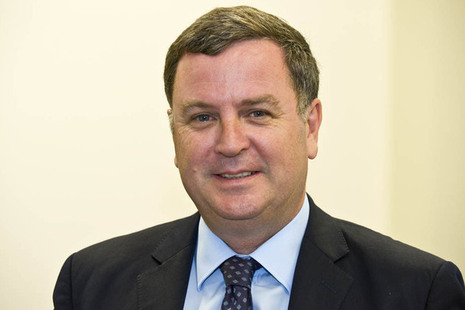
Mel Stride MP pic credit: gov.uk

Mel Stride, Conservative chair of the committee, decided to write to Ian Ackerley, Chief Executive of National Savings and Investments, demanding an explanation.

Today the committee has published his reply with a tough comment from Mr Stride about what happened.

” damage may have been done to NS&I’s reputation”

He said: “An exodus of savers from NS&I when it cut interest rates in November was foreseeable and so it is disappointing that the average time to answer a customer’s call was 19 minutes that month.

I would like to thank Mr Ackerley for his frank response, but the damage that may have been done to NS&I’s reputation over the last few months is worrying.

“NS&I has a big role to play in helping the Government fund the costs of the coronavirus recovery scheme and it will need to work hard to win back customers.”

But what is really interesting is Mr Ackerley’s explanation of how these changes in interest rates came about.

Ministers took decision not to cut interest rates

After Rishi Sunak became chancellor and pandemic took hold he decided to deliberately to attract savers to get the government out of a spending hole.

As National Savings says:

“In March 2020, in response to the Covid-19 pandemic, HM Treasury asked NS&I to provide proposals for how NS&I could quickly provide additional funding beyond the £6 billion target to support the Government’s increased borrowing requirement. …A proposal was made to Ministers to reverse the decision to implement interest rate reductions to NS&I’s variable rate products that were announced in February (before the Covid-19 pandemic had taken hold) and which were due to come into effect on 1 May 2020. “

“Ministers made the decision to proceed with this plan and on 1 May, only interest rate reductions on NS&I’s fixed term products came into effect. Variable rate product interest rates were left unchanged.”

By September it had been too successful. ” There was unexpectedly more cash in the savings market and much of this money came to NS&I – £38.3 billion in net inflows from March to September 2020 – this was a greater level of Net Financing than in the previous three years combined.”

Plan to drive savers away

So a decision was then made deliberately to drive savers away by introducing rock bottom rates because he no longer needed it.

National Savings said: “Based on previous patterns, we expected that a proportion of customers would withdraw their money. However, as many were newer customers who had come to NS&I when we were offering ‘best buy’ rates, the scale of the outflows and the timing of customers cashing in their holdings happened earlier than expected.
“A combination of factors has impacted our customer service operations which has been stressful for some customers and staff. We did not intend for this to happen but we do not believe that the situation could have been predicted.”

What happened was a rise in complaints, people waiting nearly 20 minutes on the phone to contact them and general disatisfaction with the service.

What is not said though is that the government will not want people to continue saving when the pandemic is over. They will need to spend to revive the economy. What better way to empty savings accounts than to make them so unattractive that people lose money keeping cash there.

So the real story is that this government is deliberately manipulating punters to suit its own interests -putting money away when they can’t spend it during the pandemic – and forcing them to spend it when the pandemic is over. They must take the average saver to be a fool.

Revealed: The poor health in old age scandal

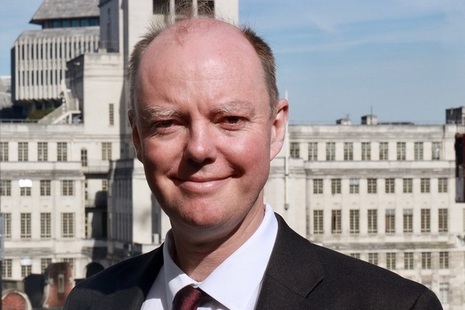
Professor Chris Whitty, chief medical officer, gave evidence on the damning statistics effecting the healthy living prospects for the elderly Pic credit: gov.uk

Today the House of Lords published an extremely worrying report into the prospect for millions of elderly people being able to enjoy a healthy old age.

I had not realised that Theresa May’s government had committed in 2017 to the Ageing Society Grand Challenge – a promise by 2035 that everybody in the country should be able to enjoy an extra five years good health in retirement. I have a feeling like the notice of the first raising of the pension age it has had little publicity.

Readers of my blog who have followed the BackTo60 campaign to get 3.8 million women born in the 1950s full restitution for their lost pensions will greet this aim with a hollow laugh – given there is growing anecdotal evidence that many women in their early 60s are already falling ill while working before they can even claim their pension. I wrote a blog about the figures in 2018 – see here.

But what this report confirms is not only that life expectancy has flatlined since 2011 but prospects for a healthy retirement has got worse particularly for the poor. The report reveals that the chances for a man to get an extra five years healthy retirement will take not 14 years as promised by the challenge but an incredible 75 years. They will be long dead by 2096.

For a woman it is actually worse – chances of having an extra five years healthy retirement is receding and getting worse by the day.

Figures in the report confirm what the Office for National Statistics has disclosed that Britain is slipping down the league table of advanced countries for those living longer – with men, who on average die earlier than women, have a higher increase in longevity than women. See my blog on this here.

Growing equality gap between rich and poor areas

But what is deeply disturbing is the huge gap between those in wealthy and deprived areas.

The report says: “In England in the period 2016–18, the difference in life expectancy between the most and least deprived areas was 9.5 years for males and 7.5 years for females. The differences in healthy life expectancy are 18.9 years for males and 19.4 years for females.”

The report notes: “the health situation is somewhat similar to other countries that have experienced
political, social and economic disruption and widening social and economic inequalities.” The report also noted that “in some of the key social determinants, inequalities are widening in England”.

The largest killer of men is heart disease and for women it is Alzheimer’s Disease and dementia. Heart disease deaths are falling while dementia is on the rise which explains the changes in longevity.

In a 2016 analysis of 20 countries, females in the UK had the lowest rate of improvement in life expectancy, followed by those in the USA. For males, the UK had the second-lowest rate of improvement,
after the USA.

The report concludes:” Inequalities in healthy life expectancy are stark, with people in the least deprived groups living more than 18 years longer in good health than those in the most deprived groups.”

This also hit ethnic minorities very badly as evidence given by Professor Chris Whitty , the chief medical officer to peers. He told them: “People from ethnic minorities are more likely to live in poverty in older age; 29% of Asian or Asian British people and 33% of Black or Black British people over the age of 65 live in poverty, compared with 14% of White people.”

Will it get better or worse?

So what is to be done and will it get worse ? For a start it will get worse because of Covid19 as the report was mainly written before the pandemic took hold and it is known that Covid killed disproportionately larger numbers of the elderly saving the DWP over £600m a year in pension payouts. In a postscript to the report the peers from science and technology committee say both short term and long term effects are an unknown.

On the positive side new technologies and robotics and new drug trials to treat diseases promise to make life better for the elderly provided they can access them.

Peers warn that unless growing inequality is tackled by the government – these benefits could widen the gap between rich and poor as wealthier pensioners would be able to benefit while the poor would be left behind.

The report also exposes the lack of a government strategy at the top to tackle this.

Peers say: “The Government is not on track to achieve the Ageing Society Grand Challenge mission to ensure five years of extra healthy life by 2035 while reducing inequalities, and does not appear to be monitoring progress towards the mission. It is hard to see how the target could be met without significant changes to the way it is managed.”

For those who criticise the House of Lords as an irrelevant institution – this report shows the House working at its best – it is a very thorough, well researched report – drawing attention to an overlooked issue and warning the government that it needs urgently to act to take this seriously. Whether it will, given the complacency of some ministers, is another matter.

The full report can be accessed here.

How a leading expert on home working is stymied by the government’s “litany” of failures to deliver broadband

John Howkins. You can find him at johnhowkins.com

MPs condemn multiple failures on planned broadband provision

John Howkins is well known in the creative industry as an innovator, author and an international speaker. His books – particularly relevant in the present pandemic – highlight a new way to look at work based at home. His latest book ” Invisible Work” concentrates on how people in work can adapt to the new age of artificial intelligence rather than be made redundant by it.

His world centres on publishing, TV, film, digital media and streaming – all the new technologies brought to us by the huge growth of the new digital age.

Supreme Irony

It is therefore a supreme irony that his opportunity to engage in this age of isolation has been wrecked by a Conservative government breaking its manifesto promise to bring broadband to everyone. The failed manifesto pledge – only a year after it was made – is highlighted today in a new report from the all party House of Commons Public Accounts Committee.

For Mr Howkins’ problem is that he lives in rural Norfolk near Attleborough in the Parliamentary constituency of Mid Norfolk represented by Tory MP George Freeman – a tech enthusiast who has written pamphlets on how technology can save the NHS. But as yet has done nothing to help his constituents get the broadband they need.

Mr Howkins like millions of others living rural Britain has no proper broadband that can download videos in seconds or easily stream Netflix or the BBC I Player. And today MPs on the Commons Public Accounts Committee tell you why.

On November 20 last year Rishi Sunak, the Chancellor, unceremoniously dumped the promise to all voters to get fast broadband by 2025 – and substituted a promise for 85 per cent coverage – dumping most rural parts of the UK ( and many Tory voters) in the process. Cynics might suggest the Tories only made this pledge because Jeremy Corbyn, for Labour, had promised a universal free broadband service – saying it should be a basic utility in the 21st century like water or electricity.

Ministry admits target unachievable

The MPs report concludes that not only in ministers’ words ““clear that Government’s 2019 election pledge to deliver nationwide gigabit broadband connectivity by 2025 was unachievable”  but that even this lower target will be missed.

There is supposed to be £5 billion of our money put aside to bring this about but the report reveals that the Department for Culture ,Media and Sport, has yet to allocate 75 percent of this money one year into government for the contracts to do this.

It also warns : PAC is “increasingly concerned that those in rural areas may have to pay more, and may reach gigabit broadband speeds late” and is not convinced that “if and when rural users finally do get gigabit broadband, they will enjoy the same choice of service provider and the same protections as their urban counterparts”.

The scoreboard of failures by the ministry is appalling Mps found:

  • failure to make meaningful progress to tackle the barriers faced by operators in maximising gigabit connectivity by 2025,
  • failure to demonstrate it has learnt lessons from the superfast programme for the detailed design of the gigabit programme,
  • failure to demonstrate how its centralised procurement model will retain the people, skills and knowledge in local authorities that were critical to success in the superfast programme,
  • failure to give any reassurance that local authorities will get additional funding to retain their expert resources at a time when local government finances are under severe pressure from the pandemic,
  • failure to make any meaningful progress in delivering the policy and legislative changes deemed essential by industry to achieve rapid roll-out,
  • failure “yet again” to prioritise consumers in rural areas

Well done culture secretary Oliver Dowden ( NOT )!

Meg Hillier: chair of the Public Accounts Committee

Meg Hillier MP, Labour Chair of the Public Accounts Committee, said: “With the grim announcement that the country and economy will be locked down for months, the Government’s promises on digital connectivity are more important than ever. But due to a litany of planning and implementation failures at DCMS, those promises are slipping farther and farther out of reach – even worse news for the “rural excluded” who face years trying to recover with substandard internet connectivity.  

“For the foreseeable future, ever more of our lives is moving online, whether we like it or not. Government cannot allow digital inequality to continue to compound and exacerbate the economic inequality that has been so harshly exposed in the Covid19 pandemic. It needs to be clear about timelines in each area so that businesses and individuals can plan for their digital future.”

As for Mr Howkins, his submission to MPs said: ” My current supplier is BT. I have an upload speed of a maximum of 0.3MB and a download speed of 3.0 MB.  BT engineers have visited three times in the past few months and have been unable to improve on these speeds. Several neighbours are in the same position.

“It is therefore difficult to carry on business at present. Our ability to receive even a moderately sized data file is limited. It is impossible to upload a video file of any significant size. Interactive usage (banking) often fails. This week, I led presentations in China and Chile. My own internet link was worse than anyone else’s”

… “The suppliers celebrate their gigabit services but do nothing for those, like me, who would be delighted to have a much lower rate, say 10MB down and 2-3 up.

Regulatory failure

” It is a regulatory failure in the UK that broadband providers are evaluated according to national averages rather than the meeting of local need. So they benefit much more by providing 1GB to a one location, even if it is seldom used, than by providing an increase of 10MB to 10 locations. And providing 1GB to one location is treated as the equivalent to providing 10MB to 100 locations.”

” The pandemic has shown up the extent of the government’s failure.  Although offices will re-open to some extent, the numbers working from home will increase.

I find it extraordinary in 2020 that the UK does not have universal service for broadband as it has for other utilities. Yes, broadband is a utility. “

He told me that he had been reduced to finding a friend who had better connections to do a lot of his work. His only alternative would be to use a local library which had restricted opening times.

He must be one among millions who have this problem and the UK is far behind other European countries.

” I’d be happy if we could reach the standards available in Romania”, he said.

My blog in 2020: The year total visitors passed over 2 million

Welcoming the New Year in London

Happy New Year. Since this blog was launched at the very end of 2009 it has had over 2.8 million hits and over 2 million visitors – a remarkable achievement – even if I say it myself – for a single handed effort.

The number of blogs on my site also topped over 1000 – 1072 – to be exact. Last year my blog got 511,721 hits – that is fewer than the 1,041,000 the previous year – but still the second highest figure since it started.

BackTo60 campaign

I am extremely grateful that so many people are interested enough to read my news and views on current issues and also to the women following the BackTo60 campaign who have had a dispiriting year after losing their Court of Appeal case for compensation for raising their state pension age from 60 to 66. They are also having to wait for a very long time to find out whether the Supreme Court will hear their cases – far too long in my opinion. If it goes to the Supreme Court I shall be reporting it.

Like last year the majority of most read stories were about that campaign. The most read story of all last year was the revelation – from a reader using a Freedom of Information request – that 4.6 million men over 60 had their national insurance contributions paid by the state if they did not register for the dole to keep the unemployment figures down. This had over 64,000 hits and when the Department for Work and Pensions revised this figure to a staggering 9.8 million that had another 34,600 hits – bringing interest in both stories to nearly 100,000.

Coverage of BackTo60’s Court of Appeal hearing was the second highest at 58,860 – which is a pretty high figure for a court case.

Also an old story on how the government has saved paying out £271 billion to the National Insurance Fund which could have paid for higher pensions and also stopped the need to raise the pension age for women had another 22,000 hits. Originally written in the summer of 2018 this enduring blog has now had 311,000 hits altogether.

Boris Johnson announcing the Brexit deal in Parliament. Pic credit: @UK Parliament_Jessica Taylor

Outside other highly read blogs on the pensions campaign the most read blog was one on how Boris Johnson and other Cabinet Ministers were moving towards an elective dictatorship by devolving power to themselves rather than Parliament under new Brexit laws. That had 35,554 hits.

Byline Times

This year there has been a subtle change in coverage on my blog of stories I write for Byline Times. Last year I tended to provide a short summary of the story on my blog. This year most of my Byline Times stories appear by themselves and are not automatically repeated on my blog. They get even wider coverage on Byline Times so those who want to see them and follow me on Twitter do get tweets telling them about the story. Or you could take out a subscription to Byline Times and get a monthly print newspaper.

Ending discrimination against women

There will be new developments next year. I will be blogging about the People’s Tribunal run by John Cooper, QC, the human rights lawyer, to end all forms of discrimination against women. This is a movement which wants to get the UK Parliament to put into domestic law the UN Convention on the Elimination of All forms of Discrimination Against Women. The UK ratified it under Margaret Thatcher but nothing has been done since.

It comes as Elizabeth Truss, the equalities minister, appears to want to reverse progress what she calls “identity politics” so I foresee fresh battles over this issue. And I am curious to see how the Equality and Human Rights Commission is going to handle this.

Dr Usha Prasad

I shall also be taking up some individual cases of injustice. The recent blog on the plight of Epsom and St Helier University Health Trust’s only woman cardiologist just one example – where a health trust is pursuing an individual and where they are whistleblowing issues.

I shall continue to keep an eye on political issues -particularly as incompetence, the chumocracy and corruption are on the rise in the UK and plan to write about it on Byline Times and this blog.

I have started again reporting on child sexual abuse again and plan more articles.

2021 promises to be a challenging year – the first post Brexit year- and I feel more than ready to meet it.

New Year fireworks in Dubai where my daughter and grandchildren are living. She is a science teacher there.

Brexit: How Parliament abdicated its role to scrutinise the biggest change in UK life for 50 years

Parliament: Abdicating scrutiny

The most potent slogan of the Vote Leave campaign was the promise that Brexit meant that the country could ” take back control” and Parliament would be sovereign and we will be governed by our own laws.

Today Parliament abdicated its role to take back control of scrutinising the Brexit deal by kowtowing to a manipulative government which left little time to examine the Treaty before it had to come into effect.

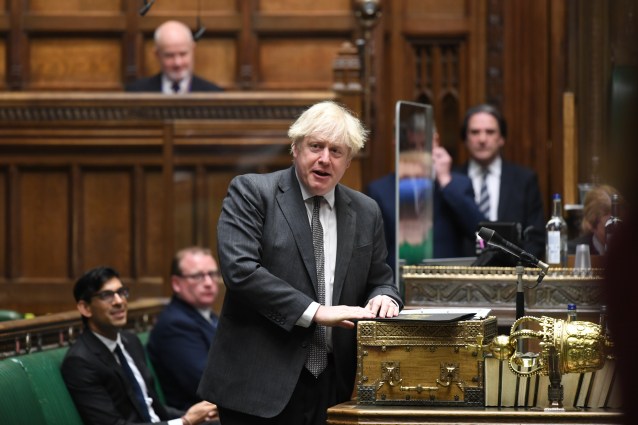
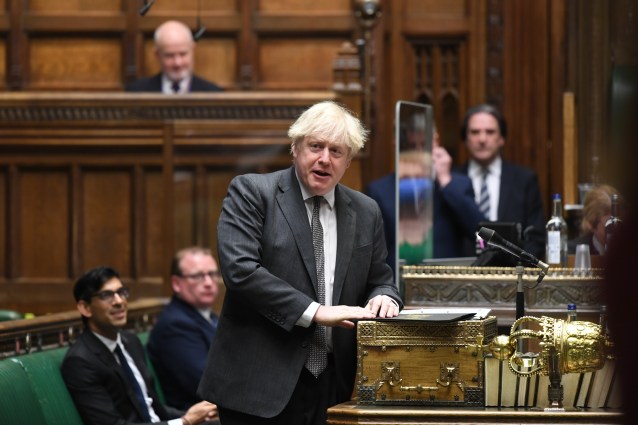
Boris Johnson opening the debate with Rishi Sunak looking on Pic Credit: @UK Parliament _jessica Taylor

A huge bill which will change Britain’s relationship with our nearest neighbours, end the freedom of British people to work and study in Europe, and introduce a raft of bureaucratic red tape to do business with Europe while avoiding tariffs and quotas, will be debated in just half a day. The bill will have no clause by clause examination because there will be no time in the Commons to do this. It will be just rubber stamped. And MPs will have just four minutes – later reduced to three – each to comment.

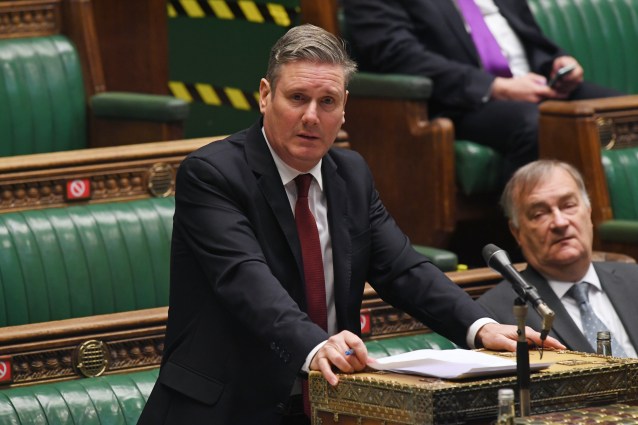
Keir Starmer backing the “thin deal rather than no deal” with Opposition chief whip Nick Brown

Similarly the House of Lords will not have time to scrutinise the bill either and though 145 peers have said they want to comment the new bill – they have precisely three minutes each to do so. The House of Lords Constitution Committee will scrutinise the detail of the bill after it has become law – even though the government does not want this to happen. The government in its explanatory memorandum says the bill is not suitable for pre legislation scrutiny. But Baroness Taylor, who chairs the Lords Constitution Committee, points out that the means the government uses to implement the treaty are subject to scrutiny – and she indicated that many of the Commission powers had been transferred to ministers not Parliament.

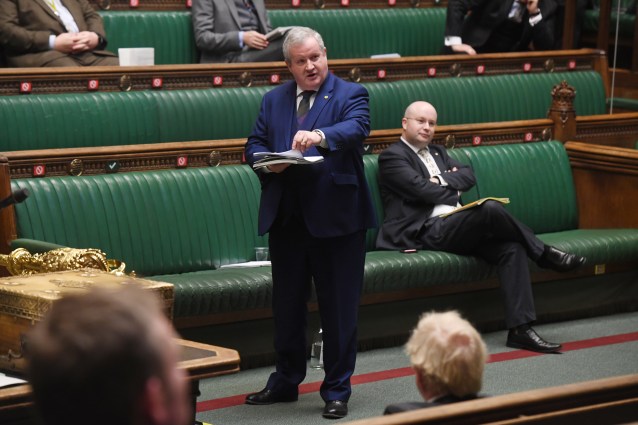
Ian Blackford, Scottish National Party leader, who opposed the deal and whose party voted against of it.

By midnight tonight the Royal Assent will be given. As the Hansard Society says: “Parliament’s role around the end of the Brexit transition and conclusion of the EU future relationship treaty is a constitutional failure to properly scrutinise the executive and the law.”

It rightly says the proceedings amount to a farce. Compare it with the European Parliament – which Brexiteers say amount to bureaucratic dictators. They declined to rush through a debate approving the deal until they could properly consider it. Instead they rely on a temporary agreement to allow trade to continue and will set aside much more time to debate it than the UK Parliament. They have two months to do this.

The reason why this is important is if there are defects in the legislation that will show up later and end up discrediting the issue even for Brexiteers. Much better to get the legislation right – and Parliamentary scrutiny is the best way to do this. Particularly as the deal runs to 1200 pages and you have to check the bill with the Treaty and refer to other legislation. We have now thrown away that chance.

In a way this is a microcosm of the way Boris Johnson and his Cabinet colleagues want to govern this country. They do not want scrutiny and want “to take back control” for themselves and not for Parliament or the people. They want to use Parliament and the people for their own agenda. Today was a bad day for Parliament and democracy.

Boris Johnson’s and his Cabinet cronies real Christmas message to you all

I am looking forward to a wonderful Christmas. Click on the link below.

This is a revised link using You Tube after someone who did not like this got Facebook to take down the original. I wonder why and who did it.

There is not much more I can say about this except it is beyond satire. Some of us might just think it is really what goes on in their minds.