Winter Fuel Allowance: Rachel Reeves relents on a policy Labour should never have done in the first place

05/07/2024. London, United Kingdom. Rachel Reeves, Chancellor of the Exchequer poses for a photograph following her appointment to Cabinet by Prime Minister Sir Keir Starmer in 10 Downing Street. Picture by Lauren Hurley / No 10 Downing Street

Last year the biggest hit on this blog was when I condemned the decision by Sir Keir Starmer and Rachel Reeves to abolish the winter fuel allowance for all pensioners except the poorest on pension credit. The blog went viral and currently stands at 188,400 with 129 comments.

The decision – one of the first by an incoming Labour government – was inept, stupid, ill thought out, and rushed – and showed that the Labour government was completely out of touch with its base and its reputation for helping the poorest.

There was a decent case for restricting the payment to the wealthiest members of society who did not need help with their fuel bills. But by setting the figure so low as £11,300 to get it and trying to get people to claim pension credit – which has been a policy failure for years – this was a serious own goal.

The decision to use regulations to do this was attacked by the House of Lords statutory instruments committee – when they examined the detail – and ministers by passed their own benefits advisory committee, the Social Security Advisory Committee, on the flimsiest excuse that they didn’t have time to do this to make sure it could be implemented as an emergency. The committee itself when it finally got to discuss the regulations pointed out it was perfectly capable to look at it at an emergency session. It did this when the last government introduced massive social security changes to cope with lockdown during the pandemic.

The optics also looked bad for any politician. Claiming they had found a huge black hole in government finances it looked as though the first people who would plug the gap were pensioners, many of them surviving on incomes less than £20,000 a year. Pensioners and the disabled also need warm homes in winter probably more than any other people and the government’s claim it was implementing the triple lock to raise pensions was no use in the winter. It would not be paid until the spring when temperatures begin to rise and some would be scrimping and saving to try and keep warm before receiving an extra penny.

The result came back to bite Labour in the spring council elections and Parliamentary by-election in Runcorn, when voters dumped Labour in droves turning to Reform, the Greens and the Liberal Democrats instead.

Labour MPs and activists found this was one of the most cited reasons why people turned against them during the election. As a result Reform could capitalise by gaining control of a swarth of county councils and some mayoralties. The Conservatives were still not trusted by people after their 14 years in government, but to be fair to them they never proposed to cut the winter fuel allowance in the first place.

Luckily for Labour it is four years to the next general election so there is a chance it might be forgotten how stupid they were after four winters. And the mechanism they have proposed to pay the allowance back to nine million pensioners is fair with those earning £35,000 or more having to pay back the money in their annual tax return. The big question is why they didn’t do this in the first place.

The overall policy will still save £450m versus the universal system. But £1.25bn of the £1.7bn projected saving when this policy was announced is gone. Rachel Reeves, the chancellor, was claiming she couldn’t have done this when the government came into power because of the state of the finances, but can now because the situation has improved. She will have to explain this big change in her statement to MPs this week.

In my view the government overall has lost a lot of support by targeting pensioners not only in this way but also in the way it has treated 50swomen who had to wait six years for their pension by completely rejecting any compensation for them and ruling out mediation. I am sceptical that the WASPI campaign will get anywhere by going to court to try and revive the now rejected Parliamentary Ombudsman’s report on partial maladministration.

The issue was always discrimination as well as maladministration and the Ombudsman’s report was a very tepid solution for those who lost tens of thousands of pounds.

And ministers are being dilatory in paying out money to HIV contaminated blood victims and those swindled by the Post Office computer scam. All these affect many in the same age group.

The government has got a lot to do to regain popularity to get a second term in office, but this U turn on the winter fuel allowance is only a start.

One-Time
Monthly
Yearly

Make a one-time donation

Make a monthly donation

Make a yearly donation

Choose an amount

£5.00
£10.00
£20.00
£5.00
£15.00
£100.00
£5.00
£15.00
£100.00

Or enter a custom amount

£

Your contribution is appreciated.

Your contribution is appreciated.

Your contribution is appreciated.

DonateDonate monthlyDonate yearly

Please donate to Westminster Confidential

£10.00
Social Security watchdog warns ministers of flaws in the scheme to scrap pensioner winter fuel allowances

Department for Work and Pensions

In a polite but tough message to Liz Kendall, the work and pensions secretary, the Government’s official advisory body on social security, has exposed flaws in the government’s implementation of its rushed policy to abolish winter fuel allowances for 9.3 million pensioners and encourage the poorest to claim pension credit.

It also undermines the government’s case that it couldn’t consult them in advance because of the short timetable Sir Keir Starmer and chancellor Rachel Reeves imposed on introducing the change.

Dr Stephen Brien, chair of the Social Security Advisory Committee, says in a letter to Liz Kendall, ” I trust you will agree, there are considerable benefits in draft legislation being presented to us for statutory scrutiny before being laid, and that ‘urgency’ should be used only in exceptional circumstances. This Committee has a strong track record of supporting successive Secretaries of State respond at pace to emerging crises and risks. We have often arranged additional meetings to enable scrutiny to take place at short notice, in an attempt to avoid the need for invoking the urgency procedure. ”

In other words; ” we could have accommodated you, if only you had asked.”

The letter goes on to point out problems implementing the plans to increase the uptake in Pension Credit and outline flaws in the changes.

It reveals that although the ministry is committed to recruiting an extra 450 staff to cope with the demand for new pension credit claims not one of them can start handling a single claim for two months because they need training.

As the committee points out:” we remain concerned about the capacity of the Department to process Pension Credit claims in a timely way, ensuring that not only are people able to establish entitlement to Winter Fuel Payments, but also that they can be paid this Winter – at the point at which they are needed most.”

In other words ” given your timetable some of the poorest could wait to winter 2025 to get a penny”.

And it questions the headline figure of £1.3 million savings pointing out it could vary because of the extra costs of paying out more pension credit. The government only provides one example – assuming a 5 per cent extra take up from the 880,000 who could get it.

The letter says: This figure is ” representing a little over 100,000 additional households. We have not been presented with any rationale for such a central case estimate (corresponding to a closing by just 14% of eligible non-recipients).”

The committee would expect the government to provide a range of estimates – and points out that if they don’t provide one, the Office for Budgetary Responsibility will do it for them in the Budget.

It adds; ” this is no substitute for the Department’s timely analysis in support of its own proposals disconnected from the Budget process.”

5000 pensioners could be worse off by switching to pension credit

When it comes to flaws the most glaring one affects a small minority of 5,000 of the 10.8 million pensioners who are affected who claim child tax credits. If they claim pension credit to get the fuel allowance , it reveals, THEY COULD BE WORSE OFF because they lose the child tax credit. And the Department has not even told them.

The letter says: ” In the absence of any tailored communications for this group during the current take-up campaign, the Committee is concerned about the potential for confusion about what this group should do. In particular, there is a potential risk that some people may take steps to move onto Pension Credit in the belief that this would be beneficial, but ultimately be financially disadvantaged.”

It calls for an urgent change to the regulations to allow any pensioner who inadvertently does this to revert back to the existing system.

Then there those on housing benefit – a means tested benefit which does not qualify by itself for pension credit.

The committee says: “The Committee understands that take-up of pensioner Housing Benefit is higher than for Pension Credit and that around 120,000 pensioners on HB only might qualify for Pension Credit if they claimed it.”

It urgently recommends that these people are passported straight onto pension credit for this year only while their claims for pension credit are checked.

Finally there are the disabled. “The Department estimates that around 71% (1.6 million) of people with a disability will lose entitlement to the allowance.” Again the committee calls for the government to target those people who claim means tested benefits because they are disabled to make them aware of pension credit.

It goes on to criticise the government for not having an impact assessment of its own proposals – Sir Keir Starmer thought it wasn’t necessary – and warn the government that the Public Sector Equality Duty could be breached.

“Having identified any disparities in impact across protected groups, we would like to have a greater understanding of how this evidence has influenced, and been reflected in, the regulations. For example, what anticipatory actions have been taken; and what types of disparity are considered a necessary consequence of the policy intent?”

In fact according to the Office for National statistics the cuts are aimed almost exclusively at white British people – only five per cent of those affected are from ethnic minorities.

This again shows how rushed regulations can be full of holes and unintended consequences and that neither Sir Keir Starmer nor Rachel Reeves took enough care over drafting them. Perhaps they genuinely don’t care, as pensioners can’t play a role in their growth plans and the sooner they die off the better. I wonder whether either of them have any grandparents.

One-Time
Monthly
Yearly

Make a one-time donation

Make a monthly donation

Make a yearly donation

Choose an amount

£5.00
£10.00
£20.00
£5.00
£15.00
£100.00
£5.00
£15.00
£100.00

Or enter a custom amount

£

Your contribution is appreciated.

Your contribution is appreciated.

Your contribution is appreciated.

DonateDonate monthlyDonate yearly

Please donate to Westminster Confidential

£10.00

Millions of pensioners on or just above the poverty line will lose winter fuel allowance – Age UK research

The government’s refusal to publish a proper impact study of exactly who will be the worst off from the abolition of the winter fuel allowance for 10.8 million pensioners was one of the worst acts of this new Labour government.

Not only was it bad government not to provide the facts on such a big change for so many people but it looks like a deliberate act to conceal the damage ministers knew it would have on vulnerable people. But people are not fools and already where they have a chance to vote in local elections they are showing disdain for what Sir Keir Starmer and Rachel Reeves have done. In a very short time voters have gone from voting for anyone who is not Conservative in the general election to anyone who is not Labour in local elections.

So it is good news today that a major charity, Age UK, has attempted to fill the gap and provide what the government refuses to do.

And it is not surprising that once again women, especially those living alone, the disabled, and the very elderly are most at risk. Elderly women are becoming the favourite target of both Tory and Labour administrations- first they raised the pension age without properly informing women – so 3.6 million 50s born women expecting a pension at 60 had to wait another six years to get one. Then they fiddled figures so people on the old pension would not properly inherit their husband’s pensions. And to add insult to injury the Department for Work and Pensions made huge errors in pension payments to women and is taking ages to pay out what they have lost.

The figures from Age UK research show pensioners living below or just above the poverty line, some 82%, or four in every five, will lose the Winter Fuel Allowance as a result of the Government’s decision, including 80% in this group who are aged over 80 and 78% who are disabled.

It is not surprising that there is such a divide in the UK. A report by IPPR North earlier this year found that life expectancy is falling in poorer areas compared to the wealthier part of the country. A man in the poorest part of Blackpool can expect on average to be dead a year after gaining their pension at 66 while a woman living in Belgravia in Kensington can expect to live to 94.

  The Age UK Report say10.7m UK pensioners will lose their WFP of whom almost one in four (23%) live in poverty or just above the poverty line. Age UK take poverty to mean living 50 per cent below the median income and just above poverty to be 60 per cent of the same figure. Full details of their research methodology can be seen here.

Women as usual to take the highest proportion of the cut

Some 1.4 million are women; 1.1 million are disabled ,800,000 are over 80 and one million live alone.- all factors that could affect their health and well being if they cannot keep warm this winter.

Caroline Abrahams CBE, Charity Director at Age UK said: 

“I think most members of the public will be horrified that this is the outcome of the Government’s decision, because it means that millions of pensioners are being exposed to the risk of failing to be able to stay adequately warm this winter, even though they are living on a low income. There will be widespread agreement, I’m sure, that Ministers must act in the Budget to protect them – and the best way for them to do so by far is to retain WFP as a universal entitlement this winter, before giving their policy options careful consideration as part of the Spending Review next Spring.

“However, if the Government is dead set on pressing ahead, the very least they should do is to greatly expand the numbers of pensioners who will receive a WFP beyond the small group they have so far said will retain it. They could achieve this in part by automatically giving the Payment to pensioners on other benefits, such as Housing Benefit, Council Tax Support, Personal Independence Allowance, Attendance Allowance and Carers Allowance. Even this would not be enough though because many pensioners on low incomes or in vulnerable circumstances would still miss out on a WFP when they can ill afford to do so. This means the Government would need to go further; for example, looking to give extra help to the older people who for various reasons receive only a small proportion of the full State Pension, for whom the WFP is an absolute lifeline.”

Age UK continues to urge the public to show solidarity and sign its petition to Save the Winter Fuel Payment for struggling pensioners.  The petition has now received more than 553,000 signatures showing the strength of public feeling behind the rushed decision to means test the Winter Fuel Payment.

Certainly there is enormous interest in this issue. My own blog has had over 190,000 hits for raising it and some of the comments from distressed people hit by this have been heart breaking. Time for the government to reverse part of this ban. We are not all as rich as Sir Keir Starmer and Rachel Reeves not to need it.

One-Time
Monthly
Yearly

Make a one-time donation

Make a monthly donation

Make a yearly donation

Choose an amount

£5.00
£10.00
£20.00
£5.00
£15.00
£100.00
£5.00
£15.00
£100.00

Or enter a custom amount

£

Your contribution is appreciated.

Your contribution is appreciated.

Your contribution is appreciated.

DonateDonate monthlyDonate yearly

Please donate to Westminster Confidential

£10.00

My interview on the 50swomen pensions scandal and the scrapping of the pensioner’s winter fuel allowance

If pensioners die from winter cold should their gravestones be engraved with the words ” Frozen to Death by Rachel Reeves and Sir Keir Starmer ” for eternity?

This is the recording of my interview last night with Ian Rothwell of Salford City Radio on the failure of the government to agree yet to any compensation for the women born in the 1950s who had to wait six more years to get their pension and the government’s sudden cruel decision to abolish the winter fuel allowance with little notice for 10.8 million people.

A reminder the original story on my blog has now got over 190.000 hits reflecting the strong feeling people have about Labour’s decision to do this leaving many of the poorest pensioners, many over 80, between £200 and £300 worse off this winter by setting such a low income level to qualify for the money.

One-Time
Monthly
Yearly

Make a one-time donation

Make a monthly donation

Make a yearly donation

Choose an amount

£5.00
£10.00
£20.00
£5.00
£15.00
£100.00
£5.00
£15.00
£100.00

Or enter a custom amount

£

Your contribution is appreciated.

Your contribution is appreciated.

Your contribution is appreciated.

DonateDonate monthlyDonate yearly

Please donate to Westminster Confidential

£10.00

House of Lords slams scrapping of winter fuel allowance for 10.8 million pensioners in advance of Commons debate this week

Lord Hunt of Wirral, chair of the Lords secondary legislation committee and a former energy minister under Lady Thatcher’s government Pic credit: Official Portrait House of Lords

UPDATE: Government got policy through the House of Commons by 348-228 on September 10. Tories, Lib Dems, Greens, Scot Nats, DUP, Alliance and Reform voted against. Some 53 Labour MPs abstained, one Labour MP voted against.

SECOND UPDATE: A Conservative motion regretting the means testing of the winter fuel allowance and the lack of transparency by Labour was passed by 164 votes to 132 in the House of Lords on Wednesday evening. An attempt by a former Tory pensions minister,Baroness Altmann to annul the cut was heavily defeated.

Infected blood victims may also face further delay for compensation say peers

Peers have slammed the government’s planned means testing of this year’s £200 and a £300 winter fuel allowance for the over 80s which will leave 10.8 million out of 12.3 million pensioners with no money before Christmas.

The Lords secondary legislation committee – which scrutinises laws introduced by government by issuing new regulations which have to be approved by Parliament -is severely critical of the changes, the lack of information, the by passing of proper scrutiny by a government appointed advisory committee and lack of evidence of any research by the Department for Work and Pensions of the effect of the changes.

The committee represents a wide range of peers in the House from Tories, Labour, Liberal Democrat and crossbench peers Including former Labour minister, Tom Watson.

Peers see no need for the urgency to get the change into law by September 16. “We are unconvinced by the reasons given for the urgency attached to laying these Regulations and are particularly concerned that this both precludes appropriate scrutiny and creates issues with the practicalities of bringing in the change at short notice,” the report says.

baroness Altmann

The criticism comes as Baroness Ros Altmann, a former Tory pensions minister, has said she will move a fatal motion in the Lords next week , a drastic power rarely used, to block the government implementing it.

The report points out that winter fuel allowances will continue to be paid this year for people who quit the UK to live in an EU country before 2021. It is likely to be abolished after this year for people who moved to Switzerland, Norway, Liechtenstein and Iceland.

The government are trying to mitigate its effect on the poorest pensioners by encouraging the 880,000 who are entitled to pension credit, to claim. To do this they have to fill in a 243 question form and if they have over £10,000 savings -including money hidden in their homes – get a reduced form of pension credit. So far there has been a five per cent increase in uptake according to the DWP.

The Lords are scathing about this situation.”We are concerned that the Regulations may cause potential inequalities between low income pensioners claiming benefits and low income pensioners not claiming benefits, and it is not clear whether DWP has assessed this risk,” says the report.

The campaign to attract more pension credit claimants is causing admin problems for the DWP with the result that other people due to get pension credit are facing a nine week delay in getting the money, the report reveals. So the government are penalising the poorest as a result of the campaign.

The report also reveals that those on Universal Credit or who live abroad may need to make a claim
for the Winter Fuel Payment. The deadline for making a claim for 2024–25 is 31 March 2025, and claims can be made by post from 16 September 2024 or by phone from 10 October 2024.”

The report also highlights that all pensioners will be hit by the rise in energy prices and many more will start paying tax because of the freezing of personal tax allowances which will go on until 2028.

Keir Starmer and Rachel Reeves are both breaking traditional consultation and witholding information of the effect of the policy change from MPs and peers.

The report says: “All benefits regulations are required by law to be considered by the independent Social Security Advisory Committee (SSAC). This is generally done in advance of the legislation being laid. In this case, the Minister has opted for the urgency provision that allows SSAC consideration to be
retrospective. Since this might be perceived as bypassing SSAC scrutiny, we asked the DWP what, if any, effect an adverse report from that Committee would have after the Regulations have already come into effect. DWP responded that, in line with their legal duty, ministers would lay the report before Parliament, and should the report contain recommendations, lay a statement before Parliament alongside the report. It remains unclear what the practical impact of any statement might be on Regulations which
will have already come into effect.

Compensation for Infected Blood victims

Peers in the same report have slammed the government regulations permitting compensation payment to infected blood victims, promised with great fanfare by ministers.

The committee’s report said: ” We found the Explanatory Memorandum (EM) to the Regulations overly
complex and technical, while lacking basic information about the policy such as how those infected can apply and from when, how long claims will take to be processed, when successful applicants can expect payments to be made, and the basis on which each claim will be assessed.”

The peers castigate the civil servants for not producing a report in simple, plain English and cast doubt on whether promises by the new government to start payment by Christmas will be fulfilled.

They also accuse the Cabinet Office of witholding information about the process.

“We are concerned that the Cabinet Office is withholding information on the impact and cost of
the Regulations until after the time for Parliamentary scrutiny has passed, which is unacceptable and circumvents proper scrutiny of the Regulations. We have not been given a reason why the costs could
not be published ahead of the budget. The House may wish to pursue the issue of costs further.”

The lesson from both the issues raised in this report is that this new government is not in control of Whitehall and allowing civil servants to evade proper scrutiny on the measures they are introducing. Either ministers are being inept in not following proper procedures or this is a deliberate decision not to provide MPs and peers with information allowing them to scrutinise the new government’s decisions.

Sir Keir Starmer says he is expecting to be the most unpopular Prime Minister of modern times. He is certainly knows how to go about it.

One-Time
Monthly
Yearly

Make a one-time donation

Make a monthly donation

Make a yearly donation

Choose an amount

£5.00
£10.00
£20.00
£5.00
£15.00
£100.00
£5.00
£15.00
£100.00

Or enter a custom amount

£

Your contribution is appreciated.

Your contribution is appreciated.

Your contribution is appreciated.

DonateDonate monthlyDonate yearly

Please donate to Westminster Confidential

£10.00

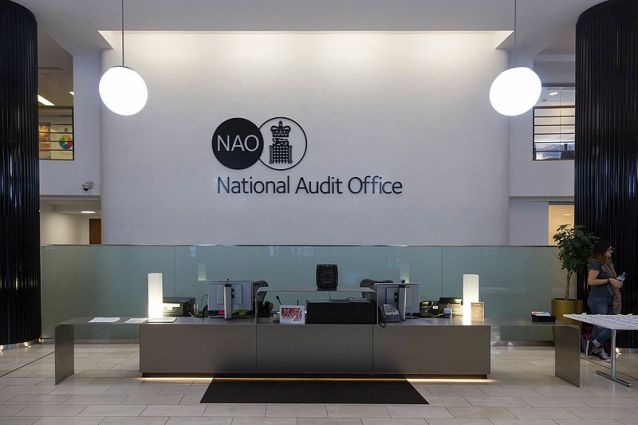
National Audit Office investigation: The hidden scandal of rip off landlords cheating the vulnerable and the state

National Audit Office foyer Pic Credit: David Pearson

An investigation by Parliament’s financial watchdog, the National Audit Office, this week has cast light on a hidden scandal of how private and social landlords are making huge profits from providing costly sub standard housing to the elderly, disabled, homeless, recovering drug addicts and domestic abuse survivors.

Officially called Supported Housing this covers providers of homes from short term hostels to specialised homes for the disabled who need a high level of care and sheltered housing for the elderly.

Extraordinarily the provision is not regulated and often not directly supervised by local authorities and the government does not know how many supported homes there are in Britain- the latest figure of 651,000 is eight years out of date. Spending on provision was £3.5 billion in 2016.

The NAO decided to investigate provision in 10 councils and uncovered some startling facts. The councils are

  • Birmingham City Council
  • Lambeth Council
  • Bristol City Council
  • Blackpool Council
  • Hull City Council
  • West Devon Borough Council
  • Bradford Council
  • Nottingham City Council
  • Sunderland City Council
  • Charnwood Borough Council (in Leicestershire)

In Hull for example some conditions were so bad that 323 out of 345 homes inspected needed immediate attention to protect their residents on health and safety grounds. And 62 per cent of homes in the city failed to meet the decent homes standard.

They also discovered the landlords were using the housing benefit system by putting in large claims for rent – which mostly went unchallenged by councils because the landlords would take them to court if they queried the sum.

Levelling Up department does know how many supported homes exist in the UK

The Department for Work and Pensions which often pursues individuals over benefit fraud actually has no record of how many claims there are for supported housing. But when Birmingham Council launched a team to investigate they recovered £3.5 million from fraudulent claims in just one city.

The report says : “Authorities like Birmingham, have seen increasing numbers of landlords who circumvent the regulations enabling them to profit by providing costly sub-standard housing with little or no support, supervision or care.”

“West Devon reported to MPs on the Commons Committee for Levelling up, Housing & Communities ( who also investigated this) that a number of new schemes have entered the market over recent years, claiming to provide exempt accommodation. These schemes involve an investment fund owning the property and a small housing association, registered with the Regulator of Social Housing, acting as the landlord. The local authority considers that these types of schemes are mainly designed to maximise the amount of Housing Benefit that can be claimed.”

Recovering drug addicted were housed with drug dealers

The report added: ” the Committee reported hearing “of people with a history of substance misuse being housed with drug dealers, and of survivors of domestic abuse being housed with perpetrators of such abuse.”

.So what is being done about this? The NAO report that the government has finally commissioned research to find out what exactly is going on..

The report says: “The research intends to focus on the size and composition of the sector, costs, current and
future supply and demand, the interaction between commissioners and housing providers, and how to improve monitoring.”

It is also aware that the supervision of the sector is split between three ministries – levelling up, work and pensions and health and social care so it has set up a supervisory board. And it has pump primed some £5.4 million to five local authorities, Birmingham, Blackburn with Darwen, Bristol, Hull and Blackpool to test monitoring of supported housing.

Blackburn and Darwen told the NAO that without this money they would never have inspected the homes in their area because they hadn’t the resources. And it has asked 26 authorities to bid for extra cash over the next three years.

Bob Blackman MP

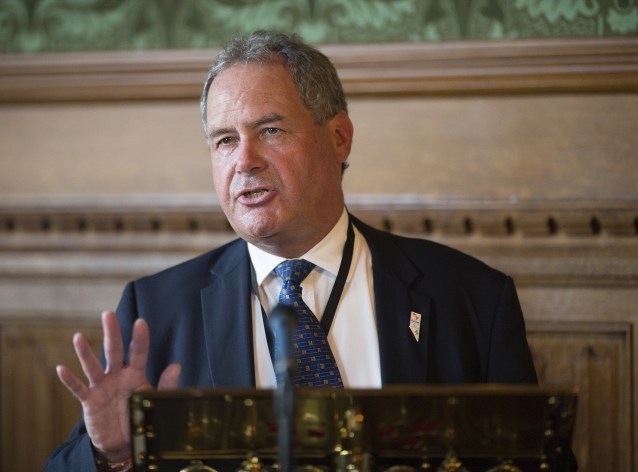
The biggest change may come from a private members bill by Bob Blackman, the Tory MP for Harrow East, now being scrutinised in the Lords, which lays out a proper framework for the sector. This still has shortcomings as it does not deal with housing benefit fraud which must be quite high in this sector.

All this is better late than never . But it says something that the government until now has not bothered about protecting vulnerable and elderly people from the landlord sharks who prey on them. It paints a pretty poor picture of modern administration in the UK which must lag behind other Western countries in looking after its vulnerable people.

As Meg Hillier MP, Chair of the Committee of Public Accounts says
“Vulnerable people deserve to live in housing that meets their needs.
But gaps in regulation mean a concerning number live in sub-standard accommodation, at great expense to the taxpayer.
Government must now capitalise on the work of its Supported Housing Programme Board and provide local authorities with the support they need, starting with meaningful data on the scale of the problem.

Please donate to Westminster Confidential to allow me to continue my investigations and reporting on serious social problems and backing whistleblowers

Please donate to Westminster Confidential

£10.00

One-Time
Monthly
Yearly

Make a one-time donation

Make a monthly donation

Make a yearly donation

Choose an amount

£3.00
£10.00
£20.00
£3.00
£9.00
£60.00
£3.00
£9.00
£60.00

Or enter a custom amount

£

Your contribution is appreciated.

Your contribution is appreciated.

Your contribution is appreciated.

DonateDonate monthlyDonate yearly

The growing scandal of the multi billion pound payments owed to pensioners and claimants by the DWP

Readers of my blog will be familiar with the scandalous story of the billions owed to 50s born women who both suffered maladministration and direct discrimination over the raising of the pension age from 60 to 66.

But what has emerged over the past year appears to show that this is part of a pattern where pensioners and disabled people are frankly swindled out of their money by the incompetence, maladministration and meanness of top management and politicians who run the Department for Work and Pensions.

Far from the 50swomen being an isolated case where mistakes were made those at the top of the DWP administration appear to have a playbook to deprive people of their rightful pensions and benefits, especially if they happen to be women. Nearly all the cases hit women much worse than men and as I have highlighted before – men have had privileges denied to women – such as the long running auto enrolment scheme that allowed men to have their national insurance contributions paid by the state from 60 to 65 while denying women any such privileges.

One of the worse cases which saved the state billions was a decision not to pay out extra pensions to people whose firms had contracted them out of Serps – an old style second pension- so they lost out of a Guaranteed Minimum Pension still payable in the public sector. A lot will have been women

The blog I wrote on this – despite being fiendishly complicated to explain- attracted over 15,000 hits – yet only two people got any compensation as the DWP made it difficult to claim.

Time to sign this petition

Christopher Thompson, a retired expert on this, has put up a petition to Parliament to protest about this and restore the indexation, but sadly only 311 people have signed. If everybody who read the blog signed it it would force the government to have to explain to Parliament why they did it. So please sign if you can.

Then there was the case of 237,000 pensioners – again a lot of them women – cheated out of £1.46 billion from their pensions – by miscalculations by the ministry raised by former pensions minister, Sir Steve Webb. The department is slowly trying reimburse them – some have decades of extra pension owed -but it will take at least to 2024 before it is completed.

Now Sir Steve has found another scandal which only affects women who should have received credits for looking after children from the late 70s. He has launched a campaign Mothers Missing Millions to try and get women’s pensions raised to make up the money – in one case a women was not credited with 14 years contributions.

And you have to add the scandal of the 118,000 disabled people put on a lower rather than benefit rate where the ministry has declined to compensate them – only giving money to the one person who complained to the Parliamentary Ombudsman. Even the Ombudsman has been silenced by the ministry who refuse to budge on this issue -leaving him appealling to MPs for help.

Time for an inquiry into the running of the DWP

What I am saying here is if you put all these cases together it is quite clear there is a pattern of underpayment and maladministration where the department do their best to avoid doing anything about it. It is without doubt discriminatory against women and suggests that ministers don’t want to pay them.

It is time women pressed all MPs to take up these issues. There is a strong case for an inquiry into the running of the DWP – there are too many cases for this to be just a coincidence.

Please donate to Westminster Confidential to allow me to continue my investigative work

One-Time
Monthly
Yearly

Make a one-time donation

Make a monthly donation

Make a yearly donation

Choose an amount

£5.00
£10.00
£20.00
£3.00
£9.00
£60.00
£3.00
£9.00
£60.00

Or enter a custom amount

£

Your contribution is appreciated.

Your contribution is appreciated.

Your contribution is appreciated.

DonateDonate monthlyDonate yearly

Please donate to Westminster Confidential

£10.00
The economic horror yet to come: Shocking report from Barnardo’s on family poverty

Jeremy Hunt – cutting benefits in the cost of living crisis

Yesterday Jeremy Hunt, the new chancellor, announced the biggest Budget U-turn in history, throwing out nearly all of Liz Truss’s and Kwame Kwarteng’s tax cuts and announcing a big curb on help for those with rising energy bills.

But this only the half of it. In less than two weeks time big cuts will be announced for public expenditure in a wealthy country and there will be more grim news for the poor – whether pensioners or low income families whatever pledges are given for compassionate Conservativism. But what is the position now before the axe falls on public spending amid a cost of living crisis?

This is the answer given in a well researched report by Barnardo’s the children’s charity, drawing on work done by the polling organisations, Yougov, and the non Tufton Street think tanks, the Institute for Public Policy Research and IPPR North. See Barnardo’s press release here.

Barnado’s logo

More than half the parents contacted have ALREADY cut back on food for the family and one in five parents have struggled to supply sufficient food. Over a quarter of parents say their children’s mental health has been affected and one in five taken out new credit cards – boosting the profits of the banks just as curbs on bankers’ bonuses have been lifted. Sadly a quarter have had to sell some of their possessions to make ends meet and a small number have had to return pets to animal rescue centres because they can’t afford to keep them.

Among the professions, three out of five people are supporting a child, young person or family experiencing poverty and three in five practitioners have either given food or pointed families to food banks. The Mirror today gives a dramatic account from other charities backing up this food crisis.

Barnardo’s calls for more benefit help not less

The charity is calling for an extension of free school; meals to all families; help for all vulnerable children to be able to participate fully in school life; strengthen targeted social security payments to help young people and families manage better; improve mental health services to help children and introduce more family hubs to support people and children.

The problem is what journalists are hearing is likely to be the opposite – real cuts to social security – a mental health service starved of resources and no compassion to extend free school meals.

Banardo’s doesn’t cover issues facing pensioners but given comments on my site the most likely changes for them are the end of the triple lock, the raising of the pension age again- and using the excuse that families are struggling in work to say pensioners can’t have a good deal.

What can’t be exaggerated is that more and more people are being driven into poverty whatever the government says ( they claim the opposite). So unless you are banker or a very highly paid executive getting a big national insurance reduction or an MP or minister life this winter is going to be very grim.

Please donate to my website to allow me to continue my forensic reporting.

One-Time
Monthly
Yearly

Make a one-time donation

Make a monthly donation

Make a yearly donation

Choose an amount

£5.00
£10.00
£20.00
£3.00
£9.00
£60.00
£3.00
£9.00
£60.00

Or enter a custom amount

£

Your contribution is appreciated.

Your contribution is appreciated.

Your contribution is appreciated.

DonateDonate monthlyDonate yearly

please donate to Westminster Confidential

£10.00

Coffey sneaks through tough plan to push 114,000 Universal Credit claimants into jobs while Parliament is in recess

Therese Coffey :Pic credit: gov.uk

The Department of Work and Pensions is to tighten the rules significantly to force 114,000 existing Universal Credit claimants into work as job vacancies soar across Britain.

She is changing the rules so far more people will have to go on what is known as an intensive work search regime where they will be monitored continually by work coaches on how many jobs they have applied for and why they didn’t get them.

Therese Coffey has been planning to do this since January this year and consulted the Social Security Advisory Committee, chaired by the architect of Universal Credit, Stephen Brien, on January 26.

Ian Caplan, DWP’s Director of Employment, Youth and Skills

A letter to the committee from Ian Caplan, director of employment, youth and skills said:

“The Secretary of State wishes to bring in the change as soon as practically possible…for providing immediate support to low-earning households to increase incomes at a time of immense cost of living pressures…. By bringing these regulations into force as quickly as possible, including by laying the regulations in recess, the Department can start making the operational preparations”

SSAC kept decision secret for 8 months

The committee approved the idea on February 4th but agreed to keep the decision secret until last week when it published the minutes of a meeting between DWP officials and the committee.

To make the change the government is using a regulation to uprate what is known as the Administrative Earnings Threshold – a device which sets the level of benefit and earnings dividing those who only receive ” a light touch” regime – ie occasional checks whether they are seeking work – from their local job centre and those put on intensive work search programmes. Those who refuse or don’t co-operate properly with face benefit cuts as a sanction.

It will move the level from £355 to £494 a month for a single claimant and from £567 to £782 a month for a couple. At present some 250,000 people covered by the intensive work search programme are in work – this will increase the number by 50 percent. The government justify it by saying the new level brings it into line with recent rises in the national minimum wage for those in work.

What is more interesting – and perhaps why the minutes were withheld – is the question and answer session between the committee members and civil servants.

While the overall aim of the scheme is to get a higher income for the unemployed – by getting them work or more work for those in part time jobs – the DWP admit they have another agenda. Questioned about the current job vacancies level encouraging this move officials said: “the vacancies position the labour market is considered by some to be hot which could be driving inflation.”

In other words by getting more of the unemployed into work, employers would have a bigger pool of labour and would not have to offer higher wages or even compensate people for the rising cost of living.

Will the unemployed be recruited as strikebreakers?

There may now be an even more compelling reason as Therese Coffey wants this to be law from September 26, since the government plans to use agency workers to break the coming strike wave. What would suit ministers would be if the unemployed could be drafted in as agency workers leading to confrontation with striking workers on trains, buses, schools, the NHS, and the post office with shouts of ” scab” and bringing the police in to make mass arrests of strikers. A reminder of the miners’ strike.

There were other gems from the minutes – which in my view revealed the attitudes of the DWP and committee members

There was much questioning about the effect this could have on 16-24 year olds which suggested the programme could work for them. There was concern about the disabled – and an admission by the DWP that except in Yorkshire it had done hardly any research on how this could affect them.

DWP building

What was tellingly missing was the complete lack of interest from the DWP or committee members about the effects on people over the age of 50 and 60. The DWP didn’t even bother to give the committee a breakdown on them. But it is a fact that the rising of the pension age to 66 -particularly among women has seen a big increase in numbers on Universal Credit who can’t get jobs.

I really wonder whether this is prejudice. Women like Therese Coffey, who is 50, have had stellar careers and I wonder if they think women born in the 1950s and 1960s who are on the dole are failures or nonentities, don’t cause them a lot of trouble and don’t turn physically aggressive like some men. So they can be safely ignored. Certainly any thought about their plight or indeed any old person was spectacularly missing from discussion about this new drive.

Please donate to my blog to allow me to continue my forensic reporting.

One-Time
Monthly
Yearly

Make a one-time donation

Make a monthly donation

Make a yearly donation

Choose an amount

£5.00
£10.00
£20.00
£3.00
£9.00
£60.00
£3.00
£9.00
£60.00

Or enter a custom amount

£

Your contribution is appreciated.

Your contribution is appreciated.

Your contribution is appreciated.

DonateDonate monthlyDonate yearly

Please donate to Westminster Confidential

£10.00
DWP ignores the Parliamentary Ombudsman and refuses to compensate 118,000 disabled people hit by benefit maladministration

Worry precedent at the Department for Work and Pensions

The Department for Work and Pensions has set a worrying precedent for millions of people hoping to get compensation if civil servants get their benefit and pensions payments wrong or don’t inform them correctly by refusing to pay them a penny.

The decision also shows up the weakness of complaining about maladministration to the Parliamentary Ombudsman, Robert Behrens, in cases involving the ministry as it ignores his rulings.

The PHSO’s strong Youtube video on this case

This particular case involved 62 year old Ms U, who lives alone in London borough of Greenwich -one of the few authorities to still have a welfare rights service – who was on incapacity benefit and was moved on to the new employment and support allowance in 2012. This is aimed to be paid to people who cannot work because of severe health problems and is paid at two levels. The lower level is based on a person’s national insurance contributions and the means tested higher level which include premiums and access to other benefits like free prescriptions in England.

Ms U should have fitted into the second category. Ms U suffers from paranoid schizophrenia, arthritis, hypertension, and Graves’ disease an autoimmune condition. But she was wrongly put in the first category. As a result she lost access to free prescriptions and missed out in getting her home insulated under the Warm Homes scheme.

Ms U couldn’t afford to heat her home

Her representative said:” She could not afford to heat her property and could not afford to buy appropriate food to keep healthy. He said Ms U had poor mental health during that period and highlighted links between paranoid beliefs and depression and economic deprivation.

As far as her physical health was concerned, her hair fell out and she lost a lot of weight. Her representative said that since 2012, Ms U’s health had declined markedly: she had recently had a bypass operation, had deep vein thrombosis and poor blood flow in her legs and was due to have a toe amputated.”

Her underpayment went on for over five years from May 2012 to August 2017 before finally her arrears which then added up to £19,832.55 were paid. But she felt she was also entitled to compensation as the error had been committed by the ministry. The Ombudsman agreed in a report she had suffered an injustice and said the Department should pay her £7,500 compensation and interest on the lost benefit of over £19,000.

NAO report forced the department to find 118,000 other cases

She was not alone. An investigation by the National Audit Office found that some 118,000 disabled people had suffered the same fate prompting anger among MPs on the Commons Works and Pensions and the Public Accounts Committee at this huge error. Some £600m has had to be paid in arrears.

The Ombudsman also recommended that the rest of the 118,000 should also get compensation for maladministration and the department should take a proactive approach to deal with this.

It has now emerged that the department has refused to do this – despite the Ombudsman’s recommendation. I am indebted to Professor Robert Thomas at Manchester University and CEDAWinLAW who spotted this in a freedom of information request two days ago. See @RobertThomas223 and his tweet thread of August 5.

He said in a series of tweets:

“This issue is important because @dwp underpaid these people their benefit entitlements and many will have suffered injustice as a result. @PHSOmbudsman recommended that @DWP proactively compensate them. It refused. Affected people must approach DWP instead.

“But many people lack the confidence, stamina and knowledge to seek redress from government. Also, this is a largely vulnerable cohort of people. The result: unremedied injustice because of @dwp

“The underlying issue is, of course, money and almost certainly HM Treasury’s refusal to fund compensation. But the DWP can present itself as being fair: “anyone can contact us” while also knowing that few affected people will actually do so in practice. “

Sir Stephen Timms, chair of the Commons Work and Pensions Committee

Since seeing this I have contacted Sir Stephen Timms, Labour chair of the Commons Works and Pensions Committee, to see if, as they promised the Ombudsman, the DWP had alerted him to the decision. Initially he said he could not recall getting this and promised to investigate what has happened.

There is another big issue. This could impact on the Waspi campaign and the all party state pension inequality group of MPs to get compensation for women through a report from the Ombudsman. If after the Ombudsman says compensation is due the DWP follows this practice for the 3.8 million – six people will get compensation and the remaining 3.6 million still alive will have to write individual letters outlining their case to the ministry for any money due which will take even more time to resolve. You have been warned.

Please donate to Westminster Confidential to help me continue my forensic reporting.

One-Time
Monthly
Yearly

Make a one-time donation

Make a monthly donation

Make a yearly donation

Choose an amount

£5.00
£10.00
£20.00
£3.00
£9.00
£60.00
£3.00
£9.00
£60.00

Or enter a custom amount

£

Your contribution is appreciated.

Your contribution is appreciated.

Your contribution is appreciated.

DonateDonate monthlyDonate yearly

Please donate to Westtminster Confidential

£10.00