Judicial Review of government’s handling of 50s women pension changes lodged at High Court

royal-courts-justice-passes-misuse-602677

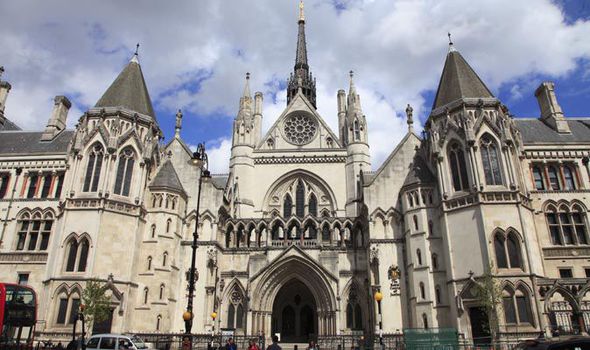
Royal Courts of Justice – venue for handing in the papers for a judicial review for the 50s women

CROSS POSTED ON BYLINE.COM

Back to 60, the campaigning group  who are supported by 738,000 of the 3.9 million 50s women waiting up to six years to get their pensions, lodged a claim  at the High Court against the  Department for Work and Pensions yesterday.

This is the first stage of taking real action to put right the injustice suffered by the women ever since the government embarked on a policy of continually raising the pension age.  It will be followed by a High Court hearing where a judge will be asked to allow the review to go ahead. It is bound to be challenged by the government which is determined not to pay up but ministers will have to justify their actions.

Backto60 lodged the documents with only 48 hours to spare as the courts  start their  summer recess tomorrow and  the courts will not hear cases  until  after October 1.

The move is the culmination of action taken by the group which now involves support  on the issue from the Equality and Human Rights Commission, which intends to raise the issue at the United Nations, the Fawcett Society and  other ampaigners.

A legal statement from Binberg Peirce & Michael Mansfield QC reads:

“The basis of the legal challenge is that the pension policy implemented by successive governments in respect of women of a particular age group (those born in the 1950s) constitutes a gross injustice and is discriminatory.  The impact on the economic, social and mental well being of these women, who rightly enjoyed a perfectly legitimate expectation of satisfactory provision in retirement, has been devastating.

“The extent of individual distress and hardship is only now becoming evident through real stories of women around the UK. It is deeply ironic that all of this is done in the name of equalisation and equality, when the very means employed to achieve this are themselves discriminatory.

“It is intended that the current pension policy be subjected to both public and judicial scrutiny and, therefore, steps are now being taken towards mounting a judicial challenge.”

At the same time Stephen Lloyd, Liberal Democrat MP for Eastbourne, whose coalition government made matters worse for 50s women by backing an acceleration of the rise in pension ages, has finally got a meeting on behalf of Waspi with the Ombudsman to discuss whether there was maladministration in not informing women.

His comment is picked up by Frances Martin:

stephen lloyd

The government is going to face challenges from all sides this autumn.


Revealed: The £271 billion “rape” of the National Insurance Fund that deprived 50s women of their state pension

dsc_8416

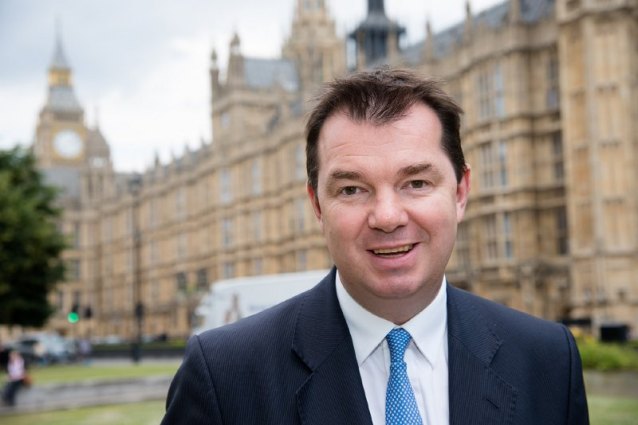
Guy Opperman – the current pension minister who says it is too expensive to pay the 50s women.

CROSS POSTED ON BYLINE.COM

The fact that 50s women  were robbed of their pensions  by raising the pension age is undeniable. But the biggest argument against putting this right has been the cost – a fact perpetually used by the present pensions minister, Guy Oppenman, who quotes the £70 billion plus figure.

Recently I discovered that successive governments had taken a decision  NOT to top up the fund as originally proposed by William Beveridge when the welfare state was set up in 1948.

What I did not know was how much money was lost. Now thanks to an extraordinary paper prepared for the National Pensioners Convention by a social security expert Tony Lynes,and still on the web, I now know. And it is staggering. You can read it here.

The paper written 12 years ago by a man I personally knew as a fount of all knowledge on the benefit system  when I was social services correspondent on the Guardian. He sadly died, aged 85, in a car accident in 2014. There is an appreciation of him in The Guardian here.

His calculation from beyond the grave is that for every year that the government decided not to contribute to the fund it was deprived of £11.3 billion. As he says: “Restoring the supplement at its pre-1981 level would bring an extra £11.3 billion a year into the Fund, enough to meet the gross cost of a £109 per week basic pension.”

We now know that virtually no money was paid into the fund by the Treasury for around 24 years from 1990 to 2014. I calculate – and this will be a conservative estimate – because it doesn’t count the reduced contributions post 1981 – that an amazing £271 billion  yes billion  extra would have been in the fund.

This would pay  more than three times over the money due to the women – and even allowed higher  state pensions for everybody else now.

Why this didn’t happen is because politicians of all three major parties took a decision not to do this. They took the decision knowing that their Parliamentary and ministerial pension pot would mean they would be some of the wealthiest pensioners in the land when they came to retire. And the taxpayer would foot their bills.

They decided the pain should fall on the electorate instead. In 1995 they knew  all the arguments about people living longer and that money paid out in state pensions would go up.

They  could have changed the rules and informed the Government Actuary  Department that they would deliberately build up a surplus in the fund – so it could pay out as people lived longer without changing the pension age.

Instead they chose the cheapest  route – raise the pension age so they won’t have to subsidise the fund- but try and keep mum so the women wouldn’t realise what they were doing.

The villains are the late Lady Thatcher, John Moore, Kenneth Clarke, Sir John Major, Tony Blair, Gordon Brown, Steve Webb and Guy Opperman. There are many others who stood by and did nothing. That is why 50s women have been left in this situation today.


Revealed: The next bill for the over 40s: Your social care tax


ImageVaultHandler.aspx

pic credit: parliament.uk

CROSS POSTED ON BYLINE.COM 

Without huge coverage MPs from two influential Parliamentary committees yesterday proposed a new tax system to pay for the burgeoning cost of social care.

The proposal could mean a new hike in national insurance contributions, some redistribution of money going to fund your local council, higher council, inheritance and income tax  and/or abolishing some of the existing universal pension benefits, like the heating allowance or cutting future state pension rises.

Significantly it includes making existing pensioners pay more tax particularly if they are still supplementing their pension by working.

This makes this the first serious policy proposal to deliberately tax people differently depending on their age – and exempting the millennials  at the expense of the elderly. In that it feeds into the current  and my view misconceived debate that millennials are being robbed by wealthy pensioners and the system must be changed to tax pensioners more.

The proposals may well prove to be attractive to the present government which has been trying to create an inter generational wedge between the young and old people – as a sop to the younger generation who have been burdened with huge student loan debts by government policy and can’t afford to buy a home.

No one can deny that the present system for social care is in a mess and is underfunded and it is estimated by the report  using  data from the Institute of Fiscal Studies that spending on  care needs to rise by 3.9 per cent a year just to keep the current severely means tested system which means many cannot get help. It will cost billions more if personal care like the NHS became free at the point of use.

At the moment many people are already paying for care through  local council tax. When people ask where is all the council tax  money  is going – anything from 25 pc to 57pc  is going on social care for the young and old. The average of 37.8 pc according to the report.

The government is also transferring a big tranche of business tax revenue from Whitehall  to the councils and at the same time abolishing grants – but not according to the MPs  earmarking any of this money for social care.

The MPs have done a lot of groundwork – suggesting an independent body should supervise the new earmarked tax-  and have used a citizens assembly to advise them of how they could do it-. The report can be read in full here.

MPs need to tread very carefully over their funding proposals because there is no doubt it could make matters worse for a lot of people.

For a start – and it is picked up by people they consulted – 40 year olds will probably have the expense of  large mortgages, or higher rents, the cost of bringing up children and  may find, if they have had successful careers that they are  paid enough to have to pay back student loans. So they may be even more squeezed.

They have completely ignored the plight of  3.9 million 50s women. – many being forced to work for up to six years – and would now have to pay extra insurance or tax just at the point when they find it difficult to get a highly paid job.

Also by extending national insurance contributions at a higher rate for those who still have a job after turning 65 could well hit people who have taken part time low paid jobs to make ends meet. The MPs also suggest the premium should apply to unearned income and investments held by pensioners – which amounts to a tax on pensioners savings.

The committee talks of  setting an income threshold to make sure some pensioners are exempt – but does not state what this threshold should be.

To my mind there are too many questions  that have not been answered or evaluated for the government to go ahead with this. People should remember that everybody who drew up this report was on an MPs salary of  £77,000 a year, way above many people’s incomes.

Yes we need a debate on how to fund social care – but it shouldn’t be used as part of way to drive a wedge between generations- and we shouldn’t rush into  yet another use for the National Insurance Fund when  they are so many women who have been robbed of a decent pension by the existing system.


Revealed: The £200,000 food bank warehouse in Amber Rudd’s Hastings constituency caused by the Universal Credit debacle

amber rudd

Amber Rudd- former home secretary and MP for Hastings as the Universal Credit debacle rolls out in her constituency

CROSS POSTED IN BYLINE.COM

The  billion pound plus failure of the implementation of Universal Credit is rightly condemned by the National Audit Office in a report published today.

Aimed to save money, get everybody back to work, simplify a complex benefit system and to be easily implemented.  Instead it is going to cost more, is years behind schedule, discriminates against disabled and poorly educated people, and the government has plans to force the elderly not entitled to a pension to have to use it when it  changes entitlement to pension credit ( see my earlier blog here)

But it is also having appalling consequences for food banks, landlords, council and housing association tenants – as the example in Amber Rudd’s constituency ( details down below show).

In the meantime ministers today were patting themselves on the back today how successful it is while senior civil servants behind  it were awarded  bonuses worth up to £20,000 each for its botched introduction ( see an earlier blog  here and  an article in the Sunday Mirror).

The statistics are appalling. According to the NAO :

“In 2017, around one quarter (113,000) of new claims were not paid in full on time. Late payments were delayed on average by four weeks, but from January to October 2017, 40% of those affected by late payments waited in total around 11 weeks or more, and 20% waited almost five months. Despite improvements in payment timeliness, in March 2018 21% of new claimants did not receive their full entitlement on time with 13% receiving no payment on time.

The Department does not anticipate payment timeliness to improve significantly in 2018. On this basis, the NAO estimates that between 270,000 and 338,000 new claimants will not be paid in full at the end of their first assessment period throughout 2018. Those with more complex cases are more likely to be paid late.

The Department expected most claimants would have enough money to cope over the initial waiting period after their claim is submitted (previously six weeks, now five). In reality, nearly 60% of new claimants (around 56,000 a month) receive a Universal Credit advance to help them manage before receiving their first payment.But they have to pay it back which means deducting an average £43 a month from their benefit. 

But while the statistics are bad, the examples are worse.

12363209_1719999128235421_6846245651388343898_o

Hastings Foodbank

Appendix 5 of the report  reveals In  Amber Rudd’s Hastings  constituency for example, according to the NAO Hastings foodbank has increased its opening hours, needs around two tonnes of stock each week to meet demand, and is considering building more storage space, costing £200,000.”

Hastings Citizens Advice pays staff to deliver Universal Support delivered locally. It therefore needs to pay providers regardless of the number of people
that are referred for support. But its income from the Department is not guaranteed so it can’t plan

Hastings Citizens Advice is considering scaling back on what it does in order to cope with increased demand.

Similarly NHS Hastings and Rother Clinical Commissioning Group funds its local advisory services. But this takes time to identify and secure. This hampers the ability of organisations to employ high-quality advocates because of the uncertainty of future funding.

.Hastings and Rother Credit Union no longer accepts Universal Credit claimant because of the complications in dealing with the new benefit and the long time waiting for people to be paid it.

Other areas have also got problems.Landlords are carrying extra debt – Croydon’s rent
collection rate has fallen from 92% to 58%, and its bad debt provision has doubled to £8 million.
Sedgemoor Council  in County Durham reported an increasing unwillingness, even with social landlords, to take on low-income tenants or those claiming Universal Credit.

So the government has piled on misery upon misery for the claimants,. voluntary organisations, food banks, landlords, credit unions, local authorities and health services. Meanwhile ministers on excess of £100,000 a year go home to expensive houses, enjoy fine wines, expensive meals out and luxury holidays while boasting how they are helping the poor. Some sick joke. As Amyas Morse, head of the National Audit Office, said today:

“The Department has pushed ahead with Universal Credit in the face of a number of problems, but has shown a lack of regard in failing to understand the hardship faced by some claimants.

“The benefits that it set out to achieve through Universal Credit, such as increased employment and lower administration costs, are unlikely to be achieved, yet the Department has little realistic alternative but to continue with the programme and hopefully learn from past mistakes.”


Taking the 50s women protest to the doors of the Department of Work and Pensions


one voice

The protesters outside the DWP under the #One Voice umbrella

CROSS POSTED ON BYLINE.COM

The campaign for justice for the 50s women denied their pensions has come home to the Department of Work and Pensions.

A group representing all shades of opinion demanding redress for the 3.7 million women who have lost out hired an old London bus to protest outside Parliament, Downing Street and Caxton House, the DWP headquarters to drive the message home.

Under the banner #One Voice it included a number of groups from London, Chichester, Bognor Regis to name but a few. On board backing the campaign was the Barnet blogger, Theresa Musgrove, who runs the @brokenbarnet  website.


20180508_131056_Richtone(HDR).jpg

Waspi supporters from London with a banner – the guy in the background is the DWP’s privatised security guard from G4S who was pretty accommodating given it was a surprise visit

The campaign was supported by lawyer Michael Mansfield who wants to bring a legal case against the DWP  presently represented by Guy Opperham, the pensions minister and MP for Hexham,. who is implacably opposed to giving any concessions to anybody.

He appealed for unity among the campaigners – warning that divide and rule between various factions – would mean they could be picked off by ministers.

The 50s women used a battlebus obtained by Angela Taylor to make as much noise as possible particularly in its thrice trip round Parliament Square, causing both tourists and MPs to turn their heads. No doubt the message would have got back to Japan given the number of pictures taken.

The choice of the bus added to the occasion. It was a London RT model – the workhorse of  London Transport for decades – and built pretty much at the same time as many of the 50s women were born.  Reliable, dependable and capable – it was very much symbolic of the women who have been robbed of their pensions.

Reliable London us

The pensions battle bus with Yvette Greenway  who works in association with with her trusty loudhailer

Of course the government is still saying it will do nothing. A letter sent to Pauline Hinder by the DWP ministerial correspondence unit ( ministers  like Guy Opperham have better things to do than reply to the general public like watching the Eurovision song contest) says :

” The Government has no plans to revisit the policy on women’s State Pension age and does not intend to make further concessions….

And according to the ministers they are striking a blow for equality.

“Changes to the State Pension age put right a long lasting inequality which was based on an outdated rationale that women were dependent on their husband’s incomes.”

Bizarrely this is exactly what many of the 50s women  were dependent on – the minister is just rewriting history to suit himself.

And mindful that the ministry may soon to be taken to court for not telling people about the change they are on the defensive..

“In the years after the 1995 legislation (1995 to 2011) this equalisation was frequently reported in the media and debated at length in Parliament. People were notified with leaflets, an extensive advertising campaign was carried out, and later individual letters were posted out. Throughout this period the Department has been providing individuals with their most up-to-date State Pension age when they have requested a Pension statement.”

And also you aren’t entitled to a pension  and we can’t afford to pay it anyway. We just take your contributions and do what we like with it.

“The National Insurance scheme operates on a ‘pay-as-you-go’ basis. It is inaccurate to characterise the State Pension as an individual contract where people get out what they pay in. It is today’s contributors who pay for today’s pensioners.

“There is no surplus in the Fund that can simply be drawn upon. The Government Actuary recommends a surplus is kept in the National Insurance fund to cover day to day variations in spend. The surplus is lent to the Government while that happens – it cannot simply be spent again.”

I have a feeling that ministers may not get away with this if people continue to press them – the Conservative government can’t afford to lose 3.7 million votes when it is neck and neck with Labour.


Britain: Sleep walking into the valley of death

img0937(1)

Glasgow Necropolis; Glasgow is nearly at the bottom for life expectancy for men and women. Pic Credit: historicgraves.com creative commons

CROSS POSTED ON BYLINE.COM

Britain is literally dying. Ever since the Tory and Liberal Democrat coalition came to power a 50 year improvement in the  death rate year on year went into reverse. Whether it is the weather’s toll on the elderly,  more homelessness or the NHS failing to cope, something has happened and nobody either  notices or wants to know.

The figures are not speculation. They are official and were published in a report from the House of Commons library just before Parliament came back after the Easter recess.

It is however remarkable that this abrupt change in trends has happened ever since successive governments committed themselves to austerity. The period also  coincides with a huge attack on the welfare state – including cuts in working benefits and  a £77 billion reduction in pension payments to  3.9 million women aged between 60 and 65 – soon to be 66 – which is known to have taken its toll.

What the figures show is that: Between 1961 and 2011 both the   crude  death rate( number of deaths per 1000 people) fell every year.

Since 2011, both the number of deaths and the crude death rate have increased. The number of deaths has increased more than the crude death rate, as some of the increase in the number of deaths was due to population growth.

Provisional figures on the number of weekly deaths indicate that winter mortality was higher than usual in early 2015, 2017 and 2018.

Improvements to life expectancy have slowed in recent years for both men and women, but estimates of life expectancy have not fallen compared with earlier periods.
Among the countries and regions of the UK, in the period 2014-16 life expectancy at birth and at age 65 was highest for women in London and for men in the South East. It was lowest for both women and men in Scotland.

This winter Theresa May presided over the largest number of deaths in recent years. The report reveals that during the first twelve weeks of 2018 the figure reached 154,684 and exceeded the 149,978 equivalent figure for  2015 – when it was known there was a serious winter flu epidemic.

This year’s flu epidemic numbers have not been as great as 2015 but the overall death rate is higher.

The report also reveals that life expectancy is still going up – but at a much slower rate than previously predicted and there is a huge difference between those living in London and the South East and much of the rest of the country – with many of the lowest life expectancy in  Scotland and the North. The difference between the metropolitan and the south and the North and Scotland is nearly 10 years.

Highest life expectancy for women ( between 86 and 86.8 years) is in Camden, Kensington and Chelsea, Hart,Westminster and Chiltern ( Chesham in Buckinghamshire).

Lowest life expectancy for women  ( between 78.7 and 79.6) is in West Dumbartonshire, Glasgow, Manchester, Blackpool, Middlesbrough, North Lanarkshire and Dundee.

For men the highest rates ( from 83.7 to 82.5) are Kensington and Chelsea,East Dorset, Chiltern,Hart and Harrow.

The lowest rates  for men  ( from 73.4 to 75.4) are Glasgow, Blackpool, Dundee, West Dunbartonshire and North Lanarkshire).

This disclosure suggests that since 2011 the country has been going into reverse and I don’t believe this is a coincidence. Nasty sharp government  policies are literally taking their toll.


Department for Work and Pensions postpones new nasty for poverty stricken pensioners until 2019

dsc_8416

Guy Opperman, pensions minster and MP for Hexham pic credit: guy opperman website

CROSS POSTED ON BYLINE.COM

The Department of Work and Pensions has put back harsh plans to change the rules for new claimants for pension credit from next June to sometime next year.

The decision not to implement savings that could lead to  tens of thousands of elderly people having to live on half the money paid out by pensioner credit is not motivated by a change of heart on a heartless measure.

It is because of incompetence and failure by the ministry itself to roll out another major benefit called universal credit – which replaces a whole series of benefits – on time. This was supposed to be nationwide by June this year. But the civil servants who planned it failed in their job – despite collecting bonuses worth £20,000 on top of six figure salaries for introducing the new benefit. You can read all about it in my blog last year here.

So now instead the benefit will not be rolled out across the country until the end of December 2018. The proposed timetable is here– and you can see which local area changes when.

Of course the department has not announced the delay to the new pension credit cuts until I contacted them to check the date. Rather like they forgot tell 3.9 million  women pensioners about the rise in the pension age until some 14 years later.

A spokesman told me:

“The timetable for the introduction of any policy changes will be determined by the roll out of universal credit – this change will not now be implemented this year.”

The measure as I reported earlier is particularly harsh if there is a big age difference between pensioner couples – with one say years younger than the other.

Previously the law said when the oldest person in a relationship reached pension age  they qualified for pension credit. Now it is being changed to the youngest person in the relationship reaching pension age. This means if there were a 10 year difference – the oldest person could get no pension credit payment until they were 76 – ten years after the raised retirement age. On person has told me of a 17 year difference – meaning one of them would wait until they were 83.

What is as shocking is the department’s disclosure to me on how the new system is planning to work. When it comes in they are proposing both people in a couple apply for universal credit when there is an age difference between the two- and only one is over 65. The change is devastating.

If you are on pension credit these are the rates (per week) for 2017 – 18 and the proposed rate for 2018-19

PENSION CREDIT
Standard minimum guarantee
single £159.35  rising to £163.00
couple £243.25   rising to £248.80
Additional amount for severe disability
single £62.45  rising to£64.30
couple (one qualifies) £62.45 rising to £64.30
couple (both qualify) £124.90 rising to  £28.60

But when you switch to Universal Credit these are the rates for 2018-19 per month:

Single claimant 25 and over £317.82
Joint claimants, either/both 25 and over £498.89

This means a couple instead of receiving £995.20 for 4 weeks would see their income halved to £498.89 a month until both of them were over, by then, 66.

Furthermore the younger person in the marriage will be subject to benefit sanctions if they fail to continually seek work. This would cut their benefit compared to pension credit by two thirds to just £313.82 a month.

Notice there are no new rates for universal credit for 2018-19 as the benefit is frozen unlike pensioner credit which rises in line with pensions. This in theory could mean the people deprived of pension credit could be forced to live on a frozen benefit for years and see their living standards fall every year.

The DWP is being generous enough to say they would not force a person over 65 to seek work and sanction them if they don’t succeed. Presumably even Mr Opperman, the pensions minister, would not want to be seen trying to force a 77 year old into a job while he or she waits for pension credit.

Frankly  this is an appalling situation and I hope Backto60 people take this up as well as demanding their pension and try and put pressure on MPs to tell the government not to go ahead next year. This is a real and sustained attack on the poorest pensioners in the country and ministers should be ashamed of thinking of implementing it.


Tories to implement new nasties for next generation of poverty stricken pensioners

dsc_8416

Guy Opperman, pensions minster and MP for Hexham pic credit: guy opperman website

CROSS POSTED ON BYLINE.COM

The attack on the 3.9 million 50s women who have lost their pension income is about to be stepped up again – with the poorest pensioners suffering a new round of misery  as a result of legislation passed by the coalition government in 2013.

The Mirror in a scoop last week by Dan Bloom has revealed that nearly one million women who could have claimed pension credit have been denied cold weather payments this year because of the rise in the pension age.

Pension credit is paid to the poorest people who can’t qualify for a pension and have less than £10,000 savings but it is linked to the pension age. It is also the passport to other benefits  – including cold weather payments. This year’s cold weather provoked by the Beast from the East has  meant more money has had to be paid out – but ministers have saved millions by raising the pension age.

According to the Mirror: There were 2.6 million eligible claimants on Pension Credit in 2010/11, the Commons Library figures show.

That fell to 2.4million in 2012/13, 2.1million in 2014/15, 1.9million in 2015/16, 1.8million in 2016/17 and 1.7million in 2017/18.

But there is worse in the pipeline. From this June a particularly nasty measure comes into force for new people claiming pension credit. Basically it means that if a woman falls for a younger man or a man falls for a younger woman – their entitlement to pension credit is forfeited when they reach the new higher pension age.

Previously the law said when the oldest person in a relationship reached pension age  they qualified for pension credit. Now it is being changed to the youngest person in the relationship reaching pension age. This means if there were a 10 year difference – the oldest person could get no pension credit payment until they were 76 – ten years after the raised retirement age.

The details are in this document here. House of Commons library Pension Credit – 2017 onwards. You can access it here.

The money involved is substantial :

Rates 2017/18

Standard minimum guarantee single £159.35 couple £243.

Additional amount for severe disability

single£62.45 couple (one qualifies) £62.45 couple (both qualify)£124.90

Additional amount for carers £34.95

But there  are also two other changes in the small print of pension changes coming into force. One involved a rather obscure named  Assessed Income Period (AIP)introduced by Labour in 2002 and 2008.

“The Labour Government’s intention, with the introduction of AIPs, was to make means-testing less intrusive for pensioners, by no longer requiring them to report changes of circumstance to the Pension Service on a weekly basis,” according to House of Commons library.

This meant the government only means tested people every five years and once pensioners reached 75 it stopped. At the time Tories and Liberal Democrats were worried that if people got worse off they wouldn’t get extra benefits.

Once both parties were in power they decided to abolish this – but not for that reason. The financial impact of such a change was shown in 2013 to benefit the government with  cuts worth £45m by making it law that pensioners lucky enough to get any extra income had to report it immediately so they could slash pension credit.

Another cut came into force in 2016. This reduced the period  people on pensioners credit could go abroad from 13 weeks to four – without having the benefit taken away. As  one of the comments from Buried News points out allowing people to spend a cold winter in warmer climes might help the elderly. But both the Tories and the Liberal Democrats at the time would have nothing of it.

The benefit is only claimed by 60 per cent of the people who are entitled to it. The House of Commons library report said: “Up to 1.4 million families who were entitled to receive Pension Credit did not claim it and up to £3.3 billion of available Pension Credit went unclaimed.”

Guy Opperman, the pensions minister, told Parliament:” We are committed to ensuring that older people receive the support they are entitled to and the Department targets activity on engaging with people who may be eligible at pivotal stages such as when they claim State Pension or report a change in their circumstances.”

He claimed the best way to help the elderly was to create “a web-based Pension Credit toolkit containing a range of resources for anyone working with pensioners.”

Somehow given his determination to slash the pension budget I suspect few people will believe he is really committed to that.


50’s Women:”Nobody will see their pension entitlement changed by more than 18 months” – Theresa May’s crass error

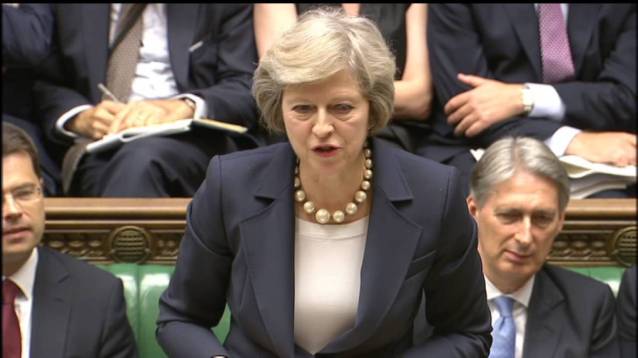
theresa may in parliament

Theresa May in Parliament Picture YouTube

CROSS POSTED ON BYLINE.COM

There was an extraordinary error by the Prime Minister, Theresa May, when she was challenged by Ian Blackford, the Scottish Nationalist leader, at Prime Minister’s Questions in Parliament today.

Mr Blackford used one of his two questions to raise the plight of the 3.8 million WASPI women who have been hit by the government’s  decision to raise the pension age from 60 to 65, then 66 and 67.

Mr Blackford asked: “Yesterday we celebrated the achievements of the suffragette movement, which was about democracy, equality and fairness for women.

“However, today in the United Kingdom, 3.8 million women are not receiving the pension to which they are entitled. A motion in this House last November, which received unanimous cross-party support—the vote was 288 to zero—called on the Government in London to do the right thing. Will the Prime Minister do her bit for gender equality and end the injustice faced by 1950s women.”

The Prime minister replied:

“As people are living longer, it is important that we equalise the pension age of men and women. We are doing that, and we are doing it faster. We have already acted to give more protection to the women involved. An extra £1 billion has been put in to ensure that nobody will see their pension entitlement changed by more than 18 months. That was a real response to the issue that was being addressed. If the right hon. Gentleman wants to talk about equality, he has to recognise the importance of the equality of the state pension age between men and women.”

What this showed is what 3.8 million women waiting up to SIX years for their delayed pension have yet to get the message across. Theresa May just thinks you have a little wait of 18 months. And this £1.1 billion  concession is just a future cost to the government over the next two years, no money has been paid out yet.

This ignorance – caused by her only taking into account the changes in 2011 affecting the rise in the pension  age from 65 to 66 for both men and women – shows how ignorant the Prime Minister is.  Considering she is in that age group herself – but guaranteed to get a large Parliamentary and Prime Ministerial pension in her right-plus a big payout for her wealthy hubby – shows the gulf between the Metropolitan elite and the ordinary person. Mo misery for her in her old age.

But it was good news that the SNP leadership were taking women pensioners plight seriously. About time Labour and Liberal Democrats did the same.

UPDATE:  Ian Blackford said today (Thurs) : ” The Prime Minister’s reply was outrageous. She was being economical with the truth. We are all know there have been some horrible cases as a result of this policy and something will have to be done.

“I am not just sympathetic I will not let this matter go.”

Later Guy Opperham, under secretary for works and pensions, made a statement in Parliament saying  the government were  not going to do anything and would fight any legal challenge by the 3.8 million people to change its mind. He was cagey about announcing the last date when people who were never told about the change until years afterwards could complain about maladministration.

Watch him and the short debate that followed here

Guy Opperman has a majority of 9,286 over Labour in his Hexham constituency in Northumberland. There are 6000 constituents who are 50s women and have suffered from a policy he has no intention of changing. If they all switched to his nearest challenger he could lose his seat. That is up to you.

How angry 50s women deprived of a pension can boot their MP out of a job


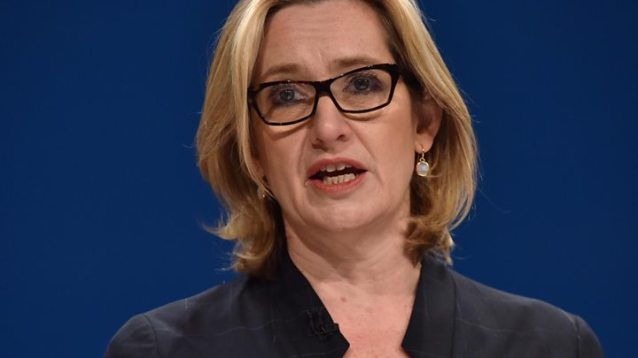
amber rudd

Home secretary Amber Rudd- most high profile Tory who could be unseated by angry people who have lost their pension for up to six years Pic credit: BBC

CROSS POSTED ON BYLINE.COM

Many angry  50s women  frustrated they can’t get a pension for up to six years – have the power at the ballot box to knock out the MPs who voted for the change. Since the next general election will be closely fought and many seats have narrow majorities they are literally – no pun intended -in poll position to effect change.

There isn’t a constituency in the United Kingdom that has less than 3000 of  these pensioners according to a breakdown helpfully provided by the House of Commons library.

And it is the current Theresa May government and her DUP allies  who are vigorously pursuing  higher and higher  retirement ages for future generations of pensioners that are the MPs most at risk. The Conservatives got a high proportion of votes from the over 60s at the last general election so  need these votes to win the next election.

The biggest voter power of this group  is in the Isle of Wight – where there are over 10,000 people affected by the raising of the pension age.The Tory MP, Bob Seely appears to have an impregnable 20,998 majority – but that would be halved if this group of people voted didn’t vote for him.. The main challenger there is Labour who came second and if people switched their vote to Labour it would become a highly marginal seat.

Much more vulnerable is home secretary  and ironically women and equalities minister Amber Rudd, whose Hastings and Rye seat, has 7400 people affected. She has a majority of 366 and Labour is the main challenger. There are 20 times more people hit by the change than her majority.

Another ultra marginal is Calder Valley where the Conservative MP Craig Whittaker,a Treasury whip, has a majority of 609 over Labour. There are 7000 people affected by the change in his constituency.

Similarly Corby where Tom Pursglove has a Conservative majority of 2,690 – it is more than outnumbered by 7,300 people affected. Both Milton Keynes seats (North and South) have small 2000+ Tory majorities but over 14,000 people affected between them.  And Scarborough where Conservative MP Robert Goodwill has a 3435 majority is dwarfed by 7,100 people affected.

The entire London borough of  Barnet  is another  hotspot.  Chipping Barnet, where Theresa Villiers, Conservative MP and ex minister, has a 353 majority has 6,200 people affected. Labour is again the main challenger. Next door Hendon which also has 6.200 people affected. Tory MP Matthew Offord has a majority of 1072 over Labour .In Finchley and Golders Green Tory Mike Freer has a majority of 1657 over Labour and there are 6000 people affected.

There are also a string of  safe Tory seats with between  7,000 and 7,800 pensioners who have lost out where the Tory majority can be severely dented or turned into marginals by switching to the highest challenger. Among these are  Beverley and Holderness ( Graham Stuart majority 14,042); Bridgewater and West Somerset ( Ian Liddell-Grainger majority 15,448); Croydon South ( Chris Philp majority 11,406); South Dorset ( Richard Drax majority 11,695), Wells (James Heappey, majority 7585 over liberal democrat) and Berwickshire, Roxburgh and Selkirk ( John Lamont, majority 11,060).

Among Labour seats with over 7,000 pensioners affected  include marginal Colne Valley (Thelma Walker majority 915) and  safe seats Croydon North and Brent North. The most marginal with over 7000  affected people is Rutherglen and Hamilton West held by Gerrard Killen with a majority of 265 over SNP.

DUP seats with the largest numbers of people affected ( 6500 and 6400 respectively)  are Upper Bann held by David Simpson with a 7,992 majority and Antrim North held by Ian Paisley Jnr with a 11,546 majority.

None of the Welsh Parliamentary seats had more than 7000 pensioners.

In addition there are those with lower numbers of people affected but who could influence the result. One is East Worthing and Shoreham which has 6,100 people affected. The MP is chair of the All-Party Parliamentary Group on State Pension Inequality for Women pensioners group, Tim Loughton. He has a 5106 majority over Labour.

These  results suggest that Waspi  and BackTo60 supporters supporters have more influence than they realise. It is a question of energising it.

Check your own constituency in the table here.  It is an Excel document. Go the page and scroll until the bottom and click on constituency estimates.