It was a subject of great embarrassment to officials at the Department for Work and Pensions. A prominent committee of Mps then chaired by the Independent MP, Frank Field, decided to hold an inquiry into why people having to wait five weeks to get their first Universal Credit payment were turning to offer sexual services to men to make ends meet.
That is not the sort of news that people responsible for the ministry’s flagship benefit wanted to hear. So they sent what MPs called a “defensive, dismissive and trite” submission. Instead of wanting to know why this might be happening the officials immediately tried to dismiss the idea.
As the MPs say: “The Department’s first written response to our inquiry addressed the narrow question of whether there is a “direct causative link” between Universal Credit and “prostitution”. The Department displayed little interest in either the lived experience of claimants or the expertise of frontline support organisations.” Indeed, officials tried to blame everything but the benefit, citing drug addiction, the rise of AirBnB, even EU immigration.
Then matters took an unexpected turn. Will Quince, the junior minister for family support and benefit delivery took against his officials. As the report said: the committee held “an evidence panel in private with B, K, M and T: four women who are, or have been, involved in survival sex or sex work.”
“Given our concerns about the Department’s engagement with our inquiry, we invited the Minister for Family Support, Housing and Child Maintenance, Will Quince MP (the Minister), to attend our private panel with B, K, M and T. We hoped that hearing directly from people with lived experience of the relationships between sex work, “survival sex” and UC would help the Department to better understand the issues.”
The evidence was graphic:”I am about to be moved on to Universal Credit. I will lose £200 a month, approximately […] The thought of going into debt and having no money is really frightening. I have children. I can’t do that. I will sell my body. – K”
“I am about to be moved on to Universal Credit. I will lose £200 a month. The thought of going into debt and having no money is frightening I will sell my body”
“I didn’t go out looking for it, I said no at first. It wasn’t until about three weeks later that I said ‘OK, yeah,’ because I thought I need to, because I need money […] It was during the eight weeks that I was waiting to get the Universal Credit. I couldn’t wait eight weeks for money. I just couldn’t. – Julie”
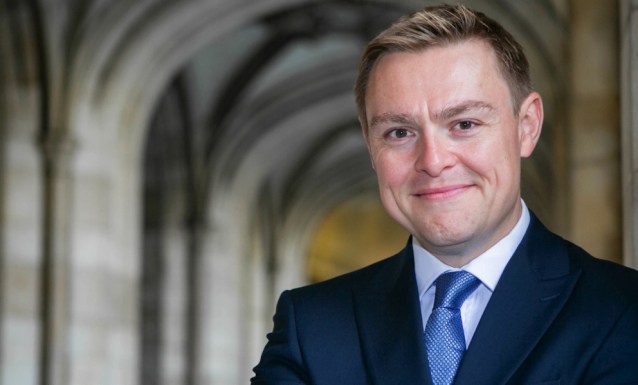
Will quince MP and DWP minister: Pic credit: willquince.com
It changed the minister’s mind and he wrote a letter to the committee apologising for his official’s submission, He wrote a letter to the committee praising the bravery of the people who came forward and in evidence later made it clear that he disagreed with his officials submission. The submission was revised.
The report came out in October 2019 and it proposed some practical ways to change the situation – particularly ending the now 5 week delay before people can get any money. The ministry has tweaked the rules and allowed people to take out loans which they have to start paying back after three months and they are reducing the maximum amount each month that has to be repaid. But the ministry will not budge over the wait. Fast forward 16 months and the ministry have finally replied to the MPs now with a new chair, Labour MP Stephen Timms. Earlier this week he commented: “The experiences of survival sex heard by the last committee act as a reminder of the hugely damaging impact that the wait for a first Universal Credit payment has been having on so many for so long. The Government’s latest rejection of constructive proposals for cutting the five week wait goes down as another wasted opportunity to rectify the harm it is causing to many vulnerable people.”
The reply, in my view, also tried to evade the issue. They have written a new guide. As their response said:
“The Department has developed a new Universal Credit Detailed Help and Support Guide for stakeholders, partners and support organisations to help vulnerable claimants get the financial and practical support they need, including helping them to make a claim for Universal Credit.
The new guide has been drafted and designed by working in collaboration with key stakeholders, including organisations who provide support and other areas where further detailed information is deemed beneficial.”
New DWP guide still not published
Unfortunately it is still to be published. On the specific issue the response said:
“Our Work Coaches are trained to encourage disclosure in the most complex and sensitive of situations. This includes domestic abuse, modern slavery and immigration concerns. We deliver this type of support daily across our jobcentres.”..The acts of buying and selling sex are not in themselves illegal in England and Wales. However, there are many activities that can be associated with prostitution which constitute offences.”
It goes on to talk about modern slavery and sex trafficking which are serious issues. But I feel it still doesn’t address the main point – the problem people have feeding their family while they wait five weeks for their first payment. My feeling is that the officials are still embarrassed by these revelations. The women involved are not slaves nor are they being used as sex traffickers – they are desperate for money and this is an extreme example of what happens when they are. It brings it back to the very issue officials won’t talk about – the structure of Universal Credit.
Mercedes EQC electric car at the Paris Motor Show: pic credit: Wikipedia
Government under fire from the NAO as Which? reveals extra costs of electric cars
This month two reports – one from the National Audit Office and another from the consumer organisation Which? – put the government’s ” Green agenda” promise to cease internal combustion engine production in 2030 and end hybrid- electric/petrol and diesel production by 2035 to a savage test.
Read together they show the government’s programme is severely wanting and so far made little impact despite all the hype of adopting a Green agenda. The public have started buying electric cars in appreciable numbers – sales were up 162 per cent to 86,291 for the first 11 months of last year according to Which? But that is still a minute proportion of the 32.9 million cars registered in the UK. They amount according to the NAO to eight per cent of new car sales.
The NAO report produces some damning figures on the environmental impact of all this. The result has been pathetic – just a 1 per cent cut in carbon emissions in the ten years since subsidies for green cars were started. Carbon emissions actually rose between 2016 and 2019 as people went for more sporty vehicles and SUVs and road traffic increased. Hardly a good omen.
Massive divide between those with drives and those who are drive less
But there is also another story which suggests that the ” electric car ” will be the new divide between the rich, the middle class and the young and poor. To get best value from an electric car you need a home charger. If you have a big drive – no problem and you can even get a government greant of £350 to install one.
But one third of home owners and tenants live not in semi detached and detached homes but in terraced houses and flats. There is nowhere to install a charger on their property – they will have to rely on public charging in the street.
And the scheme to install public chargers in the streets has been a miserable failure. The NAO reveal that:
“By the end of March 2020, government funding had contributed towards the installation of 133,336 home charging points;8,578 workplace charging points; and 690 on-street charging points.”
This pathetic last figure for on street charging has partly been caused by the government itself – according to the NAO claiming the money from the ministry is so complicated that local councils have partly given up – the £8.5m budget for this has been underused by 32 per cent over the last three years.
Private companies have fared better according to the Which? report there were 20,823 publicly accessible charging points in 13,185 locations by mid December last year.
Damning findings from Which? on costs
There are some damning findings from Which? which heighten the divide even further. Yes you can save money on fuel bills by going electric but only if you have your own charger. “ If you don’t have regular access to private charging facilities it could cost you more to run overall than a full hybrid model or even a conventional petrol or diesel car.”
And worse if you have hybrid model Which? says don’t trust the fuel economy figures from the manufacturers.“Our own fuel economy tests show that real-world costs are on average an astronomical 252 per cent more expensive than manufacturer claims, across all the models we tested.”
Seat Mii electric car – £409 extra a year from public charging.
And there is more for the poorer car owner with no access to their own charger.
” The cost of fully charging the average electric vehicle is 97 per cent more expensive than the average UK fixed-price home energy tariff, not including special rates or incentives aimed at electric car owners” And it is big money Which? estimates it would add £409 to annual fuel costs for a tiny city car such as the Seat Mii electric or around £653 for a full sized SUV such as the Mercedes EQC.
All this suggests that the government is going to need a big rethink to get to its target as both the NAO and the Commons Public Accounts Committee chair agree.
Meg Hillier MP, Chair of the Committee of Public Accounts says:
“Government has made some headway in promoting electric cars. But they are still not an affordable or practical option for most people.
“The vast majority of charging points are for private off-street parking. Not everyone has a driveway to charge their car. And reducing emissions shouldn’t be a luxury reserved for the middle classes.
“This can’t be a pie in the sky ambition – government must urgently develop a real plan if it wants electric cars to comprise 100% of new sales by 2035.”
I agree – otherwise it will just be another example of government hype.
Journalists fiercely debated the power and influence of Facebook following a controversial decision – now revoked – to remove news coverage from Australia on its site in a bitter dispute with the Australian government. The webinar was organised by the Ethical Journalist Network. For those interested in their work which support journalists striving to provide ethical coverage of issues and create more trust in journalism you can go to the website to see other issues. Here is a report from a member of the committee. Above is a video of the event.
By Matt Walsh the head of the School of Journalism, Media and Culture, Cardiff University and a UK Committee member of the Ethical Journalism Network.
“I’m probably prepared to cut Facebook and the other companies more slack because I think that there are valuable things that they’re doing. I don’t see them as evil incarnate.”
That was the view of one of the members of the Facebook Oversight Board, Alan Rusbridger, during last week’s Ethical Journalism Network debate on social media, journalism and regulation.
The former Guardian newspaper editor-in-chief was responding to the investigative journalist Carole Cadwalladr, who accused Facebook of being a bad actor who is exploiting the good intentions of people who are sat on the board.
Facebook tried everything to avoid Parliamentary scrutiny- Carole Cadwalladr
“Facebook has tried everything to avoid Parliamentary accountability,” she warns.
“That slipperiness, that evasiveness and refusal to answer to lawmakers puts it into a special case. It’s not acting in good faith.”
The Facebook Oversight board was set-up to review controversial decisions made by the company about content on its platform. To date, it has published reviews of seven cases.
The debate, which took place on Zoom, was chaired by the deputy director of the Reuters Institute for the Study of Journalism, Meera Selva.
Also on the panel was Jillian York, author of ‘Silicon Values: The Future of Free Speech Under Surveillance Capitalism’ and director for International Freedom of Expression at the Electronic Frontier Foundation.
York warned that many of the solutions to digital regulation are overly focussed on the United States and Europe.
Westerners making up rules for the rest of the world- Jillian York
“Westerners are making up rules for the rest of world and doing so quite badly,” she said. “A lot of these tendencies are nationalistic and will have negative impacts on people in other countries.”
“It’s mob behaviour,” she said “They’ve stopped carrying evidence-based journalism to an entire country during a global pandemic that is marked by toxic mis- and disinformation.”
Cadwalladr also accused Rusbridger of being silenced on the issue.
Rusbridger denied the accusation and warned that there are huge problems of trust for traditional news publishers.
Somebody has to protect freedom of information- Alan Rusbridger
He said of the oversight board’s work: “Somebody has to come in and work out how to protect freedom of information globally, to the highest possible standards, and to try and enforce the highest standards of human rights. And I think that’s an honourable thing to be trying to do.”
York said that while she welcomed some of the early decisions of the board, “there’s isn’t really case law around these issues. The Oversight Board has made some really good decisions. But those decisions are not going to trickle down.”
Responding to claims that self-regulation of social media is ineffective Rusbridger said: “I’m not sure the Facebook board will look like self-regulation in five years’ time because it will have completely de-anchored itself from Facebook. It will have more of a feeling of independent regulation rather than self-regulation. It may not work but I think you just have to give it time.”
Robert Behrens, the Parliamentary and Health Service Ombudsman. has finally come clean publicly that it cannot cope with handling complaints and has issued a public statement.
This followed a blog I wrote earlier revealing that the Ombudsman had faced fresh curbs on its budget from the Treasury. Instead of a new three year budget to help improve services it has only been given one year of funding.
But it chose not to announce that publicly and instead sent a letter to William Wragg, the Tory chair of the Public Administration and Constitutional Affairs Committee, hiding it a Parliamentary correspondence file.
In the letter Robert Behrens says “We will postpone the launch of PHSO’s new three-year strategy until we can secure the three-year funding settlement necessary to deliver it. Instead, we will use 2021-22 as a bridging year to lay the foundations for the new strategy and focus on addressing the significant operational challenges facing PHSO’s service.”
Several months of delays
Now the Ombudsman has stuck a long statement on its site which reads:
“Our service remains open but given the unprecedented situation you may experience delays of several months when you bring a complaint to us. We are very sorry about the delay and will do our best to support you through these uncertain times. We will focus on helping the most vulnerable as a priority.
To help us work through the complaints we are receiving, please do not submit a complaint to us if it is about:
• delays with complaint responses • matters which are likely to resolve themselves within the next few weeks/months • delays in service delivery which are non-critical and are the result of an organisation coping with COVID-19.
Please use our complaint checker below to make sure your complaint is ready for us to look at.
The pressures currently faced by the NHS may mean that it is not possible for us to progress some health complaints at this time. Your caseworker will keep you informed of any delays with your case.
Please continue to check our website or follow us on Twitter for further updates. ”
still not entirely transparent
The statement is still not entirely transparent as it blames Covid 19 entirely for the problem when it is also being hit by the postponement of its budget settlement. The Ombudsman also caused consternation among some people awaiting the result of their complaints by taking down the site on Saturday and Sunday morning without any explanation. Most banks and building societies put up a notice saying a site would not be available because they are working on it. Not so the uncommunicative Ombudsman.
This led one of my readers, Darren Watts, to contact me because he thought the Ombudsman had closed down the website. He is one of a large number of people awaiting the result of a complaint. I am extremely grateful for him letting me know and also grateful that the service was restored. I have to add I am not very impressed to say the least.
” Let the Queen of England collect a great fleet, let her stow away all her treasure, bullion, gold plate, and precious arms; be accompanied by all her court and chief people, and transfer the seat of her empire from London to Delhi. ”
This is a quote from Tancred, a novel by former Tory Prime minister Benjamin Disraeli, written in 1847. In it he also said; ““England is no longer a mere European power; she is the metropolis of a great maritime empire . . . she is really more an Asiatic power than a European one”.
I suspect that the world view of Disraeli, who later made Queen Victoria Empress of India, might now be similar to the world view of Boris Johnson and Elizabeth Truss, the international trade secretary and the new Empress of the Pacific.
Of course neither are going to do anything as crude as reconquering India nor are they going to emulate Tancred, Prince of Galilee, the Norman who led the first successful crusade in the Middle East in the 12th century.
But what they are doing by planning to join the Asia Pacific free trade pact and create – with the offer to 5.2 million people in Hong Kong to come to the United Kingdom – potentially the biggest migration of people for centuries that is going to change the nature of this country for good.
Since at the same time it will far more difficult for Europeans to settle here the UK will become in Disraeli’s words ” more an Asiatic power than a European one.” It will be backed up by pressure from countries like India, Malaysia and Vietnam for the UK to concede more immigration into the country as part of any future trade deals.
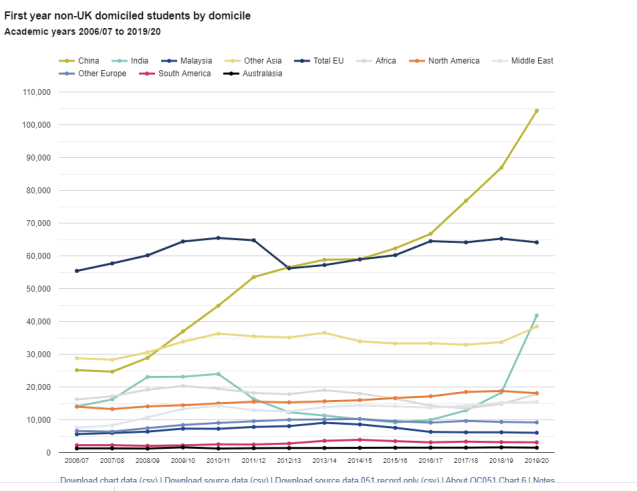
Foreign student numbers from China and India are booming
What is interesting is that it has already started. The moment the UK voted in 2016 to leave the EU the young started voting with their feet – with students from EU countries no longer so keen to come while applications from China and India started soaring. Figures released this week by a London property company show it even had an effect on the capital’s rental market as wealthy overseas students were happy to rent or even own new flats. And this is all before the ink was dry on the withdrawal agreement which came into force on January 1. The biggest rise is China -over 20 per cent in one year with India recording a 15 per cent increase.
That huge jump on the graph is the number of students from China while the EU students flatlined.
One reason for this surge also appears to be ex President Trump and his ” America First” policy which has deterred Asians from going to the US.
Andrew Weir, CEO of LCP, the London property company, comments “The UK’s safe haven status, diverse and liberal culture has attracted overseas students who would have previously studied in the US. The US has not seen growth rates above 5% since 2017, this contrasts with a 15% growth rate in the UK in 2019/20.”
“Despite fears Brexit may impact the UK and London’s status as a global city, the number of first year overseas students from the Asia region now vastly outnumbers the total number of students from all EU countries combined.
“There has been a recent surge in students from India enrolling into UK higher education establishments, almost doubling in 2019/20 compared with the previous academic year. A new generation of overseas students view the UK as a desirable place in which to reside and study.”
Falling numbers of German and Irish students
Indeed the number of students from Germany coming to the UK is now falling as are the number of students from the Republic of Ireland our nearest neighbour. Cyprus and Greece are also falling slightly. This has been balanced by a rise in the number of students from Portugal – always a low number – and Romania. You can read in more detail on this website which not only gives a bigger picture but also a breakdown for each university. Of course since then there has been the pandemic, but if there is a fall, it will only be short term. It is quite clear what the trend is. And when students come others will try to follow.
There is a supreme irony in all this. Many people who voted for Brexit were also against mass immigration – remember Nigel Farage and the warning of millions of Turks getting free movement to come to the UK. Well we may not get millions of Turks – in fact there was not much danger of that anyway as it takes years to join the EU. But we are going to get a major reset in the composition of people who make up the UK population. I actually welcome more diversity and Asian and Chinese people have a great record as entrepreneurs. But I wonder whether people thought when they voted for Brexit that Britain was on the way to become an Anglo-Asiatic nation.
Lord Freud :” failed to act on his personal honour”. Pic credit: gov.uk
This week a peer and former Tory government minister Lord Freud was ordered to apologise to the House of Lords for breaching the code of conduct by “failing to act on his personal honour.”
The peer was among the signatories to two letters sent to two senior judges, Lady Justice Thirlwall and Dame Victoria Sharp and to Lady Justice Whipple, seeking to persuade her not to publish his name giving a good character reference to the ex MP who is now a convicted sex offender.
Charlie Elphicke Ex MP Now in jail
The MP was Charlie Elphicke, Tory and later Independent MP for Dover until 2019. He was convicted of three counts of sexual assault on two women in July last year and sentenced in September to two years in prison. He is currently appealing the case.
In November last year three newspapers, The Guardian, the Times and the Daily Mail, sought permission from Lady Justice Whipple to publish the character references from prominent people who were supporting him.
Dame Victoria Sharp pic cap : Judiciary.uk web site
This led four other Tory MPs and the peer to write to two senior judges to persuade them to intervene in the case. The Lords Commissioner for Standards,Lucy Scott-Moncrieff , ruled this week in Lord Freud’s case was “was intended to persuade Lady Justice Thirlwall and Dame Victoria Sharp to intervene.”
She added: “Similarly, the letter to Mrs Justice Whipple was written in terms intended to influence her thinking.”
Former Cabinet minister Theresa Villiers
MPs say intervention ” a point of principle”
The MPs action became public when Col Stewart asked for a ruling from Jacob Rees Mogg, leader of the House, – but he kept away from committing himself to intervene. The MPs claimed their action was on a point of principle to stop all character references being released but were shot down by the Lord Chief Justice’s office saying it was “improper” to seek to influence the decision of a judge who would ultimately rule on the basis of evidence and argument in court.
Now the Lords Commissioner for Standards has described the letters as ” emotive” and ruled: “I believe doing so in private correspondence to senior judges in terms designed to influence the trial judge must also be considered outside the standards of conduct expected of individual members.”
Existence of inquiry into MPs a secret
This leaves the question of the conduct of the MPs. They come under the Commons Parliamentary Commissioner for Standards, Kathryn Stone. Under the rules of the House of Commons since 2018 it has been decided that no information on whether a complaint has been laid against an MP will be published until a final report is made. So officially it remains a secret whether there is any investigation. However the Guardian has reported that Helen Jones, the Labour MP for Warrington, North until the last election when the Tories won the seat, has put in a complaint.
It would be egregious if Lord Freud , who appears from the Lords report to have been encouraged by the MPs to write and complain, took the entire blame for this. It also, in my view, would encourage MPs to try and influence the judiciary without facing any penalty. And it smacks of the new chumocracy – one rule to protect the powerful and influential and another for Joe Bloggs.
The MPs of course say they are acting for the public who will be frightened to give character witnesses for convicted criminals if they are to be published.
Mrs Justice Whipple’s deft ruling
But this was shot down by Mrs Justice Whipple in a very deftly worded judgement. She distinguished between the ordinary Joe and public figures in releasing the names and references. Only those who had a public role in society were revealed – keeping to the right to know principle of public interest. As a result we also now know that Jonathan Aitken, a prominent former MP once jailed for perjury and now a vicar provided one . As did prominent local Roman Catholic priest, Father Jeff Cridland; Neil Wiggins, a community non executive director of the Port of Dover; and David Foley, chief executive of the Thanet and East Kent Chamber of Commerce. But we don’t know about 21 private individuals who are not prominent in public life.
Let’s see if anything comes from the sphinx like Parliamentary Commissioner for Standards on this one.
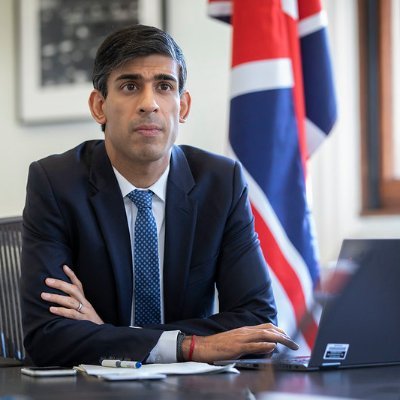
Rishi Sunak: Postponing the cash to improve the Ombudsman service
The Parliamentary Ombudsman has already – as I wrote in an earlier blog – faced a critical report from MPs on the way it handles some of its work.
And Michael Gove, the Cabinet Office minister, has also turned down any prospect of new legislation to modernise the service by combining its work with the local government and social care ombudsman.
Not content with that, Rishi Sunak, the Chancellor, has now postponed a three year funding programme which would have allowed it to introduce changes to improve matters.
Instead The Treasury has decided to give it just one year’s worth of funding and instructed it to concentrate on handling complaints arising out of Covid 19 pushing aside other grievances..
Details of this latest bad news has not been put out in any press release by the Ombudsman but has been hidden away in the correspondence section of the House of Commons Public Administration and Constitutional Affairs Committtee.
A letter from Rob Behrens, the Parliamentary and Health Service Ombudsman, to William Wragg, the Tory chair of the committee, reveals the not very bright future for people wanting to take the NHS to the Ombudsman or for the 1950s born women hoping for compensation for maladministration over the six year rise in the date they could claim their pension.
In the letter Mr Behrens says “We will postpone the launch of PHSO’s new three-year strategy until we can secure the three-year funding settlement necessary to deliver it. Instead, we will use 2021-22 as a bridging year to lay the foundations for the new strategy and focus on addressing the significant operational challenges facing PHSO’s service.”
Severely affected by Covid – 19
He goes on to describe what next financial year will be like:
“PHSO’s service has been severely affected by the ongoing COVID-19 situation in a number of ways, from the impact of school closures on the availability of staff, to pressures on the NHS that mean services are taking longer to respond to PHSO’s requests for information. “As a result, PHSO is closing substantially fewer cases than usual and, in turn, this means a growing number of complainants are waiting for their case to be allocated to a caseworker. “Although we have started to recruit some more caseworkers, it takes a minimum of six months to train new staff and even with additional caseworkers, it is clear that complainants will face increasingly long wait times unless we take further action.”
Delaying revealing the size of the complaints waiting list
I asked the Ombudsman to give me details of how many cases they were and how long they were taking. I also asked about the size of the waiting list. Simple questions enough if they are on top of the job. Instead they have decided to turn it into a Freedom of Information request which will give them a month or two to reply. I will report back when I have the figures.
In the meantime the letter says: “This means we will prioritise the quality and productivity of PHSO’s core complaints-handling service. We will also use 2021-22 to carry out preliminary work to support the new three-year strategy, such as improvements to some of PHSO’s core systems and processes, and highlighting opportunities for Parliament to make essential improvements to PHSO’s legal framework, such as removing the MP filter.” The latter point is that all complaints have to go through MPs at the moment.
The whole situation is not good at all. But I am not surprised that the government is not keen on funding or modernising the service. A more efficient service will bring to light injustices – which means a bad press for government services – and ministers don’t like bad publicity. Far better to deprive the Ombudsman of cash and keep the announcement hidden in the correspondence column of a committee.
The Department for Education promoting the Edenred scheme
Company predicted “successful business performance” on the back of feeding poverty stricken children
The spectre of poor children going hungry during the Covid 19 crisis is something the government have had to be put under pressure to remedy – notably by Marcus Rashford, the Manchester United footballer.
But now it has emerged that even when the government finally did the right thing – they managed to make a mess of it. The initial scheme was poorly implemented and the supervision by the Department for Education (DfE) of the private company, Edenred UK Ltd, was lamentable.
Naive civil servants thought they were getting a bargain when the company told them that they get the supermarket vouchers for them at their face value without it costing them a penny more. What they hadn’t realised was that the company could get a huge discount from supermarkets by bulk buying and pocket the difference themselves. And on an initial contract worth £77m later increased five fold to £425m that’s a lot of cash.
Whitehall ” surprisingly unconcerned” about Edenred making big profits out of taxpayers’ money
The report by the Commons Public Accounts Committee expresses dismay that the ministry even now seemed ” surprisingly unconcerned” about the profits made out of our money and has hit back at the MPs for suggesting it – backing the company which is also trying to deny it. A wonderful example of how the Johnson government is prepared to be shamed faced about making money out of Covid 19 and the plight of poor children.
There were serious problems in the early weeks of the scheme” and “unacceptable delays in Edenred processing orders from schools and getting vouchers to families,” the report reveals..
Those words cover up the distressing evidence given by individual schools to MPs.
School staff had to work in the middle of the night to get Edenred’s vouchers
Ms Andrea Howard ,School Business Manager at Truro & Penwith Academy Trust at the time of using Edenred, wrote to Mps, saying she was ” subjected to extreme levels of stress.”
“From the onset, the portal was not fit for purpose, initially it continually crashed and when the portal was first upgraded, there was a very long wait to access the site, this wait was sometimes more than two hours. “For several nights in a row, I and many other school business manager colleagues took to waking up in the middle of the night to attempt to upload our spreadsheets, and site traffic was better in the early hours of the morning. However, the fact that there was still traffic at these times is evidence of the desperation of school staff to be able to provide their families with vouchers.”
“Once parents received their vouchers, we had reports from the majority that they were not able to access the platform to redeem them. It must be recognised that many of these families have limited access to the internet and tried to redeem the vouchers through their phones using their limited mobile data.
” Additionally, we are located in a rural part of Cornwall with no nearby supermarkets, many of our families do not have access to their own transport and there is a very limited bus service, however the vouchers were only able to be used in large supermarket chains and not local shops such as co-op (initially) and Spar. “
Gavin Williamson, education secretary
Gavin Williamson made ” untrue statements”- headteacher
Raphael Moss, Headteacher, Elsley Primary School, Wembley, told MPs:” Due to the untrue statements made by the Secretary of State [Gavin Williamson] and DfE, their lack of acceptance of many of the issues, or the downplaying of the impact, I feel compelled to submit evidence for what amounts to gross negligence. As a result of the delays to providing vouchers, our own school set up a food bank, relying on donations from staff and the public, to ensure that children did not go hungry. “
“A major flaw in the scheme was that there was a huge incentive for schools to use the Edenred scheme rather than use a local alternative. A school’s own scheme would require laying out the cost of it it ourselves, with DfE guidance placing several limitations on which schools could claim and maximum amounts that could be claimed.
“The Edenred voucher amount of £15 was also in excess of the usual funding of £11.50 which also acted as an incentive to use the Edenred scheme. The public messages implied that schools had a choice to use their own scheme but without mentioning the limitations on schools reclaiming costs.”
Profits of £10.7 million
Taking this evidence it is quite clear that the scheme was aimed ( with Whitehall connivance) as much as benefitting Edenred as the poor hungry children. No wonder after a National Audit Office investigation and a critical report by MPs they have decided to return one per cent of the cost of the contract.
Their latest accounts – they are a subsidiary of a French firm – show they made profits of over £10.7 million.
Their annual report says they were ” honoured ” to get the food voucher contract which” will enable a successful business performance in 2020.”
You bet it did. The pay rise for their highest paid director last year was £136,000 – it went up from £235,000 to £371,000. That pays for a lot of food vouchers – more likely in caviar and French champagne than baked beans and spaghetti.
The honeymoon must truly be over for Keir Starmer as Labour leader. Out today is a biting satirical video from Joe Politics on Keir Starmer and his move to shift Labour to the small c conservative right to attract back those “Red Wall ” voters. Corbynistas must be enjoying this one. Indeed Tommy Corbyn has already tweeted lol.










 Westminster Confidential