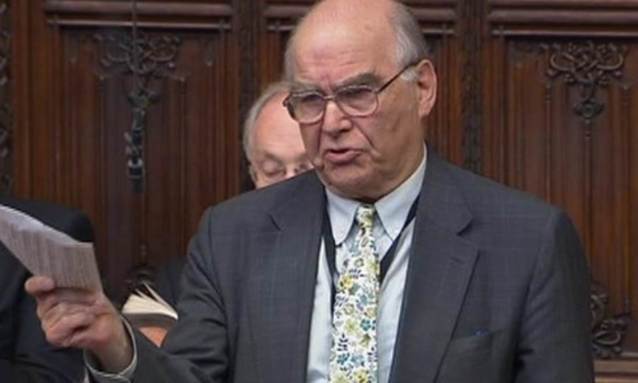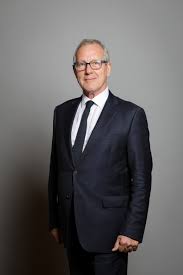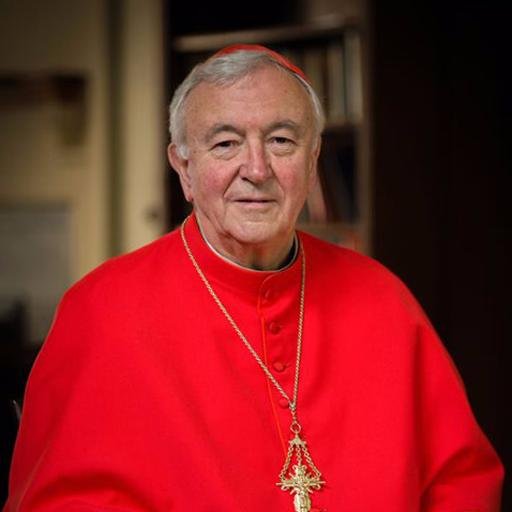
Former judge Lord Mance, chair of the Lords Conduct Committee, which proposed the changes Pic credit; June Buck
The House of Lords approved without a vote new rules which will mean that all 798 peers will have to attend behaviour training course or face being reported to the Lords Commissioner for Standards for breaching their code of conduct.
two public dissenters
The scheme had only two public dissenters – both Conservative peers – who claimed it was unnecessary. The move followed a couple of cases in the last year where two former Labour peers were found to have bullied and harassed Parliamentary staff. See my last blog here.
Lord Cormack, a former Tory MP who had a junior job in the Thatcher government said; “Speaking as one who has served in Parliament for over 50 years now, it is a very sad day when I am told that I have to be trained on how to behave. That is extremely unfortunate, and I believe that it is unnecessary. “
… “I regret and deplore it. After all, it is right that people accused of any offence should be appropriately dealt with, but I do not suppose that it would be thought appropriate for your Lordships to be given a course in how not to burgle.”
Lord Balfe, who as Richard Balfe was a former London Labour councillor and a Labour MEP until he switched to the Tories in 2002, called for the House of Lords Conduct committee to reconsider the move.
“I regret the compulsion attached to this training. I have done the training. It was largely irrelevant; most of it was about the House of Commons, or appeared to be.”
Lord Mance, a former judge and deputy president of the Supreme Court, chairs the Lords conduct committee which proposed the compulsory training, received support from a number of other peers who welcomed the move.
He said: “There is, unfortunately, a clear problem, even in this House. People sometimes behave in ways that one may not conceive of oneself, but that are recorded in great detail in the press and in the reports issued by the commissioner. Unconscious attitudes, and lack of consciousness of a problem, are real issues that the Valuing Everyone training is designed to address.”
All peers will have to either have attended or booked a training course by next April. Half of them have already attended one.
Rishi Sunak: King of the rip off rates for the ordinary savers
See end of this blog for three accounts offering you more money than these scam rates
While The Treasury has had to hand out the largesse to keep the economy alive during the Covid-19 pandemic a really nasty trick is being played on the millions of small savers who rely on National Savings for a safe home for their money.
Effectively Rishi Sunak, the Chancellor, is making sure that millions of savers and those who have a flutter on the Premium Bonds subsidise the government’s multi billion pay outs by losing money every year they invest.
Their savings are being destroyed and made smaller every year – even if we are having record lower rates of inflation.
It is also sending out an appalling message to people who wish to save money by telling them that even their meagre savings will be reduced year on year as inflation erodes them.
What I am talking about is the new interest rates being offered by National Savings from November 24. They echo the free fall in interest rates offered by most banks hit by the Covid-19 panic. The only difference is that this government will use your money to prop up their finances.
The rates are truly horrendous as shown here. The worst case example are Income Bonds shown here.
As you can see the rate falls from 1.15 per cent to 0.01 per cent – virtually providing nobody with any income. Indeed if you have less than 646 pounds invested you literally won’t even get a penny.
Similarly with an investment account. And you will get far fewer prizes from premium bonds – the odds rise from 24,500 to 1 to 34,500 to 1.
So basically this is one giant rip off – in total contrast to the rich and wealthy who can game the stock market , invest in tax havens or have the money to take advantage of investment returns in China and the Far East. Indeed as there is a limit on claiming Universal Credit if you have savings above six thousand pounds in National Savings it is worth spending them or your payment will be reduced. If you have over sixteen thousand pounds you won’t get a penny.
I notice Rishi Sunak himself has recently set up a blind trust which means he has substantial investments – which he does not want people to know about. I bet you they are not offering a return of 0.01 per cent to help fund his millionaire life style.
UPDATE: Three accounts which give you higher interest if you want to boycott National Savings
According to the reliable Which? Money there are three instant access savings accounts that offer you higher interest and allow you to access your money. All three have unfortunately now been withdrawn but their replacements still offer better value than anything at National Savings
The new ones are:
Coventry Building Society Easy Access Isa. Tax free and pays 0.50 per cent . Can withdraw money at any time
Principality BS Easy AccessWeb Saver 0.6 per centwith unlimited withdrawals
Yorkshire Building Society Six Access e-Saver No 3 and e-Saver ISA issue 3 both over tiered rates between 0.2 per cent and 0.6/0.55per cent and allow sui withdrawals a year
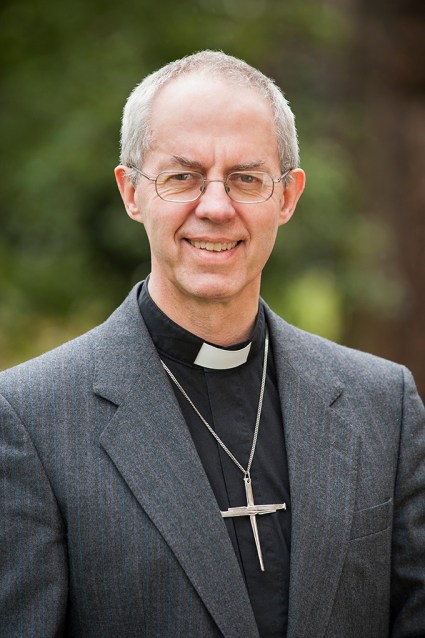
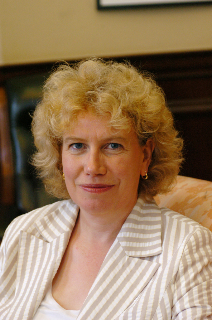
Lord Lea (left),a former trade unionist, was found to have bullied a staffer and engaged in ” stalkish behaviour” while Lord Stone of Blackheath ( right) a former Marks and Spencer managing director, was found making ” sexist remarks” and guilty of ” harassment”.
Changes proposed after two peers in their 70s and 80s were found to have bullied and sexually harassed women
A new report from the House of Lords says all 798 peers must undergo training courses in ” Valuing People” or face sanctions including the withdrawal of services.
And former MPs who become peers will face fresh investigations by the authorities if they face complaints about bullying, harassment and sexual misconduct while they were a Member of Parliament. At present a loophole means if peers are accused of anything while they were an MP they can escape investigation.
These tough new rules from the House of Lords conduct committee come into force next week if the peers vote for the changes. The full report is here. Members have until next April to complete the training. Those who refuse after that date will be referred to the Commissioner of Standards for breaching the code of conduct.
It is against a background of growing number of complaints about the treatment of staff by both MPs and peers. One former Tory MP and minister is under investigation by the Met Police for alleged rape of a staff member at the moment.
In the last year two Labour peers have been investigated by the Lords Commissioner for Standards, Lucy Scott-Moncrieff TWICE for breaching standards.
18 complaints
Lord Lea of Crondall, 82, as David Lea, a former TUC assistant general secretary, had two reports whose findings were upheld. Altogether it was revealed that since 2011 no fewer than 18 complaints were made against him.
The report said: “They included one instance involving a racially offensive remark, 15 complaints involving shouting at staff, being aggressive and making unreasonable demands, and one occasion where a woman had been made to feel uncomfortable by Lord Lea’s alleged behaviour.”
champagne and silver gilt framed photo
The complaint from the woman followed a time she accompanied him on a Parliamentary delegation. According to the report :
” Lord Lea made her very uncomfortable by his behaviour towards her, which included inviting her to his room to share a bottle of champagne that he had been given. “
He followed it up later when she had left Parliament for a new job . Then “she received a package from Lord Lea at her place of work that contained a silver-framed photograph of her taken on the official visit. It also contained a letter from Lord Lea explaining, amongst other things, that he keeps a copy of the photo on his piano at his home. He also invited me to visit him at home and referred to finishing “that bottle of champagne.’’
Lord Lea told the Commissioner: “I think she is egging the pudding in some way. I can’t think of any reason why she should, if she didn’t have some feelings for me or some other reason to be disturbed.”
The commissioner decided his behaviour did not amount to sexual misconduct or bullying but harassment.
He agreed to take up voluntary a bespoke behaviour management course but immediately ran into trouble when he forgot to inform the security staff that his coach was coming to Parliament so they could let the person in. He took it out on his staff leading to a fresh complaint of bullying which was upheld.
Lord Lea was asked to apologise to the member of staff :
He wrote: “I am not known for being a bully: I acknowledge having been very argumentative— highly audibly so—on that fateful day, concerning the predicament I found myself in regarding the apparent disappearance of my newly appointed trainer and you said you had felt ‘belittled’ as a consequence.”
Sexist and transphobic remarks
Lord Stone of Blackheath,78, a former managing director of Marks and Spencer, has also TWICE been found by the Commissioner to have breached the code of conduct. Complaints by four women were upheld only to be followed by a complaint from a fifth woman about being harassed.
In the first case it included allegations of sexist and transphobic remarks as well as unwanted touching.
Among several alleged incidents recorded by the Commissioner, he told a colleague that she was beautiful “to boost her self-esteem” and grabbed her arm.
He also allegedly stroked another staff member’s arm and said to her that he hoped a document on the bill to outlaw upskirting came with photos.
The second case involved two more complaints from women. He met one young woman at a dinner party and offered her a private tour of Parliament. She came with her cousin. He told her she was ” young and beautiful”.
“Lord Stone greeted her in an overfamiliar manner, kissing her on both cheeks near her mouth, and repeatedly touched her arms and her waist during the tour and while having tea in one of the House’s restaurants.”
Lord Stone told the commissioner that: “He was “upset by the inference that [his] behaviour toward… was anything other than to try and assist”. He accepted that “her account is factually accurate” but insisted that “the connotations of inappropriate behaviour that she makes are wholly inaccurate and seem to me be the product of her imagination.”
He was found to have broken the code by harassment and has taken a bespoke course in behaviour management.
Labour Party suspension
Both peers have been suspended from the Labour Party. Half the members of the House of Lords have voluntarily attended the course already. The full list is here.
It is an extraordinary situation that in the times we live that such courses are needed, let alone deemed compulsory. One would have thought that people when they join the House of Lords would know that bullying, harassment and sexual misconduct are out of order. But perhaps not.
Historic Brandon Station dating from 1845, built by a notable Victorian architect and now listed following the judgement.
Judicial review saves 175 year old station from ” unlawful” demolition by privatised rail company for a car park
When Save Britain’s Heritage appeared before Mrs Justice Lang to argue the case for saving Brandon Station it was almost a lost cause. But the judge who is pretty independent and also recently granted a judicial review to women born in the 1950s so they could seek compensation for the rise on their pension age was not be put off.
Breckland Council in Norfolk had already given the owners Greater Anglian railways the go ahead to demolish the booking hall that had been empty and boarded up for 16 years so they could create a 100 space car park for commuters to Norwich, Cambridge and Ely. The scheme would have cost £1m and was accepted by the Railway Heritage Trust.
The station on the Norfolk /Suffolk border is becoming busier as more rail services are introduced. The town itself is a mixture of historic flint buildings and sprawling estates and has strong military connections because of the nearby Lakenheath and Mildenhall air bases.
unlawful development certificate
But when the judge started examining the case she found the development certificate issued by the council was unlawful because the scheme appeared to encroach on land not owned by the private rail company because of irregularities in the boundaries of the site.
She was not impressed by the council granting permission while the building was being considered for listing. It has since been listed.
The railway station building is constructed of local knapped flint, gault brick and slate to a design by Victorian architect John Thomas in 1845. Mr Thomas had Parliamentary connections as he who was appointed the superintendent of stone-carving at the Palace of Westminster by Sir Charles Barry. when Parliament was rebuilt. He was also commissioned by Prince Albert for stone carving work at Buckingham Palace and Windsor Castle.
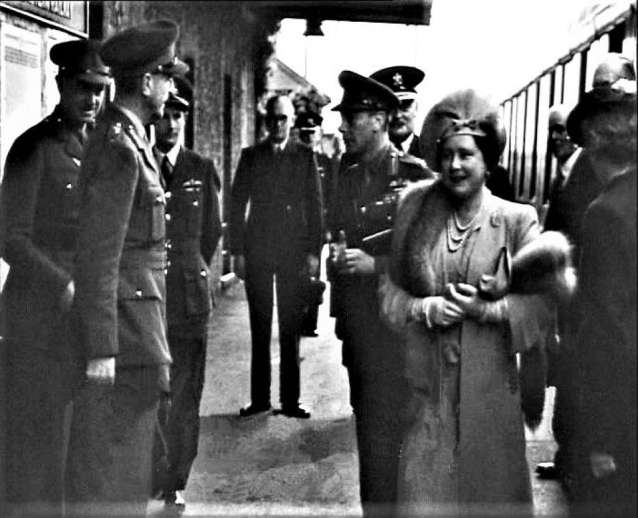
Royal visit to Brandon: Pic Credit D Norton via Save Britain’s Heritage
Local people have archive coverage of a Royal visit by King George VI and the Queen Mum to Brandon station in the second world war. There is a website by Darren Norton about both world wars here.
There were also many foreign troops stationed there. Here is a picture of Polish troops in 1946.
Units of the Polish 2nd Corps arriving at Brandon Station in 1946. Photo: Victor Lukaniuk,locaL councillor
Also the station and the town of Brandon were used for an episode of the iconic BBC series Dad’s Army. See here.
Marcus Binney, executive president of SAVE Britain’s Heritage said: “This shows that determination, persistence and resourcefulness can bring back historic buildings on death row. We have already commissioned plans by the architect Doug Reid, obtained initial costs from builders, and will now be working with the Suffolk Building Preservation Trust on raising finance.”
Judge warns she will block senders who flooded her office with 50 emails before hearing
Some readers of this blog will know that until two years ago I did report in a number of blogs the allegations of Esther Baker against former Liberal Democrat MP, John Hemming. Since then a judge has ruled against Esther Baker’s allegations and banned her from making them again and I have had an agreed settlement with Mr Hemming not to mention them.
There has been a sequel to this story culminating in Mr Hemming’s friend, Sam Collingwood Smith and Esther Baker being involved in a protracted dispute in the courts over tweets and forums on the Internet. The case culminated ( so far) in two judgements on the Queen’s Bench Division list at the Royal Court of Justice.
Today a woman judge used her discretion to refuse Mr Smith’s application to strike out her response and told Esther Baker to re-present her claim to the court within a proper legal framework.
Neither litigant is represented by lawyers. The pleadings and annexes according to the judge ran to 293 pages which shows how comments on Twitter and blogs can escalate into an extraordinary expensive dispute if they ever get into the courts.
The judge also issued an unusual statement at the end of her judgement warning she would block the email accounts of senders if they continued to flood her office over the dispute.
She said : “In the 10 days leading up to the hearing, I received well over 50 emails on this matter, not all from the parties. Some were properly alerting me to documents or issues I needed to decide or consider. Many were not. The majority of those were copied to my listing clerk had to consider them to see if there was anything she was required to do. I received a further 15 emails after the hearing and before handing down this judgment, again some of which were properly sent; others were not.”
She concluded: “If I continue to receive unnecessary emails I will block the sender and all correspondence will have to be done through the post, the court’s generic email or CE file.”
It is a long read. I will not comment but leave you to make up your mind. The ruling has absolute privilege.
Update
After further hearings in November and February Master Sullivan, the judge has issued a second judgement in this long saga. She had asked Esther Baker to resubmit her arguments against Mr Smith’s claim.
This time she rejected a substantial section of her arguments of harrassment and truth in her amended defence and counterclaim but also rejected Mr Smith’s attempt to have her case completely struck out.
The judgement is here. Make up your mind if you want to read it.
At the end of the judgement she says: “Although longwinded and at times difficult to follow, there is an understandable claim. [By Esther Baker] That remains once the matters set out above have been struck out in my judgment. I am also asked to strike the defamation claim out on the basis that the defendant’s reputation is so damaged already by the judgments against her (in the Lavery and Hemming cases) that there can be no serious harm.
“That judgment would require an investigation into the facts it would be inappropriate for me to do. I am also of the view that is it realistically arguable that there is a difference between the matters alleged against her which would arguably cause serious harm even against the backdrop of those judgments.
” The claimant also submits that given the way the defendant has conducted the litigation and the limited nature of any possible remedy, it is not proportionate to allow the counterclaim to continue. Whilst there may be triable issues on some issues such as the difference between stalking and harassment, is it not proportionate in the circumstances of an impecunious defendant with adverse findings against her and who has already caused the cost and time a number of procedural hearings, to allow the claim to continue. I do not accept that submission.
“There are triable issues and the litigation so far has not been conducted in such a way as to make it appropriate to strike out the claim. The remedies sought, if granted, would include injunctive relief and that is a matter of value as well as any damages that might be awarded. “
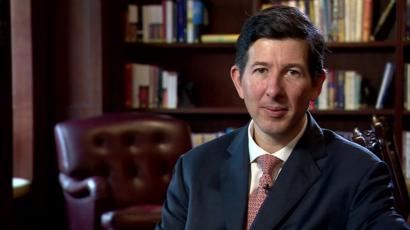
Dr Stephen Brien: The architect of Universal Credit. Pic credit: BBC
Self declared non politically active appointee turns out to be one of Iain Duncan Smith’s close advisers
A very important quango appointment has been made by the Conservative government which could affect the treatment of millions of benefit claimants -especially the huge number on Universal Credit.
It is to a fairly obscure body known as the Social Security Advisory Committee – which provides impartial advice on social security. It scrutinises most of the complex secondary legislation that underpins the social security system.
Put it more simply, its advice will influence how the DWP treats millions of poor, disabled, jobless people who are living on the breadline. It will cover a period when the government plans to to claw back money after the huge spending splurge to combat Covid-19.
The appointment is for the chair of the body and it has gone to Dr. Stephen Brien, a man who is publicly credited as the architect of one of the country’s most hated benefits, Universal Credit.
He will now lead until 2024 a committee of people who will both comment on future benefit changes and do independent research on the effects of the benefits system on the poor. The membership of the committee includes Seyi Obakin, Chief Executive of the homeless charity Centrepoint: Phil Jones,Director, The Prince’s Trust Cymru and Liz Sayce, board member of the Care Quality Commission.
Charlotte Pickles.Pic credit: Conservative Home
But Therese Coffey, the secretary of state for works and pensions, has also recently appointed Charlotte Pickles, director of the “non partisan” think tank, Reform and former adviser to Iain Duncan Smith, who piloted Universal Credit. She wrote an article for Conservative Home calling for the abolition of child benefit for millions of people and taxing the Disability Living Allowance. Read ithere.
The appointment process for Dr Brien was marred from the start. The works and pensions committee was never informed of the recruitment process which is a breach of Cabinet Office guidelines as the appointment has to be scrutinised by Parliament. They learnt about it after a member of the committee staff spotted it.
This led to an exchange of correspondence between Stephen Timms, the committee’s Labour chairman and Therese Coffey. It is reproduced here.
Not only did Mr Timms complain about the omission but also some subtle change in the wording of the job specification. The 2018 wording asked for ” strong leadership qualities”. The 2020 specification is ” measured and balanced leadership qualities”. Similarly the words ” independent” has been dropped in favour of “impartial”.
Therese Coffey defended the change in wording to reflect the future strategic direction of the organisation and that she wanted ” to strengthen relationships” between ministers and shareholders. She admits she was embarrassed by the omission but can’t bring herself to apologise. It took an earlier letter from Mr Timms to Baroness Stedman-Scott, Lords minister for work and pensions to give her ” sincere apologies”.
The appointment process looked fair – though the small number of applicants -12- were overwhelmingly white with just one disabled person. Six were ruled out without an interview including the disabled person.
Six made the interview including one BAME person. Four were women and two men but only three were considered appointable.
The interviewing panel itself did include one BAME “fast track” woman , Tammy Fevrier, from the DWP Partnership Division.
Dr Brien’s appointment comes under the category of a ” non political ” one according to the code adopted by the Commissioner for Public Appointments. He declares himself :” I am not now and have never been politically active.”
Yet his CV is pretty questionable on this matter. As well as developing the idea for Universal Credit he was on the board of Iain Duncan Smith’s Centre for Social Justice from 2008-11 and 2013-19. This is where he developed the idea of Universal Credit and this is the body that wants to deprive people in their late 60s and early 70s of a state pension by raising the age to 75.
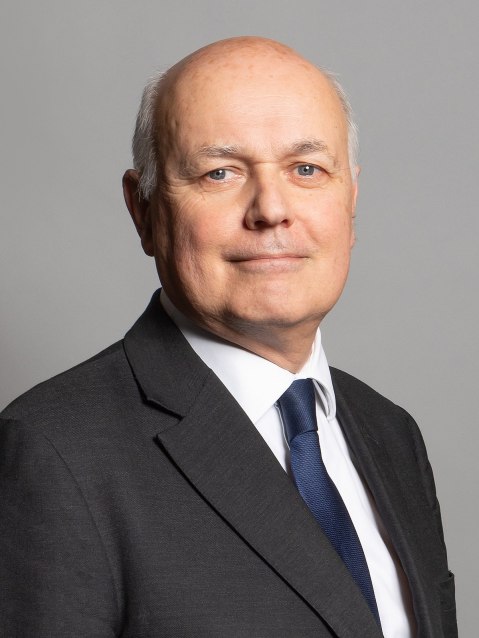
Official Commons portrait of Sir Iain Duncan Smith
On top of this he was a special expert adviser to Iain Duncan Smith in the coalition government from 2010 to 2013 at the DWP where in his words he “Played a substantial role the DWP’s engagement with the Treasury and Office for Budget Responsibility to secure the financial settlement for the reform programme” and “Worked in partnership with the senior officials delivering the Universal Credit”.
This was the time the Treasury insisted on speeding up the rise in the pension age to 66, refused to introduce national insurance auto-credits for women born in the 1950s while keeping them for men and imposed other welfare cuts.
And guess what Charlotte Pickles – also just appointed to SSAC- started her policy career at the Centre for Social Justice and then went on be the expert special adviser to Iain Duncan Smith at the DWP.
Critical friend
MPs did question Dr Brien thoroughly at the appointment hearing – with both Labour MPs Stephen McCabe and Debbie Abrahams pushing him on disabled people’s deaths and whether he was emotionally attached to Universal Credit. See here.
Dr Brien’s mantra was he would be impartial and he kept repeating he will be a ” critical friend” of the ministry.
I wonder. It depends on the balance of being friendly and critical. Either he will use his knowledge- he claims to be passionate about social security since he was 19- to try and make the new system work better. Or will he be part of the new Chumocracy – which takes in everyone from Dominic Cummings, the PM’s adviser and Michael Gove to Rishi Sunak – and give a fair wind to new benefit cuts no doubt with the approval of Charlotte Pickles.
I did an article for Byline Times on how the Conservatives through a former Vote Leave adviser are trying to pack quango appointments with Brexit inclined Tories – though it is not clear whether this is one of them.
I shall be watching. He can start with something he did promise to MPs over transparency. The minutes of SSAC should be public. They have not been published for over a year which is a disgrace. Let’s see how he gets on with this first.
Alexis Jay; Chair of the inquiry. Pic credit: iicsa
It is over six years ago that on Exaro News I worked with seven MPs from all parties to press Theresa May, then home secretary, to launch the Independent inquiry into Child Sexual Abuse. Now after two general elections only two – Caroline Lucas and Tim Loughton – remain as MPs.
Another Zac Goldsmith is now a government minister and peer. The remaining four Tom Watson, Simon Danczuk, Tessa Munt and John Hemming are Parliamentary history.
At the time with the help of Exaro colleague Mark Conrad, we drafted the letter that went to Theresa May – on behalf of the MPs- outlining the scale of abuse in the UK and citing specific cases and saying what needed to be tackled. She acted.
Tim Loughton MP
As Tim Loughton, a former children’s minister, put it at the time:
“Virtually every week, the public is bombarded with new stories about sexual abuse of children coming to light, yet they stretch as far back as the 1960’s.
“Few areas have been left untouched with increasingly alarming stories involving schools, churches, care homes, entertainment, sport and of course politicians and celebrities.
“Most alarming is a consistent theme of the reluctance or, more worryingly, the seeming complicity of police and other agencies to investigate the allegations seriously, and pursue the perpetrators rigorously.”
A lot has happened since – including the sentencing of Carl Beech, a paedophile , who made false allegations against prominent figures – as well as successful prosecutions in North Wales by the National Crime Agency – of paedophiles who got away with it for years.
Now the work of this inquiry has begun to bear fruit – and the publication this month of its over arching report into the Anglican Church and The Church of Wales is its most detailed investigation yet.
The report reveals both some progress and failure to tackle the problem. But I am pretty convinced without the catalyst of the national inquiry the Church would have continued to bury its head in the sand and still not taken half the measures it has.
The history of child sexual abuse in the church is damning. Since the 1940s as the report says 390 people have been convicted as sex offenders.
It goes on:” In 2018, 449 concerns were reported to the Church about recent child sexual abuse, of which more than half related to church officers. Latterly, a significant amount of offending involved the downloading or possession of indecent images of children. The Inquiry examined a number of cases relating to both convicted perpetrators and alleged perpetrators, many of which demonstrated the Church’s failure to take seriously disclosures by or about children or to refer allegations to the statutory authorities.”
As extraordinary are the figures spent on safeguarding children – see below. A pathetic £37,000 was spent for whole Anglican church in 2013 a year before the call for the inquiry . The last year for 2020 is not fully approved.
The report shows failings in the culture of the church which allowed paedophiles to hide and a highly complex devolved hierarchy which meant there are many gaps for allegations of child sexual abuse not to be reported because of the autonomy of different sections of the church. For example cathedrals are not as you might expect run by bishops but the Dean and Chapter. Also although safeguarding has now been highlighted, the people in charge are designated as advisers rather than officers, allowing the clergy the last word on whether action should be taken.
On the plus side it looks as though the Church is taking safeguarding seriously and training its staff about the issue. Newly recruited ordained priests seem to have the most detailed training and the church is at last doing criminal checks before appointing anyone to an important position.
There have been a number of attempts to check back on historical sex abuse allegations. The numbers checked look impressive at 40,000 but only 13 cases were identified as it was mainly a book keeping exercise.
Salisbury cathedral – one of seven dioceses where past cases of child sex abuse are being re-examined because they may not have been competently checked. Pic credit: Flickr
When this was re-examined by Sir Roger Singleton, a safeguarding expert, he recommended: ” An “updated version” of the PCR[ Past Case review} should be conducted in the dioceses of Ely, Lichfield, Rochester, Salisbury, Sheffield, Winchester, and Sodor and Man given “the absence of evidence that the Past Cases Review had been carried out competently in these dioceses”.
This is now being done again and will report in 2022.
counselling cancelled
The report also includes some rather horrifying cases because the system did not work properly. In one case a person who was claiming compensation from the Church’s insurers for past sexual abuse had his counselling cancelled because a lawyer advised the Church he shouldn’t have it since he was claiming against the Church,
It is also clear that much abuse was not revealed at the time. When the inquiry looked into a past case of Bishop Victor Whitsey, who died in 1987, but was during his career Bishop of Chester, Suffragan Bishop of Hertford at St.Albans and a priest in Blackburn and Manchester, some 19 people came forward saying he abused them including a brother and sister.
The report also discloses that there is still much to do . The Church is divided about mandatory reporting of child sexual abuse, with even the Charity Commission thinking they could be flooded with too many cases; the position over insurance and compensation for victims is unresolved and the process of clergy discipline measures needs reform and artificial time limits covering complaints removed. The rules over disclosure of child sexual abuse during confessions needs to change – exempting it from the sacred duty of confidentiality. And record keeping in the Church of Wales needs a thorough overhaul as there is a serious problem there.
The inquiry plans to come back over these issues and rightly so.
But perhaps one of the most chilling and sad paragraph in the report is a description of the Church’s problems with sexuality.
fear and secrecy over sexuality
“There was a culture of fear and secrecy within the Church about sexuality. Some members of the Church also wrongly conflated homosexuality with the sexual abuse of children and vulnerable adults. There was a lack of transparency, open dialogue and candour about sexual matters, together with an awkwardness about investigating such matters. This made it difficult to challenge sexual behaviour. Mr Colin Perkins, diocesan safeguarding adviser (DSA) for the Diocese of Chichester, told us that homosexual clergy may have found themselves inadvertently “under the same cloak” as child sexual abusers, who sought to mask their behaviour “in the same cultural hiding place”.
For those who follow this blog this report signals that I am back keeping a regular eye on child sexual abuse issues. Those who follow me on the fight for 50swomen know I don’t give up easily.
BackTo60 at the Royal Courts of Justice before the pandemic set in. They are now applying to appeal to the Supreme Court after losing their judicial review
I have given a long interview to Dave Niven, one of the country’s leading figures on the safeguarding of children, for socialworldpodcast on the issue of justice for the 50swomen. This podcast is aimed at the social work and caring professions and is watched by 2000 people in the field.
Dave contacted me after a gap of over 20 years because he had seen my writing on the plight of the 50s born women and wanted me to do an interview for his podcast. We last collaborated on a story in the 1990s when I was on The Guardian though both of us can’t remember what the story was exactly about.
He now runs his own consultancy, David Niven Associates (info@dnivenassociates.co.uk) which provides media training, and consultancy on child protection and safeguarding.
The podcast can be listened to here. That is the link to his site where you will also find other podcasts.
regular series of podcasts
It is part of a regular series of weekly podcasts on Thoughts on the Social World. Previous people who have been interviewed include Jim Gamble, a former national policing lead for child protection and the architect and CEO of the UK Child Exploitation and Online Protection (CEOP) Centre. He is now CEO of the INEQE Safeguarding Group. http://www.ineqe.com
He also recently interviewed Christopher Lamb, a former Australian ambassador and chief diplomat with the International Federation of Red Cross and Red Crescent Societies (IFRC) in Geneva. He is now an adviser.to IFRC and the Australian Red Cross.
My own interview covers the case I have made on my blog for justice and proper equality for the 50swomen. I also talk about the exposures I did on The Guardian which led to the resignation of Tory ministers Neil Hamilton and Tim Smith over the “cash for questions” scandal in the 1990s and the first resignation of Peter Mandelson from the Labour government over his hidden ” home loan” to buy a posh pad in Notting Hill. And also my award winning story on how the former head of the Student Loans Company devised a scheme for legitimate tax avoidance which led to the government discovering that they had 2500 civil servants doing the same thing.
Author and Poet Michael Rosen, recently recovered from Covid-19, narrates this short video on the exhibition
Migration Museum reveals the huge contribution of people overseas who came to the UK to work in the NHS
The NHS has been in people’s minds ever since the Covid-19 pandemic began and will continue to be so if there is a second wave of the virus.
During the worst part of the pandemic people came out in their thousands to clap and cheer the nurses, doctors, paramedics, care workers and ambulance drivers who work long hours in difficult circumstances to try and save people’s lives.
The Heart of the Nation exhibition puts a human face on the thousands of people who come to work and settle in the UK and take jobs in the National Health Service. People often say without them the NHS could not function and this exhibition rather proves the point.
It is not a sentimental account of the role of migrants helping the NHS to provide services for the last 72 years. It is a hard hitting. Some of it is “in your face”. It doesn’t pull punches about what it is like to be an immigrant in the UK.
A picture from the past: Nurses accommodation for new arrivals
It illustrates how migrants have over the years faced racial prejudice, hostility from landlords and even includes a racist cartoon in the national press. that would never be published now. It highlights migrants who found the traditional British diet tasteless and too heavy in carbohydrates which nowadays would be no problem with such a modern diverse range of cuisine in the UK. It includes some very tragic stories – including migrants who died in the Covid-19 outbreak while working in hospitals valiantly trying to save the lives of dying patients.
And it goes behind the scenes in the NHS to show the large number who work as porters and in the labs and stores.
But it is also a celebration – including a Spotify playlist of the music the migrants chose – and tales of young nurses dressed up to the hilt dancing all night to reggae and R & B only to shower and rush back to work at 7.0 am. And one of them was a founder member of a Notting Hill Carnival band designing the first colourful costumes that are a trade mark of that event.
As Allyson Williams said: “Carnival means so much to me. It has always been a celebration of our freedom and emancipation and acknowledgement of our ancestors. Here in London it’s all about family, community and inclusivity. “
“A story that needs to be told “
Aditi Anand, head of creative content at the Migration Museum and curator of the exhibition, said:
“Heart of the Nation highlights the vital role that migrants have always played in the NHS and the extent to which, just like the NHS, migration is central to the very fabric of who we are in Britain – as individuals, as communities and as a nation. Now more than ever, this is a story that needs to be told.”
You can download the digital exhibition here. As a Friend of the Migration Museum myself I am a supporter. But I think you will not be disappointed. It is an eye opener and reminder in times when populist nationalism is on the rise that Britain is also a very diverse and international country and all the better for it.
2020 was supposed to be the Year of the Bus. A newly elected Tory government promised £220m to improve services which had been in decline since 2010 when another newly elected Tory led government created the cuts.
The initiative ticked every election promise box. It was going to reverse service cuts – mainly in the shires as part of levelling up. It was going to produce a brilliant new demonstration package of co-ordinated bus and train services in Cornwall – one of the poorest areas of England. It was going to be green -promising the first total electric powered bus service in an English city. It was going to be faster with more dedicated bus lanes and expressways and it was going to be easily accessible by introducing a national data system for services and fares available on the internet.
Then came Covid 19. And as a new National Audit Office report revealed on Friday the bus plan crashed off the road.
unglamourous buses
Buses have never been a glamourous subject. As the NAO report shows they are mainly used by the poor, over 70s, the 17-21 age group before they get their own wheels and single women seeking a safe way home.
It also suffered huge service cuts and big fare rises for many of its passengers outside London. A useful map in the NAO report shows how passenger traffic has declined by an average of 10 per cent between 2010 and 2019 – falling highest in places like Tyne and Wear, Lancashire, Teesside, East Sussex and Lincolnshire but rising in Bristol and Brighton and Hove.
Pic credit: Suzy Hazelwood Pexels
Some 3000 routes have disappeared with bus mileage down from 243 million to 112 million and the average local authority support for services dropping 38 per cent with 42 authorities slashing expenditure by over 50 per cent. Some of the worst examples are West Yorkshire, Surrey and Northamptonshire. Average fares went up 18 per cent between 2010 and 2019.
free bus pass
The biggest cost to local authorities has been the free bus pass – now estimated at £650m a year – a national service – but funded by the local authority where you live. Funding from central government to bus operators has dropped from 31 per cent to 24 per cent between 2010 and 2019.
One of the problems is that since the de-regulation of services the government has had little control – so it can make a lot of noise about improving services – but it can’t force private operators to do it. The plan for a national data system for bus timetables and fares – depends on whether individual operators want to spend the money.
When Covid 19 hit the government was faced with a dilemma – only key workers were encouraged to use public transport – slashing revenue. The government did provide extra cash in tranches to bus companies to keep them going. But it also raided its shiny new support budget to improve services.
The plan for a co-ordinated Cornwall transport service from Plymouth to Penzance was dumped.
So was the money put aside to restore cut services. And it looks like – despite interest from 50 different towns and cities – to be the first to run an all electric bus service – is being delayed by Whitehall inertia.
And other promises to improve express bus services = especially in the West Midlands – have been undermined by the operators themselves.
First Worcester cut service
One check I did on Google First Worcester company had created a furore by halving the number of express buses between Worcester and Birmingham north of Bromsgrove – forcing people to use more expensive services elsewhere. Yet this is an area given priority in the government’s new bus plan and it happened before the Covid 19 crisis hit.
There are some bright spots. Bristol has improved passenger use by 36 per cent. Nottingham has increased bus use and invested in clean bio gas buses and new trams by imposing a work car parking levy. And London, which was not examined in this report, has seen bus use up 89 per cent.
The lesson is clear to all. Grandiose plans to ” level up ” the poorest parts of the country are going to be very expensive if they are to work. And if they don’t deliver there will be a political price to pay for falsely raising people’s hopes. You have been warned.