Government jumps Brexit by removing EU symbols from blue badges.
As you can see from the picture above the Government has sneakily already decided that Britain has left the EU as far as 2.35 million disabled blue badge holders are concerned.
My new card for my wife issued this week has been stripped of its EU symbols even before we have left the EU. It appears to reassure people by using nine foreign languages to describe it as a disabled parking card.
But investigating the real position of disabled driving post a ” No Deal ” Brexit this is totally misleading and could easily end up with holiday makers being fined in some European countries for illegal parking.
At present as a member of the EU all UK blue badge holders can get concessionary parking in virtually all European countries. If they hire a car they can take the blue badge with them as it is not tied to a particular vehicle. And the Independent Living advice site thinks nothing has changed. It says:
“It is not likely that Brexit would lead to the UK changing the format of the Blue Badge, so there is no obvious reason why it would not continue to be recognised across Europe, in the same way as those issued in Switzerland and Norway. “
However a more detailed investigation on a disabled motorists site paints a different picture.
It shows that once Britain leaves with a No Deal using this card will vary from country to country. In Spain, Switzerland, Denmark, Sweden, Ireland, Iceland, Norway,Austria, Poland,Luxembourg, Romania and Cyprus there will be no problem.
But in France, Croatia, Finland,Leichenstein and Latvia the card won’t be recognised because we are from a third country.
In Germany you will have to notify the local council or police and get a card to park as a disabled driver.
And it may not be recognised in Holland, Belgium or the Czech Republic because it does not have a disabled wheelchair sign on the card.
In Malta and Portugal you must apply in advance for a special card if you want to use it. At present as a member of the EU you have no problems and can use the Blue Badge Card.
In Italy you have to check with the local council – it will vary from city to city where you can use your card. At present you can use it everywhere. The same applies to Lithuania and Hungary.
In the UK it is being left to the local council’s discretion whether they want to recognise blue badges from other EU or European Economic Area countries.
So far as I can see the government does not seem to have thought about it at all – most advice dates from 2008 and 2013 on Whitehall websites.
Therese Coffey in relaxed mood: Pic Credit: Daily Mail reproduced on Twitter
Boris Johnson has appointed one of the most hard line and
divisive women to replace Amber Rudd as secretary for state for work and
pensions. The new secretary of state’s voting record reveals a tranche of reactionary
views likely to be offensive to gays, women, pensioners and non smokers. She would
also like millions of Europeans who live in the UK to have no right to stay
here.
Cigar smoking Therese
Coffey, MP for Suffolk, Coastal, would like to lift the ban on smoking in
public places, bring back limitless betting odds on addictive gambling machines
and is an opponent of gay marriage. Her voting record is recorded on Theyworkforyou.com
There are no deep coal mines in the UK. There are no coal
miners. There are no brass bands attached to a living colliery and there no new
union banners for new pits. And soon, under new environmental rules, the sale
of domestic coal, except for smokeless fuel, may be banned.
So one would think that an event called the Durham Miners
Gala would be consigned to our nostalgic past with a few old men having a pint
down the local working men’s club.
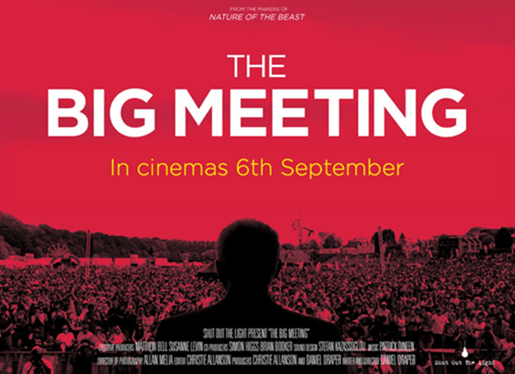
But the facts contradict this. A new film released on Friday The Big Meeting by director and producer Daniel Draper two years after the last pit closed in the UK in 2016, shows the very opposite with a thriving modern festival in the City of Durham attracting over 200,000 people. It is a tribute to the almost eternal traditions of community, solidarity and fraternity that lives on long after the last mine closed.
It is warm almost affectionate appreciation of one of Labour’s
major festivals seen partly through the eyes of a diverse group of individual
participants, including a 19 year old Oxford undergraduate who runs a local
left wing bookshop in her vacations; a Waspi group of middle aged women
campaigning for their pensions and a woman who plays in a brass band.
The film itself interweaves the past and present with split
screen and colour and black and white clips contrasts the old celebrations with
the new. It has clips of Prime Ministers like Clement Atlee and Harold Wilson
addressing the meeting from the balcony of the Durham County Hotel when the
National Union of Mineworkers was a major force in the land to today’s
political participants including a video from presidential hopeful Bernie Sanders
in the States to Jeremy Corbyn, the current Labour leader.
It shows how the country has changed. One black and white
sequence shows young lads and lassies (well before the contraceptive pill)
cavorting in the fields and woods round Durham – as the festival was the place
where young miners could meet people of the opposite sex. This is contrasted
with today’s festival highlighting gay rights.
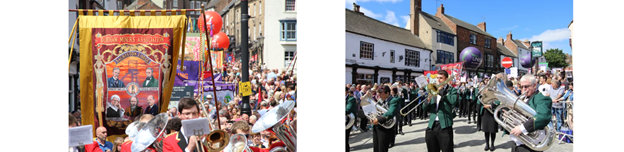
Banners and brass bands at the Durham Miners Gala
There is very raw emotional coverage of the music of brass bands – which, if anything, have expanded – with bands from places like Bristol which never had a pit to the US band players– participating with bands that have survived their pit closures. And there is in an interview with a woman who still makes these huge union colliery banners and is both reviving old lost ones and making new ones.
There is also clips of current pop artists who attend the
event including Billy Bragg.
The climax of the festival is a service inside Durham
Cathedral with the brass bands that have marched through the streets converging
on the city’s huge place of worship.
This is the film that both tells the history of a 135 year
old event and captures the spirit of it today.
As the director said: “I don’t think words can do justice to
such an occasion – I feel like the Gala is a living and breathing organism,
something not static, but immovable – a celebration of working-class life, not
just today, but almost as if it takes place in the past and future
simultaneously. I suppose this film is an elaborate explanation of something
wonderful and beyond words.”
The BIG MEETING. On release from September 6 and shown first in South Shields, Newcastle, Glasgow, Durham and Halifax. It is produced by the independent Shut Out The Light company
Contributors:
Contributers: Jeremy Corbyn, Dennis Skinner, Ian Lavery, Richard Burgon, Angela Rayner, DBC Pierre, John Irvin, Paul Mason, Margaret Aspinall, Selina Todd, Robert Colls, Ross Forbes, George Robson, Heather Wood, Heather Ward, Stephen Guy, Charlotte Austin, Laura Daly, Lynn Gibson, Mike Jackson & Brett Haran (LGSM), Ben Sellers, Liam Young, Emma Shankland, Robert McManners, Jake Campbell-Morris.
Lord Fowler, the Lord speaker Pic credit: Parliament.uk
Boris Johnson has shot himself in the foot over plans to
flood the House of Lords with up to 100 No Deal Brexit supporting peers and simultaneously
planning to prorogue Parliament.
The scheme announced over the Bank Holiday weekend has already run into serious trouble in the Lords.
In an article in Byline Times I explain how the PM has now annoyed the Lord Speaker Lord Fowler as well as John Bercow, the Commons Speaker- and how his plan will run into the ground through House of Lords procedures and a competing peerage list from Theresa May. See here
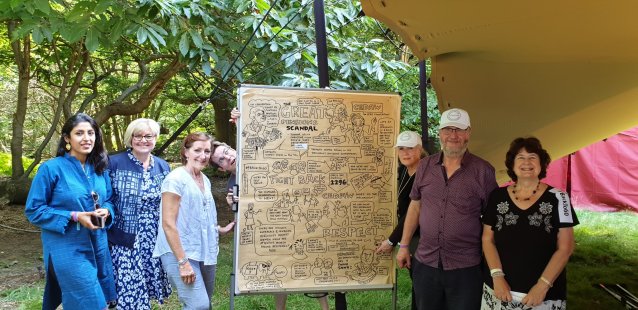
Panel and a great cartoon depicting our debate after the Byline session From left to right.MC Aisha ali-Khan; Jackie Jones MEP; Christine Austin, Joanna Welch, myself and Dr Davina Lloyd
This weekend I had the honour of chairing a session at the Byline Festival for BackTo60 Campaigning Group in Ashdown Forest in East Sussex.
The occasion was important for giving wider publicity to a new generation how successive government’s cruel treatment of a large group of 3.8 million women who are waiting up to six years for their pension. And also to show to the young that by having guts and determination ( which the 5,000 people at Byline Fest have in droves) us oldies can also press our case home by arguing and succeeding in getting a judicial review to try and remedy this injustice.
It was also to warn them that this group will be the first of many to find themselves in a similar predicament. This is particularly so if former Department of Work and Pensions Secretary Iain Duncan Smith’s charity, the Centre for Social Justice, succeeds in getting the UK to have a retirement age of 75 by 2035 – giving it by then the dubious accolade of being a world leader in forcing people to work until they drop.
Amber Rudd, the current Secretary of State for Work and Pensions, says the government won’t do it, I don’t believe her. For the role of think tanks is to influence government and prepare the people for the changes they want, and this is the think tank that proposed Universal Credit, which any self respecting person will think has been an unmitigated disaster for the poor and the disabled.
The story of the pension scandal that hit the 50s born women is not a boring pensions tale. It covers Whitehall skulduggery, effectively saving £271 billion of public money by removing the Treasury contribution to the National Insurance Fund; a failure to properly communicate the change in pension age from 60 to 65 and then 66 to the people affected until it was too late for them to do anything about it.
And the revelation of the hardship, and misery it had inflicted on people driving them to despair even suicide as they haven’t the money to live on.
And finally the fake news that we are all living longer – which has hardly been the case since 2011 when it flatlined. It has only been the wealthy who are living longer, for the poor in part of the UK like Glasgow and Blackpool it has started to fall.
It also a tale of hope – of challenging the government in the courts and finding a legal mechanism – a temporary special measure – which can be used to redress this balance – thanks to the work of one of the speakers at the session, Jackie Jones, MEP for Wales and a former professor of feminist studies at the West of England University.
What was gratifying was the interest among the young and older festival goers who came to listen. They engaged with the issue, asked pertinent questions, even if some were shocked at the antiquated attitudes in the 1970s when Dr Davina Lloyd, revealed that she was banned from going to university in the 1970s because she was a married woman and was expected to stay at home. She was saved by Roy Jenkins, who went on to become home secretary, who passed a law allowing married women to train as teachers.
Members of the panel did a YouTube film with the Byline Festival after the session. It is below.
Video taken by Byline at the Byline Festival which explains all the issues from the members of the panel. From Left to right: Jackie Jones, MEP;Christine Austin, Joanne Welch,Hannah Manza, Davina Lloyd.
From Left to right: Unison’s national pensions officer, Alan Fox; Jackie Jones, Labour MEP for Wales; Sian Stockham, senior vice president Unison and Gloria Mills, national secretary, equalities,Unison., knocking at Downing Street’s door.
A group of leading BackTo60 campaigners and top people from Unison, the public service union, today delivered a personal letter to Boris Johnson calling on him to act to pay out the money owed to 3.8 million women whose pensions have been delayed by up to six years.
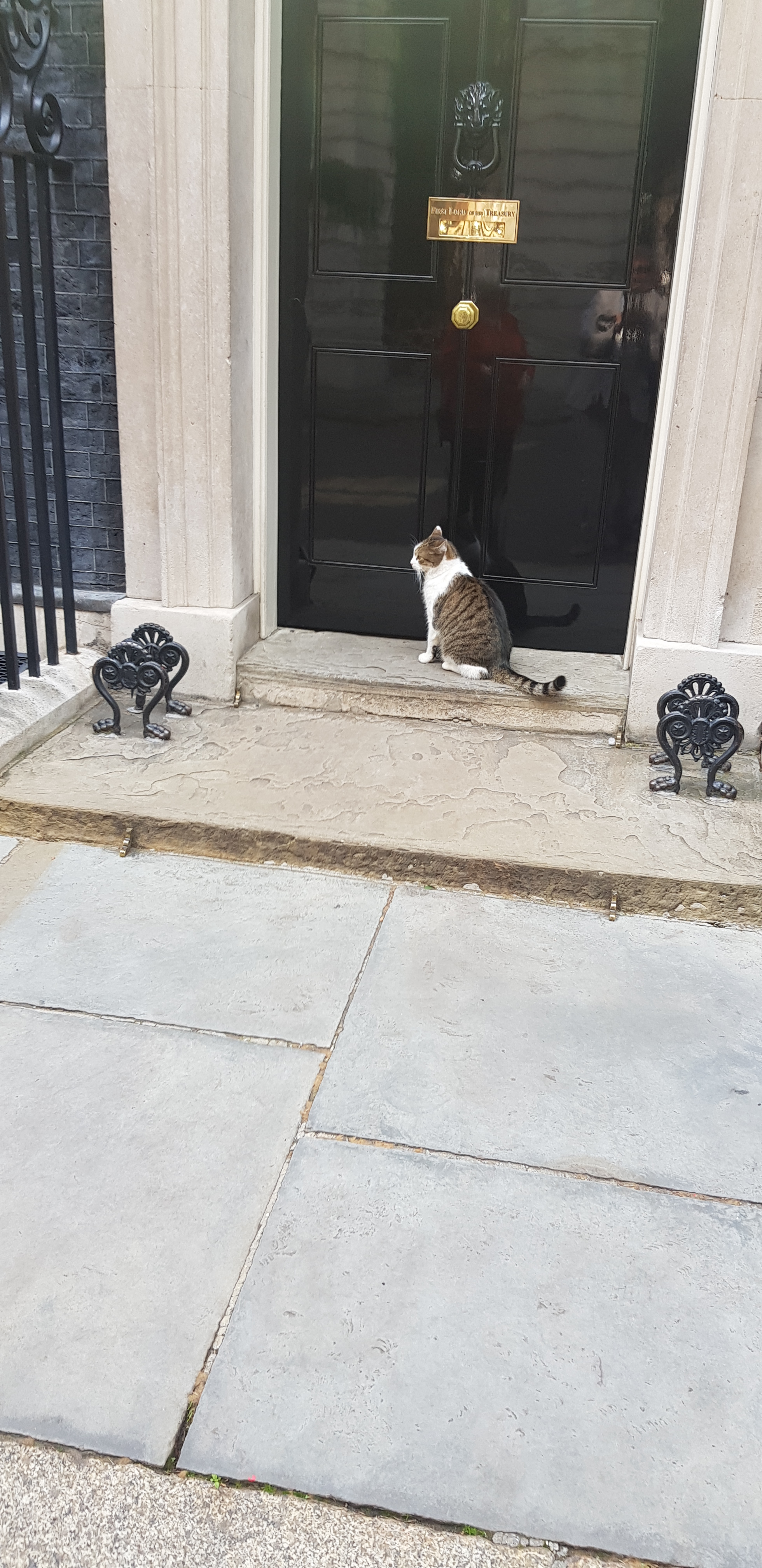
The delegation went direct to Downing Street preceded by Larry the Cat to press Boris Johnson to fulfill a pledge that he would look again at the problem for this particular group of women, many of whom have driven to poverty by the decision enacted by successive governments.
They are backed by a petition signed by 177 MPs of all parties calling for a Special temporary measure to grant the money owed without reversing the existing pensions legislation by returning the pension age to 60 for women.
The full delegation were Prof Jackie Jones, Barrister, MEP, Wales; Gloria Mills CBE, National Secretary, UNISON, Equalities, Sian Stockham, Senior Vice-President, UNISON, Alan Fox. National Pensions Officer, UNISON, Joanne Welch, Campaign Director,BackTo60.com and Callum Jones, Undergraduate.
Prof Jones said “It’s beyond time for women to have equal rights and equal financial entitlements for years of service. Equal pension is part of this. No way are women going to settle for anything less.”
Gloria Mills said”1950s women deserve their full state pension now and the government should act by using the Temporary Special Measure contained to right this wrong. UNISON the UK’s largest trade union with 1 million women members will continue to fight for pension justice for the 3.8 million women born in the 1950s many of whom are UNISON members.”.
She added: ” The recent idea that people may have to work to 75 is a disgrace to all working people. All these women have been discriminated against all their life by not being able to claim a pension while they are working part time or bringing up a family. Their pensions pots are miniscule compared to many men.”
Jackie Jones MEP and Gloria Mills
Sian Stockham said : ” Some women who just paid the married woman’s pension have been left with the disgraceful sum of just 10p a month which is a disgrace.
Callum Jones, an undergraduate student who joined the delegation said : “It is clear to see that the government is trying to take advantage of vulnerable members of society and if we don’t look after the most vulnerable members of our society what kind of society would we have.”
Delegation including myself in front of Downing Street.
Earlier petitions, one of which reached 728,000, were delivered to former Prime Minister, Theresa May on 3 separate occasions: It was ignored and this led BackTo60 to succeed in getting o a Judicial Review, held on 5th and 6th June was hthe Royal Courts of Justice,t and the Reserved Judgment is due soon.
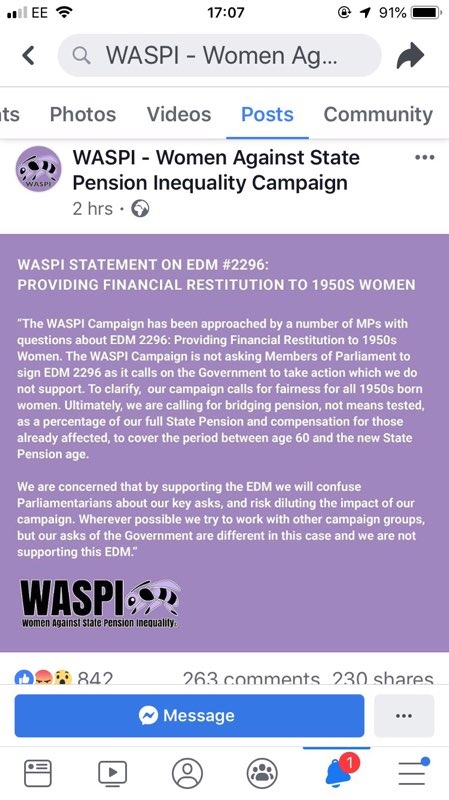
In a rather bizarre move this May WASPI Ltd, which also represents some of the women, tried to urge MPs not to sign the motion calling for the restitution of the money to the 3.8 million. They believe the women should only get a bridging loan which will have to be paid back by having reduced pensions for life.
But this action is rather late as 177 MPs have already signed and the motion was delivered to Number Ten demanding full restitution today.
This is the Waspi Ltd statement re the EDM sponsored by Ann McMorrin MP for BackTo60Larry The Cat
Parliament’s financial watchdog announced the “super
investigation” a week after Parliament rose. It now includes the extra £2
billion Johnson earmarked this month for “turbo charging” the No deal process.
It follows a total of
24 reports by the NAO on Brexit since 2016 which highlighted scandals and
public waste. This included the exposure of former transport secretary Chris
Grayling’s mishandling of No Deal Brexit freight contracts which cost the
country over £50m including paying Eurotunnel £33m in an out of court
settlement.
The Swiss will introduce work quotas, the Danes and Estonians will treat new Brits settling there after Oct 31 under the Alien laws and the Belgians will introduce tough border checks to see whether we have enough money to holiday there.
All this is in new legislation already passed by many of the 31 countries in Europe to counter Boris Johnson’s No deal Brexit on October 31.
Read the full story with all the facts on Byline Times here. Plus you can check the new legislation yourself – most of it in English – by going to an expat blog Dispatches Europe.
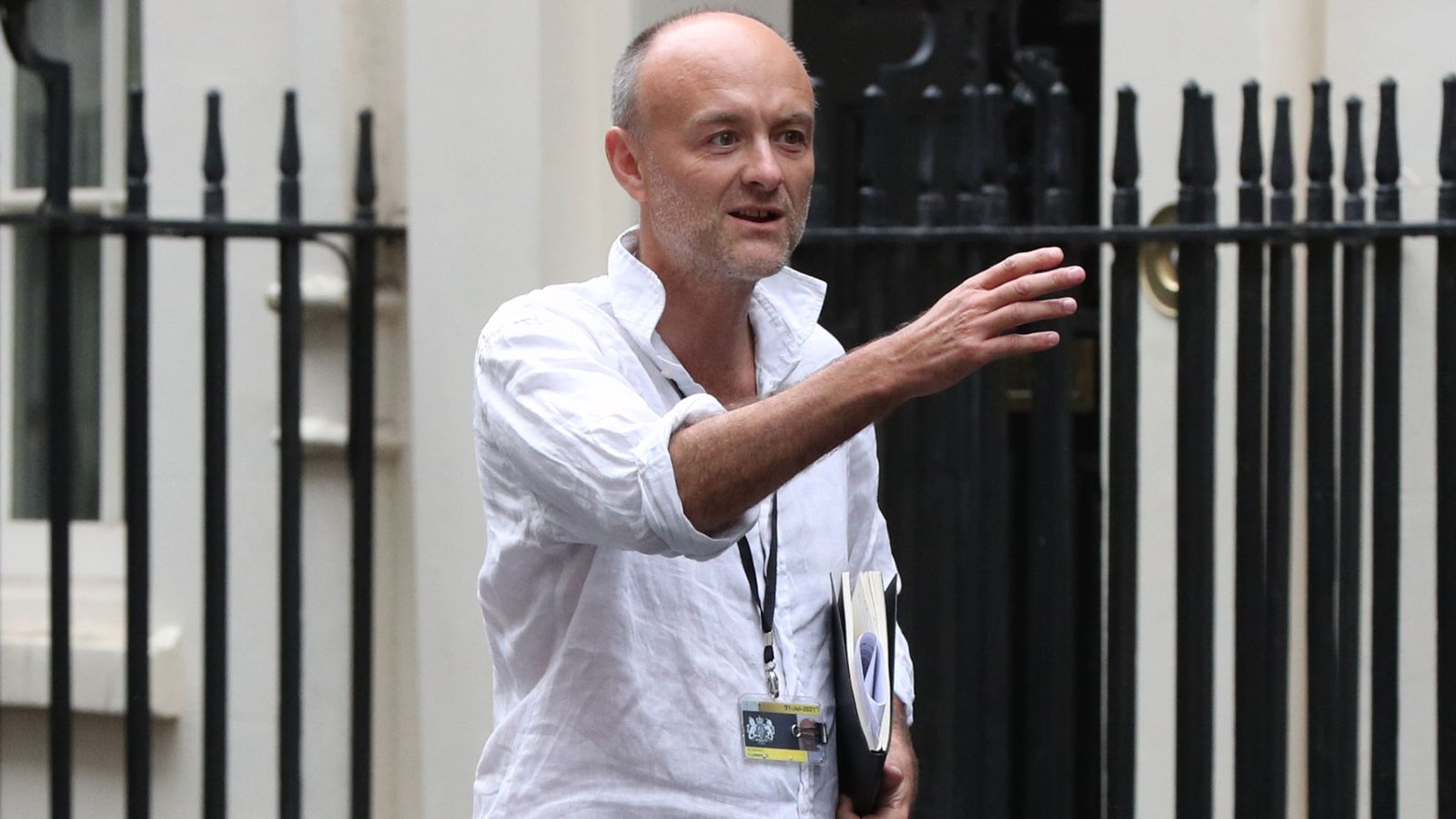
Dominic Cummings: Boris Johnson’s right hand man . Pic credit: Sky News
Halloween or October 31 may be more of a dramatic day this year than just the date set for a ” no deal ” Brexit.
It could also be the day of the next general election – if
the ruthless approach by Dominic Cummings, Boris Johnson’s chief executive to
get Brexit done is a top priority.
I have no inside information but logic points to this
possibility now the political scene in Whitehall has changed beyond all
recognition with the election of Boris Johnson as PM and surrounding himself
with a Vote Leave government.
With a majority of one it is quite clear that Johnson cannot continue as PM until 2022 and hope to get anything through Parliament. But he needs to choose a general election date with considerable care. Too early and he risks a more resurgent Remain Parliament since the Liberal Democrats ,SNP and Labour will campaign against a “ No deal” and move to revoke Article 50. Too late and he could face a backlash if “Project Fear” turns into “Project Reality” and the experience of Brexit goes sour on the British people.
Carl Beech: !8 year prison sentence for perverting the course of justice and fraud Pic credit:BBC
The Carl Beech verdict is a blow to child sex abuse
investigations. After the trial and thorough investigation by Northumbria
Police Beech he emerged as a prolific, manipulative and malicious paedophile
who made false allegations against powerful people and sparked off a huge
investigation by the Met Police.
Both myself and the reporter, Mark Conrad, who investigated Beech, part company with Exaro’s former editor in chief, Mark Watts, in deciding that the verdict was “unsafe” or that he didn’t get a fair trial. Beech chose not to call a single witness in his defence and when the net was closing he fled the country.
Now the question is asked should journalists have ignored him from day one and reported nothing taking the line that no one in “the great and good” has ever sexually molested a child and anybody alleging that is a fantasist.
Or should we try diligently to get to the truth of the matter given the limited tools journalists have compared to a police force or the powers and scope an inquiry can have to investigate a case?
The simple solution is to say allegations, particularly
historic, of child sex abuse, are so problematic, so difficult to prove, that
anybody coming to a journalist suggesting they are a survivor of sexual abuse
should be turned away. That would a devastating to the many thousands of
survivors themselves who would have no other recourse other than going to an
overworked police force. It wouldn’t be just a case of not being believed but
being ignored.
It was also play into
the hands of any paedophile to do what he or she liked – knowing their victims
would never be listened to and they could hide behind the new populism that
most child sex abuse in the UK is just a string of false allegations.
The latter fact is wrong. If you look at recent convictions
hardly a week goes by -without either individuals or paedophile gangs being
convicted in the courts- and that includes historic cases.
While Operation Midland was going on the National Crime Agency successfully prosecuted people in North Wales – including a police superintendent – the late Gordon Angelsea- who had denied child sex abuse crimes for years and successfully sued Private Eye and the Observer. He was one of 11 people so far successfully prosecuted through Operation Pallial including John Allen, an owner of children’s home and gang of five paedophiles led by a former professional wrestler.
Gangs have been convicted in Rotherham, Hull, Stoke on
Trent, Rochdale, Lichfield and Newcastle upon Tyne to name a few.
And the idea that there isn’t a single prominent person who
indulges in child sex abuse has been proved untrue with the conviction of the
late Bishop Peter Ball, Bishop of Lewes and Gloucester, who convinced people at
the very top, including Prince Charles, for years that accusations against him
were a pack of lies. And Sir Cyril Smith MP whose escaped crimes in Rochdale were
exposed in a report by the Independent Inquiry into Child Sexual Abuse.
The only way you can investigate child sex abuse is to look
for any outside facts that might stand up the likelihood of the case, test the
person’s knowledge of the places where it is alleged to have happened and do a
thorough test to see if the “ victim” can identify his perpetrator. You also
rely on other people – not sexually abused themselves – to act as whistleblowers
or people in authority at the time who can stand up the circumstances of a
story.
The problem with the Carl Beech investigation was the way he undermined any diligent reporting by meticulously researching details about his victims and their premises so the” right” answers would come out.
The other was the odd way Exaro was run. Unlike nearly all news organisations there were no internal news conferences where ideas could be swapped and challenged. Reporters were forbidden from discussing the individual child sex abuse case they were investigating with any other reporter.
As a result I did not
know the true identity of Carl Beech until it was made public. I have never met
him, never exchanged any emails or talked to him.
Perhaps he would have
been exposed if a tech savvy reporter had seized his computer – but I doubt the
public would support journalists seizing other people’s computers while they
were conducting investigations.
There has been
criticism of my colleague Mark Conrad for conducting a picture identity test
after Beech had alleged 12 people had sexually abused him. He tells me that consisted of inserting the
12 into 42 different people and took place before the police started their
investigation.
The reason why it was done was because of the disastrous episode on BBC Newsnight where the survivor Steve Messham was never shown a picture of the late Lord McAlpine who was wrongly alleged to have abused him – which would have prevented a false allegation circulating on social media..
Investigating historic child sex abuse is one of the most
difficult areas to do in journalism. Carl Beech has made it even more so. One
lesson is that people who say they were sexually abused will in future have to
face more scrutiny by both the police and journalists investigating their
claims. The law about anonymity for
people being investigated for child sex abuse might have to be tightened up –
though I would be careful in advocating this.
But what must not happen is that the default position should move from believing a survivor to taking the view that the accusation is false. That way would provide paedophiles – who are the most cunning and manipulative of all people – with a free market to abuse whoever they wish and get away scot free.





 Westminster Confidential