Top lawyer faces storm over ” perceived conflict of interest” in government job

David Isaac Pinsent Masons

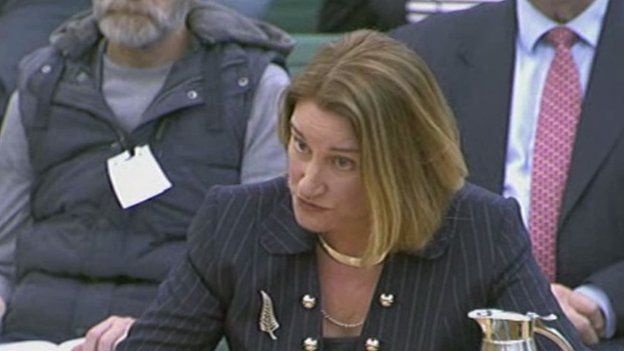
David Isaac: Controversy over his planned appointment to chair the Equality and Human rights Commission

Nicky Morgan education secretary Wikipedia

Nicky Morgan : education Secretary who recommended his appointment as preferred candidate


CROSS POSTED ON BYLINE.COM

A row will break out when Parliament returns over the government’s choice for the new chair of Equality and Human Rights Commission.

The Joint Committee on Human Rights and the Women and Equalities Committee have delayed approving the government preferred candidate, David Isaac, a lawyer earning over £500,000 a year because of a “ perceived conflict of interest “ between his new job and his  firm’s financial interests.

The chairs of both committee, both experienced ex ministers, Harriet Harman and Maria Miller, have decided to summon Nicky Morgan, the education secretary who has responsibility for equalities; Sir David Normington, Commissioner for Public Appointments and Sue Gray,Director-General, Propriety and Ethics Team at the Cabinet Office, to a hearing as soon as possible after Parliament returns. I have written about this in Tribune magazine..

The row followed the disclosure during a pre- appointment scrutiny hearing  before Easter that Mr Isaac, a partner in lawyers Pinsent Masons, would keep a equity share holding in the firm while being the new chair. The British law firm has global ambitions.

Pinsent Masons has substantial government contracts  in fields covered by the commission and Mr Isaac would stand to get a share of the profits from these contracts. He earns £500,000 a year as an equity partner compared £50,000 as part time chair of the commission.

The committees were promised that there would be “Chinese Walls” created to ensure Mr Isaac would have no say over any new contracts but were not satisfied and asked to see documentation to ensure that this was the case.

The committees then consulted their panel adviser on the matter and got nowhere.

As the letter  from the committee chairs to Nicky Morgan says: “The Committees sought information from the panel assessor who will have considered in detail potential conflicts of interest as part of the process that determined Mr Isaac is an ‘appointable candidate’.

“ However, we were told that under the terms of the Liaison Committee and Cabinet Office guidance such documents could not be released to the Select Committees either in part or in full. As a result, the committees were unable to undertake one of their purposes as set out by the Liaison Committee terms of reference: “scrutiny of the quality of ministerial decision-making”.

A spokesperson for the Government Equalities Office said: “David Isaac has an impressive track record and brings a range of experience both from his work on LGBT issues and human rights and as an experienced lawyer. We believe that as chair of the EHRC he will be a strong and effective advocate for equality and human rights in Britain.

“We are confident there are no actual or perceived conflicts of interest. All possible conflicts were explored during the recruitment process, which was overseen by the Office of the Commissioner of Public Appointments. In addition, as is usual with significant appointments such as these, there will be a clear framework in place to avoid any potential perceived conflicts.”

His biography on Pinsent Masons says :

“David is a partner and head of the Advanced Manufacturing & Technology sector. He specialises in providing clients with strategic advice on major public and private sector UK and global commercial and outsourcing projects.

Independently recognised for his wealth of knowledge and experience, David leads teams of lawyers on major projects for amongst others DWP, the Home Office,  Transport for London and BP plc. He lectures and writes extensively on IT and legal matters. He is Chair of Modern Art Oxford, a Director of the Big Lottery Fund and a Trustee of both the Human Dignity Trust and 14-18 Now.  He was Chair of Stonewall from 2003 to 2012 and a Trustee of The Diana, Princess of Wales Memorial Fund from 2005 until it spent out in 2013.”

Is Lowell Goddard moving towards a ” Show Trial ” over the Westminster Paedophile Ring?

lowell goddard

Justice Lowell Goddard giving evidence to House of Commons home affairs committee today. Pic credit: BBC

CROSS POSTED ON BYLINE.COM

Last month I  highlighted Ben Emmerson’s opening address to the Goddard Inquiry in which the leading counsel raised the argument of examining false accusations of child sex abuse and finding  against those who made them – effectively putting ” survivors on trial “.

I wrote: “this threat …must be very real for survivors who may want to give evidence in highly contentious cases. If  it does – sometime down the route – look at the Westminster paedophile ring – will ” Nick ” be expected to testify and face questions from lawyers for Harvey Proctor  who is alleged to be his abuser ( and vociferously denies it)- at the risk that a ” court” will decide he could be publicly condemned for going to the police in the first place.”

Now Lowell Goddard has confirmed this in an otherwise finely balanced statement issued surprisingly on All Fools Day ( but then she is a New Zealander and may not have known).

In it she says:

“. I am committed to ensuring that we hear all relevant testimony, including from victims and survivors as well as from those affected by false allegations of abuse. As I announced in November last year, the Inquiry intends to explore the balance which must be struck between encouraging the reporting of child sexual abuse and protecting the rights of the accused.  

I am determined to get the process of the Inquiry right.

I will ensure that all relevant evidence is considered. As is standard practice in public inquiries, questions to witnesses will normally be asked by Counsel to the Inquiry whose role will include, where necessary, the exploration of witness credibility. Affected parties will not ordinarily be permitted to ask questions of witnesses directly, but as I said in my Opening Statement in July 2015, affected parties are entitled to make an application to ask direct questions and I will grant those applications if fairness requires it. “

Yes there is a point here but the press seem to have immediately interpreted this to mean that  Harvey Proctor will have his day in court so he can condemn ” Nick” and ” Nick’s ” credibility will be judged by Lady Goddard and Ben Emmerson.

I am not going to comment further on Proctor’s case  but  draw attention  to another scenario.

Dame Janet Smith’s conclusion on the Jimmy  Savile scandal at the BBC concluded that  paedophiles were both very clever and manipulative ( Harvey Proctor’s lawyers please note this is not a reference to him).

Now just imagine if Bishop Peter Ball had appeared before Goddard after he had been first cleared but well before his recent conviction as a sex offender in a fresh police investigation.

Justice Goddard and Ben Emmerson would have heard what a decent and well respected chap he was from George Carey, Archbishop of Canterbury, Tory Mp, Tim Rathbone, Lord Justice Lloyd and ex Tory minister Sir Tim Renton. What chance would any  survivor have against such a phalanx of the great and good to be ” credible” let alone ” credible and true”. I can just imagine the line of questioning from Ben Emmerson and he wouldn’t be hauling the former Archbishop of Canterbury over the coals.

And how utterly stupid Lowell Goddard and Ben Emmerson would have looked when a subsequent police inquiry found the Bishop guilty.

The pitfalls of handling the Westminster paedophile allegations in such a way should be clear to see and the inquiry better think very carefully about how they are going to do it. And survivors again the  Latin words ” Caveat Emptor” – buyer beware – should be utmost in their minds  before taking part in such an inquiry.


Facebook to challenge sex offender’s right to privacy and excessive damages in Northern Ireland test case

Belfast High Court

Belfast High Court Pic Credit: BBC

CROSS POSTED ON BYLINE.COM

An extraordinary judgement which I reported last year  banning a Facebook page about a convicted paedophile and awarding  him £20,000 damages for harassment is to be challenged in the courts next week.

Facebook is challenging  this decision in the Northern Ireland Court of Appeal claiming the damages awarded to the  sex offender were excessive and he could not reasonably expect privacy following his conviction for offences in the courts.

The case arose after  Joseph McCloskey set up a Facebook profile page called ” Keep Our Kids Safe from Predators 2 ” which posted information about a convicted sex offender called CG.

None of the information published  by McCloskey was private. It was all in the public domain at the time of CG’s conviction. CG’s solicitors complained to Mr McCloskey  who immediately removed all postings relating to CG.

The posts are said to contain threats of violence against the paedophile which judge took particular exception.

But the lawyers weren’t satisfied and went to court claiming the sex offender had been harassed on Facebook and his human rights breached by the publication on Facebook.

The judge found against the campaigner and Facebook and awarded the sex offender £20,000 damages for harassment.

Facebook is now challenging this judgement. There is an  excellent report on the Inforrm blog by trainee barrister Aiden Wills which goes into the legal details of Facebook’s challenge.

Facebook is particularly challenging the judge’s ruling that it should have had detailed knowledge and awareness of what Mr McCloskey wrote -pointing out that such a ruling would mean they would have to have detailed knowledge of every article put up on a Facebook site and whether it could be considered illegal. The case promises to be an interesting one.

UPDATE: The judge has reserved judgement on the case after a two day hearing. Joseph McCloskey did not attend the court as there was a dispute as to whether he was entitled to legal aid.


Child Sex Abuse Justice: Premier League or Eton Mess?

Adfam Johnson pic credit BBC

Sunderland player Adam Johnson; Pic Credit: BBC

ANdrew Boeckman (1)

Andrew ” Picard ” using his father’s surname in an US swimming competition. Picture by I & M Galleries. Photographer: Nicole Harnishfeger

CROSS POSTED ON BY-LINE.COM

Two very high profile cases  involving child sexual abuse have recently hit the headlines. One involved the Premier League footballer Adam Johnson, capped 12 times for England. The other involved Andrew Picard ( who used his mother’s name rather than his father’s surname), an Old Etonian from a wealthy , well connected family.

Adam Johnson was given a six year prison sentence for grooming  and sexually assaulting a 15 year old girl, a Sunderland fan besotted with him.

As the BBC reported Judge Jonathan Rose told him he had abused a position of trust and caused his victim “severe psychological harm”. He told Johnson, 28, he had engaged in sexual activity with her knowing she was under 16. Police  also found extreme pornography involving animals on Johnson’s laptop.

Andrew Picard, 18, was spared jail and given a 10 month sentence suspended for 18 months after the police found  over 1155 indecent  children images on his computer in his Eton College dormitory. Like Johnson some of the images involved animals. The judge described some of the videos – which included abuse of babies and toddlers – as “so appalling, frankly I can’t bring myself to talk about it.”

One of his videos showed a girl as young as three being raped, while others showed young children being forced to have sex with dogs. He also shared these videos and images on a chat room where he was unmasked by undercover police.

Now I am not going to defend Adam Johnson or  challenge the sentence he received. He is a Premier League football player who used his  position in society  to take advantage of an under age girl who obviously had a crush on him, and  he took an unhealthy interest in  extreme sex.

But I do think there is an element of rough justice when you compare the sentence handed out to him and the one given to Andrew Picard.  Adam Johnson is a Northern  working  class lad educated at Easington Community College who suddenly became rich through his footballing skills.

Andrew Picard is  the son of a very wealthy American lawyer living in Westminster and has yet to prove himself in any career. Johnson is splashed all over the tabloids, Picard was initially covered by  the tabloids  but already  reports about his case have been taken down by one newspaper and he is starting to  disappear off the internet.

The Mirror reported in a now withdrawn article: ” Sallie Bennett-Jenkins, QC referred to her client’s remorse and pointed to the good work he had been doing with doctors in the past year, undergoing constant treatment with numerous doctors and psychiatrists.

“This is a young and very able man who has hopes for the future,” she added.

“He was able to have this opportunity [to seek help] and this was something Andrew sought for himself, by himself.”

Sparing Picard jail, Judge Ross said a term of custody would undo the good work he had done in the past year undergoing extensive counselling.

He said: “This defendant Andrew Picard was a privileged young man. His family are clearly wealthy enough to send him to school in Eton.

“Quite how you found your way into this unpleasant world Mr Picard, the world of chat rooms and exchanging this material, is not clear to me.”

Now there could be some  mitigating circumstances.which are highlighted by Matthew Scott’s barrister blog.  He points out that but for the delay in bringing the case to court Andrew committed the offences at the age of 17 when he would have been granted anonymity and the press could only say he was a public schoolboy. As it is his father was spared embarrassment by him being charged in his mother’s name – even though this failed when the press found  his surname. I am curious that the Crown Prosecution Service allowed him to be charged under a different name.

More interestingly he points out that the judge imposed an order that could still land him in prison. As he writes : ” Those who think the judge was going soft on Mr Picard need to ask themselves why, if that was the case, did he impose a Sexual Harm Prevention Order (breach of which carries a prison sentence of up to 5 years)? The law did not require him to impose it, he chose to do so. ”

But my view is that this sentencing reflects the present divide in society. The full force of the law comes down on a working class footballer but the law is generous to the crimes of an Old Etonian. I only hope the psychiatrists,doctors and counsellors treating Andrew Picard can get him to change his ways.He is lucky his family can afford them, unlike many child sex victims.


.


Heritage railways: Nearly a very nasty train crash

steam locomotive tangmere

Tangemere – the steam locomotive involved in the ” near miss” train crash. Pic credit: Wikipedia

CROSS POSTED ON BY-LINE.COM

The nostalgia for the age of steam has been turned into a profitable business. Rail trips using historic steam locomotives are very popular at holiday times. I enjoy them myself. They are not cheap but then safety standards for the travelling public need to be very high and it costs a lot of money to maintain steam locomotives.

Last year on one of these trips there was nearly a catastrophic train crash.  A steam special from Bristol run by West Coast Railways overshot a red light at Wootton Bassett in Wiltshire coming to rest on the South Wales main line only a minute after a 125  First Great Western express to Paddington had passed by. Some 750 people were on both trains. The inspector’s  damning report is here.

I am not going to comment further on this incident as both the engine driver  and the company are facing charges under health and safety legislation due to be heard at Swindon Crown Court in May.

However I am going to comment on the repercussions that followed this highly dangerous incident as it has led to West Coast Railways temporarily losing its licence ( now restored) to run a train service on Network Rail lines and to an extraordinary exchange of letters between the  Office of Road and Rail, the regulator, and the company. Both can be found here.

What emerges from the correspondence  is that this was not an isolated incident but one of a number – not all of which had been properly reported on other steam enthusiast’s train trips. And furthermore the company’s attitude to safety culture was seen by the Office of Road and Rail  as bad. It found ” that there is still an inadequate appreciation of the need for an appropriate safety culture from the Board down, and the senior management’s role in ensuring that its staff operate safely. ”

The report revealed also the staff who operate these trains were nearly all on  cheap zero- hours contracts – a matter that the company has now promised to rectify and that it was not clear  who was responsible for the day to day running of the company either.  Serious matters indeed.

David Smith, chairman of the company, has  promised  major changes to the way the company is run.

He writes to the ORR :” We have engaged the services of a respected independent safety consultancy to review our management arrangements and conduct safety culture surveys and gap analysis within the organisation. They will also conduct an assessment of the executive, identifying development plans if necessary.”

What is clear is that  the West Coast Railway Company needed more than just a major overhaul but a complete change of attitude from top to bottom. The public exchange of letters by the ORR shone a light on an area which the public know little and tend to trust the operators because they  are used to high safety standards on their daily commute or  travelling across the country by rail.

Luckily for the company we are discussing this after a ” near miss” not a fatal accident which could have killed and injured hundreds of people – and probably led to the end of main line steam heritage trips.


Helping crime pay with Theresa May

Theresa May

Theresa May, home secretary, ensuring crime can pay. Pic Credit: conservatives.com

Politicians love simple slogans especially bashing criminals. Tony Blair was famous for his ” Tough on crime, tough on the causes of crime” mantra. Theresa May, the home secretary  told the Police  Federation  last November that she was getting tough on criminals to ensure ” crime doesn’t pay”  when it comes to forcing them to hand back their swag.

But a forensic inquiry across Whitehall by Parliament’s spending watchdog the National Audit Office tells a different story. Read it here. It exposes politicians like May speaking warm words on the subject and doing the opposite. Indeed it could be said she is creating circumstances so it is even easier for criminals to get away with it.

No doubt Teflon Theresa will deny this -pointing out new laws saying hardened criminals will stay longer in prison if they don’t cough up where they have hidden their ill gotten gains.

But Parliament can pass as many laws as it likes. If there are fewer resources to tackle the problem and  no determination to do anything about it nothing will happen. So May’s words will  remain just a meaningless political slogan.

Her ” crime doesn’t  pay” mantra contrasts with the fact that uncollected debt from crimes is at record £1.156 billion – up £158m in two years.

True an extra £22m has been confiscated in the past two years but it hasn’t kept pace with crimes. And confiscation orders from the courts are DOWN 7 per cent.

The report says:“The total value of orders imposed also fell by £31.5 million to £247.3 million between 2012-13 and 2014-15 (an 11% reduction) after adjusting for inflation.”

It ominously warns : “We estimate that the reduction in the number and value of orders imposed is likely to continue in 2015.”

But  even more seriously the NAO  reveals the number of as ‘confiscators’, employed to find the stolen goods and money  has fallen from 1,440 in September 2013 to 1,358 in September 2015, down 6%.

The report says: “The fall has mostly been seen across police forces. Reasons for the fall include budget cuts and greater demand for the skills of experienced financial investigators in the private sector.”

So Theresa May’s support for austerity is ensuring crime will still pay. In other words public officials who have had pay restraint  and face spending cuts have been lured to join the private sector. Indeed even wealthy criminals could offer them better paid jobs.

The government has done some eye catching little initiatives to redress like giving a paltry £10m a year to police forces to boost their efforts. But as the NAO reveals this compares with £800m over five years to try and tackle tax evasion. Small potatoes.

And as for Theresa May’s claim that longer sentences will force criminals to disclose where they have hidden the money – the NAO say not proven.

New arrangements with foreign government to try and find out where assets have been hidden abroad have so far had little success. Only £6.5m of the estimated £300m of criminal assets held overseas have been recovered, though for the first time the United Arab Emirates has returned £300,000 to the Crown Prosecution Service.

The arrangement seems to have benefited foreign governments more with £28m being returned to Macau from criminals working in Britain.

Probably the most damaging fact is that the Commons public accounts committee told the government all this two years ago – and precious little has happened.

Obviously  Teflon Theresa has to be seen stopping  criminals living a luxury lifestyle on stolen goods But she is not prepared to do much about it.

I have also written about this in this week’s Tribune Magazine.


Goddard Inquiry: A very judicial view of child sex abuse

CROSS POSTED ON BYLINE.COM

It was always clear that when the independent panel into child sex abuse morphed into a full blown judicial inquiry under Lady Justice Goddard that the emphasis and atmosphere of the hearings  would change.

Now it has started with preliminary hearings into  Greville Janner, the Anglican Church, Rochdale and Sir Cyril Smith and the forthcoming one on Lambeth it could couldn’t be clearer.

The tone was set by Ben Emmerson, counsel to the inquiry, when he outlined the role of the inquiry. Meeting in Court no 73  at the imposing Royal Courts of Justice in London it will have the atmosphere of a trial, the trappings of a trial, and a huge surfeit of lawyers representing every conceivable interest you see at any trial.

Each separate inquiry over the next five years will amount to a  judicial hearing into the case and there will be a lot of them.The focus will be  into looking into  events surrounding each case  based on strict legal criteria.

This is very different to the workings of an independent panel inquiry. I am a member of one at the moment so cannot comment on its work. But there is a quite a different emphasis in approach between an inquiry which focuses on putting together facts and  whose prime responsibility is to the people who have made the complaints and an  adversarial  inquiry that will be dominated by legal arguments and disputes.

Ben Emmerson, in my view, gave the game away, in his opening address.

He said this on one key point and I  report this in full :

“As will be obvious, Madam, the Westminster  investigations take place in a highly charged media environment. Allegations of the involvement of  politicians in child sexual abuse are reported, on the  one hand, as evidence of a paedophile conspiracy at the heart of Westminster and, on the other hand, as evidence  of a modern-day witch-hunt. It is the role of this  Inquiry to move from the realms of rumour and speculation, allegation and counter-allegation, to the  assessment of objective facts.

The Inquiry must consider all relevant documents, take evidence from witnesses and publish a report which sets out in clear terms what the evidence shows. In doing so, the Inquiry will need to remain sensitive to the particular needs of vulnerable complainants without unduly privileging their testimony. The Inquiry will also need to recognise the damage that can be caused by false accusations of sexual abuse, without hesitating to make findings against individuals and institutions if justified by the evidence. “

What concerned me – and I sought guidance from the inquiry on this – is whether survivors who give evidence will find themselves ” on trial ” during this inquiry and subject to rigorous cross examination about what they claimed happened to them.

The inquiry has clarified that it plans no hearings just to cover cases of false allegations which may disappoint the very vocal minority on the internet who claim that the level of child sex abuse is exaggerated and the motives of survivors are to get easy money by lying about what happened to them.

But this threat  which  I have outlined in bold must be very real for survivors who may want to give evidence in highly contentious cases. If  it does – sometime down the route – look at the Westminster paedophile ring – will ” Nick ” be expected to testify and face questions from lawyers for Harvey Proctor  who is alleged to be his abuser ( and vociferously denies it)- at the risk that a ” court” will decide he could be publicly condemned for going to the police in the first place.

Judgements are also being made on who should be a ” core participant ” – ie a person who can question  all witnesses -and this has already happened at the first preliminary hearing on Greville Janner

Here  Nigel O’Mara, a survivor and campaigner applicant for core participant status,is involved in a legal dispute over whether he should be allowed to become one. In an independent panel this would not arise as all victims are treated equally and there are no public hearings. Justice Goddard has had to reserve judgement on this, but it will not be the last.

I raise these issues not because I  want the inquiry to fail by highlighting problems for survivors in giving evidence – but to warn of potential pitfalls. If I was a survivor I would weigh up these issues very carefully before giving evidence.


Google bows to EU law and removes right to search for delisted posts

erase past

Right to be Forgotten? Pic Credit: Index on Censorship.

CROSS POSTED ON BYLINE.COM

From Monday people in the UK and the rest of the European Union will no longer be able to bypass a ban on searching for information which an individual has asked to be removed from the net by Google.

Until now the removal of information by hundreds of thousands of people can easily be circumvented by searching on Google.com, the US version of the search engine.

However as the Inforrm blog reveals Google will block anyone with an IP address in Europe from seeing delisted posts. The full statement from Google is here. It will also be retrospective.

The decision is a victory for privacy campaigners though Inforrm thinks it may not go far enough for some.

Nearly 50,000 people  in the UK  are among the 400,000 who have requested for information to be removed. As Inforrm reports:

” Large numbers of delisting requests are now being made under the Google Spain ruling. Google’s most recent transparency report indicates that it has received 400,564 removal requests and has removed 42.6% of URLs covered by them.  Google has received 48,979 requests from the United Kingdom and has removed 184,115 URLs (38.6% of those requested).”.

While one can understand that people should have the right to remove false information from search engines what concerns me is  there is little transparency. One does not know who has requested the removal of the information and what information has been removed. Google just issues a statement to say that some posts are no longer available. Of course the post remains but people will have difficulty in finding it unless they subscribe to a particular blog.

Google has attempted with a FAQ to explain the main points behind the decision to delist – and there appears to be a view that there where there it is obviously not in the public interest or the person is a political  or public figure the request will be denied.

Google’s ban will not be foolproof – networks like Tor which is also used by the dark web – could mask the IP address of a person searching for the information. I suspect that investigative journalists will use this more as a new way of bypassing this ban if they want to do thorough searches.


A worrying indictment of how child sex abuse cases are handled today

CROSS POSTED ON BYLINE.COM

This week the inquiry into historic child sexual abuse under New Zealand judge Lady Justice Goddard will start preliminary hearings which could last years. On Wednesday it starts with a hearing into allegations against the late Lord Janner. The following Wednesday there are two short sessions looking into abuse inside the Anglican Church and at Knowl View and other venues in Rochdale and on Thursday March 24  into child sexual abuse of people in the care of Lambeth Council. The details are here.

Last week a report came out from the United Kingdom  Child Sex Abuse People’s Tribunal- a very small scale investigation that took evidence from 24 people covering different types of sexual abuse with families, institutions and paedophile rings. What comes out – apart from horrific stories from the testimony of individuals – is a system not capable of sensitively handling the issue. As it says in this paragraph:

people's tribunal two

That to my mind  is as important as the recommendations reported on Mail On line by  the Press Association here . These include a permanent commission,provision of advocates to survivors  proper links between mental health and  police investigating abuse  and a safe channel for victims yo give evidence anonymously.plus better training for police, the judiciary and the health service to handle cases.

This report deserves to be taken seriously as its steering committee was composed ,mainly of survivors themselves  aided by professional advisers and two experts, Regina Paulose, an American lawyer and former prosecutor and Alan Collins, a British solicitor with enormous experience in handling child abuse cases from Jersey’s Haut de la Garenne inquiry  to Australia and Kenya.

If the Goddard Inquiry really wants to tackle the issue they could  not do much better than take  this on board  when they start their hearings.

The full report can be found here.


How EU law hobbled Parliament investigating worst mis-selling scandal in history

CROSS POSTED ON BYLINE.COM

The scandal of the mis-selling of Personal Protection Insurance is well known as one of the worst financial scandals in history.

Some 12 million people have received £22.5 billion in compensation from  unnecessary Payment Protection Insurance (PPI) schemes sold to gullible people.

And to compound it a National Audit Office report  (NAO) last week highlighted how cold calling claims management companies had ripped off £3.8 billion and £5 billion of the compensation paid for work which could be done by claimants for free.

What might also shock people – particularly in the current debate over whether we should quit the European Union – is the revelation by the NAO  that it could not complete the investigation  to its satisfaction because a European Union directive banned Parliament from getting confidential information. I have written about this in this week’s Tribune magazine.

The situation is this. As well as finding out the scale of the problem the NAO wanted to know -on behalf of you the taxpayer – whether the public watchdog the Financial Conduct Authority had done its job its ensuring the many banks and financial organisation had smartened up their acts to prevent a repetition.. Particularly as they are fears that there could be a new scandal involving the mis-selling of annuities and pension schemes.

The FCA had collected this information but refused to hand it over to Parliament’s watchdog.. The reason it turned out is that the Financial Services and Markets Act 2000 combined with EU law restrictions prevents them obtaining the information from the FCA.

As the NAO said: “ This limits our ability to reach a judgement on the FCA’s value for money, as we could not carry out a full assessment of the effectiveness of the FCA’s actions…. we have only limited evidence on how the FCA’s actions have changed firm behaviour, and how effective its redress schemes have been in providing compensation to consumers.”

The NAO tried to get around this by contacting some 20 banks and financial companies and asking them to volunteer to disclose the information. Fifteen did reply but five including two of the companies with the largest number of complaints, Barclays and British Gas Services, declined to provide any information.

The 15 who did reply included HSBC Bank plc; Lloyds Banking Group; MBNA Limited; Nationwide Building Society; NFU Mutual Insurance Society and Santander UK plc.

But a NAO spokesman said: “The information we got from the others while helpful, didn’t enable us to carry out a full assessment of the effectiveness of the FCA’s actions.”

What  is the EU doing putting  the interests of banks above people and Parliament. The NAO is now asking the Treasury to pass a law allowing it some access to this information but it will have to bow to EU law on how much can be revealed.

I am not a supporter of Brexit but it seems to me there is something very wrong here that needs changing. I am surprised that the vociferous campaigners for a No vote have not latched on to this – even if it is in the small print of the report. The NAO is obviously an independent source with no axe to grind over Europe. But it has provided campaigners who say we are not in control of our country with a very potent example on a very serious issue.