Last of the Summer Time: The next new EU row for Theresa May

Theresa May about not to enjoy a row over summer time Pic Credit: Articular/ Freepik

CROSS POSTED ON BYLINE.COM

As the UK and the EU come to a deal on the withdrawal of the country from the EU the practicalities of the arrangement are about to rebound on Theresa May.

The European Commission  are planning  a new directive that will affect everyone in the UK and Ireland and from March 29 when the UK ceases to be an EU ” rule maker” and becomes a ” rule taker” it can do nothing about it.

The EU want to change our time. They want to standardise time across all countries by abolishing the move in the UK from Greenwich mean time to summer time – keeping the same hours for the whole year. While the EU will still respect different time zones – Brussels is normally one hour ahead of the UK – it no longer wants any difference  between summer and winter time. The UK could decide to adopt permanent summer time but this has proved unpopular in the past.

And one of the byproducts of this is that Ireland could have two time zones if Britain doesn’t agree -a sort of new ” time border” that because of the complexities will mean some farms that straddle the border will be working in two time zones.

Not surprisingly the UK does not want this. But with all the excitement about  the enormity  of Brexit we are not going about making our views known very well.

The future of this massive change – which would mean darker evenings and  lighter mornings – has been left to the most junior of ministers, Kelly Tolhurst, the MP for Rochester and Stroud and a Parliamentary under-secretary at the Department of Business. She has only been an MP for three years and a minister for just six months.

And the only discussion about this in Parliament has taken place at an obscure committee meeting a week or so ago where she did not particularly distinguish herself.Parliament has passed a resolution without debate in the chamber objecting to the move – but who in the EU will think they have to take much notice.

It has arisen because since 1980 the EU has had some  competency to  regularise time to help business and now wants to extend its role to end the ritual of clocks going forward and backward across the EU.

The pressure has come from the Germans, the French and the Austrians who, according to a survey, are fed up with changing the clocks twice a year.  The UK, it emerged, had objected at a meeting in Graz in Austria and has so far got the support of Greece and Portugal.

But time, no pun intended here, is running out. A decision will be taken in March and implemented later next year during the transition period when the UK has to accept all new EU rules.

Worse though was the reaction from the minister to telling the people of the UK about what is under discussion.

She came under repeated questioning from MPs, notably Stella Creasy, Labour MP for Walthamstow, and Michael Tomlinson, Conservative MP for Mid Dorset and North Poole, to launch a consultation about the changes. But she refused to do it.

” Currently we do not intend carry out a consultation. We are working with other member states to block the proposal. Obviously, we will respect the implementation of EU rules while we are still a member but at this moment in time we do not want to consult because we are fundamentally against the proposed clock changes.”

This extraordinary position was even worse for Northern Ireland which could find itself in a different time zone to the Republic because Stormont is suspended she is not even proposing any guidance.

Instead she insisted that the UK  would be successful in blocking it – ignoring the fact that after March 29 the UK won’t be in a position to do so.

Patrick Grady, SNP MP for Glasgow North, pit it succinctly: ” Once we leave the European Union—if the United Kingdom finally leaves—there will be nothing to stop there being different time zones across the island of Ireland, because the United Kingdom will no longer be in a position to have the kind of influence that the Minister has been speaking about, to work with other member states to come to an agreement that this is not necessary. Once we are out, we will have no say in those discussions whatsoever. ”

So I predict a  perfect storm after we leave. The only way we can stop it – if you are a Brexiteer is to press for a ” no deal” situation. The only other way to stop it is if you are a Remainer is to stay in the EU and demand a derogation from the decision which is perfectly possible.

The one way to be forced to do this is Theresa May’s present solution  which leaves UK as a ” rule taker” rather than a ” rule maker”. This I suspect will be the first of many issues that will cause massive problems. And changing our time affects everybody in the UK. For those who want the full details of the debate here’s the video of the European Committee meeting on November 12 that discussed it, courtesy of parliamentlive.tv
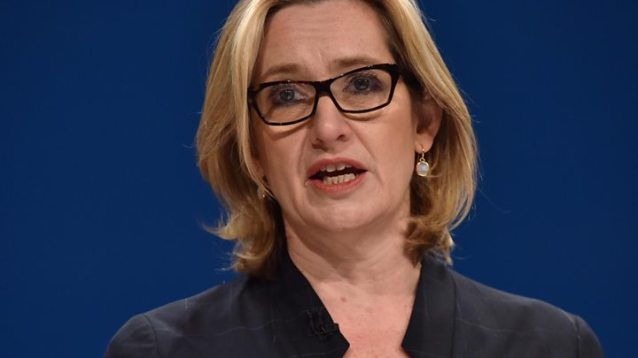
Exclusive: Amber Rudd faces new challenge over maladministration of the raising of pension age from 50s Women

amber rudd

Amber Rudd- the new work and pensions secretary and MP for Hastings

CROSS POSTED ON BYLINE.COM

Two supporters of the BackTo60 campaign have got professional legal support to challenge the government for maladministration over the failure to notify them over the raising of the pension age.

The fresh challenge is in addition to the hearing next Friday at the High court to decide whether BackTo60 can challenge the government through a judicial review.

Pensions Litigation lawyer Mr Ivan Walker (Principal of Walkers Solicitors based in Kent) has agreed to advise Fran Martin and Ros Pain-Tolin  who, are two of the lead cases of 1950s Women. They have got to the final stage of presenting their case to the Parliamentary Ombudsman.

Mr Walker recently represented the members of the Lloyds Bank pension schemes in a landmark High Court claim regarding sex discrimination in the system for contracting out of the State Earnings-related Pension Scheme.

The move is significant because professional legal advice is essential in bringing such a  case. The women are launching a crowd funding appeal  to help finance the move.

The link is here. Go onto the crowdfunder site here:

https://www.crowdfunder.co.uk/search/projects?filter%5Bc%5D=&filter%5Bt%5D=pending&filter%5Bs%5D=

Search live projects and put in 50swomen and then you will get to the site. For some reason this direct link does not work

https://www.crowdfunder.co.uk/maladministration–legal-advice-for-1950swomen

Both women have faced enormous and heart rending struggles to cope since the government pushed back the right to claim a pension from 60 to 65 and it is going up to 66 by 2020. Their struggle is typical of many others who have commented on this blog and have been left with virtually nothing to live on.

Fran Martin told me :

“I received a letter in 2013 from DWP – which indicated that I had a 6 yr hike added to my SP age – This was received 2 years before my 60th birthday in 2015. I was totally shocked and still am.

“I have gone from an optimistic cheerful forward thinking person to a virtual recluse with all the incumbent stresses and strains that this places on other family members. Health has deteriorated too, with high blood pressure, diabetes and anxiety being I feel part and parcel of the result of being misled at what is a vulnerable time in anyone’s life..”

Sleepless nights have become the new norm and even whilst now prescribed sleeping tablets I can still be wide awake at 4 or 5am with worry for a very bleak future if even that exists, I’m not convinced it does.”

She became redundant in 2015 and then saw her plans for a happy retirement ruined.

” I had purchased a retirement cottage in 2008 in Aberdeenshire completely unaware of any state pension Legislation. and which DWP treated as capital – Forced in Dec 2015 to put the cottage up for sale – but with no work and no one coming into Aberdeen to rent, to date the cottage is still on the market. and have costs for the upkeep of same and the flat that I live in Aberdeen.

” I am ineligible for any benefits as the DWP class the cottage as capital. I was also forced to draw down a small private pension in 2015 at the worst possible times for annuities, and use this and small savings to eek out a bleak existence – Dependant to on a mother in her mid 80’s which quite frankly I never thought I would have to be and obviously places stress and worry on her too.”

Ros told me: “I always expected my State Pension to be at 60 in 2015. I never received a letter. ICE  ( who handle pension complaints)say that one was ‘probably’ sent in Feb 2012, but they did not keep any ‘case specific’ records so cannot confirm.”

“I only have a small works pension that I had taken early. I also a degenerative back condition which causes me pain most days and I  suffer from Asthma.

I really don’t know how I would manage at all, if I didn’t have my husband and his Pension to rely on as well. He is now 70 with his own health issues. My Mother almost 95 has also given financial support over the last few years.”

Both women are determined to fight the system so Amber Rudd in her new role  as work and pensions secretary better look out as a storm is gathering not only from them but from millions of other people who feel they have been robbed of their state pension when they should have had it.


Establishment won’t destabilise a Corbyn government says author of “A Very British Coup”

chris mullin

Chris Mullin, author Pic credit: Twitter

CROSS POSTED ON BYLINE.COM

Chris Mullin, the former Labour minister and MP, last night told an audience of MPs and peers that he did not believe that the Establishment would seek to undermine a future Labour government  led by ” saintly” Jeremy Corbyn .

His  riposte came a month after Sir Richard Dearlove, the former head of MI6, expressed worries that Corbyn had not ditched his left wing views, had met people who were not friends of Britain and said he was worried about him becoming PM. The charge has been made also by Sajid Javid, the home secretary who describes Jeremy Corbyn as ” a threat to our national security.”

Chris Mullin was giving a talk as part of John Bercow’s Speaker’s Lectures series  after the publication of his autobiography Hinterland, which describes his life as a war  journalist. Mp and minister and a chair of the influential home affairs committee.

He is most famous for his novel written in 1982 ” A Very British Coup” which became a BBC TV series describing how a left wing Labour MP with strong views on disarmament and an ally of the trade unions wins a general election with a landslide victory only to be undermined by the security services, the Establishment and the Murdoch Empire.

Although written some 33 years before the sudden rise of Jeremy Corbyn the novel is now seen as prescient of events that did change the direction of the Labour Party. At the time it was written Tony Benn not Jeremy Corbyn was seen as the great danger.

But despite the novel’s gloomy prognosis Mr Mullin does not see this happening should Jeremy Corbyn win the next election.

” I think MI5 has been cleaned up  in the last 30 years “, he said. He was not so certain about MI6 after the comments of Sir Richard Dearlove.

Mr Mullin himself was branded as part of the ” loony left ” by the right wing media particularly as he championed the cause of the  six Birmingham bombers who  were found guilty of blowing up two pubs killing 21 people and injuring 182 others but had their convictions quashed 16 years later. This was one of the greatest miscarriages of justice.

He disclosed that although he was on the left of the party he had not voted for him as party leader as he did not agree with all his policies. He described Jeremy as a ” saintly person” who  has always stood by his beliefs.

He also had a surprise for his audience. He is a writing a sequel  to A very British Coup which covers the current Brexit crisis. It is to be published on March 29 next year – the day Britain is due to leave the European Union.


MPs slam complacent equality watchdog and the government over “rife ” ageist discrimination

ImageVaultHandler.aspx

The Equality Act: Government complacency is allowing rife discrimination in the workplace against the over 50s Pic credit: Parliament UK

CROSS POSTED ON BYLINE.COM

A damning report from the  Commons women and equalities committee has attacked the country’s equality watchdog and ministers for their complacent attitude in tackling age discrimination in the workplace and elsewhere.

The report released by the all party committee of MPs warns that the talents of up to one million women over the age of 50 are being wasted by outdated employment policies. Its strongly worded condemnation of the Equality and Human Rights Commission and ministers responsible for equality follows what can only be described as a pretty lack lustre response from both.

Chair of the Women and Equalities Committee, Maria Miller MP, said:

“Without effective intervention from the Government and EHRC, we cannot see how discriminatory practices against older people in employment, that we know are rife, will be tackled. That’s why I find the responses we have received today disappointing as we had hoped they would have worked together to agree specific enforcement actions across both the public and private sectors.

Our Committee will be taking follow up action to make sure we get the change that is desperately needed.”

The response from MPs highlights what they see as a failure to implement the  2010 Equality Act. They are particularly scathing of the failure by the EHRC which has powers – which appear to be rarely used – to use enforcement procedures  against employers who have ageist recruitment policies.

The lack of the use of its powers is worrying given that campaigners for 50s women who are waiting up to six years to get a pension also want the EHRC to use its powers to remedy what they see as discrimination against this group. This group who are being forced to look for work until they are 65 – are facing a double bind of  finding employers don’t want them while the state won’t give them a pension.

They have even had the facetious suggestion from Guy Opperman, the pensions minister, that they take jobs as apprenticeships at £3.60 an hour while they wait until they get a  pension.

The EHRC today said it would take action – even though this seems to be confined to fine words rather than deeds.

A spokeswoman  said: ““Everyone has the right to work and the right to a working environment that allows them to achieve their full potential. We have taken and will continue to take robust enforcement action, using all of our statutory powers, to tackle unlawful discrimination and ensure that no one is excluded from the workplace. This includes enabling Britain’s employers to benefit from the talent and contributions of workers of all ages.

“The right to request flexible working should apply from day one in all jobs and we have stressed the need for employers to make their workplaces accessible for everyone, including older people, parents and carers. We have also sought to tackle bias in recruitment by taking action against discriminatory adverts that request characteristics or terms that are associated with a particular age group.”
MPs are particularly angry that the government will not enact section 14 of the Equality Act – which would allow people to bring multiple ground cases against employers who discriminate against them. Thus an older woman could not bring a case on both age and sex – she has to choose one or the other.

Both former women’s minister Harriet Harman and the Fawcett Society have condemned ministers for not doing this. The government says it won’t do it because it increases burdens on business and promises more research in its response. One has to ask as this legislation was passed by Parliament – there must have been some research already behind it – so this is a pretty lame excuse.

The government uses the same excuse of putting too much a burden on employers to make it mandatory for firms employing over 250 people to publish an age breakdown of staff. Yet Whitehall already does it.

Altogether this is a pretty pathetic response from both the government and the watchdog to a serious issue. But I am very glad that the committee is also very dissatisfied and intends to pursue both organisations to come up with something better. You can get the full report here.

The day the women fighting for their pensions brought Westminster to a standstill

20181010_162148.jpg

50s women reclaiming the street outside Parliament

CROSS POSTED ON BYLINE.COM

A decade ago this would have made headline news. Hundreds of  50s women deprived of their pensions until they reach 65 or 66 blocked the road in Parliament Square for over an hour yesterday. The police – just five of them – had to divert traffic away from Parliament as they sang slogans deriding Theresa May  from ” We paid In,  U Pay Out ” to ”  Hey, Hey, Theresa May, Theresa May, how many women who have you robbed today ” in an extraordinary display of anger at successive governments decisions to raise the women’s pension age from 60 to 66.

The noise  from the vibrant  demo drowned out irritated van drivers, bus drivers and motorists tooting their horns as they were stuck on the one way system round the Square. But the women were more than a match for the motorists, the police and certainly are making an impact on MPs.

The decision to block the road was not planned  and taken spontaneously by some of the protesters and led to a traffic jams right up Whitehall. Even Fiona Bruce, the BBC newscaster had to flag down a passing police car to get to Millbank to present the six o’clock news.

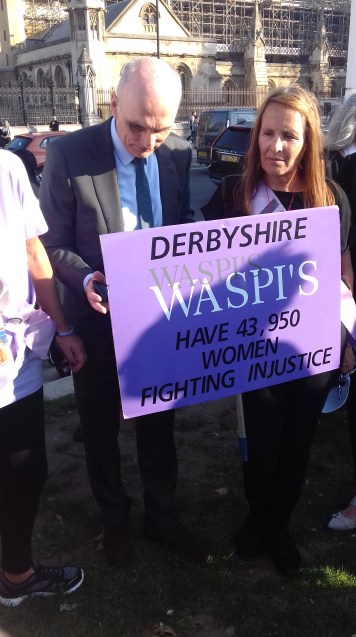
The protest  began with a 1000 strong rally in Hyde Park bringing together Backto60, Waspi and the ” We Paid In, U Pay Out” groups under a #One Voice and ” shoulder to Shoulder ” banner. Groups from as far away as Aberdeen, Cornwall, Wales, Tyne and Wear and Derby came to London to voice their anger.

It has got the backing of the Fawcett Society, the Women’s Equality Party and the SOS Initiatives  who have highlighted the desperate plight of the women , some of whom have contemplated suicide or self harm.

What was  clear at Westminster is that it is attracting support from senior people in the leadership of both the Labour Party and the Scottish Nationalist Party, the two biggest opposition groups in Westminster. John McDonnell’s office sent over a senior researcher and unless I was mistaken, Laura Alvarez, wife of Jeremy Corbyn, who keeps a low profile but I would bet will be telling the Labour leader about the strength of feeling there.

20181010_155332.jpg

Chris Williamson examines the Derby Waspi banner

Other Labour MPs there included Chris Williamson, the Labour MP for  Derby North;Laura Smith, shadow Cabinet Office minister and MP for Crewe and Nantwich; Battersea MP Marsha de Cordova; and a number from Scotland and the Midlands. Two prominent Scottish Nationalists, the Westminster leader Ian Blackford and Mhairi Black also pledged support. Tory MPs were noticeable by their absence.

What is clear is this issue which I fully support – I did address the rally myself on the key issues- is now going places. This weekend it made the mainstream media, the next stage must be inside the courts and Parliament itself.

20181010_153227.jpg

The protesters arrive at Westminster 


Conservatives v Corbyn: How the Tory party’s policy vacuum has left them floundering among the under 45s

1200px-Official_portrait_of_George_Freeman_crop_2

George Freeman, MP – man behind revitalising Tory policies. Pic credit: Wikipedia

CROSS POSTED ON BYLINE.COM

Beyond the  media hype of the Brexit battle between Boris and Theresa May this year’s Conservative Party conference was a heart searching  and navel gazing spectacle.

Clearly still rattled by the result of 2017 election where Theresa May lost them their overall majority – by far the biggest topic on the fringe was how can they woo back droves of people under 45 who have deserted them for Labour.

Unusually for a party in power  there were strident calls to develop new policies to win back these lost voters. Usually parties in government can take the initiative as they have the reins of power  and can produce plenty of fresh ideas.

But the Tories at this conference were behaving like a party in opposition – a huge navel gazing exercise in a desperate search for new policies. Tory MP Chris Skidmore, policy vice chairman of the party, virtually gave the game away at a reception for the Conservative Policy Forum – when he alluded to the great revival of ideas by  Sir Keith Joseph, which propelled Margaret Thatcher into Downing Street.  But that was the 1970s when the party had lost power after Edward Heath’s disastrous performance.

David Cameron also tried to soften the image of the party – again the new ideas came when the party was in opposition in 2008.

So what are they trying to do? One of the more illuminating debates came at the  Centre for Policy Studies fringe with the intriguing title, Today’s Millenials, Tomorrow’s Conservatives?

Chaired by Times columnist, Rachel Sylvester,it was platform for two potential rising stars, Sam Gyimah, the universities minister and a late replacement, Guy Opperman, the pensions minister.

The two were remarkably honest about the dilemma.  Sam Gyimah admitted they were used to 18-21 year olds being left wing radicals but not the 25 to 45 year old age group. whom would be in work and bringing up families.

He blamed the continual war within the Tory party over Brexit as putting off young voters.

Guy Opperman admitted that they would not win by negative campaigning against Corbyn ”  We won’t win  by portraying Corbyn  as an insane  antisemitic Hamas supporting, Cuba loving, terrorist” he said.

That message did not seem to have reached the Tory party platform where Sajid Javid  , the home secretary, warned of the security risk of having Corbyn as Prime minister and May devoted part of her speech to denouncing Corbyn over antisemitism, supporting Russia, decrying Nato and appearing on Press TV.

What did they want. Well, without a real trace of irony, it was the need for momentum without the capital M.

Energy, drive, policies that were inclusive, equal pay for women, responsible capitalism, support for the NHS and more and more housing. In olden times, it would be called progressive conservatism. Guy Opperman as pensions minister, was asked by one member of the audience whether to remove parts of the triple lock on pensions to assuage the plight of the young. He was remarkably silent on this saying he did not want to make manifesto commitments at this time. Pressed afterwards he said he liked to get away from always talking about pensions.

But what was missing was any big idea on how to tackle the issues that Labour was pushing – the failure of private firms running the railways, over crowded classrooms, police and prison service  in crisis,giving workers a bigger stake in private companies. They will have to offer real alternatives to wean voters away from Labour. Their only big point was that Corbyn hadn’t the money to do anything about it without ruinous taxation and borrowing.

It is all predicated on Britain entering the sunny uplands once we have left the EU and can plan for a post Brexit society. If Brexit turns into chaos it will further alienate that target age group.

Labour should not be complacent about the dilemma the Tories face. At the Conservative Policy  Forum reception there was a strong rallying cry for people to set up constituency wide policy groups to try and draw up more attractive policies and to reach out to non Conservatives – I expect aimed at that 25-45 year age group – to participate.

Just before I left I had a word with  George Freeman, Conservative MP for Mid Norfolk, one of the most active MPs seeking new Tory policies to appeal to the younger voter. Surprised to find that a hack had sneaked into the reception to hear about their plans, he jested I was only there for the drink. More seriously he asked:

” Why don’t you join  the Conservative forum and help us devise new policies?”

I politely declined, made my excuses and left.


Why these liars, cheats and fraudsters should be prosecuted for ripping off taxpayers and cheating London’s firefighters

assetco_3417t

John Shannon , former chief executive of Assetco. now exposed as a liar and fraudster, banned for 16 years from practising as an accountant and ordered to pay £550,00 in fines and costs

CROSS POSTED ON BYLINE.COM

This month one of the most devastating reports into a privatisation rip off was published by the Financial Reporting Council, which regulates chartered accountants. It involves a saga much reported on this blog, the failed privatisation of London and Lincoln’s  fire engines, handed over to what are now revealed to be liars and fraudsters who ran Assetco at the time.

The three top directors, chief executive, John Shannon; chief financial officer, Frank Flynn; and group financial controller, Matt Boyle, could not even be bothered to attend a tribunal hearing to defend themselves against 27 allegations of misconduct. Shannon and Boyle are thought to be somewhere in South East Asia Flynn is in Northern Ireland

Between them they lied and hid millions of pounds ripped off from income paid by London fire brigade – the London Fire and Emergency Planning Authority – through a string of Northern Ireland companies and a consultancy to Abu Dhabi and falsified invoices from the London authority to boost the income of Assetco  duping shareholders so  they could live on the hog with large salaries.

The worst culprit was John Shannon  who has been banned as practising as a chartered accountant  for 16 years – a new British record – fined £250,000 and ordered to pay £300,000 in costs. This was the same man who wined and dined the now disgraced former Tory chair of the London fire authority, Brian Coleman, while simultaneously ripping off the authority for personal gain.

His story included in a damning  FRC report  is a trail of dishonesty and improper financial gain for himself and his family, His first act  in 2008 was to take £1.5 million out of Assetco, ostensibly to invest in a Northern Ireland property company, Jaras Property Development. In fact the report found  the money was transferred almost immediately from the company to Mr Shannon’s personal bank account to pay off a loan.

To compound his action when Assetco’s accounts were prepared for 2010 he created a false invoice and lied about the use of the money to fellow directors and the auditors, Grant Thornton.

The second dishonest act involved Assetco’s take over of Graphic, a company that provided lettering for vehicles, in 2010. Mr Shannon claimed he was owed £685,000 by the company. No documentation was ever found to prove the debt but the money taken from Assetco was the exact same money owed by this son, Joel, to clear a debt with another business he was running. The report concludes this was a sham.

He then moved to fiddle the accounts of another Assetco business, Assetco Abu Dhabi, which was launched with a  £15m share issue. Included in the costs was a management fee to a firm called XYZ2 for £900,000. In fact there were no management services provided by this company, instead the money was used to pay off  interest owed.

Earlier Mr Shannon and his fellow directors Frank Flynn and Matt Boyle inflated the goodwill value of three other companies,UV Modular Limited (“UVM”), The Vehicle Application Centre Limited (“TVAC”) and Simentra Limited (“Simentra”). All three had been bought by Assetco and had huge operating losses, all became insolvent, yet between them they were valued at over £15m.

UVM which built ambulances and mobility vehicles for the NHS was ” in a parlous financial condition ” and collapsed. It got contracts from the NHS by offering cheap deals which meant it lost money.

TVAC built chassis and fire appliances was acquired in 2007 and went bust in 2008 and was an operational disaster. But it was obviously intended to service fire engines for London.

Simentra had just three staff and was supposed to provide management advice for emergency services.

The report found Mr Shannon was well aware of this yet  allowed the £15m for goodwill to be included as an asset in the company’s accounts.

Mr Shannon, Mr Flynn and Mr Boyle also inflated income from the London fire authority on purchasing equipment and  providing emergency crew training. All this led to inflated accounts which Mr Shannon claimed he had not seen but the report found that he had lied to them about his knowledge of what was agreed to be published in the accounts. There is an earlier report on my blog here.

The conclusions against Mr Shannon are stark :” While there have been no actual convictions, certain of the activities contained within the allegations could be characterised as causing or facilitating fraud. The Jaras and Graphic Allegations amount to fraud on AssetCo by Mr Shannon. The XYZ Investment was also a fraud.”

The report also says the level of dishonesty even put the fire fighters  work at risk. It is as well that Assetco  operations in London and Lincolnshre went bust before the tragic Grenfell fire or their services would have only compounded the problems.

Most of the misconduct by Flynn and Boyle was to assist in covering up rather than exposing the dishonesty of Shannon.

Raymond “Frank” Flynn (former Chief Financial Officer) for  banned from practising for 14 years and Matthew Boyle (former Financial Controller) for 12 years. Additionally, £150,000 and £100,000 respectively have been imposed and they share paying  part of the £400,000 costs bill.

The Financial Reporting Council has a memorandum of understanding with the Serious Fraud Office which could launch a criminal investigation.

The SFO told me that they were aware of the case but could neither confirm nor deny whether they would take action. In my view they should pursue these people – even if they have left the country- with the aim of securing convictions so they can spend some time in British jails.


A No Deal Brexit could leave nearly 500,000 expatriate Brits with frozen pensions like those living in Canada and Australia

brexit and state pensionCROSS POSTED ON BYLINE.COM

Last year  it looked like the 474,000 expatriates who retired to 27 European  Union countries had their pension increases protected forever and a day. A deal which meant the UK would sign up to the EU Social Security Convention  guaranteeing pension payments both to British expatriates abroad and EU citizens remaining in the UK.

There was only one caveat “nothing is agreed until everything is agreed,” which would prevent this happening and  the  government’s aim is the commitment would be reflected in the Withdrawal Agreement with the EU. This was emphasised in the White Paper on Brexit in July.

But now the spectre of a No Deal Brexit is again being raised everything is being thrown into the air. Supporters like Liam Fox talk of a country thriving on new free trade but what about the social cost? What is clear is that without a signed withdrawal treaty Britain appears to fall out of the social security convention – and as EU arrangements superseded most national arrangements the automatic rise in pensions goes as well.

The House of Commons library have just produced two new reports on the issue. One published in July on Brexit and state pensions provides an accurate summary of the present situation. You can download it here. Another published this week provides the latest analysis of frozen pensions overseas. You can get it here.

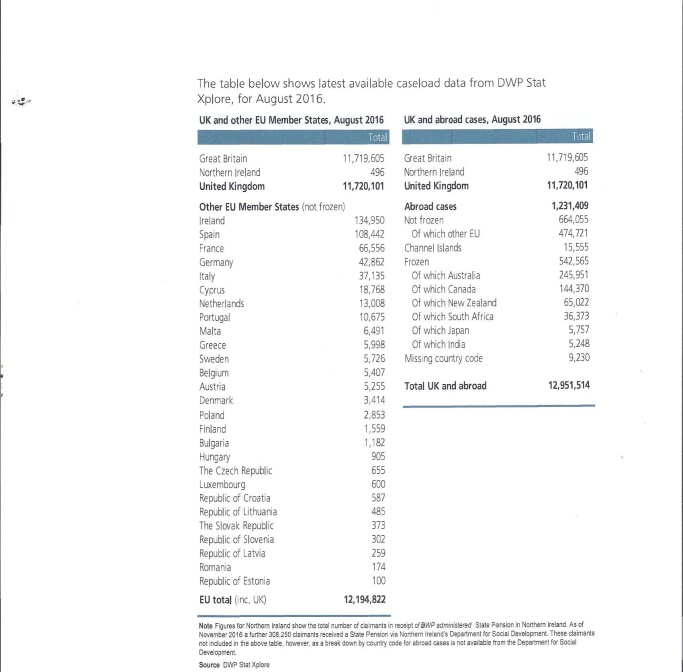
There is a current official breakdown of the situation for both  unfrozen pensions in EU countries and the Channel Islands and frozen pensions elsewhere at the end of this blog.It shows that EU  countries make up the vast majority of uprated pensions.

The government has only limited agreements with overseas countries to allow Brits who settle there to get uprated pensions. Outside the EU  the UK has agreements with Barbados; Bermuda; Bosnia-Herzegovina; Croatia; Guernsey; Isle of Man; Israel; Jamaica; Jersey; Mauritius; Montenegro; the Philippines; Serbia; Turkey; the United States of America; and, the former Yugoslav Republic of Macedonia. The rest of Europe includes Switzerland and Norway. The US agreement also covers American Samoa, Guam, the Northern Mariana Islands, Puerto Rico and the US Virgin Islands.

For those who could be confined to a frozen pension the results can be dire. And they get worse the longer you live. An expatriate living to the age of 90 in Canada would have to live on just £41.15 a week while someone who went to live in Canada in 2015 would be on just over £110.15 a week.

Ian Andexser, chairman of the Canadian Alliance of British Pensioners, said:

“The UK continue to adopt a 70 year old policy which makes no sense, is unfair and in violation of the Commonwealth charter. If you are British and live in Niagara Falls USA, you get a fully indexed pension. If you live 400 yards away in Niagara Falls , Canada, you do not!”

An even more complex situation exists in Australia where they have a means tested pension and even getting Britain to pay up part of your state pension if you have already left the country is problematic.

The latest Commons guide on frozen pensions shows campaigners – once they have lost their case for any uprating – are unlikely to get it back. Successive British governments have refused to change the rules on grounds of costs and the spurious claim that the rises caused by  British inflation rates should not apply to other countries which had different rates of inflation. If that were the case the same would apply to people living in the European Union or Mauritius where people do benefit from British inflation.

The cost to do this is about £500 million a year and opposition parties – notably the Liberal Democrats – have backed the change only to renege on it once they got into office. Indeed the only change that followed the Pensions Act that  created the new pensions system was a minute extension of the uprating to pensioners who had retired to Sark in the Channel Islands.

So Brits in the EU better keep abreast of what does happen in the EU negotiations. They need to ensure that there is an agreement with the EU. The expatriates in Australia, Canada, South Africa and Jamaica, to name   few of the frozen pension  states can only  get redress by either pressurising British politicians or by pressuring their newly adopted country to demand Britain fulfils its obligations by refusing to sign a trade deal until it does.

overseas pensions

Judicial Review of government’s handling of 50s women pension changes lodged at High Court

royal-courts-justice-passes-misuse-602677

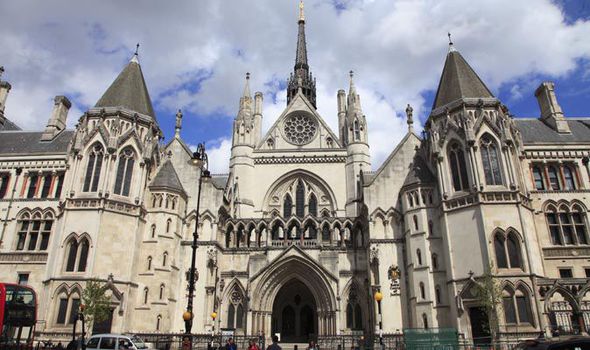
Royal Courts of Justice – venue for handing in the papers for a judicial review for the 50s women

CROSS POSTED ON BYLINE.COM

Back to 60, the campaigning group  who are supported by 738,000 of the 3.9 million 50s women waiting up to six years to get their pensions, lodged a claim  at the High Court against the  Department for Work and Pensions yesterday.

This is the first stage of taking real action to put right the injustice suffered by the women ever since the government embarked on a policy of continually raising the pension age.  It will be followed by a High Court hearing where a judge will be asked to allow the review to go ahead. It is bound to be challenged by the government which is determined not to pay up but ministers will have to justify their actions.

Backto60 lodged the documents with only 48 hours to spare as the courts  start their  summer recess tomorrow and  the courts will not hear cases  until  after October 1.

The move is the culmination of action taken by the group which now involves support  on the issue from the Equality and Human Rights Commission, which intends to raise the issue at the United Nations, the Fawcett Society and  other ampaigners.

A legal statement from Binberg Peirce & Michael Mansfield QC reads:

“The basis of the legal challenge is that the pension policy implemented by successive governments in respect of women of a particular age group (those born in the 1950s) constitutes a gross injustice and is discriminatory.  The impact on the economic, social and mental well being of these women, who rightly enjoyed a perfectly legitimate expectation of satisfactory provision in retirement, has been devastating.

“The extent of individual distress and hardship is only now becoming evident through real stories of women around the UK. It is deeply ironic that all of this is done in the name of equalisation and equality, when the very means employed to achieve this are themselves discriminatory.

“It is intended that the current pension policy be subjected to both public and judicial scrutiny and, therefore, steps are now being taken towards mounting a judicial challenge.”

At the same time Stephen Lloyd, Liberal Democrat MP for Eastbourne, whose coalition government made matters worse for 50s women by backing an acceleration of the rise in pension ages, has finally got a meeting on behalf of Waspi with the Ombudsman to discuss whether there was maladministration in not informing women.

His comment is picked up by Frances Martin:

stephen lloyd

The government is going to face challenges from all sides this autumn.


Brexit Bombshell: All Northern Ireland people would be better off in a new united Ireland says new report

cropped_United_Ireland_map_iStock

Will this be the new prosperous Ireland? Pic credit: Istock

CROSS POSTED ON BYLINE.COM

It has received virtually no publicity in the mass media in the United Kingdom, But it is a question that was begging to be asked in the current impasse over whether there should be a soft or hard border between the Republic and Northern Ireland. And until now no one has weighed up the facts and figures of a united Ireland versus a divided Ireland. Indeed there was pressure from the Irish government to keep this report secret because of the Brexit negotiations.

But this week the the Joint Oireachtas Committee on the Implementation of the Good Friday Agreement have published a highly controversial report ‘Brexit & the Future
of Ireland Uniting Ireland & its People in Peace & Prosperity’ which basically says the British taxpayer will be better off if it let Northern Ireland unite with the Republic and remain in the European Union.

The author is a German economist, Gunther Thumann who worked as a senior economist at the German desk of the International Monetary Fund at the time of German reunification.This provided him with the analytical understanding of the complex economic developments as they happened.

He is backed by Senator Mark Daly, Deputy Leader of the Fianna Fail Senate Group
Senate Spokesperson for Foreign Affairs, the Irish Overseas and Diaspora, who yesterday lambasted officials at the Irish Dept of Foreign Affairs  after he was told officials  said that they did not want the research released until ‘after Brexit’. ‘
‘This is unacceptable interference by the department of Foreign Affairs in the work of the Dail and Senate. …The fact that officials in the Department of Foreign Affairs do not want this information released and the motivation behind it need to be answered’ “.

In one sense this is not surprising. Theresa May  only stays in power because the Democratic Unionist Party  backs her government and they want to stay in the UK. But the majority of people in Northern Ireland voted to stay in the EU and this report’s findings are dynamite

And Theresa May has had to lavish gifts on the DUP increasing the bill for mainland taxpayers while depriving  the rest of the UK of money for other public services like free school meals.

The central point of this report is that Northern Ireland would no longer require any taxpayer’s subsidy and could have a balanced budget – saving over £9 billion a year. Big savings could be made in administration and the UK would be left with a £2.8 billion pension bill for pensions already accrued while Northern Ireland was part of the UK.

The findings in the report which you can download here are:

– Non-identifiable expenditure of £2.9billion includes Northern Ireland’s share of UK Defence Expenditure, UK Debt Interest, International service, UK contribution to the EU, British Royal family etc. These would not be a liability of a new agreed Ireland.
– Thumann in his research explains that not all the accounting adjustments figure attributed by Westminster to Northern Ireland of £1.1billion would be applicable in a reunification scenario either.
– Also the convergence of the public service numbers between the north and the south would bring a saving of £1.7billion per annum in the current budget expenditure of Northern Ireland.

“Taking the above adjustments and savings into account the cumulative figure is £8.5 billion. With the reported deficit for Northern Ireland is at £9.2 billion therefore the current income and expenditure figure for Northern Ireland Thumann & Daly concludes comes near a balanced budget in a reunification scenario.

This is of course, before taking into account the likely potential for growth in Northern Ireland following unification as happened in East Germany following its reunification. ”

The big problem adopting such a change is political not economic. Supporters of the DUP would resist the idea of Northern Ireland not being part of Britain’s armed forces and be furious that they would no longer financially support the Queen.

But the changing demographics mean eventually the Catholics not the Protestants will form the majority adding to pressure for a united Ireland. Tensions are already growing over proposed boundary changes for the Westminster Parliament which mean that Sinn Fein are likely to gain more seats at the expense of the DUP.

The report is one of the unforeseen consequences of Brexit. Whether  Theresa May and Arlene Foster, the DUP leader, like it or not Brexit will put a united Ireland on the agenda ,particularly if we crash out and there has to be a new border. No wonder the Irish republic’s Whitehall did not want this published.

There was a debate on the report on Newstalk Breakfast in the Republic. with one economist challenging the report because he said N Ireland would have to contribute more to the Republic’s finances.The link to the podcast is here .