How the Tories keep our Parliamentary Ombudsman powerless – while telling the rest of the world they back the highest standards

Rob Behrens Parliamentary Ombudsman

A high powered peer review of the Parliamentary Ombudsman has exposed the hypocrisy and double standards of the present UK government towards people having the right to redress from bad and unfair public and NHS treatment.

The report released from an international panel of Ombudsmen , an academic and a UK housing ombudsman concludes with a polite but damning assessment of the failure of the government to keep its word to strengthen the Ombudsman’s powers. Members of the panel included both the Greek and Israeli Ombudsmen and a respected academic, Professor Robert Thomas, Professor of Public Law, University of Manchester.

The UK is a member of the Council of Europe Venice Commission which lays down what are known as the ” Venice Principles” – an international standard to guarantee the independence of the Ombudsman and the human rights of people to have direct access to the Ombudsman to make complaints about their treatment by public services.

The UK then co-sponsored a UN resolution incorporating these standards for the entire world – telling every country that Britain was in the lead on this issue.

But then under successive Tory governments of Boris Johnson, Elizabeth Truss and Rishi Sunak nothing has not only been done but ministers have taken active steps to thwart reform.

The most obvious example is Michael Gove, who used his power in the Cabinet Office, to block any bill-even a draft bill- coming before Parliament to the despair of the Commons Public Administration and Constitutional Affairs Committee (Pacac) which under a Tory MP wanted this to happen.

The situation is remarkably similar to the government’s attitude towards the UN Convention on the elimination of all discrimination against women and girls (CEDAW) which Margaret Thatcher ratified in 1986 and had still not been properly implemented 40 years on . This is now the subject of a review from the convention in Geneva which criticises the UK for not implementing it properly and is demanding answers.

The conclusions of the peer review couldn’t be clearer:

Professor Rob Thomas Pic credit: Administrative Justice Council

“The ‘Venice Principles’ lay down a set of international standards and principles on the protection and promotion of Ombudsman institutions. These have been accepted by the UK, as a member of the Venice Commission of the Council of Europe in 2019. They were also adopted by the UN in a motion co-sponsored by the UK Government in 2020.

” In several respects, PHSO’s legal framework complies with the ‘Venice Principles’, but not in other respects. PHSO’s statutory framework is now out of date and widely seen as being unnecessarily restrictive. PHSO is also out of line with other UK Ombudsman offices, which possess powers that PHSO does not.
“This means that citizens in some parts of the UK do not have the same rights as others. We are aware that reform of the Ombudsman is a long standing and unresolved issue, although it has become an increasingly urgent matter which makes the work of PHSO more difficult. PHSO is doing everything it can reasonably do to make the argument for reform. What is required is action from the UK Government and Parliament. Any reform must maintain PHSO’s direct reporting line into Parliament to preserve its absolute independence from Government.

Andreas Pottakis, Greek Ombudsman and President the International Ombudsman Institute -Europe

The report backs this up with a traffic light (red, amber, green) system of points where it measures the consistency and performance of the Ombudsman with the Venice principles.. Nearly all the red and amber points are caused by the failure of the government to legislate to strengthen the Ombudsman.

The government does not meet the principle that “Any individual or legal person, including NGOs, shall have the right to free, unhindered and free of charge access to the Ombudsman, and to file a complaint.” Instead a complaint has to be filtered by an MP or in the case of the NHS there has to be a “safe space” for administrators to look at the complaint before the Ombudsman can act.

There is no legal provision to protect whistleblowers who contact him. He, unlike his Welsh, Scottish and Northern Ireland Ombudsmen cannot initiate investigations. It is not clear whether he has full powers to force people to respond to him and certainly his recommendations don’t have to be followed by the government if he finds maladministration. There is not proper protection for his position by law and even the recruitment of a successor is limited, so not all people can apply.

Venice Principles give Ombudsman right to recommend changes to the law

The Venice Principles give him the right ” to have the power to present, in public, recommendations to Parliament or the Executive, including to amend legislation or to adopt new legislation” and this is definitely not allowed in England – otherwise he could go further on the case of the 50swomen who lost their pensions for up to six years.

Now you might think the Ombudsman would make a great deal out of this report to press the government to expand his powers or show up ministers for failing to keep their obligations to an international agreement they signed.

But the heading on his website is “World’s first official international ombudsman review finds UK service is robust and good value “. Yes the report does make good points about improvements in the running of the Ombudsman’s |Office but its fundamental objection is given muted coverage – buried down in the copy.

Further down the press release Rob Behrens, the Parliamentary Ombudsman, says: “The peer review rightly says that the UK is out-of-step with other modern Ombudsman services in terms of our statutory framework. Without powers of own initiative, I am hamstrung from investigating many systemic issues that no one is looking at. Legislative reform of the UK Ombudsman service would mean fewer barriers to justice and more opportunities to prevent injustice happening in the future.”

I think a more gutsy Ombudsman would fight his corner better -particularly as this government is on the back foot when it comes to defending decent public services and upholding standards in public life.

A more cynical explanation is that the government don’t want the public to have greater rights to complain as they are fearful of more bad administration and scandals coming to light But they want the rest of the world to think Britain is a beacon of good government in this area -knowing this is a lie.

Please donate to Westminster Confidential so I can probe reports like this and continue my forensic reporting.

One-Time
Monthly
Yearly

Make a one-time donation

Make a monthly donation

Make a yearly donation

Choose an amount

£5.00
£10.00
£20.00
£3.00
£9.00
£60.00
£3.00
£9.00
£60.00

Or enter a custom amount

£

Your contribution is appreciated.

Your contribution is appreciated.

Your contribution is appreciated.

DonateDonate monthlyDonate yearly

Please donate to Westminster Confidential

£10.00

Andreas I. Pottakis

Will the final report from the Child Sex Abuse Inquiry be a real game changer for children or just gather dust?

Alexis Jay, chair of the inquiry

It was unfortunate that the long awaited final report from the Independent Inquiry into Child Sexual Abuse coincided with the resignation of Liz Truss, the shortest serving PM in British history. The Westminster psychodrama has drained political discussion of any policy initiatives from the government while the main protagonists in the Tory Party fight each other to the death for the top job.

If Theresa May , who commissioned the inquiry, was still PM I suspect that action would have been taken promptly. As it is there will be no response from the government for six months and I doubt whether we will see any new laws for years. Particularly if Boris Johnson becomes PM again as he made it vividly clear that investigating child sex abuse was a waste of money. You only have to look at how long it is taking to reform the antiquated Mental Health Act to see a parallel.

Having reported on it and even helped to initiate the inquiry as a journalist, I have followed it with a lot of interest , both when I was on Exaro News and on this blog. I have mixed feelings about the £186m inquiry .

On the plus side the scale of the inquiry – some 15 investigations in every institutional area of the UK from the Roman Catholic Church and Church of England to local authority care and the reach of the global internet – should put to bed any misconceptions that child sex abuse is not a major epidemic in this country. And it proves that in many instances that those in charge of those institutions are more than willing to turn a blind eye and pretend it doesn’t exist either for reputational reasons or because they actively connived in the sexual exploitation of children.

Also it did provide a much needed voice for thousands of survivors who might never get real justice but at least now felt people had listened to their appalling life changing experiences.

Carl Beech, a false flag victim of child sexual abuse, who made up allegations damaged real survivirs

On the other hand I felt -because it was closely tied to the legal profession- they felt they had to be ultra cautious and only take on proven cases by perpetrators – whether Bishop Ball or dead people like Sir Cyril Smith – because the fury from families of the living, I am thinking of Greville Janner, wanted no discussion of anything to suggest that he might have been involved.

The inquiry also took place during the conviction of paedophile Carl Beech whose detailed revelations turned out to be made up and the Metropolitan Police spent millions investigating them. I suspect that made them more cautious and the media ultra cautious in reporting fresh allegations.

The downside of this is that has protected more paedophiles from media scrutiny and made authorities less likely to believe victims. One only has to see the total silence in the media of the allegations revealed in Simon Danczuk and Dan Smith’s book, Scandal at Dolphin Square, of a well researched story of David Ingle, a victim of abuse by a Lincolnshire farmer there.

Now the proof will be in the legacy of this inquiry. It has proposed the mandatory reporting of sexual abuse – making it a criminal offence not to do so. But there is an argument whether this goes far enough.

Richard Scorer, the head of abuse law at Slater and Gordon, which represented more than 120 victims at the inquiry, said there should also be a criminal penalty for failure to report abuse that is reasonably suspected, otherwise organisations will continue to turn a blind eye.

He is reported in a good analysis by Rajeev Syal in the Guardian as saying:” Children rarely disclose abuse, perpetrators almost never do,” he said. “Mandatory reporting can only work if the requirement to report suspicions has consequences, such as a criminal sanction. The inquiry’s proposal falls short of what survivors seek.”

More must be done to support whistleblowers of sexual abuse

More can also be done to support whistleblowers in this situation.

Jayne Senior, Director of Safeguarding at WhistleblowersUK, said;
“After a week of political turmoil, it would be easy to overlook the damning reports exposing the failure by every possible authority to protect Children and the most vulnerable in our society and the Whistleblowers who have selflessly spoken up only to become targets and subsequently victims themselves.”

The report also proposes a national compensation scheme for survivors of sexual abuse and “the creation of a Child Protection Authority (CPA) in England and in Wales. The CPAs will have powers to inspect any institution associated with children. They will not replace current inspectorates in relation to the statutory authorities, but may require inspection of those authorities by existing inspectorates. The CPAs over time will become centres of expertise, and may extend their child protection functions to other forms of harm experienced by children.”

There are also 17 other recommendations. They vary from tougher controls of the internet to extending the debarring and disclosure scheme for staff to those working overseas with children to the end of pain compliance techniques for children held in custody.

The problem is that again unfortunately these measures come at a new time of austerity and fresh spending cuts so I can’t see a government committed to lifting the burdens of regulations wanting to implement them soon.

The problem is immense and the report estimates that child sexual abuse costs the country £10 billion and of the 13 million children in the UK “Babies, toddlers and children are potentially at risk, with current
estimates indicating that 1 in 6 girls and 1 in 20 boys experience child sexual abuse before the age of 16.”

But it is going to take a lot of action and public pressure to make the government act and also create a gamechanger situation for the millions of children suffering sexual abuse which is a global problem.

Please donate to Westminster Confidential to allow me to continue my investigative reporting.

One-Time
Monthly
Yearly

Make a one-time donation

Make a monthly donation

Make a yearly donation

Choose an amount

£5.00
£10.00
£20.00
£3.00
£9.00
£60.00
£3.00
£9.00
£60.00

Or enter a custom amount

£

Your contribution is appreciated.

Your contribution is appreciated.

Your contribution is appreciated.

DonateDonate monthlyDonate yearly

please donate to Westminster Confidential

£10.00

Labour Conference: WASPI promise £10,000 minimum compensation for 3.6 million women pensioners but nobody is negotiating with them

WASPI held a fringe meeting at the Labour conference in Liverpool this week. The organisation is campaigning to end women’s state pension equality and wants women born in the 1950s s to be compensated for them failure of the government to properly inform them of the effects of the six year delay from 60 to 66 in raising their pension age.

The meeting offered a great selection of Canapés-including dairy free ones for not a very big audience of 50 people- but I doubt anyone left any wiser on what would happen next. It took place with a running total banner showing over 203,573 of the women had died and the Treasury had saved over £3.1 billion by these deaths

Baroness Glenys Thornton the main guest pic credit Chris McAndrew

The meeting began with a statement from Angela Madden but it was difficult to hear her clearly at the back of the room because of the acoustics and early on the organisers asked her to speak up. My understanding at the beginning was that she was talking about six million women which would cover those born in the 1950s and 1960s.

But after another journalist who was reporting the meeting and some people from Waspi say compensation was only for the3.6 million people I have amended my earlier report. I have received no statement from her only some coverage from Waspi members who object to my coverage revealing the contents of the Parliamentary Ombudsman’s second provisional report wh ich looks at the case for compensation for partial maladministration.

Angela Madden, Waspi’s campaign leader did put a figure on compensation for the pensioners for a one off payment -from £10,000 to £20,000 at a cost of £40 billion to £50 billion.

She told the audience that WASPI was still proceeding with a case with the Parliamentary Ombudsman to get compensation. But even with the support of the All Party Parliamentary Group for state pension inequality the maximum would be £10,000.

She gave the audience a very heavily edited version of the Ombudsman’s position saying he backed maladministration which boosted their case.

WASPI economical with the truth

In fact this was being very economic with the truth. The Ombudsman’s published first report backed only partial maladministration which would automatically reduce compensation and was never challenged by Waspi. She made no reference to the second unpublished report which reduces compensation even further by saying people do not need to be compensated for financial loss only worry and confusion. And she made no reference to WASPI’s investigation into the alleged decision of the DWP’s Independent Case Examiner to destroy 2500 of the letters from complainants about their pension delay. You can read the still confidential report and the scandal at ICE on this site.

Worse she disclosed that Waspi had tried to meet government ministers to press their case but ministers would not even see them.

Labour were more diplomatic since the main speaker at the fringe was Baroness Glenys Thornton, the Lords shadow equalities minister. She repeated that Keir Starmer was sympathetic and wanted to compensate the women. But when it came to a £50 billion price tag she was not going to commit to that. Afterwards she told me she had to be “very cautious” in mentioning any sum at all.

She was much stronger on the plight of cold pensioners failing to keep warm during the present cost of living crisis and gave some advice on how campaigners could raise issues. This does seem to suggest that the pre 2019 election £60 billion compensation package promised by John McDonnell, Labour’s former shadow chancellor, is being quietly dropped.

Please donate to Westminster Confidential to allow me to continue my forensic journalism

One-Time
Monthly
Yearly

Make a one-time donation

Make a monthly donation

Make a yearly donation

Choose an amount

£5.00
£1,000.00
£20.00
£3.00
£9.00
£60.00
£3.00
£9.00
£60.00

Or enter a custom amount

£

Your contribution is appreciated.

Your contribution is appreciated.

Your contribution is appreciated.

DonateDonate monthlyDonate yearly

please donate to Westminster Confidential

£10.00

Backto60 takes The Great Pension Robbery to the Edinburgh fringe

Backto60 brought their campaign for full restitution to the Edinburgh Festival Fringe over the Bank Holiday weekend with the help of two Scottish women actors and comedians.

For half an hour at Edinburgh’s St Andrews Square Sandra McNeely and Julie Coombe, who are well known on Scottish TV, tell the tough story of the fight for 3.8 million 50s born women to get full restitution for their lost pensions when successive governments increased the pension age from 60 to 66 with all the facts, interspersed with songs, poetry and jokes.

The no holds bar performance castigated everyone from George Osborne, the former Chancellor to Guy Opperman, the current pensions minister, and of course, Boris Johnson. It gave a really good synopsis of injustice facing this group of women ending with the sad fact that during the half hour performance two more women would have died without ever receiving their pension.

Sandra McNeely has appeared in the TV series, Taggart, Happy Hollidays, Scot Squad, and the drama Ashes available on Amazon Prime.

Julie Coombe has appeared on TV in Hope Springs and on stage recently in Lena! and Hormonal Housewives.

Both are very supportive of the Backto60 campaign and gave pro bono performances with the aim of spreading the word to festival fringe audiences. You can watch the video above.

Please donate to Westminster Confidential to allow me to continue my reporting.

One-Time
Monthly
Yearly

Make a one-time donation

Make a monthly donation

Make a yearly donation

Choose an amount

£3.00
£10.00
£20.00
£3.00
£9.00
£60.00
£3.00
£9.00
£60.00

Or enter a custom amount

£

Your contribution is appreciated.

Your contribution is appreciated.

Your contribution is appreciated.

DonateDonate monthlyDonate yearly

Please donate to Westminster Confidential

£10.00

Coffey sneaks through tough plan to push 114,000 Universal Credit claimants into jobs while Parliament is in recess

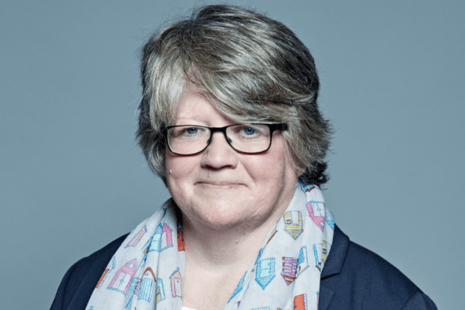
Therese Coffey :Pic credit: gov.uk

The Department of Work and Pensions is to tighten the rules significantly to force 114,000 existing Universal Credit claimants into work as job vacancies soar across Britain.

She is changing the rules so far more people will have to go on what is known as an intensive work search regime where they will be monitored continually by work coaches on how many jobs they have applied for and why they didn’t get them.

Therese Coffey has been planning to do this since January this year and consulted the Social Security Advisory Committee, chaired by the architect of Universal Credit, Stephen Brien, on January 26.

Ian Caplan, DWP’s Director of Employment, Youth and Skills

A letter to the committee from Ian Caplan, director of employment, youth and skills said:

“The Secretary of State wishes to bring in the change as soon as practically possible…for providing immediate support to low-earning households to increase incomes at a time of immense cost of living pressures…. By bringing these regulations into force as quickly as possible, including by laying the regulations in recess, the Department can start making the operational preparations”

SSAC kept decision secret for 8 months

The committee approved the idea on February 4th but agreed to keep the decision secret until last week when it published the minutes of a meeting between DWP officials and the committee.

To make the change the government is using a regulation to uprate what is known as the Administrative Earnings Threshold – a device which sets the level of benefit and earnings dividing those who only receive ” a light touch” regime – ie occasional checks whether they are seeking work – from their local job centre and those put on intensive work search programmes. Those who refuse or don’t co-operate properly with face benefit cuts as a sanction.

It will move the level from £355 to £494 a month for a single claimant and from £567 to £782 a month for a couple. At present some 250,000 people covered by the intensive work search programme are in work – this will increase the number by 50 percent. The government justify it by saying the new level brings it into line with recent rises in the national minimum wage for those in work.

What is more interesting – and perhaps why the minutes were withheld – is the question and answer session between the committee members and civil servants.

While the overall aim of the scheme is to get a higher income for the unemployed – by getting them work or more work for those in part time jobs – the DWP admit they have another agenda. Questioned about the current job vacancies level encouraging this move officials said: “the vacancies position the labour market is considered by some to be hot which could be driving inflation.”

In other words by getting more of the unemployed into work, employers would have a bigger pool of labour and would not have to offer higher wages or even compensate people for the rising cost of living.

Will the unemployed be recruited as strikebreakers?

There may now be an even more compelling reason as Therese Coffey wants this to be law from September 26, since the government plans to use agency workers to break the coming strike wave. What would suit ministers would be if the unemployed could be drafted in as agency workers leading to confrontation with striking workers on trains, buses, schools, the NHS, and the post office with shouts of ” scab” and bringing the police in to make mass arrests of strikers. A reminder of the miners’ strike.

There were other gems from the minutes – which in my view revealed the attitudes of the DWP and committee members

There was much questioning about the effect this could have on 16-24 year olds which suggested the programme could work for them. There was concern about the disabled – and an admission by the DWP that except in Yorkshire it had done hardly any research on how this could affect them.

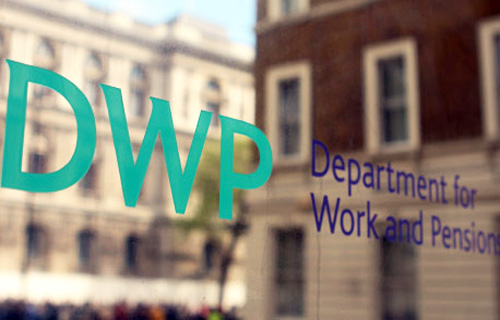
DWP building

What was tellingly missing was the complete lack of interest from the DWP or committee members about the effects on people over the age of 50 and 60. The DWP didn’t even bother to give the committee a breakdown on them. But it is a fact that the rising of the pension age to 66 -particularly among women has seen a big increase in numbers on Universal Credit who can’t get jobs.

I really wonder whether this is prejudice. Women like Therese Coffey, who is 50, have had stellar careers and I wonder if they think women born in the 1950s and 1960s who are on the dole are failures or nonentities, don’t cause them a lot of trouble and don’t turn physically aggressive like some men. So they can be safely ignored. Certainly any thought about their plight or indeed any old person was spectacularly missing from discussion about this new drive.

Please donate to my blog to allow me to continue my forensic reporting.

One-Time
Monthly
Yearly

Make a one-time donation

Make a monthly donation

Make a yearly donation

Choose an amount

£5.00
£10.00
£20.00
£3.00
£9.00
£60.00
£3.00
£9.00
£60.00

Or enter a custom amount

£

Your contribution is appreciated.

Your contribution is appreciated.

Your contribution is appreciated.

DonateDonate monthlyDonate yearly

Please donate to Westminster Confidential

£10.00

Delegates from UK’s biggest public service union back a Bill of Rights to end once and for all discrimination against women

The short snippet above from Unison delegate Lianne Dallimore is the moment the 1.3 million member Unison trade union came out in favour of backing implementing the UN Convention on the Elimination of All Discrimination Against Women into UK law.

This is a very important move as the union will be the first big organisation to endorse a policy that will require women to get equal pay, equal rights to pensions, rights to child care fast and finally put an end to the painfully slow progress there has been to grant women equal rights to men.

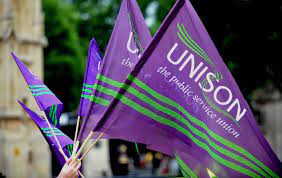
Unison banners; pic credit: unison.org

Unison is one of the largest trade unions in the UK It has a woman general secretary, Christina McAnea and women outnumber men as members by a huge majority. There are over one million women members to 300,000 men. Most of its members are among the lowest paid in the country whether they are teaching assistants,, dinner ladies, low paid NHS staff or local authority workers.

Unison is also an influential union in the Labour movement and in the Labour Party. So its delegates decision to endorse such a policy will now mean the national executive committee will have to decide whether to back it. If it does the Shadow Cabinet will have to sit up and take notice – and it will put pressure on Labour to include a promise to do so in their next party manifesto. Angela Rayner, the deputy party leader, has previously backed implementing Cedaw.

The full motion read;

Conference we call on the National Executive Council to:

1) Work with National Labour Link and the national women’s committee to develop a comprehensive campaign for the implementation of CEDAW into domestic legislation;

2) Work with Learning and Organising Services (LAOS) on developing a training and awareness package on CEDAW for activists and members;

3) Report back to National Delegates Conference 2023 on progress made.

North Cumbria Northumberland, Tyne and Wear Health

It also comes at an opportune moment as Boris Johnson’s government is under fire from the United Nations for taking far too long to implement a convention that Margaret Thatcher signed up to in 1986.

The Labour Party went part of the way introducing the Equality Act, which became law in 2010 – but it is still a half hearted piece of legislation – more bark than bite. Nicola Sturgeon, the Scottish first minister, has gone further by including in her last manifesto a promise of legislation implementing it in full.

But she is up against Boris Johnson – who shows not the slightest interest in this issue – and has blocked at the Supreme Court any chance of Scotland introducing a parallel law implementing the UN convention on the rights of the child, which the UK has also ratified but not properly implemented.

The decision by Unison at its delegate conference, which endorses a report prepared by Dr Jocelynne Scutt, President of the Cedaw Tribunal, that calls for sweeping reforms to radically change the position of women in society – from immediate equal pay to ending the long running sore that has bedevilled 3.8 million women born in the 1950s who had to wait six years to get their pensions and were never properly informed by the change.

Ground breaking issue

Last year the CEDAW People’s Tribunal was held. his was a ground breaking tribunal backed by Garden Court Chambers where academics, activists and women’s rights experts produced a wide range of evidence-based policies to end women’s discrimination.

The union’s backing is an important development for CEDAWinLAW which I am a patron, to get this issue on the agenda.

Last year some detractors, sadly a number of them professional women, tried to rubbish the CEDAW People’s Tribunal as though the whole hearing was a waste of time and space. They would rather keep women in their place than fight for change.

Another tribunal hearing on the way

Next month CEDAWinLAW will hold another tribunal to specifically look again at the issue of 50s women and their loss of a pension and how it happened.

In the meantime the action by Unison delegates will only spur women who want change now – not dragged out for decades – to continue the fight.

Please donate to my blog to allow me to continue my forensic coverage.

One-Time
Monthly
Yearly

Make a one-time donation

Make a monthly donation

Make a yearly donation

Choose an amount

£5.00
£10.00
£20.00
£3.00
£9.00
£60.00
£3.00
£9.00
£60.00

Or enter a custom amount

£

Your contribution is appreciated.

Your contribution is appreciated.

Your contribution is appreciated.

DonateDonate monthlyDonate yearly

please donate to Westminster Confidential

£10.00

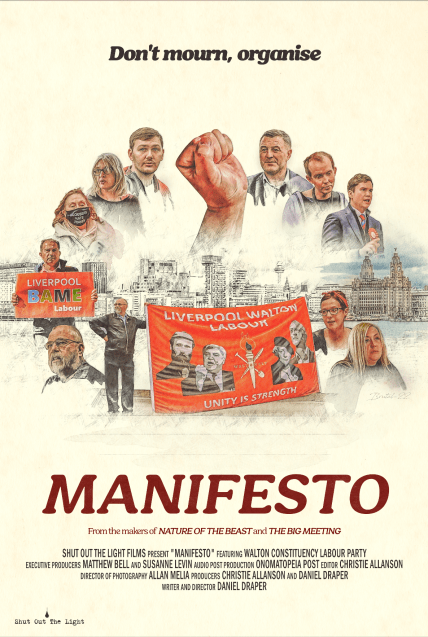
Manifesto: How Labour Party activists fought for Socialism in Liverpool and the bitter sweet results that followed

Poster for the new film

Manifesto is a new film out this week that explores in depth local Labour Party activists and their fight to get a Labour government elected in the December 2019 general election.

It is an unusual film as it covers a constituency – Liverpool, Walton – ignored by the national media -concentrating on the passion of grass roots activists in one of the poorest parts in Britain. It is also Labour’s safest seat.

The film conveys the idealism of the campaigners and how the last Labour manifesto under Jeremy Corbyn would have meant real change for the people of Walton – many relying on free school meals and food banks – by providing better schools, a better NHS, more worker’s rights and better wages. But it was not to be. Instead Labour lost the general election in the fog of the Brexit row where unknown bureaucrats in Brussels were scapegoated as holding the working class back and depriving them of their ” freedoms”.

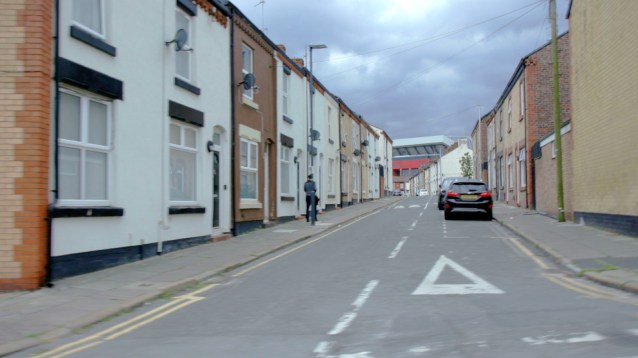
A street in Walton. Still from the film

The prism the director Daniel Draper ( who was born and grew up in Walton) uses is to tell the tale through the eyes and voices of local activists -a group that are normally completely ignored.

He intersperses their views with quotes from Robert Tressell’s work The Ragged -Trousered Philanthropists – regarded by George Orwell as a ” book everyone should read”. This tells a semi autobiographical story of a house painter’s struggle to get work in Edwardian England. He died from TB in Liverpool Royal Infirmary and was buried in a pauper’s grave in the city. The link between today’s activists and his legacy is vividly portrayed in one scene in the film.

He also intersperses the dialogue with stills of part of the constituency showing the poverty and both neat and neglected streets.

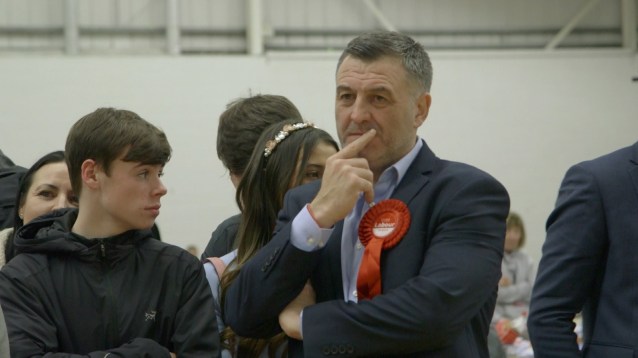
A thoughtful Ian Byrne during the 2019 election count. Still from the film

The result is a bitter sweet documentary. The campaigning in Liverpool was a great success – with both Parliamentary candidates who are on the left of the party, Dan Carden ( Liverpool Walton) and Ian Byrne (Liverpool West Derby) returned with thumping majorities.

But in the rest of the country Labour lost badly -including two seats Walton activists were sent to help the party in Blackpool and Crewe.

Since then internal struggles in the Labour Party -including in Liverpool – have divided Labour activists and I am pretty certain Liverpool Walton is not a priority for the new leader Sir Keir Starmer – precisely because it is such a safe seat where Labour voters are taken for granted.

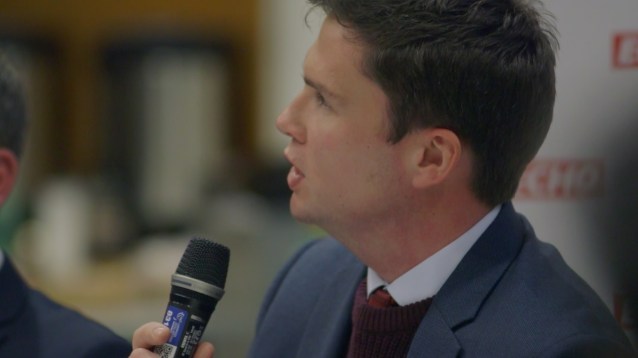
But in my view this would be a mistake. Labour has always been a broad church and the hopes, aspirations and frankly, eternal optimism to create a better society from the people portrayed in this film should not be ignored or squandered by party bosses in London.. The present mess and chaos we are in under this Tory government is too bitter a pill to swallow not only for the voters of Liverpool Walton but for everyone else. As Dan Carden, the MP for Walton said on the film before the result: “We can’t afford another five years of Tory government.”

Dan Carden during the campaign Still from the film

Initial screenings:

16 June: Picturehouse At FACT, Liverpool (Q&A: MP Ian Byrne, activist Alan Gibbons, director Daniel Draper, hosted by Ross Quinn)

16 June: Glasgow Film Theatre (Q&A: MSP Paul Sweeney & former MSP Neil Findlay, hosted by Ruth Gilbert)

17 June: Tyneside Cinema, Newcastle (Q&A: MP Ian Lavery, Laura Pidcock from People’s Assembly, activist Ben Sellers, director Daniel Draper)

30 June: Hyde Park Picture House, Leeds (Q&A: MP Richard Burgon & director Daniel Draper)

DATE TBC: Savoy Cinema, Nottingham (Q&A: MP Nadia Whittome & director Daniel Draper)

3 August: Duke’s At Komedia, Brighton (Q&A: MP Lloyd Russell Moyle & director Daniel Draper)

Further details of other venues including two in London will be on this link https://www.shutoutthelight.co.uk/manifesto

Please Donate to Westminster Confidential to help me continue my forensic investigations and different coverage.

One-Time
Monthly
Yearly

Make a one-time donation

Make a monthly donation

Make a yearly donation

Choose an amount

£5.00
£10.00
£20.00
£3.00
£9.00
£60.00
£3.00
£9.00
£60.00

Or enter a custom amount

£

Your contribution is appreciated.

Your contribution is appreciated.

Your contribution is appreciated.

DonateDonate monthlyDonate yearly

Please donate to Westminster Confidential

£10.00

Lord Reed: The Supreme Court President backing the government against the people

Lord Reed of Allermuir, President of the Supreme Court. Pic credit: judiciary.com

An influential all party report by peers and MPs published last week (see my report in Byline Times) found nine recent judgements by the Supreme Court were favouring the government over the individual.

The change appears to have taken place after Lord Robert Reed became President in 2020 replacing Baroness Brenda Hale of Richmond. It also follows a change in the composition of the court which is now almost exclusively male with just one token female judge out of 10.

The judgements of Lord Reed are hostile to women’s and children’s rights

I have since investigated further and found other cases where Lord Reed’s judgement have struck down opponents to Boris Johnson’s government particularly if they involve campaigning groups and they affect the welfare of women and children.

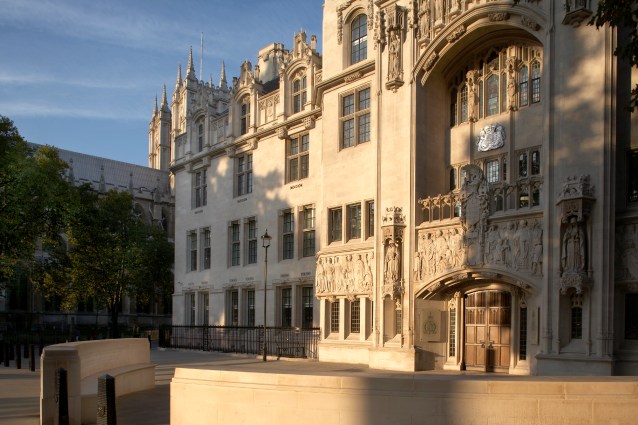
External view of the Supreme Court Pic Credit: Supreme Court

In one judgement he stated: “challenges to legislation on the ground of discrimination have become
increasingly common in the United Kingdom. They are usually brought by campaigning organisations which lobbied unsuccessfully against the measure when it was being considered in Parliament, and then act as solicitors for persons affected by the legislation, or otherwise support legal challenges brought in their names, as a means of continuing their campaign.”

This as the report points out ” reflect the executive talking point that litigation is used by “activist lawyers” to “conduct politics by other means”. Such a comment could easily have been made by Priti Patel, the home secretary.

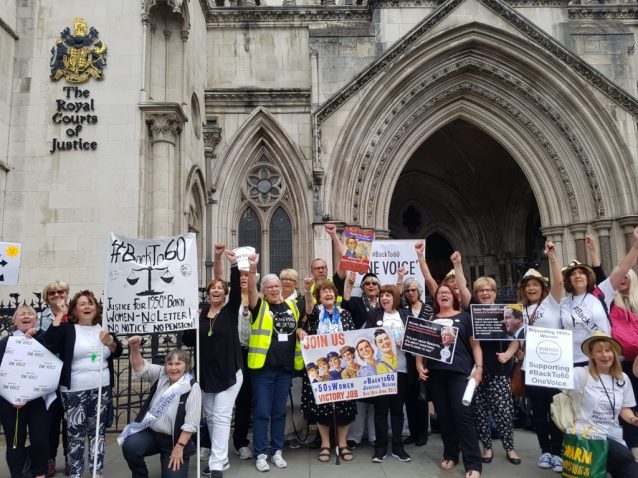
BackTo60 outside the High Court in better times

Now this view may well explain a decision not mentioned in the report concerning the fate of a judicial review brought by the BackTo60 organisation on March 30 2021. This is the case readers of this blog will be familiar (Delve and another v. Secretary of State for Work and Pensions)- involving a long standing campaign to gain full restitution for 3.8 women born in the 1950s who faced up to six years delay in getting their pensions. Since this ruling the Parliamentary Ombudsman has found partial maladministration in the arrangements for implementing this policy.

Lord Reed and two other male judges decided to refuse to hear the case at the Supreme Court saying the delay in bringing the proceedings was unarguable.

Now this is strange given that the Hon Ms Justice Lang – had granted the case for a judicial review on all grounds -and lawyers had been allowed to argue their case at the High Court and the Court of Appeal even though they lost. The only people who were really angry about the decision were government ministers at the DWP.

Michael Mansfield, QC ” activist lawyer”

Michael Mansfield QC who argued the case for Backto60 said the Supreme Court’s was a “paper thin refusal”.

In my opinion the real reason may well have been that Lord Reed loathed campaigning groups like BackTo60 and hated well known ” activist lawyers” like Michael Mansfield. Also his decision would not affect a single man -only elderly women would suffer.

The second case which is in the report concerned another case brought by women and children about the government’s two child limit on tax credits and benefits for children. Again it involved the DWP. The claimants had used the UK’s ratification of the UN Convention on the Rights of the Child to argue discrimination. Lord Reed ruled in July 2021 that this was ” out of order” and the UN convention could not be used in arguments because the UK Parliament had not passed specific legislation to implement the convention. This was precisely the opposite of what he argued in 2015.

Lord Reed backed government savings over helping children

But worse than that his judgement gave away his hostility to the plight of women and children.

 “The Court concludes that the two child limit has an objective and reasonable justification, notwithstanding its greater impact on women. The measure pursues a legitimate aim: to protect the economic wellbeing of the country by achieving savings in public expenditure and thus contributing to reducing the fiscal deficit. It was inevitable that, if that aim was to be achieved, there would be a disproportionate impact on women, since women are disproportionately represented among parents responsible for bringing up children  Parliament decided that the disproportionate impact of the two child limit on women was outweighed by the importance of achieving its aims. There is no basis on which the Court could properly take a different view.”

The third case, not mentioned in the report, involves the Scottish government’s attempt to introduce legislation to implement in full the UN Convention on the Rights of the Child. This alarmed Boris Johnson who did not want the Scottish Government implementing a convention that the UK had ratified which he felt should be done, if at all, by the Westminster Parliament.

I wrote about this here. The Supreme Court sided in October 2021 with the UK government blocking the Scottish Government doing this which also meant that other planned legislation implementing UN conventions on discrimination against women (CEDAW), ethnic minorities and the disabled would be stalled.

Lord Reed’s decision tore up part of the SNP manifesto

This decision led by Lord Reed again limited rights for women and children but also tore up the Scottish National Party manifesto pledge to introduce legislation. Ironically given all the fuss over judges being accused by the Daily Mail of being ” enemies of the people”, it makes Lord Reed, a Scottish judge who would know all about Scottish politics, an enemy of the Scottish voter who had elected the SNP government and expected them to fulfill their promises.

My conclusion is both Boris Johnson and Dominic Raab, the Lord Chancellor, literally know they have a friend at court, the highest court in the land. They know they can introduce what restrictive legislation they want, and provided it is passed by Parliament, the most powerful judge in the land’s loathing of campaigning groups, will help them get their way. And women who only have a marginal role in the Supreme Court, better not expect any help either from a man who appears to have a bit of a misogynistic streak when it comes to backing their corner.

Please donate to Westminster Confidential so I can continue my investigations and forensic analysis.

One-Time
Monthly
Yearly

Make a one-time donation

Make a monthly donation

Make a yearly donation

Choose an amount

£5.00
£10.00
£20.00
£3.00
£9.00
£60.00
£3.00
£9.00
£60.00

Or enter a custom amount

£

Your contribution is appreciated.

Your contribution is appreciated.

Your contribution is appreciated.

DonateDonate monthlyDonate yearly

please donate to Westminster Confidential

£10.00

MPs challenge Opperman to rewrite guidance for people who lost thousands of pounds in additional pensions

MPs on the Commons Work and Pensions Committee has written to Guy Opperman, the pensions minister, asking him to rewrite the fact sheet on the Gov.uk website so people can properly claim compensation for losing additional pensions worth up to thousands of pounds after the new state pension was introduced in 2016.

Guy Opperman, pensions minister. Pic Credit: Twitter

The action from the committee comes after members of the public complained to MPs that it was virtually impossible to find the advice given in the fact sheet or claim. Not a single person has succeeded in a claim against the Department for Work and Pensions yet possibly 11 million people are entitled to it.

The people affected are a large but distinct group. They were  people who were contracted out of SERPS by their employer but were told they would receive an index linked guaranteed minimum pension. This arrangement was scrapped when the new state pension was introduced in 2016 for anyone in the private sector – but remains for public sector workers.

The money they have lost is anything from a few pounds a week to tens of thousands of pounds over the lifetime of their pension. This decision was never debated in Parliament or included in the Pensions White Paper. Just as with the 50swomen and divorcees, women are the most affected.

Robert Behrens, the Parliamentary Ombudsman, decided that there was maladministration by the DWP and two complainants got £1250 between them. He recommended that the government publish guidance on how to claim. But ministers ignored his advice and he never bothered to hold the ministry to account for its failure.

Peter Schofield, permanent secretary at the DWP

In March Peter Schofield, DWP permanent secretary on £190,000 a year, wrote to MPs on the committee, saying he had no intention of changing it. You can read the blog on this here.

Now Stephen Timms, the Labour chair of the committee, has written a strongly worded letter to Guy Opperman, asking for it to be rewritten. The full text is here.

Stephen Timms MP chair of the committee

The letter reveals anger among members of the public.

The letter said:” One person pointed out that the factsheet has been placed on Gov.UK in the section on ‘public service pensions’, when it is not in fact relevant to members of such schemes as they have full inflation protection.

“Another told us that they only became aware of it after looking through the correspondence between the Committee and DWP on the Committee’s website. They said “how anyone affected was expected to know it was there I will never know. There was no press release or other publicity to encourage the large numbers of people affected to look at the gov.uk site factsheet.
” Yet another person pointed out that some pension schemes were unaware of the factsheet.

One referred on its website to GMP indexation being partly delivered through ‘increases each year added to your State Pension’, without distinguishing between people who reach State Pension age before and after 6 April 2016.”

Only 19 people used the on-page search function

The analytic review of the factsheet sent to the Committee on 2 March 2022 said, the factsheet had had 6,922 ‘unique page views’, which seems low number given that the Department estimated that 50,000 people would be worse off in 2017-18 alone.13 Only 19 people had used the on-page search function, which is ‘very low’.

The MPs say: “The Committee would be grateful for an explanation of the circumstances in which an individual in the target group for the factsheet may be eligible for compensation and what steps should they take to get it. This should be included in a revised version of the factsheet.”

The letter concludes; ” The Committee is concerned that, now six years on from the NAO report, it is still the case that some people with GMPs negatively affected by the new State Pension reforms “have not been able to find the information they need.” In light of this, will the Department revisit its decision not to review the factsheet and commit to improving its content so that it better meets the needs of those affected and promoting it better? This Committee would be grateful for sight of a suitably revised version of this factsheet before it is published.
“I would be grateful for a response by 8 June.”

The DWP’s official position is “We encourage anyone who is concerned to read the online factsheet and contact us if they think they have been affected.

“The publication of the factsheet is the final step in the Department meeting the Ombudsman’s recommendations on this issue.”

But MPs are not satisfied and nor should anyone else. So Mr Opperman’s response will be closely watched. To repeat again if this is the way the ministry treats this group of people how are the 3.8 million 50s women who are hanging on for a compensation package from Robert Behrens are going to be vastly disappointed. Note it is SIX years since he recommended compensation for this group and not a single person has got a penny. At this rate the 50s women could be well into their 70s before they get any money or in their graves by then.

Please donate to Westminster Confidential to allow me to continue my forensic coverage.

One-Time
Monthly
Yearly

Make a one-time donation

Make a monthly donation

Make a yearly donation

Choose an amount

£5.00
£10.00
£20.00
£3.00
£9.00
£60.00
£3.00
£9.00
£60.00

Or enter a custom amount

£

Your contribution is appreciated.

Your contribution is appreciated.

Your contribution is appreciated.

DonateDonate monthlyDonate yearly

Please donate to Westminster Confidential

£10.00

Local elections: The pincer movement that threatens Boris Johnson

Those who follow my tweets that record local by-election results over the last year should not be surprised by this week’s council election results. For the past year they have been revealing shock upsets where either the Green or Liberal Democrat candidate unseats a sitting councillor – more often a Tory rather than a Labour one – with a jump in their vote share by anything from 30 to 50 per cent.

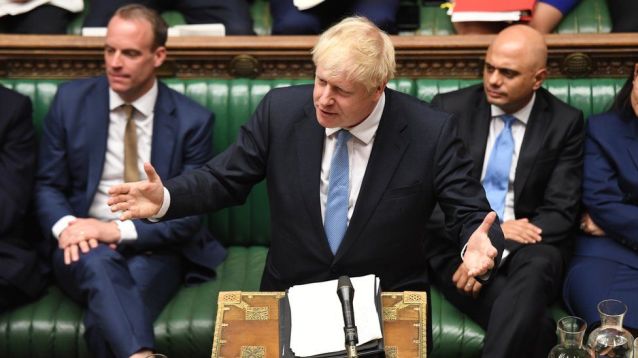
Boris Johnson – facing an all party pincer movement

Labour a year ago was still losing councillors to the Tories in by-elections in Red Wall and Midland seats. It is only in the last few months as the Partygate scandal developed that Labour started holding those seats and occasionally taking a seat back from the Tories.

What the local elections showed this week is that these startling by-election gains by the Greens and the Liberal Democrats are not a flash in the pan but part of a new trend. It also confirmed that Labour is back in business, has largely halted its decline in local government seats, consolidated its firm grip in London,, recovered from an all time low in Scotland, and yes, made gains in the North of England in Cumbria and Lancashire and stopped the rot in the North East. And it has made spectacular gains in Wales and become a force again in the South of England.

Sunderland symbolic of the halting of the Tory surge

The symbolic Labour council for me in the North was Sunderland. This was a council the Tories were keen for Labour to lose – and previous gains by the Tories and Liberal Democrats made this feasible as Labour’s majority had been cut. The Tories put money into winning seats – Johnson came up to the North East – even if he confused Tyneside with Teesside. What happened? The Tories did not gain a single seat and Labour managed to hold on with reduced majorities. Instead the Lib Dems took a seat off the Tories and Labour – winning by that surge in vote share that has become familiar in council by-elections.

The two symbolic Lib Dem council victories for me are St Albans and Gosport. The Lib Dems just controlled the Hertfordshire city before the local elections and had also taken the Parliamentary seat from the Tories in 2019. But this week’s election saw a Liberal Democrat landslide. The city has 56 councillors – 50 of them are now Liberal Democrat after they gained 20 seats overnight wiping out Labour and reducing the Tories to just four councillors.

Gosport was another extraordinary result for the Lib Dems. I know the town from sitting on the Gosport War Memorial Hospital inquiry. It is a fiercely working class, Tory naval town, heavily pro Brexit leaning even towards UKIP at one time. Yet the Remain supporting Liberal Democrats have taken control and ousted the Tories. This with Somerset , Woking and Hull going Liberal Democrat show a big change.

For Labour in the South the fact they now have a big majority on Worthing Council in West Sussex is also an extraordinary result. Some five years ago Labour won its first seat for 50 years and now they control the authority. The other extraordinary victory is Westminster. Dame Shirley Porter, now 91,- the Tory leader fined for gerrymandering the council to prevent Labour ever winning in the 1980s – must be cursing the result in Israel now Labour have a working majority.

Rise of the Greens

The other factor in the mix is the rise of the Greens. Though they control no council fewer and fewer authorities do not have a Green councillor – after this election . Here their appeal is potentially dangerous to both the main parties. The emphasis on green issues is subconsciously boosting their brand among people fed up with the old two party system. They can simultaneously appeal to the radical elements who left Labour after Jeremy Corbyn was banished from the Parliamentary party – and to rural Tories concerned about the demise of the countryside. No wonder one right wing Labour supporter suggested undemocratically that people expelled by Labour should be banned from joining another party. Thus the Greens can win seats in Sheffield, North Tyneside, Newham and West Oxfordshire, Sussex and Rutland all in the same year.

There is one person who is going lose out altogether by these converging trends – Boris Johnson. He is facing a pincer movement. His chances of further gains in the Red Wall area have been stymied, he has gone backwards in Scotland and Wales and his heartland Blue Wall seats are now seriously threatened by the Liberal Democrats in places like Esher and Walton and in places like Worthing and Southampton by Labour.

In my view, these local election results have created the perfect storm to undermine Boris Johnson.

Please donate to my blog so I can continue my forensic analysis of the political scene and my investigations.

One-Time
Monthly
Yearly

Make a one-time donation

Make a monthly donation

Make a yearly donation

Choose an amount

£5.00
£10.00
£20.00
£3.00
£9.00
£60.00
£3.00
£9.00
£60.00

Or enter a custom amount

£

Your contribution is appreciated.

Your contribution is appreciated.

Your contribution is appreciated.

DonateDonate monthlyDonate yearly

please donate to westminster confidential

£10.00