MPs vote to stop pensioners to get a big rise next April

Commons vote to throw out Lords case for a revised triple lock rise

Guy Opperman, pensions minister,” reckless to pay pensioners more”

The House of Commons last night voted down the Lords case for a higher pension rise next April with Guy Opperman, the pension minister, describing such a move as ” reckless” as there could be no robust figure to work out a compromise figure suggested by former Tory pensions minister Baroness Altmann. He boasted that the government were spending huge sums on pensions ” amounting to £129 billion this year”.

Full list of MPs who didn’t want pensioners to get a bigger rise below -all Tories

Baroness Altmann had argued for a higher figure than the government’s 3.1 per cent but below the 8.3 per cent rise in earnings if the government had kept the triple lock. This follows the latest estimates for inflation rising as high as 5 per cent by next April. The government won by 300 votes to 229 and by 299 to 53 to disagree with the Lords.

Full vote on pension uprating here. Those who were against any more money for pensioners included Sir Geoffrey Cox, who has made a £1m advising a tax haven, Alok Sharma, the president of Cop 26, Red Wall Tory, Ben Bradley for Mansfield and Lee Anderson, MP for Ashfield Bob Seely, Isle of Wight with a large pensioner population; millionaire Grant Shapps, the transport secretary; Scottish Tory leader, Douglas Ross; Peter Aldous, joint chair of the APPG on 50s women’s pensions and a clutch of Tories who won seats from Labour in the last general election. Two Tories rebelled and voted for the Lords uprating, Esther McVey, MP for Tatton and Derek Thomas, MP for St Ives. Derek Thomas it turns out voted against the government by mistake and then went into the government lobby. So he voted twice. Independents voting for the rise included former Labour leader, Jeremy Corbyn.

There were a lot of MPs who didn’t vote including Rishi Sunak, Boris Johnson and among Labour, Andrew Gwynne, joint chair of the APPG on 50s women’s pensions, Jack Dromey and Margaret Beckett.

The government was opposed by Labour, the Scottish National Party, the Liberal Democrats, the Green Party, the Alliance Party, the SDLP, and the Democratic Unionist Party. Only one Tory backbencher spoke to defend the government, Duncan Baker, the MP for Norfolk, North. Most Tory MPs stayed away from the debate.

Duncan Baker, Tory MP for Norfolk North. Claimed his large number of elderly pensioners accepted the logic of the need not to keep the triple lock this year.

He argued that his large number of elderly pensioner constituents understood the need not to increase pensions by 8.3 per cent because of the current financial situation. Jonathan Reynolds, Labour’s social security spokesman, supported the Lords move and rejected the government’s case -saying it was reasonable for the government to find a figure.

The strongest support came from John McDonnell, who argued the full triple lock of 8.3 per cent should be paid because of pensioner poverty, women being especially hit. ” Under the Lords amendment we are talking about giving pensioners an extra £2.75 a week – it is ridiculous that we are arguing against this. I would give them the full 8.3 per cent – worth £7 a week.”

Three Scottish MPs – two from the Scottish National Party David Linden and Patricia Linden – and Liberal Democrat Wendy Chamberlain argued against the government. Wendy Chamberlain said she had not received a single letter supporting the government abandoning the triple lock and many letters opposing the move.

Stephen Timms, Labour chair of the Commons works and pensions committee, challenged the government to make up the shortfall and was sceptical whether the government would abandon the triple lock next year ( Guy Opperman denied this) but even if not, it meant pensions would continue to fall behind wages.

Please donate to Westminster Confidential to allow me to continue my investigative reporting

One-Time
Monthly
Yearly

Make a one-time donation

Make a monthly donation

Make a yearly donation

Choose an amount

£5.00
£10.00
£20.00
£3.00
£9.00
£60.00
£3.00
£9.00
£60.00

Or enter a custom amount

£

Your contribution is appreciated.

Your contribution is appreciated.

Your contribution is appreciated.

DonateDonate monthlyDonate yearly

please donate to Westminster Confidential

£10.00
Exclusive: Benefits watchdog wants tougher punishment for jobless and disabled claimants after DWP bungles new sanctions system

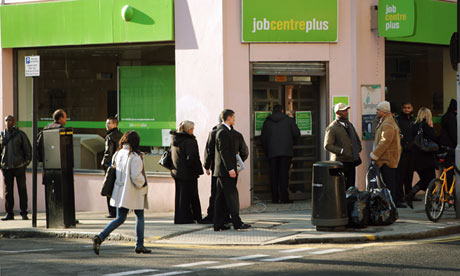
New sanctions to be imposed in Jobcentres

From November 3 the Department for Work and Pensions introduced a new tough regime for people claiming the new Jobseekers Allowance and the Employment and Support Allowance. They will like those already on Universal Credit have to sign up to a ” claimant commitment ” to undertake whatever work coaches at the DWP demand from them to get a job, Failure to do so leads to a rising number of financial penalties ultimately leading to the withdrawal of all benefits.

The new regulations like the ones dealing with domestic abuse should have been scrutinised by Parliament but the main body that vets them is the little known Social Security Advisory Committee,(SSAC) a watchdog which is expected to see whether the benefit regime is fair and equitable.

Minutes and correspondence released by SSAC show that it has been doing its job since September and is currently involved in discussing the new regulations with Mims Davies, the employment minister.

Mim Davies, Parliamentary undersecretary at the Department for Work and Pensions

But people might be surprised to know that SSAC’s main focus has been on increasing the penalties on claimants rather than reducing them.

The reason is that the watchdog spotted that the tabled regulations had a big loophole which, in their view, made them less effective. The hideously complicated benefit system means that there are people who claim both Universal Credit and Jobseekers Allowance or the Employment and Support Allowance. Where they claim both the new regulations say only one penalty can apply on Universal Credit alone – and the Jobseekers Allowance and the Employment and Support Allowance remain untouched.

SSAC want the penalties to apply to both.

Dr Stephen Brien

Dr Stephen Brien, the chair of SSAC wrote to the minister: “in circumstances where the value of UC element of the benefit was lower than the sanctioned amount, the claimant would be in a more favourable position than a claimant solely in receipt of either UC or a new style benefit who would be impacted by the full force of the sanction. As it is possible that the UC element of a dual claim
could be zero, this presents a significant inconsistency.”

He went on: ” the Committee is of the strong view that this inconsistency be reviewed and addressed at the earliest opportunity.” The ministry went ahead with regulations as they stand and is still discussing what it should do while it looks at the effectiveness of the new sanctions.

Since the sanctions system depends on the views of the DWP work coach it looks like the fate of many claimants will decided by individual civil servants. Now it so happens that SSAC has done some serious work on the ” claimant commitment ” rules under Universal Credit which decide whether sanctions will be applied.

The report two years ago is a somewhat idealistic document which expects a parity of esteem between the civil servant handing out the sanction and a desperate claimant getting the benefit. It says the commitment should be accessible, clear, tailored to the claimant’s needs and the state of the local labour market, and agreed by both the claimant and the DWP. It also says claimants should be properly informed.

Real world not the same as the idealistic picture of claimant commitment

However in the real world SSAC found it was pretty mixed picture. It found some good practice but also examples of lone parents not being informed of their right to reduced work searches, re-assessment interviews lasting just ten minutes and “not all work coaches are using discretion fairly or reasonably and opt for generic, rather than tailored, actions. We saw examples of work coaches copying and pasting actions from a shared document which had become standard in their local Jobcentre.”

As usual the DWP itself didn’t seem to have an overall picture of what was happening as it couldn’t be bothered to put together a national picture. So it is rather strange that the present SSAC committee is concentrating on punitive measures. Or is it?

The present committee under Stephen Brien, who worked for Iain Duncan Smith’s Centre for Policy Studies and now works for the United Arab Emirates funded Legatum Institute is more inclined to want to correct inefficiency in the DWP than to take tough action over the welfare of claimants.

What is deeply worrying is that many claimants – particularly more elderly disabled claimants now looking for work in their 60s and suffering poor health could get some very harsh treatment. They might be lucky and get a really sympathetic work coach or they could be landed with a jobsworth or worse a power maniac who enjoys putting the disadvantaged down. Will SSAC be bothered? Documents referred to in this article can be found on the SSAC website here.

Please donate to my site to keep up my forensic monitoring of Westminster and Whitehall.

One-Time
Monthly
Yearly

Make a one-time donation

Make a monthly donation

Make a yearly donation

Choose an amount

£5.00
£10.00
£20.00
£3.00
£9.00
£60.00
£3.00
£9.00
£60.00

Or enter a custom amount

£

Your contribution is appreciated.

Your contribution is appreciated.

Your contribution is appreciated.

DonateDonate monthlyDonate yearly

please donate to Westminster Confidential

PLN 10.00

Sellafield Whistleblower Case: Claimant faces a £20,000 legal bill for necessary Freedom of Information and Subject Access Requests

Alison McDermott: Whistleblower

By Philip Whiteley and David Hencke

A law firm in the Sellafield whistleblowing case has put in a bid for £20,000 costs against the claimant Alison McDermott, in part to deal with Freedom of Information requests – even though it emerged at the Tribunal hearing that the firm’s client had failed substantially to provide relevant evidence.

The costs application by Pinsent Masons on behalf of the Nuclear Decommissioning Authority, if successful, could set a precedent that weakens a citizen’s right to request information. It would appear to undermine the will of Parliament, given that when the Freedom of Information Act was passed MPs specifically rejected the idea of levying a fee for FoI requests.

The other law firm in the case, DLA Piper, simultaneously put in a bid for £20,000 costs against Ms McDermott – the maximum allowed without being subject to a further hearing – listing other factors, principally changes the claimant made in the detail of her case.

Sellafield site Pic credit: gov.uk

At the three hearings in the case held so far there has been overwhelmingly strong evidence indicating that Ms McDermott’s FoI requests were both proportionate and necessary. She said: “The governing body [the NDA] in its ordinary disclosure, released one email. Then, when I put in direct subject access requests, many more emails proved that they had been asking questions about the termination of my contract. Then, at the hearing it emerged that Heather Roberts [former HR director at Sellafield] had withheld a key document that said that the NDA was very concerned about the timing of my termination and that conversations had been held. This information was never released.

“The Freedom of Information requests also revealed that contracts had been awarded for HR services, including EDI [equality, diversity and inclusion] services, for the value of £17 million. It was only after that that they [Sellafield] switched from financial reasons [for dismissal] to one of performance.”

Ms McDermott, an independent EDI consultant hired by the nuclear plant Sellafield, had her contract terminated the first working day after making a report detailing systemic discrimination and bullying at the plant, a pattern confirmed by a BBC investigation which reported earlier this year.

At the tribunal hearing in June-July 2021 her barrister, James Arnold, pointed to directly relevant evidence only coming to light shortly before the hearing – after a period of more than two years since litigation began. He was not contradicted by either Respondent (see our coverage on 30 June). This hampered Mr Arnold’s ability to call witnesses, and cross-examine them. Ms McDermott was not successful in linking the detriment she experienced to the reports she made, although she is appealing the ruling.

Law Firm Pinsent Masons claimed FOI requests were ” vexatious”

The law firm, Pinsent Mason, claimed that the requests for Freedom of Information and Subject Access Requests, were part of vexatious, abusive, disruptive and unreasonable behaviour by Alison McDermott against both Sellafield and the Nuclear Decommissioning Authority.

In a letter to the court the firm said she had “submitted four Data Subject Access Requests and six Freedom of Information Requests over the last three years, the majority of which were complex and involved significant work and additional legal time and cost by the Second Respondent [the NDA] to answer.”

It added it meant ”significant inhouse legal resource time and wider staff management time responding to data subject access requests and Freedom of Information Requests linked to the claim”.

Pinsent Mason said the NDA had spent £200,000 fighting the case and wanted £20,000 – the maximum it can claim at a tribunal – back.

Solicitors Regulation Authority takes no action against law firms

A critical response came from the Solicitors Regulation Authority who claimed that Ms McDermott had confused the difference between using all the information from Subject Access Requests with what was relevant to the case at the tribunal. The letter suggested that she should have highlighted more information from the requests if she thought the tribunal was not looking at the issue – citing the ruling from the judge.

The letter from the SRA making this point, dated 30 September 2021, cites from an earlier Tribunal ruling – following the strike-out hearing in July 2020. This was fully one year before the full hearing, where further directly relevant evidence came to light, as noted by Mr Arnold, including the correspondence in which the governing body admitted to nervousness about the timing of her dismissal.

DLA Piper wipes metadata and says it was a mistake

On another matter, as reported earlier, metadata was wiped from a piece of evidence in the case while in possession of DLA Piper, representing Sellafield, shielding information on authorship and time of creation of the document. The metadata was released to the claimant upon request.

The matter was referred to the Solicitors Regulation Authority, which decided in September to take no action. It accepted that this was a genuine mistake by DLA Piper, although its own investigation was inconclusive.

Pinsent Masons, for the Nuclear Decommissioning Authority, did not respond to a request for a statement or interview.

A spokesman for DLA Piper said: ‘As a matter of course, DLA Piper does not comment on client matters. We refute allegations of wrongdoing on the firm’s part. The employment tribunal’s decision is open to the public and we would refer you to this for details of the case and the outcome.’ The Solicitors Regulation Authority did not respond to a request for an interview or statement.

Lords reveals 12 million pensioners lose £30 billion as rebel peers defeat government over scrapping the triple lock

But deputy speaker stops Lord Sikka’s” full restitution” amendment going to a vote

Baroness Stedman-Scott Defeated in the Lords

The government were roundly defeated in the Lords – by 220 votes to 178 – yesterday over its plans to abolish the triple lock for next year’s pension rise – reducing the up rating for pensioners from 8.1 per cent to 3.1 per cent.

The loss of cash for pensioners in the next five years is enormous. They lose a share of £5.4 billon next year, £5.78 billion in 2023-24, £6.1 billion in 2024-25, £6.5 billion in 2025-26 and £6.7 billion in 2026-27. That amounts as Lord Sikka told peers to £30.5 billion removed from pensioners’ pockets over the next five years.

What happened yesterday in the Lords were two separate approaches to challenging the government’s decision to end for next year the link between pensions and earnings.

Baroness Ros Altmann

The first which was successful was put forward by Baroness Ros Altmann, a former Tory pensions minister, in a series of amendments. She had the support of Labour’s Baroness Sherlock, a former special adviser to Gordon Brown and an ordained priest at Durham Cathedral; Baroness Janke, a Liberal Democrat peer and former leader of Bristol council; and Baroness Boycott, a crossbench peer, feminist and former editor of the Independent newspaper.

It was one of these amendments that led to the defeat of the government in the Lords. This particular amendment had the support of former Labour Cabinet minister, Baron Hain, Liberal Democrat baroness Janke and crossbencher (and ex Conservative) Baroness Wheatcroft former editor of the Sunday Telegraph.

Basically the amendment challenged the government’s calculation of the rise in earnings at 8.1 or 8.3 per cent and wanted a new calculation stripping out the effect of the pandemic. Lady Altmann initially had put this at 3.8 per cent but yesterday suggested it could be as high as five per cent and then suggested she was had no firm figure. This particular approach had the support of Labour.

The official wording maintained the link with “earnings obtaining in Great Britain, as adjusted to take account of the exceptional impact of the COVID-19 pandemic on the level of earnings”.

She told peers: ” after seeing alcohol and fuel duty cut in the Budget and the bank surcharge allowance raised, and adding up the amount of Exchequer savings that those measures entail, half the cost of not honouring the triple lock will cover the costs of just those three measures. I appeal to noble Lords across the House: is this really the country that we believe that we should be living in? Is that the priority for public spending?”

The key point about this amendment is that it does not restore the full 8.1 per cent to pensioners and it leaves the government to decide if it wants to – the new earnings rate.

Baroness Stedman Scott, the DWP Lords minister, did not sound convinced. Referring to a blog on the Office for National Statistics site she said “Using a range of possible estimates based on a method that cannot be agreed on does not provide a sufficiently robust basis for making critical decisions about billions of pounds-worth of expenditure.”

Prem Sikka

The second more radical approach came from Prem Sikka, Lord Sikka. He was backed by Baroness Bennett, Natalie Bennett the former Green leader; Baron Davies of Brixton – Bryn Davies- a former Labour union leader; Baroness Blower, Labour and former general secretary of the National Union of Teachers and Lord Hendy, Labour, a barrister and labour law expert. Lord Sikka told them the government’s measure “is also contrary to the Government’s levelling-up agenda. Rather than levelling up, it impoverishes citizens and condemns millions of current and future retirees to a life of poverty and misery. There is no moral or economic rationale for this; indeed, none has been offered by any Minister so far.

“The Government’s own statistics, published on 3 September 2021, say that the average weekly pre-2016 state pension is £169.21 for males, £141.98 for females, and the overall mean is £155.08. The average weekly post-2016 pension is £166.34 for males, £160.11 for females, and the overall average is £164.23. As we can see from these figures, women are especially impoverished by the way that pensions are calculated and paid. They will be hit even harder by the abandonment or, as the Minister might say, the temporary suspension of the triple lock.”

….”Low pensions condemn our citizens to a life of misery. Some 1.3 million retirees are affected by malnutrition or undernutrition. Around 25,000 older people die each year due to cold weather, and we will no doubt hear the grim statistics for this year, possibly on 26 November when the next numbers are out. Despite the triple lock, the proportion of elderly people living in severe poverty in the UK is five times what it was in 1986, which is the largest increase among major western countries. Some 2.1 million pensioners live in poverty, and the poverty rate has actually increased since 2012-13.”

Baroness Fookes : Blocked official vote

Then extraordinarily Baroness Fookes, a Tory peer who was a deputy speaker, blocked a vote on Lord Sikka’s amendment leading Lord Sikka to say he was cheated. She argued that his opponents had made more noise than his supporters to justify the decision.

If this amendment had been passed it would have allowed pensioners to get the full uprating of 8.1 per cent but would have wrecked the bill. Labour did not support this and would have abstained. A spokesman for the Labour Whip’s office explained:”Prem’s amendment was not in line with the Lords’ constitutional position, in that it would wreck the core purpose of a bill that the Commons had already voted to support.

There was all party support however for a full impact study into pensioner poverty after peers from all sides had expressed concern about the plight of pensioners this winter and the DWP minister promised this when faced with possibility of yet another Lords revolt.. There was also a promise from the minister for a detailed explanation of the national insurance fund – which appears to have a £37 billion surplus which the government says cannot be used to pay for keeping the triple lock.

What is clear is that Rishi Sunak, the Chancellor, has been silent about this surplus in all the documents he produced to accompany the Budget. If it turns out that it has been used secretly to repay government debt I suspect there will be an all mighty row as 12 million pensioners will feel they have been cheated yet again by successive governments. Watch this space for more developments.

Read here who supported revising the triple lock and those who were against pensioners getting a penny more. Those in favour included 3 Tories, 99 Labour, 41 cross benchers,64 Liberal Democrats,13 non affiliated, including one Green Party and 2 Democratic Unionist Party.

Those against included 165 Tories, 11 crossbenchers and 2 non affiliated peers. Hereditary peers also voted against. You can see all their names on the link.

Please Donate to Westminster Confidential to allow me to continue my forensic investigations.

One-Time
Monthly
Yearly

Make a one-time donation

Make a monthly donation

Make a yearly donation

Choose an amount

£5.00
£10.00
£20.00
£3.00
£9.00
£60.00
£3.00
£9.00
£60.00

Or enter a custom amount

£

Your contribution is appreciated.

Your contribution is appreciated.

Your contribution is appreciated.

DonateDonate monthlyDonate yearly

Please donate to Westminster Confidential

£10.00
NHS Whistleblowers: Persecuted and trashed by managers to cover up patient safety issues

Issue much more widespread than the public realise

The recent Dispatches programme and article in the Times by journalist Matthew Syed highlighted the plight of whistleblowers in the NHS citing the case of Peter Duffy, a consultant surgeon, working for the Morecambe Bay Foundation Trust. Faced with failures at the trust in the emergencies department he expressed concern for two patients who subsequently died from kidney sepsis.

One would have expected the Trust to have remedied the situation. Instead they turned on him rather than admit any failings. As he told Matthew Syed: ” I was on the receiving end of allegations of bullying, abuse and racism. And so what I hoped would be an attempt to raise standards became an investigation of myself”.

It took five years of toxic attacks and tribunal hearings before he won his case for constructive dismissal. The sad thing is that this is not some isolated instance but appears to be growing in an NHS that is more concerned with its reputation than the safety of patients in its care and is preparing to spend millions of taxpayers money on lawyers fees to undermine any cases brought by whistleblowers. Furthermore it is prepared to spend literally years to wear down anybody who puts their face above the parapet.

Dr Usha Prasad

Readers of this blog will be aware of the case of Usha Prasad, a popular and competent cardiologist ( the General Medical Council has recently revalidated her) who has been driven out of the Epsom and St Helier University Health Trust ( now merged with St George’s Health Trust),

Today she starts a 16 day employment tribunal hearing as a whistleblower. She is backed by Dr Sola Odimuyiwa, from the hospital trust and two retired eminent cardiologists, Professor Jane Somerville and Dr David Ward, who believe her case is just one example of a malign system designed to cover up failures in the NHS. This week the latter two sent a letter to the Sunday Times which was edited down for publication. This is the full text:

“We thank Matthew Syed (Comment Oct 24) for his frank exposure of some of the “mistakes and weaknesses” of the NHS of which the persecution of medical whistle-blowers, as shown by the heinous story of the consultant surgeon, Mr Peter Duffy. He is one example of many.

It is a doctor’s duty of candour to draw attention to matters which are not safe for patients. This action, in good faith, prevents accidents thereby protecting patients. Hospital Trusts may not respond favourably to such complaints and may use their unbridled powers to instigate prolonged, expensive and vengeful disciplinary processes.

Medicine has learnt some of the lessons from aviation safety but the fair and open treatment of whistle-blowers is not one of them. Hospital Trusts are able to fund these processes because they can access public funds not available to the whistle-blower which is a gross imbalance of power. Shady external “management consultants”, who operate by their own rules, and expensive legal firms are hired by Trusts at great expense with the sole aim of ensuring the dismissal of the troublesome whistle-blower. This certainly affects the recruitment and retention of doctors the NHS so badly needs.

A serious consequence of this nefarious process has been the emergence of a cover-up culture in which the initial deficiencies or ‘protected disclosures’ are inadequately investigated.  There is no oversight or regulation of the way Trusts investigate whistleblowers. What informal processes there are may have been designed deliberately to avoid or deflect scrutiny. We have been unable to find a body or organisation to whom to report a Trust’s bad treatment of a whistle-blower. Attempts by supporters of whistle-blowers to engage higher regulatory bodies such as NHS England are usually met with indifference.

For the victimised, whistle-blowing doctor the outcome can be devastating. Their careers are stolen from them. The reputational damage prevents them from securing another job. Serious physical and mental health problems are not uncommon and family lives are destroyed.

We think the investigation of NHS whistle-blowers, of which there have been many notable cases over the past decade, should open and accountable. It is a scandal unknown by the wider public and in need of an independent inquiry.”

A national problem

You can see they believe this is a national problem not an isolated case. It can be backed up by a roll call of cases ( some of which are not yet finished). You can click on the stories reported in various newspapers to get an idea of the scale of toxicity on this issue.

Whistleblowing cases

Dr Raj Mattuhttps://www.theguardian.com/uk-news/2016/feb/04/dismissed-nhs-whistleblower-who-exposed-safety-concerns-handed-122m
Dr David Drewhttps://www.theguardian.com/society/2015/feb/11/nhs-whistleblowers-the-staff-who-raised-the-alarmhttps://www.amazon.co.uk/Little-Stories-Life-Death-NHSwhistleblowr/dp/1783065230?asin=1783065230&revisionId=&format=4&depth=1
Dr Kevin Beatthttps://www.standard.co.uk/news/health/nhs-to-pay-ps870-000-to-whistleblower-doctor-who-spoke-out-on-patient-safety-a4384211.html
Dr Chris Dayhttps://www.theguardian.com/society/2018/oct/02/nhs-whistleblowing-protection-tribunal-junior-doctors
Dr Ed Jesudason https://www.drphilhammond.com/blog/2018/06/28/private-eye/private-eye-medicine-balls-1468-march-16-2018/
Mr Peter Duffyhttps://the-medical-negligence-experts.co.uk/lancaster-surgeon-peter-duffy-nhs-whistleblower-book/
Dr Claire Connollyhttps://www.rllaw.co.uk/success-at-tribunal-for-nhs-whistleblower-dr-claire-connolly/
Dr Minh Alexander, who hosts a blog site about whistleblowing having been one herselfhttps://minhalexander.com
Pandemic whistleblowers inchttps://www.independent.co.uk/news/uk/home-news/coronavirus-uk-nhs-ppe-whistleblowers-job-losses-ppe-a9515856.html
Dr Usha Prasadhttps://davidhencke.com/?s=Prasad&submit=Search
Mr David Sellu, a surgeon in the private sector, was treated badly but he was not a whistleblower just a victim of the judiciaryhttps://www.theguardian.com/global/2019/jun/16/they-look-for-a-scapegoat-a-sugeons-battle-to-clear-his-name-dr-david-sellu

But this is not the end of it by many means. Since I took up Dr Prasad’s case I have become aware through a new group. Doctors for Justice, that there are as many as 35, yes 35, other cases. Nearly all the doctors at the moment are requesting confidentiality until their case becomes public at an employment tribunal hearing. There are many, many other doctors who have quietly quit trusts to find work elsewhere because they don’t want to have to fight their employers for years on end.

Under this system it is the patient that pays the price – and in a number of cases the ultimate price – death. That is why this blog is going to keep an eye on what is going on the NHS until someone has the guts to reform the system and take on a bureaucracy that seems more interested in preserving its reputation than improving patient safety.

Please donate to this blog to allow me to continue my forensic reporting of public issues.

One-Time
Monthly
Yearly

Make a one-time donation

Make a monthly donation

Make a yearly donation

Choose an amount

£3.00
£5.00
£10.00
£3.00
£9.00
£60.00
£3.00
£9.00
£60.00

Or enter a custom amount

£

Your contribution is appreciated.

Your contribution is appreciated.

Your contribution is appreciated.

DonateDonate monthlyDonate yearly

Please donate to Westminster Confidential

£10.00

Peers fight into the night for 12 million pensioners to get the full “triple lock” rise of over £14 a week

Baroness Stedman-Scott, DWP minister in the Lords who said bill would collapse if peers voted for the amendments

The government came under fire from all parties last night in a late sitting in the House of Lords for deciding to scrap the “triple lock” for pensioners- reducing next April’s rise from over £14 to £5.55 a week.

There also was a constitutional row when the Conservative Leader of the House of Lords, Baroness Evans, on advice from the clerks, wanted to rule out of order an amendment from Tory peer Baroness Stroud, on the £20 a week cut in Universal Credit. It was quite clear from her proposal – she worked with Iain Duncan Smith at the Centre for Social Justice – that she wanted MPs to to have a vote on the cut and was not happy with the policy.

The debate which ran on until midnight united rebellious Tories, Labour, Liberal Democrats, Greens and crossbenchers in opposition to the plans to break the earnings link.

Baroness Altmann, a former Conservative pensions minister, proposed three amendments – all aimed at restoring in some way an earnings link – though offering the government a compromise by either linking to a lower earnings level or giving the highest rise to those pension credit – who are the poorest pensioners.

Lord Sikka – picture credit Twitter

By far the strongest criticism of the move came from the Labour peer, Prem Sikka, who wanted to scrap the clause altogether. He was backed by Baroness Bennett, the former Green Party leader and Lord Davies of Brixton, a former trade unionist and leader of the Inner London education authority.

He called for the full 8.3 per cent up rating to be paid:” In the 1980s, the Thatcher Administration broke the link between earnings and the state pension, and we never recovered from it. This is another example of where, once that link is broken, we will never really recover from it; the Minister so far has not said that in future the backlog will somehow be made up. Nothing has been said about that.”

“The current full state pension at the moment is £9,350 a year, and only four out of 10 retirees receive it. The average state pension is about £8,000 a year and, as has already been pointed out, is around 24% or 25% of the earnings. It is the lowest among industrialised nations, and by not increasing the state pension in line with average earnings we are going to condemn it to remain low.”

He said that state pensions were lowest in Europe – just 4.6 per cent od gross national product – compared to 10 per cent in Germany.

1.25 million women pensioners living in poverty

He asked: “Why is it that the Government are content for such low allocation to the state pension? What happened to the billions that the Government took from 3.8 million women by raising their state pension age from 60 to 66? What happened to the billions that the Government said would be saved by coming out of the European Union? Why have those resources not been used to lift our senior citizens out of poverty?”

He added: “Despite the triple lock, 2.1 million pensioners live in poverty, 1.25 million of whom are women. The poverty rate is higher now that it was in 2012-13. Many simply struggle to survive. Those retirees who try to top up their meagre state pension with part-time work will soon be hit by the Johnson tax: a 1.25% hike in national insurance. At the same time, what do we actually observe? For those rich people who make vast fortunes from capital gains and dividends, or speculation on second homes, commodities markets and securities markets, no national insurance contributions are payable on unearned income. That money could definitely be used to alleviate poverty, but the Government have not indicated any inclination to do that.”

“£8.50 a week is probably less than what many ministers pay for a glass of wine”

He said it would cost £4.7 billion to do so and could easily be raised by raising the national insurance levy on unearned income, such as shares or capital gains, which are exempt from the new levy.

“A triple lock based upon the existing formula could have given an increase of around 8% to 8.3%, adding up to about £14 a week in the full new state pension, instead of £5.55 a week. That is a difference of about £8.50 a week. Is that really a king’s ransom? It is probably less than what many Ministers pay for a glass of wine with their lunch.”

Baroness Bennett said she wanted a even more radical overhaul of the pensions system – saying no pensioner should live in povery and the con tributory system which is unfair to women should be abolished.

Baroness Stedman-Scott, junior minister at the Department for Work and Pensions, said if Lord Sikka’s proposal was passed the bill would collapse as it has only two clauses and asked for him to withdraw it. He did but promised to come back next Wednesday when the bill is debated again when he plans to raise the issue of the National Insurance Fund whose latest accounts show it has a £37 billion surplus. Curiously I learnt that Sir Keir Starmer, the Labour leader, did not want Labour peers highlighting the issue of the pensions ” triple lock” implying Labour was prepared to go along with the Tories over this issue but it seems pretty clear from the debate that this was ignored. Rather extraordinary that Labour don’t want to highlight the issue.

For those who want to see the debate go to https://parliamentlive.tv/Event/Index/3af431d5-923d-46d3-a9ec-3bf5a3ad7d2f and scroll down to 20:12:26 Legislation: Social Security (Uprating of Benefits) Bill – committee stage .It is a long debate lasting nearly four hours.

Please donate to my blog to continue through coverage and through forensic investigations

One-Time
Monthly
Yearly

Make a one-time donation

Make a monthly donation

Make a yearly donation

Choose an amount

£3.00
£5.00
£10.00
£3.00
£9.00
£60.00
£3.00
£9.00
£60.00

Or enter a custom amount

£

Your contribution is appreciated.

Your contribution is appreciated.

Your contribution is appreciated.

DonateDonate monthlyDonate yearly

Donate to Westminster ConfidentiaL

£10.00

The cheapskate botched and useless investigations into child sexual abuse by Leicestershire Police that led to no timely prosecution of Greville Janner

Child Sex Abuse Inquiry keeps private more detailed report to protect victims

Another coruscating report from the Independent Inquiry into Child Sexual Abuse has condemned Leicestershire Police and Leicestershire County Council for their handling of allegations from survivors of abuse.

Following damning reports by the inquiry into Rochdale, the London borough of Lambeth, the Church of England and the Roman Catholic Church, a picture is now emerging across many parts of England of failures among the police, social services and the churches to tackle this problem with thousands of survivors being let down by authorities that should have protected them.

The national press and the BBC have rightly highlighted the failures of the police and the council to adequately investigate claims by survivors yet again in cases of historic child sexual abuse.

However it is in the mind blowing detail of the report that exposes how incompetent the police and council were in handling the investigations. It reveals a picture of quarrelling under resourced police officers, hiding of key evidence, and a difference of approach to investigations into a VIP figure, Lord Janner, from other less prominent people.

Police incompetence

The report shows there were two separate police investigations into child sexual abuse by Leicestershire Police – one in 2000 Operation Magnolia – into abuse at two children’s homes and the second -Operation Dauntless in 2005 – into specific complaints against Greville Janner. The first also involved Lord Janner though it was mainly directed at suspected staff in the homes.

The initial budget for the first operation was just £10,000- and it kept being paused as investigating officers were put on other police work including murders.

The inquiry reports: “Detective Constable (DC) Nigel Baraclough, one of the team of officers involved in Operation Magnolia, told us that the Operation was a low-priority investigation, allocated to the least experienced SIO[senior investigating officer]and Deputy SIO, and was poorly staffed. The Operation was classed as a Category C investigation, the lowest of three gradings for a major investigation.”

During the investigation two residents alleged they had been sexually assaulted by Lord Janner which would normally trigger a reference to the assistant chief constable. This does not appear to be have been done and one officer thought the allegations were “lies”. Lord Janner was never interviewed. Nor were the two cases ever referred to the Crown Prosecution Service. The rest of the allegations against staff of physical or sexual abuse led to no prosecutions by the CPS. The statements given by the two children against Lord Janner were locked away in a drawer at Market Harborough Police Station.

They only resurfaced after fresh allegations were made against Lord Janner in 2005 when Operation Dauntless was launched. Even then no attempt was made to reinvestigate them or even find out whether the children were still alive. Officers argued whether Lord Janner should be arrested and his home searched.

“Staggering, bewildering and disappointing” a policeman’s verdict

Detective Sergeant Swift-Rollinson told the inquiry it was “incredible that an individual such as Lord Janner should be treated any differently by not interviewing him, not arresting and searching” his properties. He stated that the fact that Lord Janner “was not allowed the opportunity to dispel those allegations or provide a reasonable account is staggering, bewildering and disappointing”.

This time the CPS was informed but before any further investigations took place. The CPS advised not to interview Lord Janner or pursue this any further. The inquiry describes the view as complacent. The case was wound down despite protests from some officers.

It was not until 2012 when Leicestershire Police launched a further investigation, Project Enamel, that Lord Janner was finally charged when 33 former children came forward. By then Lord Janner was not well and died before any trial could take place.

This has left a situation where all the complainants have no resolution to what happened to them and Lord Janner’s family are left denying the charges but cannot challenge them in court. Daniel Janner, his son, has however been wrong in trying to stop the inquiry investigating the circumstances as this report will remain a permanent guide on how not to investigate child sexual abuse cases. Without it other police forces could be tempted yet again to dismiss such allegations.

One issue the inquiry has decided I find rather difficult. This comes from the decision to produce two reports – an expurgated report-now published – and a much longer and more detailed unexpurgated report. The inquiry’s explanation is that they have to protect the anonymity of those who allege were sexually abused for life. They did not answer my questions on whether the survivors will see the report, whether they also took this decision to prevent any litigation from Lord Janner’s family who have been opposed to the inquiry and would find the details of the allegations pretty damning.

A spokesman told me: “In order to protect the identity of complainants, who are entitled to lifelong anonymity under the Sexual Offences (Amendment) Act 1992, a part of the public hearing for this investigation was held in closed session, reflecting the necessity for a restricted report.  The Inquiry took steps to ensure that as much evidence was heard in public as possible, and the same approach was taken in regard to the unrestricted report. Whilst the restricted report cannot be publicly published due to anonymity issues, it will still be used by the Chair and Panel to inform findings and any recommendations they choose to make in the Final Report. ”

Professor Alexis Jay, Chair of the Inquiry

Chair to the Inquiry Professor Alexis Jay said:“Despite numerous serious allegations against the late Lord Janner, police and prosecutors appeared reluctant to fully investigate the claims against him. On multiple occasions police put too little emphasis on looking for supporting evidence and shut down investigations without pursuing all outstanding enquiries.”

“It was a similar picture for Leicestershire County Council, which had a sorry record of failures in relation to the sexual abuse of children in its care over several decades. A number of council staff had concerns about Lord Janner’s association with a particular child in residential care, and further enquiries should have been carried out.”

“This investigation has brought up themes we are now extremely familiar with, such as deference to powerful individuals, the barriers to reporting faced by children and the need for institutions to have clear policies and procedures setting out how to respond to allegations of child sexual abuse, regardless of the prominence of the alleged abuser.”

Previous Blogs https://davidhencke.com/2017/04/11/independent-child-sexual-abuse-inquiry-will-investigate-the-late-greville-janner-and-whether-there-was-a-cover-up/

https://davidhencke.com/2016/10/16/why-the-children-of-greville-janner-believe-he-must-be-innocent-of-33-child-sex-abuse-allegations/

https://davidhencke.com/2016/09/11/abuse-of-trust-a-horrible-reminder-of-a-child-sex-scandal-as-the-jay-inquiry-prepares-to-examine-greville-janner/

https://davidhencke.com/2014/12/13/police-re-open-child-sex-abuse-investigation-into-labour-peer-greville-janner/

https://davidhencke.com/2016/09/06/daniel-janner-is-wrong-to-say-all-allegations-of-child-sex-abuse-against-his-father-must-be-fabricated/

Please consider a donation to my blog to continue the detailed forensic work on my many investigations.

One-Time
Monthly
Yearly

Make a one-time donation

Make a monthly donation

Make a yearly donation

Choose an amount

£3.00
£5.00
£10.00
£3.00
£9.00
£60.00
£3.00
£9.00
£60.00

Or enter a custom amount

£

Your contribution is appreciated.

Your contribution is appreciated.

Your contribution is appreciated.

DonateDonate monthlyDonate yearly

Please donate to Westminster Confidential

£10.00
Death is a great leveller: Taliban agree to mass vaccination against polio and a campaign against Covid 19

Women to be giving jabs in a frontline role

The Taliban’s ideological stance against women having an equal role with men has had to take a back seat in the face of a potential major health crisis in the country. For once the extremist leaders are finding out they can’t fight disease without the participation of women.

In what must be a welcome breakthrough following negotiations between the World Health Organisation and the Taliban the leaders have agreed to a country wide vaccination programme against polio and for a new campaign to fight Covid 19 and measles.

Failure to do so would have opened the country -already reeling from the loss of Western and humanitarian aid – to the spread of life threatening diseases which have all but disappeared in more advanced countries. The prospect of widespread deaths from unchecked diseases as well as growing hunger and poverty has focused minds.

The new deal was revealed in an announcement from the World Health Organisation today.

The vaccination campaign, which begins on November 8, will be the first in over three years to reach all children in Afghanistan, including more than 3.3 million children in some parts of the country who have previously remained inaccessible to vaccination campaigns.  A second nationwide polio vaccination campaign has also been agreed and will be synchronised with Pakistan’s own polio campaign planned in December.

WHO welcomes programme

“This is an extremely important step in the right direction,” said Dapeng Luo, WHO Representative in Afghanistan.  “We know that multiple doses of oral polio vaccine offer the best protection, so we are pleased to see that there is another campaign planned before the end of this year.  Sustained access to all children is essential to end polio for good.  This must remain a top priority,” he said.

So far there has been only one case of polio this year under the previous government but with no vaccination programme a resurgence of the disease was likely. Instead now it could be eradicated.

“This is not only a win for Afghanistan but also a win for the region as it opens a real path to achieve wild poliovirus eradication,” said Dr Ahmed Al Mandhari, WHO Regional Director for the Eastern Mediterranean.  “The urgency with which the Taliban leadership wants the polio campaign to proceed demonstrates a joint commitment to maintain the health system and restart essential immunizations to avert further outbreaks of preventable diseases,” he said.

The overall health system in Afghanistan remains vulnerable.  To mitigate against the risk of a rise in diseases and deaths, all parties have agreed on the need to immediately start measles and COVID-19 vaccination campaigns.  This will be complemented with the support of the polio eradication programme and with outreach activities that will urgently begin to deliver other life-saving vaccinations through the national expanded programme for immunization.

The Taliban leadership has expressed their commitment for the inclusion of female frontline workers and for providing security and assuring the safety of all health workers across the country, which is an essential prerequisite for the implementation of polio vaccination campaigns.

WHO and UNICEF call on authorities and community leaders at all levels to respect and uphold the neutrality of health interventions and ensure unhindered access to children now and for future campaigns.

This is probably the one gleam of light in what has been an extremely bad autumn for the people of Afghanistan and a huge setback for women’s rights. The threat of mass deaths from preventable diseases has obviously alarmed the new regime.

Please donate so I can expand my website and continue to hold people and governments to account.

One-Time
Monthly
Yearly

Make a one-time donation

Make a monthly donation

Make a yearly donation

Choose an amount

£3.00
£5.00
£10.00
£3.00
£9.00
£60.00
£3.00
£9.00
£60.00

Or enter a custom amount

£

Your contribution is appreciated.

Your contribution is appreciated.

Your contribution is appreciated.

DonateDonate monthlyDonate yearly

donate to westminster confidential

£10.00

DWP dumps on benefit watchdog and ignores plea for more help for victims of domestic violence

The Department of Work and Pensions has rejected any changes to its new minimalist regulations to exempt victims of domestic violence -mainly women – from paying the ” bedroom tax ” and helping them to find out how they could qualify to keep more of their benefits.

Ministry turns down plea from social security watchdog

As I reported ten days ago the release of minutes from the little known Social Security Advisory Committee revealed in July the body chaired by Stephen Brien who worked for Ian Duncan Smith’s think tank had written to the ministry criticising the proposed regulations for being too narrow and the ministry for not running a prominent campaign to let victims know they will now be exempt.

The exemption applies to anybody who wants to stay in their own home and has thrown out an abusive partner and enrols in a sanctuary scheme – which provides extra locks, a fireproof letterbox and in extreme cases a reinforced door to a ” panic room” should the abusive partner return and break into the house.

The problem is that not all women know about this and the exemption only applies to council homes and flats. Also abuse from stalkers or strangers is not covered by the new regulations.

Mr Brien wrote: “Given the vulnerable situations of those affected, there is a compelling case for the Department to examine what options exist in terms of proactively identifying those potentially affected. This should be supplemented by a strong communications strategy that sets out clearly the criteria for this exemption, along with guidance on how to access it.”
“There is a risk that a number of claimants entitled to take advantage of this scheme, particularly those who have already benefitted from a sanctuary scheme security adaptation prior to these regulations coming into force, will be unaware of this change.”

Ministry rejects plea to change the regulation

But the DWP has told me not only will there be no changes but they had already implemented the regulations which came into force on October 1.

A DWP spokesperson said:

“The Department offers support to victims of domestic abuse, whether in the private rented sector or not. The benefit system acts as a safety net for people who find themselves in need of financial support with living and housing costs for a variety of reasons. A range of Universal Credit measures are designed to support victims of domestic abuse, including special provisions for temporary accommodation, same day advances, easements from work-related requirements and signposting to expert third-party services.”

Now for these regulations to become law they have to be scrutinised by Parliament. So I looked up what had happened.

It turns out the ministry laid the regulations before the House of Commons and the House of Lords on September 9 – a Thursday evening just before MPs and peers went off for the weekend. They were laid under what is known as a negative statutory instrument – which means that unless a peer or a MP objects they automatically can become law three weeks later.

Not one MP or peer spoke up about this

The regulations were laid alongside numerous other regulations including changes to Covid 19 pandemic regulations. Not one MP or peer objected or even spoke about it.

They would not have known about the criticism from the watchdog body because its minutes had not been published then. Nevertheless this shows up the ineffectiveness of MPs and peers – who have more time – in scrutinising what the executive is doing.

Given the high profile issue of violence against women after the kidnap and murder of Sarah Everard by a serving Met Police officer it is pretty deplorable that a ministry can get away with this.

Benefits watchdog keeps mum

I sent the ministry’s response to the watchdog body – which regards scrutinising regulations as its main priority – and it decided not to comment, preferring to keep silent about its advice being ignored .I haven’t had a reply from the House of Lords on why the new regulations were missed.

However I have discovered the ministry has issued new advice six days ago to its housing benefit officers. It is here and victims of domestic abuse should challenge officials about getting an exemption.

For those in England I would suggest contacting Shelter. The charity has a comprehensive guide for victims of domestic abuse here. It includes a list of other charities who can help.

So if the ministry, the social security watchdog and Parliament are so ineffectual, at least this blog can highlight some information so more people know about it.

Previous Blog

https://davidhencke.com/2021/10/03/exclusive-half-baked-and-half-hearted-dwps-help-for-women-facing-domestic-abuse-and-violence/

Please consider a donation to allow me to expand and develop this blog to hold more people and government to account

One-Time
Monthly
Yearly

Make a one-time donation

Make a monthly donation

Make a yearly donation

Choose an amount

£3.00
£5.00
£10.00
£3.00
£9.00
£60.00
£3.00
£9.00
£60.00

Or enter a custom amount

£

Your contribution is appreciated.

Your contribution is appreciated.

Your contribution is appreciated.

DonateDonate monthlyDonate yearly

Donate to Westminster Confidential

£10.00

A Supreme Court verdict on Scottish human rights that could backfire on Dominic Raab and Boris Johnson

Last week the Supreme Court delivered a verdict against Scotland’s government that gave Boris Johnson a victory to stop both Scotland and Wales giving new rights to children, women, disabled people and protecting ethnic minorities from discrimination.

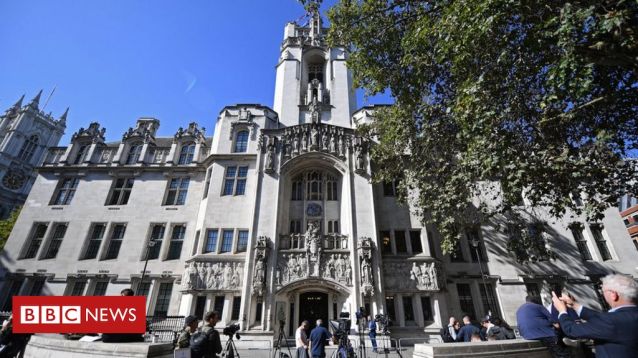
Supreme Court. Pic credit BBC News

The Tories were triumphant that Suella Braverman, QC, the Attorney General, employing the Treasury Devil. Sir James Eadie, to argue successfully that neither Scotland nor Wales could bring forward legislation to implement in full the UN convention on the Rights of the Child nor a European Charter on local self government. The Daily Mail said that it was ” a humiliation” for Nicola Sturgeon and could be used to stop any Scottish referendum. Tories in Scotland accused her of manufacturing a row with the UK by proposing to implement the charter in full.

The decision has implications for three other UN conventions – the Convention on Eliminating All forms of Discrimination against Women (Cedaw); a UN Convention outlawing racial discrimination and one giving full rights to disabled people effectively saying that even in areas of law already devolved to Scotland and Wales neither Parliament can legislate to implement these rights. The Scottish government was planning to introduce legislation to do this.

The immediate effect will be that Holyrood will have to remove clauses in two bills unanimously passed by the Scottish Parliament to take out measures that give extra rights to children or the Queen will refuse Royal Assent to the measures.

Westminster overrides Scotland

The decision basically gives untrammelled rights to the Westminster Parliament to override the Scottish Parliament if it is thought its new law conflicts with lesser rights for children in England.

The issue was argued on constitutional grounds – not on any issues of the rights of any of these groups- who will now be denied these rights purely by the Westminster government saying it is outside the competence of Scotland to legislate in this way.

The judgement was made by five elderly and middle aged male judges and argued equally by a middle aged QC – he is 59 -the same QC who successfully argued before the Court of Appeal that the Department of Work and Pensions had no obligation to bother to tell women born in the 1950s and 1960s that they weren’t going to get their pensions until the age of 66 instead of 60. One is tempted to say ” male, pale and stale” government rules supreme in Westminster- though I may be guilty of ageism.

All male judicial decision

The five judges who unanimously took the decision are

Lord Reed, President, aged 65, a Scottish judge, Baron Reed of Allermuir
Lord Hodge, Deputy President, aged 68, Patrick Stewart Hodge
Lord Lloyd-Jones, aged 69, David Lloyd Jones, President of the Welsh Law Council
Lord Sales, aged 59, Philip James Sales
Lord Stephens, aged 66, Lord Stephens of Creevyloughgare, a Northern Ireland judge.

The full judgement is here. The key phrase is that the changes are outside the competence of the Scottish Parliament under the 1997, Scotland Act which limited the powers of the Scottish Parliament to legislate for certain matters. The judges were careful to say that this was not about the rights of children under the UN Convention only the manner the legislation . This might provide a loophole for the Scottish government.

Nicola Sturgeon – official portrait

Nicola Sturgeon the SNP leader and first minister, said in a tweet: ” The current powers of the @ScotParl leaves us unable to full protect children’s rights, even in devolved areas. If our Parliament was independent, no such restriction would apply.

” Anyone thinking this is an abstract argument should reflect that also today, the UK government is taking £20pw from the pockets of the poorest families- making it harder for many parents to provide essential for their children”.

John Swinney, deputy first minister, said: “While we fully respect the court’s judgment and will abide by the ruling, we cannot help but be bitterly disappointed. It makes plain that we are constitutionally prohibited from enacting legislation that the Scottish Parliament unanimously decided was necessary to enshrine and fully protect the rights of our children.

“The judgment exposes the devolution settlement as even more limited than we all – indeed the Scottish Parliament itself -­ had understood.  It sets out new constraints on the ability of our elected Scottish Parliament to legislate to protect children’s rights in the way it determines.

“There is no doubt that the implications of this judgment are significant from a children’s rights perspective. This Bill will not now become law in the form which our Parliament agreed, but we remain committed to the incorporation of the UNCRC to the maximum extent possible as soon as practicable.  Whilst the judgment means that the Bill cannot receive Royal Assent in its current form, the majority of work in relation to implementation of the UNCRC can and is continuing.”

What we have here is a warning shot of a huge row which could also become a centrepiece in the debate over the Scottish independence referendum.

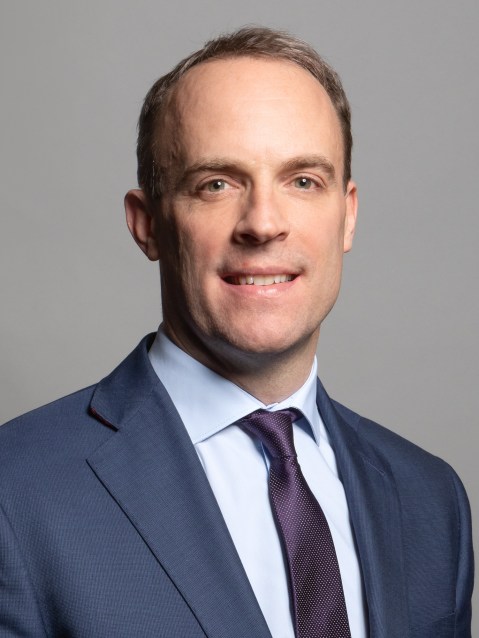
Official portrait of Dominic Raab, Lord High Chancellor

For at the same time Dominic Raab, the new justice secretary, wants to scrap the present UK human rights legislation which still allows appeals to the European Court of Human Rights.

It looks like – whatever the spin – is that he wants to take away human rights from women, the disabled, children and those facing racial discrimination- just at the point when Scotland and Wales want to extend them. We therefore have a perfect storm which could end with the break-up of the UK which is why I say this victory by Boris Johnson could backfire. It could end up being a Pyrrhic victory.

I am trying to extend the work of this website. Please donate if you can to continue my forensic investigations.

One-Time
Monthly
Yearly

Make a one-time donation

Make a monthly donation

Make a yearly donation

Choose an amount

£3.00
£5.00
£10.00
£3.00
£9.00
£60.00
£3.00
£9.00
£60.00

Or enter a custom amount

£

Your contribution is appreciated.

Your contribution is appreciated.

Your contribution is appreciated.

DonateDonate monthlyDonate yearly

donate to westminster confidential

£10.00