Lake Como’s little piece of paradise

IMG_20170409_170233_panorama

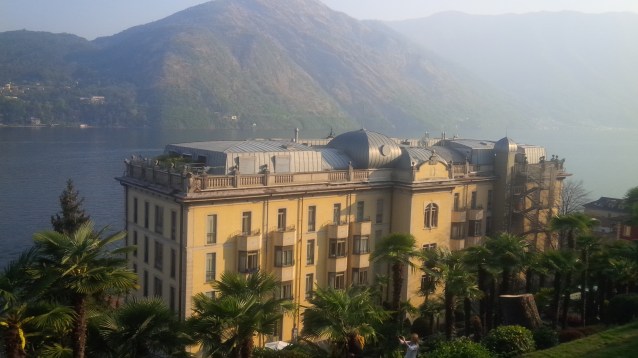
Grand Hotel Tremezzo and Lake Como

CROSS POSTED ON BYLINE.COM

If ever you fancy a rest in perfect luxury in one of the world’s most beautiful places, there is one place well worth staying, the Grand Hotel Tremezzo overlooking Lake Como in Italy.

I don’t normally wax lyrically about hotels  but having had a week on Lake Como ( and in case you are wondering not a journo’s freebie)  and stayed in a family run hotel with  beautiful surroundings, superb food and a very comfortable and large double bed, it is difficult to avoid it.

 

IMG_20170409_135206_hdr

gardens of the Grand Hotel Tremezzo

My view may have been  coloured by the warm spring weather – enough for the Italians to open the hotel’s  outdoor garden swimming pool  early – and the magic of dining every night in a restaurant with a panoramic view of Lake Como. Or it could have the stunning situation next door to the Villa Carlotta with its huge gardens full of camellias and  wisteria. Or the boat services on the lake to Como and Bellagio, a lovely city and a town full of alleyways.
 

IMG_20170405_113757

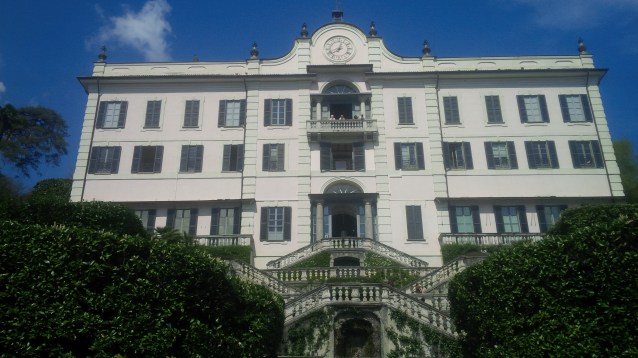
The Villa Carlotta – you can avoid the scissor staircase if you are disabled by using lifts up to the villa

The Villa Carlotta is remarkably disabled friendly – which was great for my wife Margaret – given the fact it is built on a mountainside. There are lifts to two levels of the garden and a lift to the top floor of the villa itself.

IMG_20170405_125928

Camellias in the garden at Villa Carlotta.

Named after the daughter of the King of Prussia who married Georg, the Grand Duke of Saxe Meiningen – she is responsible for the design of the garden – but sadly only lived there for five years before dying at the age 23 in childbirth  in 1855 after having three children. He lived on until 1914, remarried twice, collected hundreds of species for the garden, and took an interest in theatre. The top floor of the villa is full of furniture, china, paintings and a flag from their stay there.

IMG_20170405_141919

Wisteria in bloom in the gardens of Villa Carlotta

The stunning beauty of the lake has always attached the wealthy – in the past rival aristocrats and politicians who vied with each other for the most stunning villas. Now it is the haunt of global celebrities  whether Greta Garbo ( who stayed at the hotel) or more recently George Clooney (said to have a £7.5m lakeside villa in Laglio), Madonna and fashion designer Versace.

IMG_20170408_135735

Menaggio – quaint old streets in the centre mask a more ordinary town beyond

Travel on the lake is also disabled friendly – the local boats and faster hydrofoils – have easy access on level gangways.And they had disabled loos. Elderly tourists get a 20 per cent discount through Britain’s EU membership ( though for how long this will be is not clear).
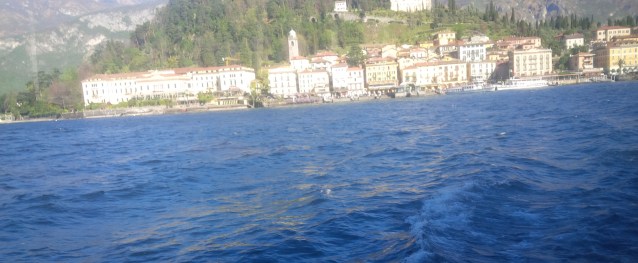
img_20170406_154436.jpg

Bellagio from the lake

Bus services run from Como to Menaggio along the lake – where it is not clear whether the elderly have free travel, but we were not charged for using the service, ending up by mistake at the town’s bus depot rather than the prettier centre.

IMG_20170407_155619

Statue of Pliny on the exterior of Como cathedral

The centre of Como and most of the waterfront has also been pedestrianised allowing easy access to the cathedral which intriguingly pays homage to both  the pagan Romans Pliny the Younger and the Elder as well as Catholic saints.

If you fancy splashing out and enjoy beautiful scenery or are feeling a bit romantic this is the place for you. And a welcome rest from the grim national and international situation. No wonder the rich like it.

IMG_20170409_120437

Front of the Grand Hotel Tremezzo. Lake road is busy during the day.
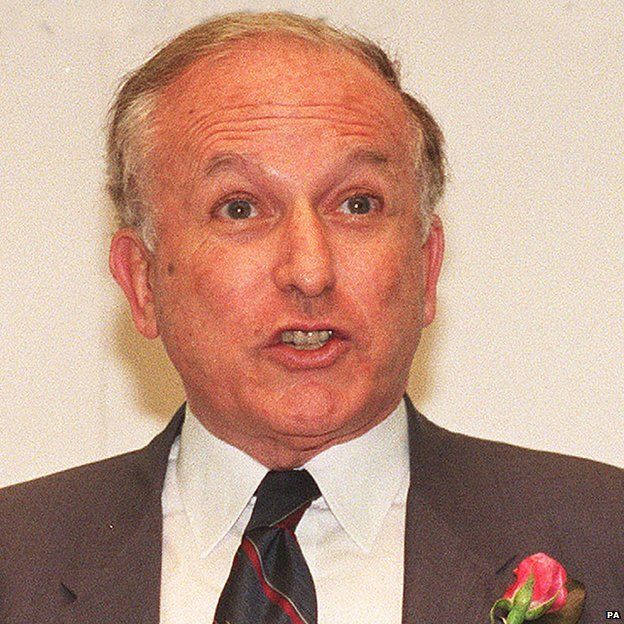
 

Independent Child Sexual Abuse Inquiry WILL investigate the late Greville Janner and whether there was a cover up

lord janner

Lord Janner Image courtesy BBC

The independent inquiry into child sexual abuse has decided to go ahead with a wide ranging inquiry into allegations that the late Greville Janner was involved in child sexual abuse and whether the Labour Party, the intelligence services, Parliament and government departments could have been involved in a cover up.

The decision, announced on the inquiry’s website, comes despite strong objections from Lord Janner’s family and a plea from retired  Assistant Chief Constable Tony Butler, from Leicestershire Police  to halt investigations immediately.

The terms of the inquiry are set out in a full statement  from Alexis Jay, chair of the inquiry here but the full terms are worth repeating in full.

” 1. The Inquiry will investigate institutional responses to allegations of child sexual abuse involving the late Lord Janner of Braunstone QC (“Lord Janner”).
2. In particular, the Inquiry will consider
2.1. the adequacy and propriety of law enforcement investigations and prosecutorial decisions relating to allegations falling within paragraph 1 above;
2.2. the extent to which Leicestershire County Council and the Kirkwood Inquiry were awareof allegations falling within paragraph 1 and the adequacy of their response;
2.3. the extent to which the Labour Party, Parliament, government departments, and/or the security and intelligence agencies were aware of allegations falling within paragraph 1 and the adequacy of their response;
2.4. the extent to which any other public or private institution may have failed in its duty to protect children from sexual abuse in respect of the allegations falling with paragraph 1;
2.5 whether any attempts were made to exert improper influence in order to hinder or prevent an institution from effectively investigating or otherwise responding to allegations falling within paragraph 1.
3. In light of the investigations set out above, the Inquiry will publish a report setting out its findings and recommendations to improve child protection and safeguarding in England and Wales. ”

daniel-janner-qc

Daniel Janner QC Pic credit: http://www.regulatorycriminallawyers.co.uk

In a series of private meetings Lord Janner’s three children, Daniel Janner QC,Marion Janner OBE and Rabbi LauraJanner-Klausner,  objected to further inquiries while they were pursuing cases against people who had claimed they were sexual abused by him in the civil courts.

They two daughters argued: “The Janner family and Estate remains energetically opposed to the singling out of an innocent, dead man for a paradigm case study that will, necessarily, be based on incomplete and distorted information.

“It is a further insult to Lord Janner’s posthumous reputation with consequential cost to the Janner Family and Estate, including devastating emotional upset.
It would be more representative to pick a prominent person from public life as the paradigm who is either alive,or has been subject to a prosecution process (whether convicted, or not).”

Daniel Janner argued:“the decision on whether to hold the investigation and whether it should be part of the Westminster strand should be put on hold pending the outcome of the civil case and IPCC.”  He insisted that his father was innocent.

There was also an attempt by the Janner family to have one member of the panel, Dru Sharpling removed from this particular inquiry, on the grounds that she could have a conflict of interest having worked for the Crown Prosecution Service and HM Inspector of Constabulary, but this was rejected by Amber Rudd, the home secretary.

But the strongest objection came from the former assistant chief constable of Leicestershire Tony Butler, who wanted the inquiry stopped.

He argued:”this particular investigation is unlikely, by virtue of temporal scope, number
of institutions involved or as a paradigm of the “pendulum effect”, to contribute
any unique or unusual feature”

He claimed all previous inquiries had already established what needed to be done in Leicestershire – during the time Frank Beck, who was found guilty of numerous child sex abuse attacks – in the 1990s. This is quite evidently not the case as the excellent book Abuse of Trust by  Paul Gosling and Mark D’Arcy which examined the Beck scandal reveals.

But this was rejected by alleged victims of child sexual abuse and counsel to the inquiry and their view prevailed.

I am very pleased with the decision particularly now it is known that the scope of the inquiry will be wide ranging. It is equally important that the inquiry looks at whole picture surrounding the allegations of child sexual abuse against Lord Janner which means delving into the Labour Party, Parliament, the security services and Whitehall and also forensically investigating whether there were further cover up. if they appear to be true.

So I applaud Alexis Jay for pursuing this against a background where some newspapers would rather it was not investigated.


An inquiry into an inquiry: Will it uncover what went wrong when Ben Emmerson quit the Child Sexual Abuse inquiry?

ben emmerson

Ben Emmerson: He resigned as leading counsel from the inquiry last September Pic Credit: UN

CROSS POSTED ON BYLINE.COM

The rather bland announcement from Alexis Jay, chair of the independent inquiry into child sexual abuse that she had appointed an employment judge Mark Sutton to investigate dignity at work  and safeguarding inside the inquiry poses more questions than answers.

It followed ferocious  criticism from the Commons Home Affairs Committee after the rather lurid – and now said to be untrue – tale that its leading counsel. Ben Emmerson, had sexually assaulted a woman on the inquiry’s premises.

The report concluded: “It is not for us to pass any comment on the allegations made in the media about the former Counsel to the Inquiry, which he has categorically denied. We are not in a position, and it is certainly not our responsibility, to assess either the facts of the case or the details of the processes that the Inquiry pursued.

However, on the basis of the evidence we have seen, we do not believe that IICSA has taken seriously enough its responsibility to pursue allegations of bullying or disclosures of sexual assault within the Inquiry.”

It goes on:

“Nor do we believe it has done enough to demonstrate publicly that it has a robust approach to such matters. IICSA’s public response has been inadequate, and the words attributed to an unidentified “IICSA source” in the press in response to the alleged assault are completely inappropriate, appearing to dismiss the serious nature of the matter and the credibility of the alleged victim.

“One of the Inquiry’s key purposes is to assess other organisations’ procedures for dealing with disclosures of sexual assault or abuses of power, and institutional reluctance to confront difficult issues that might jeopardise their reputation. We therefore believe that it is extremely important that the Inquiry can show that it treats these issues with appropriate rigour when they affect IICSA itself.”

 The reason for these strong words followed evidence from Hugh Davies QC, who resigned as Deputy Counsel to IICSA in December 2015, He made it clear he was unhappy with the procedures for handling such instances.  He said:“the institution cannot abdicate responsibility to the person making the disclosure, who may be vulnerable or otherwise emotionally unable to pursue a formal process”.

Also significantly the report says : “We also received a confidential submission relating to this alleged incident. Although it is not appropriate for us to publish this evidence, it has helped us to understand the incident and the way in which IICSA dealt with it. We are very grateful to the individual concerned for providing us with this information.”

How IICSA handles this will be crucial and it must not be seen to bury it. Its instructions to Mark Sutton say:

“You are requested to examine the events surrounding the Counsel to the Inquiry’s resignation from the Inquiry and to advise on the appropriateness, in the given circumstances, of the Inquiry’s actions at that time.
If you find evidence that there are structural challenges in HR / employment matters that arise due to the legal status of public inquiries and their employment model of seconded staff, self employed individuals and contractors, the Inquiry would welcome your Review making broader recommendations or observations.”

 He will not rerun or second guess the actual incident nor will he publish his advice to the inquiry. And the inquiry will see his report  before any statement is published.

I have also learnt separately that Graham Wilmer, a member of the original panel before it became a public inquiry, wants Mark Sutton, to look at the involvement  of Mr Emmerson in a  campaign conducted by members of the Victims and Survivors Consultative Panel to undermine him and the Lantern Project, which helped survivors in  the Wirral, North Wales and the North West. He has passed documentary evidence to the inquiry. Given that Mr Wilmer was a member of the first independent panel one would expect ” dignity at work ” to apply to their dealings with him.

My concern – given there have been other allegations of  bullying dating back to when Dame Lowell Goddard was in charge – is the inquiry may not do enough to allay fears and suspicions among staff working there.

If that happens people will not be satisfied. You can’t have an inquiry examining the most sensitive allegations of historical child sexual abuse which have been hidden for decades through the abuse of power  if it can’t handle sensitive allegations about its own staff.

We don’t want yet another cover up in this already troubled inquiry.

Should this powerful man both bankroll press standards and an editor that brought them into disrepute?

Murdoch MacLennan Pic credit UK Press gazette

Murdoch MacLennan: just given former jailed News of the World editor Andy Coulson a £200,000 plus contract as pr man for the Telegraph group. Pic credit: Press Gazette

CROSS POSTED ON BYLINE.COM

This is Murdoch MacLennan, chief executive of the Telegraph Group, board member of the body that bankrolls the Independent Press Standards Organisation, and friend of Andy Coulson the former jailed editor of the News of the World, and former David Cameron Downing Street press spokesman.

As Roy Greenslade revealed in The Guardian  he has just given a lucrative contract to Andy Coulson to handle  public relations for the Telegraph Group.

Tim Fenton in his Zelo Street blog describes the whole sorry saga of Andy Coulson and how Murdoch MacLennan stood by the beleaguered  former News of the World editor by providing him with a character reference in court before he was sent down.

However his take up of a £200,000 plus job – already met with horror among  some Telegraph journalists – is also in the sense a damning reflection of the body, the Independent Press Standards Organisation.

MacLennan is a director  of the Regulatory Funding Company  which raises levies from the newspaper industry to pay for its work in upholding press standards and handling complaints.

While I am not suggesting – as safeguards are written into the funding arrangements that he would influence any complaint against his newspaper group – it nevertheless reflects badly on IPSO that someone on its funding board does not believe that Andy Coulson did anything wrong.

How are  we to believe that IPSO really stands by such high standards when it turns a blind eye to such a breach of standards. I put this point to IPSO today and their reply dodges the issue.

“IPSO does not comment on appointments made by any of our 86 publishers”, said a spokesman.

But given the flack the rival press standards body, Impress, has faced in the media because it was funded by Max Mosley, that seemed a fair question.

Andy Coulson

Murdoch MacLennan is part of the media Establishment as Tim Fenton points out. He also is no friend of transparency – given if you check the remarkably uninformative Telegraph Media accounts at Companies House – his salary is hidden from public view. Given he is chief executive he could be the highest paid director – earning £900,000 a year in 2016. That might explain why he thought Andy Coulson’s £200,000 plus a year to do a bit of PR work was relatively small change. Another case of ” mates rates ” I think.


Why does this man keep secret the pay and perks for people running David Cameron’s taxpayer funded National Citizen Service scheme?

micheal lynas

Michael Lynas Chief Executive of the National Citizen’s Trust. Pic credit: Twitter

CROSS POSTED ON BYLINE.COM

This is Michael Lynas. So far he has spent £475m of taxpayer’s money as chief executive of the National Citizens Trust – a legacy project of David Cameron’s government aimed at providing community projects to aid character building  for 15 to 17 year olds across the nation.

His Linked In profile reveals that his sole qualifications  to do the job are a four year spell as a consultant for Bain and Company and just under three years in Downing Street as a policy adviser to David Cameron and Nick Clegg. He is obviously conventionally bright having studied at  Harvard and Cambridge.

Recently he appeared before MPs on the Commons Public Accounts Committee following a highly critical report from the National Audit Office questioning whether  National Citizen Service was value for money. The NAO pointed out that it was almost entirely funded by the state and the cost providing places on its schemes was very high. Also it has paid out money up front to organisations for places that were not taken up and was now trying to get the money back. I have written about this in Tribune magazine.

Indeed he was challenged by MPs about his ( lack of ) experience.This is the extract from the minutes:

Michael Lynas :”I have been involved in this now for eight years. I helped
to set up the first pilot. That is my ultimate experience. I have worked in
Government covering everything from the London 2012 Olympics to the same-sex marriage proposals when I was a senior policy adviser at No.10.
Chair ( Meg Hillier MP) : The same-sex marriage proposals, important as they were, are not quite the same things as running a contract with a big budget.
Michael Lynas: The Olympics had a large budget, obviously. When I was a management consultant for five years I looked at a whole range of projects, some of which were very large, but as I said, I have not managed something with this budget before.”

But the MPs were also concerned about the complete lack of transparency in declaring the salaries of directors -including himself- and senior staff  who are funded by the taxpayer. This is because  the trust was set up as a community interest company by David Cameron – so it did not have to disclose any details of the pay or perks  of directors or senior staff. Even though it was funded by you and me  –  the taxpayer.

MPs challenged him to publish the information and he agreed he could – but avoided pledging to do so. A flavour of the exchange can be seen here at the hearing.

Kevin Forster MP :”I have asked you if there is a legal bar to sharing that information and you have not said that there is.. .But you have said several times that you are waiting for the new Bill to go through. I accept that would be a new transition and structure but, if you want to sharei nformation and there is no legal bar to do doing so, and it relates to an
organisation that is taxpayer-funded, why don’t you do it?
Michael Lynas: I absolutely agree. I just thought it was a question about whether we did it under the auspices of the new arrangements or whether  we did it before then. We can do it before then.
Mr  Richard Bacon MP: This question of whether we do it under the old auspices or
the new arrangements: how profound is that question and how difficult to solve? Why does it matter? Why can’t you just do it, if it doesn’t make any difference? Are you familiar with the maxim, “Don’t ask for permission, ask for forgiveness”? Why don’t you just get on with it?”

An examination of the accounts and the original advertisement for the job of chief executive does reveal some information. Mr Lynas’s original job was advertised at £120,000 a year. The accounts reveal that in 2015 the highest paid director ( and he is also a director) received £117,688 a year and £5775 towards his pension. This increased by nearly £20,000 to £137,253 in 2016 and to £6343 towards his pension. We don’t know if that is him but it is very likely it is.

Total payments for directors increased by £45,000 in the same period from £466,608 to £511,182 whole pension contributions rose slightly from £23,025 ro £23,480.

Now there are 12 directors – eight are non-executive and four are executive – so you  might assume they share this between them. But you would be wrong because one of them, Lord David Blunkett, the former Labour home secretary, has had to declare what he gets in the House of Lords register of interests – even if the trust wants to keep it secret. And guess what, he is doing it pro bono – not claiming a penny salary for sitting on the board.

And I would be willing to bet the other seven- Dame Julia Cleverdon former chief executive of Business in the Community ; Pippa Dunn, Nick Farnhill, John Hartley, Sue Gray.,( Director of Propriety and Ethics at the Cabinet Office) Martina Milburn, ( head of the Prince’s Trust)  and Shaun Watling- may be in the same position. The Prince’s Trust confirmed that Martina Milburn also gives her time on a voluntary basis.

These leaves another four executive directors to share the spoils ,Will Gallagher ( resigned last December);Doug Fraley ( resigned June 2015); Simon Jones ( resigned January 2016) and Natasha Kizzie in the previous financial year. Indeed the disappearance of so many executive directors seems to suggest another hidden story. Particularly since Will Gallagher was NCT’s chief operating officer and Simon Jones was NCT’s finance director. Natasha who is still in post is director of communications and marketing.

The accounts also reveal that in 2015 50 staff shared a £3 million wage bill. They are now over 100 staff.

The Trust will be forced to release information once  a bill  turning it into a public body goes through Parliament under Theresa May’s government.

I asked for the trust to release these figures now  and explain how much of the millions they lost on ” ghost places” they had recovered. I got no reply – no doubt Mr Lynas was too busy to be bothered by pesky journalists.

But I might say when the public sector ( especially education) is being squeezed by cuts and wage freezes – the largesse shown  to a few here is out of proportion. Unless of  course the former PM arranged ” mates rates” for the privileged few so they could help the underprivileged masses understand their role in society.


Whitehall doesn’t rule OK: How Wendover canal trust tragically missed out on a £1 million payout from river polluters

thames water

Thames Water’s pollution of the Wendover Arm led to the £1m fine

Over a year ago I raged about the injustice of the very wealthy Thames Water private utility being fined £1m for polluting the Wendover Arm of the Grand Union Canal  with sewage because they ignored a simple £30,000 repair to the outfall of Tring sewage works. The article is here.

I thought it was particularly unfair on the volunteers who are restoring the canal  and decided to write to our local MP, David Gauke, who is now chief secretary to the Treasury, suggesting that the government might reimburse the fine to help the trust. which desperately needs the money.I also lobbied David Lidington, now leader of the House, to see, as Wendover is in his constituency, whether he would back the idea.

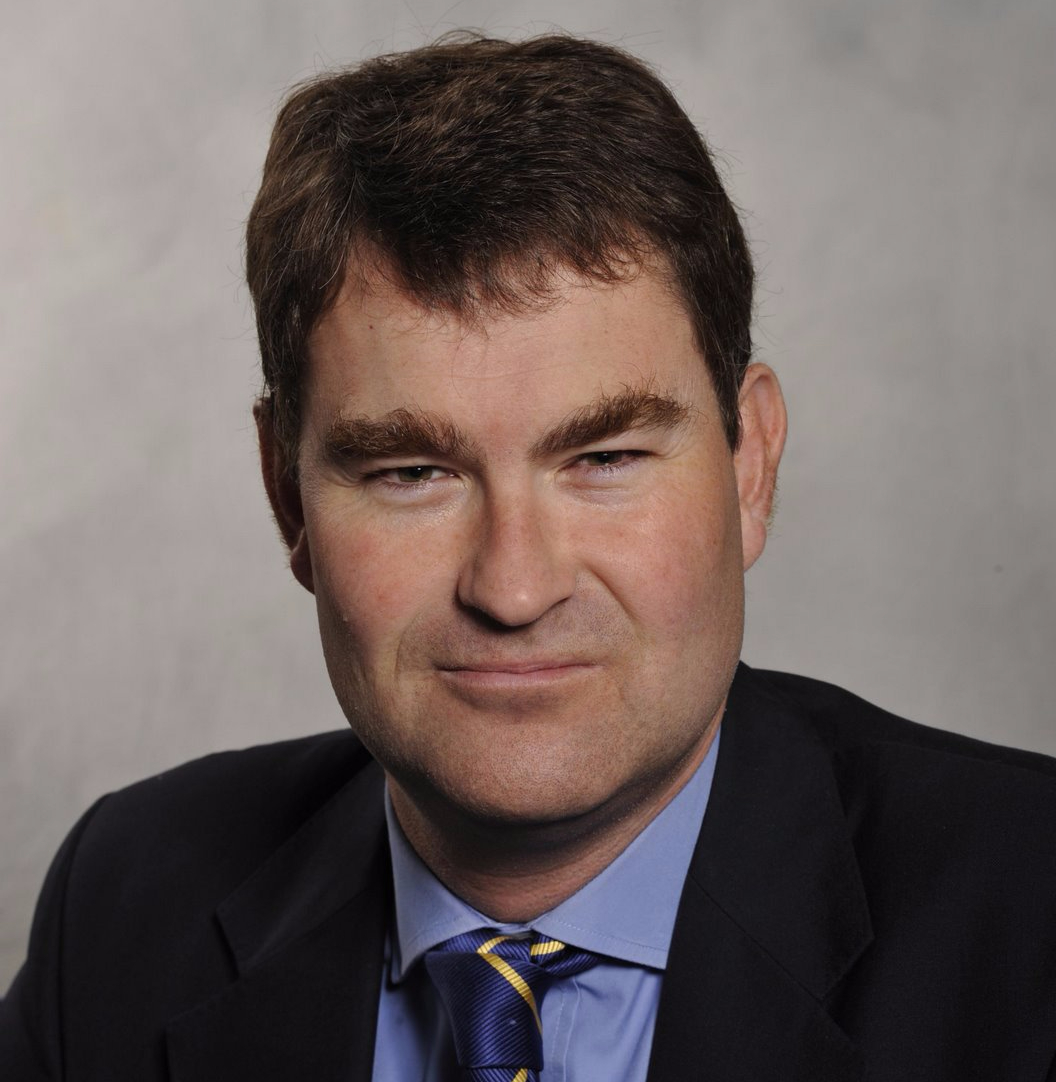
Conservative Party Portraits

David Gauke MP, the Treasury minister said No

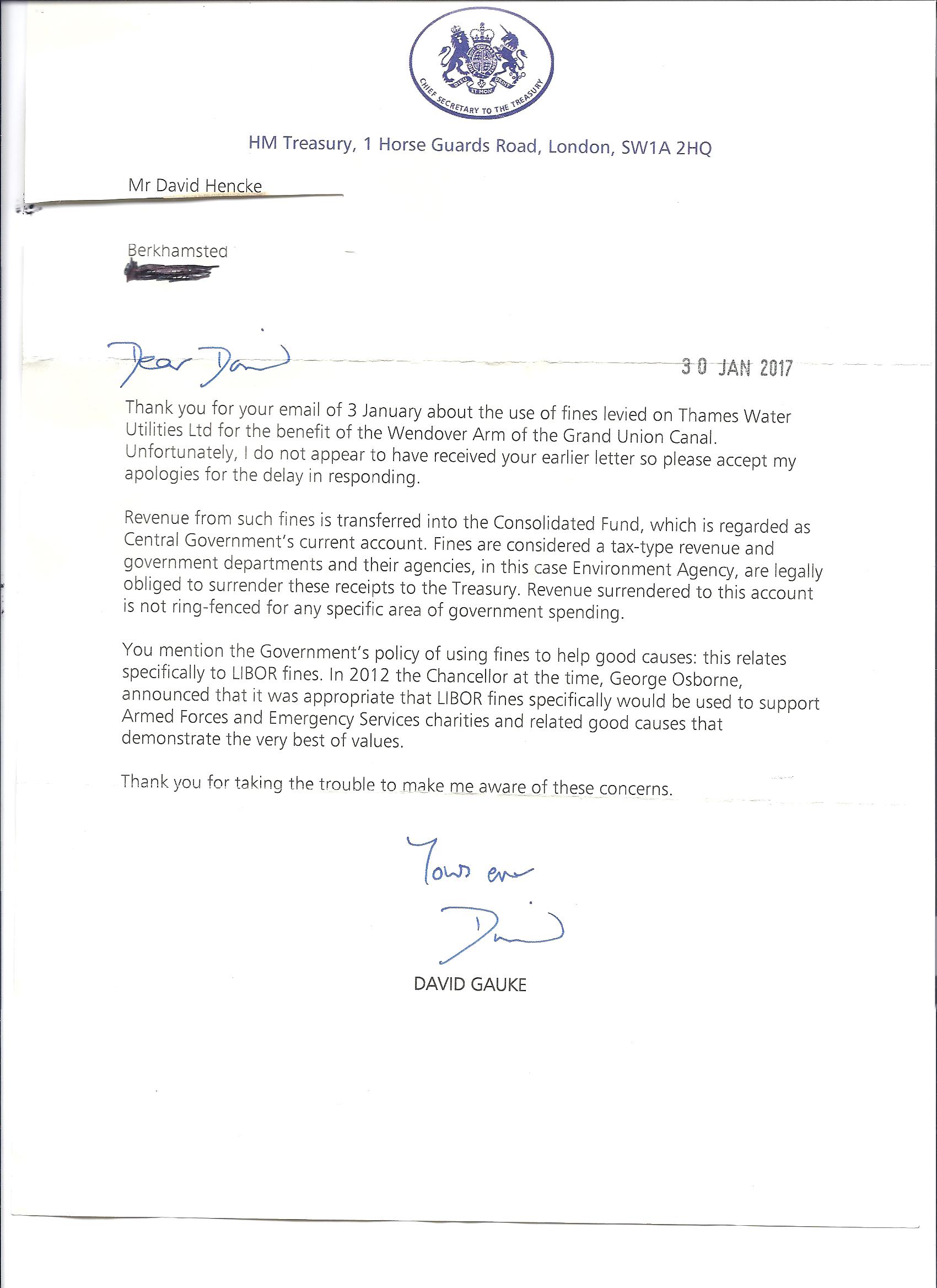
David Gauke took a long time to reply ( he admitted that his office had mislaid my letter) but finally at the end of January he replied from the Treasury.

His answer was a resounding NO. He wrote: ” Fines are considered a tax-type revenue and government departments and their agencies, in this case the Environment Agency, are legally obliged to surrender these receipts to the Treasury. revenue surrendered to this account is not ring fenced for any specific area of government funding..”

environment agency letter

Full Text of Letter saying NO from David Gauke

Imagine my surprise then to see this press release  on the same day from the Environment Agency.

Environmental charities receive over £1.5 million from businesses which broke environmental laws

This revealed :

“There are 26 Enforcement Undertakings on the new list with payments ranging from £1,500 – £375,000, including 6 companies that have agreed to make 6 figure payments: ( among these were)

  • Northumbrian Water Limited (£375,000) for pumping raw sewage into a tributary of the River Tyne.
  • Filippo Berio UK Limited (£253,906.91) for failing to recover or recycle packaging waste.
  • Anglian Water Services Limited have made two separate payments (£100,000 and £100,000) both for causing pollution incidents which killed fish.

Among the beneficiaries were the Nene Country Park in Northamptonshire and river trusts  on the Tyne. The list of enforcement undertakings is published here:https://www.gov.uk/government/publications/enforcement-undertakings-accepted-by-the-environment-agency

It shows a much wider group of people have benefited.

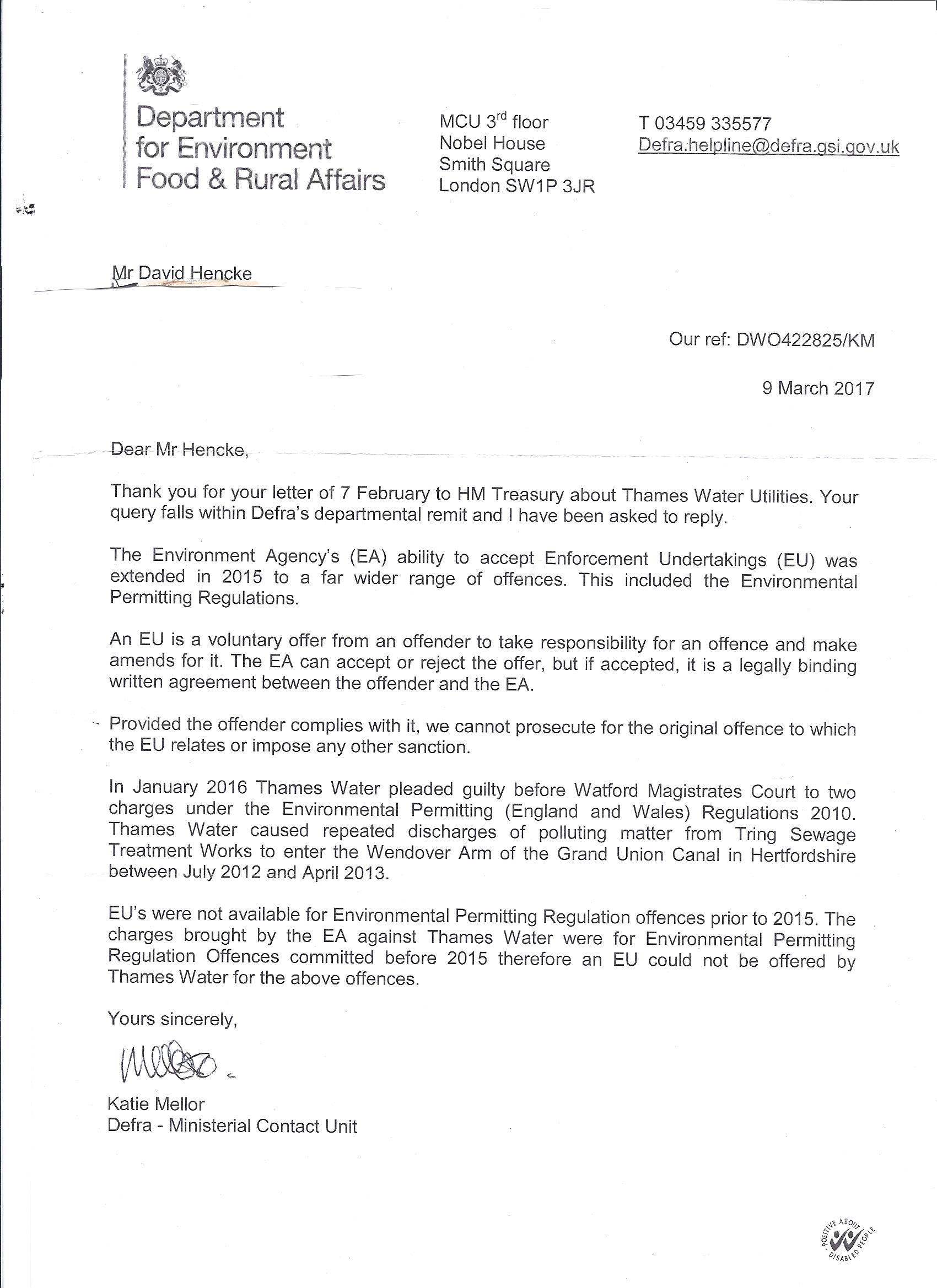
So I wrote back to the minister which led to this reply last week from Department for Environment and Rural Affairs.

Yes they had been able to do this since 2015 – by accepting Enforcement Undertakings to cover river pollution rather than taking companies to court.

The court case involving Thames Water was in 2016. But here’s the rub -because the pollution took place in 2012 and 2013 it was not covered by the change in the law.

david gauke letterTwo points from this tragic state of affairs. First I am surprised by the ignorance of David Gauke that as a Cabinet minister he didn’t know his own government had changed the law.
Second it seems very unfair the Wendover Arm Trust has lost out. Perhaps pressure should be put on Thames Water – who has just been fined for polluting the River Thames – to give a donation to the trust. And certainly  if they repeat this pollution immediate representation should be made to the Environment Agency for an Enforcement Undertaking so money can be handed out to the trust in future.


Is George Osborne’s Northern Powerhouse about to hit the buffers?

George-Osborne

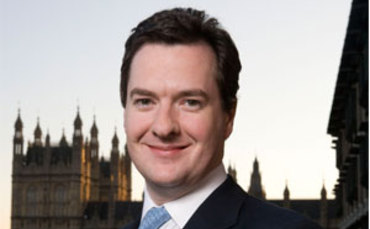
George getting out in time before the Northern Powerhouse runs into trouble

CROSS POSTED ON BYLINE.COM

My last post on the national repercussions of the Great Western electrification shambles has elicited some very interesting information about why Network Rail got into such a big overspend. (£1.2 billion on a £2.8 billion project)

If the information is accurate – and it seems to be based on some sound sources – it would suggest that George Osborne’s strategy to boost the North through better rail connections is about to come to a grinding halt because it has not been properly costed.

Through Tim Fenton well known for his caustic comments on the media oligarchs on his Zelo Street blog , I have become acquainted with an extraordinary obscure debate about the  safe clearances needed to install overhead electrification.

Ever since the electrification of the West Coast mainline in the 1960s Britain has had narrower clearances than the bigger gauge continental railways. We even had a derogation under the EU. But according to rail expert Roger Ford a serious blunder during the privatisation of the rail engineering which meant all the papers justifying the narrower standards were lost. So we now have no derogation because we lost all the paperwork to justify it.

Why this is important is that the higher clearances will add huge costs to ongoing rail electrification projects in every tunnel and under every bridge on the line. They will have to be higher margins between the top of the train and the wires.and the structures  They will  also have to raise the height of every planned pantograph- to protect people and staff coming into contact with it.

Now it appears that if each situation is given a special risk assessment it might be possible to get round the rules – but that will add to delays and costs and will have to be approved by British regulators – the Office of Rail and Road- even if we have left the EU.

As Roger Ford wrote in his December bulletin: “When all this was reviewed by the relevant British Standards committee it was agreed that, while the previous  2.75m clearance  was not justifiable as a minimum limit in a standard, it might be justifiable subject to a risk assessment.  So, according to Network Rail, electrical clearances below 3.5m are possible – with risk assessment.

” What’s really infuriating about this safety-by-diktat, is that the engineers concerned know that it is irrational and yet they go along with it. To paraphrase Edmund Burke, ‘the only thing necessary for the triumph of bureaucracy over common sense is that good engineers should do nothing.’

Great_Bentley_station_geograph-3890553-by-Ben-Brooksbank

Picture of Great Bentley station by Ben Brooksbank

Now obviously this is going to effect more lines than just the Great Western – and this is where George Osborne’s plans  turn to dust.

Already costs are rising on the Midland main line electrification from Bedford to Nottingham and Sheffield. With a critical National Audit Office report likely it is possible that electrification  will stop dead in its tracks at Kettering and Corby – nowhere near the real North.

And the Trans Pennine electrification – another Osborne  project -might stop altogether.

No wonder George Osborne is now going to be editor of the London Evening Standard – he will want to be well clear of the North. This is just a brilliant example of how our incompetent and overrated political amateurs  don’t properly assess what they are  doing.

And the public are  always the losers – in this case the travelling public.


Why millions of passengers will face years of overcrowded trains because of a staggering electrification blunder

electrification-work-on-line

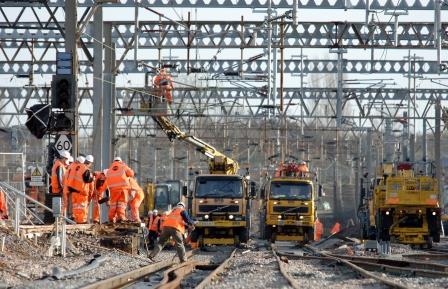
Electrification work Pic Credit:South West Business

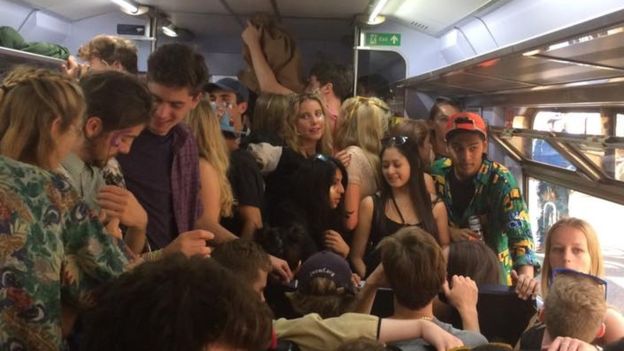
overcrowded train

Today’s Vision of future travel: Overcrowded train Pic credit:BBC

CROSS POSTED ON BYLINE.COM

If you want to know what is wrong with the present state of  Britain’s railways look no further than a recent National Audit Office report into the mess that is the Great Western electrification scheme. I have written about this in Tribune

As reported at the time the cost overrun and delay totalled a mouthwatering £1.2 billion on a £2.8 billion scheme and led to the scheme being curtailed with delays to the Cardiff to Swansea electrification for up to five years and  similar delays for the electrification of branch services in the Thames Valley.

But the damage  goes much further than just the Great Western Mainline to Cardiff and Bristol electrification scheme, bad though that is, the National Audit Office reveals. It will affect train capacity hundreds of miles away

The electrification was supposed to be the catalyst for the release of rolling stock across the country improving train capacity and phasing out old stock that has been around for decades.

The NAO reports: Under the original plan:

Electric trains from Thameslink would replace diesel trains in the Thames Valley from May providing more capacity to reduce overcrowding

Thames Valley could then release diesel trains to the west, providing more capacity for passengers on the Bristol, Exeter and Cornish networks

West Devon and Cornwall routes would then release diesel trains to support service improvements on Northern franchise routes

New Super Express Trains from the Department’s Intercity Express Programme would replace ageing diesel High Speed Trains on the London to Swansea line cutting journey times from London to Cardiff

The London to Swansea route could then release the diesel High Speed Trains to address capacity issues on intercity routes in Scotland.

An additional fleet of diesel and electric ( Bi mode trains) capable trains recently ordered by the train company, Great Western Railway,  would be introduced in the south-west, providing more capacity and faster journey times on London to Plymouth and Penzance routes.

Now:

Diesel trains due to go to the west in 2017 will be retained until 2019 as electrification is completed and new electric trains are phased in

Passengers in the west (Bristol, Exeter and Cornwall routes) will now have to wait almost two years later than scheduled to see benefits such as more capacity.

Passengers on Northern franchise routes may have to wait an additional nine months as trains are retained in the west to protect services

Great Western Railway has also had to make additional orders of new bi-mode  trains to prevent the cancellation of services on busy Oxford to London routes.

The result according to the NAO will mean higher costs as diesel trains cost more to maintain, lower revenue because of lack of capacity and a bill for converting older trains to comply with stricter laws on helping disabled passengers that would not have been necessary if they had been replaced.

But it goes further than the NAO findings. The privatised rail companies- many owned by state railways in France, Holland and Germany – will be allowed to raise fares every year regardless- so they charge commuters more for inferior services but spend the profits modernising train services in France, Holland and Germany.

And they won’t care if the trains are overcrowded as they can maximise revenue. If ever there was a case for reforming the rail system and ending privatisation this is a perfect example.

Exposed: The Whitehall high flyer who stole ministry secrets to help Adam Smith International bid for overseas aid contracts

rajadasgupta.jpg

Raja Dasgupta: pic credit Daily Mail and keyword suggestions

CROSS POSTED ON BYLINE.COM

This is Raja Dasgupta. He was a fast stream entrant to the civil service elite. He had a  good career . He started in the private office of  Alan Duncan ,the minster for international development in 2011.

He was promoted to climate change manager in South Africa in 2012 and then became head of the business effectiveness team in 2014 also in South Africa.

His Linked In profile says : “I have played a leading role on strategic business planning for DFID’s regional Africa programme, directly advised and worked with UK International Development ministers, and officially represented the UK during international treaty negotiations at the United Nations.”.

His Linked In profile which detailed his career now appears to have been taken down following  the exposure about his activities.

But in June last year he joined Adam Smith International – a British private overseas aid contractor ( annual income £130m) which relied on 80 per cent of its money from the Department for International Development – as a senior manager based in Nairobi, Kenya.

Now he has proved to be the catalyst that has brought down ASI Ltd – which has been effectively banned from bidding for any more contracts until the organisation has proved to the ministry that it has been completely reformed. Three senior founder directors, Peter Young ( in his youth a far right Tory), Andrew Kuhn and  Amitabh Shrivastava have resigned and the founder executive chairman,William Morrison, is to leave once the reforms are completed.

Three separate sources in England and Africa  (and the Mail on Sunday) have named Raja  Dasgupta as the civil servant who gave confidential ministry  information to ASI Ltd which gave them a competitive edge to bid for contracts across Africa.

One source said : “when moving to ASI in South Africa he took with him DFID country plans and country specific private sector engagement plans that DFID would then rank bids against, it set out specific priorities and specific sectors and markets that DFID wanted to focus on…This then allowed ASI to bid on contracts specific to these Southern Africa private sector engagement plans as set out and created by DFID and FCO.( Foreign and Commonwealth Office).”

Certainly the official findings of a DFID report – which does not name him – confirm this.

“The withdrawal by ASI is the result of serious concerns about the company’s behaviour:

  • ASI employees sought to make use of improperly obtained DFID documents shared within ASI by a former member of DFID staff.
  • The documents in question were draft internal DFID documents which contained information clearly confidential to the Department.
  • The documents were nevertheless shared widely within ASI, including to senior personnel, in full knowledge that ASI should not have had access to the documents.
  • This was done with a view to exploiting the material to ASI’s commercial advantage.
  • At no point did ASI or any of its employees question this or raise concerns with DFID.
  • DFID has conducted its own forensic investigation into these allegations. There have been serious questions over ASI’s ethical integrity. It is therefore right that ASI is taking action to address this.”

I tried to contact Raja Dasgupta by ringing his Nairobi office. There was no reply nor message facility to leave my name. I tried to contact ASI’s media team and did leave a message about whether Raja was still working for them. They have not come back to me.

Reprehensible as his actions were, this story has wider ramifications. He is not just a rogue  chancer or trader even if DFID seem to pin the blame on him. The culture exposed at Adam Smith International is a damning indictment of the British company. They knew they had access to confidential material which could be used for commercial gain. They wanted to make more profits in a company that already paid six figure salaries  and huge dividends to its top people. They were millionaires dealing in poverty. That is why – even if it is reformed – DFID are right to say there will be no “quick fix” which allows them to resume business next month.

But it also raises questions about DFID and its capacity to monitor what is going on. While the aid budget has gone up – the staff budget has been cut. So fewer people are monitoring larger sums of aid. DFID will not release the  full forensic report into what happened – either to the public or to the Select Committee for International Development, which holds the ministry to account. What have they got to hide.

This story began when the Mail on Sunday exposed the firm trying and failing to hoodwink the Select Committee on International Development by creating favourable reports of their work. It has now morphed into an example of how British private contractors can try and rip off the British taxpayer for private gain by any means they see as necessary.