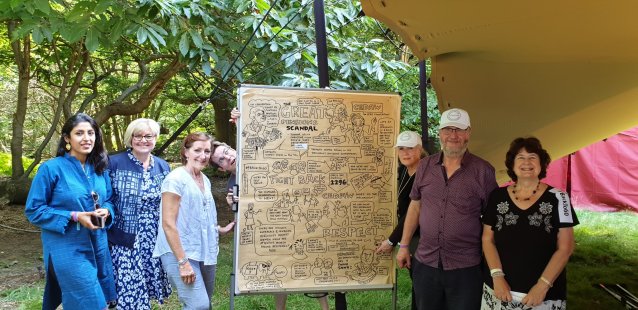
Panel and a great cartoon depicting our debate after the Byline session From left to right.MC Aisha ali-Khan; Jackie Jones MEP; Christine Austin, Joanna Welch, myself and Dr Davina Lloyd
This weekend I had the honour of chairing a session at the Byline Festival for BackTo60 Campaigning Group in Ashdown Forest in East Sussex.
The occasion was important for giving wider publicity to a new generation how successive government’s cruel treatment of a large group of 3.8 million women who are waiting up to six years for their pension. And also to show to the young that by having guts and determination ( which the 5,000 people at Byline Fest have in droves) us oldies can also press our case home by arguing and succeeding in getting a judicial review to try and remedy this injustice.
It was also to warn them that this group will be the first of many to find themselves in a similar predicament. This is particularly so if former Department of Work and Pensions Secretary Iain Duncan Smith’s charity, the Centre for Social Justice, succeeds in getting the UK to have a retirement age of 75 by 2035 – giving it by then the dubious accolade of being a world leader in forcing people to work until they drop.
Amber Rudd, the current Secretary of State for Work and Pensions, says the government won’t do it, I don’t believe her. For the role of think tanks is to influence government and prepare the people for the changes they want, and this is the think tank that proposed Universal Credit, which any self respecting person will think has been an unmitigated disaster for the poor and the disabled.
The story of the pension scandal that hit the 50s born women is not a boring pensions tale. It covers Whitehall skulduggery, effectively saving £271 billion of public money by removing the Treasury contribution to the National Insurance Fund; a failure to properly communicate the change in pension age from 60 to 65 and then 66 to the people affected until it was too late for them to do anything about it.
And the revelation of the hardship, and misery it had inflicted on people driving them to despair even suicide as they haven’t the money to live on.
And finally the fake news that we are all living longer – which has hardly been the case since 2011 when it flatlined. It has only been the wealthy who are living longer, for the poor in part of the UK like Glasgow and Blackpool it has started to fall.
It also a tale of hope – of challenging the government in the courts and finding a legal mechanism – a temporary special measure – which can be used to redress this balance – thanks to the work of one of the speakers at the session, Jackie Jones, MEP for Wales and a former professor of feminist studies at the West of England University.
What was gratifying was the interest among the young and older festival goers who came to listen. They engaged with the issue, asked pertinent questions, even if some were shocked at the antiquated attitudes in the 1970s when Dr Davina Lloyd, revealed that she was banned from going to university in the 1970s because she was a married woman and was expected to stay at home. She was saved by Roy Jenkins, who went on to become home secretary, who passed a law allowing married women to train as teachers.
Members of the panel did a YouTube film with the Byline Festival after the session. It is below.
Video taken by Byline at the Byline Festival which explains all the issues from the members of the panel. From Left to right: Jackie Jones, MEP;Christine Austin, Joanne Welch,Hannah Manza, Davina Lloyd.
From Left to right: Unison’s national pensions officer, Alan Fox; Jackie Jones, Labour MEP for Wales; Sian Stockham, senior vice president Unison and Gloria Mills, national secretary, equalities,Unison., knocking at Downing Street’s door.
A group of leading BackTo60 campaigners and top people from Unison, the public service union, today delivered a personal letter to Boris Johnson calling on him to act to pay out the money owed to 3.8 million women whose pensions have been delayed by up to six years.
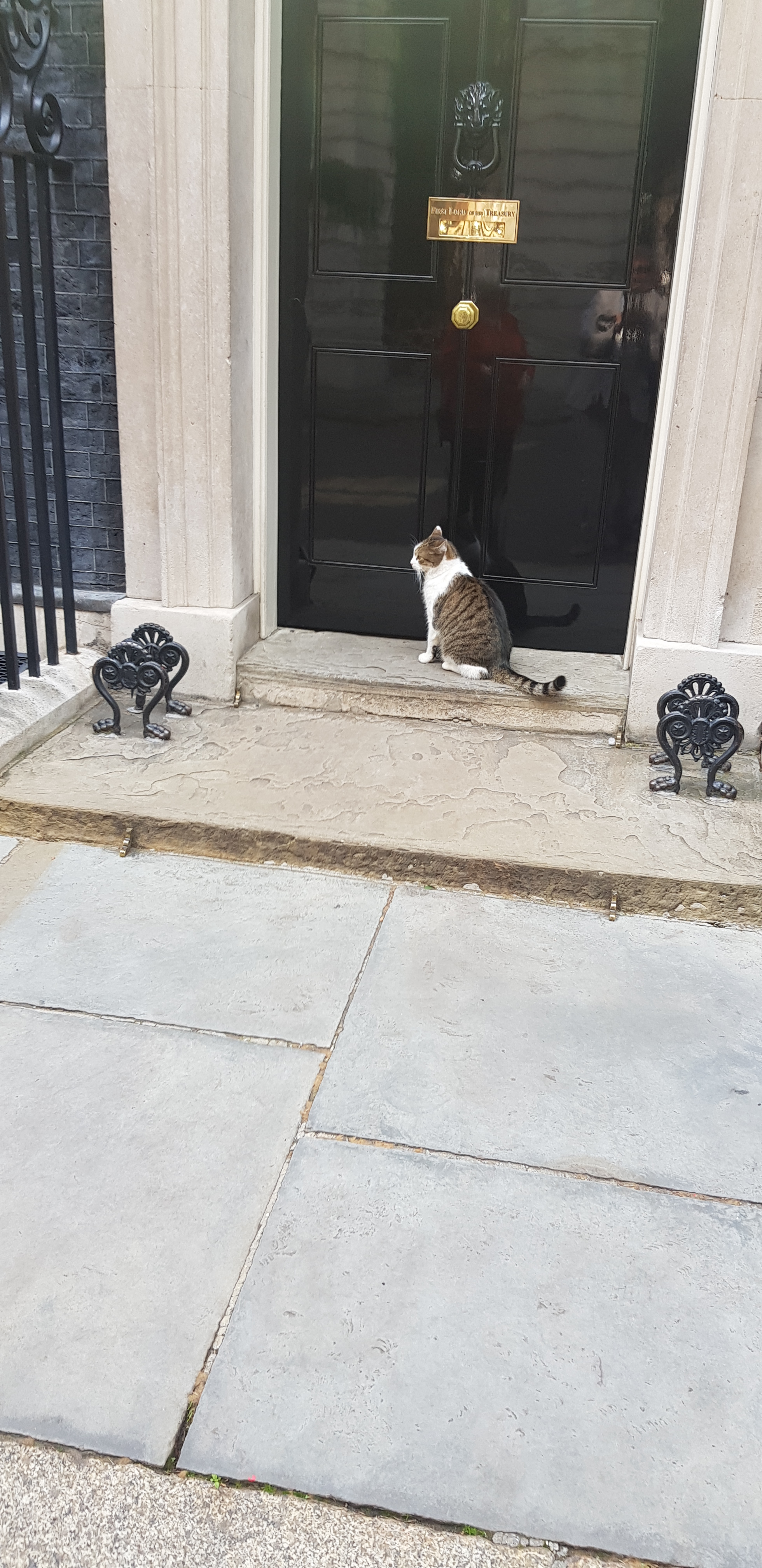
The delegation went direct to Downing Street preceded by Larry the Cat to press Boris Johnson to fulfill a pledge that he would look again at the problem for this particular group of women, many of whom have driven to poverty by the decision enacted by successive governments.
They are backed by a petition signed by 177 MPs of all parties calling for a Special temporary measure to grant the money owed without reversing the existing pensions legislation by returning the pension age to 60 for women.
The full delegation were Prof Jackie Jones, Barrister, MEP, Wales; Gloria Mills CBE, National Secretary, UNISON, Equalities, Sian Stockham, Senior Vice-President, UNISON, Alan Fox. National Pensions Officer, UNISON, Joanne Welch, Campaign Director,BackTo60.com and Callum Jones, Undergraduate.
Prof Jones said “It’s beyond time for women to have equal rights and equal financial entitlements for years of service. Equal pension is part of this. No way are women going to settle for anything less.”
Gloria Mills said”1950s women deserve their full state pension now and the government should act by using the Temporary Special Measure contained to right this wrong. UNISON the UK’s largest trade union with 1 million women members will continue to fight for pension justice for the 3.8 million women born in the 1950s many of whom are UNISON members.”.
She added: ” The recent idea that people may have to work to 75 is a disgrace to all working people. All these women have been discriminated against all their life by not being able to claim a pension while they are working part time or bringing up a family. Their pensions pots are miniscule compared to many men.”
Jackie Jones MEP and Gloria Mills
Sian Stockham said : ” Some women who just paid the married woman’s pension have been left with the disgraceful sum of just 10p a month which is a disgrace.
Callum Jones, an undergraduate student who joined the delegation said : “It is clear to see that the government is trying to take advantage of vulnerable members of society and if we don’t look after the most vulnerable members of our society what kind of society would we have.”
Delegation including myself in front of Downing Street.
Earlier petitions, one of which reached 728,000, were delivered to former Prime Minister, Theresa May on 3 separate occasions: It was ignored and this led BackTo60 to succeed in getting o a Judicial Review, held on 5th and 6th June was hthe Royal Courts of Justice,t and the Reserved Judgment is due soon.
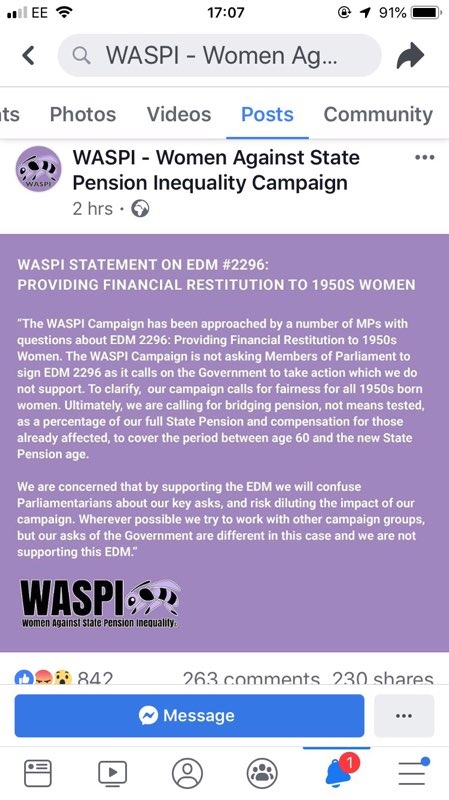
In a rather bizarre move this May WASPI Ltd, which also represents some of the women, tried to urge MPs not to sign the motion calling for the restitution of the money to the 3.8 million. They believe the women should only get a bridging loan which will have to be paid back by having reduced pensions for life.
But this action is rather late as 177 MPs have already signed and the motion was delivered to Number Ten demanding full restitution today.
This is the Waspi Ltd statement re the EDM sponsored by Ann McMorrin MP for BackTo60Larry The Cat
Parliament’s financial watchdog announced the “super
investigation” a week after Parliament rose. It now includes the extra £2
billion Johnson earmarked this month for “turbo charging” the No deal process.
It follows a total of
24 reports by the NAO on Brexit since 2016 which highlighted scandals and
public waste. This included the exposure of former transport secretary Chris
Grayling’s mishandling of No Deal Brexit freight contracts which cost the
country over £50m including paying Eurotunnel £33m in an out of court
settlement.
The Swiss will introduce work quotas, the Danes and Estonians will treat new Brits settling there after Oct 31 under the Alien laws and the Belgians will introduce tough border checks to see whether we have enough money to holiday there.
All this is in new legislation already passed by many of the 31 countries in Europe to counter Boris Johnson’s No deal Brexit on October 31.
Read the full story with all the facts on Byline Times here. Plus you can check the new legislation yourself – most of it in English – by going to an expat blog Dispatches Europe.
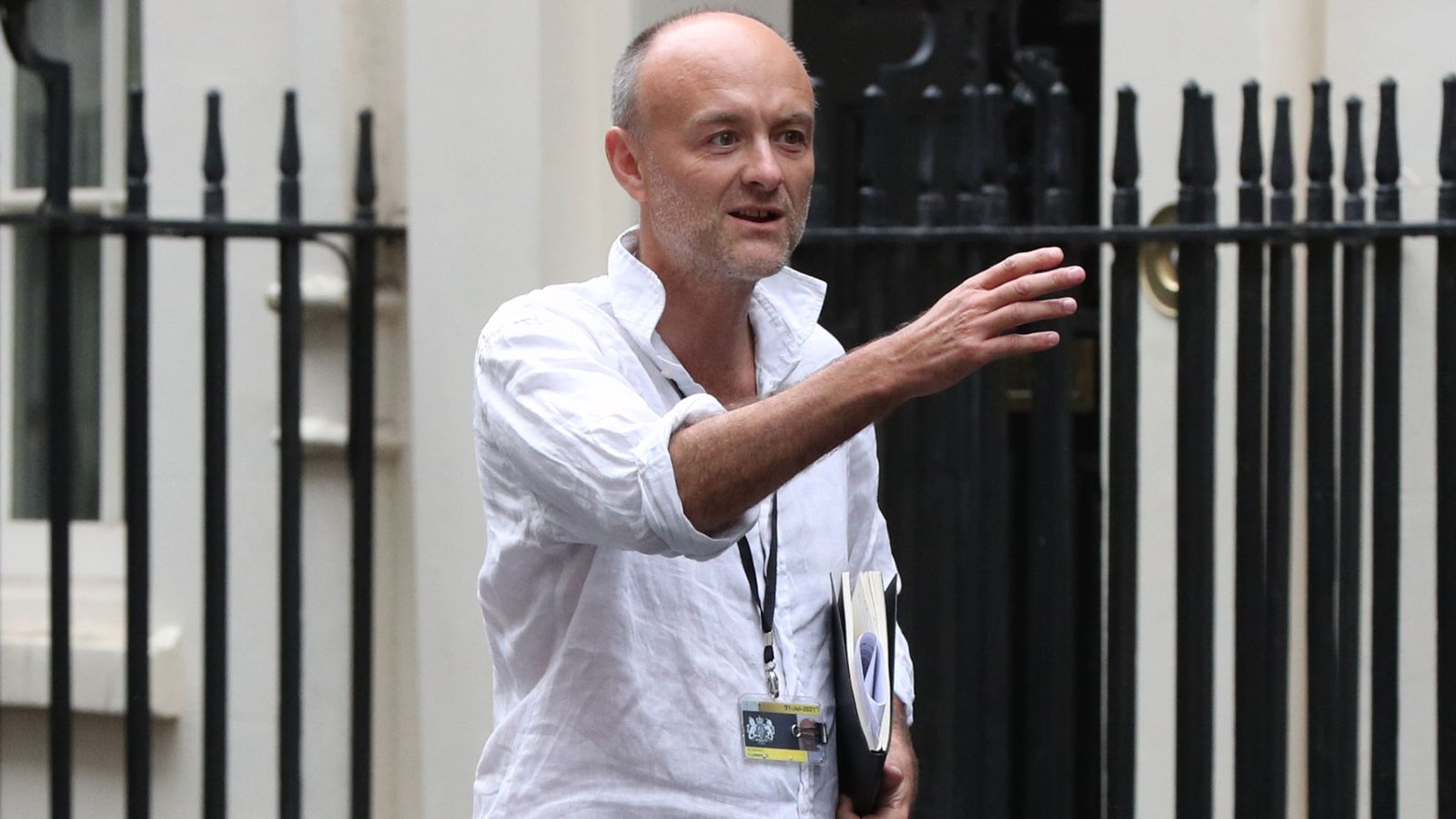
Dominic Cummings: Boris Johnson’s right hand man . Pic credit: Sky News
Halloween or October 31 may be more of a dramatic day this year than just the date set for a ” no deal ” Brexit.
It could also be the day of the next general election – if
the ruthless approach by Dominic Cummings, Boris Johnson’s chief executive to
get Brexit done is a top priority.
I have no inside information but logic points to this
possibility now the political scene in Whitehall has changed beyond all
recognition with the election of Boris Johnson as PM and surrounding himself
with a Vote Leave government.
With a majority of one it is quite clear that Johnson cannot continue as PM until 2022 and hope to get anything through Parliament. But he needs to choose a general election date with considerable care. Too early and he risks a more resurgent Remain Parliament since the Liberal Democrats ,SNP and Labour will campaign against a “ No deal” and move to revoke Article 50. Too late and he could face a backlash if “Project Fear” turns into “Project Reality” and the experience of Brexit goes sour on the British people.
Carl Beech: !8 year prison sentence for perverting the course of justice and fraud Pic credit:BBC
The Carl Beech verdict is a blow to child sex abuse
investigations. After the trial and thorough investigation by Northumbria
Police Beech he emerged as a prolific, manipulative and malicious paedophile
who made false allegations against powerful people and sparked off a huge
investigation by the Met Police.
Both myself and the reporter, Mark Conrad, who investigated Beech, part company with Exaro’s former editor in chief, Mark Watts, in deciding that the verdict was “unsafe” or that he didn’t get a fair trial. Beech chose not to call a single witness in his defence and when the net was closing he fled the country.
Now the question is asked should journalists have ignored him from day one and reported nothing taking the line that no one in “the great and good” has ever sexually molested a child and anybody alleging that is a fantasist.
Or should we try diligently to get to the truth of the matter given the limited tools journalists have compared to a police force or the powers and scope an inquiry can have to investigate a case?
The simple solution is to say allegations, particularly
historic, of child sex abuse, are so problematic, so difficult to prove, that
anybody coming to a journalist suggesting they are a survivor of sexual abuse
should be turned away. That would a devastating to the many thousands of
survivors themselves who would have no other recourse other than going to an
overworked police force. It wouldn’t be just a case of not being believed but
being ignored.
It was also play into
the hands of any paedophile to do what he or she liked – knowing their victims
would never be listened to and they could hide behind the new populism that
most child sex abuse in the UK is just a string of false allegations.
The latter fact is wrong. If you look at recent convictions
hardly a week goes by -without either individuals or paedophile gangs being
convicted in the courts- and that includes historic cases.
While Operation Midland was going on the National Crime Agency successfully prosecuted people in North Wales – including a police superintendent – the late Gordon Angelsea- who had denied child sex abuse crimes for years and successfully sued Private Eye and the Observer. He was one of 11 people so far successfully prosecuted through Operation Pallial including John Allen, an owner of children’s home and gang of five paedophiles led by a former professional wrestler.
Gangs have been convicted in Rotherham, Hull, Stoke on
Trent, Rochdale, Lichfield and Newcastle upon Tyne to name a few.
And the idea that there isn’t a single prominent person who
indulges in child sex abuse has been proved untrue with the conviction of the
late Bishop Peter Ball, Bishop of Lewes and Gloucester, who convinced people at
the very top, including Prince Charles, for years that accusations against him
were a pack of lies. And Sir Cyril Smith MP whose escaped crimes in Rochdale were
exposed in a report by the Independent Inquiry into Child Sexual Abuse.
The only way you can investigate child sex abuse is to look
for any outside facts that might stand up the likelihood of the case, test the
person’s knowledge of the places where it is alleged to have happened and do a
thorough test to see if the “ victim” can identify his perpetrator. You also
rely on other people – not sexually abused themselves – to act as whistleblowers
or people in authority at the time who can stand up the circumstances of a
story.
The problem with the Carl Beech investigation was the way he undermined any diligent reporting by meticulously researching details about his victims and their premises so the” right” answers would come out.
The other was the odd way Exaro was run. Unlike nearly all news organisations there were no internal news conferences where ideas could be swapped and challenged. Reporters were forbidden from discussing the individual child sex abuse case they were investigating with any other reporter.
As a result I did not
know the true identity of Carl Beech until it was made public. I have never met
him, never exchanged any emails or talked to him.
Perhaps he would have
been exposed if a tech savvy reporter had seized his computer – but I doubt the
public would support journalists seizing other people’s computers while they
were conducting investigations.
There has been
criticism of my colleague Mark Conrad for conducting a picture identity test
after Beech had alleged 12 people had sexually abused him. He tells me that consisted of inserting the
12 into 42 different people and took place before the police started their
investigation.
The reason why it was done was because of the disastrous episode on BBC Newsnight where the survivor Steve Messham was never shown a picture of the late Lord McAlpine who was wrongly alleged to have abused him – which would have prevented a false allegation circulating on social media..
Investigating historic child sex abuse is one of the most
difficult areas to do in journalism. Carl Beech has made it even more so. One
lesson is that people who say they were sexually abused will in future have to
face more scrutiny by both the police and journalists investigating their
claims. The law about anonymity for
people being investigated for child sex abuse might have to be tightened up –
though I would be careful in advocating this.
But what must not happen is that the default position should move from believing a survivor to taking the view that the accusation is false. That way would provide paedophiles – who are the most cunning and manipulative of all people – with a free market to abuse whoever they wish and get away scot free.
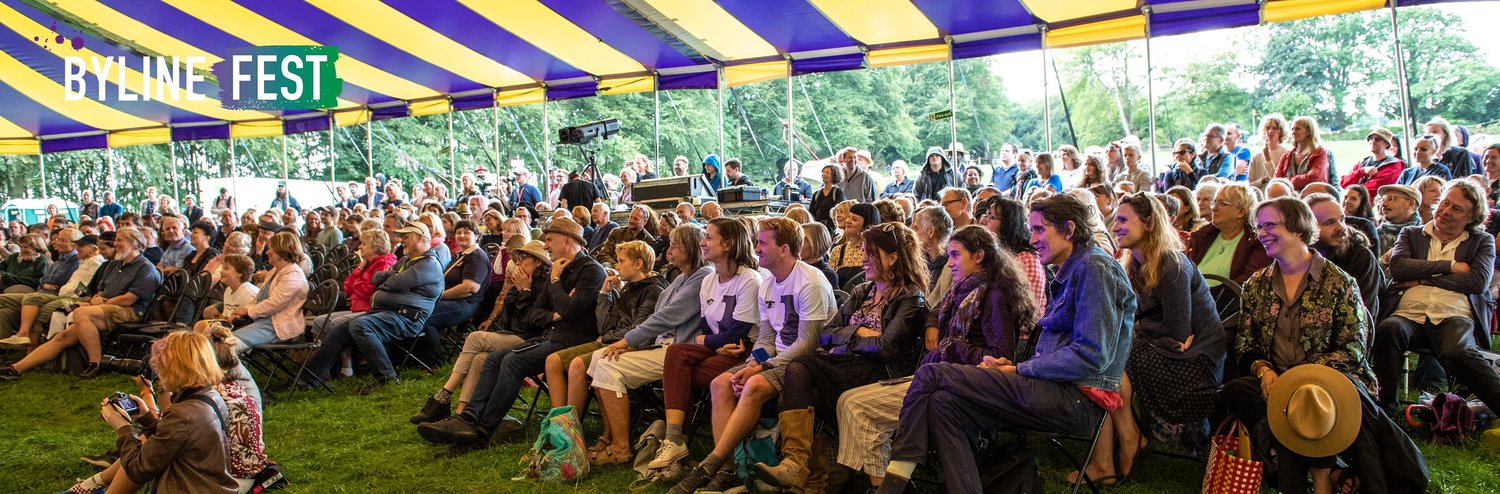
Crowds at the Byline festival. Pic Credit: Byline Festival
While 3.8 million women born in the 1950s are waiting for a decision of the judicial review into their compensation claim against the Department for Work and Pensions about their lost pensions, the August Bank holiday weekend offers them the opportunity to let their hair down.
I will be chairing a panel at the festival in Pippingford Park. Nutley in East Sussex to discuss the issues and facts behind one of the biggest scandals in Whitehall – how such a huge generation of women were cheated out of the pensions – ostensibly in the name of equality.
The dodges and dives taken by successive governments to conceal what was happening , the false facts now being propagated about ever rising longevity and the real hardship being suffered by many of these women who thought they would now be living a life of leisure, will be highlighted in a session on Sunday.
Joining me on the panel will be Professor Jackie Jones, Barrister, Labour MEP for Wales;Dr Davina Lloyd, UN Envoy, Yvette Greenway, CEO, Silence of Suicide and Joanne Welch, Campaign Director, BackTo60.com .
The lively festival put on by Byline Times runs from Friday August 23 until Monday August 26 and will include groups like Pussy Riot ( bad news for Vladimir Putin), The Blow Monkeys, The Feeling, Jerry Dammers and Don Letts.
Other speakers include Luke Harding former Moscow correspondent from the Guardian ( again not good news for Putin), campaigners and journalists Nick Davies, Carole Cadwalladr, Gina Miller, feminists Bonnie Greer and Afrua Hirsch and comedian, Hardeep Singh Kohli.
There will also be debates on issues from the Extinction Rebellion campaign , Brexit, race and civil rights.
The EU British Driving Licence that will disappear. and no longer be valid in the EU and EEA.Pic credit: gov uk
Britain’s 43,000 citizens living in Holland will have to
retake their driving test if they do not apply for a Dutch driving licence by
31 October, according to new No Deal Brexit advice from the Department of
Transport.
In Spain any of the 300,000 British citizens who have not
exchanged their licence by October 31 will have to pass a medical test to
continue driving to get a new licence.
These are just two of a whole plethora of confusing and
chaotic rules that will vary from country to country when the British driving
licence is no longer recognised by the EU.
UK’s 1.3 million citizens living in the 27 countries will face different
rules, time deadlines for applications and compulsory medical checks before
they can drive again in some countries.
Whitehall Brexit redeployment boosts tax credit fraud at revenue and Customs. Pic credit: gov.uk
The Revenue and Customs agency has sacrificed the monitoring
of fraud and error in paying out £22.9 billion a year in tax credits to
millions of people so it can meet deadlines for Brexit.
The switching of 270 civil servants to prepare for Brexit from
checking error and fraud among people claiming tax credits has cost Revenue and
Customs up to £1.46 billion in overpayments, the National Audit Office has
revealed.
The losses are the highest since 2011 and has led to the NAO
qualifying the accounts of Revenue and Customs as inaccurate for the 15th
year running since former Labour chancellor Gordon Brown first introduced tax
credits in 2003.
The losses come on top of figures from the Department for Work and Pensions which disclosed that in the last financial year benefit error and fraud is running at record levels. Altogether the level of known error and fraud in both departments has now been revealed to total a record £7.5 billion.
I am reprinting this article by an Irish academic because it not only finds a way of dealing with major providers like Facebook and Google harvesting personal data for financial gain but could help stop anonymous attacks on people and organisations by spreading hate and fake news.
It has struck me for some time that some of the most vile attacks on people – whether on anti semitism,or directed at survivors of child sexual abuse, on Brexit or the 50s born women courageously fighting for a pension come from anonymous accounts which can’t be easily verified.
This proposes a new way of identifying people before they can get on the internet without the whole system being controlled by the state.
It would stop attempts by people – particularly by those who support paedophiles and regularly abuse child sex survivors on line – being able to hide behind anonymous Twitter handles or claim websites they run are not their responsibility.
And it would make it much easier for the police and other regulatory authorities to identify people behind these attacks and prosecute if necessary. It is an interesting read.
Four ways blockchain could make the internet safer, fairer and more creative
The internet is unique in that it has no central control, administration or authority. It has given everyone with access to it a platform to express their views and exchange ideas with others instantaneously. But in recent years, internet services such as search engines and social media platforms have increasingly been provided by a small number of very large tech firms.
On the face of it, companies such as Google and Facebook claim to provide a free service to all their users. But in practice, they harvest huge amounts of personal data and sell it on to others for profit. They’re able to do this every time you log into social media, ask a question on a search engine or store files on a cloud service. The internet is slowly turning into something like the current financial system, which centrally monitors all transactions and uses that data to predict what people will buy in future.
This type of monitoring has huge implications for the privacy of ordinary people around the world. The digital currency Bitcoin, which surfaced on the internet in 2008, sought to break the influence that large, private bodies have over what we do online. The researchers had finally solved one of the biggest concerns with digital currencies – that they need central control by the companies that operate them, in the same way traditional currencies are controlled by a bank.
Bitcoin was the first application of a blockchain, but the technology shouldn’t stop there.
AnnaGarmatiy/Shutterstock
The core idea behind the Bitcoin system is to make all the participants in the system, collectively, the bank. To do this, blockchains are used. Blockchains are distributed, tamper-proof ledgers, which can record every transaction made within a network. The ledger is distributed in the sense that a synchronised copy of the blockchain is maintained by each of the participants in the network, and tamper-proof in the sense that each of the transactions in the ledger is locked into place using a strong encrypting technique called hashing.
More than a decade since this technology emerged, we’re still only beginning to scratch the surface of its potential. People researching it may have overlooked one of its most useful applications – making the internet better for everyone who uses it.
Help stamp out hate
In order to use services on the internet such as social media, email and cloud data storage, people need to authenticate themselves to the service provider. The way to do this at the moment is to come up with a username and password and register an account with the provider. But at the moment, there’s no way to verify the user’s identity. Anyone can create an account on platforms like Facebook and use it to spread fake news and hatred, without fear of ever being identified and caught.
Our idea is to issue each citizen with a digital certificate by first verifying their identity. An organisation like your workplace, university or school knows your identity and is in a position to issue you with a certificate. If other organisations do the same for their members, we could put these certificates on a publicly accessible blockchain and create a global protected record of every internet user’s identity.
Since there’d be a means for identifying users with their digital certificate, social media accounts could be linked to real people. A school could create social media groups which could only be accessed if a student had a certificate issued to them by the school, preventing the group being infiltrated by outsiders.
Never forget a password again
A user could ask for a one-time password (OTP) for Facebook by clicking an icon on their mobile phone. Facebook would then look up the user’s digital certificate on the blockchain and return an OPT to their phone. The OTP will be encrypted so that it cannot be seen by anyone else apart from the intended recipient. The user would then login to the service using their username and the OTP, thereby eliminating the need to remember passwords. The OTP changes with each login and is delivered encrypted to your phone, so it’s much more difficult to guess or steal a password.
Vote with your phone
People are often too busy or reluctant to go to a polling station on voting days. An internet voting system could change that. Digital currencies like Zerocash are fully anonymous and can be traced on the blockchain, giving it the basic ingredients for a voting system. Anyone can examine the blockchain and confirm that a particular token has been transferred between two parties without revealing their identities.
Each candidate could be given a digital wallet and each eligible voter given a token. Voters cast their token into the wallet of their preferred candidate using their mobile phone. If the total number of tokens in the wallets is less than or equal to the number issued, then you have a valid poll and the candidate with the most tokens is declared the winner.
No more tech companies selling your data
People use search engines everyday, but this allows companies like Google to gather trends, create profiles and sell this valuable information to marketing companies. If internet users were to use a digital currency to make a micropayment – perhaps one-hundredth of a cent – for each search query that they perform, there would be less incentive for a search company to sell their personal data. Even if someone performed a hundred search queries per day they would end up paying only one cent – a small price to pay for one’s privacy.
Blockchain technology started as a means for making online transactions anonymous, but it would be shame for it to stop there. The more researchers like me think about its potential, the more exciting possibilities emerge.







 Westminster Confidential