Therese Coffey’s mean “pay out and grab back” scheme for the poorest elderly cheated of their rightful pensions

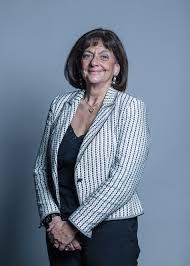
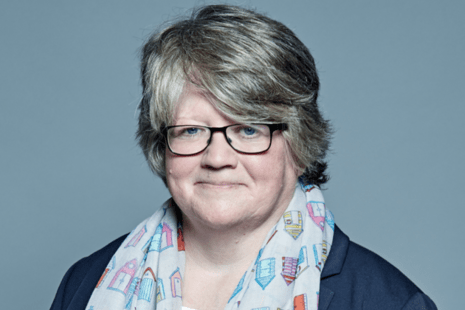
Therese Coffey

A new scandal was revealed in the House of Lords this afternoon which could affect tens of thousands of the poorest pensioners already cheated for decades of the right money for their pension.

The underpayments running to tens of millions – exposed by Sir Steve Webb, the former Liberal Democrat pensions minister – is slowly being sorted out by officials at the DWP though as this blog exposed earlier with the most complicated cases being delayed under a secret ” drop and go ” scheme to get the numbers up.

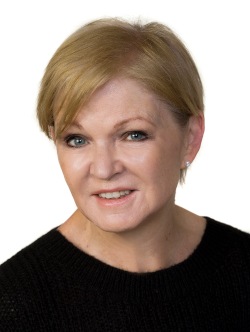
Baroness Stedman- Scott

The minister Baroness Deborah Stedman-Scott revealed that so far £60.7 million had been paid out to 9491 people cheated of their full pension – suggesting that some of the payments must be pretty large.

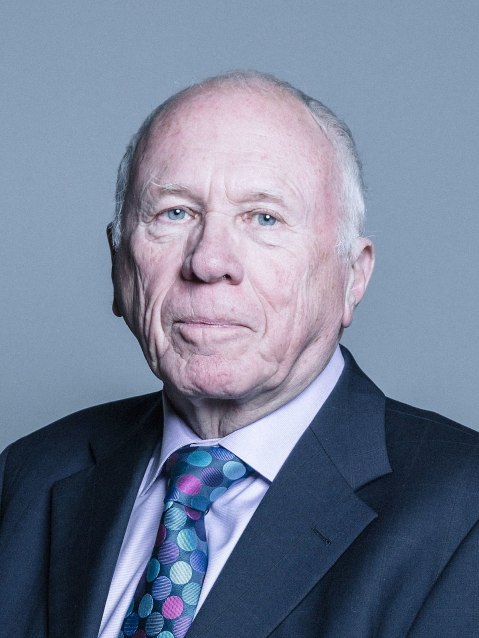
Extraordinarily she could not give a gender breakdown – which led to a rebuke from Labour peer Lord Jeff Rooker who accused her of hiding the fact that vast majority must be all women.

But then came the killer blow. In answer to a question to another former pension minister, Baroness Ros Altmann, Baroness Stedman-Scott confirmed that the poorest pensioners who got the money -mostly in their 80s and 90s – would cease to get their fees paid by local councils if they got more than £23,250 in England

Hidden bonanza for care home owners

Instead they would have to pay privately until their pension savings money fell below £23,250. Given that many care homes charge differential rates for people residing there – local authority rates are often lower than private rates – this could even be a new bonanza for care home owners – as they could get more money for providing the same services.

Baroness Ros Altmann raised the issue

This “pay out and grab back” scheme was universally condemned by peers of all parties. Not one supported Baroness Stedman-Scott who was looking increasingly uneasy at having to admit this.

She hinted that in rare cases the DWP could make a special payment to a pensioner or that local authorities could perhaps waive individual fees.

“Special payments under the DWP discretionary scheme are not routinely made to those who have been underpaid state pension. However, under exceptional circumstances, such as where severe distress has been caused by the way an individual case has been handled, a case may be referred for consideration of a special payment.”

This got no purchase with the peers. The most critical comment came from Lord Forsythe of Drumlean, another former Tory minister, who accused the government of ” hiding behind the skirts of local government” rather than take national responsibility for the change.

Lord Rooker raised the issue of 50s women and the government’s ” holiday” from funding the national insurance fund

Lord Rooker linked this action to the failure to pay out the 50s women when the pension age was raised to 66.

“The noble Baroness talks about “people” and “persons”, but we are talking about women. When was the last time tens of thousands of men were short-changed with their pension? I do not recall that happening. When the Government took their long-term holiday from paying into the National Insurance Fund, they deprived hundreds of thousands of women of the pension that they were entitled to. Why cannot that be redressed?”

Government ignores answering who is to blame at the DWP

Conservative peer Baroness Patience Wheatcroft, a former journalist, wanted to know who in the DWP was responsible for this failure to pay so many people the right pension.

“My Lords, when more than £60 million that should have been paid has not been paid, surely somebody should be held responsible in the end for that error. In the private sector, the sum of £60 million would be taken very seriously. Can the Minister tell us, therefore, who was ultimately responsible for this failure to pay such a large sum of money?”

The minister couldn’t – she just blamed it on a computer failure.

She did promise under pressure to approach both the Treasury and Therese Coffey to see if the government could introduce regulations for councils to ignore the pension back payment. But admitted she might get short shrift from the Treasury.

All this points to another blow for the 50s born women when and if they get compensation in the future. By that time many may well need social care -only to find out that they will have to give back their payments to cover their care home costs.

Please donate to Westminster Confidential so I can continue my forensic coverage.

One-Time
Monthly
Yearly

Make a one-time donation

Make a monthly donation

Make a yearly donation

Choose an amount

£5.00
£10.00
£20.00
£3.00
£9.00
£60.00
£3.00
£9.00
£60.00

Or enter a custom amount

£

Your contribution is appreciated.

Your contribution is appreciated.

Your contribution is appreciated.

DonateDonate monthlyDonate yearly

Please donate to Westminster Confidential

£10.00
Boris Johnson: Labour solely to blame for the maladministration over 50swomen pensions

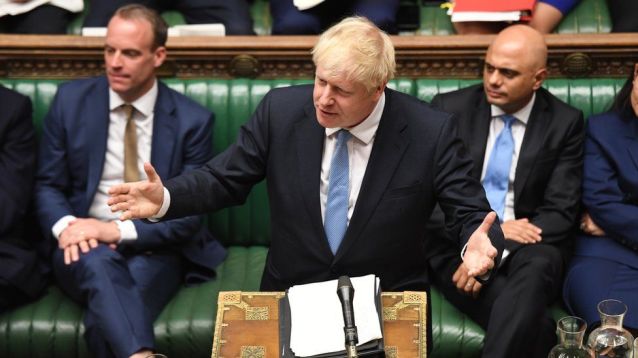
Boris Johnson at PMQ;s Pic credit: Jessica Taylor House of Commons

Boris Johnson is planning to weaponise the sad plight of 3.8 million 50s born women by blaming Tony Blair’s Labour government solely for the maladministration in not informing them about the six year delay in getting their pensions.

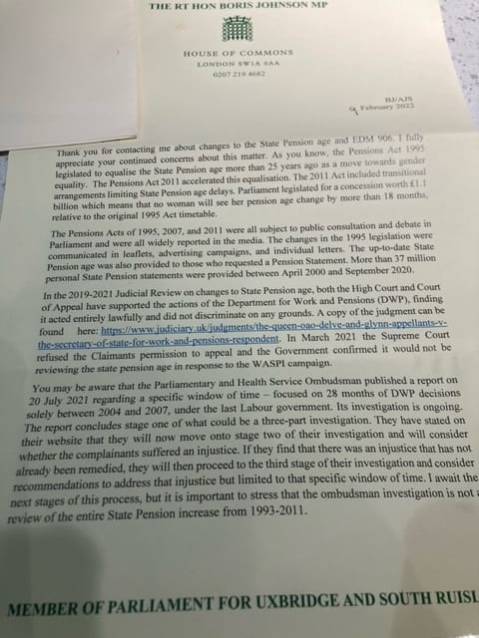
In a letter to one of his constituents, Anne Taylor, the PM provides his first detailed comment for some time on the plight of the pensioners. It comes as Parliamentary activity is being stepped up. The all party group of MPs on 50s women state pension inequality for women is pressing the Parliamentary Ombudsman to propose compensation of £10,000 for each woman. A Parliamentary motion by Ian Byrne, the Labour MP for Liverpool, West Derby, calls for full restitution for all 50s women, worth up to £50,000 for some, has been signed by 52 MPs.

Mr Johnson justifies blaming Labour by seizing on the finding of the Parliamentary Ombudsman, Rob Behrens, who found that there was maladministration over a 28 month period from 2004 and 2007 solely under a Labour government.

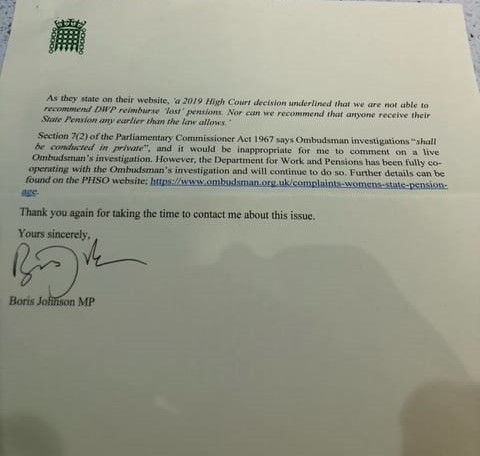
He points out that the Ombudsman’s investigation has to go through two further stages and still has to consider whether there has been an injustice. Only then will it move on to discussing compensation and he insists that this will be ” limited to that specific window of time.”

” I await the next stages of this process, but it is important to stress, that the ombudsman investigation is not an entire review of the State Pension increase from 1993 -2011.”

Actually he is wrong here, as the Ombudsman did consider the wider period but as I have written in an earlier blog, one of the flaws of his findings, was that it exonerated Whitehall action in the earlier period, including when Peter Lilley, then social security secretary, ignored warnings by civil servants of the need to inform the women.

He is also wrong about the court judgement when the Court of Appeal rejected a judicial review and the Supreme Court refused to hear BackTo60s case. He cites WASPI in this case and seems to think they were calling for a review of the pension age to 60. This insults both groups.

Boris Johnson has changed his mind on the issue. In a blog in 2019 I wrote about his two faced approach – first supporting women during his Tory leadership campaign and then dropping them after the court decision.

What is disturbing about this latest letter is that it offers little hope of any support for their case from the Prime Minister. It also suggests that he is building up ammunition to accuse Labour of being responsible for all the mistakes – hoping they will stay mum for fear that he will accuse Keir Starmer of being responsible for the women’s plight.

Bizarrely the Ombudsman’s findings leave him aiding and abetting the PM’s stance. It also means those hoping for a quick decision on compensation from the Ombudsman are going to be very disappointed as the PM will hope it is dragged out for years.

As for his constituent Anne, this is her view: ‘Having less than 2 years to prepare for a 6 year hike was shocking enough.  Nothing could have prepared me for the way I have felt since, I have literally had my hair turn grey, lost my sense of self and felt like a second class citizen. I had no idea how aged I would become in this time. I have 6 months of my sentence to go, I will never forgive this and successive governments for not giving back our earned dues’.

Boris Johnson’s letter

Please donate to Westminster Confidential to allow me to continue my forensic investigations

One-Time
Monthly
Yearly

Make a one-time donation

Make a monthly donation

Make a yearly donation

Choose an amount

£5.00
£10.00
£20.00
£3.00
£9.00
£60.00
£3.00
£9.00
£60.00

Or enter a custom amount

£

Your contribution is appreciated.

Your contribution is appreciated.

Your contribution is appreciated.

DonateDonate monthlyDonate yearly

Please donate to Westminster Confidential

£10.00
The 200,000 men in their 50s and 60s who can’t get jobs

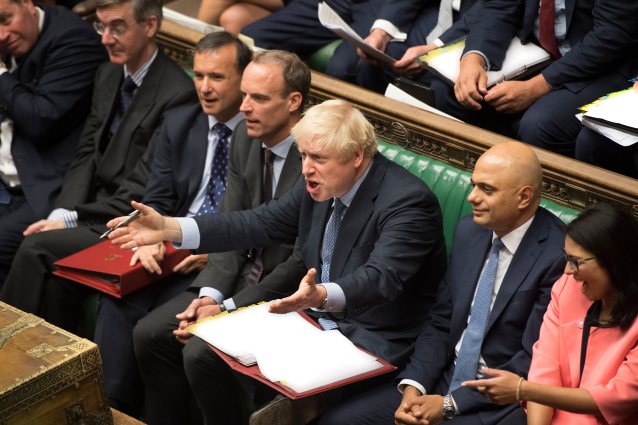
Boris Johnson in full flight in the Commons. Picture credit: Jessica Taylor House of Commons

This blog has consistently highlighted the cases of 50s born women who in waiting for their delayed pension have either had to fall back on benefit or struggle on in work with serious health issues.

Now in the last two years – almost since the Covid pandemic started – the same problem is hitting men born in the 1950s and 1960s as they wait until they can claim pensions at the age of 66.

The official figures compiled by the Office for National Statistics comes just as Boris Johnson has been found out again for lying five times about the record number of jobs created during the pandemic.

Boris Johnson’s ” incorrect job figures”

The BBC’s Reality Check Team revealed that Ed Humpherson, from the Office for Statistics Regulation, had sent one of the prime minister’s advisers at Downing Street a letter saying it was “incorrect to state that there were more people in work at the end of this period than the start”.

Mr Johnson has been mixing up the number of people on payrolls, which has gone up with the number of people in work, which has not. They are not the same thing – the payroll number excludes self-employed people, In fact the number of people in work had fallen by 600,000 to 32.5 million – a point taken up by Justin Madders, Labour MP for Ellesmere Port, and Shadow Health and social care spokesman. He criticised the PM for providing in accurate information to Parliament.

An analysis by Rest Less , a digital community which acts as an advocate for people aged over 50, reveals startling increases in people over 50 on the dole queues

Latest figures released by ONS show that half the men who have been on the dole for more than 12 months are over 50. Comparable figures for the 18-24 age group is just 27 per cent.

While the proportion of both men and women who have been on the dole for more than a year has risen from 34 per cent to 41 per cent. This compares with a rise from 14 per cent to 25 per cent for the 18-24 year old group.

DWP plans crackdown on unemployed benefit claimants

Stuart Lewis, Founder of Rest Less, commented: “Our analysis shines a light on the many individuals who have so much to contribute to the workplace, but who are being left behind by the recovery. Unemployment amongst people aged over 50 is up 23% compared with pre-Covid levels. The fact that half of all unemployed men aged over 50 have been unemployed for more than 12 months is shocking and a timely wake-up call to government and industry that we need to do more to ensure that our post-pandemic jobs plan supports people of all ages.”

And some of the cases are heart wrenching and are very similar to the plight of 50swomen trying to get jobs while being forced to live on Universal Credit.

Plight of Chris Long

One example is Chris Long from Bedfordshire.

He will turn 60 in March. According to a report from Rest Less:”  He has been out of work for the past three years.  Chris has worked in a variety of roles over the years, most recently as a forklift driver but previously in a security role and in mental health and addiction services.  He has a broad skill set as a result.

” Around the same time as Covid hit three years ago, Chris became unwell with a health condition which was later diagnosed as lung disease for which there is no cure, only symptom management.  He had to give up his job as a result.  Some days, Chris has trouble walking up and down the stairs but there are other days where he feels fit enough to work.  It has proven difficult for him to find work whilst he looks after his health and, in his own words, he says ‘I just don’t know where I fit anymore’.

Chris is currently on benefits but needs to get back to work for financial reasons.  He lives with his partner, who works, and they have an 8 year old daughter to support. “

Given the Department for Work and Pensions is now cracking down on anybody on Universal Credit who has been out of work for more than four weeks and won’t accept any job by reducing benefits the picture for him is bleak.

What employer is going to take on someone on who can’t get up the stairs unless they happen to have a policy of employing disabled people.

What appears to be happening is a double whammy for people over 50.

On the one hand the government is boasting about how successful their jobs programme has been – with the Prime Minister lying about the statistics.

On the other it looks like now both men and women who have health issues over the age of 50 ( and who doesn’t) and find it difficult to stay in work are being confined to a twilight existence until they get their pension which is being remorselessly made later and later in their lives by an uncaring government.

Please donate to my blog to allow me to continue my forensic investigations.

One-Time
Monthly
Yearly

Make a one-time donation

Make a monthly donation

Make a yearly donation

Choose an amount

£5.00
£10.00
£20.00
£3.00
£9.00
£60.00
£3.00
£9.00
£60.00

Or enter a custom amount

£

Your contribution is appreciated.

Your contribution is appreciated.

Your contribution is appreciated.

DonateDonate monthlyDonate yearly

please donate to Westminster cCnfidential

£10.00

MP reignites Back to 60’s demand for “full restitution” for 3.8m 50s born women

Ian Byrne MP

A Labour MP has tabled a fresh Parliamentary motion backing the case for women born in the 1950s to have repaid all the money they lost by the six year delay in receiving their pension. For some people this could be as high as £50,000.

Ian Byrne, Labour MP for Liverpool, West Derby, tabled the new motion this morning reigniting the issue which the government want dead and buried after the campaign group Back to 60 lost in the Court of Appeal and the Supreme Court refused to hear the case.

The full test of the motion is:

“That this House welcomes the positive interventions from so many hon. Members from across the House on behalf of women born in the 1950s who have lost their pensions; and pays tribute to constituents and campaigners in their ongoing fight for justice; recalls that women born in the 1950s were subject to discriminatory employment and pension laws; recognises that this included being excluded from some pensions schemes; recognises that this had the negative effect for them of losing the opportunity to have the same level of pension as their partner or spouse; further recognises that this has had the consequence of women in this position never being able to have equal pensions to men; further notes that this has negatively and profoundly impacted on them including increased poverty, deteriorating health and homelessness; notes that at least 3.8 million women have been impacted by the loss of their pensions from the age of 60 in three separate age hikes; and calls on the Government to enact a temporary special measure as permitted by international law to provide full restitution to women born in the 1950s who have lost their pensions from the age of 60 because of the impact of the rise in retirement age. “

50s women unjustly treated

While Parliamentary motions are rarely debated publication of this motion acts as a noticeboard to other MPs and ministers that there is a still a very strong feeling in Westminster that the women have been unjustly treated.

It is significant that the motion tells the government that there is a mechanism in Parliament that they can use to implement the change – known as the special temporary measure- which would lead to the women being paid quickly.

It comes at the time when through ill health and Covid 19 some 204,000 women have already died before they get their pensions.

It is also significant as it shows that there are MPs in Parliament who think that the state pension inequality for women all party parliamentary group does not go far enough in redressing the issue. This group, chaired by Labour MP Andrew Gwynne and Tory MP Peter Aldous, has submitted proposals to Robert Behrens, the Parliamentary Ombudsman, asking for him to offer a minimum of £10,000 compensation to the women. This proposal backed by WASPI has two drawbacks. First the Ombudsman has to agree and given his report only found partial maladministration between 1995 and 2010 he may decide not to agree such a high sum. And he has no power to force the government to accept his recommendations beyond shaming them.

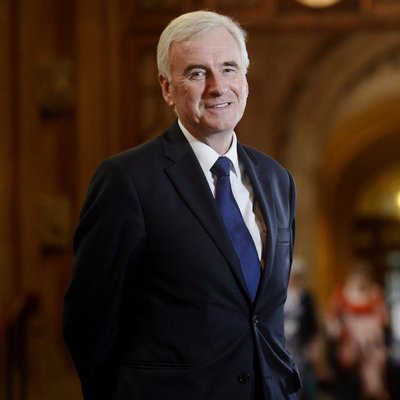
John McDonnell MP

This new motion is backed by 15 MPs including John McDonnell, the former shadow chancellor, and Jeremy Corbyn, the former Labour leader. It is perhaps rather ironic that if Labour had won the last general election compensation might have already agreed as John McDonnell promised a £58 billion pay out to correct the injustice.

Other MPs backing the move include Jim Shannon, the DUP social care and health spokesman, and Labour MPs, Kim Johnson, Beth Winter, Bell Ribeiro-Addy, Zarah Sultana, Ian Mearns, Kate Osborne. Nadia Whittome, Grahame Morris, and Jon Trickett.

Jon Trickett has linked his support to his local Waspi group, showing that they favour full restitution.

The motion also has the support of Wera Hobhouse, Lib Dem spokesperson for Justice and women and equalities, and independent MP Claudia Webb.

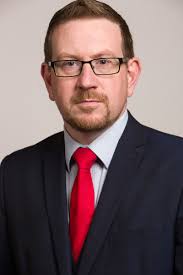
Andrew Gwynne MP, joint chair of the state pension inequality for women APPG

UPDATE: Andrew Gwynne, Labour MP and joint chair of the APPG state pension inequality for women, told BackTo 60, he had no objection to MPs from his group signing Ian Byrne’s motion.

He said” I see no conflict between it and the APPG’s submission to the PHSO.”

Nine more MPs have signed the motion including five SNP MPs, Chris Stephens, Glasgow South West; Allan Dorans, Ayr, Carrick and Cumnock and Deidre Brock, Edinburgh North and Leith, Amy Callaghan, East Dumbartonshire and Chris Law, Dundee West. The other three MPs are Labour and SDLP – Dan Carden, Liverpool Walton; Ian Lavery, Wansbeck and Aspana Begum, Poplar and Limehouse, Barry Sheerman, Huddersfield; Sir George Howarth, Knowsley, and Hannah Claire, Belfast South.

In another development the Pensions Reform Alliance and Waspi have said they do not want 50swomen to get full restitution. Members of the Alliance put out misleading information that this Parliamentary motion would somehow influence Robert Behrens, the Parliamentary Ombudsman, from recommending compensation for the 3.8 million women. This is complete nonsense as it would not impinge on anything the Parliamentary Ombudsman would recommend and MPs are entitled to express their opinions.

Please donate to my blog to allow me to continue my forensic investigations

One-Time
Monthly
Yearly

Make a one-time donation

Make a monthly donation

Make a yearly donation

Choose an amount

£5.00
£10.00
£20.00
£3.00
£9.00
£60.00
£3.00
£9.00
£60.00

Or enter a custom amount

£

Your contribution is appreciated.

Your contribution is appreciated.

Your contribution is appreciated.

DonateDonate monthlyDonate yearly

Please donate to westminster Confidential

£10.00

Parliamentary Ombudsman officially says maladministration over 50s women pensions – but it will still be a long wait for justice

Amanda Amroliwala, Deputy Ombudsman Pic Credit: Parliamentary Ombudsman

Rob Behrens, the Parliamentary Ombudsman, today published his report finding there was maladministration by the Department for Work and Pensions in issuing advance warnings over the rise in the pension age for women born in the 1950s and 1960s.

The report – as previously revealed on this website – is little changed from its draft version – and still insists that up to 2005 there was no maladministration over telling the women that their pension age would rise. After that the report says there were delays.

Amanda Amroliwala, Parliamentary and Health Service Ombudsman CEO, said: “After a detailed investigation, we have found that DWP failed to act quickly enough once it knew a significant proportion of women were not aware of changes to their State Pension age. It should have written to the women affected at least 28 months earlier than it did.

‘We will now consider the impact of these failings, and what action should be taken to address them”

The decision to publish the first part of the investigating before announcing whether the women will be compensated is unprecedented. But according to the press office ” this is because it is the most important investigation we have done” and ” there is a lot of public interest”.

The report is now laid before Parliament and MPs will be able to press the government about its findings.

Andrew Gwynne MP

Andrew Gwynne, joint chair of the All Party Group on the State Pension Inequality for Women, said:

This report is a landmark moment in the ongoing fight for 1950s women to receive justice, and a vindication of what campaigners have been saying for years. The PHSO has conducted a thorough investigation of a number of complaints and found that there were failings in the actions of the DWP in communicating changes to State Pension.

The DWP must urgently address these findings and advise 1950s women what actions they will take to right the wrongs committed by successive Governments. For too long 1950s women have been ignored, and this must change.”

The question is now what will happen next. The report is the first part of a three stage process.

What happens next?

The next stage will be to examine how badly the women were affected by this process. According to the press office this may not be just examining how the six complainants were affected but will look wider. It is not clear at this stage how this will be done and how long it will take.

Then there is a third process -deciding how much compensation the women will get. It will be nothing like the sums of money women lost – often adding up to as much as £50,000 – but is more likely to be hundreds or low thousands.

Again it is not clear whether the Ombudsman will publish these two processes separately or just issue a final report.

My guess – and it is only a guess- is that this may take a year.

Even when it is published the Department for Work and Pensions will need time to respond and a lot will depend on the timetable the Ombudsman gives them to respond and compensate people.

If I take previous cases involving the DWP- the six will get their compensation within a month- while the remaining millions will have to wait. Also the Ombudsman cannot compel the DWP to compensate them – but pressure from MPs should ensure that people will eventually get the money.

The 3.8 million women and those born in the 1960s are still a long way from justice despite this ruling today.

Previous stories on my blog on this issue are:

https://davidhencke.com/2021/06/07/exclusive-parliamentary-ombudsman-proposes-to-say-maladministration-by-dwp-over-the-rise-in-the-womens-pension-age/

https://davidhencke.com/2021/06/12/50s-women-pensions-flaws-in-the-parliamentary-ombudsmans-preliminary-maladministration-report/

I haven’t gone into much detail on the report as you would have read it when I published the draft on June 7.

Those who want to see the report It is here.

A scandalous cover up: The DWP and Ombudsman let down millions of people promised an indexed Guaranteed Minimum Pension for life

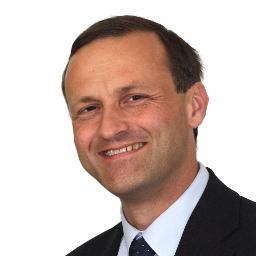
Steve Webb, former Liberal Democrat minister, who piloted the change in pension law in 2014

Only two people given a total of £1250 compensation out of millions who lost out

This is a complicated story but bear with me. Under the old pension arrangements (abolished in 2016) employers who decided to contract out of the old SERPS scheme would save on their national insurance contributions (NICs) but promised whatever happened they would still maintain a Guaranteed Minimum Pension for their workers.

But they would not pay for the indexation of the pension once people retired. That money would be paid by the state. and still is for those who have the old state pension.

But from 2016 with the introduction of the new pension that would cease with the exception of people who received an occupational second pension in the public sector – and that includes ministers, MPs, civil servants as well as other public sector workers. This exception even covers any public sector worker who moved abroad to places like Canada and Australia where their basic state pension is frozen.

This change which could lead to people losing thousands of pounds over their retirement – was spotted independently by two knowledgeable people who having got nowhere with the Department for Work and Pensions complained to the Ombudsman. 11.5 million people affected had opted out of the scheme between 1978 and 1997.

Some 21 months ago the Ombudsman reported that they had been right to spot this. The report noted:

“The National Audit Office (NAO) and the Work and Pensions Select Committee considered that the DWP had provided insufficient and limited information to individuals about the potential negative impacts the new State Pension could have, particularly in relation to indexation on the GMP. The NAO said that some people were likely to lose out and could not find the information they needed.

DWP information was misleading

It concluded:

“The DWP communicated the impact of the 2014 Pensions Act legislative change to the public. ln communicating this change, the DWP said that individuals could increase their starting amount of new State Pension. However, people who were to reach SPA shortly after April 2016 were in fact unable to make significant additional NlCs to do this. The DWP’s information was thus misleading.”

Indeed the DWP gave the impression that the change would make a mere 36p a week difference when in fact people, especially women, would lose over their course of their retirement, thousands of pounds. It is very difficult to estimate how much, but a Treasury estimate on how much money those in the public sector will GAIN by keeping this right – suggests, if inflation stays at 2 per cent, it is £13,000 for every man and £18000 for every woman over their average life span. If it is 3 per cent, it is £19,000 for a man and £27,000 for a woman. Not 36p!

Once they had retired they could do nothing about it. The Ombudsman’s report says that between 2016 and today two million people have already been affected. The bulk of the people have still to claim their pension.

The ministry to confuse matters said that the new triple lock provisions for the basic state pension meant that on average people affected would only be between £2 a week worse off and £4 a week better off. But in fact that has nothing to do with the indexation of GMP, it was part of package of measures for the new pension.

Rob Behrens, Parliamentary Ombudsman

If that change wasn’t bad enough the last 21 months nothing has happened. The Ombudsman made straightforward recommendations and wanted the ministry to report back in three months. He was ignored.

“The DWP should ensure that their literature clearly and appropriately references that some individuals, who have large GMPs and reach State Pension Age in the early years of the new State Pension, may be negatively affected by the changes.
“The DWP should direct individuals to check their circumstances. Further, the DWP should provide details to the public about how they can check their circumstances.. We have recommended that the DWP should ensure that anyone with a complaint of injustice arising from the same maladministration can have their concerns fully considered.”

Ombudsman has no power to compel the DWP to redress the injustice

Well so far the DWP has only offered to produce a fact sheet and not made any attempt to contact a single person who was misled . And the Ombudsman – who has no power to compel people to follow his recommendations – looks like letting them get away with it by agreeing to the offer. So only two people – the complainants Mr Smart and Stephen Kenny – have been compensated -offered £500 and £750 each respectively.

Despite some heroic efforts by Stephen Timms, the chair of the Commons Work and Pensions Committee and some questions from me the ministry has stonewalled in providing detailed information. Both the Ombudsman and the DWP are also silent on how the law was changed in 2014 -since the money was paid out before under the old system and those in public sector rather than the private sector now get it through their occupational pension.

Some readers might find this story eerily familiar. If you are a 1950s or 1960s woman it sounds like a rerun of the denial of pensions to millions of women between 60 and 66. Misleading information, nobody being told, and then no redress.

But there is also something alarming in this tale for the WASPI women who have placed their faith in the Ombudsman to save them. First compensation for the potential loss of tens of thousands of pounds is just £500 and £750. Secondly it could suggest if maladministration is proven that the DWP will just compensate the six women involved in the complaint and ignore the rest of the 3.8 million. Thirdly it looks like the DWP may ignore the Ombudsman’s recommendations -knowing he can’t compel them to do anything – or make it so difficult and obtuse for the women to claim that they will get nothing. After all you can’t prove you never had a letter!

A thank you to one of my readers Christopher Thompson who contacted me about this and helped with unearthing some of the key facts in this story.

High court judgement on 50swomen pension’s cannot stand – Jocelynne Scutt tells CEDAW People’s Tribunal

Dr Jocelynne Scutt

The president of the Cedaw People’s Tribunal, and a former judge, Jocelynne Scutt, said today that the decision by the Court of Appeal to turn down the judicial review into the handling of the rise of the pension age for 50s women will be overturned.

She was commenting on evidence to the tribunal from Christine Cooper, chair of accounting at Edinburgh Business School on the plight of 50s women and how CEDAR could redress the issue. She was giving evidence in a personal capacity.

Christine Cooper pointed out that the ruling -part based on the fact that the 1995 legislation allowed the Department for Work and Pensions to say they had no obligation to tell the 3.8 million women about changes to their pension would have wider implications for the rest of government policy if it was applied in other areas. For this reason alone it is likely to be challenged in other cases.

If the UN Convention on the Elimination of all forms of discrimination against women (CEDAW) was part of UK law it would seen as discrimination against a particular group on that ground alone.

Christine Coooer

Christine Cooper strongly defended the 50swomen saying ; ” This is a group of women who did all what was expected of them in society, brought up families and went back to work when they could. The way they have been treated is mad.”

She said if the government had spent the £6.5 million on an advertising campaign to get people to take out a second private pension instead on informing women about the change in 2001 they would have been more prepared. Instead it had only spent £80,000 47,000 leaflets many going to private finance advisers – the people who were most likely to know about it anyway. She said the worst affected people were those who were in low paid jobs, single women, divorced women, women from ethnic minorities and those who had worked part time.

She it was clear that there had been no impact study in 1995 on the effect it could have on the women and the impact study which covered the 2011 Pensions Act was based on how men would be affected. Most women only had months notice – while men had seven years notice of the rise in the pension age from 65 to 66.

She also revealed that the DWP does not keep any information on the gender pay gap ,the gap between the pension earnings of women and men. Instead a survey is done by Prospect, a Whitehall trade union, which revealed that the difference has remained stubbornly at 40 per cent for the last five years -meaning men will get a pension worth £7,500 more than women.

Occupational pension pots for women aged 65 are at present £35,800 – a fifth of the figure for men at the same age.

Government pressure to get trade deals will hit women’s pay – former civil servant

Janet Veitch- former civil servant with extensive knowledge of CEDAW

A former senior civil servant warned that both Brexit and the hostile environment against migrants were going to have a disproportionate effect on women’s rights.

Janet Veitch OBE  is a consultant in the UK and internationally on women’s rights, having worked for ten years for the UK Ministers for Women and as Director of the UK Women’s National Commission.

She is a founder member of the End Violence Against Women Coalition; Vice-Chair of ‘Equally Ours’ and an associate adviser on gender for the British Council. Janet was awarded the OBE for services to women’s rights in 2011.

Janet Veitch said that the UK leaving a market of 500 million people would profoundly affect the British economy because it had yet to find alternative markets. Pressure to get trade deals would lead to a downward pressure on wages and labour conditions, which would predominately affect women, as many were already in low paid jobs.

The ” hostile environment ” against migrants would also lead people to start to condone a critical attitudes against people who looked visually different to themselves. CEDAW might not be a complete panacea but it would force the government to do due diligence on a host of issues.

Horrendous statistics on how women are treated over maternity leave and costly child care

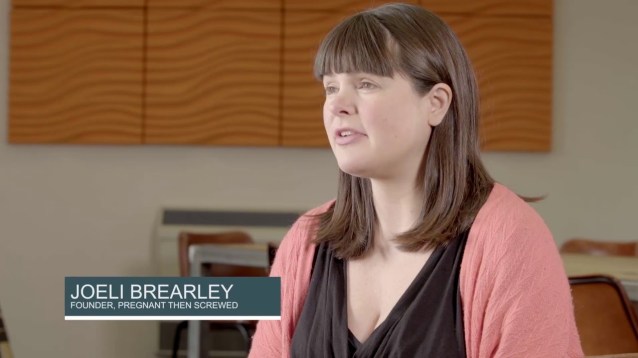
Joeli Brearley – campaigner on maternity rights

A horrendous picture of discrimination against pregnant women was outlined by Joeli Brearley to the tribunal.

Joeil,founder and CEO of ‘Pregnant Then Screwed’, a charity which protects and supports women who encounter pregnancy; maternity discrimination and lobbies the Government for legislative change. This was after being sacked when she was four months pregnant.  Joeli was awarded the 2019 Northern Power Women ‘’Agent of Change’’; and is an International Women Human Rights Defender.

She described the appalling position of pregnant women who were often sacked by employers but then found they could get no redress under the employment tribunal system She said they had, while heavily pregnant only three months to lodge a case, found it would cost them £8000 to do so and many had no knowledge of the law. As a result there were very few cases.

She said women were hit by two major issues -facing pay cuts if they lost their jobs as they had to seek part time work on low pay – and paying for the second most expensive child care costs in Europe.

Typical child care costs took 33 per cent of their salary while single mothers, it took 67 per cent of their earnings. The difference between maternity leave and male parental leave of just two weeks meant only three per cent of men took a major part in looking after the new born baby, even though many more men would have liked to do it. Those who did had a 40 per cent more chance of staying together.

She said the situation had worsened during the Covid 19 pandemic. She thought CEDAW would make a big difference.

Loneliness and misery for women in rural Britain

Nick Newland

Poor transport and health services, loneliness in the remote areas of the UK were all part of the problems facing women in rural England, Scotland, Northern Ireland and Wales.

Nick Newland is from the Association of Country Women Worldwide The organisation exists to amplify the voices of rural women, so that the problems they face and the solutions they raise are heard and acknowledged by international policy-makers and legislators. Rural women are the backbone of families/communities but they go unheard
in legislation, and they remain unprotected and unsupported. ACWW exists to change that.

He hoped CEDAW would lead to women have a much greater say in rural areas – and not just in the odd focus group -so they could get change in their area. He said transport was a major problem for many women – though it was better in Scotland and Wales than England.

He cited an example of one woman living in Monmouth who had to spend seven hours travelling to get a 15 minute jab against Covid 19 in Newport because of the bus timetable.

He also said that loneliness and isolation of women was a major issue – and had been made worse for women by the raising of the pension age. He said getting health care was also a big issue and there was a serious mental health crisis in rural Britain – some times aggravated by their farmer partners committing suicide. There were also cases of brain damage among women who had tried to commit suicide but had not succeeded.

” There is a desperate need for a national strategy , a better quality of life and equality for women in education and health.”

” We have already got one Pakistani here , we can’t take another one” – women’s refuge owner

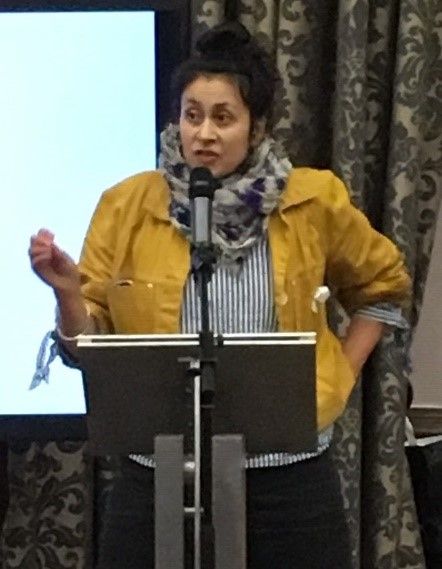
Rosie Lewis at TUC backed rally

Rosie Lewis is Director of the Angelou Centre , Newcastle supporting the organisation’s services for Black women and girl survivors and has been involved in social justice activism for more than 25 years.

She has given evidence to CEDAW and to the Independent Inquiry into Child Sexual Abuse in order to ensure that the findings of both reflect the state response to violence against Black and minority ethnic women and girls. 

An appalling picture of the treatment of women from ethnic minorities now migrant women and children had been excluded deliberately by the government from new domestic abuse legislation was given by Rosie Lewis

She said they were now being excluded from access to justice, help from specialists and many professional organisations no longer want to know or help them. She cited the case of one woman fleeing a forced marriage being told by the person running a women’s refuge, ” We already have one Pakistani here, we can’t take another one.”

She said a city like Durham now had no specialist organisation that could help people in the surrounding rural areas.

She thought if the UK did adopt CEDAW in UK law it would raise awareness, and improve access to services for ethnic minorities.

Other witnesses.

There was also evidence given today from Catherine Casserley, a barrister specialising in employment, discrimination, and Human Rights law. Co author of ‘Disability Discrimination Claims: An Adviser’s Handbook’. She said CEDAW would make a big difference to the plight of disabled women, including increasing awareness, creating a willingness to change and give a proactive approach to achieving equality.

Cris McCurley, who studied Law at the University of Essex and is a Partner in Ben Hoare Bell LLP; and a member of The Law Society’s Access to Justice Committee. gave some damning evidence of the treatment judges gave in family courts towards ethnic minorities.

Rebecca J. Cook from Toronto University who has made a contribution to international women’s rights as an author, legal educator, editor, lecturer, and participant in numerous conferences sponsored by such organizations as the World Health Organization and Planned Parenthood. She gave a video interview on abortion issues facing women.

Lisa Gormley from the LSE Women’s Peace and Security Policy, gave a talk on violence against women and the role of the Istanbul Convention, which the UK has yet to sign up.

She is an international lawyer specialising in equality for women and girls. She has also worked closely for several years with the UN Special Rapporteur on violence against women, its causes and consequences Lisa a legal adviser in Amnesty International’s International Secretariat (2000-2014).

Finally there was also a video from Professor Diane Elson and Mary-Ann Stephenson analysing how much the government spends on women and the huge pay gap between women and men.

Mary-Ann is the Director of the Women’s Budget Group and has worked for women’s equality and human rights for over twenty years as a campaigner, researcher and trainer. She was previously Director of the Fawcett Society and a Commissioner on the Women’s National Commission.

Professor Diane Elson is Emeritus Professor at University of Essex; member of the UN Committee for Development Policy; and consultant to UN Women.  She has served as  Vice-President of the International Association for Feminist Economics and as a member of G7 Gender Equality Advisory Council (2018).  She one of the pioneers of gender analysis of government budgets.

50s women pensions: Flaws in the Parliamentary Ombudsman’s preliminary maladministration report ?

Last week I had sight of the Parliamentary Ombudsman confidential preliminary report into whether there was maladministration in informing some four million women that their pensions would have to wait another six years before they got their penswion.

The report found that there was – but only from 2005. The report exonerated the Department for Work and Pensions for its handling of everything from 1995 – when the Pensions Act was passed – to 2004.

Its official words were: ” Between 1995 and 2004, accurate information about changes to State Pensions Age was publicly available in leaflets, through DWP’s agencies and on its website. What the DWP did reflects expectations set out in the Civil Service Code, the DWP Policy Statement, the Pension Services Customer Services Charter and the Benefit Agency Customer Charter”.

I thought I would check their findings against the release of hitherto secret documents from the DWP following the court case brought by BackTo60 which I obtained when the case was over.

The Ombudsman’s report says it applied the same standard to events that happened before 2005 and after 2005 – when internal documents showed the ministry did have tougher standards for the delivery and supply of information for benefits and pensions from 2006 which strengthened the Ombudsman’s hand.

What surprised me therefore was the lack of weight in the Ombudsman’s report placed on a key document in February 1997 -just months before the general election that saw Tony Blair’s landslide victory.

It read: “Ministers have seen your submission of 20 January seeking agreement to run an advertising campaign aimed at informing/reminding women of the change in state pensions age following the Pensions Act 1995.

“Ministers do not see a pressing need at this stage to run such a campaign but would be prepared to re-consider at a later date.”

Lack of curiosity

There seems to be a remarkable lack of curiosity by the Ombudsman about this. For a start the internal document shows it went right up to Peter Lilley, then Secretary of State, which is the highest level in the ministry. Secondly they don’t ask what sparked civil servants to seek such action.

Perhaps it might be because the the DWP devoted just two sentences in an appendix to the legislation to any thought of communicating the change to millions of people. They decided to leave it in the hope that employers might voluntarily tell their staff. Why should they, surely it is the government’s job? The DWP anyway insisted in the court case they had no obligation to tell anybody.

The second point is that the Ombudsman is right to mention that leaflets were printed, there was some advertising and were distributed in benefit offices and citizen advice bureaux. What they don’t say is the quantity. Internal documents show the DWP spent just £80,000 printing 47,000 leaflets to inform the 3.8 million women affected. How pathetic is that for a communications policy?

Priority given to independent financial advisers

Priority was given to informing independent financial advisers, representing the wealthiest pensioners, who received personalised letters. For some reason, this letter appeared to be missing from the 1,600 pages of documents submitted by the DWP as part of the judicial review.

Yes some £6.5 million was spent by Alistair Darling, the Labour social security secretary in 2001 on advertising -including the notorious talking dogs advert – but ministers at the time tell me the emphasis was then on getting people to take out a second workplace pension to supplement the state pension not on the impending rise in the pension age for women.

So it seems curious for me that the Ombudsman has let off the ministry for this period while coming down strongly against them after 2005 when people had little time left to plan to alter their retirement plans. The evidence that millions of people didn’t know as the internal documents reveal is shaming for the DWP, as is the slow way they reacted to the facts. Indeed, ironically it was only because civil servants feared someone would complain to the Ombudsman that they thought they must cover their backs.

Flaw in the process

My other thought about the report is the process. Normally the Ombudsman might be dealing with one family or a small group of people in handling a maladministration case. In this instance they are asking six people to respond to their report on behalf of four million people. It puts a huge burden on those six people to have the knowledge and time to respond to get this right. I don’t know who they are but I am not sure in this case this is entirely the right process – since they can’t share the findings with other people or get advice.

This is one reason once I discovered the report had been circulated rather more widely than the six – including with the DWP and MPs – that I thought, on public interest grounds, it ought to be more widely known.

Ian Rothwell radio programme: Interview on CEDAW with me and on BackTo60 with Joanne Welch

Here is the Salford City Radio programme broadcast last night. I talked about the importance of tackling all discrimination against women and girls in the CEDAW People’s Tribunal. I explained how the issue had evolved from the Back To 60 judicial review over discrimination against women who lost their pensions into a three day hearing later this month with the backing of top lawyers from Garden Court Chambers.

Joanne Welch talked about the latest developments in the Back To 60 campaign which is a burning injustice issue for millions of women born in the 1950s and waited six years to get their pension.

Revised All Party Pension Inequality Group for Women to act as bridge to get justice

The new Parliament has seen a complete revamp of the all party group tackling the long standing festering issue of pension inequality for millions of women caused by the mishandling of the rise in the women’s pension age.

Out go Carolyn Harris, the former chair and Labour MP for Swansea, East and co chair Tim Loughton, Conservative MP for East Worthing and Shoreham.

In come Andrew Gwynne, Labour MP for Denton and Reddish as the new chair and Peter Aldous, Conservative MP for Waveney as co chair.

The good news is that the change means a fresh start and a move to a more inclusive approach taking in the views of all the different women’s organisations that represent those born in the 1950s who were faced with a wait for up to six years to get their pension. Unfortunately under his predecessor Carolyn Harris this was not always the case and it was a never completely clear what this group of MPs wanted in compensation for the millions of women affected by the change.

Andrew Gwynne summed up the change succinctly.

“The APPG on State Pension Inequality exists to keep the issue of the 1950s women’s pension injustice alive.

“As new Chairs, Peter Aldous and I are informally taking evidence from all the 1950s women’s groups to get as much information as possible. We also await the Ombudsman’s report.[This is the report on maladministration]

“We recently had a good meeting with BackTo60 who are providing information to us about CEDAW and whether there is a parliamentary route on the issue.”

I gather that as well as Waspi and Waspi 2018 they have asked Joanne Welch, who ran BackTo60, to address a full meeting of the committee.

welcome news

This is particularly welcome news as for years we had a ridiculous position of a major court case seeking a judicial review of the government’s handling of the issue running alongside complaints to the Parliamentary Ombudsman – with the former being ignored by this committee. The first dealt with the past inequalities that were enshrined by the legislation, the second with whether the Department for Work and Pensions was guilty of maladministration in handling it.

The first ultimately failed but the fact that it took place at all is due to a ruling by Mrs Justice Lang – a remarkably independent woman judge – who decided that it couldn’t have possibly been known in 1995 that the new act would cause such present hardship to a group of women born in the 1950s. She incidentally took an equally controversial decision to save at the eleventh hour from destruction Brandon Station on the Suffolk/ Norfolk border designed by the architect who supervised the stone carvings in the Houses of Parliament. See my blog here.

The great news is that MPs will now look at all proposals from full restitution to compensation, take account of what the Parliamentary Ombudsman finally says, and be able to present their views to ministers who have been extremely reluctant to award any money at all to the 50s women.

CEDAW People’s Tribunal

They have also acknowledged the link to CEDAW – the UN Convention on the Elimination of all Discrimination Against Women, ratified by Margaret Thatcher in 1986.

With a CEDAW People’s Tribunal due to be held from June 21 in London with the backing of lawyers from Garden Court Chambers – it also very likely that the plight of the 50swomen will form part of wide ranging submissions covering violence to women, unequal pay and job discrimination.

The other members of the committee are: Philippa Whitford, SNP MP for Central Ayrshire; Liz Saville Roberts, Plaid Cymru MP for Dwyfor Meirionnydd; Ruth Cadbury, Labour MP for Brentford and Isleworth; Jason McCartney, Conservative MP for Colne Valley; and Gavin Newlands ,SNP MP for Paisley and Renfrewshire North.