

The new Parliament has seen a complete revamp of the all party group tackling the long standing festering issue of pension inequality for millions of women caused by the mishandling of the rise in the women’s pension age.
Out go Carolyn Harris, the former chair and Labour MP for Swansea, East and co chair Tim Loughton, Conservative MP for East Worthing and Shoreham.
In come Andrew Gwynne, Labour MP for Denton and Reddish as the new chair and Peter Aldous, Conservative MP for Waveney as co chair.
The good news is that the change means a fresh start and a move to a more inclusive approach taking in the views of all the different women’s organisations that represent those born in the 1950s who were faced with a wait for up to six years to get their pension. Unfortunately under his predecessor Carolyn Harris this was not always the case and it was a never completely clear what this group of MPs wanted in compensation for the millions of women affected by the change.
Andrew Gwynne summed up the change succinctly.
“The APPG on State Pension Inequality exists to keep the issue of the 1950s women’s pension injustice alive.
“As new Chairs, Peter Aldous and I are informally taking evidence from all the 1950s women’s groups to get as much information as possible. We also await the Ombudsman’s report.[This is the report on maladministration]
“We recently had a good meeting with BackTo60 who are providing information to us about CEDAW and whether there is a parliamentary route on the issue.”
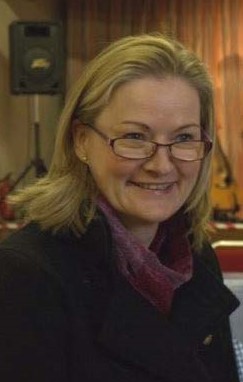
I gather that as well as Waspi and Waspi 2018 they have asked Joanne Welch, who ran BackTo60, to address a full meeting of the committee.
welcome news
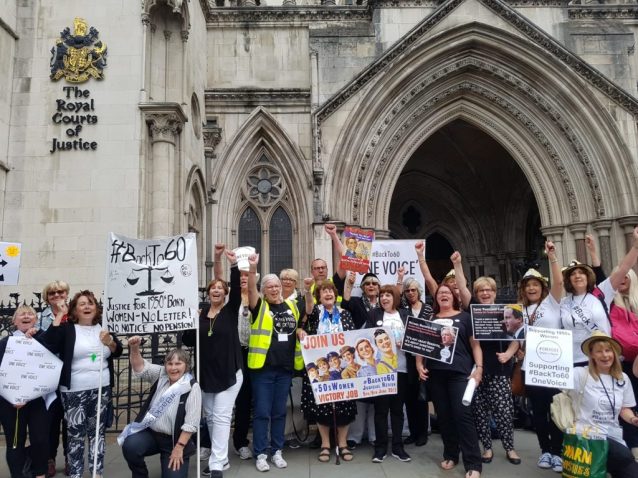
This is particularly welcome news as for years we had a ridiculous position of a major court case seeking a judicial review of the government’s handling of the issue running alongside complaints to the Parliamentary Ombudsman – with the former being ignored by this committee. The first dealt with the past inequalities that were enshrined by the legislation, the second with whether the Department for Work and Pensions was guilty of maladministration in handling it.
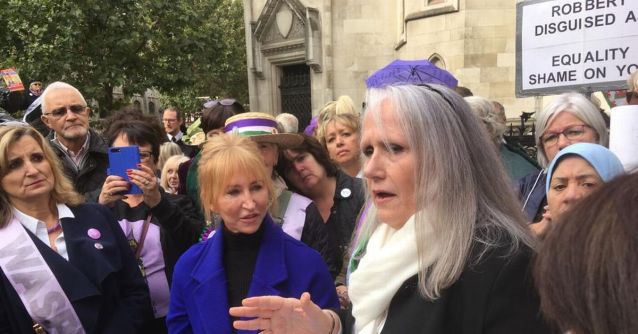
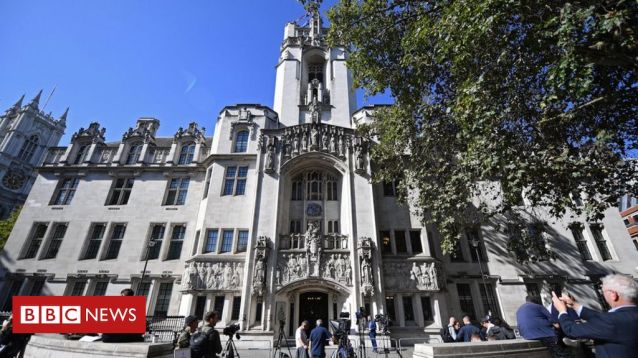
The first ultimately failed but the fact that it took place at all is due to a ruling by Mrs Justice Lang – a remarkably independent woman judge – who decided that it couldn’t have possibly been known in 1995 that the new act would cause such present hardship to a group of women born in the 1950s. She incidentally took an equally controversial decision to save at the eleventh hour from destruction Brandon Station on the Suffolk/ Norfolk border designed by the architect who supervised the stone carvings in the Houses of Parliament. See my blog here.
The great news is that MPs will now look at all proposals from full restitution to compensation, take account of what the Parliamentary Ombudsman finally says, and be able to present their views to ministers who have been extremely reluctant to award any money at all to the 50s women.
CEDAW People’s Tribunal
They have also acknowledged the link to CEDAW – the UN Convention on the Elimination of all Discrimination Against Women, ratified by Margaret Thatcher in 1986.
With a CEDAW People’s Tribunal due to be held from June 21 in London with the backing of lawyers from Garden Court Chambers – it also very likely that the plight of the 50swomen will form part of wide ranging submissions covering violence to women, unequal pay and job discrimination.
The other members of the committee are: Philippa Whitford, SNP MP for Central Ayrshire; Liz Saville Roberts, Plaid Cymru MP for Dwyfor Meirionnydd; Ruth Cadbury, Labour MP for Brentford and Isleworth; Jason McCartney, Conservative MP for Colne Valley; and Gavin Newlands ,SNP MP for Paisley and Renfrewshire North.







 Westminster Confidential