MP reignites Back to 60’s demand for “full restitution” for 3.8m 50s born women

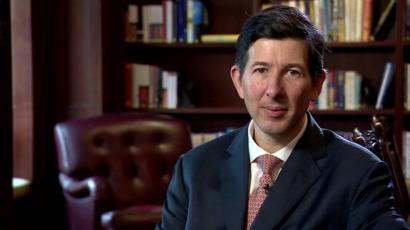
Ian Byrne MP

A Labour MP has tabled a fresh Parliamentary motion backing the case for women born in the 1950s to have repaid all the money they lost by the six year delay in receiving their pension. For some people this could be as high as £50,000.

Ian Byrne, Labour MP for Liverpool, West Derby, tabled the new motion this morning reigniting the issue which the government want dead and buried after the campaign group Back to 60 lost in the Court of Appeal and the Supreme Court refused to hear the case.

The full test of the motion is:

“That this House welcomes the positive interventions from so many hon. Members from across the House on behalf of women born in the 1950s who have lost their pensions; and pays tribute to constituents and campaigners in their ongoing fight for justice; recalls that women born in the 1950s were subject to discriminatory employment and pension laws; recognises that this included being excluded from some pensions schemes; recognises that this had the negative effect for them of losing the opportunity to have the same level of pension as their partner or spouse; further recognises that this has had the consequence of women in this position never being able to have equal pensions to men; further notes that this has negatively and profoundly impacted on them including increased poverty, deteriorating health and homelessness; notes that at least 3.8 million women have been impacted by the loss of their pensions from the age of 60 in three separate age hikes; and calls on the Government to enact a temporary special measure as permitted by international law to provide full restitution to women born in the 1950s who have lost their pensions from the age of 60 because of the impact of the rise in retirement age. “

50s women unjustly treated

While Parliamentary motions are rarely debated publication of this motion acts as a noticeboard to other MPs and ministers that there is a still a very strong feeling in Westminster that the women have been unjustly treated.

It is significant that the motion tells the government that there is a mechanism in Parliament that they can use to implement the change – known as the special temporary measure- which would lead to the women being paid quickly.

It comes at the time when through ill health and Covid 19 some 204,000 women have already died before they get their pensions.

It is also significant as it shows that there are MPs in Parliament who think that the state pension inequality for women all party parliamentary group does not go far enough in redressing the issue. This group, chaired by Labour MP Andrew Gwynne and Tory MP Peter Aldous, has submitted proposals to Robert Behrens, the Parliamentary Ombudsman, asking for him to offer a minimum of £10,000 compensation to the women. This proposal backed by WASPI has two drawbacks. First the Ombudsman has to agree and given his report only found partial maladministration between 1995 and 2010 he may decide not to agree such a high sum. And he has no power to force the government to accept his recommendations beyond shaming them.
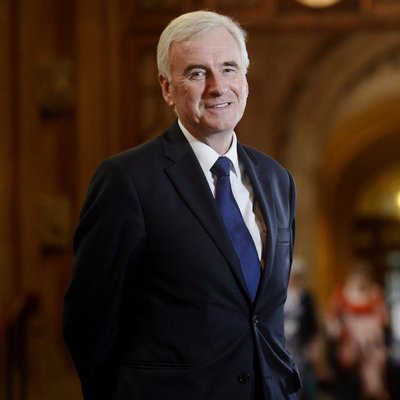
John McDonnell MP

This new motion is backed by 15 MPs including John McDonnell, the former shadow chancellor, and Jeremy Corbyn, the former Labour leader. It is perhaps rather ironic that if Labour had won the last general election compensation might have already agreed as John McDonnell promised a £58 billion pay out to correct the injustice.

Other MPs backing the move include Jim Shannon, the DUP social care and health spokesman, and Labour MPs, Kim Johnson, Beth Winter, Bell Ribeiro-Addy, Zarah Sultana, Ian Mearns, Kate Osborne. Nadia Whittome, Grahame Morris, and Jon Trickett.

Jon Trickett has linked his support to his local Waspi group, showing that they favour full restitution.

The motion also has the support of Wera Hobhouse, Lib Dem spokesperson for Justice and women and equalities, and independent MP Claudia Webb.
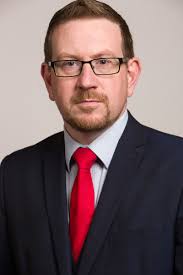
Andrew Gwynne MP, joint chair of the state pension inequality for women APPG

UPDATE: Andrew Gwynne, Labour MP and joint chair of the APPG state pension inequality for women, told BackTo 60, he had no objection to MPs from his group signing Ian Byrne’s motion.

He said” I see no conflict between it and the APPG’s submission to the PHSO.”

Nine more MPs have signed the motion including five SNP MPs, Chris Stephens, Glasgow South West; Allan Dorans, Ayr, Carrick and Cumnock and Deidre Brock, Edinburgh North and Leith, Amy Callaghan, East Dumbartonshire and Chris Law, Dundee West. The other three MPs are Labour and SDLP – Dan Carden, Liverpool Walton; Ian Lavery, Wansbeck and Aspana Begum, Poplar and Limehouse, Barry Sheerman, Huddersfield; Sir George Howarth, Knowsley, and Hannah Claire, Belfast South.

In another development the Pensions Reform Alliance and Waspi have said they do not want 50swomen to get full restitution. Members of the Alliance put out misleading information that this Parliamentary motion would somehow influence Robert Behrens, the Parliamentary Ombudsman, from recommending compensation for the 3.8 million women. This is complete nonsense as it would not impinge on anything the Parliamentary Ombudsman would recommend and MPs are entitled to express their opinions.

Please donate to my blog to allow me to continue my forensic investigations

One-Time
Monthly
Yearly

Make a one-time donation

Make a monthly donation

Make a yearly donation

Choose an amount

£5.00
£10.00
£20.00
£3.00
£9.00
£60.00
£3.00
£9.00
£60.00

Or enter a custom amount

£

Your contribution is appreciated.

Your contribution is appreciated.

Your contribution is appreciated.

DonateDonate monthlyDonate yearly

Please donate to westminster Confidential

£10.00

MPs demand full restitution for all pensioners hit by “shambles” of underpayments to over 134,000 people

A truly damning report by MPs on the Commons Public Accounts Committee today castigates the Department for Work and Pensions for running an “unfit for purpose” system to pay pensions to more than 12 million people.

The scandal of 134,000 pensioners being underpaid by around £1 billion dates back over 37 years and a number have already died before they could receive the money. The MPs say: “The errors happened because of the Department’s use of outdated systems and heavily manual processing, coupled with complacency in monitoring errors and a quality assurance framework that is not fit for purpose.”

The report says: “Managing Public Money requires Departments who make mistakes to put them right and restore people as far as possible to the situation they would have been in had the error not occurred. However, the Department is seeking only to pay people their legal entitlement in arrears, in some cases many years after the event, and has treated people inconsistently in paying interest on their arrears.”

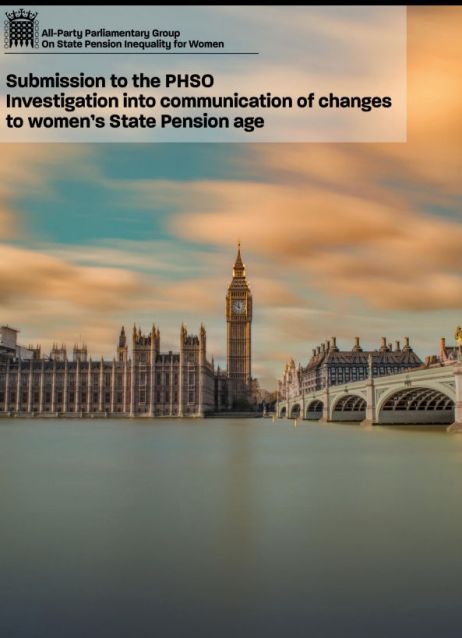
The APPG report sent to Rob Behrens, the Parliamentary Ombudsman

Meanwhile another report from the All Party Parliamentary Group On State Pension Equality for Women submitted to Rob Behrens, the Parliamentary Ombudsman, on behalf of 3.8 million women who have faced delays of up to six years before receiving their pension falls short of asking for full restitution for the women.

Instead it is asking the Parliamentary Ombudsman to recommend that the women should receive a minimum of £10,000 each because of heartrending stories of poverty and hardship.

“Women have had their emotional, physical, and mental circumstances totally obliterated by a lack of reasonable notice. These impacts must be addressed, if we are to reach any kind of conclusion regarding this injustice”, it says.

The proposal is far better than the unspecified figure by the same committee prior to the 2019 election but falls substantially short for people who have lost £40,000 to £50,000 by the DWP refusing to entertain any payment at all.

The Public Accounts Committee report on the pensions underpayments is unflinching in its criticism of the DWP. It points out that 40,000 of those owed money are now dead adding:”94,000 pensioners are estimated to be alive, which represents approximately 0.9% of those currently claiming the pre-2016 basic State Pension.

These official errors affect pensioners who first claimed State Pension before April 2016 and who do not have a full National Insurance record or who should have inherited additional entitlement from their deceased partner.

90 per cent of the people hit by underpayments are women

Around 90% of the pensioners underpaid are women because of the types of State Pension claim affected. The Department does not expect to trace over 15,000 of the affected pensioners or their next of kin where the pensioner is deceased. On average, the Department estimates that the approximately 118,000 pensioners it can trace could receive payments averaging around £8,900 by the time the payments are made. So far, the Department has found underpayments of between £0.01 and £128,448.37.”

The report goes on:” The Department has not given people who are worried they have been underpaid enough information to find out what they should do, with the risk that many may still miss out on money they should receive.

” The Department’s communications strategy is to only contact those who it finds have been underpaid under the State Pension regulations. Other groups of pensioners can receive arrears if they make
a claim for additional entitlements to the Department, but the Department has provided very little information on which pensioners should do so.”

The report also points out that by repaying the money as a lump sum people means it could affect other benefits – such as entitlement to pension credit and social care payments. The DWP ignores doing anything about this.

Dame Meg Hillier, chair of the PAC, said: “In reality DWP can never make up what people have actually lost, over decades, and in many cases it’s not even trying.

Both the latest reports are damning for the Department and show up the disdain the ministry has for elderly people. The Public Accounts Committee report is the most damning as it suggests that the ministry is breaking Treasury guidelines on managing public money correctly by not taking comprehensive action to restore the rights of people – nearly all women – to get cash they are entitled to receive.

Please donate to my blog to help me continue my forensic investigations.

One-Time
Monthly
Yearly

Make a one-time donation

Make a monthly donation

Make a yearly donation

Choose an amount

£5.00
£10.00
£20.00
£3.00
£9.00
£60.00
£3.00
£9.00
£60.00

Or enter a custom amount

£

Your contribution is appreciated.

Your contribution is appreciated.

Your contribution is appreciated.

DonateDonate monthlyDonate yearly


Please donate to Westminster Confidential

£10.00
Why I am backing a women’s Bill of Rights

Last night I did a live stream video for CEDAWinLAW explaining why I am supporting their campaign for a new Women’s Rights Bill to implement properly the UN Convention for the Elimination of all forms of Discrimination against Women which Margaret Thatcher ratified in 1986.

Despite this happening 36 years ago it has still not been properly implemented by the government causing widespread hardship, discrimination and lack of opportunity for millions of women. Recently the UN committee supervising the implementation of the convention has taken the current government to task for its failings though you would not know this from coverage in the mass media.

This to my mind illustrates how marginalised women – particularly elderly and middle aged women – are treated by society.

The good news is that it looks like the Scottish government under Nicola Sturgeon, the Scottish National Party leader, is planning to introduce a new bill of rights for women. She may run into a dispute with the Westminster government which does not want devolved administrations implementing UN conventions until the UK government introduced legislation. At the moment there is no sign of the UK government doing this which is why we need a strong and powerful campaign to get it done.

Please donate to my blog to help me continue my forensic investigations into issues of the day.

One-Time
Monthly
Yearly

Make a one-time donation

Make a monthly donation

Make a yearly donation

Choose an amount

£5.00
£10.00
£20.00
£3.00
£9.00
£60.00
£3.00
£9.00
£60.00

Or enter a custom amount

£

Your contribution is appreciated.

Your contribution is appreciated.

Your contribution is appreciated.

DonateDonate monthlyDonate yearly

donate to Westminster Confidential

£10.00
My blog in 2021: The year the number of hits reached three million

London fireworks ushering in the New Year. Pic credit: BBC

Happy New Year to all my readers and followers.

This year my blog hit another milestone since it was launched in 2009 after I left the Guardian . The number of hits on the site topped three million – 3,113, 413 to be exact.

Last year this blog received 286,840 hits and over 203,000 visitors. This is smaller than the previous year but still a substantial number for a single handed blog. It is also the year when I started to solicit donations for my investigative work and I have now received close to £2000 in four months.

Part of the reason for the drop is that Back to 60 campaign which I still support has now morphed into a broader campaign – CEDAWinLAW- which people have needed time to get their heads round. Back to 60 was a simple single issue campaign concentrating on getting full restitution for 3.8 million 50s born women who have had to wait up to six years for their pension. Now it has changed into a much bigger campaign covering ALL discrimination against women based on a UN convention which we ratified in 1986 but have never fully implemented- the UN Convention on Eliminating All forms of Discrimination Against Women.

CEDAW tribunal last year attracted a lot of interest

This is now making its mark – two of my highest blogs hits last year- relate to the new CEDAW campaign getting 6500 and over 8,800 each.

The top blog came from a tip off from a reader, Rosie Brocklehurst, who received a threatening letter from the Department for Work and Pensions as part of an anti-fraud exercise to gather information from pensioners. The top line was : ““If you fail to be available for this review and do not contact me, your entitlement to State Pension may be in doubt and your payments may be stopped. ( Bold type my emphasis). This had 25,652 hits.

The second highest at 20,643 came from a 50s woman whose Freedom of Information request revealed the Department for Work and Pensions had never conducted an impact assessment on the effects of raising the pension age for women from 60 to 66.

One older blog which exposed the huge £271 billion savings made by successive governments putting money into the national insurance fund made the top ten blogs – adding another 9828 hits – taking it to an astonishing 331,000 hits since it was published.

Rob Behrens – Parliamentary Ombudsman. His report findings leaked.

One controversial blog leaking the maladministration findings of the Parliamentary Ombudsman’s draft report on 50s women over the raising of the pension age had 9,688 hits. Senior members of the WASPI campaign who knew this wanted me to take it down for fear the Ombudsman would change his mind. This turned out to be groundless and a lot of people were given advance warning.

More next year on Whistleblowers

Next year as well as following through CEDAW, keeping an eye on pension developments, I will also be taking up more and more whistleblower cases -involving doctors in the NHS, Sellafield and other areas. One case I took up last year was the plight of Dr Usha Prasad, a cardiologist who has been dismissed by Epsom and St Helier University Health Trust after exposing an avoidable death there. The combined blogs in her case have topped over 8000 hits. Expect more of this.

Global reach of the blog

An analysis by WordPress shows that my blog has a very big UK audience – over 264,000 hits out of the 286,840 last year – with the remaining 22.700 coming from overseas. Biggest overseas hits were from the United States ( 6821), Spain (3071) and the Republic of Ireland ( 2143). But on a much smaller scale it also has a global reach covering almost every country in the world, including hits from the Marshall Islands, Greenland, Russia, China, India, Mauritius and nearly every country in South America, Asia and Africa plus Canada, Australia and New Zealand and the whole of Europe.

Next year will be challenging – I already have enough new stories to investigate -plus a some long term investigations which take a while to come to fruition. Please continue to donate to my blog to keep my investigations going.

One-Time
Monthly
Yearly

Make a one-time donation

Make a monthly donation

Make a yearly donation

Choose an amount

£5.00
£10.00
£20.00
£3.00
£9.00
£60.00
£3.00
£9.00
£60.00

Or enter a custom amount

£

Your contribution is appreciated.

Your contribution is appreciated.

Your contribution is appreciated.

DonateDonate monthlyDonate yearly

Please donate to Westminster Confidential

£10.00
New rip off scandal by the Treasury could lead to hundreds of thousands of young mothers and grandparents without a full state pension

George Osborne speaking at the 2013 Global Investment Conference where he boasted of the savings he made by raising the pension age

The government is once again going to save hundreds of millions of pounds in future pensions bills by keeping young mothers and caring grandparents ignorant of the consequences of a law change that came into force when George Osborne was Chancellor of the Exchequer.

For once the Department of Works and Pensions is not behind these savings. Instead it is HM Treasury via HM Revenue and Customs. And the way the government is getting away with this would not be obvious to anyone unless they had an encyclopedic knowledge of social security regulations.

When a young mother is giving birth to a new born probably the last thing on her mind is whether she will get a decent pension. Yet laws introduced in 2013 which reformed and effectively ended child benefit as a universal benefit have had an extraordinary hidden knock on effect on individual pensions that will be paid out in 40 to 50 years time. It also hit home much earlier for caring grandparents who took on child care responsibilities – the very group of 50s women who have already lost tens of thousands of pounds by the raising of the pension age from 60 to 66.

The law change introduced by George Osborne after his 2012 budget was to stop paying child benefit to people whose individual income exceeded £50,000-£59,000. Those who were already receiving child benefit and didn’t know about the change or didn’t tell the Inland Revenue were hit with stiff fines.

As a result mothers who were aware of this widely advertised change didn’t put in a claim. What they didn’t realise is without a claim for a benefit that would be denied – they would also lose their national insurance credits while they brought up a young family. This can make a huge difference to the amount of state pension they can claim decades later.

There was a double whammy in all this which hits home much sooner. Grandparents and other close relatives who were happy to help with childcare for a struggling young family are entitled to additional credits on their final pension called Specified Adult Childcare Credits. But if their daughters haven’t registered for child benefit they get nothing.

Both groups get nothing

If either group suddenly finds this out all they are entitled to is just three months national insurance credits- even if it is years in arrears.

Now if you think this all sounds rather fanciful all this information is taken from a bundle of documents prepared for an appeal to a tribunal to take place next year. The case is being bought by grandparent Judy Lynch from Harrow in north London, a woman born in the 1950s who has already lost £40,000 in back pension by the raising of the pension age from 60 to 66 and stands to lose another £800 a year from this law change. Her NI credits were five years short of getting a full pension. Her case was highlighted in The Times by journalist David Byers recently.

She has written to the tribunal to tell them her daughter did not claim child benefit in 2016 precisely because she knew she would not get it. But the form contains no information that she would lose national insurance credits towards her pension nor has she ever received a letter telling her the consequences of her decision. Nor is it made clear that if grandparents helped her with the childcare that they would not be able to claim additional national insurance credits.

George Osborne has managed to get away with this for at least six years before MPs in a Westminster Hall debate in the Commons caught up with it. When they did the then financial secretary of the Treasury came in for strong criticism from all parties including a Tory backbencher, Craig Mackinley. He attacked the system.

He said: “There is no withdrawal of child benefit for a couple both earning £50,000—the high income child benefit tax charge does not apply, even though the family income is a generous £100,000. In another family, in which only one parent is working and earning, say, £60,000, and the other is not working, there would be a full claw-back of the child benefit given.”

Alison Thewliss, SNP MP for Glasgow Central

The severest critic was Alison Thewliss, SNP MP for Glasgow Central : “Organisations such as the Women’s Budget Group have long argued that the UK Government’s approach to balancing the books is gendered and does not stand up to the most rudimental scrutiny from an equality perspective. This policy is a key example of that. Budgets and spending reviews come and go, but we are yet to see any real strategic direction in tackling gender inequality.”

“The notion that a woman has to know her partner’s intimate financial details is quite unusual. My husband and I have separate bank accounts. I have no idea what he earns, but I was expected to phone up and give intimate details to someone over the phone. That will be all the more difficult for a woman in a situation of financial coercive control, and it will give the male parent a huge amount of control.”

Anneliese Dodds, then Labour’s shadow Treasury spokesperson said:” New research on the high-income child benefit charge indicates that much larger numbers of people are being drawn into the system than were initially. The Institute for Fiscal Studies indicated that since the £50,000 threshold has not shifted upwards, about 36% more people— 370,000 more families— will lose child benefit in 2019-20 than in 2013-14.”
The government of course denied that it was targeting women again.

Jesse Norman said: “The hon. Member for Glasgow Central said that the charge is a gendered policy. I do not think that is true at all, and many other aspects of Government policy do not reflect anything like that position, as she will be aware. For example, there is extensive work in supporting women as entrepreneurs and women in business.”

Liz Truss the women’s and equalities minister

More recently, Liz Truss, who is also women’s and equalities minster, has backed this up claiming that women affected have plenty of time to make up lost national insurance credits to get a full pension.

There is one other twist to this story. The government has part privatised the handing out of child benefit forms to a private company, Bounty Joy Ltd. This firm gives out vouchers to women in maternity wards and child benefit claim forms. The firm has one director Alan Chan, a Canadian resident in the United States. He has a correspondence address in Stevenage, Hertfordshire and employs 19 people to cover England. The company has yet to produce a single account. I think this may have to be the subject of another investigation.

In the meantime lots of people are having to put up with yet another sleight of hand by Conservative ministers so they can hide savings. Again women are the main losers. And George Osborne has form on this. After all it was he who boasted in 2013 at a global finance conference talking about the raising of the pension age :“I’ve found it one of the less controversial things we’ve done and probably saved more money than anything else we’ve done.”

Gareth Thomas MP : condemned the government over this

Gareth Thomas Labour MP for Harrow West and her local MP, who has already written to HMRC and the DWP about this and now intends to raise the issue again in Parliament. He described the revelations about the arrangements as ” scandalous” for both young mothers and grandmothers also condemning the privatisation of benefit advice to young mothers when they are ” at their most vulnerable.”

He attacked the government’s decision not to disclose to people that could lose national insurance credits by not applying for child benefit in the forms available at hospitals and is to press ministers to change the policy on this and the system which means mothers and grandmothers can’t get back most of the credits if they later find out.

Please donate to my blog to continue my forensic investigations

One-Time
Monthly
Yearly

Make a one-time donation

Make a monthly donation

Make a yearly donation

Choose an amount

£5.00
£10.00
£20.00
£3.00
£9.00
£60.00
£3.00
£9.00
£60.00

Or enter a custom amount

£

Your contribution is appreciated.

Your contribution is appreciated.

Your contribution is appreciated.

DonateDonate monthlyDonate yearly

donate to westminster confidential

£10.00

Exclusive: United Nations slams the UK for failing to properly implement the convention signed by Mrs Thatcher to eliminate all discrimination against women

The UN committee monitoring progress by the UK to implement the UN Convention to end all forms of discrimination against women and girls (CEDAW) ratified by Margaret Thatcher in 1986 has severely criticised the foot dragging by the British government under Boris Johnson to fully implement it.

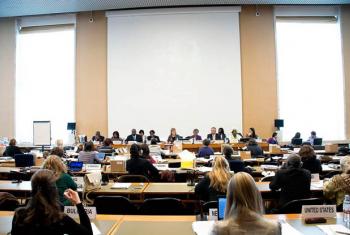
CEDAW in session; Pic Credit UN News

In a strongly worded report the Geneva based organisation “recommends that the State party incorporate all the provisions of the Convention into its legislation without further delay to ensure that the rights of women are guaranteed systematically and on an equal footing throughout all territories under its jurisdiction, including Northern Ireland.

It also recommends that the State party, in accordance with its obligations under the Convention, take proactive measures to ensure that the Convention is given effect in all of its overseas territories and Crown dependencies”.

The damning criticism comes after 35 years of delay by successive UK governments to properly implement a convention which the country signed up to years ago.

The committee’s findings sharply differentiate between the foot dragging actions of the UK government under Boris Johnson and the progress promised by the Welsh and Scottish governments. It is also pleased that Jersey has decided to implement the convention.

It says; “The Committee takes note that the Welsh Government commissioned research on how to foster equality and human rights in Wales, including through the incorporation of the Convention, and the new Programme for Government for 2021 to 2026 confirms the Government’s commitment to incorporate the Convention into Welsh law.

“The Committee also welcomes that the Scottish Government’s commitment to incorporate the Convention through a new Human rights Bill following the recommendation by the National Taskforce for Human Rights Leadership. Further, the Committee welcomes that the Convention has been extended to the Crown Dependency of the Bailiwick of Jersey in 2021.”

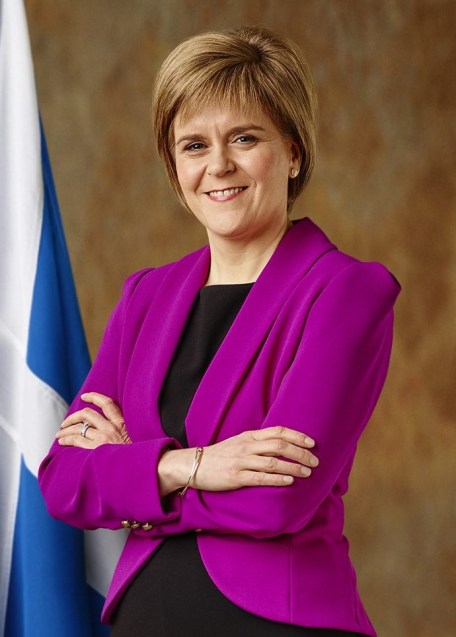
Official picture of Nicola Sturgeon who is pushing to implement CEDAW in full

The decision will place pressure on Johnson’s government which has been antagonistic to Scotland and Wales implementing UN human rights conventions – witnessed by Johnson successfully going to the Supreme Court to block Nicola Sturgeon, the Scottish leader, from legislating to cover all parts of the UN Convention on the Rights of Child.

At the heart of the matter is that successive governments have not gone far enough in equality and human rights legislation to implement the convention.

It says: “the Committee deeply regrets that the State party has not taken necessary measures within its jurisdiction, including in Northern Ireland, to incorporate all the provisions of the Convention into its legislation despite the fact that the Equality Act 2010 and the Human Rights Act 1998 do not give the full effect of the Convention. The Committee also remains concerned that the Convention has not been extended to all of its Overseas Territories and Crown Dependencies, including the Crown Dependency of the Bailiwick of Guernsey.”

It calls in particular for an “over arching strategy ” to implement women’s rights.

The CEDAW tribunal logo- where people earlier this year pressed for full rights for all women and girls

It says the UK must “Develop, without further delay, a unified and overarching national strategy for the incorporation of all the provisions of the Convention into its national legislation throughout its jurisdiction (including Northern Ireland) as well as its Overseas Territories and the Crown Dependencies (including the Crown Dependency of the Bailiwick of Guernsey), and take all necessary measures for the implementation thereof.”
It also critical of the UK government’s failure to make a proper post Brexit impact study on women’s rights”

Action called to tackle women’s rights post Brexit

It says the UK must “undertake a thorough impact assessment of its withdrawal from the European Union on the rights of women, including women in Northern Ireland, and adopt effective measures to mitigate the negative effects.”

The report goes on to urge the government to “consider establishing a national oversight mechanism to coordinate and monitor the implementation of the Convention, with the effective participation of its national human rights institutions and women’s organizations”.

It says the recent establishment of an equality hub in the Cabinet Office is not good enough.

It expresses its concern”that the Government Equalities Office nor the Equality Hub specifically target the rights of women protected under the Convention, nor do they address the State party’s implementation of the Committee’s recommendations. Also, the Committee regrets that the State party has yet taken any actions to establish a national oversight mechanism in reviewing and implementing the Convention.”

This is a pretty damning conclusion by the UN about the state of women’s rights in this country. To campaigners like Jocelynne Scutt, president of CEDAWinlaw , it pinpoints exactly what they have been saying is missing in UK law – no overarching rights for women which could transform the situation on equal pay , pensions, job rights, protection from violence and could also have changed decisions taken in our courts. This will be a real test on whether Boris Johnson believes in real equality for women or just sticks to warm words.

Please donate to Westminster Confidential to allow me to continue my investigative reporting into vital issues of the day

One-Time
Monthly
Yearly

Make a one-time donation

Make a monthly donation

Make a yearly donation

Choose an amount

£5.00
£10.00
£20.00
£3.00
£9.00
£60.00
£3.00
£9.00
£60.00

Or enter a custom amount

£

Your contribution is appreciated.

Your contribution is appreciated.

Your contribution is appreciated.

DonateDonate monthlyDonate yearly

please donate to westminster confidential

£10.00

UK intends to ratify new international convention outlawing violence and harassment at work

Step will strengthen rights for women and men facing bullies and workplace sexual harassment

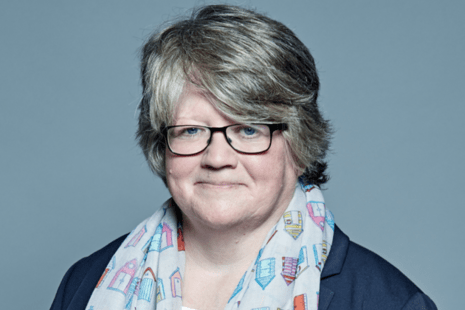
Almost unnoticed and surprising announcement from Therese Coffey

Unless any MP objects next month the UK government will start drawing up a submission to the International Labour Organisation to ratify a new convention outlawing violence and harassment at work.

The announcement hardly noticed by anyone was made by Therese Coffey, the work and pensions secretary, in a written answer to Parliament this month. MPs were told if there were no objections within 21 days a ratification submission to the ILO will be drawn up and it will come into force a year later. This will make the UK the tenth nation in the world to ratify this convention and it is the culmination of two years of work following an initiative started under Theresa May when she was PM.

Rare case of political unity

In a rare case of unity in the present polarised world that characterises the UK, the action has all party backing. It has the support of the Westminster Tory government, the Welsh Labour government, the Scottish National and Green Government and the Democratic Unionist Party and Sinn Fein Northern Ireland government. It is supported by both the CBI and the TUC and has the strong support of many international NGOs, women’s groups, Care International and the human rights organisations like Amnesty International.

The convention took time to draw up and it is – for an exclusively work orientated convention – remarkably inclusive..

Stephen Russell, policy officer at the TUC, says the convention itself is very broad based and also through ILO procedures means the UK will have to produce reports every two years on how it is being implemented.

The convention covers “persons working irrespective of their contractual status, persons in training, including interns and apprentices, workers whose employment has been terminated, volunteers, jobseekers and job applicants, and individuals exercising the authority, duties or responsibilities of an employer.”

It is also covers not just the workplace but also work related trips, accommodation provided by employers, harassment on social media, office parties and other work related social activities and commuting from home to work.

Amanda Brown

According to the TUC and the government the UK had a big role in drawing up the scope of the convention. One of the leading figures was Amanda Brown, deputy general secretary of the National Education Union , which represents teachers. She is on the governing body of the ILO and was on the committee that drew up the scope of the convention.

Therese Coffey said that the government already has the legal framework to meet the requirements of the convention in both criminal and civil law but proposed to go further following recent consultations on sexual harassment in the workplace.

She said she would introduce ” a new proactive duty requiring employers to take steps to prevent their employees from experiencing sexual harassment and introducing explicit protections for employees from harassment by third parties, for example customers and clients.”

The issue of sexual harassment and violence against women has been highlighted lately in the police and Parliament where one former Tory MP. Charles Elphicke, was jailed for assaulting a member of his staff, The House of Lords has also introduced compulsory training for peers after some were accused of harassing women, including Parliamentary staff.

Only Fiji and Uruguay have ratified this, Namibia is next

So far internationally only two countries, Fiji and Uruguay, have ratified it. Another seven countries are in the process of ratifying it, including Greece, Italy, Namibia, Somalia, Ecuador, Argentina and Mauritius. Namibia will ratify it from December 9.

While the UK has ratified four UN conventions covering the rights of the child, eliminating all forms of discrimination against women (CEDAW), racial discrimination, and the rights of the disabled, but has not introduced all encompassing laws to implement the conventions.

When Scotland tried to implement in full the ratified UN Convention on the Rights of the Child, Boris Johnson instructed lawyers to go to the Supreme Court to block the move and succeeded. Similarly the government is not keen on implementing CEDAW in full with a Women’s Rights Bill.

Jocelynne Stutt

Jocelynne Stutt, president and patron of CEDAW in Law, said:
” This is a step in the right direction but does not go far enough in sexual harassment cases. There is harassment of tenants by landlords, there is rampant harassment of students in education, and sexual harassment in the home. None of this is covered by the new convention and the UK has not ratified the Istanbul Convention which comprehensively covers sexual harassment and violence towards women.”

One-Time
Monthly
Yearly

Make a one-time donation

Make a monthly donation

Make a yearly donation

Choose an amount

£5.00
£10.00
£20.00
£3.00
£9.00
£60.00
£3.00
£9.00
£60.00

Or enter a custom amount

£

Your contribution is appreciated.

Your contribution is appreciated.

Your contribution is appreciated.

DonateDonate monthlyDonate yearly

Please donate to Westminster Confidential

£10.00
MPs vote to stop pensioners to get a big rise next April

Commons vote to throw out Lords case for a revised triple lock rise

Guy Opperman, pensions minister,” reckless to pay pensioners more”

The House of Commons last night voted down the Lords case for a higher pension rise next April with Guy Opperman, the pension minister, describing such a move as ” reckless” as there could be no robust figure to work out a compromise figure suggested by former Tory pensions minister Baroness Altmann. He boasted that the government were spending huge sums on pensions ” amounting to £129 billion this year”.

Full list of MPs who didn’t want pensioners to get a bigger rise below -all Tories

Baroness Altmann had argued for a higher figure than the government’s 3.1 per cent but below the 8.3 per cent rise in earnings if the government had kept the triple lock. This follows the latest estimates for inflation rising as high as 5 per cent by next April. The government won by 300 votes to 229 and by 299 to 53 to disagree with the Lords.

Full vote on pension uprating here. Those who were against any more money for pensioners included Sir Geoffrey Cox, who has made a £1m advising a tax haven, Alok Sharma, the president of Cop 26, Red Wall Tory, Ben Bradley for Mansfield and Lee Anderson, MP for Ashfield Bob Seely, Isle of Wight with a large pensioner population; millionaire Grant Shapps, the transport secretary; Scottish Tory leader, Douglas Ross; Peter Aldous, joint chair of the APPG on 50s women’s pensions and a clutch of Tories who won seats from Labour in the last general election. Two Tories rebelled and voted for the Lords uprating, Esther McVey, MP for Tatton and Derek Thomas, MP for St Ives. Derek Thomas it turns out voted against the government by mistake and then went into the government lobby. So he voted twice. Independents voting for the rise included former Labour leader, Jeremy Corbyn.

There were a lot of MPs who didn’t vote including Rishi Sunak, Boris Johnson and among Labour, Andrew Gwynne, joint chair of the APPG on 50s women’s pensions, Jack Dromey and Margaret Beckett.

The government was opposed by Labour, the Scottish National Party, the Liberal Democrats, the Green Party, the Alliance Party, the SDLP, and the Democratic Unionist Party. Only one Tory backbencher spoke to defend the government, Duncan Baker, the MP for Norfolk, North. Most Tory MPs stayed away from the debate.

Duncan Baker, Tory MP for Norfolk North. Claimed his large number of elderly pensioners accepted the logic of the need not to keep the triple lock this year.

He argued that his large number of elderly pensioner constituents understood the need not to increase pensions by 8.3 per cent because of the current financial situation. Jonathan Reynolds, Labour’s social security spokesman, supported the Lords move and rejected the government’s case -saying it was reasonable for the government to find a figure.

The strongest support came from John McDonnell, who argued the full triple lock of 8.3 per cent should be paid because of pensioner poverty, women being especially hit. ” Under the Lords amendment we are talking about giving pensioners an extra £2.75 a week – it is ridiculous that we are arguing against this. I would give them the full 8.3 per cent – worth £7 a week.”

Three Scottish MPs – two from the Scottish National Party David Linden and Patricia Linden – and Liberal Democrat Wendy Chamberlain argued against the government. Wendy Chamberlain said she had not received a single letter supporting the government abandoning the triple lock and many letters opposing the move.

Stephen Timms, Labour chair of the Commons works and pensions committee, challenged the government to make up the shortfall and was sceptical whether the government would abandon the triple lock next year ( Guy Opperman denied this) but even if not, it meant pensions would continue to fall behind wages.

Please donate to Westminster Confidential to allow me to continue my investigative reporting

One-Time
Monthly
Yearly

Make a one-time donation

Make a monthly donation

Make a yearly donation

Choose an amount

£5.00
£10.00
£20.00
£3.00
£9.00
£60.00
£3.00
£9.00
£60.00

Or enter a custom amount

£

Your contribution is appreciated.

Your contribution is appreciated.

Your contribution is appreciated.

DonateDonate monthlyDonate yearly

please donate to Westminster Confidential

£10.00
Exclusive: Benefits watchdog wants tougher punishment for jobless and disabled claimants after DWP bungles new sanctions system

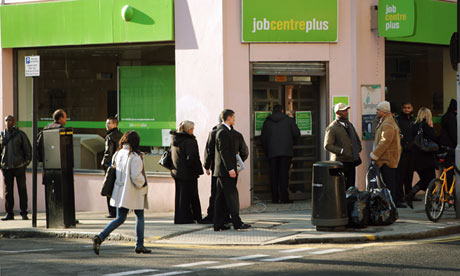
New sanctions to be imposed in Jobcentres

From November 3 the Department for Work and Pensions introduced a new tough regime for people claiming the new Jobseekers Allowance and the Employment and Support Allowance. They will like those already on Universal Credit have to sign up to a ” claimant commitment ” to undertake whatever work coaches at the DWP demand from them to get a job, Failure to do so leads to a rising number of financial penalties ultimately leading to the withdrawal of all benefits.

The new regulations like the ones dealing with domestic abuse should have been scrutinised by Parliament but the main body that vets them is the little known Social Security Advisory Committee,(SSAC) a watchdog which is expected to see whether the benefit regime is fair and equitable.

Minutes and correspondence released by SSAC show that it has been doing its job since September and is currently involved in discussing the new regulations with Mims Davies, the employment minister.

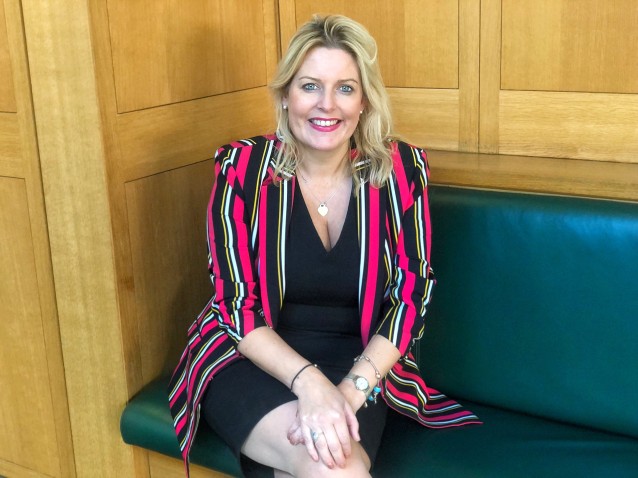
Mim Davies, Parliamentary undersecretary at the Department for Work and Pensions

But people might be surprised to know that SSAC’s main focus has been on increasing the penalties on claimants rather than reducing them.

The reason is that the watchdog spotted that the tabled regulations had a big loophole which, in their view, made them less effective. The hideously complicated benefit system means that there are people who claim both Universal Credit and Jobseekers Allowance or the Employment and Support Allowance. Where they claim both the new regulations say only one penalty can apply on Universal Credit alone – and the Jobseekers Allowance and the Employment and Support Allowance remain untouched.

SSAC want the penalties to apply to both.

Dr Stephen Brien

Dr Stephen Brien, the chair of SSAC wrote to the minister: “in circumstances where the value of UC element of the benefit was lower than the sanctioned amount, the claimant would be in a more favourable position than a claimant solely in receipt of either UC or a new style benefit who would be impacted by the full force of the sanction. As it is possible that the UC element of a dual claim
could be zero, this presents a significant inconsistency.”

He went on: ” the Committee is of the strong view that this inconsistency be reviewed and addressed at the earliest opportunity.” The ministry went ahead with regulations as they stand and is still discussing what it should do while it looks at the effectiveness of the new sanctions.

Since the sanctions system depends on the views of the DWP work coach it looks like the fate of many claimants will decided by individual civil servants. Now it so happens that SSAC has done some serious work on the ” claimant commitment ” rules under Universal Credit which decide whether sanctions will be applied.

The report two years ago is a somewhat idealistic document which expects a parity of esteem between the civil servant handing out the sanction and a desperate claimant getting the benefit. It says the commitment should be accessible, clear, tailored to the claimant’s needs and the state of the local labour market, and agreed by both the claimant and the DWP. It also says claimants should be properly informed.

Real world not the same as the idealistic picture of claimant commitment

However in the real world SSAC found it was pretty mixed picture. It found some good practice but also examples of lone parents not being informed of their right to reduced work searches, re-assessment interviews lasting just ten minutes and “not all work coaches are using discretion fairly or reasonably and opt for generic, rather than tailored, actions. We saw examples of work coaches copying and pasting actions from a shared document which had become standard in their local Jobcentre.”

As usual the DWP itself didn’t seem to have an overall picture of what was happening as it couldn’t be bothered to put together a national picture. So it is rather strange that the present SSAC committee is concentrating on punitive measures. Or is it?

The present committee under Stephen Brien, who worked for Iain Duncan Smith’s Centre for Policy Studies and now works for the United Arab Emirates funded Legatum Institute is more inclined to want to correct inefficiency in the DWP than to take tough action over the welfare of claimants.

What is deeply worrying is that many claimants – particularly more elderly disabled claimants now looking for work in their 60s and suffering poor health could get some very harsh treatment. They might be lucky and get a really sympathetic work coach or they could be landed with a jobsworth or worse a power maniac who enjoys putting the disadvantaged down. Will SSAC be bothered? Documents referred to in this article can be found on the SSAC website here.

Please donate to my site to keep up my forensic monitoring of Westminster and Whitehall.

One-Time
Monthly
Yearly

Make a one-time donation

Make a monthly donation

Make a yearly donation

Choose an amount

£5.00
£10.00
£20.00
£3.00
£9.00
£60.00
£3.00
£9.00
£60.00

Or enter a custom amount

£

Your contribution is appreciated.

Your contribution is appreciated.

Your contribution is appreciated.

DonateDonate monthlyDonate yearly

please donate to Westminster Confidential

PLN 10.00

Lords reveals 12 million pensioners lose £30 billion as rebel peers defeat government over scrapping the triple lock

But deputy speaker stops Lord Sikka’s” full restitution” amendment going to a vote

Baroness Stedman-Scott Defeated in the Lords

The government were roundly defeated in the Lords – by 220 votes to 178 – yesterday over its plans to abolish the triple lock for next year’s pension rise – reducing the up rating for pensioners from 8.1 per cent to 3.1 per cent.

The loss of cash for pensioners in the next five years is enormous. They lose a share of £5.4 billon next year, £5.78 billion in 2023-24, £6.1 billion in 2024-25, £6.5 billion in 2025-26 and £6.7 billion in 2026-27. That amounts as Lord Sikka told peers to £30.5 billion removed from pensioners’ pockets over the next five years.

What happened yesterday in the Lords were two separate approaches to challenging the government’s decision to end for next year the link between pensions and earnings.

Baroness Ros Altmann

The first which was successful was put forward by Baroness Ros Altmann, a former Tory pensions minister, in a series of amendments. She had the support of Labour’s Baroness Sherlock, a former special adviser to Gordon Brown and an ordained priest at Durham Cathedral; Baroness Janke, a Liberal Democrat peer and former leader of Bristol council; and Baroness Boycott, a crossbench peer, feminist and former editor of the Independent newspaper.

It was one of these amendments that led to the defeat of the government in the Lords. This particular amendment had the support of former Labour Cabinet minister, Baron Hain, Liberal Democrat baroness Janke and crossbencher (and ex Conservative) Baroness Wheatcroft former editor of the Sunday Telegraph.

Basically the amendment challenged the government’s calculation of the rise in earnings at 8.1 or 8.3 per cent and wanted a new calculation stripping out the effect of the pandemic. Lady Altmann initially had put this at 3.8 per cent but yesterday suggested it could be as high as five per cent and then suggested she was had no firm figure. This particular approach had the support of Labour.

The official wording maintained the link with “earnings obtaining in Great Britain, as adjusted to take account of the exceptional impact of the COVID-19 pandemic on the level of earnings”.

She told peers: ” after seeing alcohol and fuel duty cut in the Budget and the bank surcharge allowance raised, and adding up the amount of Exchequer savings that those measures entail, half the cost of not honouring the triple lock will cover the costs of just those three measures. I appeal to noble Lords across the House: is this really the country that we believe that we should be living in? Is that the priority for public spending?”

The key point about this amendment is that it does not restore the full 8.1 per cent to pensioners and it leaves the government to decide if it wants to – the new earnings rate.

Baroness Stedman Scott, the DWP Lords minister, did not sound convinced. Referring to a blog on the Office for National Statistics site she said “Using a range of possible estimates based on a method that cannot be agreed on does not provide a sufficiently robust basis for making critical decisions about billions of pounds-worth of expenditure.”

Prem Sikka

The second more radical approach came from Prem Sikka, Lord Sikka. He was backed by Baroness Bennett, Natalie Bennett the former Green leader; Baron Davies of Brixton – Bryn Davies- a former Labour union leader; Baroness Blower, Labour and former general secretary of the National Union of Teachers and Lord Hendy, Labour, a barrister and labour law expert. Lord Sikka told them the government’s measure “is also contrary to the Government’s levelling-up agenda. Rather than levelling up, it impoverishes citizens and condemns millions of current and future retirees to a life of poverty and misery. There is no moral or economic rationale for this; indeed, none has been offered by any Minister so far.

“The Government’s own statistics, published on 3 September 2021, say that the average weekly pre-2016 state pension is £169.21 for males, £141.98 for females, and the overall mean is £155.08. The average weekly post-2016 pension is £166.34 for males, £160.11 for females, and the overall average is £164.23. As we can see from these figures, women are especially impoverished by the way that pensions are calculated and paid. They will be hit even harder by the abandonment or, as the Minister might say, the temporary suspension of the triple lock.”

….”Low pensions condemn our citizens to a life of misery. Some 1.3 million retirees are affected by malnutrition or undernutrition. Around 25,000 older people die each year due to cold weather, and we will no doubt hear the grim statistics for this year, possibly on 26 November when the next numbers are out. Despite the triple lock, the proportion of elderly people living in severe poverty in the UK is five times what it was in 1986, which is the largest increase among major western countries. Some 2.1 million pensioners live in poverty, and the poverty rate has actually increased since 2012-13.”

Baroness Fookes : Blocked official vote

Then extraordinarily Baroness Fookes, a Tory peer who was a deputy speaker, blocked a vote on Lord Sikka’s amendment leading Lord Sikka to say he was cheated. She argued that his opponents had made more noise than his supporters to justify the decision.

If this amendment had been passed it would have allowed pensioners to get the full uprating of 8.1 per cent but would have wrecked the bill. Labour did not support this and would have abstained. A spokesman for the Labour Whip’s office explained:”Prem’s amendment was not in line with the Lords’ constitutional position, in that it would wreck the core purpose of a bill that the Commons had already voted to support.

There was all party support however for a full impact study into pensioner poverty after peers from all sides had expressed concern about the plight of pensioners this winter and the DWP minister promised this when faced with possibility of yet another Lords revolt.. There was also a promise from the minister for a detailed explanation of the national insurance fund – which appears to have a £37 billion surplus which the government says cannot be used to pay for keeping the triple lock.

What is clear is that Rishi Sunak, the Chancellor, has been silent about this surplus in all the documents he produced to accompany the Budget. If it turns out that it has been used secretly to repay government debt I suspect there will be an all mighty row as 12 million pensioners will feel they have been cheated yet again by successive governments. Watch this space for more developments.

Read here who supported revising the triple lock and those who were against pensioners getting a penny more. Those in favour included 3 Tories, 99 Labour, 41 cross benchers,64 Liberal Democrats,13 non affiliated, including one Green Party and 2 Democratic Unionist Party.

Those against included 165 Tories, 11 crossbenchers and 2 non affiliated peers. Hereditary peers also voted against. You can see all their names on the link.

Please Donate to Westminster Confidential to allow me to continue my forensic investigations.

One-Time
Monthly
Yearly

Make a one-time donation

Make a monthly donation

Make a yearly donation

Choose an amount

£5.00
£10.00
£20.00
£3.00
£9.00
£60.00
£3.00
£9.00
£60.00

Or enter a custom amount

£

Your contribution is appreciated.

Your contribution is appreciated.

Your contribution is appreciated.

DonateDonate monthlyDonate yearly

Please donate to Westminster Confidential

£10.00