Now I am back in the UK after going around the world and visiting 22 countries I am introducing some changes to my blog.
I have a number of major projects for the current year and a backlog of challenging investigations following a number of you contacting me on this site to ask me to write about issues which are not being reported or ignored in mainstream media.
I am currently employed as a consultant to a national newspaper and an independent television production company scoping a long term investigation which hopefully will appear later this year.
BYLINE
I will also be regularly writing for byline.com on their new project bylinetimes – a print and on line paper that specialises in reporting issues not covered by the mainstream press. This will mean that my coverage of Whitehall mismanagement and political scandals will first appear on their site but every article will be highlighted on this site so you can link to it and read it.
This site has run a number of articles on the plight of the 3.8 million women born in the 1950s who have been hit by the raising of the pension age from 60 to 66. I decided to back the campaign by BackTo60 after seeing the poverty, stress and misery caused to so many people by this mismanaged policy. Apart from the Guardian and the Press Association, this site and bylinetimes were the only people to cover a judicial review hearing which could affect the lives of 3.8 million people.
Coverage of this issue will be intensified over the next few weeks as I have a string of exclusive stories and analysis in the pipeline.
This site has also covered very challenging child sex abuse stories in the past and some very controversial investigations through Exaro News . I am still planning to cover issues raised in this area and will come back to it shortly.
YOU DECIDE
The rest of the news agenda on this site will depend partly on you, the reader, when you ask me to either investigate something that has manifestly gone wrong or expose mismanagement and corruption wherever it might be. I have had a number of you contacting me about local government scandals, housing and business scandals, racism, mental health issues to name but a few. Please bear with me as it takes time to do a proper investigation.
Finally I have made one change. My figures from WordPress show though this a UK site some 10 per cent of the traffic is from overseas – notably Spain, France, the US, Canada, Australia, Cyprus and Turkey. It also has had sizable hits from the United Arab Emirates, Croatia, Mexico, Bulgaria and Thailand to name a few. Many of these could be migrants or expats but I have added a Google translate button so the blogs can be read in other languages.
In the meantime I am very gratified by the huge increase in the number of hits on this site – mainly as the result of my support for the 50s born women. The site is running at record levels, so thank you all.
The fight by 3.8 million women born in the 1950s. Film by Jasper Warry and Hello Deer Productions
This up beat film rightly pitches the mood of a generation of women who are not going to lie down and lose tens of thousands of pounds each because of a cruel, incompetent government which thought it could get away with raising the pension age without telling them.
It is a worthy rebuke to George Osborne, the multi millionaire former Tory chancellor and editor of the Evening Standard who once boasted about the removal of the benefit:
“I’ve found it one of the less controversial things we’ve done and probably saved more money than anything else we’ve done.“
Instead he has left the Department of Work and Pensions with a multi million pound legal bill and that’s only for starters. If the women win it is going to be one of the most costly decisions George Osborne has ever made.
Oxfam to be damned tomorrow while 23 other international charities could have a worse history of sex exploitation of women
The Charity
Commission will tomorrow issue an excoriating report on Oxfam’s mismanagement
and failure to act over the sexual exploitation of victims of the Haiti
earthquake in 2011.
But the Commission will ignore a much wider scandal that suggests that 23 of the world’s biggest overseas aid charities are hiding far worse sexual exploitation of vulnerable people by their own staff and of fellow women and gay aid workers.
Crowds of BackTo60 and Waspi supporters outside the High Court celebrating the hearing today
The 3.8 million women born in the 1950s who lost lost billions
of pounds by the raising of the pension age from 60 to 66 had no right to
expect to be told about the changes to their pensions, lawyers for the Department
of Work and Pensions told a judicial review today.
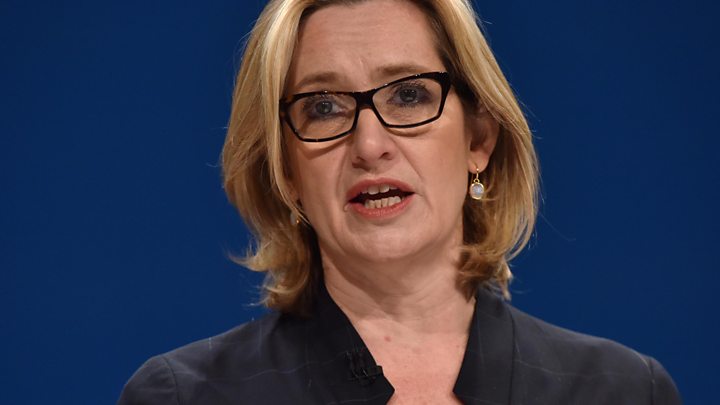
Sir James Eadie,QC, on behalf of Amber Rudd, the current work and pensions secretary, argued that the women had no legal remedy to get their money back because the judges hearing the case could not challenge the primary legislation which authorised the change. He said constitutional grounds prevented the judges challenging any major primary legislation passed by Parliament.
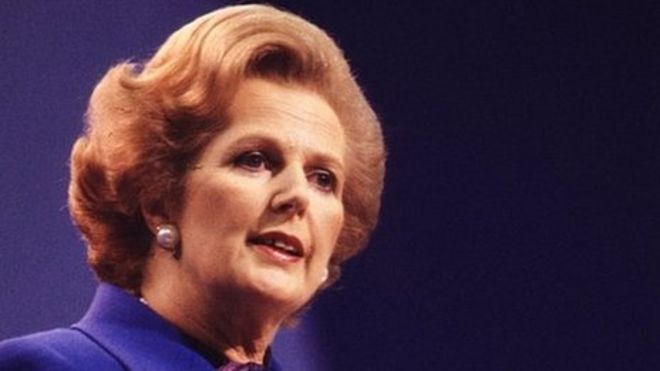
It is a supreme irony. Margaret Thatcher’s government ended the Treasury contribution to the National Insurance Fund that has now deprived 3.9 million women born in the 1950s of their pensions for up to six years. Now she could also be their saviour.
This is because Britain’s first woman prime minister took the decision to ratify in 1986 the United Nations Convention on the Elimination of All Forms of Discrimination 1979 (CEDAW).
It is this decision that commits the United Kingdom to outlawing not only any discrimination against women who are unfairly treated but demands reparations for the people who lost those rights.
Pic credit: BBC
The CEDAW convention also crucially provides a mechanism to deliver the money to 50s women without facing a legal challenge from any other group – whether it be the pensions industry or anyone else.
The role of this convention is likely to be a major debating point in next week’s high court judicial review since Professor Jackie Jones – elected last week as a Labour MEP for Wales and former professor of Feminist Studies at the University of the West of England – will be BackTo60s expert witness. In the hearing that led to the granting of the judicial review she produced a brief here which explains the convention.
What is particularly exciting for 50s women – regardless of the result of the judicial review – is that this mechanism known as a Temporary Special Measure could be implemented by government ministers without any need for a judicial review at all. All it would need is the will of the politicians to do something about it under our obligations to ratify CEDAW.
The effect would be to legal proof any challenge without changing the law that has equalised the state pension age.
There is also an extraordinary precedent which was adopted by the Blair government and extended by the Brown government.
In 2002 Parliament passed the Sexual Discrimination (Election Candidates )Act which set up the controversial all women’s short lists for MPs, MSPs, MEPs, AMs and local councillors. The aim, as a detailed House of Commons library briefing reveals, was to dramatically increase the number of successful women candidates in public life and redress the balance between men and women holding public office.
This particular change was seen as a Temporary Special Measure originally aimed to end in 2015.
The 2010 Equality Act used an order to extend this to 2030. The measure was enthusiastically adopted by Labour who had pioneered the idea for the 1997 general election. Other parties did not adopt all women short lists but came under increasing pressure to select more women candidates.
The result has been a big increase in the number of women in Parliament. Now there are 208 women MPs in Parliament compared to 60 in 1992 before Labour introduced the all women shortlist.
Two issues have not been sorted out. The UK has repeatedly refused to embed all the provisions of CEDAW into domestic law. It steadfastly refuses to incorporate CEDAW into the Equalities Act 2010 or pass a separate Act that would provide women with the rights and fundamental freedoms Mrs Thatcher pledged to adhere to over 30 years ago.
And no special legislation has been passed to allow such payments to be made to the 3.9 million women born in the 1950s.
However this is changing. A Parliamentary motion calling for a temporary special measure to compensate the women has attracted 139 MPs from all parties and widely differing views. These include a number of ex ministers from the two main parties including Tories Sir Michael Penning and Robert Halfon, Labour’s Kevan Jones and Angela Eagle.
Other MPs supporting Anna McMorrin’s motion include the DUP chief whip, Sammy Wilson and Brexit spokesman Nigel Dodds; Green Party MP Caroline Lucas; Labour MPs Stephen Kinnock, David Lammy , Chris Bryant, Emma Lewell-Buck and Gareth Thomas; Tory MPs, Sir Peter Bottomley, Dame Caroline Spelman,Sir David Amess, Sir Henry Bellingham and Laurence Robertson;Liberal Democrat MPs Jo Swinson, Layla Moran, Tim Farron and Stephen Lloyd; Plaid Cymru MPs, Ben Lake and Jonathan Edwards Scottish Nationalists, Angus Brendan MacNeil and Deidre Brock and Independents John Woodcock and Chris Williamson.
What is clear is a gathering support for action among MPs – something the present government and pensions minister Guy Opperman ignore at their peril. The 50s born women have a just cause on their side.
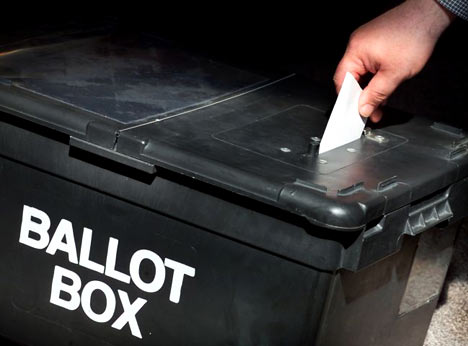
The 2019 local elections were one of the most surreal in recent times. For a start two of the newest party groups, Nigel Farage’s Brexit Party and the breakaway group, ChangeUK, were too late to field any candidates. So they didn’t reflect the range of political alternatives on offer.
The voting results Pic credit: BBC
They took place against a background of massive disillusion with politicians and country bitterly divided between Remain and Brexit.
The comparison with 2015 – the last time the seats were fought- was not equally valid as the 2015 elections were on the same day as a general election when more people turn out to vote.
England scoreboard
PARTY
COUNCILLORS
CHANGE +/-
Conservative
3564
-1330
Labour
2021
-84
Liberal Democrat
1352
+705
Green
265
+194
UKIP
31
-145
Others
1177
+660
So it was not surprising that the two major parties suffered and there was a rise in the number of Independents elected reversing a trend for decades.
However contrary to some of the reporting disillusionment did not fall equally on the Tories and Labour. The Tories lost out massively , Labour did not.
The Conservative party lost 1,330 seats and lost control of 45 councils. They now have control of 93 councils. Labour gained some councils but finished with an overall loss of six councils ending up controlling 60.
The Lib Dems managed net gains of 11 councils – leaving them in control of 18. The Greens did not win any council but are now a presence in both rural and urban areas.
When you get down to the detail you find Labour’s performance reflects a trend that was going on last year. The party is finding it is losing ground in some traditional working class areas where they have dominated for decades but still gaining ground in the most unlikely of places, particularly in the South.
The must dramatic losses were in Sunderland ( 10 seats), Bolsover (14) and North East Derbyshire ( 17), Redcar and Cleveland ( 13) all traditional working class areas. They also were driven back in Derby where the Tories are now the largest party and lost five seats in South Tyneside. Labour lost to a landslide of Independents in Ashfield, Nottinghamshire and now only have two councillors left. Labour disappeared completely in Dacorum ( Hemel Hemsptead) where they have been declining for years. In Stoke on Trent where Labour launched its local election campaign it lost five seats and the Tories gained eight. They also lost control of Bolton, Darlington , Stockton, Middlesbrough and Hartlepool.
Now the council leader of Sunderland Graeme Miller blamed the loss of Labour seats on a ” massive protest ” over the party’s attitude to Brexit by agreeing there could be a second referendum. This may have been partly true – as other big losses were in Leave areas – but in Sunderland voters seem to be saying ” Anybody but Labour” by voting in UKIP, Liberal Democrat , Conservative and Green councillors.
Now if this was repeated all over the country it would have been a very bad night for Labour. But it wasn’t. Labour gained seats to take control of Trafford, High Peak and Gravesham in Kent. They also remarkably took over Witney town council winning 15 of 17 seats on David Cameron’s doorstep.
And again like last year they won seats in areas where Labour hasn’t existed for years. This included one seat on South Norfolk council, one seat on Lyme Regis town council, 16 gains in Thanet – last time a UKIP stronghold, six in Folkestone and Hythe, where they hadn’t been represented, and they doubled their councillors in Worthing from five to ten. They also won 3 seats on Lewes council in East Sussex where they have not been represented for a decade.More surprisingly they took two seats in Surrey on Waverley council – both in Godalming, bringing back into politics the former Labour MP for Broxtowe, Nick Palmer. The rout in Waverley which covers true blue Farnham and Haslemere saw a 49 seat Tory majority collapse with 30 Tory councillors losing their seats ( Lib Dems gained 13, Greens two, and Farnham Residents, an independent group ended up with 14 councillors.
The Liberal Democrats did well with landslide results in Chelmsford, North Norfolk, Bath and North East Somerset, Vale of the White Horse, Hinckley & Bosworth, Winchester, Cotswolds, North Devon, Mole Valley, North Devon, Somerset West & Taunton and Teignbridge. Without doubt at a local level they have shrugged off their appalling performances after the coalition government but it is not entirely clear that in every area it will mean a rejection of Brexit. The Greens also now have a presence on many councils by winning seats in both rural and urban areas and strengthening their position in Lewes, Brighton and Norwich.
The Conservative losses are so numerous that it is impossible to list all the 45 councils they no longer control. But there was a devastating trail across Kent and Surrey and serious losses in the West country. Among the biggest losses were Waverley (30), Guildford ( 22) Bath and North East Somerset ( 25) ,Chelmsford (31) , Swale (16) North Norfolk (19) and Kings Lynn (16).
What does all mean? It is too facile to see this as a Brexit v Remain result particularly as they have been a substantial rise in Independents. These are by no means all Tories in disguise. On one level it is the reverse of the 2017 general election which saw the two main parties dominate. Now they are in the back foot in some of their strongholds – whether it be the North East or parts of the Midlands for Labour or the South East, West country and parts of East Anglia for the Tories.
Labour is still advancing the South East and has strengthened its position in Manchester. The Lib Dems are back with a vengeance in former strongholds.What will happen next with the European elections and the Peterborough by-election may also not be a true guide.
We live in surreal times and these were surreal local elections.
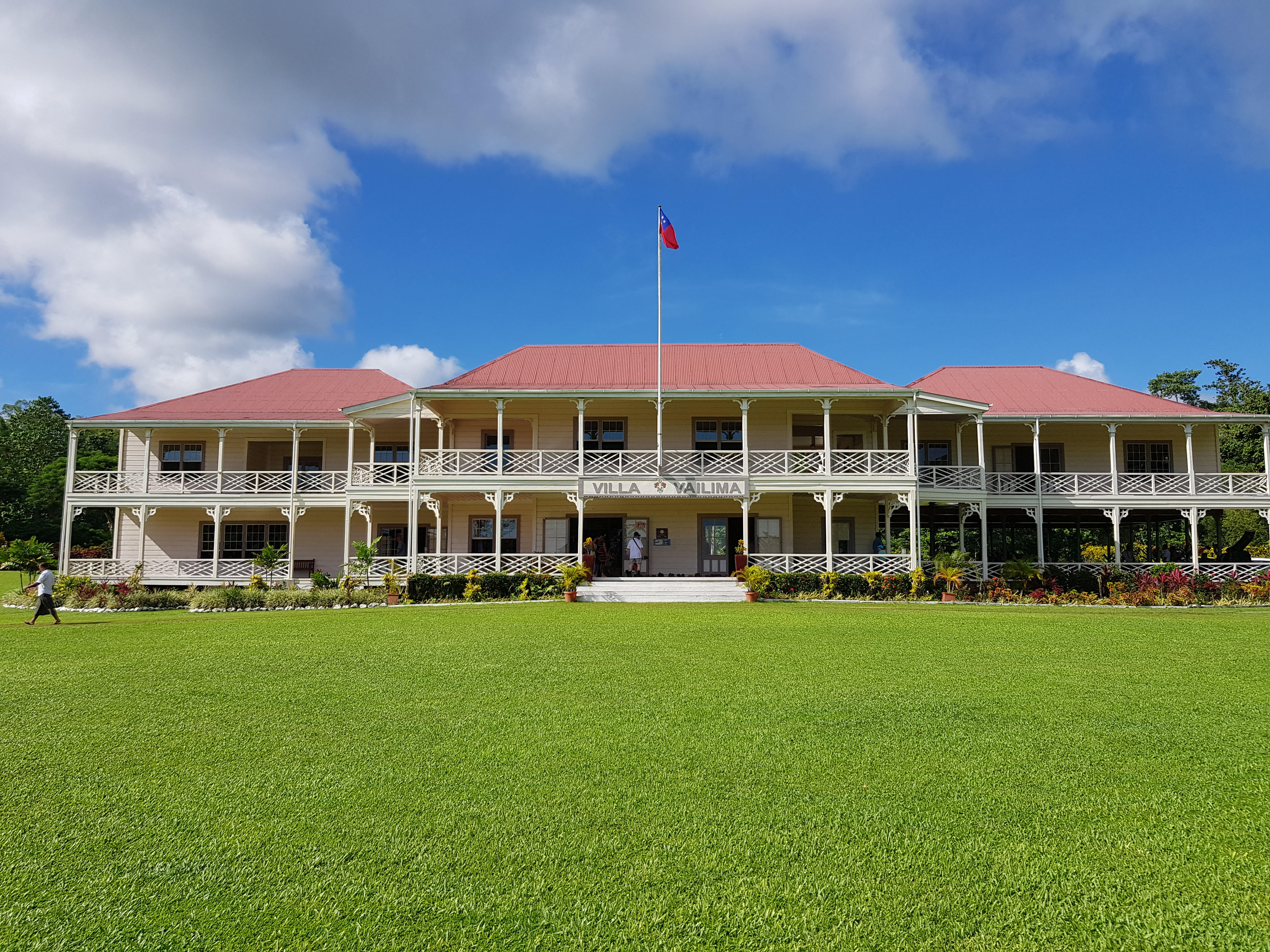
The lush tropical island of Samoa in the South Pacific is famous as the last resting place of Robert Louis Stevenson author of Treasure Island.His villa is now a museum and a major tourist attraction set in the hills above Apia, the nation’s capital.
Stevenson is buried at the top of a nearby mountain and reached by a hike through tropical rainforest. There is even an environmental project to preserve the forest in that area.
It was at Stevenson’s villa that five months ago that Laura Clarke the British High Commissioner to Samoa chose to launch a new initiative aimed to boost Britain’s place in the world post Brexit. Here for one day the Union Jack flew from the building while the high commissioner waxed lyrically about how similar the UK was do this tropical paradise. You can read all about it in a FO press release here.
Samoa it turns out is one of nine countries that Britain is keen to strengthen its presence as part of a Foreign Office initiative to compensate for losing its influence in the European Union. The argument goes along the lines that for every small country that Britain supports is likely to back Britain at the United Nations as each country has one vote. That way Britain can keep playing a major role without relying on the EU.The initiative goes back to Boris Johnson’s time as foreign secretary.It is being repeated in Tonga and Vanuatu.
The policy could be expensive and the competition could be fierce. In Samoa it will mean building a high commission to compete with the ones already in the capital representing Australia,New Zealand and Japan. In both Samoa and Tonga the main competition comes from China which is aiding Samoa’s education system and operates behind a high security compound in Tonga. The Japanese and Koreans are funding a new bridge in Apia. And both islands have strong links with Australia and New Zealand.
Exactly what new business opportunities Britain will get from Samoa and Tonga is not clear. Neither country relies entirely on tourism but most of their exports are agriculture and both have tiny populations ( they have less than 300,000 between them) and are no substitute for any EU country. Britain could benefit from coconut oil and cream from Samoa. Tonga could send us frozen fish,squash and vanilla beans.
As a visitor to both countries, Samoa is stunningly beautiful and friendly and Tonga is similar. Both have a very strong Christian religious communities dating from the missionaries and still observe Sundays as a day of rest.
In Samoa family is very important and unusually there are few cementaries as nearly all Samoans bury their ancestors on their own land. As well having their own homes they build meeting halls for family events.
Surprisingly for such a beautiful place it is not overdeveloped. There are no huge tower block hotels like Honolulu dominating the coast.Instead it remains rather a remarkable tropical paradise that even Robert Louis Stevenson might still recognise.
A High Court judge yesterday gave the Back To 60 campaign permission to bring a judicial review against the Department for Work and Pensions over the raising of the pension age for 3.8 million women born in the 1950s.
The Hon Ms Justice Lang – who is also known as Dame Beverley Ann Macnaughton Lang – ruled in favour of all the issues raised by barristers Catherine Rayner and Michael Mansfield on behalf of the women.
The ruling by the 63 year old judge obviously stunned the Department of Work and Pensions whose barrister, Julian Milford, asked for 66 days ( instead of the normal 14 days) to prepare a fresh case against Back To 60. They were granted 42 days.
The ruling means that a future hearing BackTo60 have the right to argue their case that the government’s decision which affected the 3.8 million women was both a matter of gender and age discrimination. In addition they can argue that the total failure of successive governments to review the arrangements to look at the hardship faced by many of the people made matters worse.
” the taper mechanism used to raise the date on which women receive state pension, in combination with a failure to properly inform women of the changes was unlawful because it discriminates on grounds of sex, age and sex combined and age.”
Catherine Rayner told the judge that there had been no fewer than 60 changes to the date when a 50s woman could get a pension and that the main driving force for the government was to save money. She said the equivalent of £5.3billion had been taken from this group of women. She described it as an ” historic inequality ” which was made worse by the lack of knowledge among the women themselves because the government never informed them directly about the changes.
Julian Milford for the DWP, admitted that this was part of a cost saving for the government but also said it was about equalising the pension age between men and women.
He argued that there should be no judicial review of this because it was about primary legislation which had been widely debated in Parliament in 1995 and it was far too late to call it into question.
He also argued that a ruling by the European Court of Human Rights which meant that pensioners who had retired to Canada, Australia, New Zealand and South Africa were not entitled to uprated pensions meant that the women had no case to ask for a judicial review about changing their pensions.
Both these points were rejected by the judge who said that even though the act was passed 23 years ago the fact that its impact was causing problems for the women now meant the review could go ahead.
The government also revealed that the private pensions industry is uneasy about the women winning their case because it could force them to pay out occupational pensions five years earlier to some women – if their contract with companies meant it was payable on the day they could collect their state pension.
As the 7BR website says:
“The hearing will allow a detailed examination of complaints made by made by women born in the 1950s, and championed by groups such as #backto60 and WASPIE, as well as their political representatives. The case raises legal questions about sex and age discrimination in the mechanisms chosen by government to implement a policy; the responsibility of Government to inform people of significant changes to State Pension entitlement and of the applicability of the EU directive on Equal Treatment in Social Security provision.”
My view is that it has significant implications for Westminster and Whitehall.
It means that a judge has quashed the views expressed by financial commentators like Frances Coppola and other people connected to the private pensions and banking industry that there was no chance of a judicial review. It has also called into question the arguments they used over primary legislation and the ECHR court ruling.
It will add to pressure on the Labour Party leadership to promise to do something for these women whose cause is championed by Laura Alvarez, the partner of Jeremy Corbyn, and whose shadow chancellor, John McDonnell, is well aware of the issue, and predicted the women would win a review.
It will put enormous pressure on Amber Rudd, the new works and pensions secretary, who is already having to cope with the backlash over the mess caused by universal credit and will now have to seriously address the plight of the 50s women. It is also a blow to the reputation of Guy Opperman, the pensions minister, who all but nearly misled Parliament by telling them that the judicial review had already been rejected.
And I am afraid the All Party Group on State Pension Inequality for Women in Westminster will have to buck their ideas up and come behind this review rather than seeking small sums of compensation for the affected women. By taking this radical stand and going for the jugular BackTo60 have shown the way. They have not won yet but they have got much farther than anybody thought.
As the UK and the EU come to a deal on the withdrawal of the country from the EU the practicalities of the arrangement are about to rebound on Theresa May.
The European Commission are planning a new directive that will affect everyone in the UK and Ireland and from March 29 when the UK ceases to be an EU ” rule maker” and becomes a ” rule taker” it can do nothing about it.
The EU want to change our time. They want to standardise time across all countries by abolishing the move in the UK from Greenwich mean time to summer time – keeping the same hours for the whole year. While the EU will still respect different time zones – Brussels is normally one hour ahead of the UK – it no longer wants any difference between summer and winter time. The UK could decide to adopt permanent summer time but this has proved unpopular in the past.
And one of the byproducts of this is that Ireland could have two time zones if Britain doesn’t agree -a sort of new ” time border” that because of the complexities will mean some farms that straddle the border will be working in two time zones.
Not surprisingly the UK does not want this. But with all the excitement about the enormity of Brexit we are not going about making our views known very well.
The future of this massive change – which would mean darker evenings and lighter mornings – has been left to the most junior of ministers, Kelly Tolhurst, the MP for Rochester and Stroud and a Parliamentary under-secretary at the Department of Business. She has only been an MP for three years and a minister for just six months.
And the only discussion about this in Parliament has taken place at an obscure committee meeting a week or so ago where she did not particularly distinguish herself.Parliament has passed a resolution without debate in the chamber objecting to the move – but who in the EU will think they have to take much notice.
It has arisen because since 1980 the EU has had some competency to regularise time to help business and now wants to extend its role to end the ritual of clocks going forward and backward across the EU.
The pressure has come from the Germans, the French and the Austrians who, according to a survey, are fed up with changing the clocks twice a year. The UK, it emerged, had objected at a meeting in Graz in Austria and has so far got the support of Greece and Portugal.
But time, no pun intended here, is running out. A decision will be taken in March and implemented later next year during the transition period when the UK has to accept all new EU rules.
Worse though was the reaction from the minister to telling the people of the UK about what is under discussion.
She came under repeated questioning from MPs, notably Stella Creasy, Labour MP for Walthamstow, and Michael Tomlinson, Conservative MP for Mid Dorset and North Poole, to launch a consultation about the changes. But she refused to do it.
” Currently we do not intend carry out a consultation. We are working with other member states to block the proposal. Obviously, we will respect the implementation of EU rules while we are still a member but at this moment in time we do not want to consult because we are fundamentally against the proposed clock changes.”
This extraordinary position was even worse for Northern Ireland which could find itself in a different time zone to the Republic because Stormont is suspended she is not even proposing any guidance.
Instead she insisted that the UK would be successful in blocking it – ignoring the fact that after March 29 the UK won’t be in a position to do so.
Patrick Grady, SNP MP for Glasgow North, pit it succinctly: ” Once we leave the European Union—if the United Kingdom finally leaves—there will be nothing to stop there being different time zones across the island of Ireland, because the United Kingdom will no longer be in a position to have the kind of influence that the Minister has been speaking about, to work with other member states to come to an agreement that this is not necessary. Once we are out, we will have no say in those discussions whatsoever. ”
So I predict a perfect storm after we leave. The only way we can stop it – if you are a Brexiteer is to press for a ” no deal” situation. The only other way to stop it is if you are a Remainer is to stay in the EU and demand a derogation from the decision which is perfectly possible.
The one way to be forced to do this is Theresa May’s present solution which leaves UK as a ” rule taker” rather than a ” rule maker”. This I suspect will be the first of many issues that will cause massive problems. And changing our time affects everybody in the UK. For those who want the full details of the debate here’s the video of the European Committee meeting on November 12 that discussed it, courtesy of parliamentlive.tv
Two supporters of the BackTo60 campaign have got professional legal support to challenge the government for maladministration over the failure to notify them over the raising of the pension age.
The fresh challenge is in addition to the hearing next Friday at the High court to decide whether BackTo60 can challenge the government through a judicial review.
Pensions Litigation lawyer Mr Ivan Walker (Principal of Walkers Solicitors based in Kent) has agreed to advise Fran Martin and Ros Pain-Tolin who, are two of the lead cases of 1950s Women. They have got to the final stage of presenting their case to the Parliamentary Ombudsman.
Mr Walker recently represented the members of the Lloyds Bank pension schemes in a landmark High Court claim regarding sex discrimination in the system for contracting out of the State Earnings-related Pension Scheme.
The move is significant because professional legal advice is essential in bringing such a case. The women are launching a crowd funding appeal to help finance the move.
The link is here. Go onto the crowdfunder site here:
Both women have faced enormous and heart rending struggles to cope since the government pushed back the right to claim a pension from 60 to 65 and it is going up to 66 by 2020. Their struggle is typical of many others who have commented on this blog and have been left with virtually nothing to live on.
Fran Martin told me :
“I received a letter in 2013 from DWP – which indicated that I had a 6 yr hike added to my SP age – This was received 2 years before my 60th birthday in 2015. I was totally shocked and still am.
“I have gone from an optimistic cheerful forward thinking person to a virtual recluse with all the incumbent stresses and strains that this places on other family members. Health has deteriorated too, with high blood pressure, diabetes and anxiety being I feel part and parcel of the result of being misled at what is a vulnerable time in anyone’s life..”
Sleepless nights have become the new norm and even whilst now prescribed sleeping tablets I can still be wide awake at 4 or 5am with worry for a very bleak future if even that exists, I’m not convinced it does.”
She became redundant in 2015 and then saw her plans for a happy retirement ruined.
” I had purchased a retirement cottage in 2008 in Aberdeenshire completely unaware of any state pension Legislation. and which DWP treated as capital – Forced in Dec 2015 to put the cottage up for sale – but with no work and no one coming into Aberdeen to rent, to date the cottage is still on the market. and have costs for the upkeep of same and the flat that I live in Aberdeen.
” I am ineligible for any benefits as the DWP class the cottage as capital. I was also forced to draw down a small private pension in 2015 at the worst possible times for annuities, and use this and small savings to eek out a bleak existence – Dependant to on a mother in her mid 80’s which quite frankly I never thought I would have to be and obviously places stress and worry on her too.”
Ros told me: “I always expected my State Pension to be at 60 in 2015. I never received a letter. ICE ( who handle pension complaints)say that one was ‘probably’ sent in Feb 2012, but they did not keep any ‘case specific’ records so cannot confirm.”
“I only have a small works pension that I had taken early. I also a degenerative back condition which causes me pain most days and I suffer from Asthma.
” I really don’t know how I would manage at all, if I didn’t have my husband and his Pension to rely on as well. He is now 70 with his own health issues. My Mother almost 95 has also given financial support over the last few years.”
Both women are determined to fight the system so Amber Rudd in her new role as work and pensions secretary better look out as a storm is gathering not only from them but from millions of other people who feel they have been robbed of their state pension when they should have had it.







 Westminster Confidential